

The hobo spider (Tegenaria agrestis) is a common spider in parts of the United States, especially the Pacific Northwest. It is often misunderstood and frequently confused with more dangerous spiders like the brown recluse. Over the years, hobo spiders have gained a reputation for having a serious bite, but modern research paints a very different picture. This article explains what a hobo spider is, how to identify it, where it lives, how big it gets, and what science really says about its bite and venom.
What Is a Hobo Spider?
The hobo spider is a funnel-weaving spider belonging to the Agelenidae family. Its scientific name is Tegenaria agrestis. The name “hobo spider” comes from early theories that the species spread through the United States by hitching rides along railroad lines.
Native to Europe, the hobo spider became established in North America during the 20th century. Today, it is considered a common household and outdoor spider in certain regions. Despite its intimidating reputation, it is not naturally aggressive and prefers to avoid human contact.
Hobo Spider Identification

- Medium-sized brown spider with subtle chevron (V-shaped) markings on the abdomen
- Long, slender legs built for fast movement
- Eight eyes arranged in two slightly curved rows
- No violin-shaped marking on the head (unlike brown recluse)
- Builds funnel-shaped webs close to ground level
- Commonly found in basements, window wells, yards, and crawl spaces
What Does a Hobo Spider Look Like?
A hobo spider typically appears brown or tan with subtle patterns that blend easily into its environment. Its body is not glossy, and it lacks bold markings. Adult males and females look similar, though males may appear slightly leggier due to longer legs and enlarged pedipalps.
Compared to common house spiders, hobo spiders look more streamlined and fast-moving. They are often mistaken for wolf spiders, but wolf spiders are hairier and do not build funnel webs.
Hobo Spider Size
How Big Is a Hobo Spider?
Hobo spiders are considered medium-sized spiders. The average body length ranges from about 7 to 14 millimeters. When legs are fully extended, the spider may span up to 1.5 to 2 inches, making it appear larger than it actually is.
Size Comparison With Similar Spiders
Compared to a wolf spider, a hobo spider is usually smaller and less robust. Giant house spiders, which are often confused with hobo spiders, can grow significantly larger and have much longer leg spans. Size alone is not a reliable identification method, but it can help narrow possibilities.
Hobo Spider Web

Hobo spiders build horizontal, funnel-shaped webs that narrow into a retreat where the spider hides. These webs are usually found near ground level in yards, gardens, window wells, basements, and crawl spaces.
Unlike orb-weaving spiders, hobo spiders do not rebuild their webs daily. They wait for insects to stumble onto the web surface and then rush out to capture prey. The presence of a funnel web near the ground is one of the strongest indicators of a hobo spider.
Hobo Spider Habitat and Behavior
Where Hobo Spiders Live
Hobo spiders prefer dry, undisturbed areas close to the ground. Outdoors, they are commonly found under rocks, logs, and landscaping materials. Indoors, they may wander into basements, garages, and storage areas, especially during cooler months.
Behavior and Temperament
Hobo spiders are fast runners but shy by nature. They do not seek out humans and will usually flee when disturbed. Most encounters occur accidentally, such as when a spider becomes trapped indoors. Bites are rare and typically happen only when the spider is pressed against the skin.
Hobo Spider Range and Location
Hobo Spider Territory in the United States
The hobo spider’s range in the U.S. is concentrated in the Pacific Northwest and nearby regions. It thrives in climates with moderate temperatures and suitable ground-level habitats.
Common States Where Hobo Spiders Are Found
Hobo spiders are most commonly reported in Washington, Oregon, Idaho, Utah, Montana, and parts of Colorado. Reports from states like Texas, Florida, or California are often due to misidentification, as hobo spiders are not well established in those regions.
Hobo Spider Bite Overview
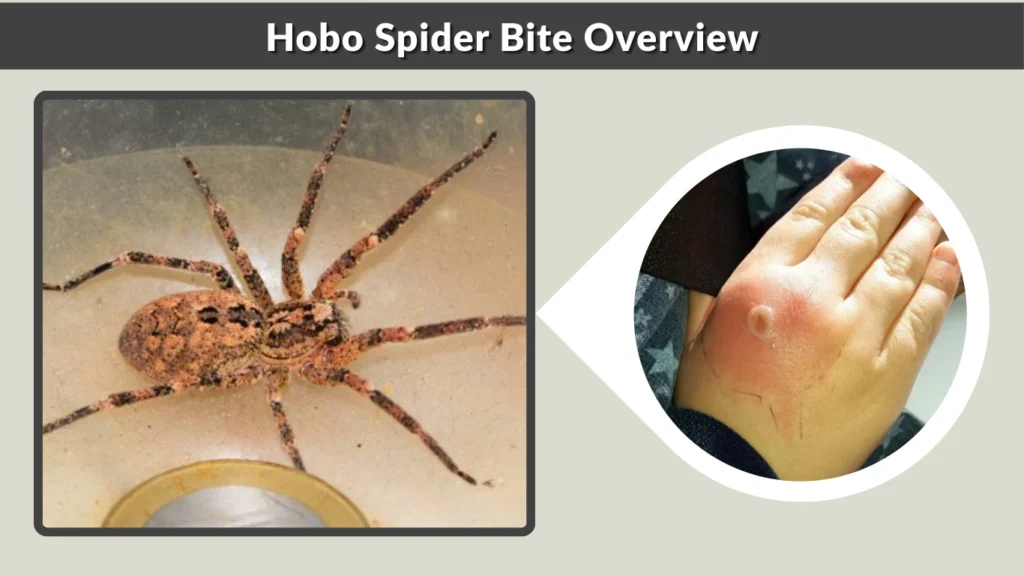
Hobo spider bites are considered rare, and confirmed cases are uncommon. For many years, hobo spiders were suspected of causing necrotic wounds similar to those associated with brown recluse bites. However, later scientific studies failed to support these claims. Many reported “hobo spider bites” were later identified as skin infections, allergic reactions, or bites from other insects.
Hobo spiders are not aggressive toward humans. Bites usually occur only when the spider is accidentally trapped against the skin, such as inside clothing or bedding.
What Does a Hobo Spider Bite Look Like?
In the rare event of a bite, symptoms are typically mild. A hobo spider bite may cause slight redness, localized pain, or itching shortly after the incident. In some cases, a small swollen area may develop, resembling a mosquito or ant bite.
Severe reactions are uncommon. There is no consistent evidence showing that hobo spider bites cause tissue necrosis. Most bite-like symptoms heal on their own within a few days without medical treatment.
Hobo Spider Bite Stages
Early Stage
The early stage may involve mild redness and a stinging or burning sensation at the bite site. Many people may not notice symptoms immediately.
Intermediate Stage
In some cases, slight swelling or irritation may occur within a few hours. The affected area may feel tender, but symptoms usually remain localized.
Healing Stage
Symptoms typically subside within a few days. The skin gradually returns to normal without scarring or lasting effects.
Hobo Spider Bite Symptoms
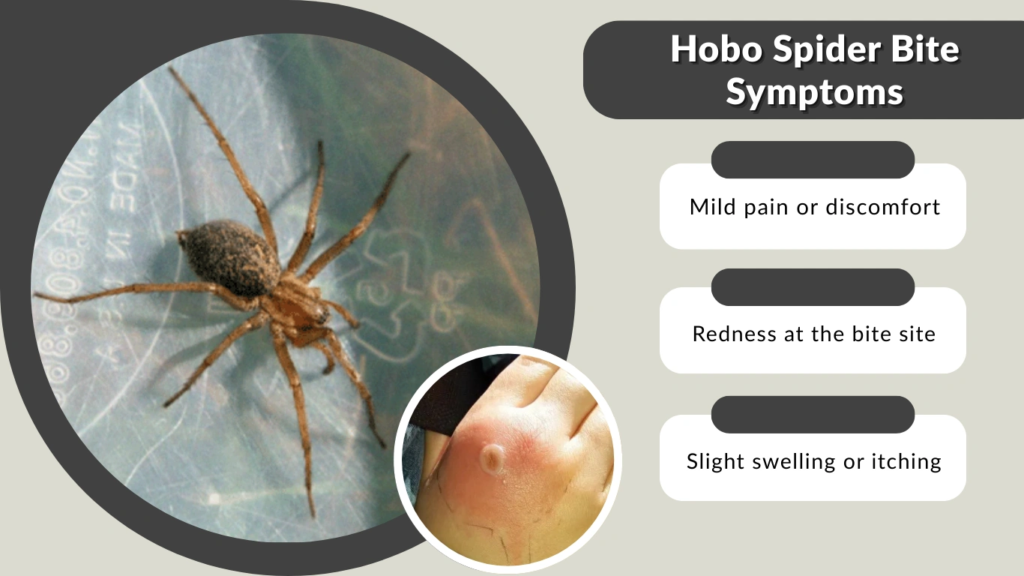
Commonly reported symptoms include:
- Mild pain or discomfort
- Redness at the bite site
- Slight swelling or itching
Rare symptoms may include headache or fatigue, though these are not conclusively linked to hobo spider venom. Severe reactions should always be evaluated by a medical professional, as they may have other causes.
Hobo Spider Bite Treatment
Treatment for a suspected hobo spider bite is simple and conservative. The bite area should be gently washed with soap and water to prevent infection. Applying a cold compress can help reduce swelling and discomfort.
Over-the-counter pain relievers or antihistamines may be used if needed. Medical attention should be sought if symptoms worsen, signs of infection appear, or if the bite does not improve within several days.
Is the Hobo Spider Poisonous or Dangerous?
Hobo spiders are venomous, like most spiders, but venomous does not mean dangerous. Current scientific consensus considers hobo spider venom to be of low medical significance to humans. There is no strong evidence linking hobo spider bites to serious or necrotic wounds.
Compared to medically significant spiders such as the brown recluse or black widow, the hobo spider poses very little risk.
Hobo Spider Venom Explained
Earlier studies suggested hobo spider venom might cause tissue damage, but later research failed to replicate these findings. Modern understanding indicates that the venom is mild and unlikely to cause severe reactions in humans.
The hobo spider’s reputation as a dangerous species is largely based on outdated information and misdiagnosed skin conditions rather than verified bite cases.
Hobo Spider vs Brown Recluse

Hobo spiders are often confused with brown recluse spiders, but the two are very different. Brown recluse spiders have a distinctive violin-shaped marking and are primarily found in the central and southern United States. Their venom can cause serious tissue damage in some cases.
Hobo spiders lack the violin marking and are mainly found in the Pacific Northwest. Their bites are not considered medically dangerous.
Hobo Spider vs Wolf Spider
Wolf spiders and hobo spiders share similar coloration, which leads to frequent confusion. Wolf spiders are bulkier, hairier, and do not build webs to catch prey. They actively hunt instead.
Both spiders have low-risk bites, but wolf spiders are more commonly encountered indoors. Neither species is considered dangerous to humans.
Hobo Spider vs Giant House Spider
Giant house spiders are larger than hobo spiders and have significantly longer leg spans. They are commonly found indoors and are known for their speed. Despite their size, giant house spiders are harmless.
Hobo spiders are smaller, live closer to the ground, and rely on funnel webs rather than roaming freely.
Hobo Spider Extermination and Pest Control
Prevention Tips
Reducing clutter, sealing cracks, and removing debris around the home can help prevent hobo spiders from entering living spaces. Regular cleaning of basements and crawl spaces also reduces suitable habitats.
When to Call Pest Control
Professional pest control may be helpful if spiders are consistently found indoors or if there is an ongoing infestation. Extermination is rarely necessary for isolated sightings, as hobo spiders are not aggressive or dangerous.
FAQs
What is a hobo spider?
A hobo spider is a funnel-weaving spider native to Europe and now found in parts of the northwestern United States.
Is a hobo spider bite dangerous?
No. Scientific evidence shows that hobo spider bites are not medically dangerous and usually cause only mild symptoms.
How big can a hobo spider get?
Hobo spiders typically measure 7–14 mm in body length, with leg spans reaching up to 2 inches.
Where are hobo spiders most common?
They are most common in Washington, Oregon, Idaho, Utah, and nearby states in the Pacific Northwest.
How can you tell a hobo spider from a brown recluse?
Hobo spiders lack the violin-shaped marking found on brown recluse spiders and live in different regions of the U.S.
Conclusion
The hobo spider is one of the most misunderstood spiders in North America. While often feared due to outdated information, modern research shows that it poses little threat to humans. Proper identification, awareness of its behavior, and understanding the facts about its bite can help reduce unnecessary fear. In most cases, hobo spiders are harmless household visitors that play a role in controlling insect populations.
