
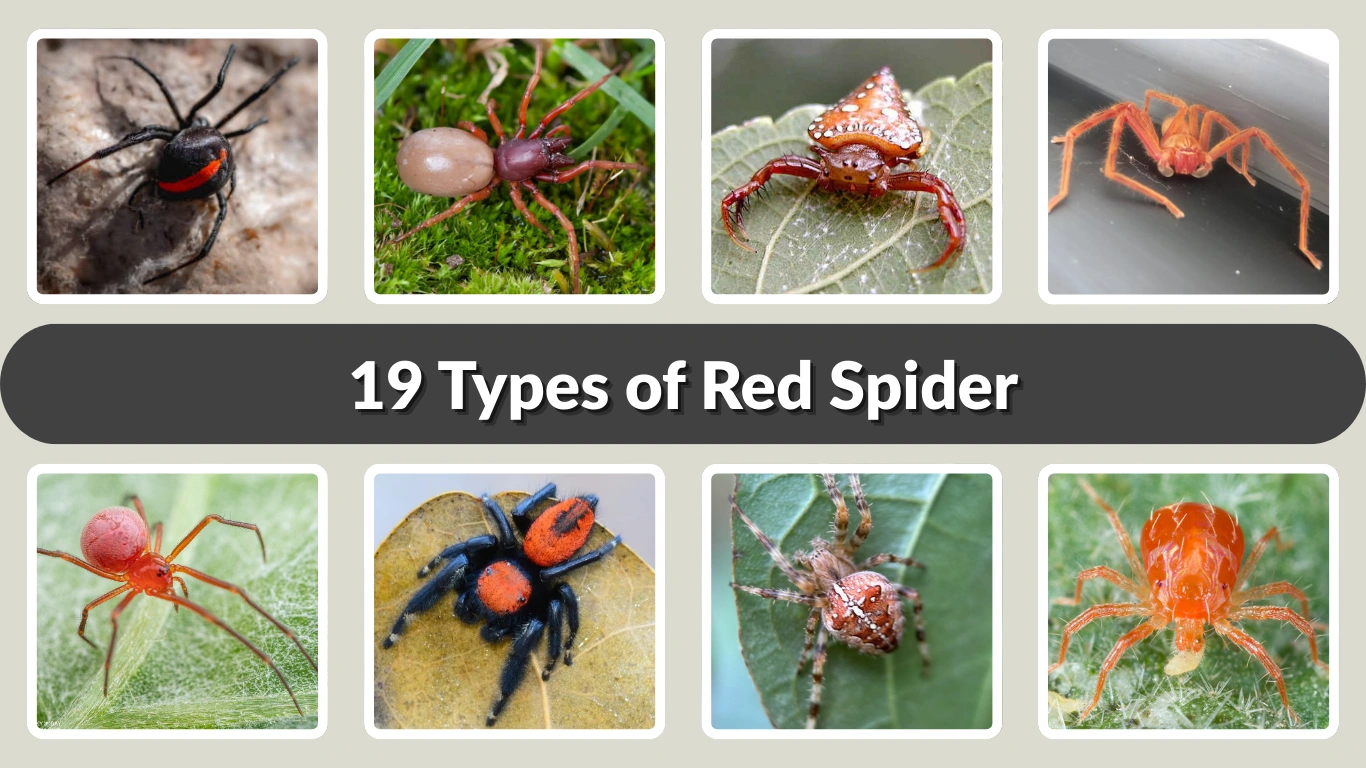
Red spiders are a fascinating group of arachnids known for their striking red, orange, or reddish-brown coloration. They can be found in gardens, forests, deserts, and even inside homes across different parts of the world. While many people assume red spiders are dangerous, most species are harmless and play an important role in controlling insect populations. Understanding their types, behavior, and habitat helps reduce fear and promotes coexistence.
1. Red Velvet Spider
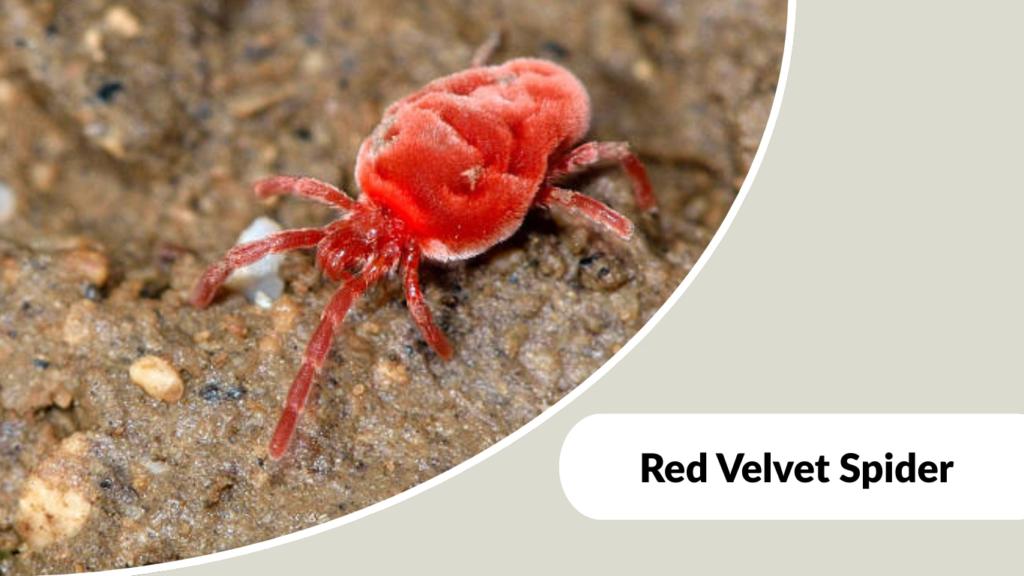
The Red Velvet Spider is a strikingly colored arachnid known for its bright red, velvety body. Belonging to the family Eresidae, these spiders are native to parts of Europe and Africa. They are solitary hunters, often residing in underground burrows or hidden among leaf litter. Despite their vivid color, Red Velvet Spiders are generally non-aggressive toward humans. Their unique appearance and fascinating social behaviors, especially in the case of some species, make them a subject of interest for arachnologists and spider enthusiasts alike.
Identification
- Body covered with dense, velvety red hair
- Small to medium size, typically 8–15 mm in length
- Distinct dark markings on the abdomen
- Short, thick legs with a reddish hue
- Eyes arranged in two rows typical of the Eresidae family
Habitat and Behaviors
Red Velvet Spiders are mostly ground dwellers. They prefer dry, sandy areas, under stones, or in leaf litter. Some species build silk-lined burrows or hide in crevices. They are primarily nocturnal hunters, preying on insects and other small arthropods. Interestingly, some species display social behavior, with females caring for spiderlings after they hatch. Mating usually occurs in late summer, and the female often produces a silk egg sac in her burrow to protect the young.
Diet and Lifecycle
Their diet consists mainly of insects such as beetles, ants, and small crickets. Juveniles begin hunting small prey immediately after emerging from the egg sac. Red Velvet Spiders undergo several molts before reaching adulthood, usually within one to two years depending on environmental conditions. Adults live for approximately 2–3 years, and females often outlive males. Cannibalism is rare but can occur under extreme food scarcity.
2. Redback Spider
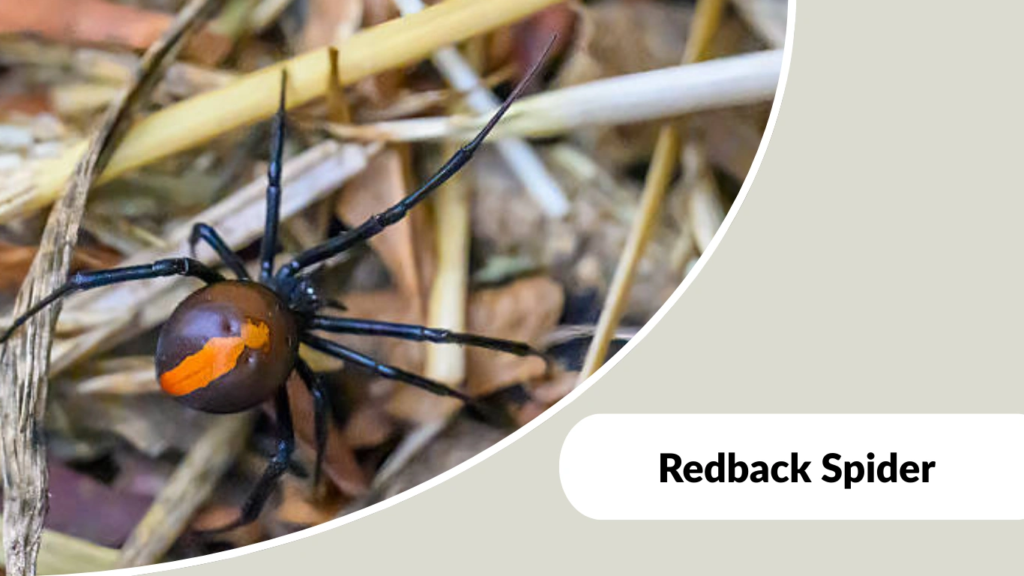
The Redback Spider is a venomous species native to Australia, closely related to the widow spiders. Recognizable by the prominent red stripe on its black, rounded abdomen, this spider is one of the most well-known and medically significant in its region. Despite its dangerous reputation, Redback Spiders are shy and rarely bite unless provoked. They are highly adaptable, often living near human habitation, including gardens, sheds, and outdoor toilets.
Identification
- Black body with a distinct bright red stripe on the dorsal abdomen
- Females are larger (around 10 mm) than males (around 3–4 mm)
- Round, bulbous abdomen
- Long, slender legs, typically black with subtle red or orange markings
- Males are smaller and lighter in color, often brownish with faint markings
Habitat and Behaviors
Redback Spiders are commonly found in dry, sheltered areas, often constructing messy, irregular webs near the ground. They are solitary and nocturnal, spending most of the day hidden. The female typically stays near her web, while males wander in search of mates. Redback Spiders exhibit sexual cannibalism, where the female may consume the male after mating. These spiders are highly resilient and can survive in urban and rural environments.
Diet and Lifecycle
Redback Spiders feed primarily on insects such as flies, ants, and beetles that become trapped in their web. Females produce egg sacs containing hundreds of eggs, which she guards fiercely. Spiderlings emerge within a few weeks and disperse to establish their own territories. The lifespan of a female Redback Spider is typically 1–2 years, while males usually die shortly after mating. Their venom can be harmful to humans, but antivenom is available for serious bites.
3. Crimson Spider Mite
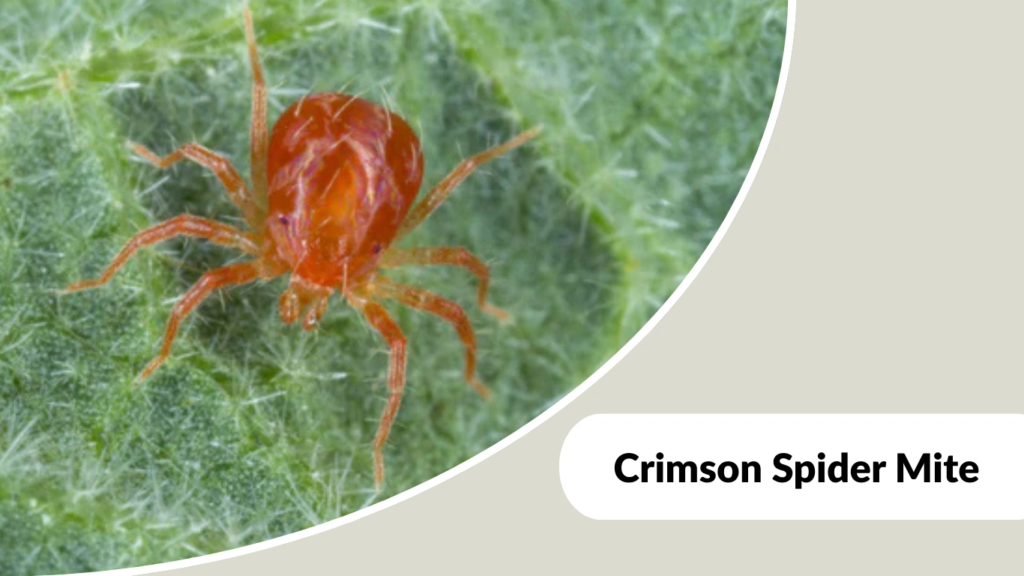
The Crimson Spider Mite is a tiny arachnid known for its bright red coloration and significant impact on plants. Belonging to the family Tetranychidae, these mites are notorious agricultural pests, affecting a wide range of crops, including tomatoes, cucumbers, and ornamental plants. They are not true spiders but are closely related arachnids. Despite their small size—less than 1 mm—they can cause extensive damage by feeding on plant sap, leading to leaf discoloration and reduced plant vigor.
Identification
- Very small, usually 0.4–0.5 mm in length
- Bright red, sometimes orange or greenish depending on diet and species
- Oval-shaped body with eight tiny legs
- Often produce fine webbing on leaves and stems
- Difficult to see without a magnifying glass
Habitat and Behaviors
Crimson Spider Mites thrive in warm, dry environments and are commonly found on the undersides of leaves. They prefer sheltered areas with ample sunlight. These mites are highly reproductive and can rapidly infest plants, often forming dense colonies. They produce fine silk webbing, which protects them from predators and environmental stress. Infestations can lead to leaf stippling, yellowing, and even premature leaf drop.
Diet and Lifecycle
Crimson Spider Mites feed by piercing plant cells and sucking out sap, which causes visible damage to the foliage. Females lay dozens of eggs on the underside of leaves, and the entire lifecycle from egg to adult can be completed in as little as one week under favorable conditions. Populations can increase explosively during hot, dry periods. Natural predators include ladybugs, predatory mites, and lacewing larvae. Controlling infestations often requires a combination of cultural practices and biological or chemical treatments.
4. Scarlet Sac Spider
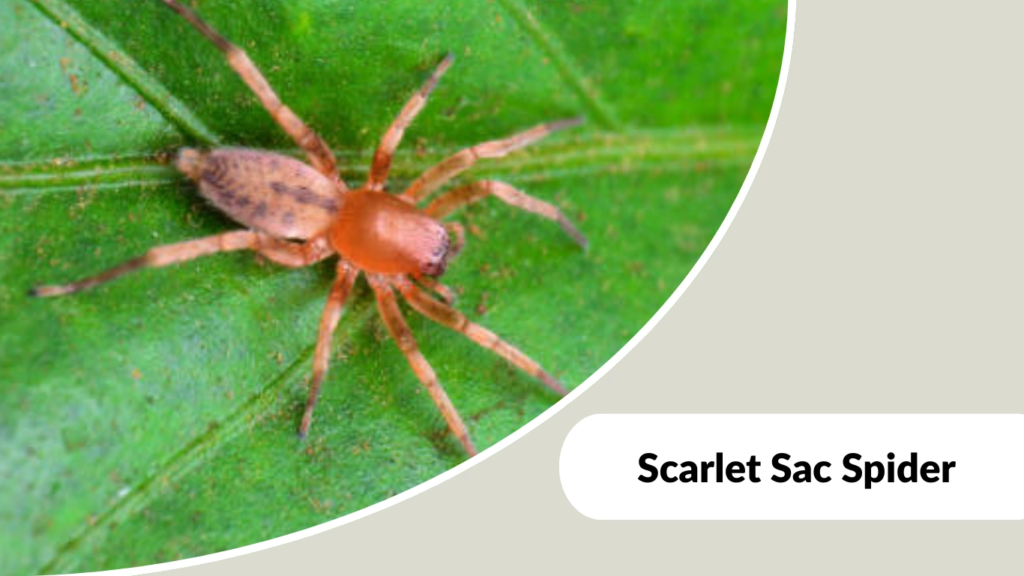
The Scarlet Sac Spider is a small, fast-moving arachnid recognized for its pale body and bright red or orange markings. Belonging to the family Miturgidae, these spiders are common in homes and gardens worldwide. They are nocturnal hunters and do not rely on webs to catch prey, instead actively stalking insects. While their bite can cause minor irritation in humans, they are generally not dangerous.
Identification
- Pale or creamy body with bright red or orange cephalothorax or abdomen markings
- Small size, usually 5–10 mm in length
- Eight legs, often light-colored and slender
- Eyes arranged in two rows, typical of sac spiders
- Smooth, shiny body with minimal hair
Habitat and Behaviors
Scarlet Sac Spiders prefer hiding in corners, under leaves, or inside rolled-up plant matter. They are primarily nocturnal hunters, emerging at night to capture small insects and other arthropods. During the day, they retreat to silk sacs, which they construct as resting and egg-laying sites. These sacs are usually found in hidden, sheltered areas like cracks in walls, window sills, or among foliage.
Diet and Lifecycle
Scarlet Sac Spiders feed on small insects, including flies, moths, and ants. Females lay eggs inside silk sacs, which they guard until the spiderlings emerge. The young spiders disperse shortly after hatching. These spiders molt several times before reaching maturity, usually within a few months depending on environmental conditions. Adults can live up to one year, with females often outliving males. Cannibalism is rare but can occur if prey is scarce.
5. Red Lace Weaver
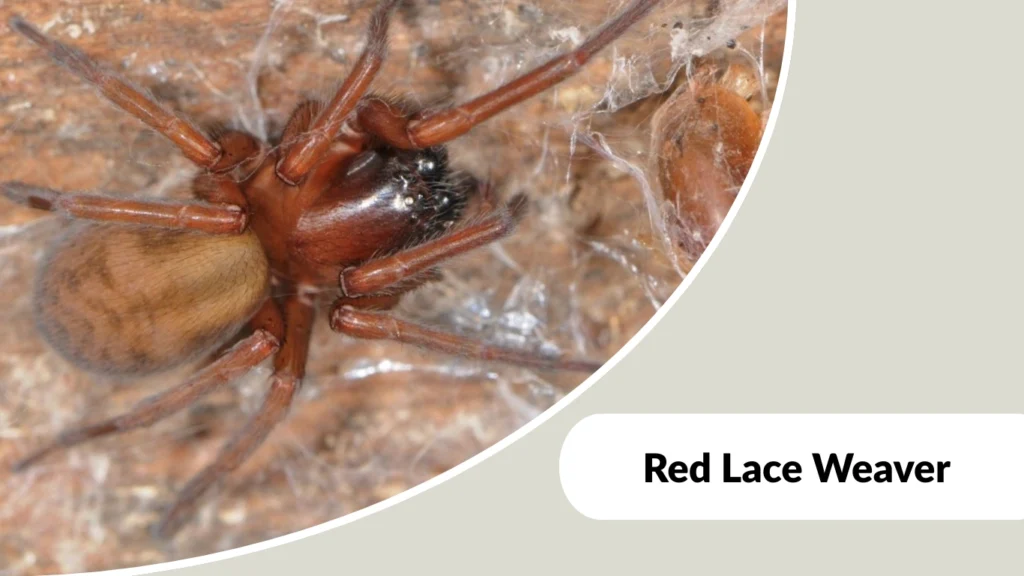
The Red Lace Weaver is a strikingly colored spider known for its intricate web patterns and vivid reddish hues. Belonging to the family Amaurobiidae, these spiders are not aggressive and are more notable for their delicate, lace-like silk structures than for biting humans. They are nocturnal hunters and often build retreat webs in hidden or shaded areas.
Identification
- Bright red or reddish-brown body with subtle patterns on the abdomen
- Medium size, usually 8–12 mm in length
- Legs are long, slender, and reddish with faint banding
- Eyes arranged in two rows typical of lace weavers
- Abdomen slightly flattened and often covered with fine hairs
Habitat and Behaviors
Red Lace Weavers prefer shaded, sheltered environments such as under rocks, logs, leaf litter, or inside garden structures. They build messy but strong webs, which serve both as a hunting ground and a retreat. These spiders are nocturnal, actively hunting at night and retreating during the day. Their webs often have a lace-like appearance, giving the species its common name.
Diet and Lifecycle
Their diet mainly consists of small insects, including flies, beetles, and other spiders. Red Lace Weavers employ a sit-and-wait strategy, relying on their webs to capture prey. Females lay eggs in silk sacs within their webs, protecting them until the spiderlings hatch. The young disperse shortly after hatching and undergo several molts before reaching adulthood. Adult lifespan typically ranges from one to two years, with females generally outliving males.
6. Red Orb-Weaver
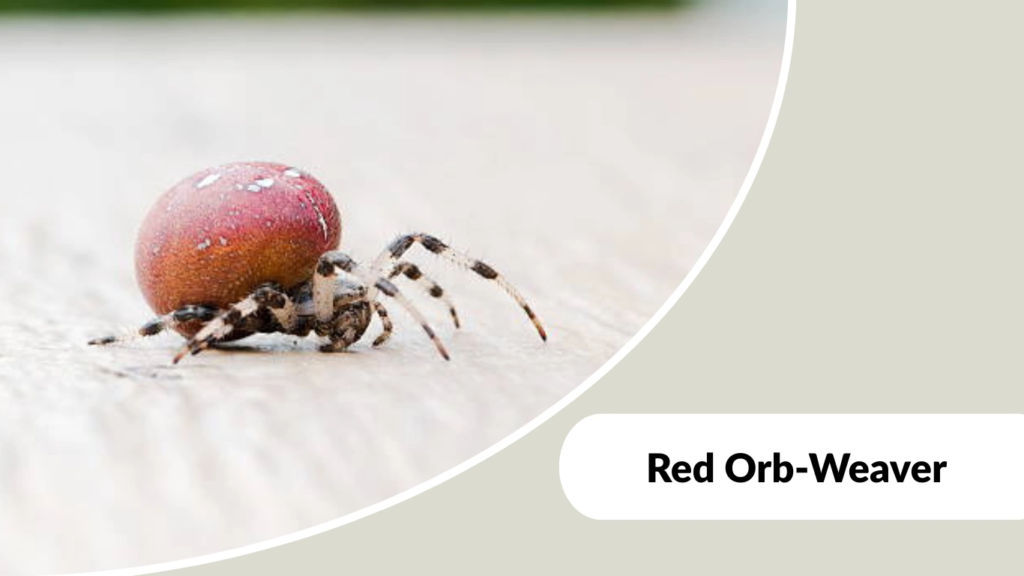
The Red Orb-Weaver is a visually striking spider known for its vibrant red coloration and the intricate circular webs it constructs. Belonging to the family Araneidae, these spiders are common in gardens, forests, and grasslands. They are non-aggressive and pose little threat to humans, making them popular among spider enthusiasts and nature observers.
Identification
- Bright red or reddish-orange abdomen, often with black or white markings
- Medium to large size, typically 10–25 mm in length
- Long, slender legs with fine hairs
- Eight eyes arranged in two rows
- Round, bulbous abdomen distinctive of orb-weaving spiders
Habitat and Behaviors
Red Orb-Weavers are commonly found in gardens, shrubs, forest edges, and grasslands. They construct large, circular webs to catch flying insects, usually during the night or early morning. These spiders are mostly sedentary, staying close to their webs and repairing them daily. Females remain near the center of the web, while males often wander in search of mates.
Diet and Lifecycle
Red Orb-Weavers feed primarily on flying insects such as flies, moths, and small beetles that become trapped in their webs. Females lay eggs in silken sacs, often attached to vegetation near their webs. Spiderlings hatch and disperse using a process called ballooning, where they release silk threads to catch the wind. Adults generally live for one year, with females outliving males. They molt multiple times before reaching maturity, and their vibrant coloration serves as both camouflage and a warning to potential predators.
7. Red Crab Spider
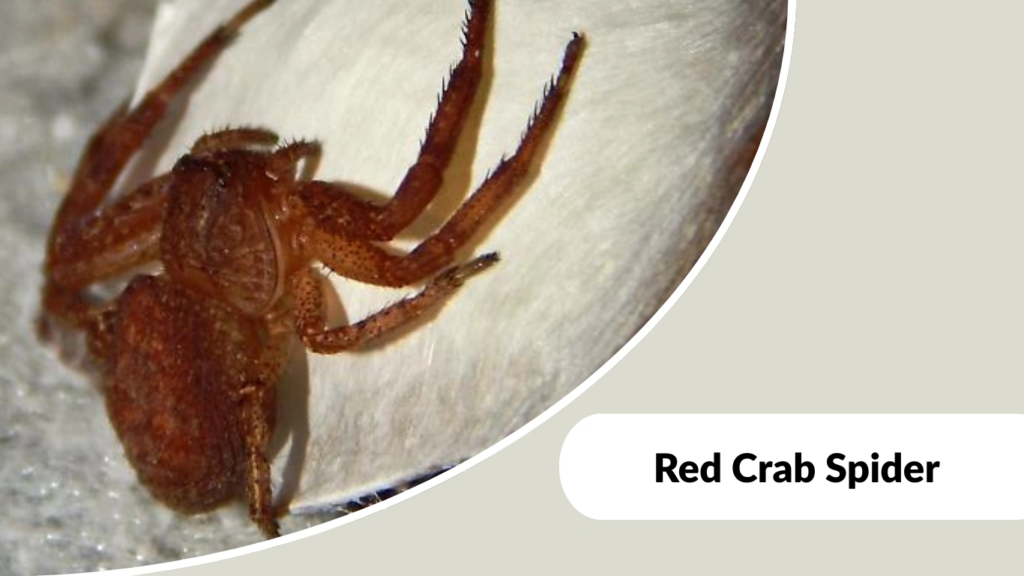
The Red Crab Spider is a small, brightly colored arachnid known for its crab-like appearance and sideways movement. Belonging to the family Thomisidae, these spiders are ambush predators that rely on camouflage to catch prey rather than building webs. They are commonly found on flowers, leaves, and shrubs, blending perfectly with their surroundings.
Identification
- Bright red or reddish-orange body, sometimes with white or yellow markings
- Flattened, broad body resembling a crab
- Front legs longer and stronger than the back legs
- Small to medium size, typically 5–10 mm in length
- Eight eyes arranged in two slightly curved rows
Habitat and Behaviors
Red Crab Spiders prefer habitats with abundant flowers and vegetation, including gardens, meadows, and forest edges. They are sit-and-wait hunters, often positioning themselves on flower petals to ambush insects such as bees, flies, and butterflies. They can move sideways like crabs, which aids in stealthy approaches and escaping predators. These spiders are solitary and are rarely seen in large groups.
Diet and Lifecycle
Red Crab Spiders feed mainly on insects that visit flowers. They inject venom to immobilize their prey before feeding. Females lay eggs in silk sacs hidden under leaves or in crevices. Spiderlings emerge after several weeks and begin hunting small insects immediately. They molt several times before reaching adulthood, which usually takes a few months depending on environmental conditions. Adult lifespan is typically around one year, with females living slightly longer than males.
8. Red Jumping Spider
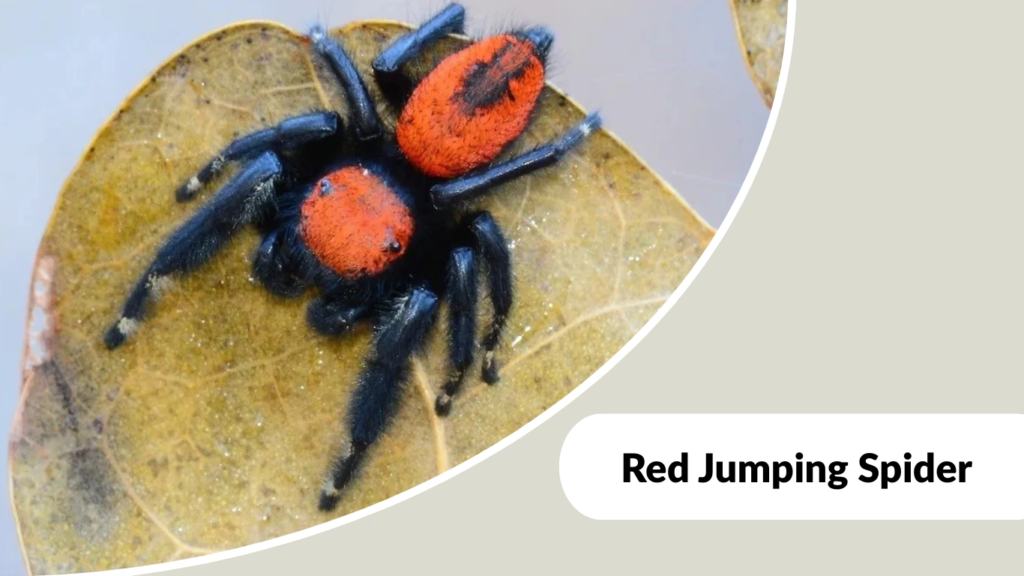
The Red Jumping Spider is a small, agile spider known for its bright red coloration and excellent jumping ability. Belonging to the family Salticidae, these spiders are active hunters with keen vision, relying on stealth and precision to capture prey rather than using webs. Their vivid colors and dynamic hunting style make them popular among arachnid enthusiasts.
Identification
- Bright red or reddish-orange body, sometimes with black or white markings
- Compact, robust body, typically 4–10 mm in length
- Eight eyes with two large, forward-facing eyes giving excellent vision
- Short, strong legs adapted for jumping
- Slightly hairy body and legs, providing grip and sensory input
Habitat and Behaviors
Red Jumping Spiders inhabit a wide range of environments, including gardens, grasslands, shrubs, and even inside homes. They are diurnal hunters, actively stalking and leaping onto prey. These spiders do not spin webs to catch food but may create silk shelters for resting or laying eggs. Males often display vibrant colors and perform elaborate courtship dances to attract females.
Diet and Lifecycle
Their diet consists mainly of small insects such as flies, moths, and ants. Red Jumping Spiders are excellent hunters, using their keen eyesight to spot prey from a distance and then pouncing with precision. Females lay eggs in silk sacs hidden in leaves or under rocks. Spiderlings emerge after a few weeks and begin hunting immediately. Adults live approximately one year, with females generally outliving males. They molt several times before reaching maturity.
9. Ruby Spider
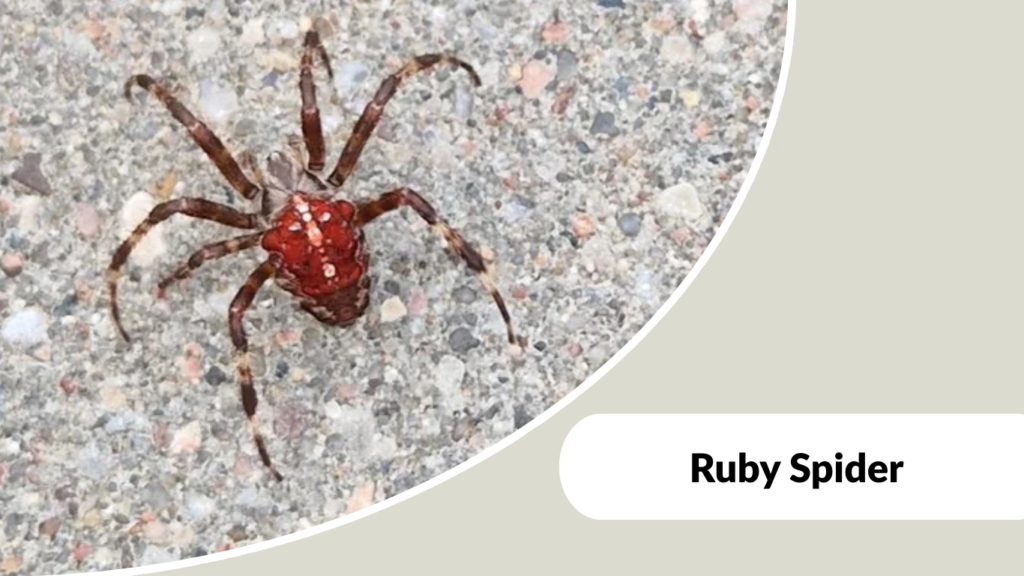
The Ruby Spider is a small, vividly red spider admired for its striking color and delicate appearance. Belonging to the family Theridiidae, these spiders are often found in gardens, shrubs, and under rocks. They are generally harmless to humans and are known for their neat, tangled webs used to catch small insects.
Identification
- Bright ruby-red body, sometimes with faint black markings
- Small size, usually 4–8 mm in length
- Rounded abdomen typical of comb-footed spiders
- Eight legs, slender and often slightly darker than the body
- Eyes arranged in two rows, characteristic of Theridiidae
Habitat and Behaviors
Ruby Spiders favor sheltered environments such as low vegetation, leaf litter, and garden structures. They build irregular, sticky webs to trap insects and usually remain close to their webs. These spiders are mostly nocturnal, staying hidden during the day. Females are more vividly colored than males, and like other comb-footed spiders, they exhibit web-based predatory behavior rather than hunting actively.
Diet and Lifecycle
Ruby Spiders feed primarily on small insects caught in their webs, including flies, ants, and beetles. Females produce silk egg sacs and guard them until the spiderlings emerge. The young disperse shortly afterward, beginning their hunting independently. They undergo several molts before reaching adulthood, which takes a few months depending on environmental conditions. Adults generally live around one year, with females often surviving longer than males.
10. Red Garden Spider
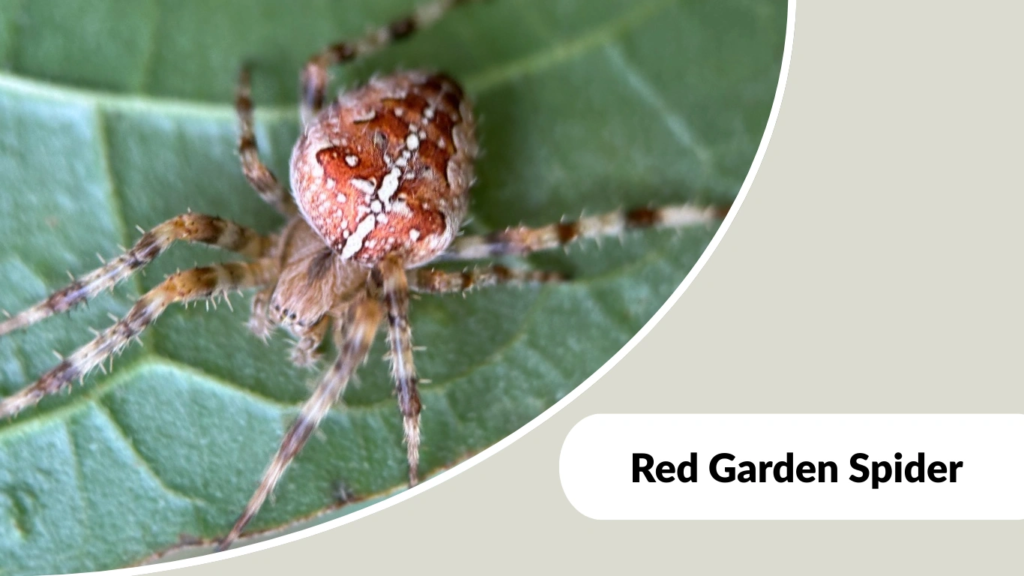
The Red Garden Spider is a brightly colored arachnid commonly found in gardens and grassy areas. Belonging to the family Araneidae, this spider is renowned for its vibrant red body and the intricate orb-shaped webs it constructs. It is non-aggressive and poses little threat to humans, making it a beneficial predator for controlling garden pests.
Identification
- Bright red or reddish-orange body with occasional black or white markings
- Medium size, typically 10–20 mm in length
- Long, slender legs often banded with darker shades
- Round, bulbous abdomen characteristic of orb-weaving spiders
- Eyes arranged in two rows, providing excellent vision for detecting prey
Habitat and Behaviors
Red Garden Spiders are commonly found in gardens, meadows, and shrubs. They construct large, circular webs between plants or in shaded areas to capture flying insects. These spiders are primarily nocturnal, repairing their webs daily. Females usually remain near the center of the web, while males wander to find mates. They are solitary and rarely leave their webs unless disturbed.
Diet and Lifecycle
Red Garden Spiders feed primarily on flying insects such as flies, moths, and small beetles caught in their webs. Females lay eggs in silk sacs attached to vegetation near their webs. Spiderlings hatch after a few weeks and disperse using “ballooning,” where they release silk threads to be carried by the wind. Adults generally live for one year, with females outliving males. They molt several times before reaching maturity, and their bright coloration helps in both camouflage and warning predators.
11. Red Comb-Footed Spider
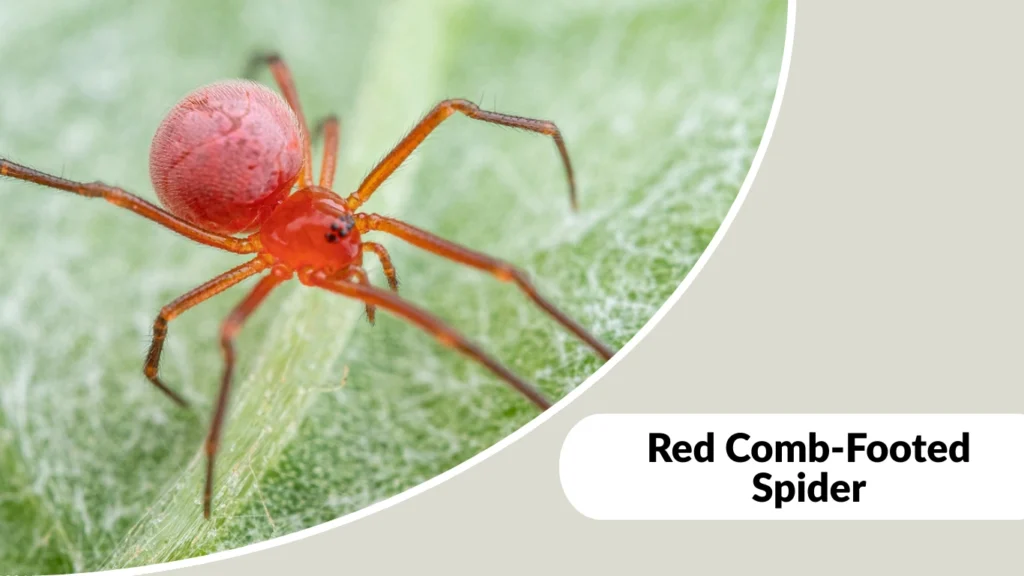
The Red Comb-Footed Spider is a small, vibrant spider belonging to the family Theridiidae, also known as cobweb or comb-footed spiders. It is recognized for its bright red body and the irregular webs it spins. These spiders are generally non-aggressive and pose minimal risk to humans, feeding primarily on insects trapped in their webs.
Identification
- Bright red or reddish-orange body, sometimes with black or darker markings
- Small size, typically 4–10 mm in length
- Rounded abdomen typical of comb-footed spiders
- Eight slender legs, slightly darker than the body
- Presence of a comb-like row of bristles on the fourth pair of legs, used to fling silk over prey
Habitat and Behaviors
Red Comb-Footed Spiders are found in gardens, shrubs, leaf litter, and occasionally inside homes. They construct irregular, tangled webs to catch prey, usually in hidden or shaded areas. They are nocturnal hunters, waiting for insects to become trapped in their sticky silk. Females are often more vividly colored than males and tend to stay close to their webs, while males wander to find mates.
Diet and Lifecycle
Their diet primarily includes small insects like flies, ants, and beetles. Females lay eggs in silk sacs, which they guard until the spiderlings hatch. The young disperse shortly afterward and undergo several molts before reaching maturity. Adult lifespan is usually around one year, with females living longer than males. These spiders play a beneficial role in controlling insect populations in gardens and other habitats.
12. Red Funnel-Web Spider
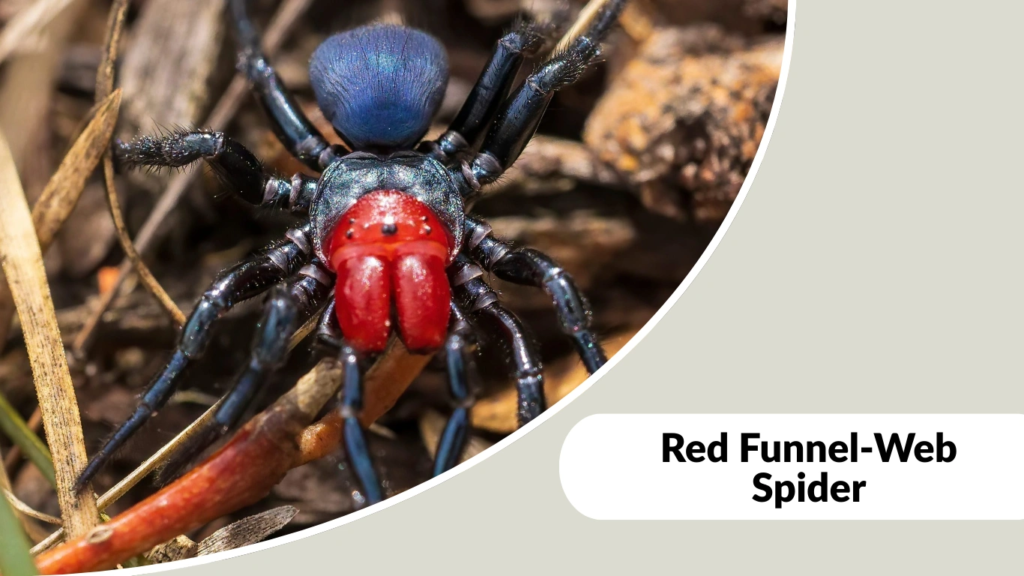
The Red Funnel-Web Spider is a highly venomous spider belonging to the family Atracidae. Native primarily to Australia, it is renowned for its glossy, deep red body and robust build. Despite its dangerous venom, this spider is generally shy and avoids human contact. Funnel-web spiders are known for their aggressive defensive behavior when threatened and their unique silk-lined burrows.
Identification
- Shiny, deep red cephalothorax with slightly darker legs
- Medium to large size, typically 15–25 mm in body length
- Thick, powerful legs adapted for digging and capturing prey
- Large fangs capable of delivering venom
- Eyes arranged in two rows, typical of funnel-web spiders
Habitat and Behaviors
Red Funnel-Web Spiders prefer moist, sheltered habitats such as under logs, rocks, or in burrows. They build silk-lined funnel-shaped retreats that extend into the ground, allowing them to ambush passing prey. These spiders are mostly nocturnal, emerging at night to hunt. Males often leave their burrows to find mates during the mating season, increasing the risk of human encounters.
Diet and Lifecycle
Red Funnel-Web Spiders feed primarily on insects, other spiders, and small vertebrates that come near their burrows. Females lay eggs in silk sacs within their burrows, which they guard carefully until the spiderlings emerge. Juveniles disperse and begin hunting independently. Funnel-web spiders molt several times before reaching adulthood. Adult females can live up to 10 years, while males typically live 1–2 years, dying shortly after mating. Their potent venom contains neurotoxins that can be dangerous to humans, but antivenom is available.
13. Red Lynx Spider
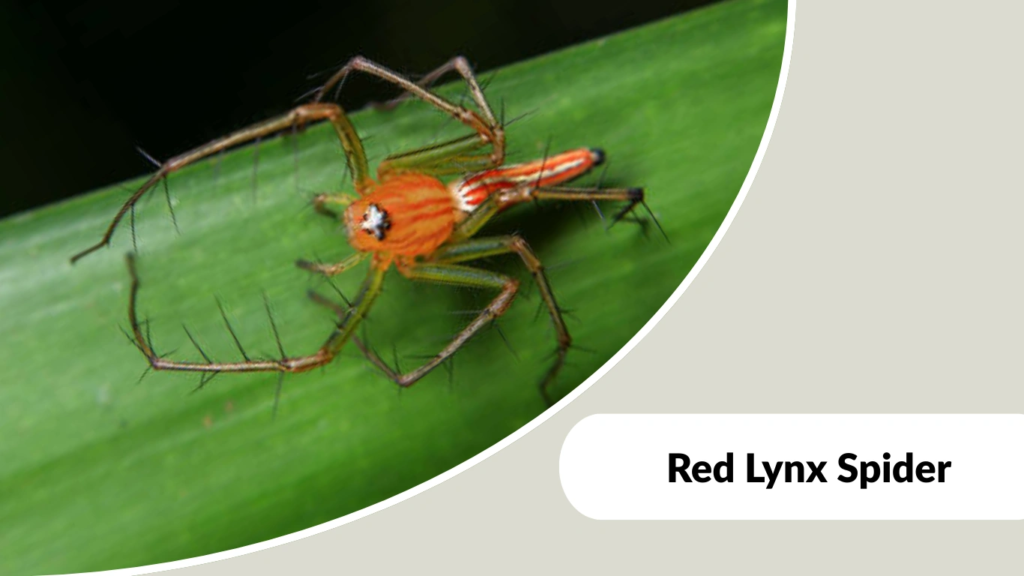
The Red Lynx Spider is a small to medium-sized, brightly colored arachnid belonging to the family Oxyopidae. Known for its vivid red body and spiny legs, this spider is an agile hunter that relies on speed and camouflage rather than webs. It is commonly found in gardens, shrubs, and fields, preying on insects that visit flowers.
Identification
- Bright red or reddish-orange body, sometimes with green or yellow highlights
- Medium size, typically 8–12 mm in length
- Long, spiny legs aiding in gripping and hunting prey
- Eight eyes arranged in a hexagonal pattern
- Slim, elongated body with a slightly flattened abdomen
Habitat and Behaviors
Red Lynx Spiders prefer areas with dense vegetation, including gardens, shrubs, and crop fields. They are diurnal hunters, actively stalking insects on leaves and flowers. These spiders are solitary and use their spiny legs to quickly capture prey. When threatened, they can leap away rapidly, similar to a lynx, which gives them their common name. Females often guard their eggs on the underside of leaves.
Diet and Lifecycle
Red Lynx Spiders feed primarily on small insects such as flies, moths, and bees. Females lay eggs in silk sacs attached to leaves, protecting them until spiderlings emerge. Young spiders begin hunting immediately and undergo several molts before reaching maturity. Adults typically live for about one year, with females outliving males. Their bright coloration provides both camouflage among flowers and a warning to potential predators.
14. Red Spiny Spider
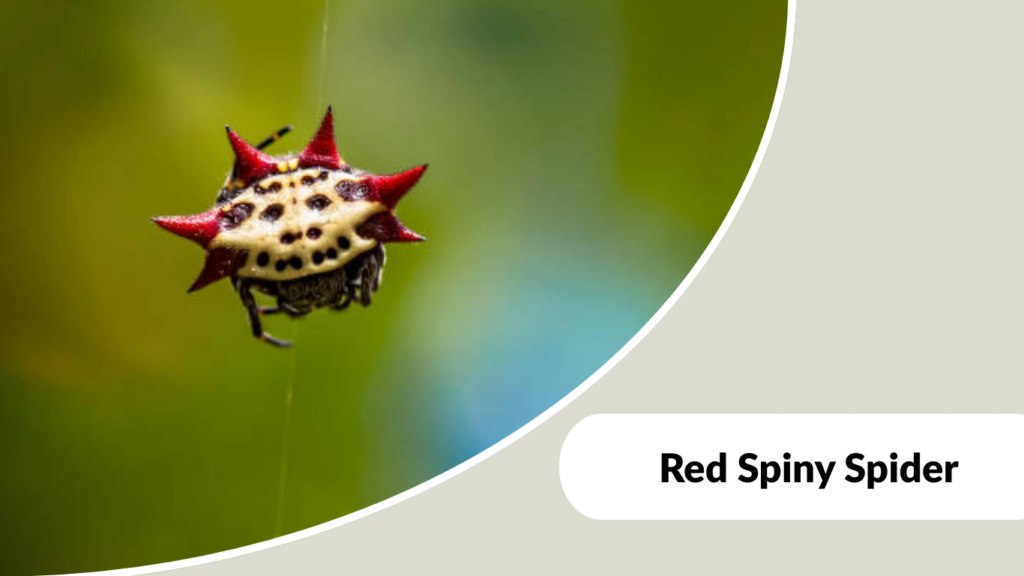
The Red Spiny Spider is a small to medium-sized arachnid known for its vibrant red coloration and spiny protrusions along its body. Belonging to the family Araneidae, this spider is an effective predator that captures prey using its orb-shaped webs. Its striking appearance makes it easily recognizable among garden and forest-dwelling spiders.
Identification
- Bright red or reddish-orange body with small spines or tubercles
- Medium size, typically 8–15 mm in length
- Long, slightly hairy legs often banded with darker shades
- Rounded, bulbous abdomen with visible spines
- Eyes arranged in two rows typical of orb-weaving spiders
Habitat and Behaviors
Red Spiny Spiders are commonly found in gardens, shrubs, and forest edges. They construct orb-shaped webs between plants to capture flying insects. These spiders are mostly nocturnal, spending the day resting near their webs. Females remain close to the web center to monitor for prey, while males often wander to locate mates. They are solitary and generally avoid human contact.
Diet and Lifecycle
Their diet consists mainly of small insects such as flies, moths, and beetles that become trapped in their webs. Females lay eggs in silk sacs attached near the web or hidden under foliage. Spiderlings emerge after a few weeks and begin hunting independently. Juveniles molt several times before reaching adulthood. Adult lifespan typically ranges from one to two years, with females outliving males. The spines along their body may deter predators and provide additional camouflage among plants.
15. Red Huntsman Spider
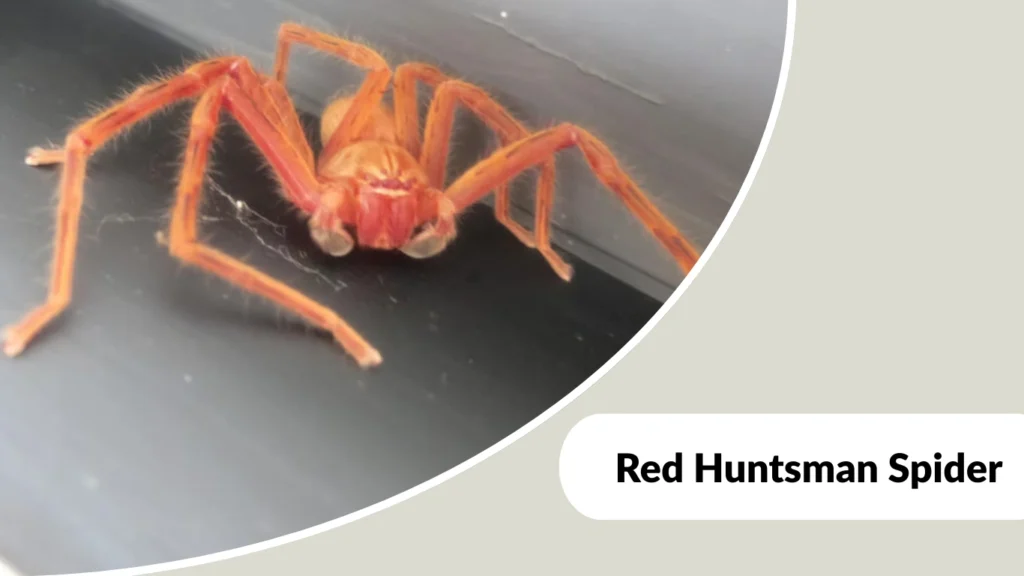
The Red Huntsman Spider is a large, fast-moving spider known for its reddish-brown coloration and impressive speed. Belonging to the family Sparassidae, these spiders are non-aggressive toward humans and are often found in homes, gardens, and forests. They are nocturnal hunters that do not rely on webs but actively chase or ambush prey.
Identification
- Reddish-brown or orange body with subtle darker markings
- Large size, typically 15–30 mm in body length
- Long, robust legs adapted for running and climbing
- Flattened body allowing access to narrow spaces
- Eight eyes arranged in two rows, providing good vision
Habitat and Behaviors
Red Huntsman Spiders are found in sheltered areas, including tree bark, rock crevices, under leaves, and occasionally inside homes. They are nocturnal, hunting primarily at night. These spiders are solitary and rely on speed and agility to capture prey. Unlike web-building spiders, Huntsman Spiders use ambush and active hunting techniques. They can also climb smooth surfaces and walls with ease.
Diet and Lifecycle
Red Huntsman Spiders feed on insects, small arthropods, and occasionally other spiders. Females lay eggs in silken sacs hidden in crevices or under bark and guard them until the spiderlings emerge. The young spiders disperse and hunt independently, molting several times before reaching maturity. Adults typically live for one to two years, with females generally outliving males. Their large size and speed make them effective predators in both natural and human environments.
16. Red Triangle Spider
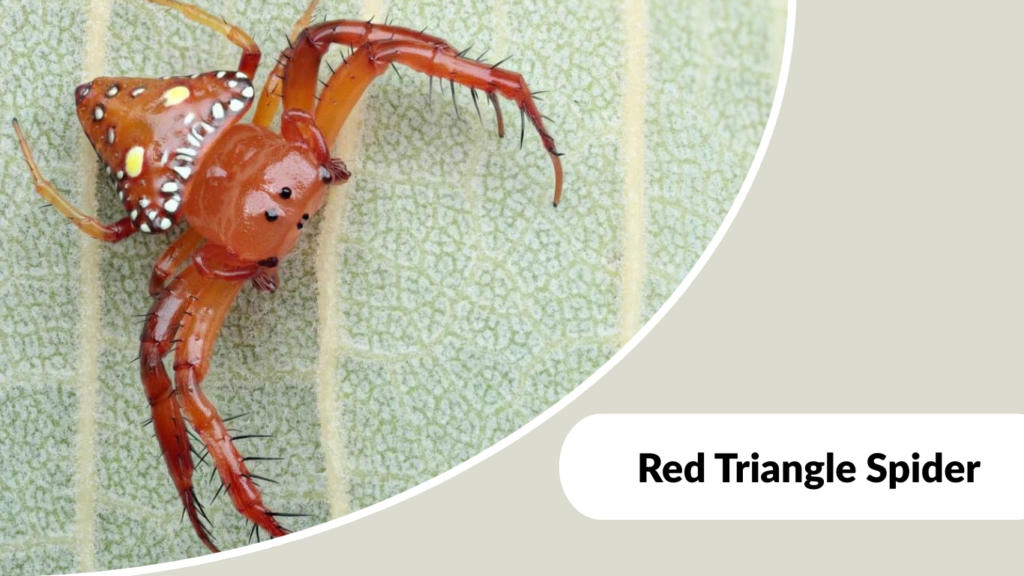
The Red Triangle Spider is a small to medium-sized arachnid recognized for the distinctive red triangular mark on its black or dark-colored abdomen. Belonging to the family Araneidae, this spider is an orb-weaver that constructs intricate webs to catch flying insects. It is non-aggressive and poses minimal threat to humans.
Identification
- Dark-colored body with a prominent red triangle on the abdomen
- Medium size, typically 8–15 mm in length
- Long, slender legs often banded with subtle shades
- Rounded abdomen characteristic of orb-weaving spiders
- Eyes arranged in two rows typical of Araneidae
Habitat and Behaviors
Red Triangle Spiders are commonly found in gardens, shrubs, forests, and grasslands. They construct orb-shaped webs between plants to capture flying insects. These spiders are mostly nocturnal, repairing their webs daily and retreating to a hidden spot during the day. Females usually remain at the center of the web, while males wander to locate mates. They are solitary and rarely interact with other spiders outside mating periods.
Diet and Lifecycle
Their diet consists mainly of small insects such as flies, moths, and beetles trapped in their webs. Females lay eggs in silk sacs attached to vegetation near the web, which they guard until the spiderlings emerge. Spiderlings disperse after hatching and molt several times before reaching adulthood. Adults generally live for about one year, with females outliving males. The red triangle marking acts as a warning to potential predators and aids in camouflage among flowers and foliage.
17. Red Woodlouse Spider
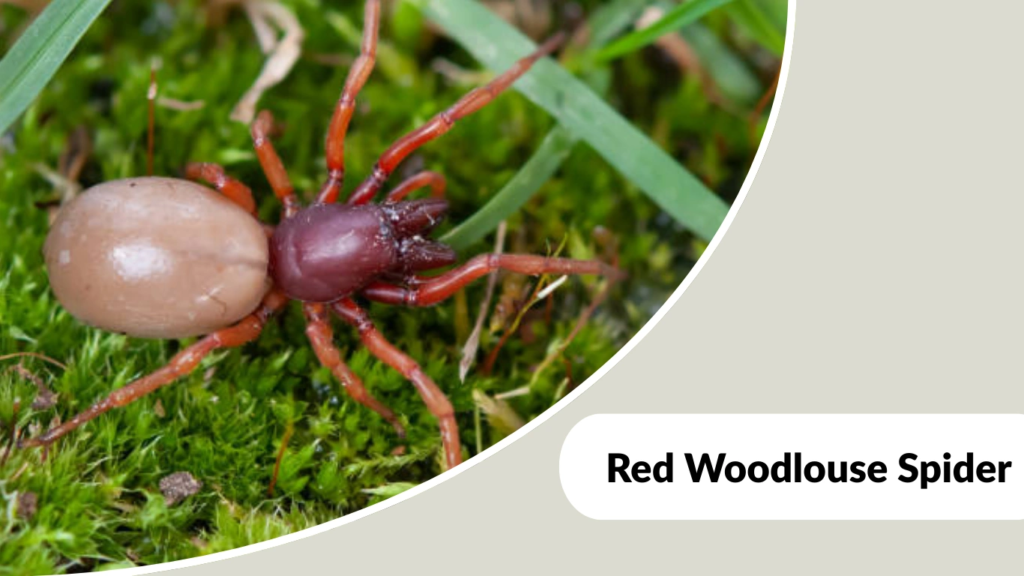
The Red Woodlouse Spider is a medium-sized spider known for its striking red cephalothorax and its specialized diet of woodlice. Belonging to the family Dysderidae, this spider is nocturnal and typically hunts at night, preying almost exclusively on woodlice. It is non-aggressive toward humans and plays a beneficial role in controlling woodlouse populations.
Identification
- Bright red cephalothorax with a yellowish or pale abdomen
- Medium size, typically 9–15 mm in length
- Long, strong chelicerae adapted for piercing woodlice exoskeletons
- Six eyes arranged in a semicircle (unique to Dysderidae)
- Legs are pale to reddish, slightly robust for hunting
Habitat and Behaviors
Red Woodlouse Spiders are found in damp, sheltered areas such as under logs, stones, leaf litter, or in compost heaps. They are nocturnal hunters, actively seeking woodlice during the night. These spiders do not build webs for hunting but may construct a small silk retreat for resting and egg-laying. They are solitary and territorial, rarely interacting with other spiders except during mating.
Diet and Lifecycle
Their diet consists almost entirely of woodlice, which they immobilize using venom before feeding. Females lay eggs in silk sacs hidden in crevices or under debris and guard them until the spiderlings hatch. The young spiders disperse shortly afterward and begin hunting small prey immediately. They molt several times before reaching adulthood. Adult lifespan ranges from one to two years, with females generally outliving males. Their specialized diet and nocturnal habits make them an important predator in leaf litter ecosystems.
18. Red Bark Spider
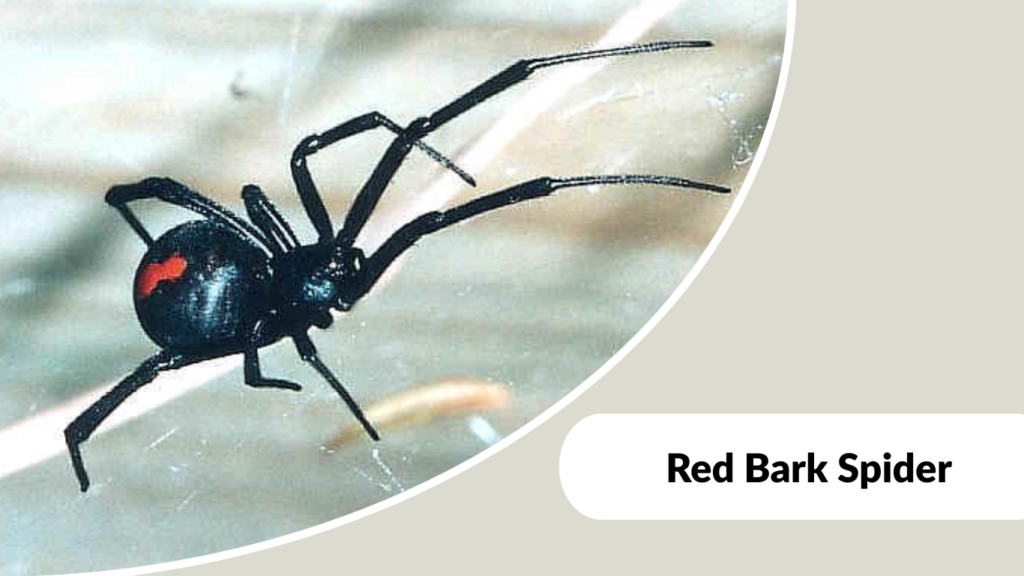
The Red Bark Spider is a medium-sized, reddish-brown spider that often camouflages itself against tree bark. Belonging to the family Clubionidae, this spider is primarily nocturnal and an active hunter rather than a web-builder. Its coloration and cryptic patterns allow it to blend seamlessly with its arboreal environment, helping it ambush prey and avoid predators.
Identification
- Reddish-brown or brick-red body with subtle darker markings
- Medium size, typically 8–12 mm in length
- Oval or slightly elongated abdomen
- Long, slender legs adapted for climbing
- Eyes arranged in two rows, providing good night vision
Habitat and Behaviors
Red Bark Spiders are mostly found on tree trunks, under loose bark, or among woody debris in forests and wooded areas. They are nocturnal hunters, preying on insects that traverse the bark surface. During the day, they hide in crevices or under bark to avoid predators. These spiders are solitary and territorial, rarely interacting with others except during mating.
Diet and Lifecycle
Their diet consists mainly of small insects, including ants, beetles, and larvae found on or under tree bark. Females lay eggs in silk sacs hidden under bark or in tree crevices. Spiderlings hatch after several weeks and begin hunting immediately. Juveniles molt multiple times before reaching adulthood. Adults typically live for one year, with females usually surviving longer than males. Their cryptic coloration and nocturnal habits make them effectively ambush predators in forest ecosystems.
19. Redback Spider (Regional Variant)
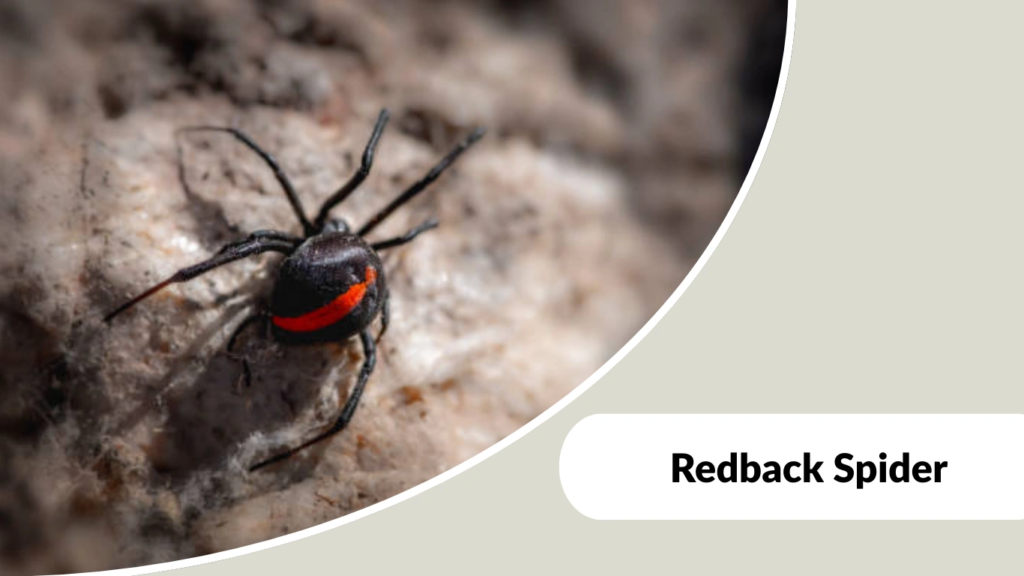
The Redback Spider is a well-known venomous spider native to Australia, famous for the distinctive red stripe on its black body. This regional variant exhibits slight differences in size and coloration depending on habitat. It is highly adaptable, often found in urban and rural areas, and is notorious for its medically significant bite. Despite this, it generally avoids human contact.
Identification
- Black body with a prominent red or orange dorsal stripe on the abdomen
- Females larger (around 10 mm) than males (around 3–4 mm)
- Round, bulbous abdomen
- Long, slender black legs, sometimes with subtle red markings
- Males are smaller and lighter in color, often brownish with faint markings
Habitat and Behaviors
Redback Spiders prefer dry, sheltered areas such as under logs, rocks, garden sheds, or outdoor structures. They build irregular, messy webs near the ground where they wait for prey. These spiders are nocturnal and generally shy, emerging at night to hunt. Females may display sexual cannibalism, consuming males after mating. They thrive in both urban and natural environments due to their adaptability.
Diet and Lifecycle
Redback Spiders feed mainly on insects such as flies, ants, and beetles. Females lay eggs in silk sacs, which they guard until the spiderlings emerge. Juveniles disperse to establish their own territories. The lifespan of females is typically 1–2 years, while males often die shortly after mating. Their venom is potent but rarely fatal to humans, and antivenom is available for serious bites.
FAQs
Are red spiders dangerous to humans?
Most red spiders are harmless and pose no serious threat. Only a few species, like some widow spiders, have venom that can affect humans, and bites are rare.
Why are some spiders red in color?
Red coloration can help spiders camouflage, warn predators, or attract mates. In some species, it is simply a natural pigmentation trait.
Are red spiders the same as red spider mites?
No. Red spider mites are tiny plant pests, not true spiders. They belong to a different group of arachnids and behave very differently.
Can red spiders be found indoors?
Yes, some species like red house spiders and cobweb spiders often live indoors, especially in warm, undisturbed areas.
Should I remove red spiders from my home?
If they are not dangerous, it’s usually better to leave them alone, as spiders help control insects. If necessary, gentle relocation is the best option.
