

Red wasps are common insects that often build nests around homes, barns, and outdoor structures, especially in warm climates like the southern United States. Their bold color and painful sting cause many people to worry about whether red wasps are dangerous, aggressive, or poisonous. Homeowners also want to know what attracts red wasps and how to get rid of them safely. Understanding their behavior, diet, and sting risk makes it easier to prevent problems and respond correctly if an encounter occurs.
What Is a Red Wasp
The term red wasp usually refers to several wasp species with reddish or red-brown coloring. The most common is the red paper wasp, a type of paper wasp closely related to yellow jackets. Other insects sometimes called red wasps include red-and-black mason wasps and the red velvet ant, which is actually a wingless wasp.
Red wasps are especially common in Texas and other warm regions where long summers allow colonies to thrive. While they look intimidating, most red wasps are not naturally aggressive unless their nest is threatened.
What Do Red Wasps Look Like

Red wasps are fairly easy to identify once you know what to look for.
- Slender body with a narrow waist
- Reddish-brown or deep red coloration
- Long dangling legs when flying
- Smooth, shiny body rather than fuzzy
Red paper wasps are usually solid reddish-brown, while red-and-black mason wasps have darker bodies with red markings. Their stinger is smooth, not barbed, which allows them to sting multiple times without leaving the stinger behind.
Are Red Wasps Dangerous
Red wasps are not deadly to most people, but they can still pose a risk. Their venom causes pain, swelling, and redness, which can be severe for some individuals.
For healthy adults, a single red wasp sting is rarely dangerous. However, red wasps can become a serious threat in the following situations:
- Multiple stings at once
- Stings to the face, throat, or neck
- Allergic reactions to wasp venom
Red paper wasps are not poisonous in the sense of being lethal, but their venom is potent enough to cause significant discomfort and, in rare cases, medical emergencies.
Are Red Wasps Aggressive

Why Red Wasps Sting
Red wasps are defensive rather than aggressive. They sting primarily to protect their nest. If a person gets too close, bumps into a nest, or swats at them, red wasps may attack.
They are highly territorial and can remember threats near their nesting area. This behavior explains why people often describe red wasps as aggressive, especially during late spring and summer when colonies are at their largest.
When Red Wasps Are Most Active
Red wasps are active during the daytime and return to their nests at night. They are not typically active after dark, which is why nest removal is safest in the evening when most wasps are inside and less alert.
Do Red Wasps Sting

Yes, red wasps sting, and they can sting more than once. Unlike honey bees, red wasps do not lose their stinger after attacking.
Important sting facts include:
- Red wasps can sting repeatedly
- They do not die after stinging
- They inject venom with each sting
Red paper wasps are more likely to sting than many other red-colored wasps because they aggressively defend their nests.
Do Red Wasps Have Venom
Red wasps do have venom, which is injected through the stinger. This venom causes pain, swelling, redness, and itching at the sting site.
Although people often ask whether red wasps are poisonous, the correct term is venomous, not poisonous. Their venom is not usually life-threatening but can cause serious reactions in people with allergies. Compared to bees, red wasp stings are often described as more painful and longer-lasting.
What Does a Red Wasp Sting Look Like
A red wasp sting usually appears as a red, raised bump with swelling around the area. The skin may feel hot and tight, and pain is often immediate.
Within the first few hours, redness may expand outward. Swelling can increase for up to 48 hours before gradually improving. Most red wasp stings heal within several days, although itching can linger as the skin recovers.
How to Treat a Red Wasp Sting
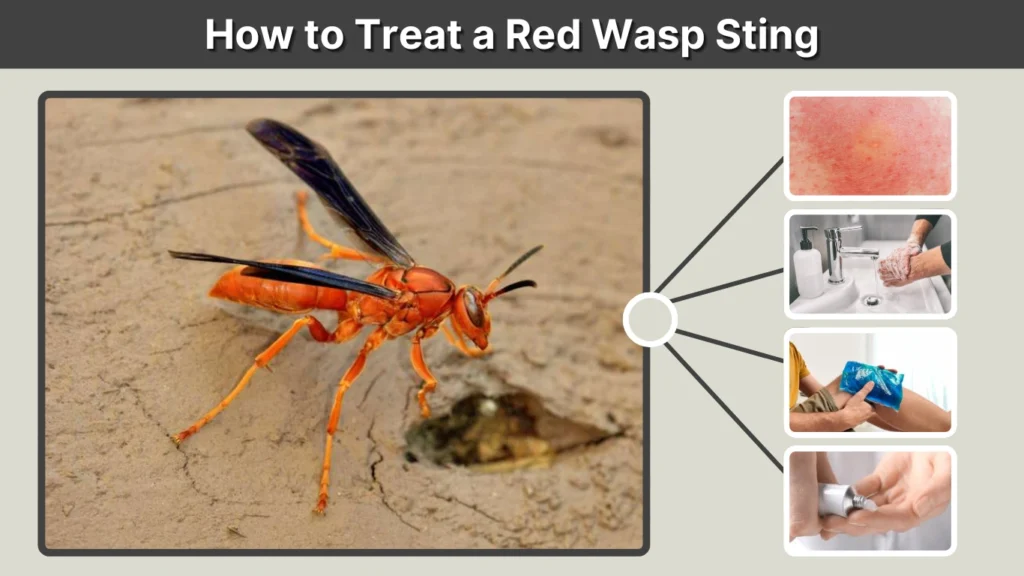
Proper treatment helps reduce pain and prevent complications.
What to Do When Stung by a Red Wasp
Move away from the area to avoid additional stings. Wash the sting site with soap and water to remove venom residue. Apply a cold compress for 10–15 minutes to reduce swelling and numb pain.
What to Put on a Red Wasp Sting
Antihistamines help reduce itching and swelling. Hydrocortisone cream or calamine lotion can soothe irritated skin. Over-the-counter pain relievers may also help manage discomfort.
What Do Red Wasps Eat
Red wasps are omnivorous insects that feed on both plant- and animal-based food sources. Their diet changes depending on the season and availability of food.
Adult red wasps primarily consume:
- Nectar from flowers
- Sweet liquids such as tree sap
- Overripe fruit and sugary residues
They also hunt other insects, especially caterpillars, flies, and garden pests. This predatory behavior is why red wasps are sometimes considered beneficial, as they help control pest populations around gardens and crops.
What Attracts Red Wasps
Red wasps are attracted to environments that provide food, water, and shelter. Common attractants include exposed trash, sugary drinks, pet food left outdoors, and flowering plants that produce nectar.
Sheltered nesting areas such as eaves, porches, sheds, and attic vents also draw red wasps. Standing water, birdbaths, and leaky hoses can further increase wasp activity near homes.
Where Do Red Wasps Live and Nest
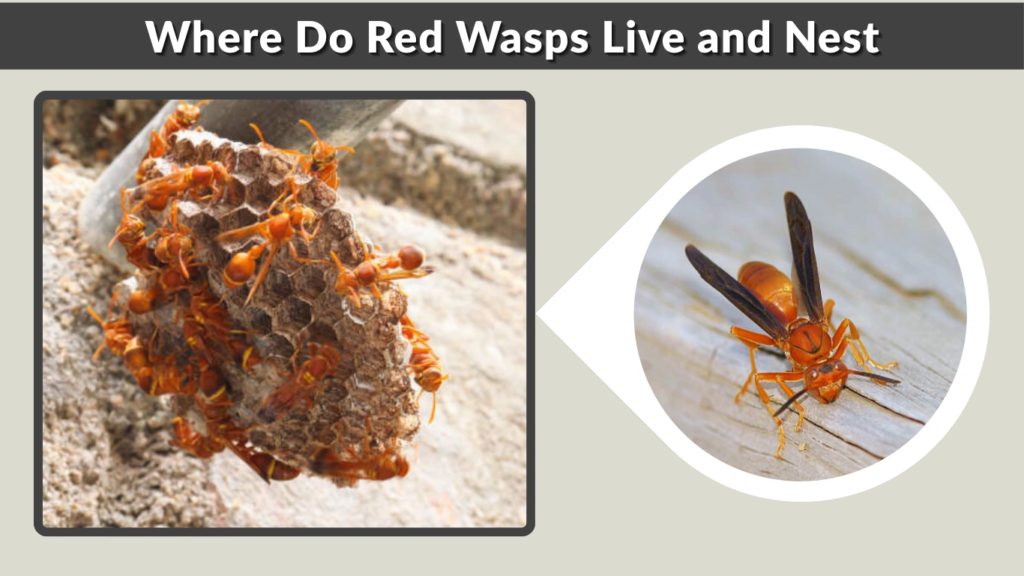
Red wasps typically live near open spaces where they can easily find food. They prefer to build nests in elevated, protected locations.
Common nesting sites include:
- Roof eaves and porch ceilings
- Fence posts and deck railings
- Barns, sheds, and garages
- Tree branches and thick shrubs
What Does a Red Wasp Nest Look Like
Red wasp nests are made of chewed wood fibers that form a gray, paper-like structure. The nest is usually open-faced, with visible hexagonal cells. Unlike enclosed yellow jacket nests, red wasp nests are often clearly visible.
Where Do Red Wasps Go in the Winter
In colder months, most worker red wasps die. Fertilized queens survive by overwintering in protected spaces such as wall voids, attics, or tree bark. In spring, queens emerge to start new colonies.
How Long Do Red Wasps Live
The lifespan of a red wasp depends on its role in the colony. Worker wasps usually live a few weeks to a couple of months during the active season. Queens can live for nearly a year, surviving winter to establish new nests in the spring.
Red wasp colonies die off each fall, and old nests are not reused the following year.
Are Red Wasps Attracted to Red
Despite popular belief, red wasps are not attracted to the color red. Wasps have difficulty seeing red wavelengths and are more attracted to bright colors like yellow and white.
They may, however, react defensively to dark or fast-moving objects near their nest, which can be mistaken for attraction to certain colors or clothing.
How to Get Rid of Red Wasps
Removing red wasps safely requires careful planning, especially when dealing with active nests.
How to Get Rid of Red Wasps Naturally
Natural deterrents include removing food sources, sealing potential nesting areas, and hanging decoy wasp nests. Some people also use essential oil sprays containing peppermint or clove oil to discourage nesting.
How to Kill Red Wasps Safely
When nests pose a safety risk, commercial wasp sprays may be necessary. Treatments should be applied at night when wasps are less active. Protective clothing is essential to reduce sting risk.
How to Get Rid of Red Paper Wasps
Red paper wasp nests should be removed early in the season before colonies grow large. Large or hard-to-reach nests are best handled by professional pest control services.
How to Keep Red Wasps Away

Long-term prevention focuses on eliminating attractants and blocking nesting sites.
- Keep outdoor trash sealed
- Clean up food spills promptly
- Repair gaps under eaves and siding
- Remove old nests early in the season
- Limit standing water near the home
Consistent prevention reduces the likelihood of red wasps returning year after year.
Are Red Wasps Beneficial
Red wasps do provide some ecological benefits. They help control insect populations by preying on agricultural and garden pests. They also contribute modestly to pollination while feeding on nectar.
However, when red wasps nest close to homes or high-traffic areas, the risk of stings often outweighs their benefits, making relocation or removal necessary.
FAQs
Are red wasps poisonous?
Red wasps are venomous, not poisonous. Their venom causes pain and swelling but is rarely life-threatening unless an allergic reaction occurs.
Can red wasps sting more than once?
Yes, red wasps can sting multiple times because they do not leave their stinger behind.
What attracts red wasps to houses?
Food sources, sheltered nesting areas, and standing water commonly attract red wasps to homes.
Are red wasps more aggressive than other wasps?
Red wasps are highly defensive near their nests but are generally less aggressive than yellow jackets away from nesting sites.
Should I remove a red wasp nest near my home?
Nests near doors, walkways, or play areas should be removed to reduce sting risk, preferably early in the season or by professionals.
