

The European paper wasp (Polistes dominula) is one of the most common and recognizable wasp species across Europe, the UK, and even parts of North America and Australia. Known for its black-and-yellow coloring and umbrella-shaped nests, this wasp often gets confused with the yellow jacket—but they’re not the same. While less aggressive than yellow jackets, European paper wasps still pack a sting and play a surprising role in pest control.
In this article, we’ll explore everything you need to know about the European paper wasp—from identification and nesting habits to diet, sting reactions, and how they compare to yellow jackets.
What is a European Paper Wasp?
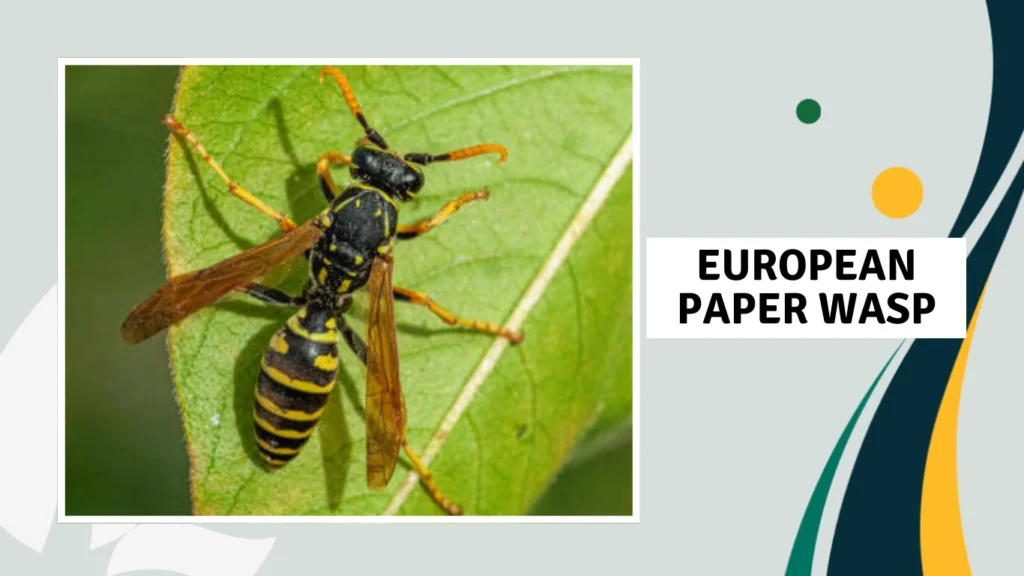
The European paper wasp (Polistes dominula) is a social wasp species native to Europe but has now spread widely across many continents. It’s particularly common in gardens, eaves of buildings, and sunny outdoor spaces. Unlike some more aggressive wasps, European paper wasps are generally less likely to sting unless they feel directly threatened.
These wasps are known for building open, umbrella-shaped nests made of chewed plant fibers mixed with saliva. Their adaptable nature and ability to thrive in urban environments have made them one of the most successful wasp species globally.
Scientific Classification:
- Species: Polistes dominula
- Family: Vespidae
- Order: Hymenoptera
Common Regions: Europe, UK, Australia, North America
Identification and Appearance
Face and Color Pattern
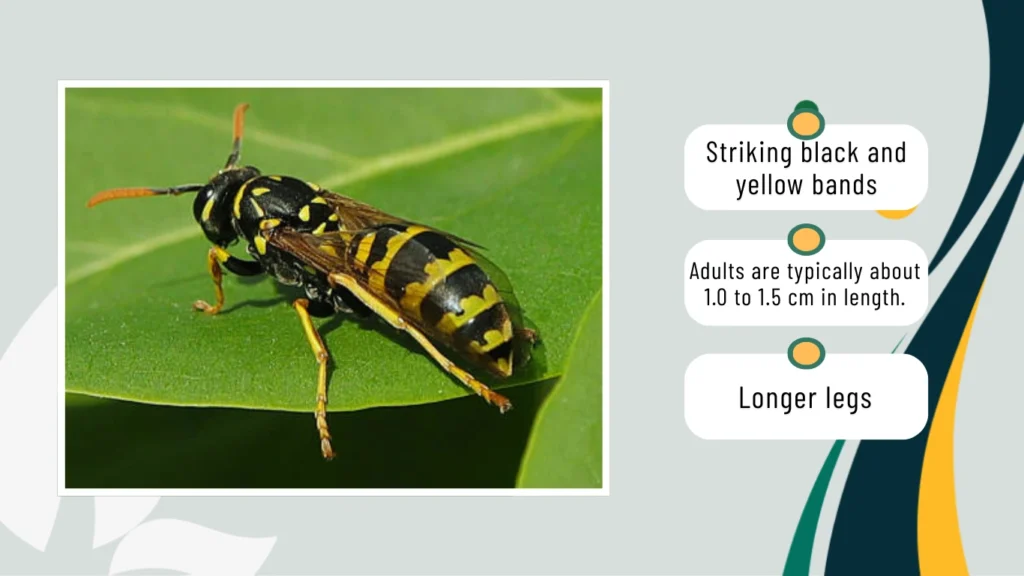
European paper wasps have striking black and yellow bands that resemble the more aggressive yellow jackets. However, their patterns are more defined and symmetrical. Their faces often show orange or reddish markings near the antennae, helping differentiate them from other wasp species.
Size and Physical Build
Adults are typically about 1.0 to 1.5 cm in length. They have a narrow “waist” between the thorax and abdomen, and their long legs dangle noticeably while flying. Their wings are smoky in color and fold lengthwise when at rest.
How to Tell Them Apart from Yellow Jackets
Though both are black and yellow, European paper wasps have a slimmer build and longer legs. Yellow jackets are chunkier and more aggressive in nature. The antennae of Polistes dominula are also mostly orange—a quick visual cue to spot them.
Male vs Female Differences
Males are generally smaller and have curved antennae, while females have straighter ones and are typically the nest builders and defenders. Only females possess stingers, as the stinger is a modified ovipositor.
Habitat and Distribution
Where They Are Found
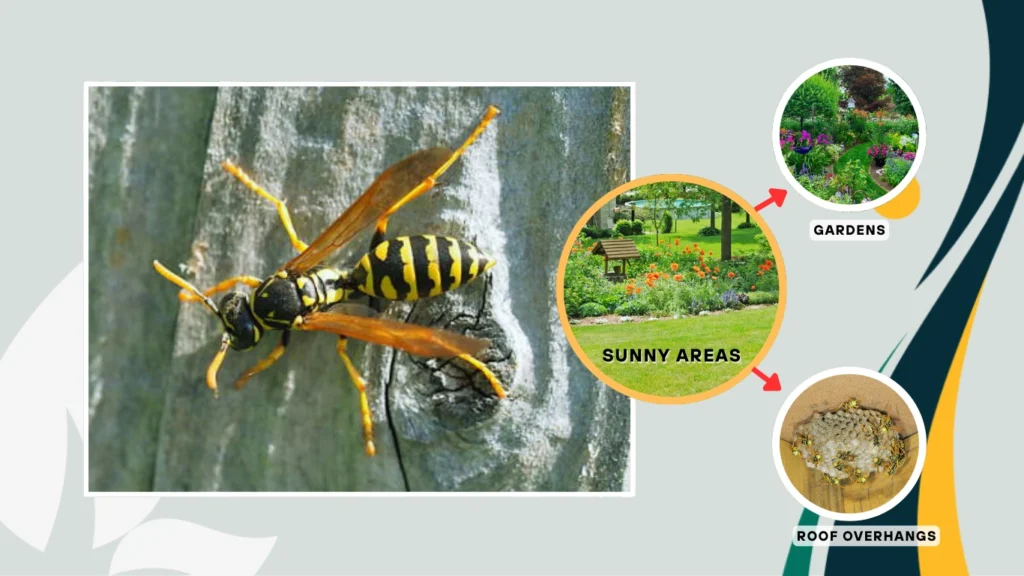
European paper wasps are widespread across Europe and have successfully expanded into North America, Australia, and the UK. They prefer warm, sunny areas and are commonly found in gardens, under roof overhangs, window sills, sheds, and hollow pipes. Their ability to thrive in urban, suburban, and rural environments has made them one of the most adaptive wasps globally.
In regions like the UK and Australia, they are considered invasive due to their fast reproductive cycle and competition with native wasp species. Despite this, they help control garden pests, which offers some ecological benefits.
Nesting Behavior
European paper wasps build small, umbrella-shaped nests that are often found in sheltered, elevated places. These nests are made from chewed plant material mixed with the wasp’s saliva, creating a paper-like texture. Nests are usually exposed, unlike hornet or yellow jacket nests that may be hidden inside walls or underground.
A single nest can house anywhere from 20 to 200 individuals, with one dominant queen and many female workers. Males do not help with nest building and appear mainly during mating season.
Diet and Role in Ecosystem

What Do European Paper Wasps Eat?
Adult European paper wasps feed mainly on nectar, fruit juice, and other sweet liquids. However, they are also skilled hunters, especially during the larval stage of the colony. They capture soft-bodied insects like:
- Caterpillars
- Flies
- Aphids
- Small spiders
These prey items are chewed and fed to their developing larvae. In return, larvae secrete a sugary fluid that adults consume—a form of mutual nourishment.
Beneficial Role in Gardens
Because they feed on many common garden pests, European paper wasps can actually benefit home gardens and crops. They help reduce populations of destructive insects like cabbage worms and leaf-eating caterpillars.
However, their presence near homes or outdoor seating areas can become a nuisance, especially in late summer when they search for sugary substances more aggressively.
Sting and Defense Mechanism

Do They Sting Humans?
Yes, European paper wasps can sting—but they are generally less aggressive than yellow jackets or hornets. They will usually only sting if their nest is threatened or if they are directly provoked. The sting is painful but short-lived, often described as similar to a bee sting.
Unlike honey bees, European paper wasps do not lose their stinger after stinging, so they can sting multiple times. Only females have stingers, as the stinger is a modified egg-laying organ (ovipositor).
Sting Reaction and Treatment
For most people, a European paper wasp sting causes:
- Immediate sharp pain
- Redness and swelling at the site
- A burning or itching sensation
For sting treatment:
- Wash the area with soap and water
- Apply a cold compress to reduce swelling
- Use over-the-counter antihistamines or hydrocortisone cream to manage itching
Seek medical attention immediately if you experience severe allergic reactions, such as swelling in the throat, difficulty breathing, dizziness, or a widespread rash (anaphylaxis).
European Paper Wasp vs Yellow Jacket

Key Differences
Although they look similar at first glance, European paper wasps and yellow jackets are quite different:
| Feature | European Paper Wasp | Yellow Jacket |
| Body Shape | Slim with long legs | Stocky and compact |
| Color Pattern | More distinct and symmetrical | Often more patterned, but variable |
| Aggression | Less aggressive | Very aggressive |
| Nest Type | Exposed, umbrella-shaped | Enclosed, often hidden |
| Diet Focus | Insects and nectar | More scavenger-like, often attracted to meat |
Which One Is More Dangerous?
Yellow jackets are generally considered more dangerous because of their high aggression and tendency to sting unprovoked, especially around food or drinks. They are also more likely to sting in swarms.
European paper wasps, while capable of stinging, are usually more passive and less likely to chase or attack unless their nest is disturbed. However, both species can trigger serious allergic reactions in sensitive individuals.
Interesting Facts About European Paper Wasps
Social Structure and Nest Hierarchy
European paper wasps live in structured colonies with a dominant queen, sterile female workers, and short-lived males. The queen is the only reproductive female and begins the nest in spring. Once the first generation of workers matures, they take over foraging and nest-building duties while the queen focuses on egg-laying.
Sometimes, more than one female may start a nest together, forming a co-founding group, but only one eventually becomes dominant. Interestingly, if the queen dies, a worker may take over and become the new reproductive leader.
Intelligence and Facial Recognition
European paper wasps have shown signs of individual recognition—especially among females. Scientific studies have found that they can recognize the faces of other wasps in their colony, an ability rare among insects. This social memory helps manage dominance hierarchies and reduces conflicts within the nest.
They are also capable of learning and problem-solving, especially when it comes to foraging and navigating complex environments.
European Paper Wasps in the UK and Australia
Adaptation to New Environments
In both the UK and Australia, Polistes dominula is considered an invasive species. These regions provide favorable climates and plenty of nesting spots, allowing them to spread rapidly. Their long nesting season, ability to build in human-made structures, and tolerance to cooler climates give them a competitive edge over some native wasp species.
In the UK, they are commonly found in southern England, and their numbers are increasing northward due to warming temperatures. In Australia, particularly in parts of Victoria and New South Wales, they’ve become a concern for native biodiversity.
Environmental Impact and Control
While they offer benefits like natural pest control, European paper wasps can outcompete native wasps and pollinators for food and nesting spots. This disrupts local ecosystems.
To control their population:
- Regularly check for early-stage nests in spring
- Seal small crevices around buildings
- Avoid using open compost or leaving sweet drinks exposed outdoors
FAQs
Are European paper wasps dangerous?
They can be, but they’re not highly aggressive. They’ll only sting when they feel threatened, especially if their nest is disturbed. Their sting is painful but usually not life-threatening unless the person is allergic.
2. What’s the difference between a European paper wasp and a yellow jacket?
European paper wasps have a slimmer body, longer legs, and often orange-tipped antennae. Yellow jackets are bulkier, more aggressive, and build hidden nests. Paper wasps are also more likely to be beneficial in gardens.
3. Can their nests be removed safely?
Yes, but it’s best to remove them early in the season when the colony is small. Wear protective clothing and remove nests in the evening when wasps are less active—or contact a professional for safe removal.
4. Are European paper wasps beneficial for gardens?
Yes. They help control pest insects like caterpillars and aphids, which damage plants. Their hunting behavior makes them helpful natural pest managers.
