
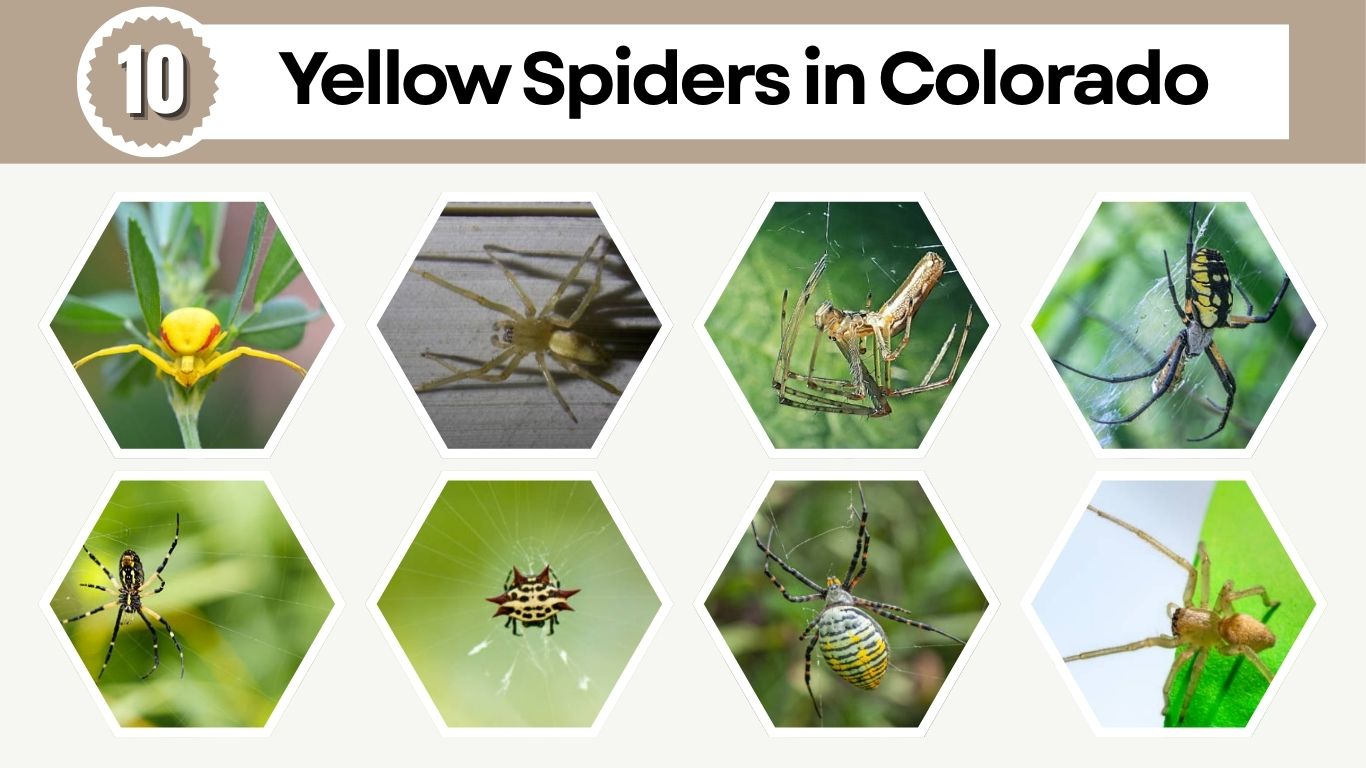
Colorado is home to a variety of spiders that display striking yellow coloration, ranging from active hunters to elegant web builders. These yellow spiders can be found in gardens, grasslands, forests, and even inside homes. While their bright colors often draw attention, most are harmless to humans and play an important role in controlling insect populations. Below are ten notable yellow spider species commonly seen across Colorado.
1. Goldenrod Crab Spider
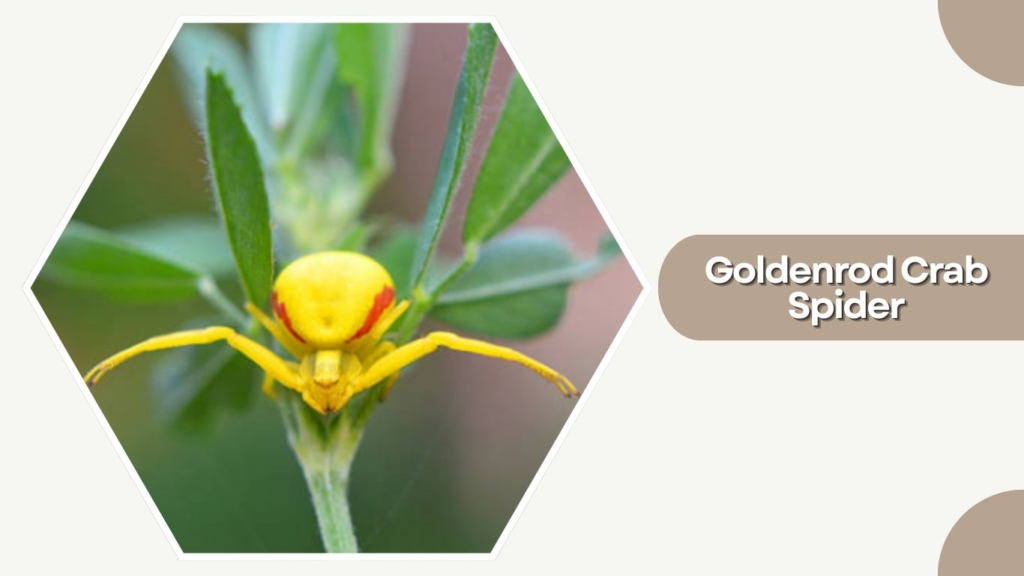
The goldenrod crab spider is a small but striking spider commonly found in Colorado. It is best known for its bright yellow coloration and its ability to blend into flowers, where it waits patiently to ambush prey. Despite its vivid appearance, it is harmless to humans and plays an important role in controlling insect populations.
Identification
- Bright yellow or white body, sometimes with red or pink markings
- Crab-like stance with front legs held outward
- Females significantly larger than males
- Compact, flattened body shape
Habitat
This spider is typically found on flowering plants such as goldenrod, sunflowers, and daisies. It prefers gardens, meadows, grasslands, and open fields where pollinating insects are abundant.
Behavior
Goldenrod crab spiders do not build webs to catch prey. Instead, they rely on camouflage and remain motionless on flowers, striking quickly when an insect comes within reach. They can change color slowly over time to better match their surroundings.
Diet
Their diet mainly consists of bees, flies, butterflies, and other pollinating insects. They overpower prey using strong front legs and venom before feeding.
Lifecycle
Females lay eggs in silk sacs hidden under leaves or plant debris. They guard the egg sac until death, while spiderlings emerge later and disperse to begin their independent lives.
2. Yellow Garden Spider
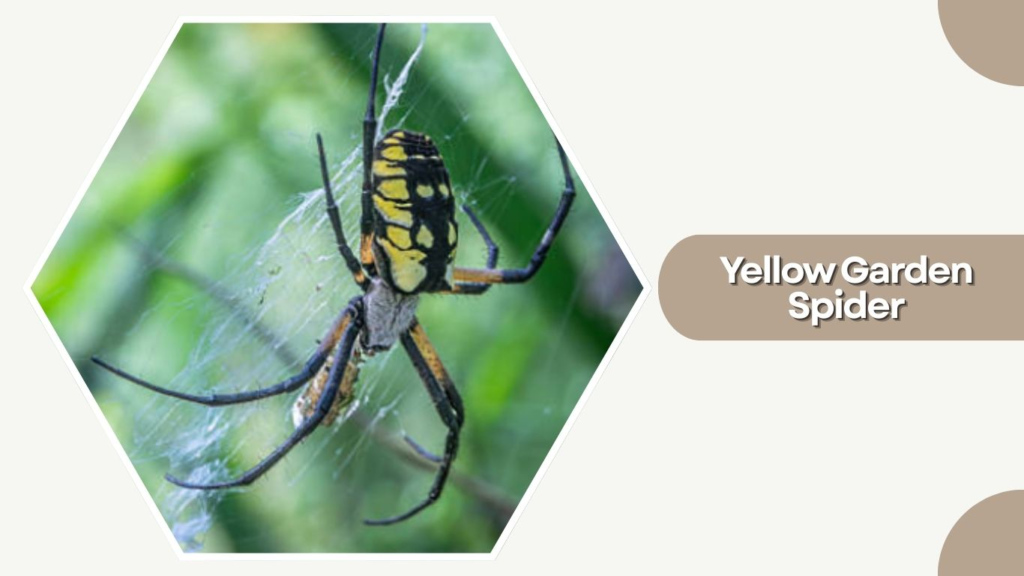
The yellow garden spider is one of the most recognizable spiders in Colorado, known for its large size and bold yellow-and-black coloring. Often seen in late summer, it builds impressive orb-shaped webs and is completely harmless to people, despite its intimidating appearance.
Identification
- Large body with bright yellow and black markings
- Females much larger than males
- Long legs often held in pairs
- Distinctive zigzag silk pattern (stabilimentum) in the web
Habitat
This spider is commonly found in gardens, fields, tall grasses, forest edges, and open meadows. It prefers areas where it can anchor large webs between plants or shrubs.
Behavior
Yellow garden spiders are diurnal and usually remain at the center of their webs during the day. They are non-aggressive and rely on their webs to capture flying insects rather than active hunting.
Diet
Their diet includes grasshoppers, flies, bees, wasps, and other large insects that become trapped in their strong webs.
Lifecycle
Females lay egg sacs in late summer or fall, attaching them to nearby vegetation. The adults die with the onset of cold weather, while spiderlings hatch the following spring.
3. Black-and-Yellow Argiope
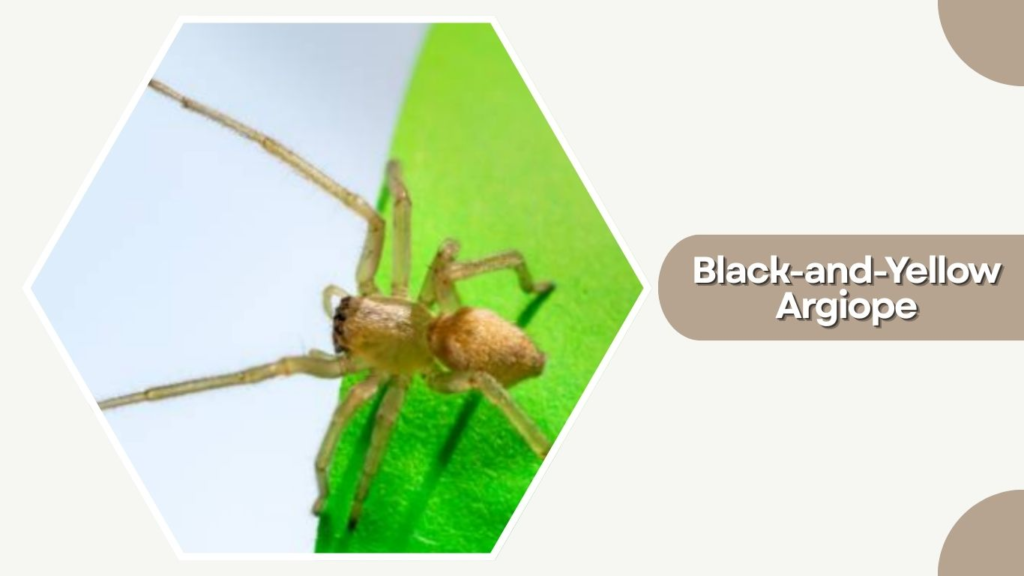
The black-and-yellow argiope is a large, eye-catching spider found in Colorado, often mistaken for other garden spiders due to its bold coloration. Its striking appearance helps deter predators, while its intricate web design makes it a highly effective insect hunter.
Identification
- Bold black and yellow patterned abdomen
- Long, slender legs with banding
- Females significantly larger than males
- Prominent zigzag silk decoration in the web
Habitat
This species is commonly found in open areas such as meadows, gardens, fields, roadsides, and forest edges. It favors locations with tall vegetation that can support its wide orb-shaped web.
Behavior
Black-and-yellow argiopes are calm and non-aggressive. They typically sit head-down in the center of their web and rely on vibrations to detect prey. When threatened, they may drop from the web or vibrate rapidly.
Diet
Their diet consists mainly of flying and jumping insects, including grasshoppers, flies, bees, and wasps caught in their sticky webs.
Lifecycle
Females produce egg sacs in late summer or early fall and attach them to nearby plants. Adults die after the first frost, while spiderlings overwinter inside the egg sac and emerge in spring.
4. Northern Yellow Sac Spider
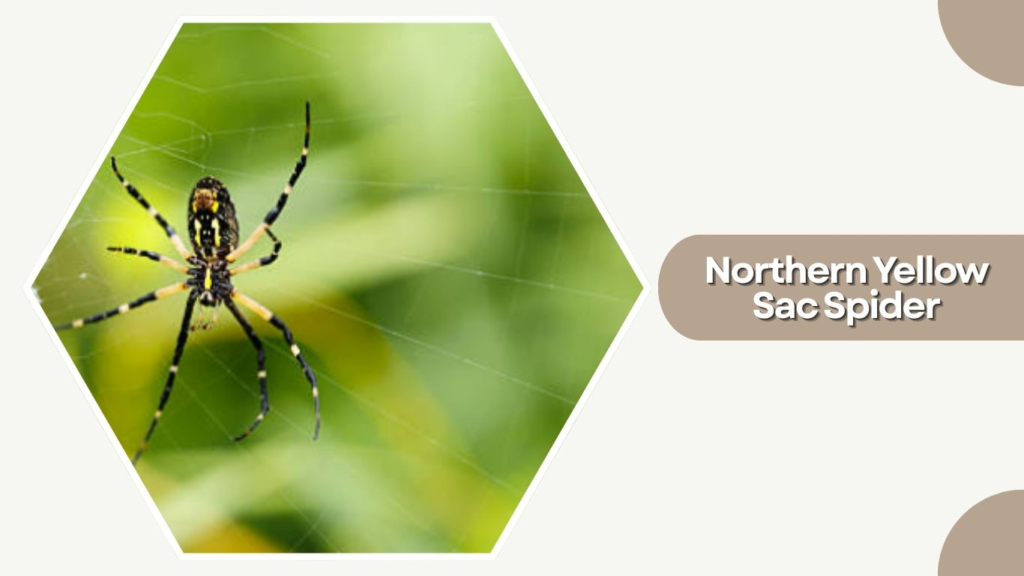
The northern yellow sac spider is a small but noticeable yellow spider found in Colorado. Unlike web-building spiders, it is an active hunter and is often encountered indoors, especially during cooler months. Its pale yellow coloration and fast movements make it easy to recognize.
Identification
- Pale yellow to light green body
- Slightly darker mouthparts
- Slender legs with a smooth appearance
- Small to medium body size
Habitat
This spider lives both outdoors and indoors. Outside, it can be found in leaf litter, under rocks, and on vegetation. Indoors, it commonly hides in corners of walls, ceilings, closets, and behind furniture.
Behavior
Northern yellow sac spiders are nocturnal and very active hunters. They do not use webs to catch prey but instead roam at night in search of insects. During the day, they rest inside small silk “sacs” used as shelters.
Diet
Their diet consists of flies, ants, moths, and other small insects. They play a beneficial role by helping control household and garden pests.
Lifecycle
Females lay eggs inside their silk sacs and guard them until hatching. Spiderlings disperse soon after emerging and reach maturity within a few months, depending on environmental conditions.
5. Western Yellow Sac Spider
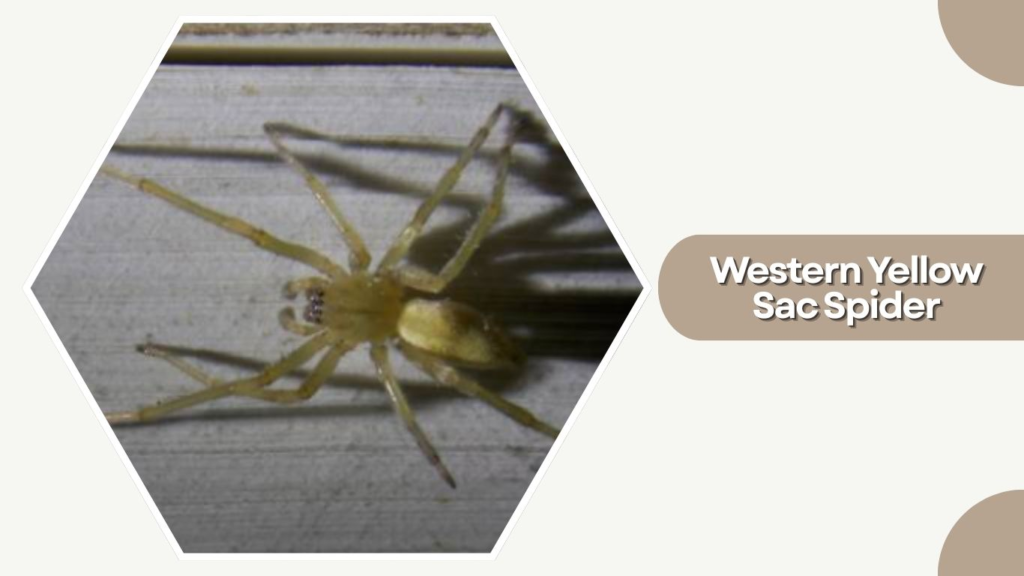
The western yellow sac spider is a common yellow-colored spider in Colorado, closely related to its northern counterpart. It is frequently seen in homes and gardens and is known for its fast movements and wandering hunting style rather than web-based trapping.
Identification
- Pale yellow to cream-colored body
- Slightly darker jaws and head region
- Long, slender legs with minimal markings
- Small to medium body size
Habitat
This species is found both outdoors and indoors. Outdoors, it inhabits shrubs, grasses, leaf litter, and under bark. Indoors, it often shelters in wall corners, ceilings, window frames, and storage areas.
Behavior
Western yellow sac spiders are nocturnal and actively hunt at night. During daylight hours, they hide inside small silk sacs that serve as resting sites rather than prey-catching webs. They may bite if trapped against skin but are not aggressive.
Diet
Their diet includes flies, mosquitoes, moths, ants, and other small insects. By feeding on common pests, they contribute to natural insect control.
Lifecycle
Females lay eggs inside silk sacs and may guard them until hatching. Spiderlings disperse shortly after emerging and mature within several months, depending on temperature and food availability.
6. Long-jawed Orb Weaver
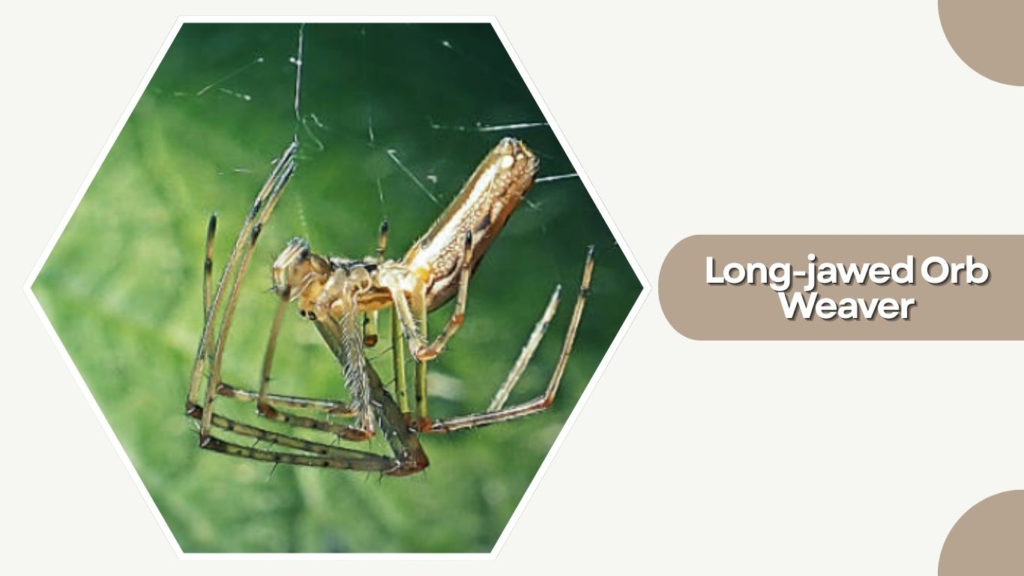
The long-jawed orb weaver is a slender, yellowish spider found across Colorado, especially near water sources. It is named for its elongated jaws and body shape, which give it a delicate appearance. Despite its size and prominent webs, it is harmless to humans.
Identification
- Long, narrow body with yellow to pale green coloring
- Very elongated jaws (chelicerae)
- Long, thin legs held stretched along the body
- Females larger than males
Habitat
This spider is commonly found near ponds, streams, wetlands, and moist meadows. It builds orb-shaped webs among tall grasses, reeds, and shrubs, often close to water where flying insects are abundant.
Behavior
Long-jawed orb weavers are mostly nocturnal. During the day, they often rest stretched along plant stems, making them difficult to spot. At night, they actively maintain and use their webs to capture prey.
Diet
Their diet mainly consists of small flying insects such as mosquitoes, gnats, and flies that become trapped in their webs.
Lifecycle
Females lay egg sacs on vegetation near their webs. Adults usually die as temperatures drop, while eggs overwinter and hatch in spring, continuing the next generation.
7. Marbled Orb Weaver
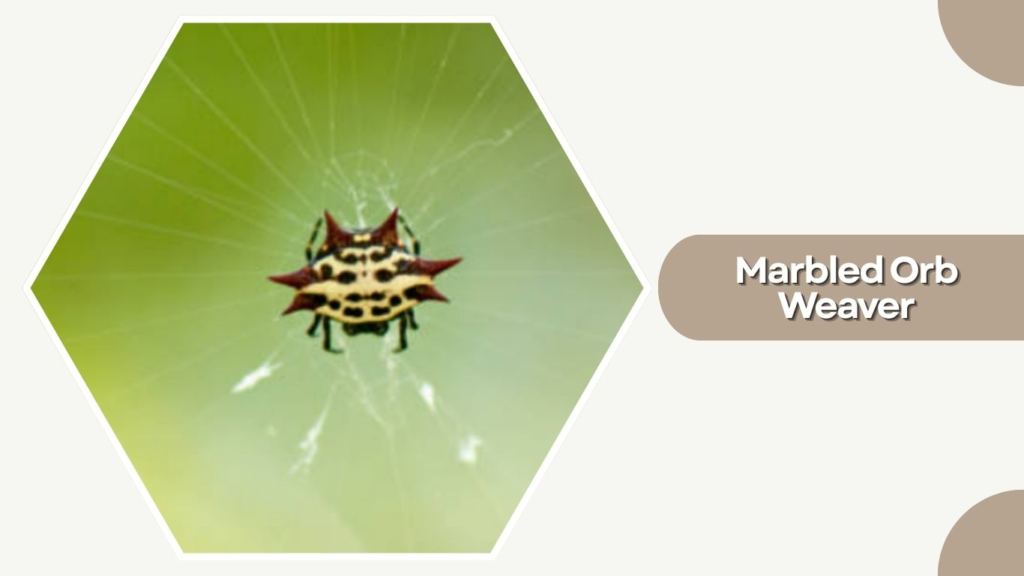
The marbled orb weaver is a colorful spider found in Colorado that can sometimes appear yellow or yellow-orange. It is known for its rounded abdomen and striking patterns, which vary widely between individuals. Despite its bold look, it is harmless and beneficial.
Identification
- Rounded abdomen with marbled yellow, orange, or cream patterns
- Shorter, thicker legs compared to many orb weavers
- Females much larger than males
- Variable coloration, often with light and dark mottling
Habitat
This species is commonly found in gardens, woodlands, forest edges, and near buildings. It prefers areas with shrubs, trees, or tall plants where it can build large orb-shaped webs.
Behavior
Marbled orb weavers are mostly nocturnal. They typically hide nearby during the day and move to the center of the web at night. When disturbed, they may drop from the web or retreat into nearby foliage.
Diet
Their diet includes flies, moths, beetles, and other insects that become trapped in their sticky webs.
Lifecycle
Females produce egg sacs in late summer or fall, attaching them to protected surfaces. Adults usually die before winter, while the eggs survive cold conditions and hatch the following spring.
8. Spotted Orb Weaver
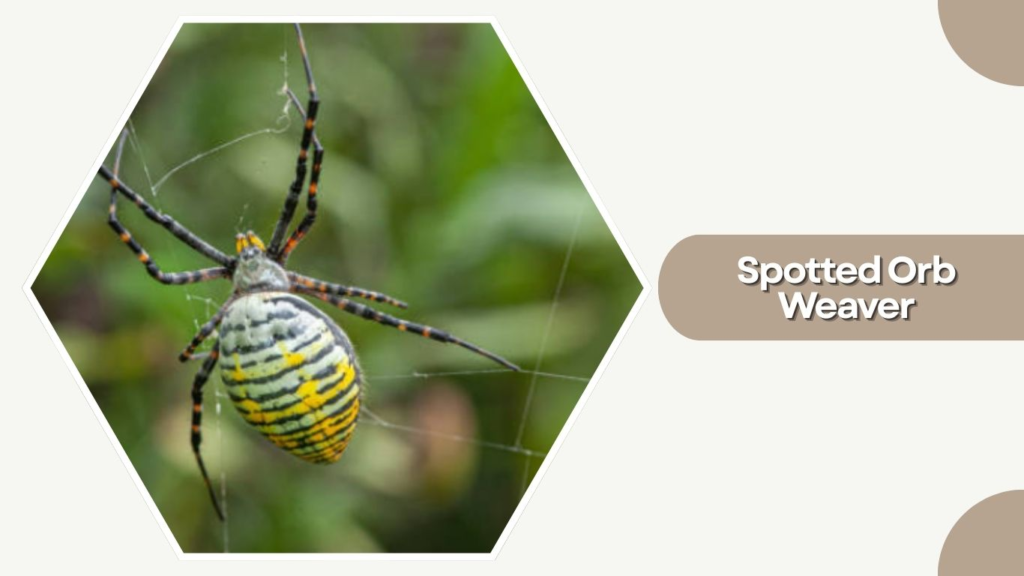
The spotted orb weaver is a common and visually appealing spider in Colorado, often displaying yellow, cream, or light orange tones. It is well known for building large, symmetrical orb webs and is frequently seen in gardens and around outdoor structures.
Identification
- Rounded abdomen with yellow or cream coloring and dark spots
- Moderately long legs, often lightly banded
- Females larger and more noticeable than males
- Distinctive circular orb web
Habitat
This spider is commonly found in gardens, backyards, forest edges, fences, and around buildings. It prefers open areas where it can anchor its web between plants or man-made structures.
Behavior
Spotted orb weavers are mostly nocturnal. They typically rebuild their webs in the evening and rest nearby during the day. They are non-aggressive and rarely leave their webs unless disturbed.
Diet
Their diet consists of flies, moths, mosquitoes, beetles, and other flying insects caught in their sticky webs.
Lifecycle
Females lay egg sacs in late summer or early fall, attaching them to leaves, bark, or structures. Adults die with the onset of cold weather, while spiderlings overwinter in egg sacs and emerge in spring.
9. Orchard Orb Weaver
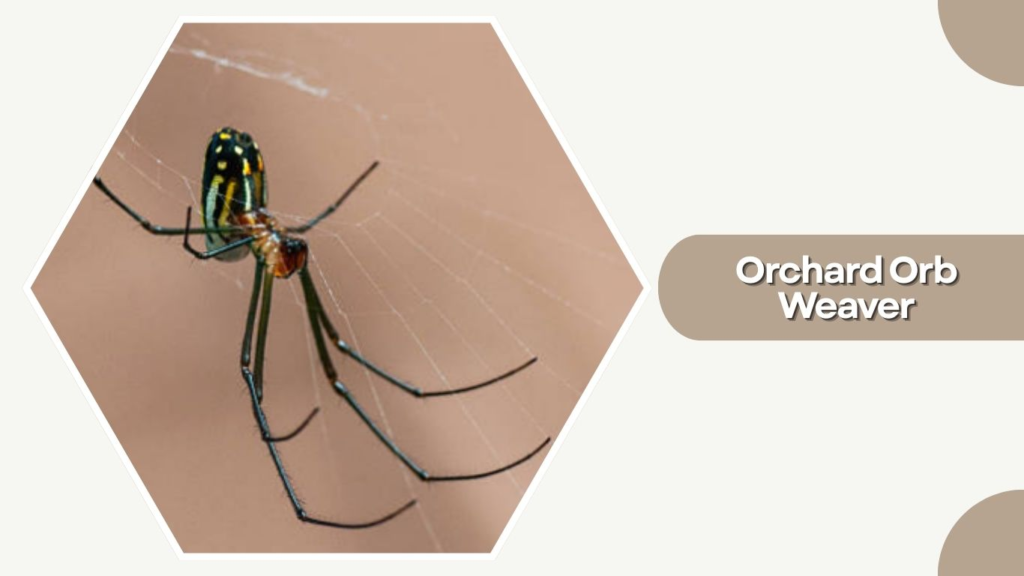
The orchard orb weaver is a small, delicate-looking spider commonly found in Colorado, often showing pale yellow, green, or silvery tones. It is less intimidating than many orb weavers and is known for its finely woven webs and graceful appearance.
Identification
- Small body with pale yellow, green, or silvery coloring
- Elongated abdomen with subtle dark markings
- Slender, translucent legs
- Females slightly larger than males
Habitat
This species is commonly found in gardens, orchards, shrubs, forest edges, and near buildings. It prefers low vegetation where it can build horizontal or slightly angled orb webs between branches or stems.
Behavior
Orchard orb weavers are mostly nocturnal. They usually rest near the edge of the web or in nearby foliage during the day and move to the center at night. They are calm, non-aggressive, and rarely noticed unless their web is disturbed.
Diet
Their diet includes small flying insects such as gnats, flies, mosquitoes, and moths that become trapped in their delicate webs.
Lifecycle
Females lay egg sacs on nearby vegetation in late summer. Adults typically die before winter, while the eggs survive colder temperatures and hatch in spring.
10. Banded Garden Spider
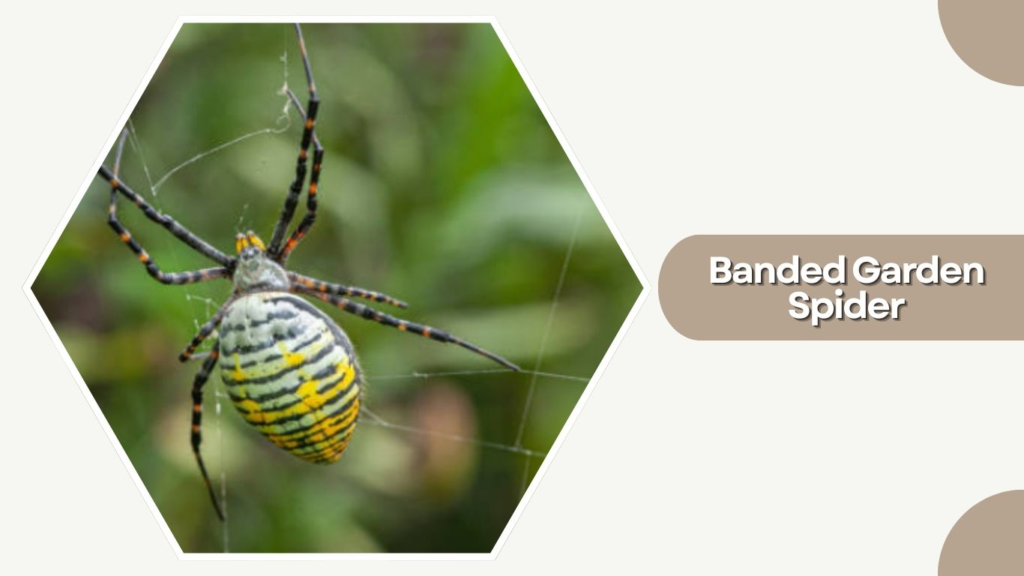
The banded garden spider is a striking yellow-and-black spider found in parts of Colorado, closely related to other large orb weavers. Its bold coloration and large web often make it stand out in gardens and open landscapes, though it is completely harmless to humans.
Identification
- Yellow, black, and white banded abdomen
- Long legs with alternating dark and light bands
- Females much larger than males
- Large orb-shaped web with a visible zigzag pattern
Habitat
This spider is commonly found in gardens, meadows, fields, and along fence lines. It prefers sunny, open areas with tall vegetation or structures that support its large webs.
Behavior
Banded garden spiders are diurnal and often remain at the center of their webs during the day. When threatened, they may vibrate their web rapidly or drop to the ground as a defense.
Diet
Their diet consists of grasshoppers, flies, bees, wasps, and other large insects captured in their strong, sticky webs.
Lifecycle
Females lay egg sacs in late summer or early fall, attaching them to nearby plants. Adults die with the arrival of cold weather, while spiderlings overwinter inside the egg sac and emerge in spring.
FAQs
1. Are yellow spiders in Colorado dangerous?
Most yellow spiders found in Colorado are harmless to humans. While a few species can bite if threatened, serious reactions are rare.
2. Why are some spiders yellow?
Yellow coloration helps spiders blend into flowers, leaves, or sunlight, improving camouflage and hunting success while avoiding predators.
3. Are yellow spiders beneficial?
Yes, yellow spiders help control populations of flies, mosquitoes, grasshoppers, and other pests, making them beneficial to gardens and ecosystems.
4. Where are yellow spiders most commonly found?
They are commonly found in gardens, meadows, forests, near water sources, and sometimes indoors, depending on the species.
5. What should I do if I find a yellow spider indoors?
If you find one indoors, it’s best to gently capture and release it outside. They are not aggressive and prefer natural outdoor habitats.
