

The yellow orb weaver spider is a brightly colored garden spider best known for its vivid yellow body and large circular web. Often spotted in late summer and early fall, it builds impressive webs between shrubs, tall plants, and outdoor structures. While its size and color can appear intimidating, this spider is harmless to humans and highly beneficial in controlling flying insects. Its striking appearance, predictable behavior, and widespread distribution make it one of the most recognizable orb-weaver spiders.
Yellow Orb Weaver Spider Classification and Background
Scientific Classification
The yellow orb weaver spider belongs to the orb-weaver group, a large family of spiders that rely on circular, wheel-shaped webs to capture prey. Orb weavers are known for their silk engineering rather than aggressive hunting. This spider shares many traits with other orb weavers, including web design, hunting strategy, and seasonal life patterns.
Origin of the Common Name
The common name “yellow orb weaver” comes from the spider’s bright yellow or yellow-green abdomen. This coloration makes the spider easy to spot when resting in the center of its web. The name is used broadly to describe orb-weaver species with dominant yellow coloring rather than a single identifying feature.
Yellow Orb Weaver Spider Size and Body Structure
Yellow orb weaver spiders are medium to large in size, especially when compared to other common garden spiders. Adult females typically measure between 15 and 25 millimeters in body length, while males are much smaller and slimmer. This size difference between sexes is a clear example of sexual dimorphism.
The spider’s body is rounded and well-suited for web-based hunting. Long, slender legs allow it to move efficiently across silk threads without becoming trapped. These legs are also sensitive to vibrations, helping the spider quickly detect prey.
Females usually occupy the center of the web and are responsible for web construction and prey capture. Males often remain near the edges of the web or in nearby vegetation, making them far less noticeable.
Yellow Orb Weaver Spider Coloration and Markings
Coloration is the most distinctive feature of the yellow orb weaver spider. The abdomen is often bright yellow, yellow-green, or golden, sometimes accented with black, brown, or white markings. This bold coloring can vary depending on age, location, and environmental conditions.
Some individuals display strong contrast between the yellow abdomen and darker legs, while others appear more muted. Younger spiders may have less intense coloration, which becomes brighter as they mature. Seasonal changes can also influence color intensity, particularly during peak breeding periods.
Despite its brightness, the coloration can serve as camouflage among sunlit leaves and flowers. In some cases, it may also act as a warning to predators.
How to Identify a Yellow Orb Weaver Spider
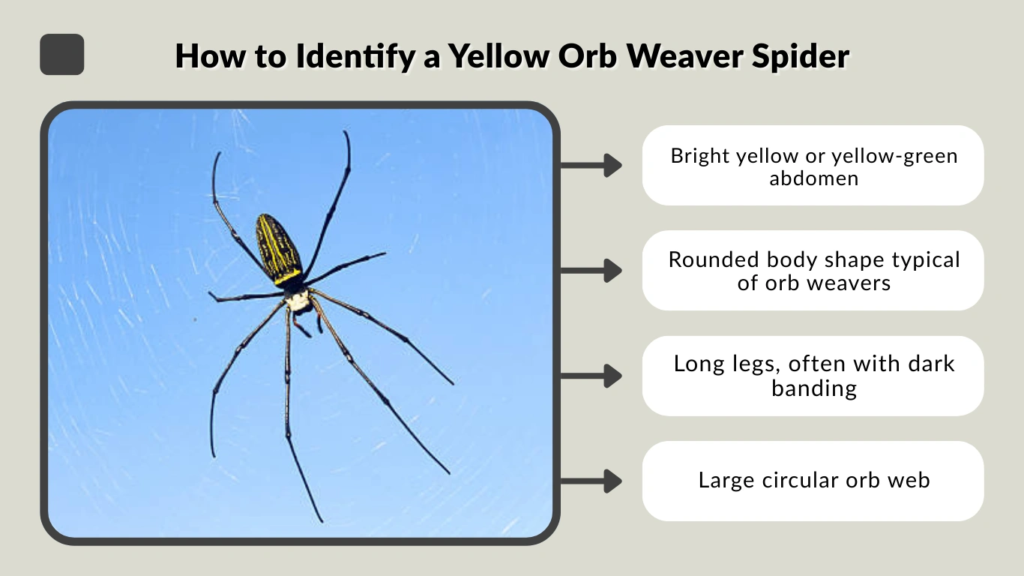
You can identify a yellow orb weaver spider by the following traits:
- Bright yellow or yellow-green abdomen
- Rounded body shape typical of orb weavers
- Long legs, often with dark banding
- Large circular orb web
- Spider resting at the center of the web
Yellow Orb Weaver Spider Habitat and Range
Typical Living Environments
Yellow orb weaver spiders are commonly found in gardens, fields, forest edges, and areas with tall vegetation. They prefer locations with open space for web construction and an abundance of flying insects. Fences, bushes, tall grasses, and porch areas are common web sites.
These spiders adapt well to human-modified environments and are frequently seen near homes, especially where outdoor lighting attracts insects.
Geographic Distribution
Yellow orb weaver spiders are widely distributed across North America. They are especially common in temperate and warm regions where seasonal insect populations support their feeding and reproduction. Their adaptability has allowed them to thrive in both rural and suburban settings.
Yellow Orb Weaver Spider Web Structure
The web of a yellow orb weaver spider is a large, symmetrical orb designed to capture flying insects efficiently. Webs are often positioned at chest height or higher and anchored securely to surrounding plants or structures.
Strong radial threads form the framework, while sticky spiral threads trap prey on contact. The spider usually waits at the center of the web, monitoring vibrations that signal a successful catch. Webs are frequently repaired or rebuilt to remain effective, particularly during periods of high insect activity.
Yellow Orb Weaver Spider Behavior
Web-Building Patterns
Yellow orb weaver spiders usually build or repair their webs during the evening or early morning hours. Constructing webs during low-activity periods reduces the risk of disturbance and ensures the web is ready for peak insect movement during the day. If a web is damaged, the spider often repairs only the affected areas rather than rebuilding the entire structure.
Feeding and Resting Behavior
Once the web is complete, the spider typically waits at the center, remaining motionless for long periods. When an insect becomes trapped, vibrations in the silk alert the spider immediately. The prey is quickly wrapped in silk to prevent escape before feeding begins. During inactive periods, the spider conserves energy by remaining still.
What the Yellow Orb Weaver Spider Eats
The yellow orb weaver spider feeds on a wide variety of flying insects that become caught in its web, including:
- Flies and mosquitoes
- Moths and butterflies
- Bees and wasps
- Small flying beetles
This broad diet allows the spider to thrive in gardens and natural areas with abundant insect populations.
Yellow Orb Weaver Spider Reproduction and Life Cycle
Mating usually occurs in late summer when adult spiders are most active. Males cautiously approach females to avoid being mistaken for prey. After mating, the female produces one or more egg sacs, which are securely attached to nearby vegetation or hidden in protected areas.
Each egg sac contains hundreds of eggs. Spiderlings hatch after several weeks and remain sheltered until environmental conditions are favorable. In most regions, adult yellow orb weaver spiders die after the first frost, completing a one-year life cycle.
Natural Enemies of the Yellow Orb Weaver Spider
Despite their size and webs, yellow orb weaver spiders face several natural threats:
- Birds that capture spiders from their webs
- Parasitic wasps targeting egg sacs
- Heavy rain and strong wind
- Human disturbance near homes and gardens
Camouflage, web placement, and rapid response to vibrations help reduce predation, but survival rates remain low.
Yellow Orb Weaver Spider and Humans
Yellow orb weaver spiders are not aggressive and pose little risk to humans. Bites are extremely rare and usually occur only if the spider is handled directly. When bites do happen, symptoms are typically mild and similar to a minor insect sting.
These spiders provide significant benefits by controlling populations of flying insects. Many gardeners and homeowners choose to leave them undisturbed, recognizing their role in natural pest control and maintaining ecological balance.
FAQs
Is the yellow orb weaver spider dangerous to humans?
Yellow orb weaver spiders are not considered dangerous. They are shy and non-aggressive, and bites are very rare. If a bite does occur, it usually results in mild redness or irritation and does not require medical attention.
How can you identify a yellow orb weaver spider?
You can identify this spider by its bright yellow or yellow-green abdomen, long banded legs, and large circular web. It is often seen resting at the center of its web, especially during late summer and early fall.
Where are yellow orb weaver spiders most commonly found?
Yellow orb weaver spiders are commonly found in gardens, fields, forest edges, and near buildings. They prefer areas with open space for web construction and abundant flying insects.
When are yellow orb weavers most active?
They are most active during late summer and early fall. This is when adult females build large, noticeable webs and feed heavily before reproducing and completing their life cycle.
Does the yellow orb weaver spider rebuild its web often?
Yellow orb weaver spiders frequently repair their webs and may rebuild them entirely if damaged. Web construction and maintenance usually occur during the evening or early morning hours.
