
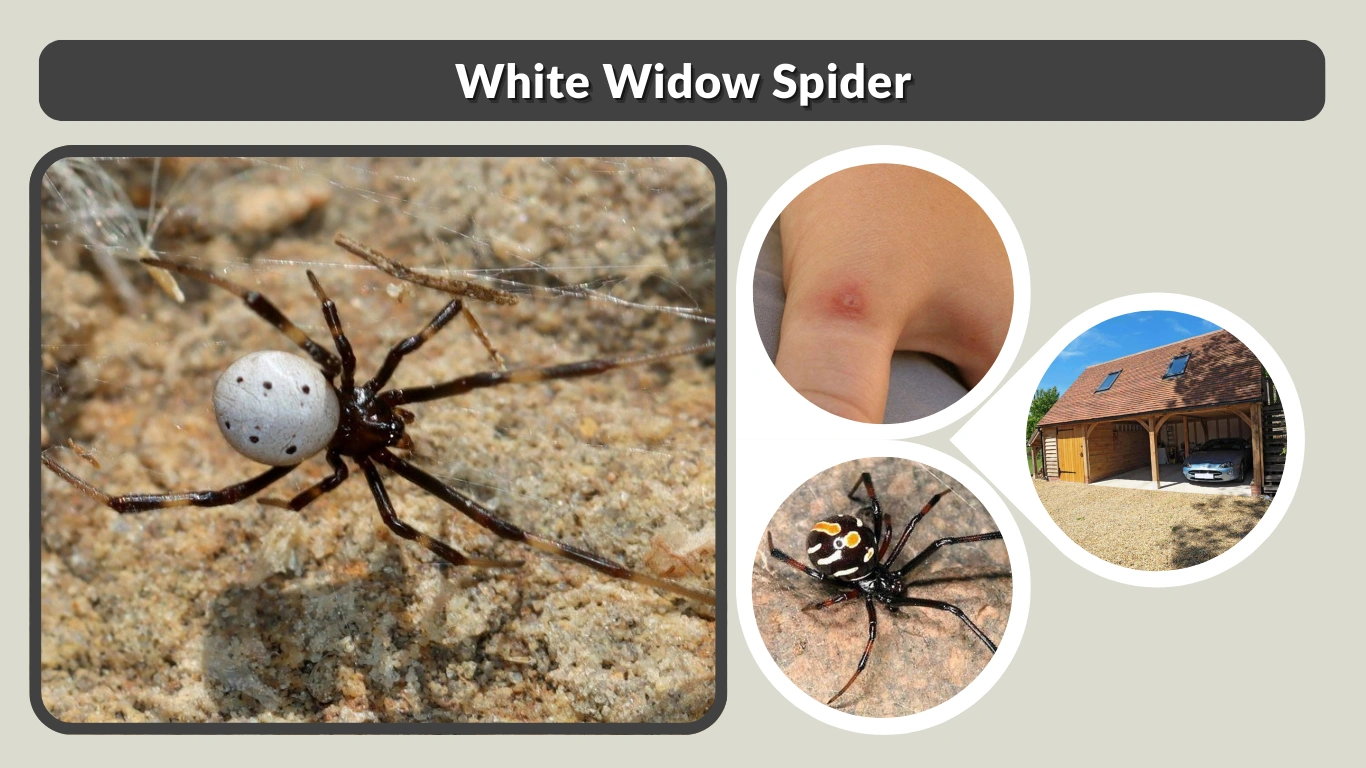
Many people search for a “white widow spider” after spotting a black spider with white spots, stripes, or markings. This often leads to fear, especially because black widows are known for their venom. In reality, there is no officially recognized spider species called a white widow spider. Most sightings involve juvenile black widows, brown widows, or false widows that have white or pale markings. This article explains what a white widow spider really is, why black widow spiders sometimes appear to have white markings, and how to identify these spiders correctly.
What Is a White Widow Spider?
The term “white widow spider” is not a scientific or officially recognized species name. Instead, it is a descriptive phrase people use when they see a widow-like spider with white markings.
In most cases, the spider turns out to be:
- A juvenile black widow spider
- A brown widow spider
- A false widow spider (Steatoda species)
- A harmless house spider with widow-like markings
Because color and pattern can change with age, lighting, and location, these spiders are often misidentified.
Is There a White Black Widow Spider?
There is no true white black widow spider. Adult female black widows are always glossy black with a red hourglass marking on the underside of the abdomen. Adult males and juveniles, however, can look very different.
White or pale markings do not indicate a new or rare widow species. Instead, they usually appear because the spider is immature or belongs to a related but different species.
Why Do Some Black Widow Spiders Have White Spots?

Black widow spiders go through several growth stages before adulthood. During these juvenile stages, their appearance is very different from the iconic adult female.
Juvenile black widows commonly display:
- White or cream-colored spots
- Pale stripes on the abdomen
- Yellow, orange, or red markings
- Broken or incomplete hourglass shapes
These markings gradually fade as the spider matures, especially in females that eventually become solid black.
Black Widow Spider White Markings Explained
- Seen mostly in juveniles
- Patterns vary by species and region
- Markings fade with each molt
- Adults do not retain white spots
Because of this, a black widow spider with white spots is almost always not fully grown.
What Does a “White Widow Spider” Look Like?
When people describe a white widow spider, they usually mean one of the following:
- A black spider with a single white spot on its back
- A black widow-looking spider with white stripes
- A spider that resembles a widow but lacks a red hourglass
Lighting can make pale yellow or orange markings appear white, especially in photos. Camera flash, shadows, and spider age all contribute to confusion.
Common Spiders Mistaken for a White Widow Spider
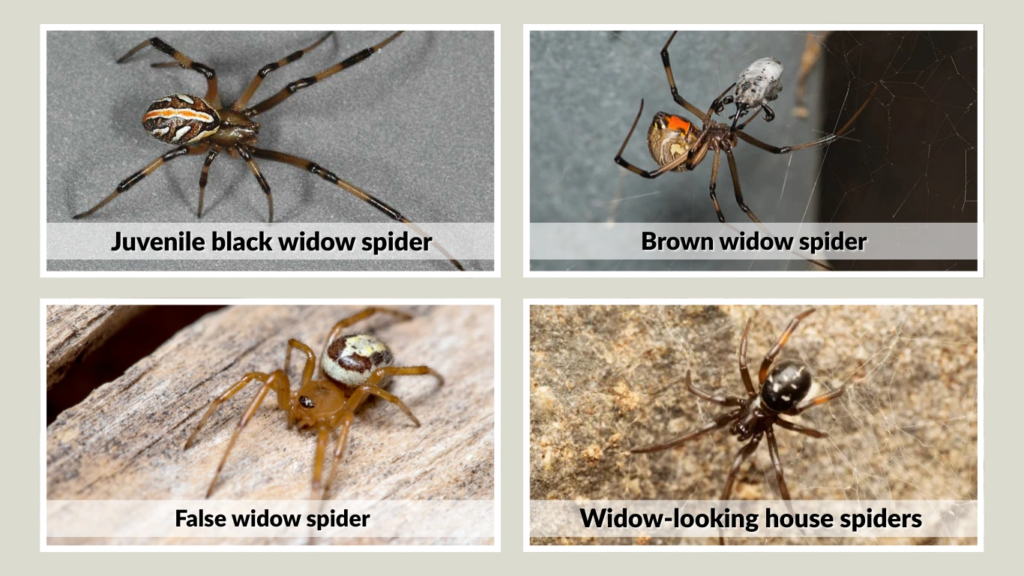
Several spiders are frequently confused with a white widow spider.
- Juvenile black widow spider – patterned abdomen, lighter colors
- Brown widow spider – white and orange markings, spiky egg sacs
- False widow spider – white or cream markings, round abdomen
- Widow-looking house spiders – similar shape but harmless
Correct identification requires looking at body shape, markings, and web type rather than color alone.
White Widow Spider vs Black Widow
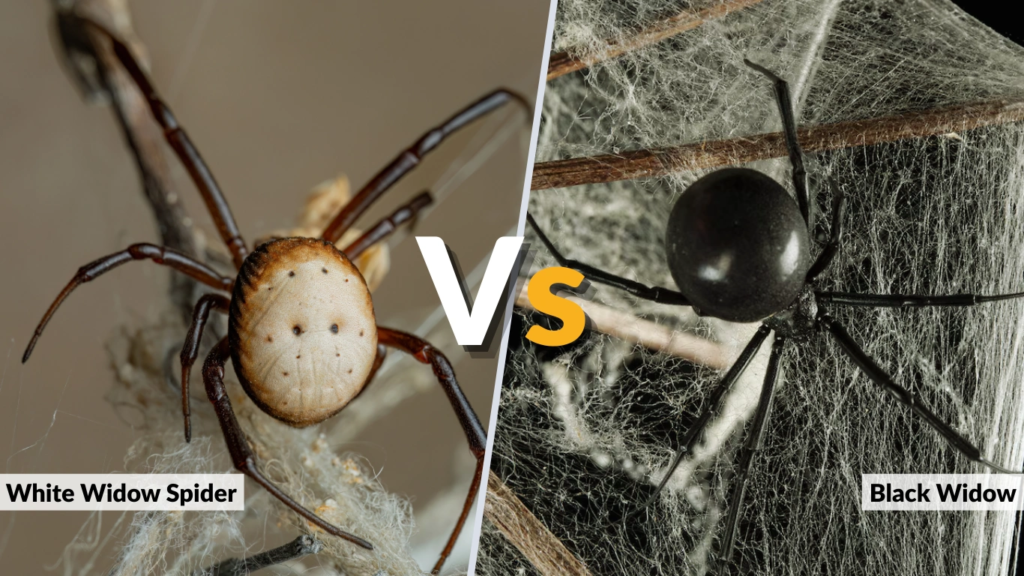
Many people worry that a white-marked spider might be more dangerous than a normal black widow. This is not the case.
| Feature | “White Widow” | Black Widow |
| Official species | No | Yes (Latrodectus) |
| Body color | Black with white markings | Solid black |
| Hourglass | White, broken, or absent | Red |
| Venom risk | Low | High (female) |
A spider with white markings is usually less dangerous, not more.
Black Widow Spider With White Hourglass
Some people report seeing a black widow spider with a white hourglass instead of red. This is almost always a misunderstanding.
Possible explanations include:
- Juvenile spiders with pale markings
- Lighting making red appear white
- Partial or broken hourglass shapes
A true adult black widow does not have a white hourglass.
Brown Widow Spider With White Spots
Brown widow spiders are one of the most common sources of “white widow” sightings.
- Brown or tan body
- White, cream, or pale markings
- Orange or light hourglass
- Spiky egg sacs
Brown Widow vs “White Widow”
Brown widows are less aggressive and generally less dangerous than black widows, despite having more visible markings.
White False Widow Spider
False widow spiders (Steatoda species) can also appear black with white or cream markings. They are often found indoors and are much less venomous than true widows.
They are commonly misidentified as black widows because of their rounded abdomen and glossy appearance.
Is a White Widow Spider Poisonous?
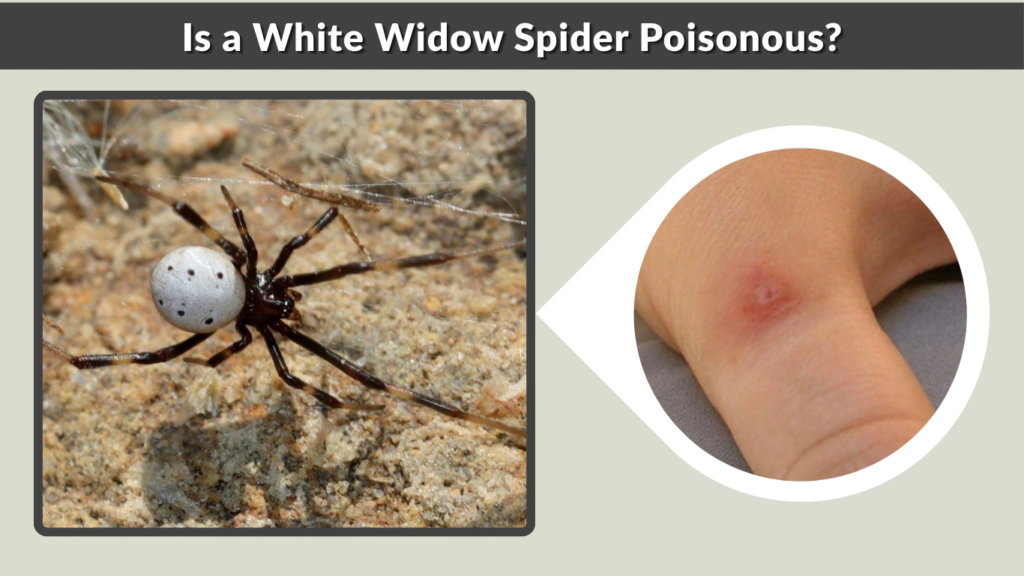
Because there is no real white widow spider species, the danger depends on the actual spider involved.
- Juvenile black widows → low risk
- Brown widows → mild to moderate venom
- False widows → mild venom
In most cases, these spiders are not dangerous to humans.
White Widow Spider Bite
Because there is no real white widow spider species, bite risk depends entirely on the actual spider involved. Most spiders described as “white widows” are juveniles, brown widows, or false widows, all of which are far less dangerous than adult female black widows.
Bites are uncommon and usually occur only when a spider is trapped against skin, such as inside clothing or bedding.
White Widow Spider Bite Symptoms
When symptoms occur, they are typically mild.
- Localized pain or irritation
- Redness and slight swelling
- Itching or burning sensation
- Rare blistering
Serious medical symptoms are extremely rare and usually linked to misidentified adult black widows rather than white-marked spiders.
Rare Color Variations and Albino Myths
There are many online claims about albino or white black widow spiders, but these are myths.
- Albino black widows do not exist
- No confirmed “white black widow” species
- White markings are developmental or lighting effects
- Color mutations do not produce white widows
What appears white in photos is usually pale yellow, cream, or faded markings rather than true white coloration.
Where Are “White Widow Spiders” Found?
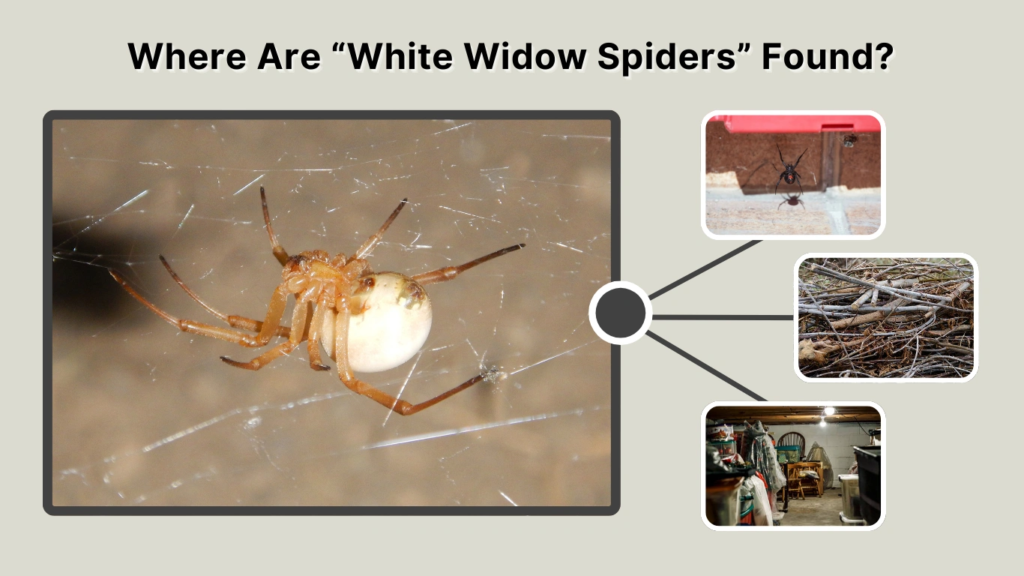
Spiders described as white widows are found anywhere widow-type spiders live.
Common locations include:
- Garages and basements
- Sheds and storage areas
- Woodpiles and outdoor clutter
- Corners of homes and fences
Because many of these spiders prefer sheltered, undisturbed spaces, people often encounter them unexpectedly.
White Widow Spider vs Other Look-Alike Spiders
Several spiders are frequently mistaken for white widows due to markings or body shape.
- White-tailed spider vs widow – different body shape and behavior
- False widow vs juvenile black widow – false widows lack hourglass markings
- Brown widow vs juvenile black widow – brown widows have spiky egg sacs
Looking at egg sacs, web structure, and abdomen shape helps confirm identification.
White Widow Spider vs Black Widow
Some people believe white-marked widows are more dangerous than normal black widows. This is incorrect.
| Feature | “White Widow” | Black Widow |
| Species | None | Latrodectus |
| Color | Black with white markings | Solid black |
| Venom risk | Low | High (female) |
| Aggression | Very low | Defensive |
In reality, white markings usually mean the spider is less dangerous, not more.
Common Myths About White Widow Spiders
Several myths continue to spread online.
- “White widows are more poisonous” – False
- “They are rare albino black widows” – False
- “White markings mean extreme danger” – False
Most fear comes from misunderstanding juvenile or non-widow spiders.
FAQs
Is there a real white widow spider?
No. There is no officially recognized spider species called a white widow spider.
Can black widows have white spots?
Yes. Juvenile black widows often have white or pale markings that fade as they mature.
Is a black spider with a white spot poisonous?
It depends on the species. Many are harmless or only mildly venomous.
What spider looks like a black widow but has white markings?
Juvenile black widows, brown widows, and false widows commonly have white markings.
Should I worry about a white widow spider?
In most cases, no. These spiders are usually misidentified and pose little risk.
Conclusion
The so-called “white widow spider” is not a real species but a name used for widow-like spiders with white markings. Most sightings involve juvenile black widows, brown widows, or false widows, all of which are far less dangerous than adult black widows. Learning how to identify these spiders correctly helps prevent unnecessary fear and confusion.
