

Common wasps (Vespula vulgaris) are one of the most frequently encountered stinging insects in the world. Known for their yellow and black coloring and painful sting, they often become a nuisance in summer when colonies reach their peak. But have you ever wondered where common wasps actually live? From natural hideouts to man-made structures, these resourceful insects can make their homes in a variety of places. In this article, we’ll explore 10 of the most common places where common wasps live, nest, and thrive.
What Makes a Good Wasp Habitat?
Common wasps are highly adaptable and opportunistic nest builders. A good wasp habitat provides three key things: shelter, nesting material, and food sources.
Shelter and Nesting Material
Wasps seek dry, secure spots to build their nests. This could include tight crevices, enclosed spaces, or underground burrows. They construct their nests using chewed wood pulp, which forms a papery substance.
Food Availability
Adult wasps feed on nectar, sugary substances, and protein-rich foods like insects. They also hunt prey to feed developing larvae. Any place that offers easy access to sweet liquids, fallen fruit, or garbage becomes a potential hotspot.
10 Common Places Where Common Wasps Live

Let’s dive into the most frequent locations where you’re likely to find common wasps nesting or foraging.
1. Wall Cavities and Attics
Wall voids and attics are among the most common nesting sites for wasps in residential areas. These spots offer protection from the elements and human activity. Once inside, wasps construct large nests out of chewed wood pulp, which grows rapidly throughout summer.
Warning signs include:
- Constant buzzing or flying activity near wall vents
- Faint scratching or humming noises inside walls
- Droppings or debris below the entry point
Wasps often enter through small cracks, roof vents, or loose siding.
2. Roof Eaves and Soffits
The underside of roof edges provides perfect cover for early nest-building. Wasps often build small to medium-sized nests in the corners of soffits where it’s sheltered from rain and wind.
Why they choose this spot:
- Elevation keeps them safe from predators
- Easy access to gardens and food sources
- Sun exposure helps regulate nest temperature
In early summer, you may notice small round nests resembling grey paper balls.
3. Garden Sheds and Garages
Wasps often take advantage of cluttered, dimly lit spaces like sheds and garages. These structures offer plenty of hiding places and are usually undisturbed for long periods.
Typical nest sites inside sheds/garages:
- In corners near the roof
- Inside unused containers, boxes, or cabinets
- Behind wall-mounted tools or equipment
If you store sweet drinks, pet food, or garden waste, the risk of attracting wasps increases.
4. Underground Burrows
Some species of common wasps, like Vespula vulgaris, are known to use underground nesting sites. These are often abandoned rodent holes, hollow tree roots, or soil depressions.
How to spot them:
- A steady stream of wasps flying into a single hole in the ground
- Nest hidden in grassy or shaded areas
- Increased wasp activity during warm, sunny days
These nests can be difficult to detect and dangerous if disturbed by accident while gardening or mowing.
5. Trees and Tree Hollows
Old trees with natural cavities are a prime location for wasp colonies, especially in forests and orchards. Tree hollows offer insulation and safety from wind and rain.
Why trees are ideal:
- Close to flower nectar and insect prey
- Elevated position offers predator protection
- Natural material aids nest attachment
Wasps may also build hanging nests among branches, although this is less common than cavity use.
6. Bushes and Shrubs
Dense bushes provide an excellent foundation for discreet nests, particularly early in the season. Wasps tend to prefer low shrubs near fences, flower beds, or walkways.
Signs of nesting in bushes:
- Unusual wasp traffic near specific plants
- Visible nest structure deep within the branches
- Aggressive behavior if the nest is approached
Pruning bushes can sometimes reveal active nests unexpectedly, so proceed with caution.
7. House Fascia Boards and Cladding Gaps
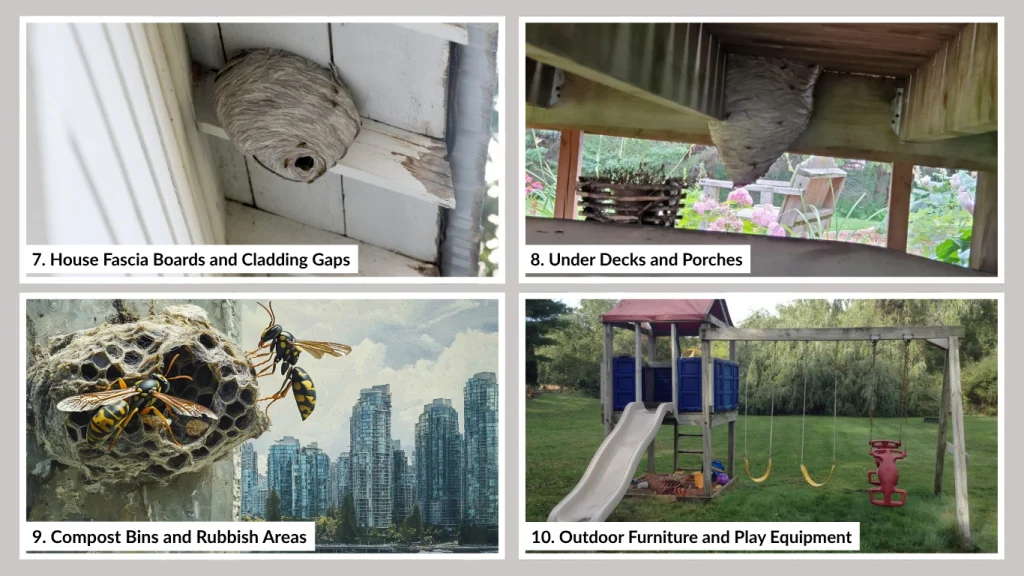
Narrow openings under fascia boards, behind siding, or within insulation offer hidden entry points for wasps to access the voids inside your home exterior.
Why these spots are popular:
- Easily accessed via small cracks or gaps
- Protection from weather and predators
- Close to human food sources in kitchens and bins
Nests in these areas often go unnoticed until the colony becomes very large.
8. Under Decks and Porches
The shaded, enclosed space beneath decks and porches offers perfect nesting conditions. Wasps are drawn to the dry wooden support beams and undisturbed environment.
Common nesting indicators:
- Visible paper-like nests between joists
- Increased activity when you’re sitting outside
- Buzzing or flying near gaps in deck boards
It’s one of the more dangerous spots for accidental stings due to human proximity.
9. Compost Bins and Rubbish Areas
Food waste is a magnet for wasps, especially later in the summer when colonies demand sugar. Compost heaps, recycling bins, and trash cans can quickly become feeding zones.
Why wasps are drawn here:
- Rotting fruit and sugary waste
- Warm, humid conditions ideal for scavenging
- Fewer predators in human-inhabited areas
While they don’t always nest here, these spots often host foraging swarms.
10. Outdoor Furniture and Play Equipment
Sometimes, wasps choose unusual nesting spots like inside the hollow tubing of patio furniture, grills, swing sets, or plastic playground equipment.
Examples include:
- Inside umbrella poles
- Beneath patio table panels
- Within toy chests or plastic slides
Because these areas are frequently used by children, any nest here should be professionally removed immediately.
Conclusion
Common wasps are incredibly resourceful when it comes to choosing where to live. They can be found in a wide range of locations—from underground burrows and tree hollows to modern-day garages and attics. Their nesting preferences are shaped by access to food, shelter, and safety from threats. Understanding the most common wasp habitats allows homeowners and gardeners to take preventive measures before a full colony is established. Whether you’re trying to avoid stings or protect your family, early detection is key. And when in doubt, always call a professional for safe nest removal.
FAQs
1. What is the most common nesting place for wasps?
Wall cavities, roof eaves, and attic spaces are the most frequent nesting places due to their protection and warmth.
2. Do wasps reuse old nests?
No. Common wasps build new nests each season. Old nests are never reused, although the same area may be targeted again.
3. How can I spot a hidden wasp nest?
Watch for frequent wasp traffic to a single point—such as a wall crack, hole in the ground, or bush. You may also hear faint buzzing sounds inside walls.
4. Is it safe to remove a wasp nest myself?
It’s not recommended. Wasps become aggressive when their nest is threatened. Always hire a pest control expert, especially for large or hidden nests.
5. What should I do if wasps are near my home?
Avoid swatting them or blocking their entry point. Monitor the area, keep food sealed, and contact professionals if you suspect a nest is forming.
