
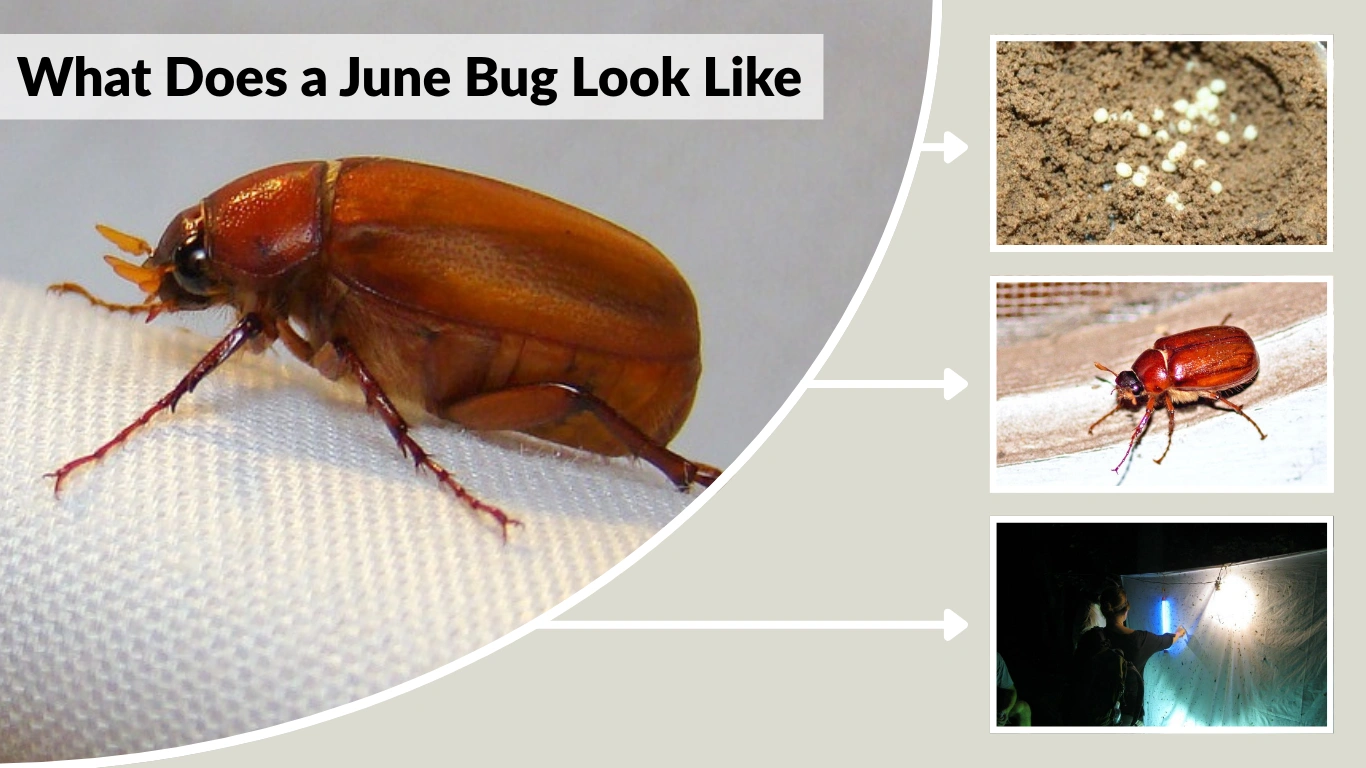
June bugs are a familiar sight on warm summer nights, flying clumsily toward porch lights or resting on windows. Despite their simple appearance, these beetles come in different colors and sizes depending on the species and region. Understanding what a June bug looks like can help you identify them and tell them apart from similar insects like Japanese beetles or cockroaches.
June Bug Appearance Overview
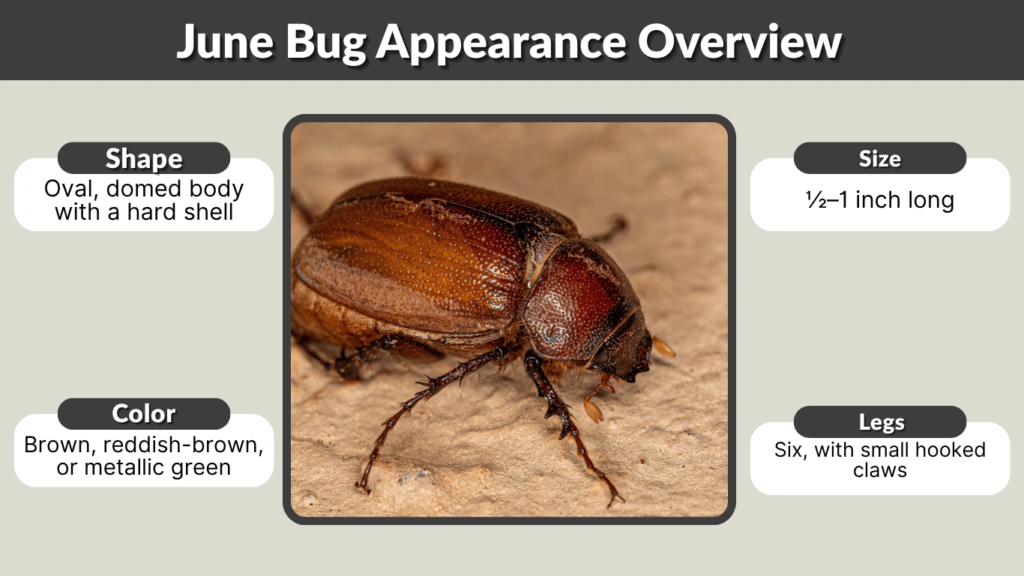
General Description
June bugs are medium-sized beetles with a sturdy, oval body and a smooth, hard shell. Most species measure between ½ and 1 inch long. Their color can range from dull brown to shiny metallic green, depending on the type.
They have six strong legs tipped with small claws, allowing them to cling to grass or tree bark. Their antennae are short but end in fan-like clubs that can spread open — a distinct feature of beetles in the Scarabaeidae family. Fine hairs often cover their bodies, giving them a velvety or dusty texture, especially noticeable on brown June bugs.
Their flight is slow and noisy, often accompanied by a low buzzing sound. Because of their hard shells and heavy bodies, June bugs are clumsy in the air and frequently bump into walls, lights, or people.
| Feature | Description |
| Shape | Oval, domed body with a hard shell |
| Size | ½–1 inch long |
| Color | Brown, reddish-brown, or metallic green |
| Legs | Six, with small hooked claws |
| Antennae | Fan-shaped clubs used for sensing light and pheromones |
| Flight | Slow, loud, and clumsy |
June Bug Colors and Variations
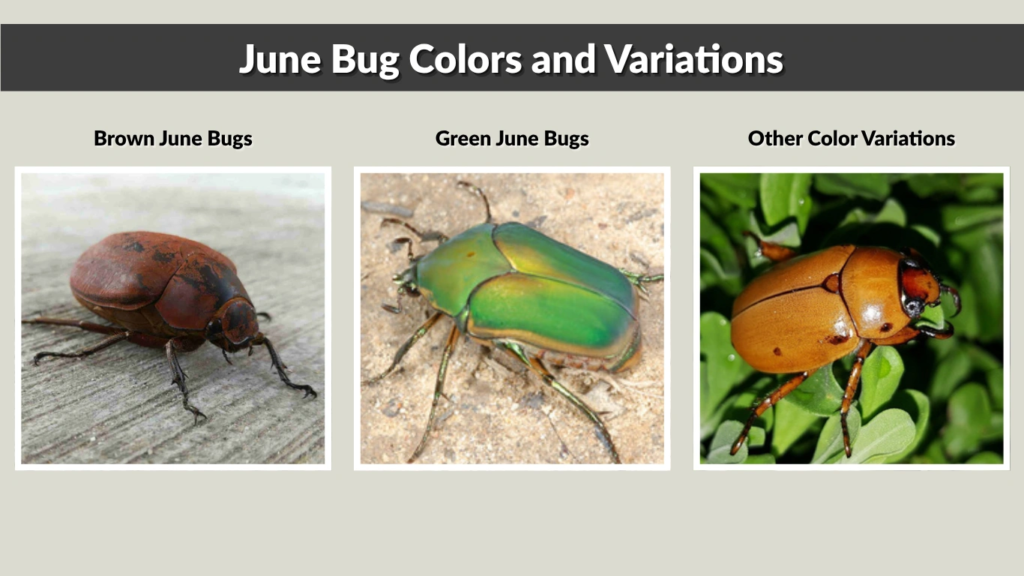
Brown June Bugs
The most common type of June bug in North America is the brown or reddish-brown June bug (Phyllophaga species). These beetles have dull, matte shells and are most active at night. When viewed under light, their color may show a faint reddish tint.
Brown June bugs are usually seen from May through July, flying near porch lights or resting on screens. Their thick bodies and muted color make them easy to identify. They are harmless to humans but can cause damage to lawns during their larval stage by feeding on grass roots.
Green June Bugs
Another well-known species is the green June beetle (Cotinis nitida), found mostly in the southern and eastern United States. These beetles are larger than the brown species, often reaching over an inch in length. Their shells have a glossy, metallic green color with golden or bronze reflections.
Unlike brown June bugs, green June beetles are active during the day. They make a loud humming sound while flying over lawns, gardens, and fruit trees. Their striking color and daytime activity make them one of the easiest types to recognize.
Other Color Variations
While brown and green are the most common colors, some June bugs display subtle variations:
- Tan or golden-brown shades in dry or sandy areas.
- Black or dark brown morphs found in cooler climates.
- Spotted or dotted shells in certain scarab relatives.
Lighting and age can also influence appearance — older beetles may appear duller as their outer shells wear down.
June Bug Life Stages and What Each Looks Like
Egg Stage
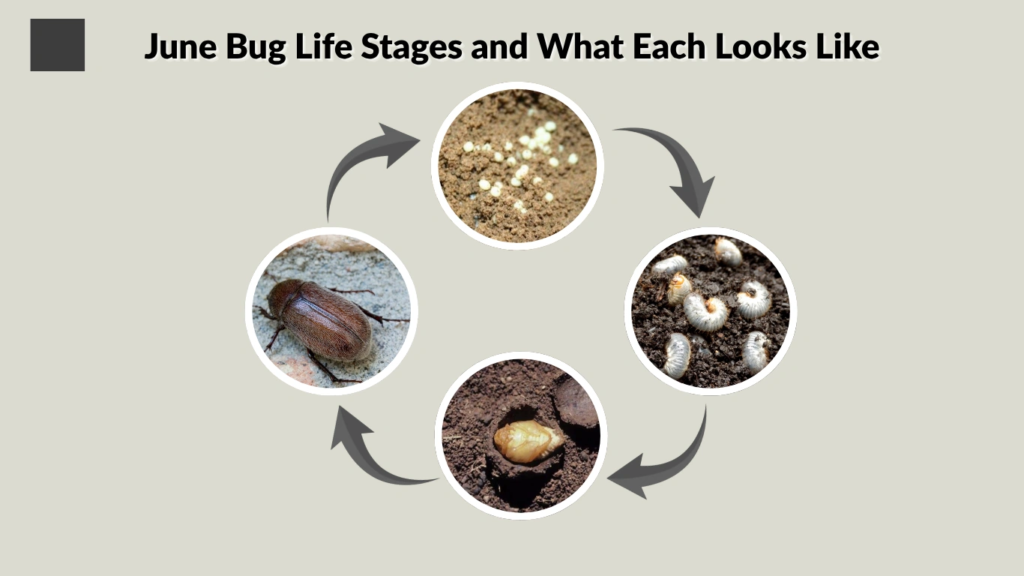
June bugs begin their life underground. Females lay eggs about 2 inches deep in soft, moist soil during early summer. These eggs are small, white, and round, resembling tiny pearls. Within two to three weeks, they hatch into larvae.
Larva (Grub) Stage
The larval stage, or grub, is when June bugs spend most of their life. Grubs are white, C-shaped, and soft-bodied with a distinct brown head and six small legs near the front. They can grow up to an inch long and live underground for 9–11 months, feeding on grass and crop roots.
If you dig into a lawn and see curled, white larvae under the surface, they’re likely June bug grubs. Their presence often causes brown patches in turf, a clear sign of root damage.
Pupa Stage
After nearly a year as grubs, they form a pupal cell underground. The pupa looks like a tan or brown capsule, roughly the size of a peanut. During this 2–3 week period, they transform into their adult beetle form.
Adult Stage
The adult June bug is the familiar flying beetle seen in late spring and summer. Adults emerge from the soil after sunset and fly in search of mates. Depending on the species, they may be brown, reddish, or bright green. Once mature, they live only a few weeks, completing the life cycle.
Male vs Female June Bugs
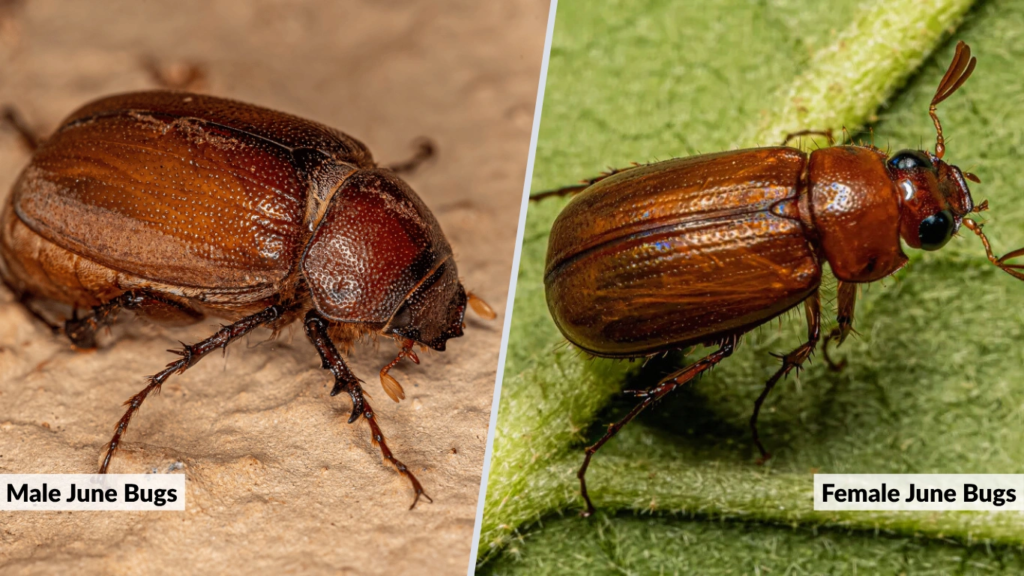
Subtle Physical Differences
At first glance, male and female June bugs look nearly identical, but close observation reveals subtle distinctions:
- Males have larger, more spread-out antenna fans used to detect female pheromones from long distances.
- Females have smaller, more compact antennae and slightly rounder bodies.
- In terms of color and size, both sexes are generally similar.
These small differences are easiest to notice when examining beetles side by side under good lighting.
Bugs That Look Like June Bugs
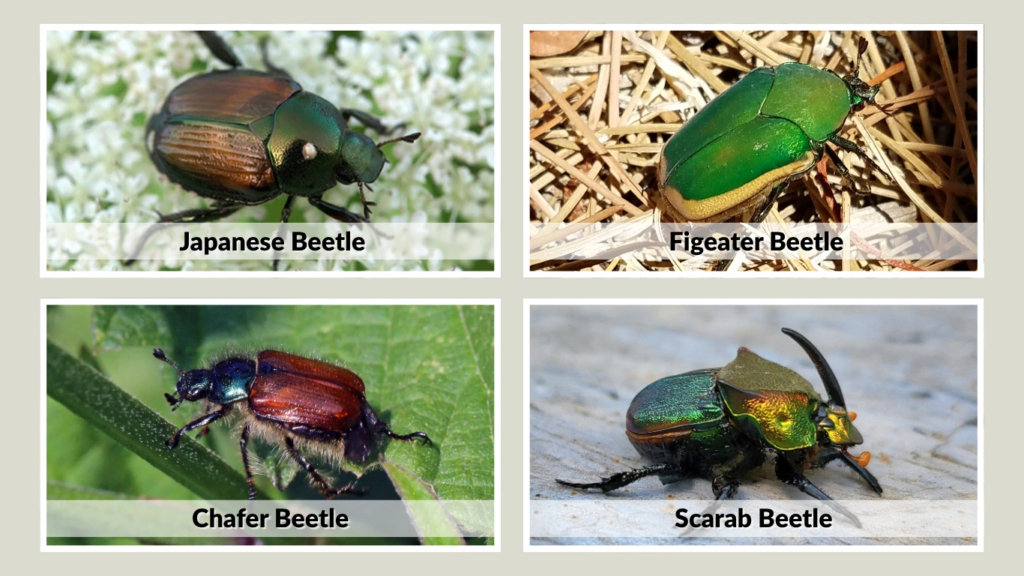
Beetle Look-Alikes
Several beetles closely resemble June bugs but differ in color, shape, or behavior.
- Japanese Beetle: Smaller and more metallic, with green and copper wings; active during the day.
- Figeater Beetle: Larger and shinier green, often mistaken for an oversized June bug.
- Chafer Beetle: Golden-colored with shorter bodies, appearing earlier in the season.
- Scarab Beetle: Relatives of June bugs, sharing similar body shape but with unique markings or horn structures.
Each of these species belongs to the same beetle family but occupies a slightly different niche.
Regional Appearances
By Region
The appearance of June bugs varies depending on where you live.
- Southern United States: The green June beetle (Cotinis nitida) is dominant here, recognized by its glossy metallic green color with gold edges. It’s larger than brown species and often seen flying over lawns during the day.
- Midwestern States: Brown June bugs (Phyllophaga spp.) are most common. They emerge at dusk and gather near porch lights, especially in late May and June.
- Western U.S.: Tan or reddish-brown June bugs are widespread in California, Arizona, and Oregon. These species thrive in drier climates and are sometimes mistaken for scarabs.
- Canada and Northern U.S.: Smaller, darker beetles are found in cooler areas. Because of the shorter summer season, their underground stages often last longer before emerging as adults.
By Season
June bugs typically appear from late spring through mid-summer. Brown species fly primarily at night, while green June beetles are active in daylight. Their life cycle follows warm weather patterns — once temperatures drop below 60 °F (15 °C), activity declines rapidly.
June Bugs Indoors and at Night
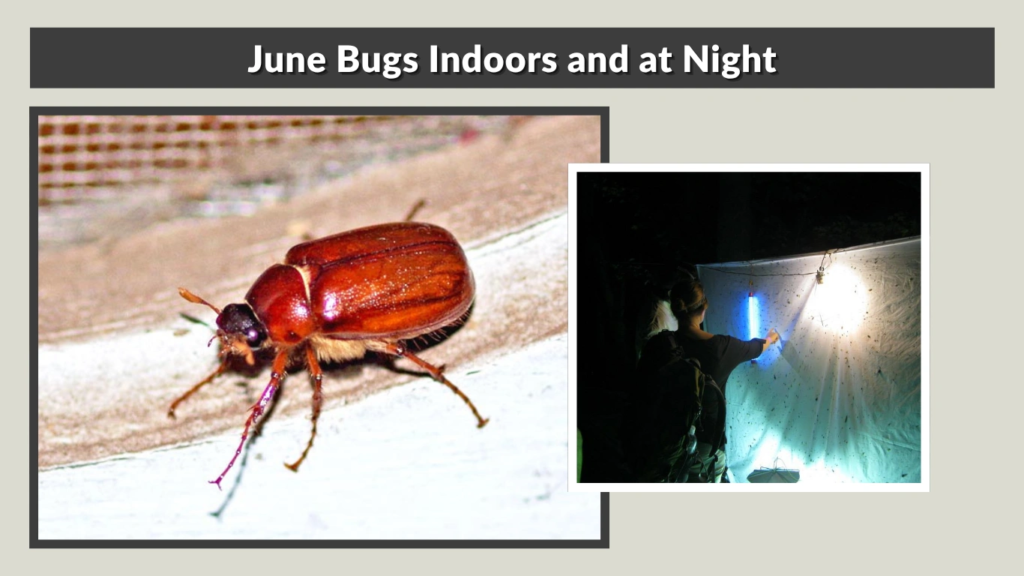
What They Look Like Indoors
When June bugs accidentally enter homes, they appear dull brown or reddish with dusty shells. They’re slow, clumsy, and often found on windowsills, under lights, or near doors.
Their movements are unpredictable — they buzz loudly, bump into walls, and frequently flip onto their backs. This can make them appear alarming, but they’re harmless and do not bite or damage furniture.
Why They Come Inside
June bugs are strongly drawn to light. Porch bulbs, lamp reflections, and even television screens attract them at night. Once indoors, they quickly become confused and exhausted because there’s no soil to land in or vegetation to feed on.
Without food or moisture, most die within three to five days.
June Bug Larvae and Grubs
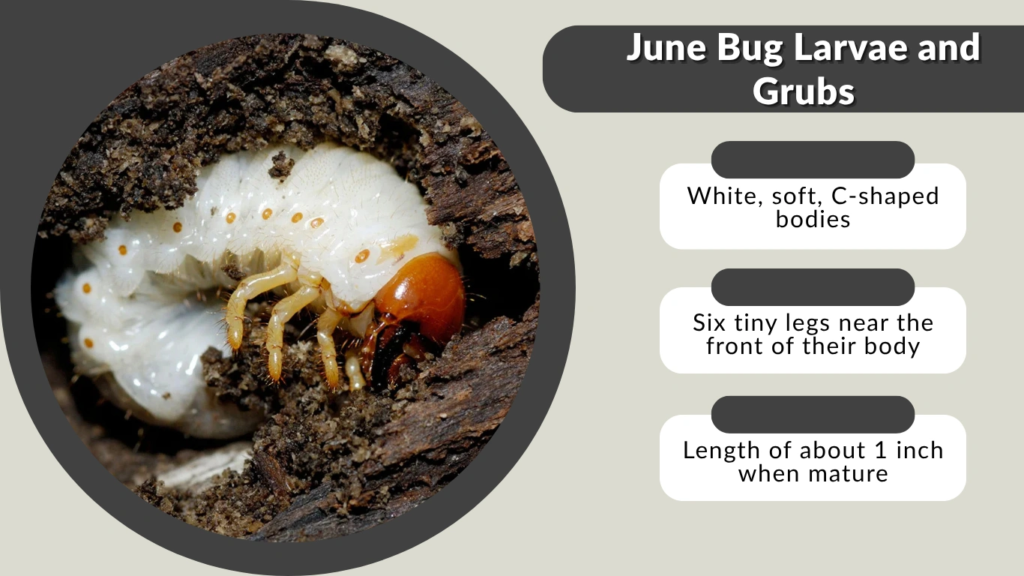
What Do June Bug Grubs Look Like?
June bug larvae, commonly called white grubs, live underground and are the longest-lived stage of the insect’s life. They are easy to identify by their:
- White, soft, C-shaped bodies
- Brown heads with visible chewing mandibles
- Six tiny legs near the front of their body
- Length of about 1 inch when mature
They curl into a tight C-shape when disturbed and are often discovered while gardening or digging up turf.
Behavior and Damage
Grubs feed on the roots of grasses and crops, creating brown patches in lawns and stunted plants in gardens. Heavy infestations can cause large areas of grass to lift easily, almost like loose sod, because the roots have been eaten away.
Birds, raccoons, and moles often dig up soil to eat them, further damaging lawns.
How to Distinguish Grubs
Different grub species can look similar, but June bug larvae can be identified by:
- A raster pattern (tiny bristle cluster) near the end of their abdomen
- Larger size compared to chafer or Japanese beetle grubs
- Habit of lying on their sides or backs when moving through soil
Unusual Colors and Look-Alike Species
Rare Color Variants
Though brown and green are standard, some June bugs display unusual shades:
- Tan or golden beetles: Appear lighter due to regional dust or early molting.
- Black June bugs: Found in cooler or shaded regions; sometimes coated in soil residue.
- Yellow or spotted beetles: May actually be grapevine beetles (Pelidnota punctata), often mistaken for June bugs because of their similar size and shape.
Large “June-Bug-Like” Beetles
In areas such as Arizona and Texas, large figeater beetles (Cotinis mutabilis) are commonly misidentified as “giant June bugs.” They are louder, shinier, and capable of smoother flight.
Other scarab relatives, like the dung beetle or Christmas beetle, share the same rounded shape but differ in color and ecological role.
Male vs Female Identification Recap
Males and females look nearly identical to the casual observer, but entomologists can tell them apart by examining the antennae.
- Males: Possess larger, more open fan-like antenna segments to detect pheromones from females over long distances.
- Females: Have shorter, compact clubs and more rounded bodies built for egg-laying.
During mating season, males are usually seen flying in greater numbers, while females remain near the ground or on plants.
Quick Comparison: June Bugs vs Look-Alike Insects
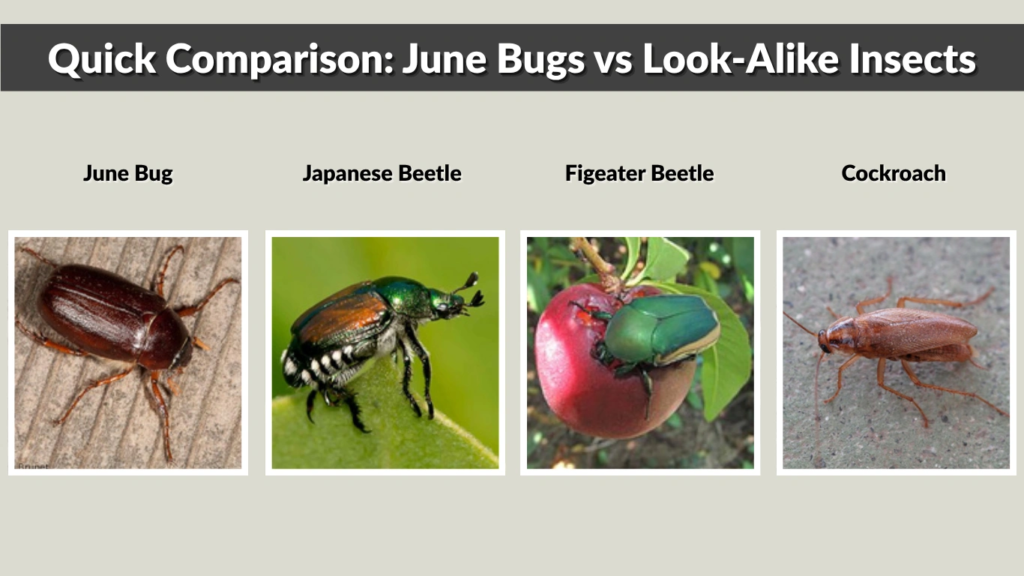
| Insect | Main Color | Activity | Key Difference |
| June Bug | Brown or Green | Night / Day | Clumsy flight, fan-like antennae |
| Japanese Beetle | Metallic green & copper | Day | Smaller, shinier, skeletonized leaves |
| Figeater Beetle | Bright metallic green | Day | Larger, louder, smoother flight |
| Cockroach | Brown, flat body | Night | Fast runner, not a true beetle |
| Stink Bug | Gray / Green, shield-shaped | Day | Flat back, releases odor |
| Chafer Beetle | Golden-brown | Night | Shorter body, earlier in spring |
This table can help identify what’s buzzing around your porch light or lawn each summer evening.
FAQs
What does a June bug look like?
A June bug is a medium-sized beetle about ½–1 inch long with an oval, hard shell. It’s usually brown or green and has six legs, short antennae, and a loud buzzing flight.
What do June bug larvae look like?
June bug grubs are white, C-shaped, and live underground. They have brown heads, six small legs, and feed on plant roots.
What bugs look like June bugs?
Japanese beetles, figeater beetles, and chafer beetles closely resemble June bugs. You can tell them apart by color and the time of day they fly.
Do male and female June bugs look different?
Yes. Males have larger fan-shaped antennae, while females have smaller ones and rounder bodies used for egg-laying.
Can June bugs live indoors?
Only briefly. They can survive a few days inside but soon die from exhaustion and dehydration because they need soil and moisture.
