
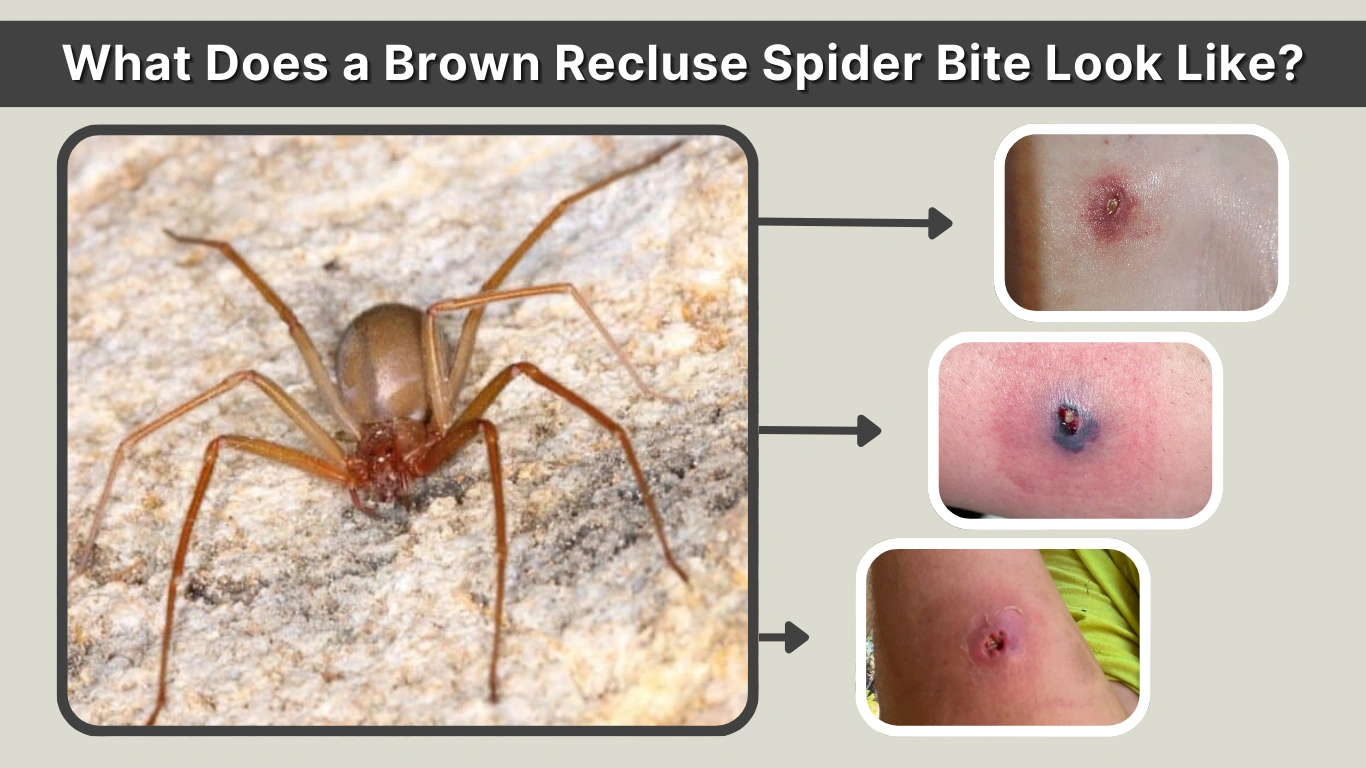
Brown recluse spider bites are often misunderstood because they don’t always look dangerous at first. In many cases, the bite appears mild or even harmless during the early hours, which leads people to ignore it. However, the appearance of a brown recluse spider bite can change significantly over time. Understanding how a bite looks initially, how it develops, and what warning signs to watch for can help you identify potential problems early and seek medical care when necessary.
Identification: What a Brown Recluse Spider Bite Looks Like
A brown recluse spider bite has several visual characteristics that help distinguish it from other insect bites, though no single sign is definitive.
- Usually a single bite rather than multiple bites
- Small red, pink, or pale spot at the bite site
- Minimal swelling in the beginning
- Often flat or slightly raised
- Mild itching or burning sensation
- No immediate pus or fluid discharge
Many bites are painless at first, which is why people often do not realize they were bitten by a spider.
What Does a Brown Recluse Spider Bite Look Like Initially?
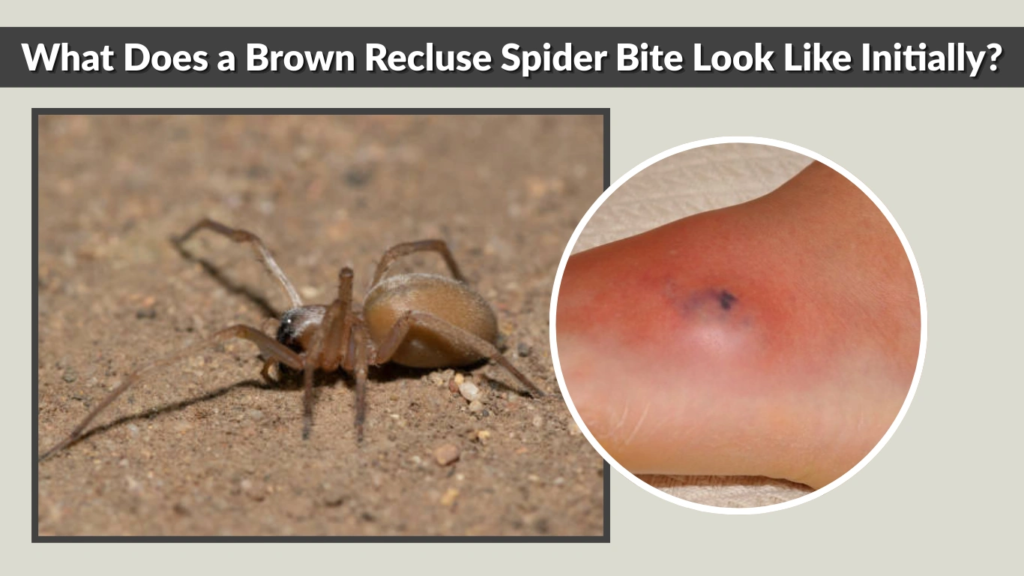
(First 0–6 hours)
In the earliest stage, a brown recluse spider bite may be difficult to notice. The skin often looks almost normal, with only slight discoloration.
- Light redness or faint pink mark
- Skin may feel warm
- Mild itching, tingling, or burning
- Little to no pain
- No visible blister or wound
At this stage, the bite is commonly mistaken for a mosquito bite, ant bite, or minor skin irritation. Because the reaction is subtle, many people do not take any action during this early phase.
What Does a Fresh Brown Recluse Spider Bite Look Like?
(6–24 hours after the bite)
As time passes, the bite begins to show more noticeable changes. This is often when people start searching for information about what a brown recluse spider bite looks like.
Common Visual Changes
- Red ring forming around the bite area
- Pale, white, or slightly bluish center
- Target-like or “bullseye” appearance
- Mild swelling around the site
Sensation Changes
- Increasing pain or tenderness
- Burning sensation becomes more noticeable
- Skin may feel tight or sore
Not all bites follow this exact pattern, but the red-white-red coloration is a commonly reported feature of brown recluse bites.
What Does a New Brown Recluse Spider Bite Look Like?
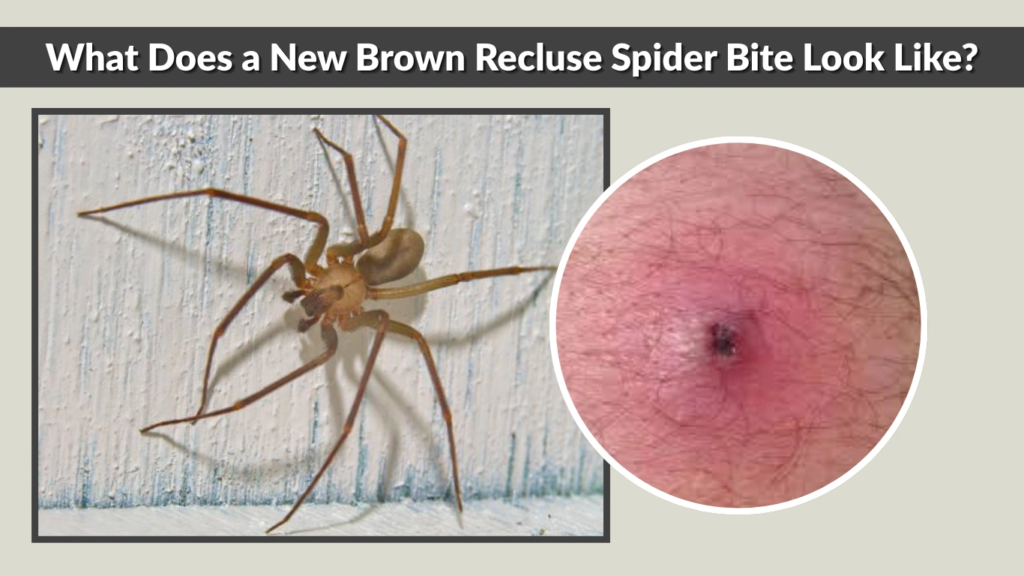
(1–2 days after the bite)
Within one to two days, the bite may continue to evolve. At this point, tissue damage may begin in some cases.
- Small blister may develop in the center
- Skin color may shift to blue, purple, or gray
- Surrounding redness may spread slightly
- Pain becomes more persistent
- Area may feel firm or stiff
Some bites remain mild and stop progressing, while others continue to worsen. The severity varies depending on the amount of venom injected and the individual’s immune response.
How a Brown Recluse Spider Bite Changes Over Time
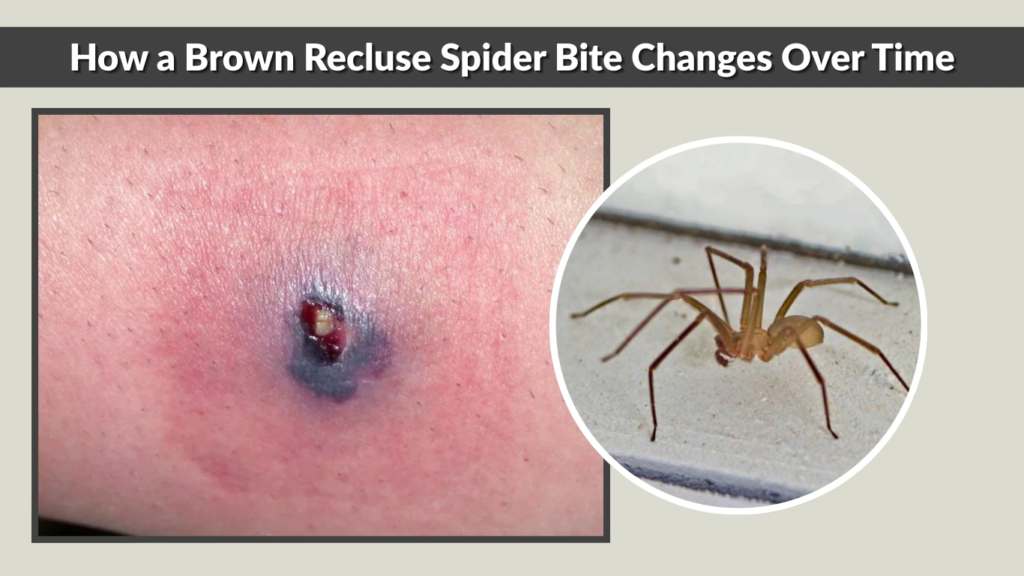
Days 3–7
During this stage, more serious bites may show signs of tissue damage.
- Blister may rupture
- Central area may darken or turn black
- Open sore or ulcer may form
- Pain and inflammation increase
This darkened area is often referred to as necrosis, though not all brown recluse bites become necrotic.
One to Two Weeks
- Dead tissue may begin to slough off
- Wound may appear deeper
- Healing starts slowly from the edges
At this stage, medical evaluation is often recommended, especially if the wound is enlarging or showing signs of infection.
What Does a Systemic Brown Recluse Spider Bite Look Like?
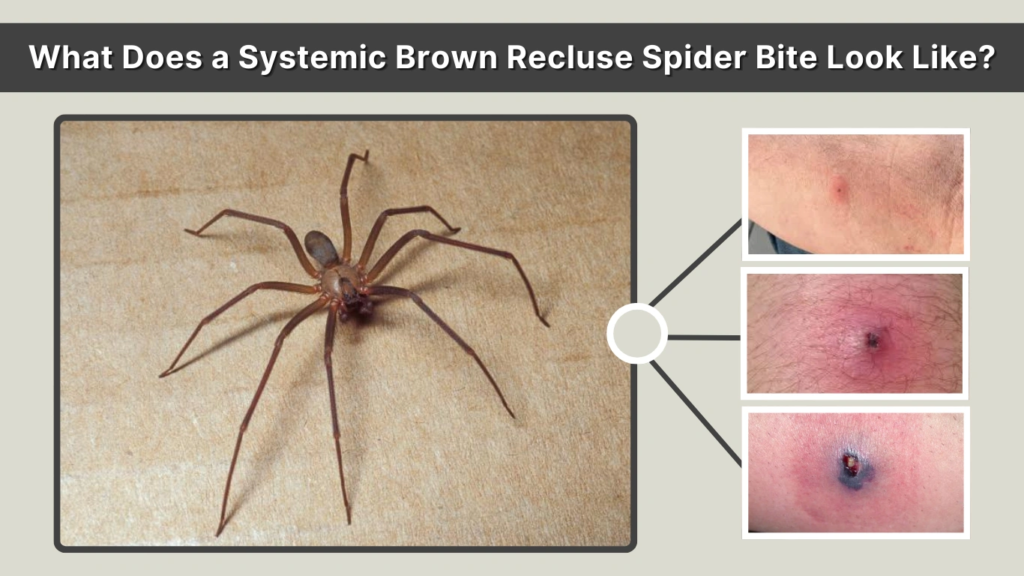
A systemic brown recluse spider bite occurs when the venom affects more than just the skin. This reaction is uncommon but can be serious, especially in children, older adults, or people with weakened immune systems.
Visually, the bite site itself may not always look severe at first. In some cases, the skin lesion appears relatively small while systemic symptoms develop elsewhere in the body.
Skin-Related Signs
- Bite area may turn dark blue, purple, or black
- Surrounding skin may look bruised or mottled
- Rash may spread beyond the original bite
- Yellowing of skin in rare cases
Whole-Body Symptoms
- Fever and chills
- Nausea or vomiting
- Fatigue and weakness
- Muscle aches or joint pain
- Headache or dizziness
Systemic reactions require immediate medical attention, even if the bite itself does not look severe.
What Does a Brown Recluse Spider Bite Look Like in Pictures?
Images of brown recluse spider bites can help people understand how the bite changes over time, but they should not be used for self-diagnosis.
Common image stages include:
- Early-stage bites showing mild redness
- Fresh bites with a red ring and pale center
- Necrotic bites with darkened or black tissue
- Healing bites showing scabbing or scarring
It’s important to note that many skin infections and insect bites can look similar in photos.
Brown Recluse Spider Bite vs Other Common Bites
| Feature | Brown Recluse | Black Widow | Mosquito | Bed Bug |
| Pain onset | Delayed | Immediate | Mild | Itchy |
| Number of bites | Single | Single | Multiple | Clusters |
| Skin damage | Possible necrosis | Minimal | None | None |
| Systemic symptoms | Possible | Common | Rare | Rare |
| Healing time | Weeks to months | Days to weeks | Days | Days |
This comparison helps explain why brown recluse bites are often misidentified.
Common Conditions Mistaken for Brown Recluse Spider Bites
Many skin issues are incorrectly blamed on brown recluse spiders, especially in areas where the spiders are rare.
- Staph or MRSA infections – often painful with pus
- Tick bites – may form a bullseye rash
- Bed bug bites – usually appear in clusters
- Allergic reactions – cause widespread redness or itching
- Boils or ingrown hairs – localized swelling with tenderness
Misdiagnosis can delay proper treatment, making professional evaluation important.
When to See a Doctor
You should seek medical care if any of the following occur:
- Increasing pain after 24–48 hours
- Skin turning dark blue, purple, or black
- Fever, chills, or flu-like symptoms
- Open sores or ulcers forming
- Redness spreading rapidly
- Bite located on the face, groin, hands, or joints
Early medical care can help prevent complications and support proper healing.
How to Reduce the Risk of Brown Recluse Spider Bites
Brown recluse spiders prefer dark, quiet areas and rarely bite unless disturbed.
- Shake clothes and shoes before wearing
- Reduce clutter in storage areas
- Seal cracks and gaps in walls
- Use sticky traps to monitor spider presence
- Wear gloves when cleaning garages or basements
Preventive steps significantly reduce the chance of accidental contact.
FAQs
Is a brown recluse spider bite painful at first?
Most brown recluse bites are painless or only mildly irritating at first. Pain usually develops gradually over several hours rather than immediately after the bite.
Do all brown recluse spider bites become necrotic?
No. The majority of brown recluse bites heal without serious complications. Tissue necrosis occurs in a small percentage of cases.
How long does a brown recluse spider bite take to heal?
Mild bites often heal within two to three weeks. Severe bites with tissue damage may take several months and can leave scars.
Can a brown recluse spider bite look harmless?
Yes. Many bites look mild in the early stages, which is why symptoms are sometimes ignored until the bite worsens.
Should you pop a brown recluse spider bite blister?
No. Popping a blister increases the risk of infection. Keep the area clean and seek medical advice if the blister worsens.
