

When people think of stink bugs, their unpleasant odor is often the first thing that comes to mind. These small, shield-shaped insects don’t bite or sting — instead, they defend themselves by releasing a strong-smelling chemical when threatened or crushed. The odor is unique, often compared to cilantro, burnt rubber, or pungent herbs. This natural defense mechanism helps stink bugs survive in the wild, but it can make them unwelcome guests indoors.
Why Do Stink Bugs Smell?

The Science Behind the Stink
The notorious odor of stink bugs comes from special glands located on their abdomen or thorax. When the insect feels threatened, these glands release a liquid that quickly evaporates into the air, producing an instantly recognizable smell. The scent’s strength and duration depend on the bug’s size and species.
This defensive spray is made up of two major chemicals — trans-2-decenal and trans-2-octenal — compounds also found in cilantro and coriander leaves. That’s why some people describe the odor as herbal or spicy, while others find it sharp and unpleasant.
Purpose of the Odor
- Defense Mechanism: The smell deters predators such as birds, lizards, and spiders.
- Warning Signal: The odor also acts as an alarm pheromone, alerting nearby stink bugs to danger.
- Survival Tool: It allows stink bugs to escape predators and avoid being eaten, especially during overwintering when they gather in groups.
What Do Stink Bugs Smell Like?

General Odor Description
The smell of a stink bug is difficult to describe because it varies based on perception and species. Most people compare it to:
- Cilantro or coriander — a spicy, herbal note that’s oddly familiar.
- Burnt rubber or chemicals — especially when a bug is crushed.
- Skunk-like or musty undertones that linger in the air.
While the odor is faint if only one bug is present, it becomes noticeably strong when multiple stink bugs release their scent — such as during a home infestation or if several are vacuumed or squished at once.
Why People Smell It Differently
The same genetic factor that influences how humans perceive cilantro also affects how they experience stink bug odor. Some people find the smell tolerable or even mildly citrusy, while others detect an overwhelmingly unpleasant or metallic scent. The variation comes down to individual sensitivity to aldehyde compounds.
Odor Differences by Species
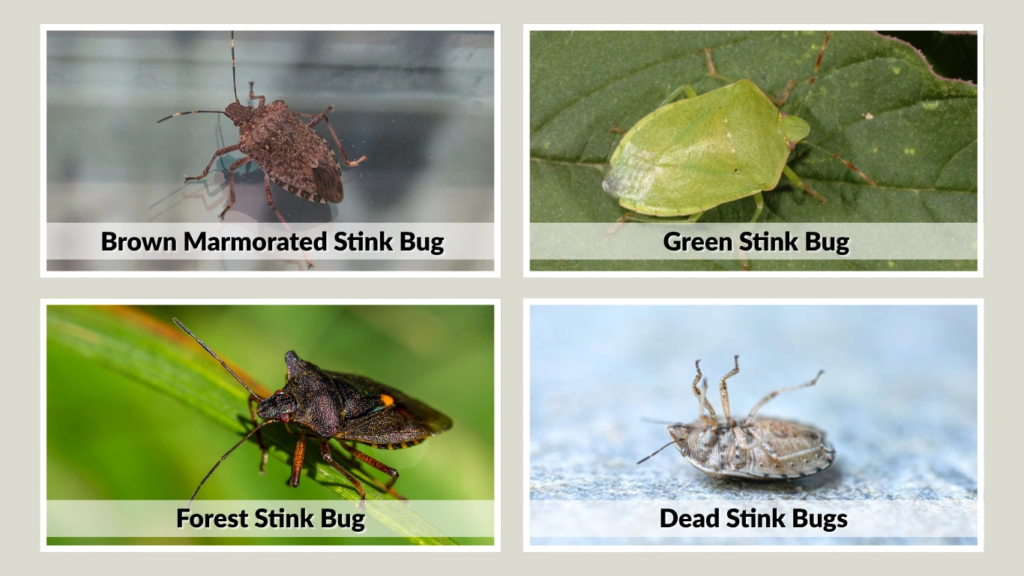
Brown Marmorated Stink Bug
This is the most common household stink bug in North America. Its scent is described as spicy, woody, or similar to cilantro. When crushed, it releases a sharp odor that can linger for several hours indoors.
Brown marmorated stink bugs often emit stronger smells when trapped in enclosed spaces such as windows, lamps, or vacuum cleaners.
Green Stink Bug
Green stink bugs give off a milder, grassy smell. Their scent has been compared to the aroma of freshly cut plants with a faint bitter tone. While less intense than the brown variety, it can still be noticeable when several bugs are disturbed together.
Black or Forest Stink Bug
These species tend to produce a rubber-like, chemical smell that is stronger and longer-lasting than other types. The odor often sticks to fabrics, walls, or curtains after contact.
Dead Stink Bugs
Dead or decaying stink bugs create a musty, earthy smell that spreads slowly but lingers longer. When many die inside walls or attics, this odor can persist for weeks, especially in warm, closed spaces.
When and Why They Release the Smell
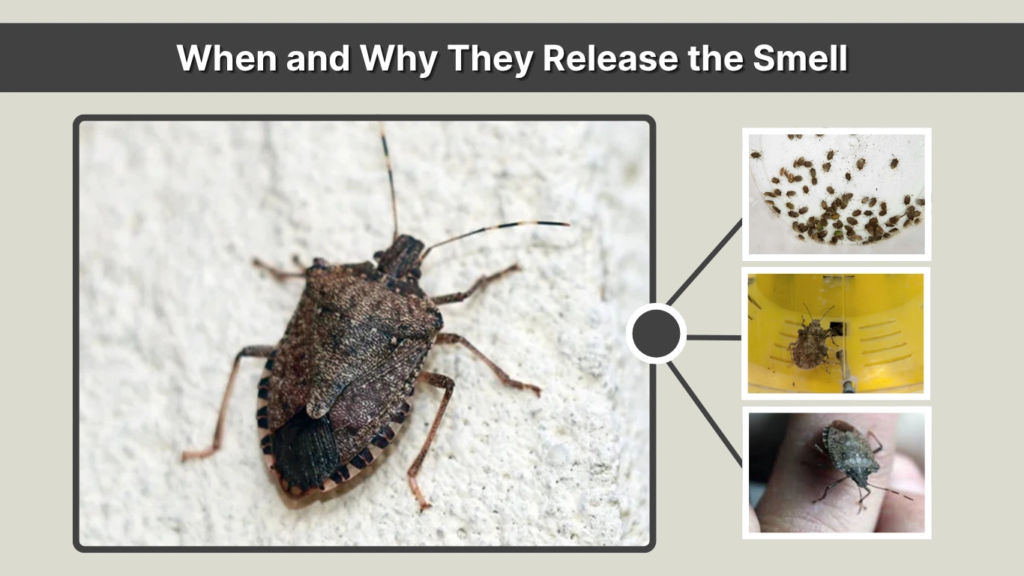
Defensive Trigger
Stink bugs release their signature odor when they feel threatened or disturbed. This can happen if they’re:
- Crushed or stepped on.
- Trapped inside vacuum cleaners or jars.
- Handled or moved suddenly.
The odor spreads quickly because the released fluid evaporates almost instantly, filling the air with an unmistakable scent.
Communication Signal
The smell isn’t just a defense — it’s also a form of communication. When one stink bug releases the odor, it can attract other stink bugs nearby, signaling that a potential danger is present. Ironically, this can lead to more bugs gathering in the same spot after one is crushed.
Flight or Stress Response
Stink bugs may also release small amounts of odor during flight or high stress, such as when they’re swatted or caught near light sources. Indoors, this often explains the faint smell that lingers after a few buzzing bugs have flown around a lamp or ceiling.
What Do Stink Bugs Smell Like When Killed or Squished?
The Immediate Odor
When a stink bug is crushed, the odor becomes much more intense. The pressure ruptures its scent glands, releasing all stored chemicals at once. The result is a sharp, earthy smell with hints of spice, burnt herbs, and cilantro.
Some describe it as a mix between skunk spray and rubber cement, while others say it resembles rotten almonds. This scent can fill a room quickly and linger for several hours if not ventilated.
Lingering Indoor Odor
Stink bug odor can cling to walls, curtains, and furniture fabrics. The oily compound doesn’t evaporate immediately, which explains why the smell can persist long after the bug is gone.
To reduce lingering scent:
- Air out the room by opening windows.
- Wipe affected surfaces with vinegar or lemon water.
- Avoid using air fresheners — they may only mask the odor temporarily.
What Do Stink Bugs Smell Like When They Die Naturally?

Stink bugs that die on their own release a milder but longer-lasting smell. As their bodies decompose, the remaining chemicals in the scent glands slowly seep out. This creates an odor that’s musty, organic, and earthy, similar to decaying leaves or damp wood.
If many stink bugs die in hidden areas, such as attics, basements, or wall voids, the smell can spread through vents or ceilings. Vacuuming or removing the carcasses is the best way to eliminate it.
What Smells Do Stink Bugs Not Like?

Natural Repellent Scents
Stink bugs have sensitive antennae and can detect odors from long distances. Fortunately, many strong, natural scents repel them effectively.
The following smells are known to drive them away:
- Peppermint oil: The most effective natural deterrent; confuses their scent receptors.
- Clove or eucalyptus oil: Both create sharp aromas that stink bugs avoid.
- Garlic and vinegar: Pungent, acidic scents that mask pheromone trails.
- Lemon or citrus peels: Overpower their odor detection system near entry points.
How to Use Repellent Scents
- Mix 10–15 drops of essential oil with water in a spray bottle.
- Spray around doors, windows, and vents every few days.
- Place cotton balls soaked in peppermint oil in corners or near lights.
- Keep mint or basil plants on windowsills to deter new bugs naturally.
These scents don’t just repel stink bugs — they also help neutralize their lingering odor indoors.
What Smells Attract Stink Bugs?

Stink bugs are more attracted to light and warmth than specific food smells. However, certain scents and environmental cues still draw them in.
Outdoor Attractants
- Ripening fruit and crops: Sweet, sugary scents from apples, corn, or tomatoes.
- Decaying plants or weeds: Indicate potential feeding or egg-laying areas.
- Tree sap and nectar: Offer moisture and sugar during warm months.
Indoor Attractants
- Artificial light: Especially bright white bulbs or lamps near windows.
- Body heat and movement: They may accidentally fly toward humans.
- The odor of crushed stink bugs: Acts as an alarm pheromone, unintentionally attracting others.
To reduce attraction, use yellow “bug lights” outdoors and avoid crushing bugs inside the home.
How to Neutralize Stink Bug Odor
Quick Cleaning Methods
When a stink bug releases its odor, quick action can prevent the smell from spreading:
- Vinegar and Water: Mix equal parts and wipe surfaces where the bug landed.
- Citrus Cleaner: Lemon juice or orange-scented sprays neutralize acidic compounds.
- Baking Soda or Activated Charcoal: Place near odor sources to absorb lingering smell.
- Soapy Water Traps: If several stink bugs are present, set up a bowl under a lamp; they’ll fly in and drown without releasing odor.
Long-Term Odor Prevention
- Vacuum instead of crushing. Dispose of the bag immediately outside.
- Use gloves or tissues when handling bugs to avoid transferring scent to skin.
- Ventilate rooms regularly to disperse trapped odor molecules.
- Seal entry points — fewer bugs inside means fewer smells to manage.
Can the Smell Affect People or Pets?
Effects on Humans
Stink bug odor is not toxic but can be irritating. In confined spaces, it may cause:
- Headaches or mild nausea in odor-sensitive individuals.
- Sneezing or coughing if inhaled directly after crushing a bug.
- Temporary odor on hands or clothing, removable with soap or lemon juice.
Effects on Pets
Cats and dogs typically ignore stink bugs, though curious pets may sniff or eat them.
- Eating one can cause temporary drooling or vomiting, but it’s not dangerous.
- Pets quickly learn to avoid them after one unpleasant encounter.
Interesting Facts About Stink Bug Odor
- The smell can last up to 48 hours on skin or fabric.
- Some people can detect it from over 10 feet away in still air.
- The same chemicals responsible for the odor are used in biological pest control studies.
- In certain Asian countries, stink bugs are nicknamed “cilantro bugs” because of their herbal scent.
- Birds often avoid them after one sniff — proving how effective this defense truly is.
FAQs
What do stink bugs smell like when crushed?
They release a strong odor similar to cilantro mixed with burnt herbs or rubber, lasting for hours.
Do all stink bugs smell the same?
No. Brown stink bugs smell spicier, green ones smell grassy, and black species smell more chemical or burnt.
Why do stink bugs smell bad?
Their glands secrete aldehyde compounds that act as a defense and communication system.
What smells repel stink bugs naturally?
Peppermint, clove, citrus, garlic, and vinegar are effective natural repellents.
Can the smell attract more stink bugs?
Yes, crushed stink bugs emit alarm pheromones that can draw nearby ones.
How do I remove stink bug odor from my home?
Clean with vinegar or citrus spray, air out rooms, and use baking soda or charcoal to absorb lingering scents.
