

Mud dauber wasps are often spotted quietly working around homes, sheds, and barns—building their signature tube-shaped nests out of mud. Unlike social wasps, they live solitary lives and rarely bother humans. But have you ever wondered what fuels these tireless builders and hunters? Their diet is more specific than most people realize, especially when it comes to feeding their young.
In this article, we’ll explore what mud dauber wasps eat, breaking down 14 common foods they consume—both for themselves and their developing larvae. You’ll discover how their feeding habits help control pest populations and why these misunderstood wasps are more helpful than harmful.
Overview of Mud Dauber Wasps and Their Diet
What Are Mud Dauber Wasps?
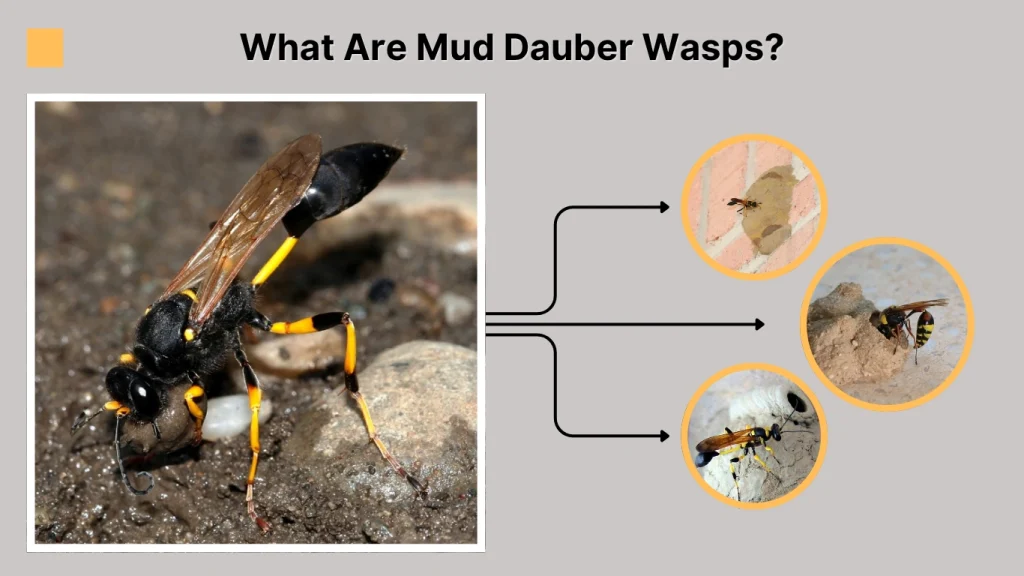
Mud dauber wasps are solitary insects known for constructing nests out of mud. Unlike social wasps that live in colonies, each mud dauber female works alone to build, hunt, and lay eggs. Their nests—often found on walls, ceilings, or under eaves—are composed of multiple mud tubes, each housing a single egg and a supply of food for the developing larva.
These wasps are generally non-aggressive and rarely sting unless provoked. Their primary role in the environment is as predators, particularly of spiders, which they hunt with precision and store as live food for their offspring.
Hunting Style and Feeding Behavior
Mud dauber wasps have a fascinating way of securing food. Female mud daubers paralyze their prey—usually spiders—using a non-lethal sting. They then transport the immobilized spiders to their nests and seal them inside the mud tubes alongside their eggs. When the larva hatches, it has a fresh, paralyzed spider to feed on.
Adults, on the other hand, don’t eat spiders. They rely on nectar, honeydew, and other sugary substances for energy. This difference in diet between adults and larvae is key to understanding their overall feeding behavior.
14 Common Foods Mud Dauber Wasps Like to Eat
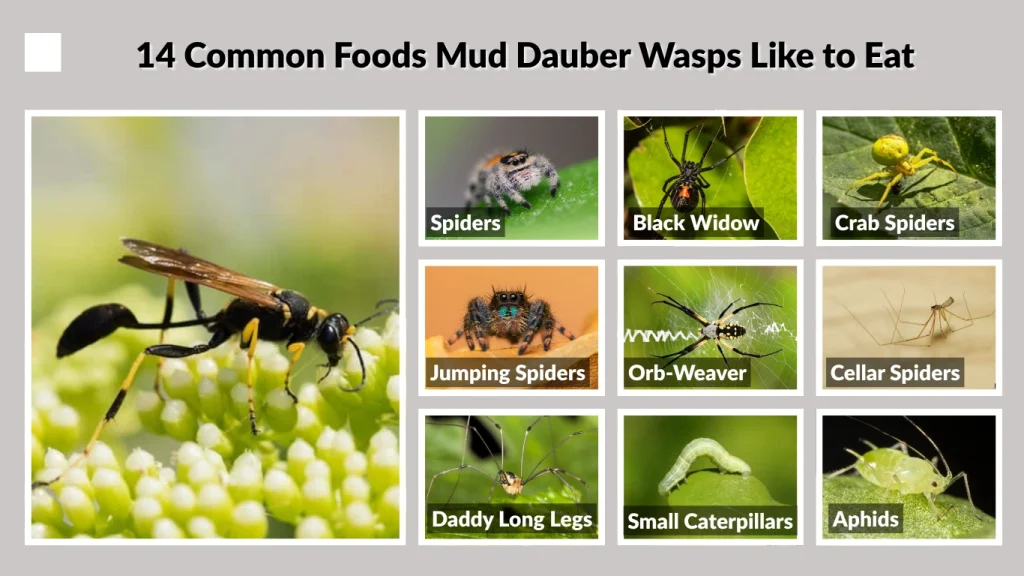
Below are the most common food sources mud dauber wasps depend on—primarily spiders for their larvae and sugary substances for the adults.
1. Spiders (Primary Food for Larvae)
Spiders are the main food source for mud dauber larvae. The female wasp hunts, stings, and paralyzes the spider before placing it into a mud cell with her egg. This ensures the larva has fresh food when it hatches.
2. Black Widow Spiders
Surprisingly, black widow spiders are one of the mud dauber’s preferred prey. Their venom doesn’t harm the wasp, and capturing black widows helps reduce a potentially dangerous spider population.
3. Crab Spiders
These ambush predators are another target. Mud daubers often find them hidden among flowers or leaves, making them a convenient food source.
4. Jumping Spiders
Fast and agile, jumping spiders are often hunted by mud daubers due to their abundance and size. Their nutritional value makes them ideal for larvae.
5. Orb-Weaver Spiders
Mud daubers often raid the intricate webs of orb-weavers, paralyzing them mid-web or after luring them out. These large spiders provide a good amount of food for a growing larva.
6. Cellar Spiders
Common in dark, damp spaces, cellar spiders are easy for mud daubers to find in basements, crawl spaces, and sheds.
7. Daddy Long Legs (Harvestmen)
Although not true spiders, daddy long legs are sometimes taken as prey due to their small size and slow movement.
8. Small Caterpillars (Occasionally)
In rare cases, mud daubers may target soft-bodied insects like caterpillars, especially if spiders are scarce in the environment.
9. Aphids (Occasionally Consumed)
Aphids are sometimes targeted for their soft bodies, though they are more often a food source for other insects like ladybugs and lacewings.
10. Flies (As Accidental or Rare Prey)
Mud daubers may occasionally sting and use small flies if more desirable prey is unavailable, though it’s not common behavior.
11. Nectar (Adult Wasps Feed on It)
Adult mud daubers rely on nectar as a main energy source. They visit flowers much like bees, drinking the sugary liquid for sustenance.
12. Honeydew (From Aphids – for Energy)
Honeydew is a sticky, sugar-rich liquid produced by aphids and other sap-sucking insects. Mud daubers may consume this when available on leaves or branches.
13. Water (Used for Digestion & Nest Building)
While not a food, water is essential. Adults drink water to stay hydrated and mix it with dirt to create mud for nest building.
14. Tree Sap (Extra Energy Source)
Occasionally, adult mud daubers drink tree sap for a quick energy boost, especially if flowers or nectar sources are limited.
Differences Between Larval and Adult Diets
What Larvae Eat
Mud dauber larvae feed exclusively on the paralyzed prey their mother provides—primarily spiders. Once the egg hatches inside the mud nest, the larva consumes the immobilized spider, which remains alive but paralyzed to ensure freshness. The larva eats until it’s ready to pupate, relying entirely on this stockpiled protein source for growth.
What Adults Eat
In contrast, adult mud daubers do not hunt for food to consume themselves. Instead, they feed on nectar from flowers, honeydew from aphids, tree sap, and water. These sugary and hydrating substances provide the energy needed for flight, nest construction, and foraging.
How They Catch and Store Food
Mud dauber wasps are skilled hunters. A female wasp locates a spider, delivers a precise sting that paralyzes but doesn’t kill it, and then carries or drags the immobilized spider back to her nest. Each mud cell in the nest is stocked with one or more spiders, depending on their size, along with a single egg.
Once the cell is filled, she seals it with mud. The egg hatches into a larva, which feeds on the spiders until it’s ready to enter the pupal stage. This efficient and purposeful method ensures the larva has all the food it needs in a secure, sealed environment.
Role in Ecosystem as Predators
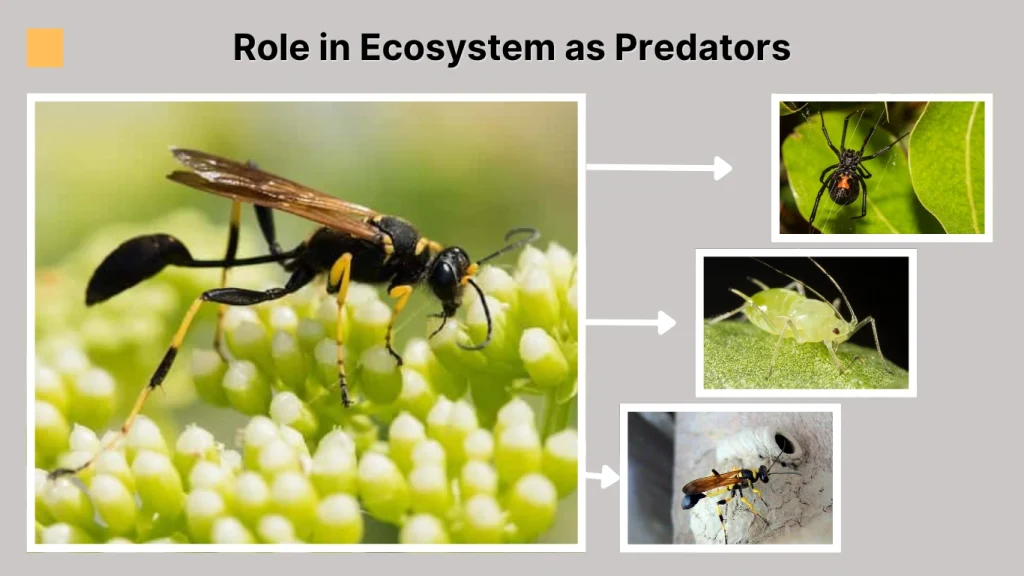
Mud daubers play an important ecological role by helping control spider populations. Their preference for spiders—especially venomous ones like black widows—makes them natural pest controllers. This balance helps keep both indoor and outdoor spaces safer and reduces reliance on chemical pest control.
While they don’t sting unless provoked, their hunting activities are beneficial to gardens, homes, barns, and other human spaces where spiders may be considered a nuisance.
FAQs
Do mud daubers eat mosquitoes?
No, mud daubers do not typically hunt or eat mosquitoes. Their primary prey are spiders, and adults feed on nectar and sugary substances.
What happens if they can’t find spiders?
If spiders are scarce, the female may use other small insects like caterpillars or flies, but this is rare. Without proper prey, she may not complete the nest.
Can they sting prey to kill it?
Mud daubers don’t kill their prey. They sting spiders to paralyze them so the food remains fresh for their larvae.
Do adult mud daubers eat the same food as larvae?
No. Larvae eat spiders, while adults feed on nectar, honeydew, and tree sap for energy.
Are mud daubers helpful in pest control?
Yes. By reducing spider populations—especially black widows—they help control pests naturally around homes and gardens.
