
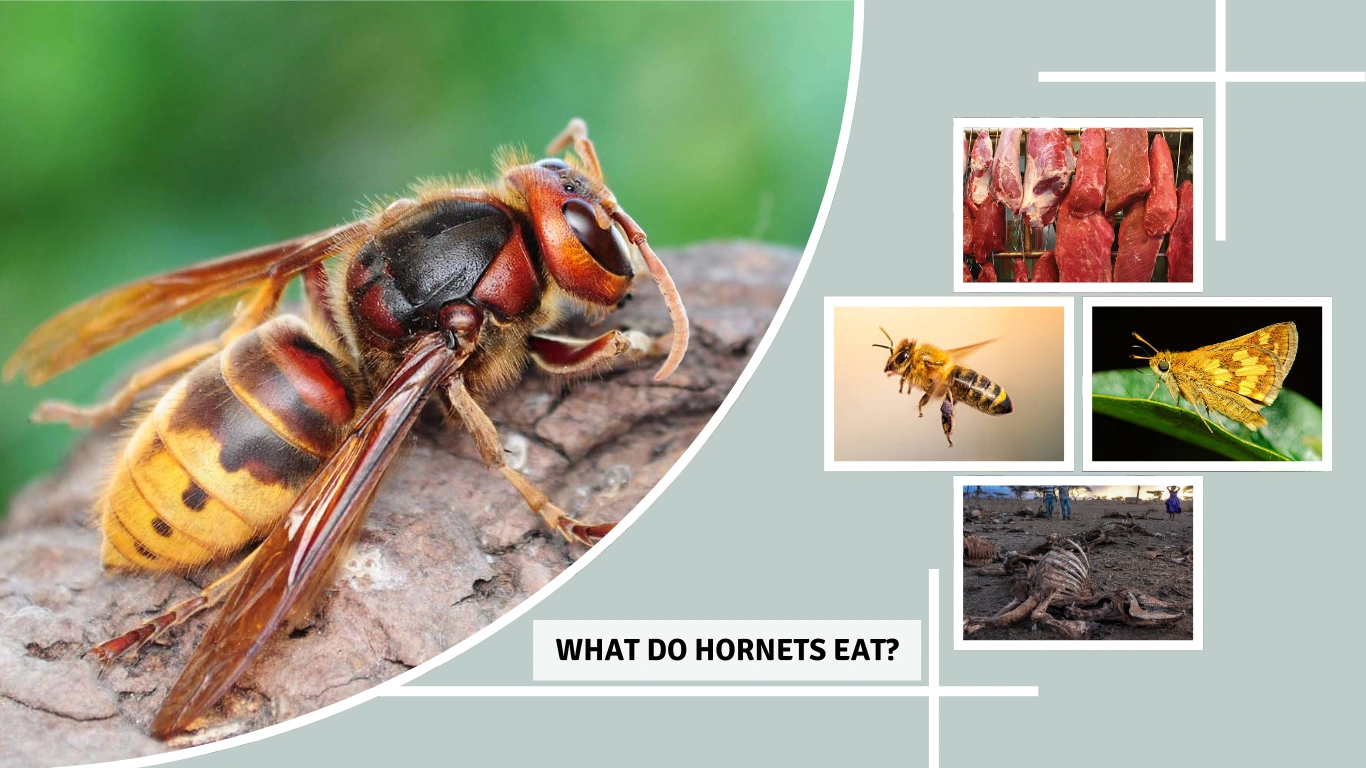
Hornets are powerful predators with a fearsome reputation, but many people are surprised to learn just how varied and purposeful their diet is. From meat-eating hunters to sweet-toothed nectar lovers, hornets adapt their meals to fit the season, their environment, and their role in the colony. In this article, we’ll explore exactly what hornets eat, what types of insects they hunt, whether they eat fruit, and even whether they eat other hornets or animals.
What Does a Hornet Eat?
Hornets are omnivorous insects, meaning they consume both plant-based and animal-based food sources. Their diet changes throughout their life cycle and depending on whether they are adult workers or larvae.
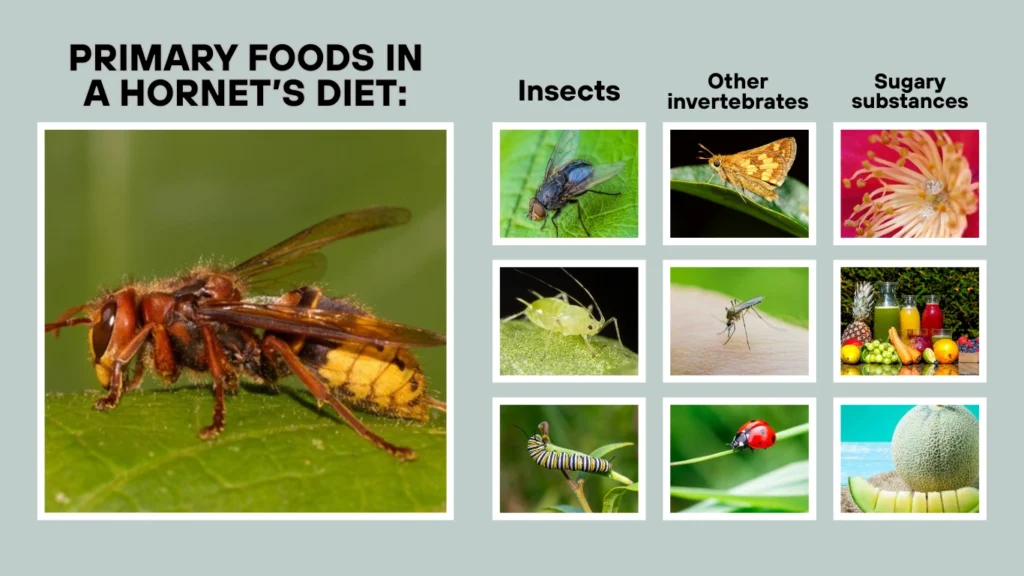
Primary Foods in a Hornet’s Diet:
- Insects: Flies, aphids, caterpillars, spiders, grasshoppers, crickets, beetles, ants, and wasps
- Other invertebrates: Moths, mosquitoes, ladybugs, maggots, stink bugs
- Sugary substances: Nectar, fruit juice, honeydew, sap, and honey
- Meat: Hornets chew on raw meat and animal remains (especially for larvae)
Adult hornets prefer sugary substances like nectar and fruit for their own energy needs. However, they hunt protein-rich prey to feed their developing larvae back in the nest.
Why Do Hornets Eat Meat?
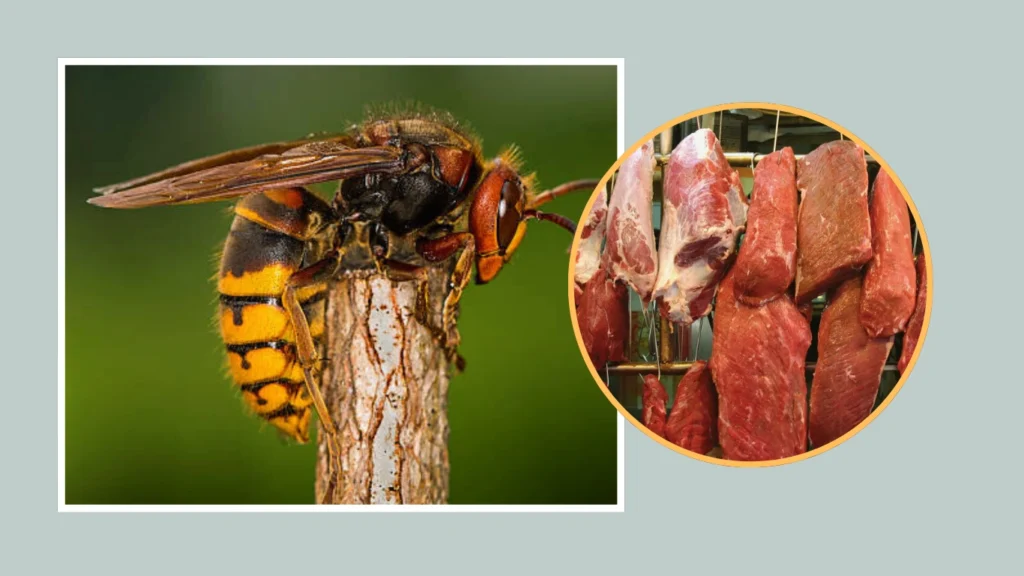
Hornets are predatory by nature, especially during the warmer months when larvae require high-protein meals to grow. Adult hornets chew up insects and meat into a pulp and bring it back to the nest. Interestingly, the larvae excrete a sugary fluid (called trophallaxis) which the adults consume. So, adult hornets feed the larvae protein and receive sugar in return — a mutual exchange vital to colony survival.
Do Hornets Eat Other Insects?
Absolutely. In fact, hornets are among nature’s most effective insect hunters.
Common Insects Hornets Eat:
- Flies and gnats – Easy to catch and high in protein
- Mosquitoes – Especially targeted by smaller hornet species
- Spiders – Hornets paralyze them and carry them back to the nest
- Caterpillars and grubs – Common prey for feeding larvae
- Grasshoppers, mantises, and dragonflies – Larger prey for giant hornet species
- Maggots and stink bugs – Opportunistically eaten when abundant
- Aphids and ladybugs – Hornets help control garden pests too
Do Hornets Eat Bees and Wasps?
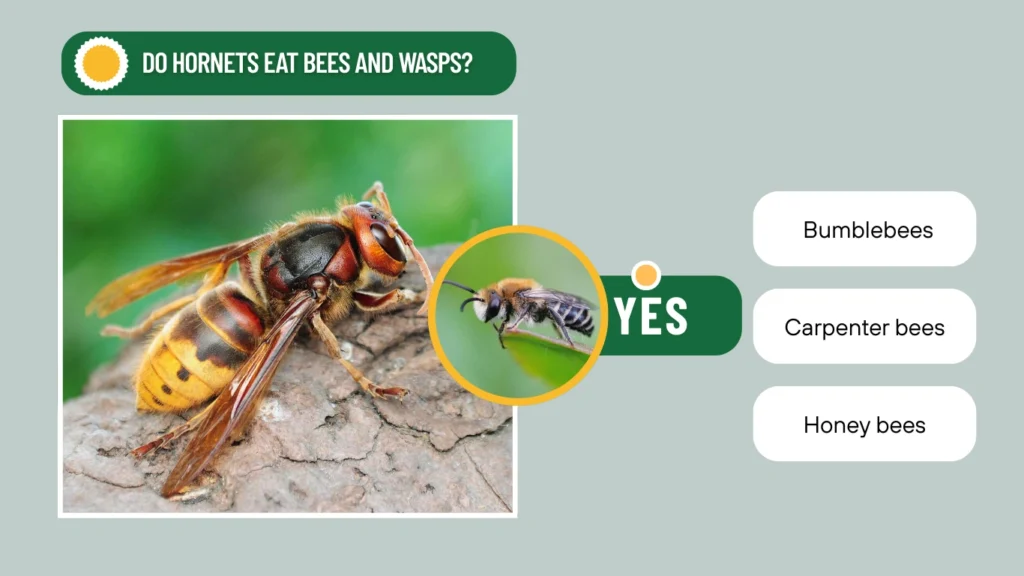
Yes — hornets are notorious for raiding bee hives. They kill bees, chew them up, and bring the pulp back to feed their larvae. Asian Giant Hornets (also known as “murder hornets”) are particularly infamous for wiping out entire honey bee colonies.
Hornets also eat:
- Bumblebees
- Carpenter bees
- Honey bees
- Paper wasps
- Yellow jackets
Despite belonging to the same family, hornets will not hesitate to prey on other wasp species if food is scarce.
What Do Specific Hornet Species Eat?
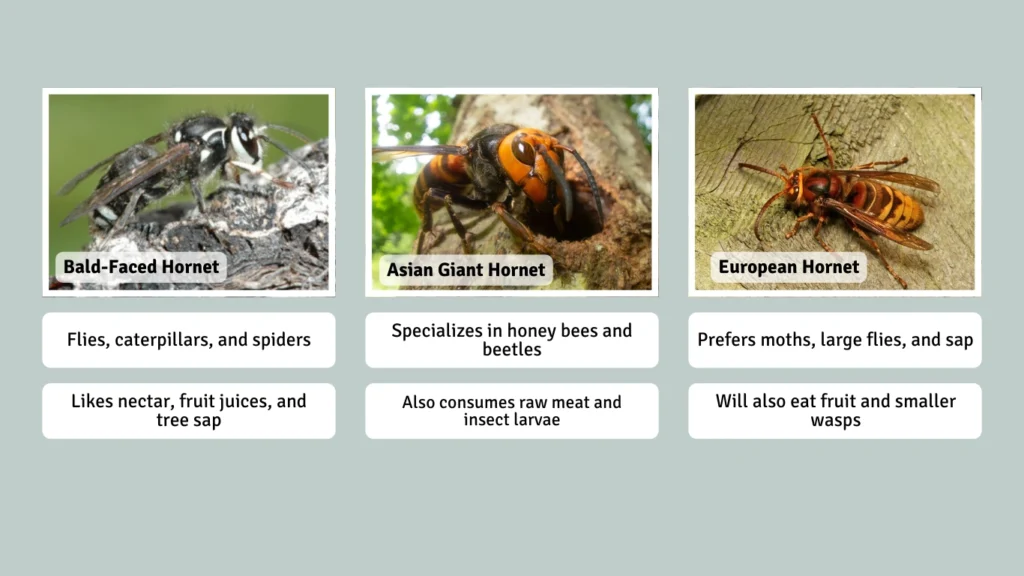
Different hornet species have varied diets depending on habitat and prey availability:
Bald-Faced Hornet
- Flies, caterpillars, and spiders
- Likes nectar, fruit juices, and tree sap
Asian Giant Hornet
- Specializes in honey bees and beetles
- Also consumes raw meat and insect larvae
European Hornet
- Prefers moths, large flies, and sap
- Will also eat fruit and smaller wasps
Ground Hornet (Cicada Killer)
- Paralyzes and stores cicadas in burrows
- Feeds on nectar and juices
Japanese Hornet
- Similar to Asian hornets; eats bees and larger insects
Australian Hornet
- Hunts insects like caterpillars and grasshoppers
- Feeds on flowers and fruit juices
Do Hornets Eat Unusual Things?
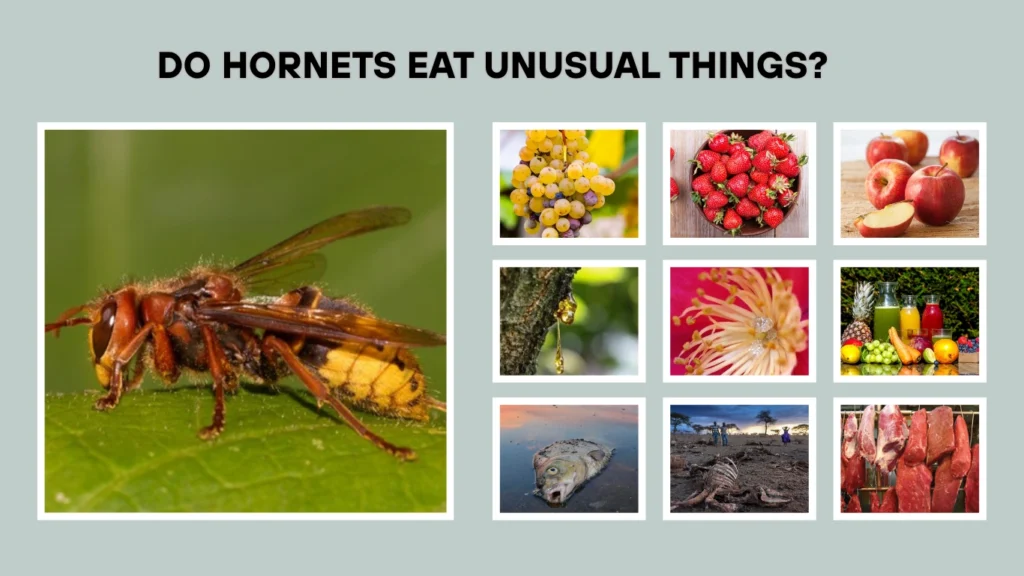
You’d be surprised how adaptive hornets can be:
Do Hornets Eat Wood?
They don’t eat wood, but they chew it to make their nests. Their saliva mixes with the chewed wood fibers to create a paper-like material.
Do Hornets Eat Fruit and Sugar?
Yes. Hornets are drawn to:
- Overripe grapes
- Strawberries
- Apples
- Sap from trees
- Nectar from flowers
- Sugar from soda, candy, or garbage
Do Hornets Eat Dead Animals or Meat?
Yes. Hornets will scavenge on:
- Dead fish
- Animal carcasses
- Raw meat scraps left outside
They especially seek out meat during the breeding season to feed their larvae.
Do Hornets Eat Other Unusual Things?
Here are answers to more rare or strange questions:
- Do hornets eat poop or dog feces? Rarely, but they might if it contains sugars.
- Do hornets eat plants or leaves? No. They don’t digest plant matter.
- Do hornets eat flowers or pollen? They may drink nectar but don’t consume pollen like bees.
- Do hornets eat snakes, mice, or birds? No. These animals are far too large.
- Do hornets eat each other? Cannibalism may happen in extreme cases of hunger or when defending the nest.
Seasonal Diet Changes
What Do Hornets Eat in the Winter?
Most hornets die in the winter, except for fertilized queens who hibernate and emerge in spring. During cold seasons:
- There’s no active feeding by hornets
- The queen survives off stored fat
- Colonies collapse and are not reused
What Do Hornets Eat and Drink Daily?
- Eat: Insects and sugary foods
- Drink: Nectar, sap, rainwater, and fluids from prey
Hornets stay hydrated through liquid sugars or direct drinking from natural sources.
Hornet Behavior While Eating
Hornets don’t eat in the traditional sense like mammals do. Instead:
- Adults chew up prey into a paste
- Feed it to larvae
- Larvae release a sweet secretion, which adults consume
This is one of the most fascinating feeding systems in the insect world — a dual food exchange.
Do Hornets Eat Through Wood?
No. Hornets chew wood to build nests, not for nutrition. You may find hornets stripping fences, sheds, or decks, but they’re not eating it — just harvesting material for construction.
FAQs About Hornet Diet
Can Humans Eat Hornets?
Yes. In some cultures, fried or roasted hornets are considered a delicacy and are high in protein.
Do Hornets Eat People or Flesh?
No. Hornets do not eat human flesh. They will sting in defense but are not predators of people.
Do Hornets Eat Other Hornets?
It’s possible in rare cases, such as colony collapse or food shortage, but it’s not common behavior.
Conclusion
Hornets are more than just aggressive insects — they’re efficient hunters, master builders, and skilled foragers. From flies and bees to fruit and sugary drinks, their diet helps balance ecosystems by controlling pest populations and recycling decaying matter. Whether you’re observing them in your garden or dealing with a nest near your home, understanding what hornets eat gives insight into their role in nature and how to coexist safely.
