

For most people, wasps are creatures to avoid. Known for their painful stings and aggressive behavior, they are often seen as one of nature’s more intimidating insects. But while humans may shy away from them, many animals see wasps as a valuable food source. Birds, mammals, reptiles, amphibians, and even other insects have learned how to eat wasps without becoming victims of their sting. Each predator has its own strategy, making wasps an important part of the food chain.
Why Wasps Have Predators

Role of Wasps in the Food Chain
In ecosystems, no species stands entirely alone. Wasps themselves are effective predators, feeding on caterpillars, flies, and other insects, helping control populations of pests. But they also serve as prey. For many animals, wasps provide a protein-rich diet that supports survival, especially during breeding or migration seasons.
Nutritional Value of Wasps
Why would animals risk stings for such prey? The answer lies in nutrition. Wasps offer:
- High protein: vital for muscle and feather growth.
- Fat content: a dense source of energy.
- Larvae: soft-bodied and stingless, making them easy to digest.
- Chitin: while harder to process, it contributes to a balanced insect diet.
This nutritional package explains why so many animals willingly take the risk of hunting wasps.
Birds That Eat Wasps

Birds are among the most skilled predators of wasps. Many species rely on insects to feed themselves and their chicks, and wasps often appear on their menu.
Species That Hunt Adult Wasps
- Bee-eaters: Famous for their diet of bees and wasps. They catch wasps mid-flight, then rub them against a branch to remove the stinger before swallowing.
- Swallows & Purple Martins: Agile aerial hunters that swoop through the air to catch flying insects, including wasps. Their speed and precision make them excellent at avoiding stings.
Species That Raid Nests
- Woodpeckers: Rather than chasing adults, woodpeckers use their strong beaks to drill into tree cavities and wooden structures, pulling out larvae from wasp nests.
- Honey Buzzards: These birds are specialized wasp predators. They tear open nests to feast on larvae and pupae, sometimes consuming entire colonies.
Hunting Process
Birds have developed clever techniques to eat wasps safely:
- Disabling the insect – crushing the body or rubbing off the stinger.
- Targeting inactive times – hunting at dawn or dusk when wasps are sluggish.
- Focusing on larvae – raiding nests for stingless young.
These strategies allow birds to benefit from wasps’ rich nutrition with minimal risk.
Mammals That Eat Wasps

While it may be surprising, several mammals also prey on wasps, particularly for their larvae.
Bears
Bears are among the most well-known wasp predators. They dig into ground nests to reach larvae, which provide a protein-rich meal. Their thick fur and skin give them natural protection against stings, making raids less dangerous.
Skunks and Badgers
These nocturnal mammals are efficient wasp hunters. Using their claws, they dig up ground nests and feed on the larvae inside. By striking at night, they face fewer active adult wasps, reducing the risk of attack.
Raccoons and Opossums
Opportunistic feeders like raccoons and opossums will raid wasp nests if they stumble upon them. Their feeding often occurs at night, when wasps are resting and less able to defend their colonies.
Hunting Process
Mammals typically:
- Dig into soil or wooden nests.
- Claw open colonies to expose larvae.
- Eat quickly before too many adults can retaliate.
Their fur and nocturnal habits give them an advantage against defensive wasps.
Reptiles and Amphibians
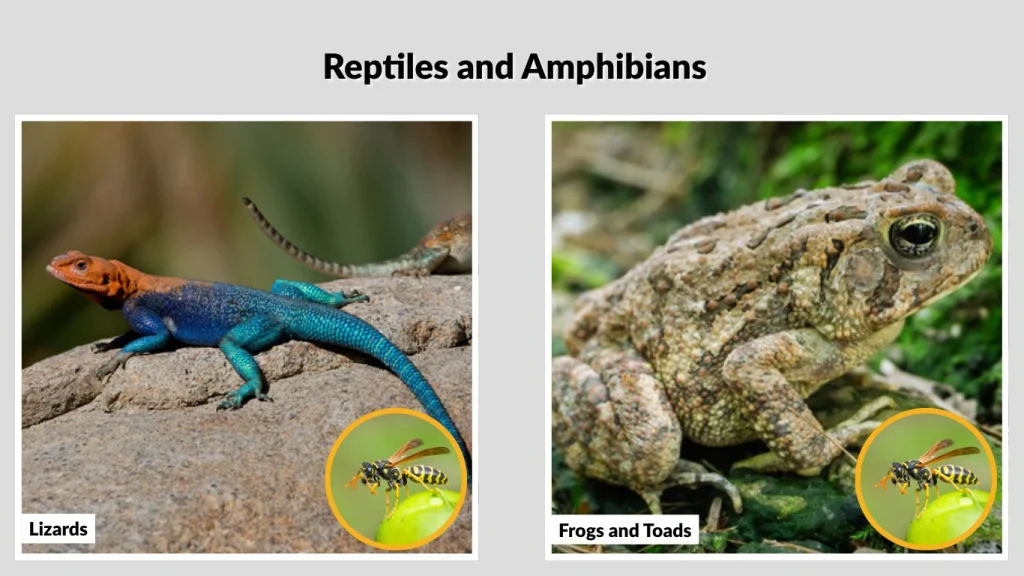
Wasps are also preyed upon by certain reptiles and amphibians, though usually in smaller numbers.
Lizards
Some lizard species snap up adult wasps when they land or crawl on surfaces. They usually target slower individuals or solitary wasps rather than swarms.
Frogs and Toads
Amphibians like frogs and toads occasionally eat wasps. Their sticky tongues allow them to ambush small wasps in a single quick strike. Because the insect is swallowed whole, the wasp rarely has a chance to sting.
Hunting Process
- Ambush predators – waiting still until a wasp comes close.
- Fast reflexes – catching prey before it reacts.
- Preference for solitary wasps – reducing risk from swarms.
Though not their primary food source, reptiles and amphibians demonstrate that even stinging insects are vulnerable to opportunistic predators.
Insects and Arachnids That Eat Wasps
Not all wasp predators are larger animals. Many insects and spiders actively hunt and consume wasps, often using stealth and speed.
Praying Mantises
Mantises are ambush predators with lightning-fast reflexes. They hide among leaves, waiting patiently until a wasp comes close. With a sudden strike, they grab the wasp in their spiked forelegs, holding it tightly while eating it alive. Their speed prevents the wasp from stinging.
Spiders
Several spider species prey on wasps. Orb-weaver spiders spin large webs that trap flying wasps. Once entangled, the spider quickly wraps the wasp in silk and injects venom to paralyze it. Some jumping spiders are even bold enough to stalk and pounce on smaller wasps directly.
Dragonflies
Known as skilled aerial hunters, dragonflies catch wasps mid-flight with precision. Their powerful jaws crush the insect before it has time to sting.
Other Wasps
Interestingly, some wasps feed on other wasp species. Larger or parasitic wasps may attack smaller ones, consuming them or using their larvae as hosts.
Fish and Aquatic Predators
Though less common, wasps can also fall prey to aquatic animals.
- Fish: Surface-feeding fish such as trout or bass may snap up wasps that fall into the water. Because the wasps are already weakened or drowning, they pose little risk.
- Frogs in ponds may also take advantage of wasps struggling on the surface, quickly swallowing them whole.
The hunting process here is opportunistic—animals eat wasps only when they’re vulnerable in water.
How Animals Avoid Stings
Eating a stinging insect requires strategy. Over time, predators have developed several adaptations and techniques to minimize risk:
- Targeting larvae: Many animals focus on stingless larvae, which are safe and packed with protein.
- Timing attacks: Predators like skunks and raccoons raid nests at night when wasps are inactive.
- Crushing or disarming stingers: Birds such as bee-eaters remove stingers by rubbing wasps against hard surfaces.
- Protective adaptations: Thick fur, feathers, or skin act as natural armor against stings.
- Speed and surprise: Mantises, dragonflies, and frogs rely on lightning-fast strikes so the wasp has no chance to fight back.
These methods show the balance between predator and prey—while wasps defend with stings, predators evolve to overcome them.
Ecological Importance
Natural Population Control
Wasps are important for pest control, but unchecked populations could become overwhelming. Predators keep wasp numbers balanced, preventing colonies from expanding too aggressively.
Food Web Connections
Wasps represent both predator and prey in the food chain. They consume insects harmful to crops but also provide nutrition for a wide range of animals. This dual role makes them vital to ecological balance.
Human Benefits
By preying on wasps, animals indirectly help humans. Natural predators reduce wasp populations near farms, gardens, and homes, lowering the need for chemical control. Birds like swallows and purple martins, for example, provide a natural solution to summer wasp swarms.
Myths and Misconceptions
- “Wasps have no natural enemies.”
False—many animals, from bears to spiders, eat wasps regularly. - “Eating wasps is always dangerous.”
While risky, predators have strategies to handle stings safely. For many, wasps are simply part of their diet. - “Only birds eat wasps.”
In reality, mammals, reptiles, amphibians, insects, spiders, and even fish feed on them.
FAQs
Do wasps have natural enemies?
Yes. Birds, mammals, reptiles, amphibians, spiders, and insects all prey on wasps.
Do animals get stung while eating wasps?
Sometimes, but many are protected by fur, feathers, or fast reflexes. Over time, they learn techniques to reduce the risk.
Which animal is the biggest wasp predator?
Honey buzzards are highly specialized, while bears are among the most powerful, raiding entire nests for larvae.
Do animals eat wasp nests?
Yes. Mammals such as skunks and bears dig up nests for larvae, while woodpeckers and honey buzzards tear into tree or ground nests.
Can wasps defend themselves successfully?
Yes, through stings and swarm defense. However, predators often adapt by attacking at night or going straight for larvae.
