
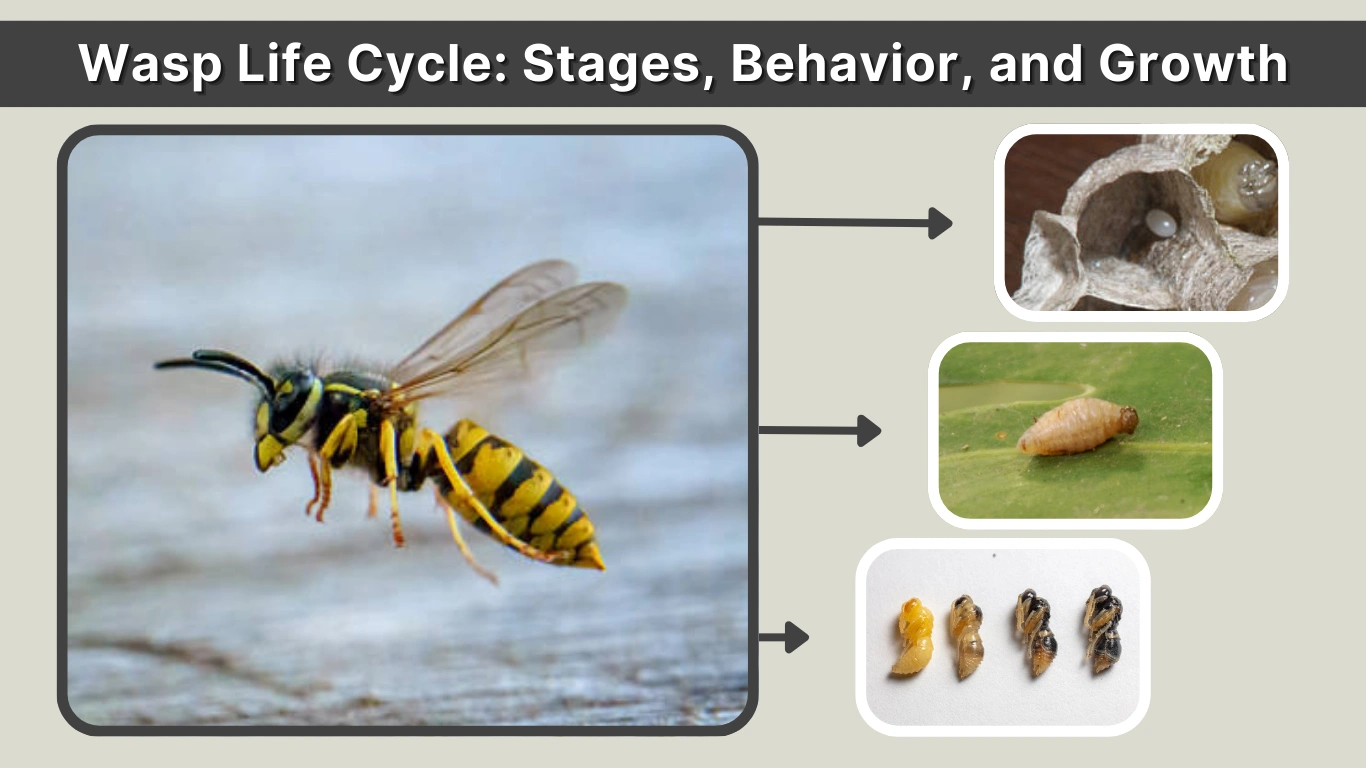
Wasps are fascinating insects that play a crucial role in maintaining ecological balance. Although many people associate them with painful stings, wasps are also important pollinators and natural pest controllers. Understanding the wasp life cycle helps gardeners, homeowners, and students appreciate how these insects grow and function throughout the year. Like butterflies and beetles, wasps undergo complete metamorphosis, developing through four distinct stages: egg, larva, pupa, and adult. Each stage serves a specific purpose in their survival and reproduction.
What Is a Wasp?
Wasps belong to the order Hymenoptera, which also includes bees and ants. They are typically recognized by their slender bodies, narrow waists, and smooth, shiny appearance. Unlike bees, most wasps have fewer body hairs and can sting multiple times.
There are two main categories of wasps: social and solitary. Social wasps, such as yellow jackets and hornets, live in colonies with a queen and worker system. Solitary wasps, on the other hand, live independently and do not form large colonies.
Wasps are highly beneficial to ecosystems. Many species act as predators, feeding on insects that damage crops and gardens. Some also contribute to pollination while feeding on nectar.
Overview of the Wasp Life Cycle
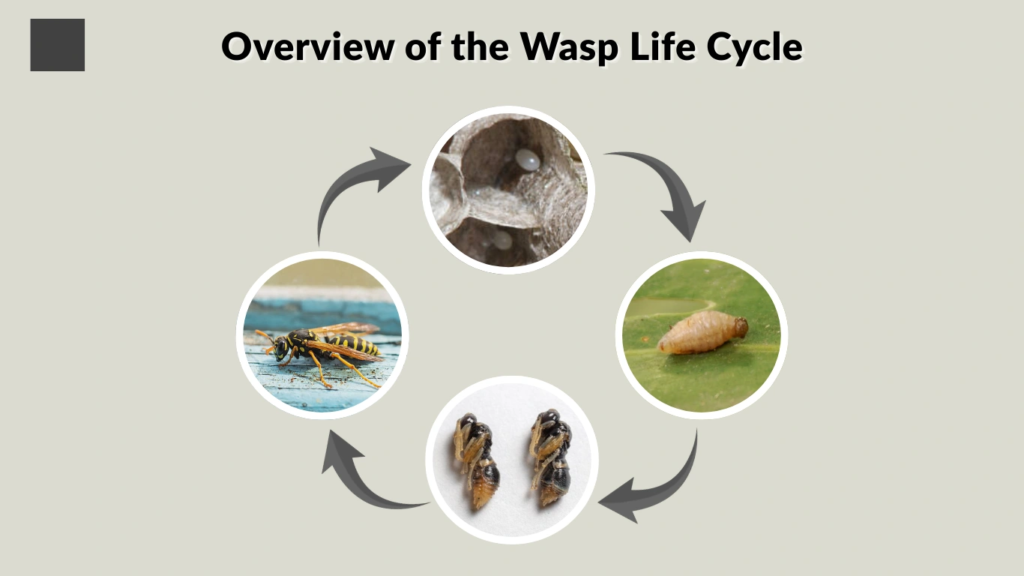
The wasp life cycle consists of four stages:
- Egg
- Larva
- Pupa
- Adult
This process is known as complete metamorphosis. Each stage looks entirely different from the others and has a specific function. The duration of the life cycle varies depending on species, climate, and environmental conditions. In warm weather, the full cycle can take just a few weeks, while cooler temperatures may slow development.
Stage 1 – Egg
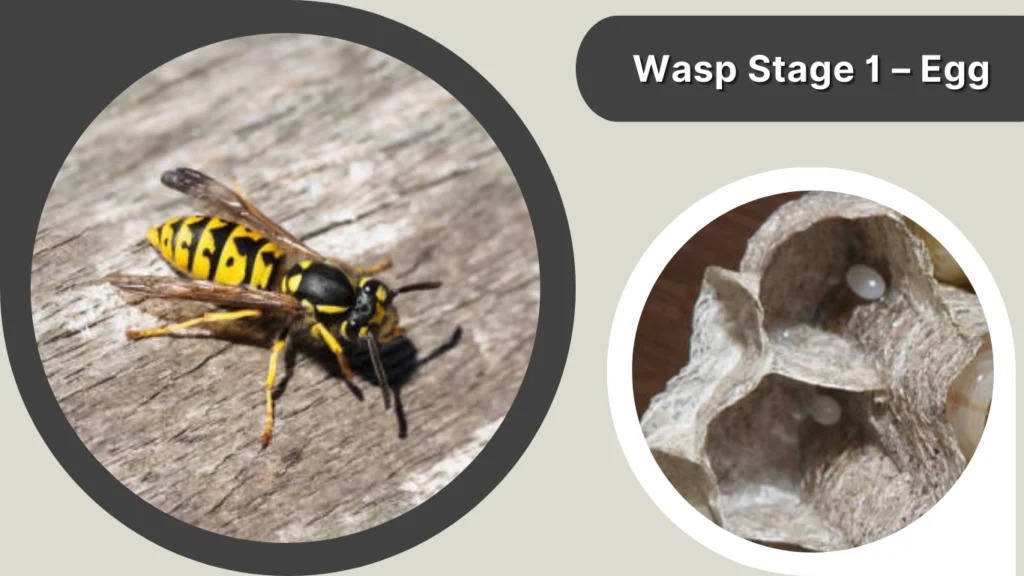
The life cycle begins when a fertilized female wasp, usually the queen in social species, lays eggs. In spring, after emerging from winter hibernation, the queen builds a small nest and lays her first batch of eggs inside hexagonal cells.
Solitary wasps may lay eggs in underground burrows, mud nests, or even inside paralyzed insects that will serve as food for the larvae.
Wasp eggs are tiny, white, and oval-shaped. They typically hatch within a few days to a week, depending on temperature. Warm conditions speed up development, while cold weather slows it down.
The egg stage is brief but critical, as proper incubation ensures healthy larvae.
Stage 2 – Larva
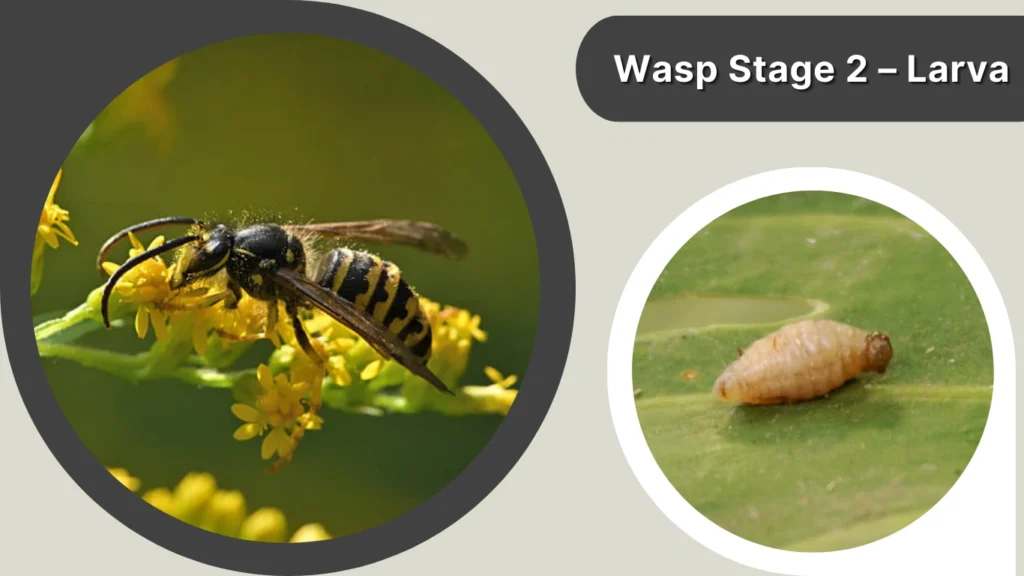
Once the egg hatches, a larva emerges. The larva looks like a small, legless grub. At this stage, its primary function is to eat and grow.
Feeding and Growth
In social species, worker wasps feed the larvae chewed-up insects or other protein-rich food. The larvae may produce sugary secretions that feed adult workers in return. This exchange strengthens colony cooperation.
In solitary species, the mother provides paralyzed prey, such as caterpillars or spiders, inside the nest. The larva feeds on this food source until fully grown.
During this stage, the larva molts several times as it increases in size. Rapid growth occurs over approximately one to two weeks, depending on species and environmental conditions.
The larval stage is one of the most important periods in the wasp life cycle because it determines the strength and health of the adult wasp.
Stage 3 – Pupa
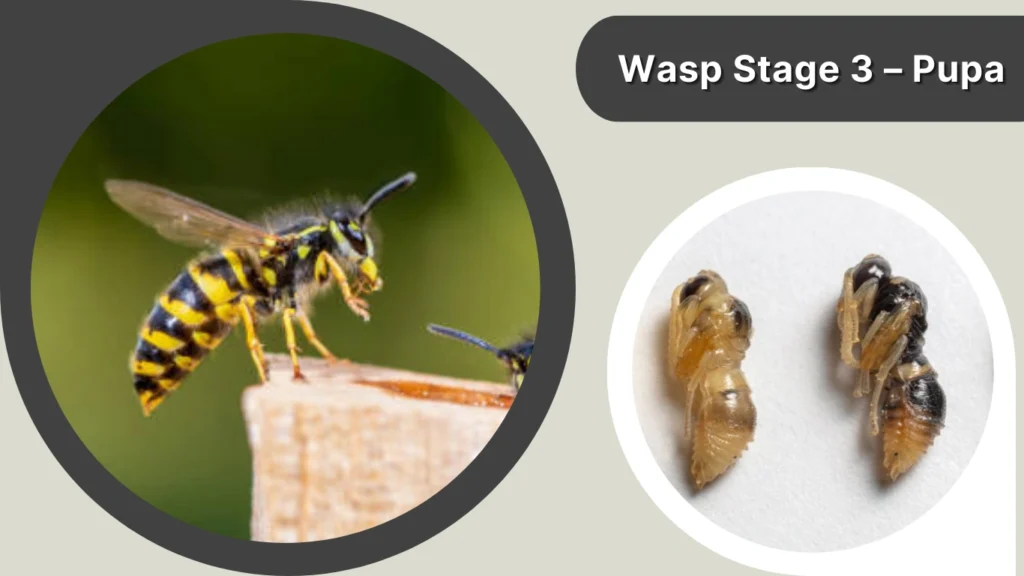
After reaching full size, the larva enters the pupal stage. In many species, it spins a protective cocoon around itself inside the nest cell.
During this stage, dramatic internal changes occur. The larval body transforms into an adult wasp. Wings, legs, antennae, and compound eyes develop. This transformation is similar to what happens inside a butterfly chrysalis.
The pupal stage may last from several days to a few weeks. Temperature plays a significant role in development speed. Warm environments accelerate the transformation, while cooler climates extend the pupation period.
Though inactive externally, this stage is critical because it shapes the fully formed adult wasp.
Stage 4 – Adult Wasp
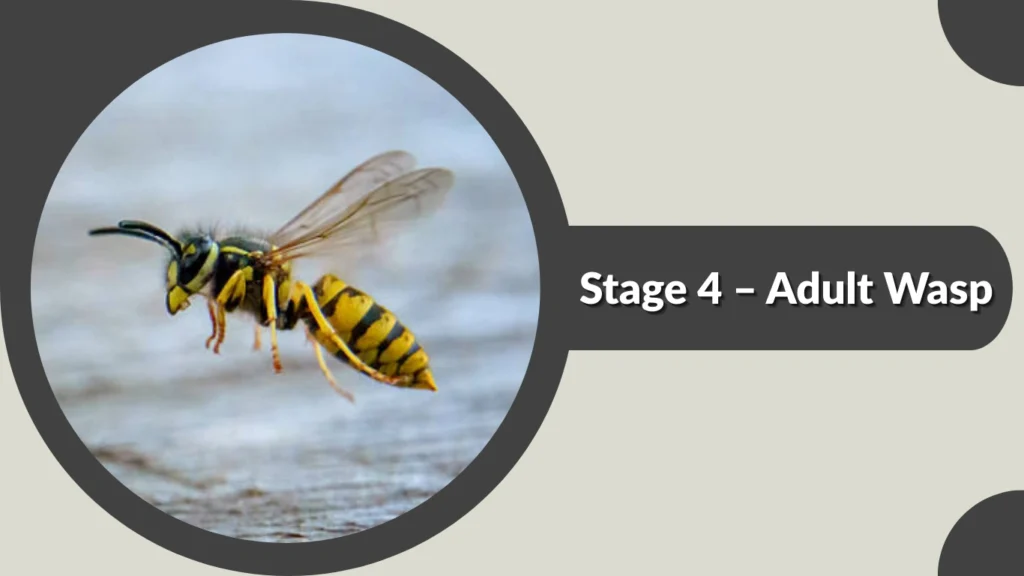
When development is complete, the adult wasp chews its way out of the nest cell. At first, its body may appear soft and pale. Within a short time, its exoskeleton hardens, wings expand, and the wasp becomes fully active.
Roles in Social Colonies
In social species, adult wasps fall into three categories:
- Queen: The primary egg-layer responsible for reproduction.
- Workers: Non-reproductive females that gather food, care for larvae, and defend the nest.
- Drones (males): Their main role is to mate with new queens.
Workers typically live for a few weeks, while queens can survive for several months and even overwinter.
Adult wasps focus on feeding, nest building, colony maintenance, and reproduction. Their diet often shifts from protein in early life to more sugary substances like nectar later on.
Seasonal Life Cycle of Social Wasps
The life cycle of social wasps follows a clear seasonal pattern:
Spring
Overwintered queens emerge from hibernation. They build small nests and lay the first eggs.
Summer
The colony grows rapidly as worker wasps hatch and take over nest duties. The queen focuses solely on laying eggs.
Late Summer
The colony reaches peak population. New queens and male drones are produced for mating.
Fall and Winter
As temperatures drop, most workers and old queens die. Only newly fertilized queens survive by hibernating in sheltered locations until the following spring.
This seasonal cycle repeats each year.
Life Cycle of Solitary vs Social Wasps
While all wasps undergo the same four developmental stages, their lifestyles differ significantly.
Social Wasps
- Live in colonies
- Share responsibilities
- Build large communal nests
- Colony dies off annually (except new queens)
Solitary Wasps
- Live and nest alone
- No worker caste
- Each female lays and provisions her own eggs
- No colony cooperation
Solitary wasps are generally less aggressive because they do not have a colony to defend.
Factors That Affect Wasp Development
Several factors influence how quickly and successfully wasps develop:
- Temperature: Warmer climates accelerate growth.
- Food Availability: Abundant prey leads to healthier larvae.
- Species Differences: Some species naturally develop faster than others.
- Habitat Conditions: Shelter and nest security impact survival.
- Predators and Parasites: Birds, spiders, and parasitic insects can disrupt development.
Environmental balance is essential for maintaining stable wasp populations.
How Long Does a Wasp Live?
The lifespan of a wasp varies depending on its role and species.
- Worker Wasps: Typically live 12–22 days.
- Male Wasps: Usually survive only long enough to mate.
- Queen Wasps: Can live up to a year, especially if they overwinter.
Solitary wasps often live for a few weeks to a couple of months, depending on environmental conditions.
Why Understanding the Wasp Life Cycle Matters
Learning about the wasp life cycle has practical benefits. For gardeners, wasps help control harmful insects naturally. For homeowners, understanding seasonal patterns can help prevent nest infestations. Knowing that colonies decline naturally in fall may prevent unnecessary pesticide use.
Additionally, wasps contribute to biodiversity and ecological stability. Recognizing their life cycle encourages informed decisions about pest management and environmental conservation.
FAQs
How long does it take for a wasp to develop?
The full wasp life cycle typically takes about 3 to 6 weeks, depending on the species and environmental conditions. Warm temperatures speed up development, while cooler climates slow it down. Each stage—egg, larva, pupa, and adult—must be completed before the wasp becomes fully mature.
Do all wasps go through the same life cycle?
Yes, all wasps undergo complete metamorphosis, meaning they pass through egg, larva, pupa, and adult stages. However, their nesting habits and social structures differ. Some species live in colonies, while others are solitary and raise their young independently.
What happens to wasps in winter?
In social species, most worker wasps and old queens die when temperatures drop. Only newly fertilized queens survive by hibernating in protected areas. They emerge in spring to start new colonies. Solitary wasps may overwinter as larvae or pupae inside nests.
How many eggs does a queen wasp lay?
A queen wasp can lay hundreds or even thousands of eggs during a single season. Early in spring, she lays a small batch to establish the colony. As worker wasps mature and assist with nest duties, egg production increases significantly.
Are wasps useful or harmful?
Wasps are highly beneficial to ecosystems. They help control pest insect populations and contribute to pollination. While they can sting if threatened, they are not naturally aggressive without reason. Their ecological benefits often outweigh the risks they pose.
Conclusion
The wasp life cycle is a remarkable process of complete metamorphosis, progressing through egg, larva, pupa, and adult stages. Each phase plays a crucial role in the survival and success of the species. From spring nest-building queens to busy summer workers and overwintering survivors, wasps follow a carefully timed seasonal pattern. Although often misunderstood, wasps are essential contributors to natural pest control and ecological balance. By understanding their life cycle, we can better appreciate their role in the environment and make informed decisions about managing their presence responsibly.
