

White butterflies are found across nearly every continent, displaying delicate patterns, soft coloration, and graceful flight. Though similar at first glance, each species has unique markings, habitats, and behaviors. From forest-dwelling wood whites to bold caper whites of dry savannas, these butterflies thrive in diverse environments. Understanding their features helps with accurate identification, appreciation of biodiversity, and recognizing how each species fits within its ecosystem.
1. Small White (Pieris rapae)
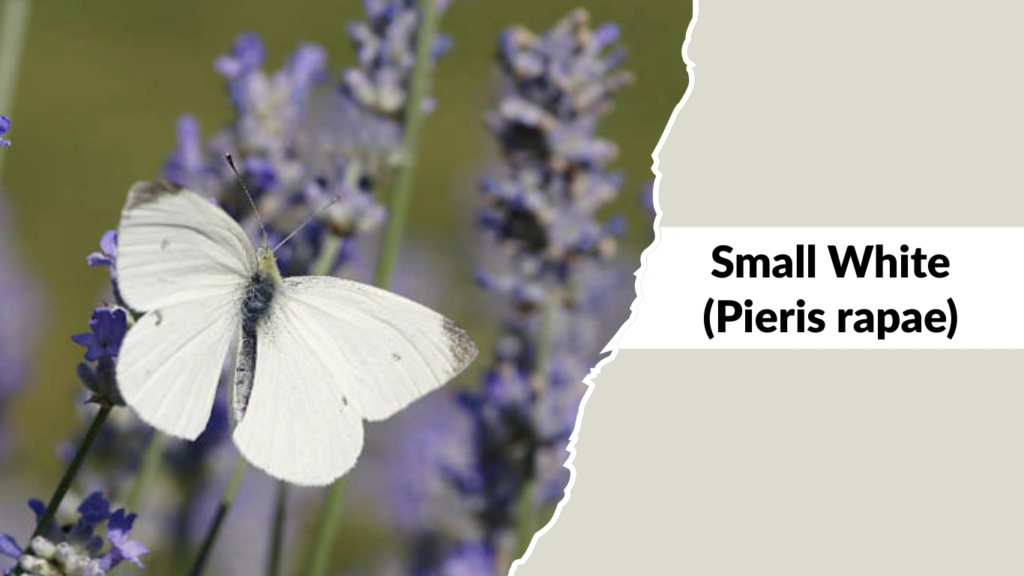
A widespread white butterfly commonly found in gardens, meadows, and farmland. Known for its simple white wings with dark tips, it is one of the most recognizable butterflies across Europe, Asia, and North America.
Identification
- Small to medium-sized white butterfly
- Black wing tips on the forewings
- Females have two black spots; males have one
- Underside is pale yellowish with faint markings
- Flight pattern is light, fluttery, and erratic
Habitat
The Small White thrives in open, sunny environments such as gardens, crop fields, parks, grasslands, and roadside vegetation. It easily adapts to human-altered landscapes and is often found anywhere cruciferous plants grow.
Behaviors
This butterfly is an active, fast flyer that often darts between flowers and host plants. Males patrol sunny areas to locate females, while females inspect suitable plants for egg-laying. They are highly migratory and capable of expanding rapidly across regions.
Diet and Lifecycle
Adults feed on nectar from flowers like dandelion, clover, mustard, and lavender. Females lay single yellow eggs on cabbage-family plants. The caterpillars feed heavily on leaves, then pupate on stems or walls. Several generations occur each year depending on climate.
2. Large White (Pieris brassicae)
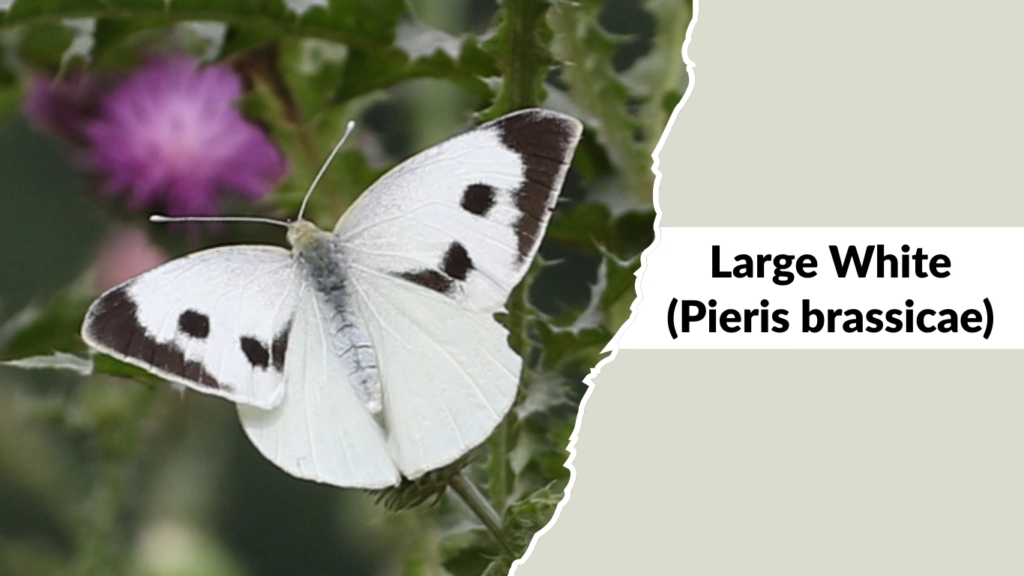
A big, bold white butterfly recognized by its strong flight and prominent black markings. Common in Europe, Asia, and North Africa, it is often seen in gardens and farmland where its caterpillars feed on brassica plants.
Identification
- Larger than the Small White
- Forewings have large, bold black tips
- Females show two large black spots on each wing
- Underside is pale yellowish or creamy
- Strong, purposeful flight pattern
Habitat
The Large White prefers open, sunny habitats including fields, vegetable gardens, meadows, woodland edges, and agricultural areas. It is especially common in places where cabbage-family crops are abundant.
Behaviors
This butterfly is a powerful flyer, capable of long-distance migration. Males patrol high and wide, while females search for large host plants to lay clusters of eggs. It is often seen gliding and making direct, fast movements across open spaces.
Diet and Lifecycle
Adults feed on nectar from thistles, knapweed, bramble, and lavender. Females lay yellow egg clusters on host plants such as cabbage, kale, and broccoli. Caterpillars feed in groups, grow rapidly, and pupate on nearby surfaces. Multiple generations occur each year in warm climates.
3. Checkered White (Pontia protodice)
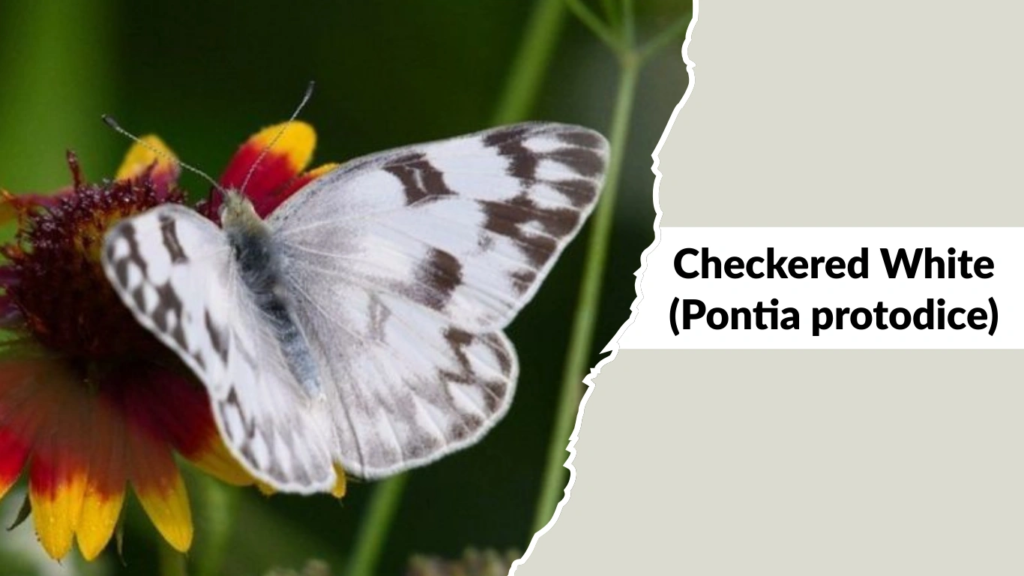
A delicate white butterfly found mainly in North America, known for its checkered gray-and-black wing patterns. It prefers open, dry habitats and is commonly seen fluttering close to the ground.
Identification
- White wings with dark checkered patterns
- Females have heavier markings than males
- Underside shows greenish or brownish mottling
- Medium-sized with angular wing shape
- Fast, low-to-the-ground flight
Habitat
The Checkered White thrives in sunny, open environments such as prairies, deserts, fields, roadsides, and disturbed lands. It favors dry climates and areas rich in mustards and other host plants.
Behaviors
Males patrol low over open ground to find females, circling repeatedly in preferred territories. Both sexes are active in warm, dry weather and often settle on the ground or low plants. Their erratic, close-to-ground flight helps them avoid predators.
Diet and Lifecycle
Adults feed on nectar from mustards, alfalfa, aster, and verbena. Females lay eggs singly on host plants like peppergrass, bladderpod, and other mustards. Caterpillars feed on leaves and flowers, then pupate on stems. Several broods occur each year in warm regions.
4. Western White (Pontia occidentalis)
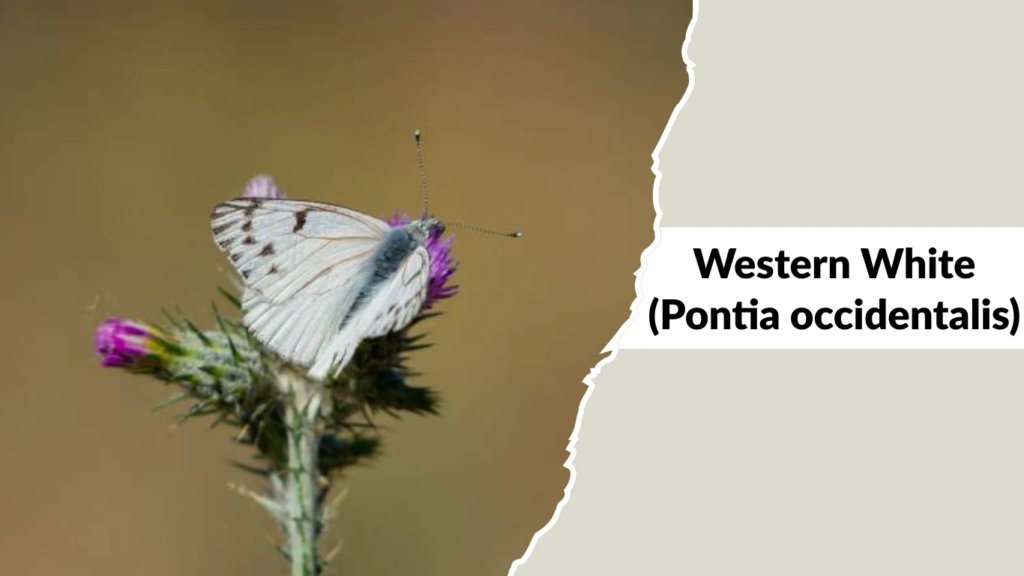
A high-elevation and western North American species known for its crisp white wings with gray or black patterning. Frequently seen in mountain meadows and dry open fields during summer.
Identification
- Bright white wings with dark edges
- Underside has greenish or gray mottling
- Medium size with pointed forewings
- Males are lighter marked; females darker
- Swift, direct flight
Habitat
Western Whites inhabit sunny mountain meadows, sagebrush flats, prairies, and open woodland edges. They are especially common at higher elevations and in dry western landscapes where their host plants thrive.
Behaviors
They fly quickly and directly, often weaving through grasses and low plants. Males patrol open areas for mates and defend small territories. They are most active in warm midday sunlight and frequently bask with wings open.
Diet and Lifecycle
Adults nectar on mustards, phlox, asters, and rabbitbrush. Females lay single eggs on mustard-family plants including bladderpod and rockcress. Caterpillars feed on leaves and buds before pupating in a loosely attached chrysalis. One to two generations occur yearly.
5. Mustard White (Pieris oleracea)
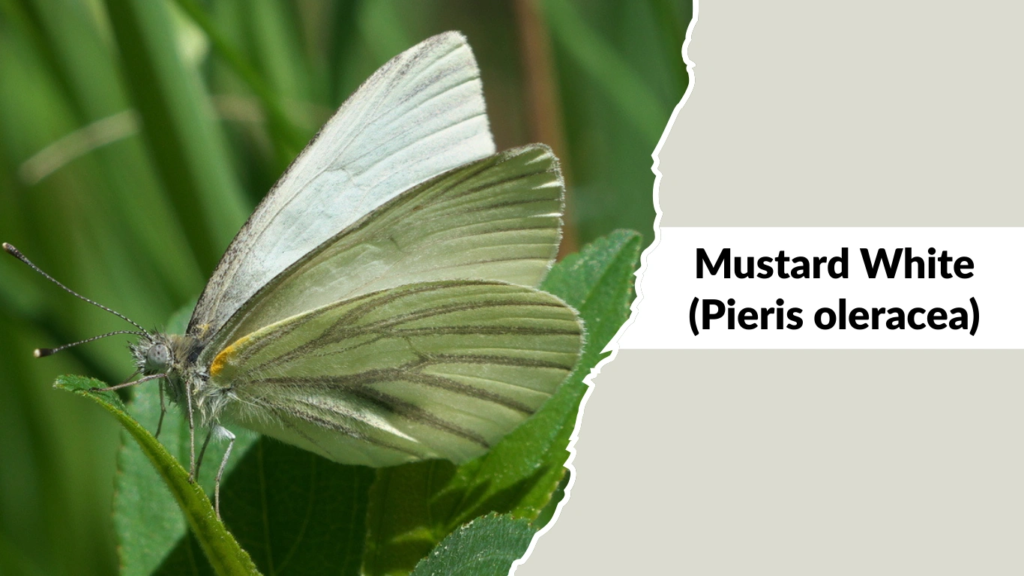
A cool-forest butterfly native to northeastern North America, recognized by its soft white wings and delicate flight. Spring forms are white, while summer forms show darker veining.
Identification
- Pure white spring form; darker-veined summer form
- Slim body and rounded wings
- Underside is pale with faint greenish tint
- Gentle, floating flight pattern
- Usually seen in shady woodland areas
Habitat
Mustard Whites live in cool, moist forests, especially near streams, ravines, and shaded trails. They rely on forest mustards such as toothwort, making them closely tied to healthy woodland ecosystems.
Behaviors
They fly softly through forest understories, rarely venturing into open areas. Males patrol shaded paths for females, while females inspect toothwort patches for egg-laying. Activity peaks in spring and early summer.
Diet and Lifecycle
Adults feed on nectar from spring wildflowers like toothwort and violets. Females lay eggs on toothwort leaves. Caterpillars feed on the foliage, later forming a chrysalis attached to stems or leaves. One or two broods occur depending on region and climate.
6. West Virginia White (Pieris virginiensis)
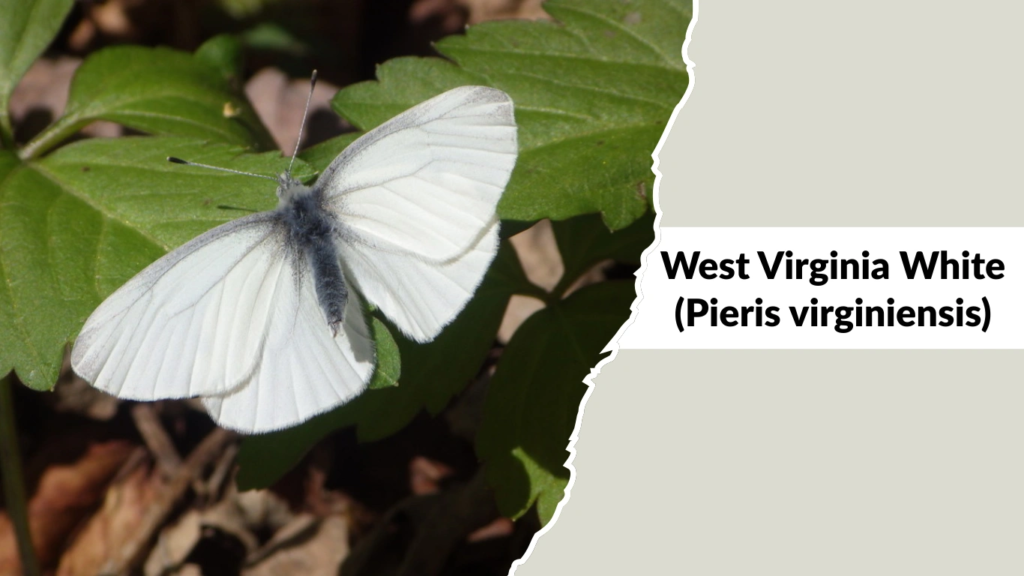
A rare, early-spring woodland butterfly native to eastern North America. Known for its pure white wings and absence of dark markings, it is one of the most delicate and short-lived white butterflies.
Identification
- Pure white wings with no black tips
- Small, delicate body
- Underside is matte white or faintly grayish
- Rounded wings with soft edges
- Slow, gentle, drifting flight
Habitat
The West Virginia White lives exclusively in mature, moist deciduous forests. It is strongly tied to rich woodland areas where spring wildflowers grow, especially in hilly or mountainous terrain with cool, shaded understories.
Behaviors
This butterfly emerges very early in spring, often before most other butterflies appear. It flies low and slowly through forest paths and understory vegetation. Males search quietly for females, and both remain close to host plant patches.
Diet and Lifecycle
Adults nectar on early spring flowers such as toothwort and spring beauties. Females lay eggs only on native toothwort species. Caterpillars feed on the young leaves, then pupate on stems or leaf litter. Only one generation occurs each year, making the species sensitive to habitat decline.
7. Green-veined White (Pieris napi)
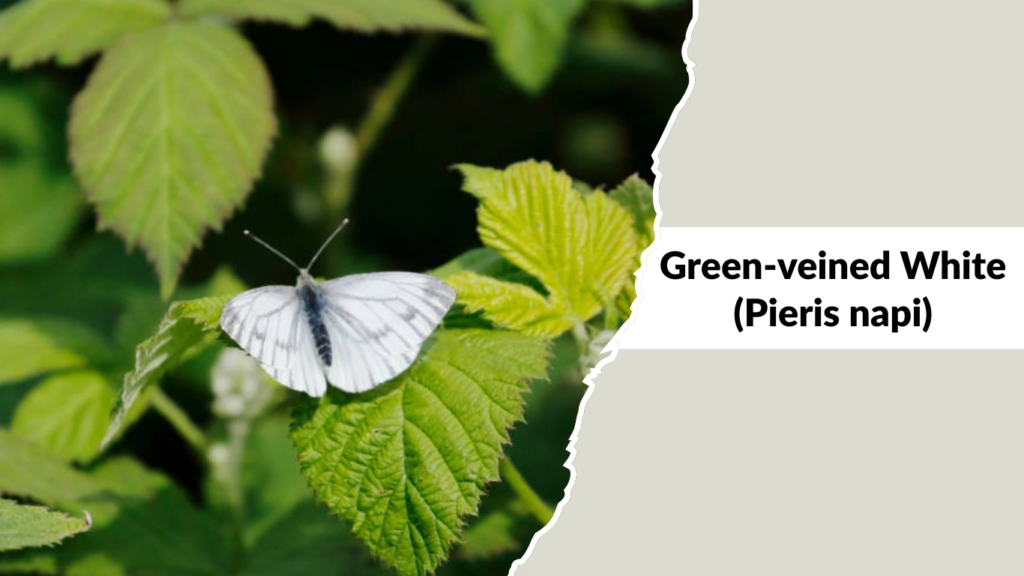
A widespread white butterfly found across Europe, Asia, and parts of North America. It is easily recognized by the greenish, vein-like markings on the underside of its wings, giving it a mossy, textured appearance.
Identification
- White wings with subtle gray or greenish veining underneath
- Upper side is mostly white with light gray tips
- Females show stronger markings than males
- Medium-sized with rounded wings
- Soft, floating, low-to-medium flight pattern
Habitat
The Green-veined White thrives in damp meadows, hedgerows, woodland edges, marshy fields, and gardens. It prefers moist environments and is commonly seen near streams, wet grasslands, and lightly shaded natural areas.
Behaviors
This butterfly flies gently through vegetation, frequently stopping to nectar on low flowers. Males patrol grassy lanes and meadow edges, while females explore moist areas with abundant host plants. They are active from spring through autumn in multiple broods.
Diet and Lifecycle
Adults feed on nectar from cuckooflower, dandelion, knapweed, and wild mustard. Eggs are laid singly on host plants like garlic mustard and cuckooflower. Caterpillars feed on leaves, then pupate on stems or walls. Depending on climate, two to three generations occur yearly.
8. Southern Small White (Pieris mannii)
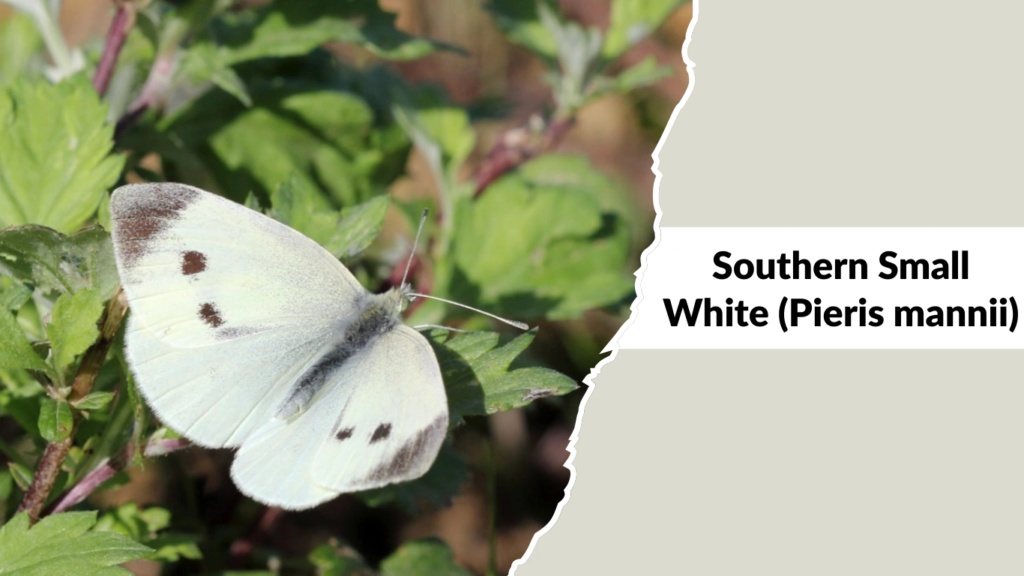
A close relative of the Small White, this butterfly is found across southern Europe, the Middle East, and parts of Central Asia. It is known for its clean white wings and subtle gray markings, often appearing in warm, dry regions.
Identification
- White wings with light gray or faint black tips
- Females may have one or two small black spots
- Underside is pale yellowish or creamy
- Medium size with smooth wing edges
- Quick, fluttering flight close to vegetation
Habitat
The Southern Small White prefers warm, sunny environments such as Mediterranean scrublands, dry fields, rocky slopes, orchards, and open farmland. It is especially common in regions with a long, hot summer.
Behaviors
Males actively patrol open sunny paths and fields searching for females. They often hover briefly near plants before darting away. This species is highly mobile and can spread quickly across new areas during warm seasons.
Diet and Lifecycle
Adults feed on nectar from thistles, rosemary, mustard flowers, and other sun-loving plants. Females lay eggs singly on brassica-family plants, including wild mustards. Caterpillars feed on leaves before pupating on stems. Several generations occur yearly in warm climates.
9. Mountain White (Pieris marginalis)
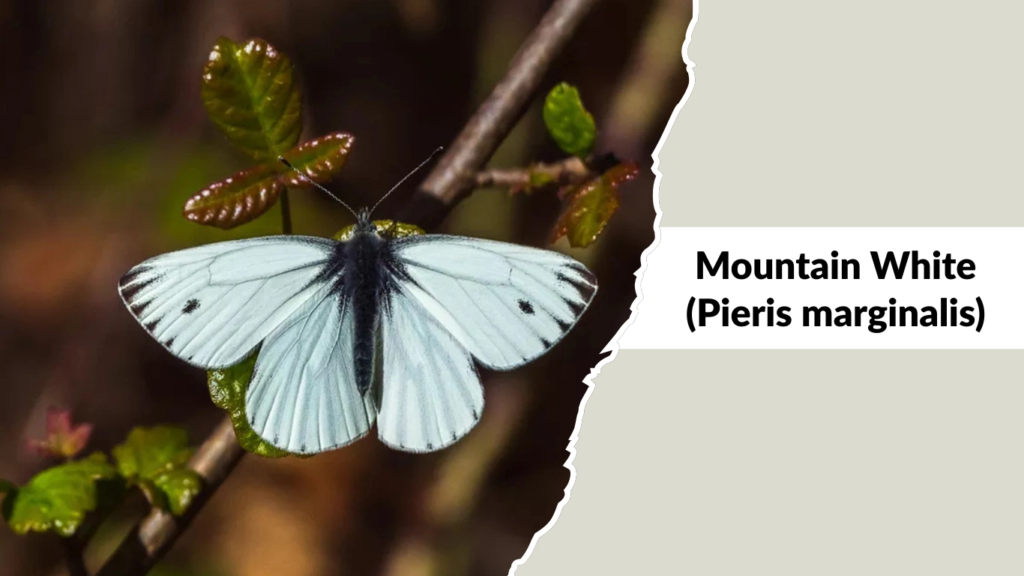
A butterfly found mainly in western North America, especially in cooler mountain regions. It closely resembles other Pieris species but prefers higher elevations and moist forest edges.
Identification
- White wings with subtle gray shading near the tips
- Underside washed with pale yellow or greenish tones
- Males are cleaner white; females show darker marks
- Medium-sized with smooth wing outlines
- Soft, drifting flight along forest margins
Habitat
Mountain Whites inhabit cool mountain forests, alpine meadows, streamside clearings, and moist woodland edges. They are particularly common at mid to high elevations where host plants flourish in shaded, damp areas.
Behaviors
They fly gently along forest paths, often weaving between shrubs and low plants. Males patrol small territories near host plant patches, while females stay closer to vegetation for egg-laying. Activity peaks in late spring and early summer.
Diet and Lifecycle
Adults nectar on mountain wildflowers such as phlox, asters, and cinquefoil. Eggs are laid singly on mustard-family plants like rockcress and bittercress. Caterpillars feed on tender leaves, then pupate on stems or nearby surfaces. One to two broods occur each year depending on elevation.
10. Black-veined White (Aporia crataegi)
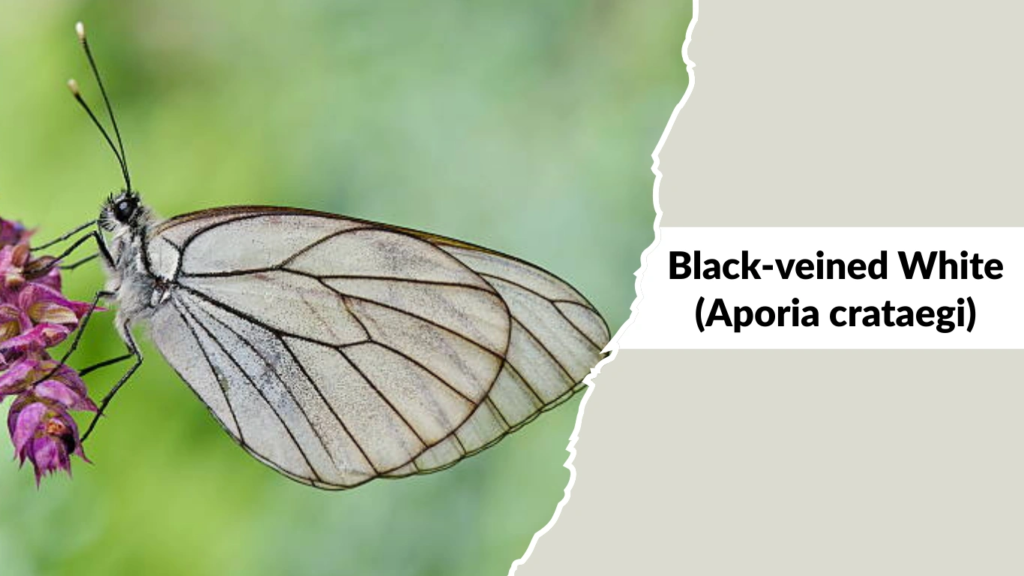
A striking white butterfly widespread across Europe and Asia, known for its bold black wing veins. Its translucent white wings give it a delicate, glassy appearance in sunlight.
Identification
- White wings with thick, black, well-defined veins
- Wings appear slightly translucent
- Larger than many other white butterflies
- Underside shows similar dark veining
- Graceful, floating flight in sunny weather
Habitat
The Black-veined White prefers open woodland, orchards, meadows, forest edges, and flowering shrublands. It is especially attracted to areas with abundant fruit trees such as hawthorn, cherry, and apple.
Behaviors
This species is a slow, elegant flyer that often glides between shrubs and fruit trees. Males patrol sunny clearings, while females remain near host plants. They frequently gather in groups on flowering bushes during peak bloom.
Diet and Lifecycle
Adults feed on nectar from hawthorn, dog-rose, clover, and bramble flowers. Females lay eggs in clusters on the leaves of fruit trees like hawthorn and apple. Caterpillars feed communally at first, then pupate on branches. Typically one generation occurs per year.
11. Wood White (Leptidea sinapis)
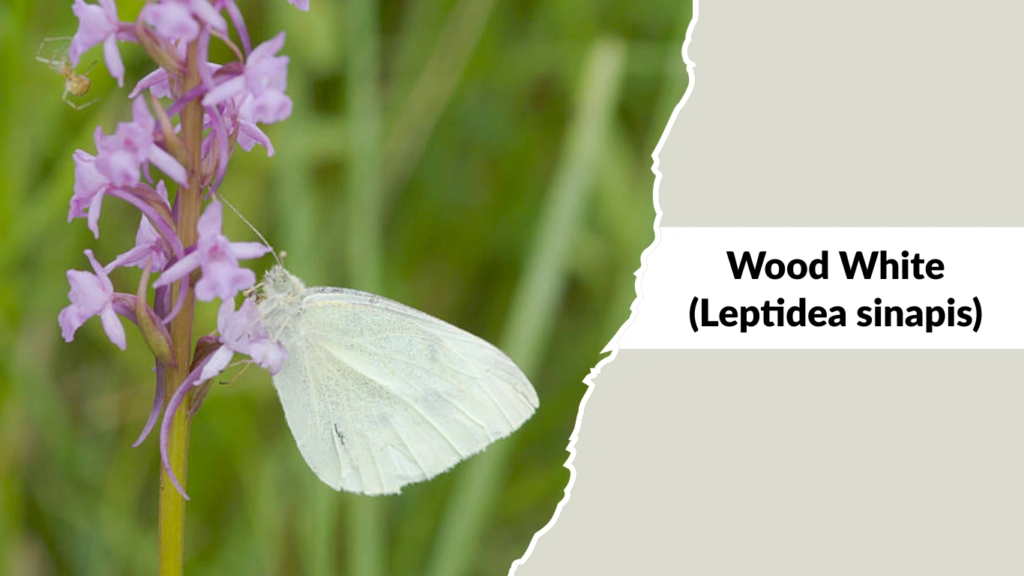
A delicate, slender white butterfly found across Europe and parts of Asia. Known for its narrow wings and soft, fluttering flight, it often stays close to shady woodland paths.
Identification
- Narrow, elongated wings compared to other whites
- Upper side is plain white with almost no markings
- Underside pale with faint yellow or gray tint
- Small body and slow, drifting flight
- Often rests with wings closed
Habitat
Wood Whites inhabit light woodlands, forest clearings, shaded paths, hedgerows, and moist meadows. They prefer calm, sheltered areas with plenty of shade and abundant vetches or wild peas.
Behaviors
They fly weakly and slowly, often staying within a few meters of where they emerge. Males patrol shaded trails, drifting gently as they search for females. They are one of the shyest white butterflies and avoid open, windy places.
Diet and Lifecycle
Adults nectar on small flowers like vetch, clover, and bird’s-foot trefoil. Females lay eggs on various legumes including meadow vetchling and wild peas. Caterpillars feed on leaves before pupating on stems. Usually one or two generations occur yearly depending on climate.
12. Real’s Wood White (Leptidea reali)

A very similar species to the Wood White, found mainly in southwestern and central Europe. It is nearly identical in appearance to related Leptidea species but tends to inhabit warmer and more open woodland environments.
Identification
- Slender white butterfly with narrow wings
- Upper side plain white with minimal markings
- Underside creamy or pale yellowish
- Very similar to L. sinapis but genetically distinct
- Weak, fluttering flight close to vegetation
Habitat
Real’s Wood White prefers warm, sheltered habitats such as open woodlands, bushy meadows, hedgerow edges, and sunny forest clearings. It is often associated with transitional habitats where woodland meets grassland.
Behaviors
This species flies slowly and stays low to the ground, drifting between grasses and shrubs. Males patrol small, sunny patches in search of females, while females stay near legume-rich areas. They avoid strong winds and bright open fields.
Diet and Lifecycle
Adults feed on nectar from vetches, trefoils, and small meadow flowers. Females lay eggs singly on legumes such as meadow vetchling and various wild peas. Caterpillars develop on these plants before pupating on stems. One to two broods occur each year depending on region.
13. Eastern Wood White (Leptidea duponcheli)
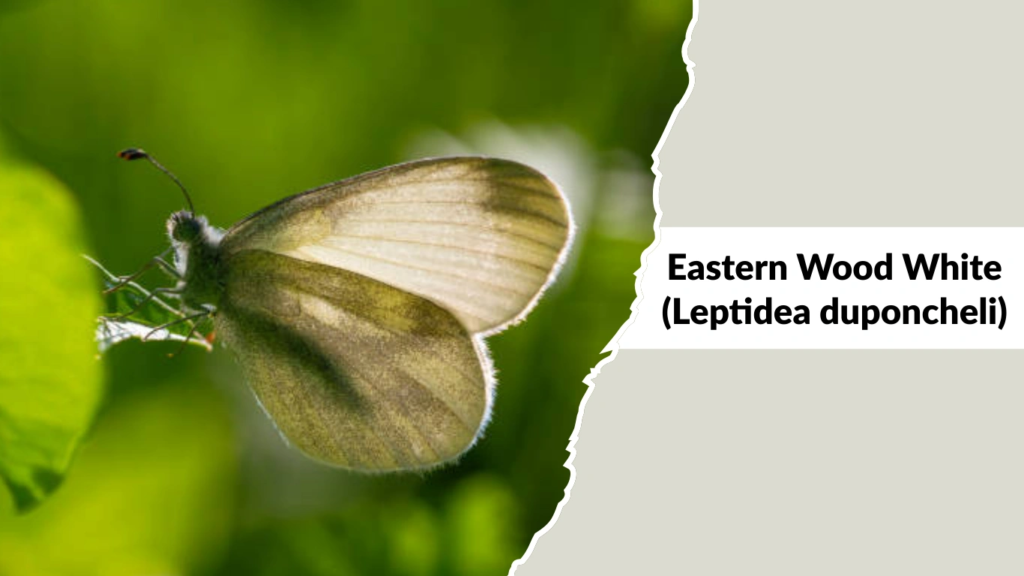
A slender, pale white butterfly found across southeastern Europe, Turkey, and parts of western Asia. It is part of the Leptidea group, known for delicate wings and a light, fluttering flight.
Identification
- Narrow, elongated wings typical of Leptidea species
- Upper side plain white with almost no markings
- Underside pale cream or yellowish
- Small, fragile appearance
- Slow, floating flight near low vegetation
Habitat
The Eastern Wood White inhabits warm, open woodland edges, grassy clearings, shrublands, and sunny forest borders. It favors areas where legumes grow, especially in dry, rocky, or lightly wooded regions.
Behaviors
This butterfly flies gently and stays close to the ground, weaving through grasses and small shrubs. Males search quietly along warm, sheltered paths, while females remain near host plants for egg-laying. They avoid windy, exposed landscapes.
Diet and Lifecycle
Adults feed on nectar from small flowers such as vetches, clovers, and meadow trefoil. Females lay eggs on various legumes. Caterpillars feed on tender leaves before pupating on stems or twigs. Typically one generation occurs annually, with possible partial second broods in warm areas.
14. Orange-tip (Female) (Anthocharis cardamines)
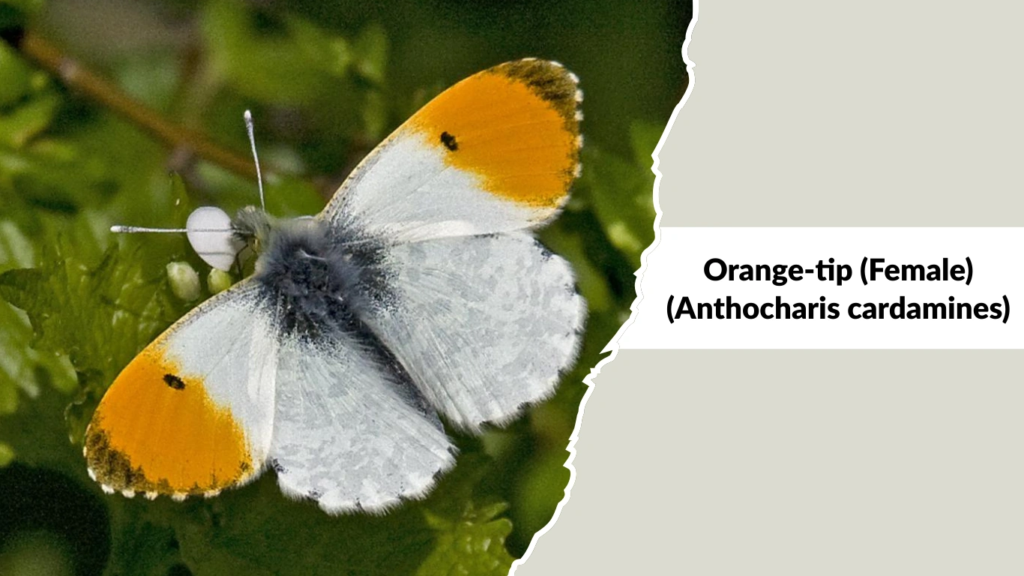
The female Orange-tip is a mostly white butterfly found across Europe and Asia. Unlike males, females lack the bright orange wing tips, giving them a clean white appearance with subtle gray markings.
Identification
- White wings without the male’s orange tips
- Small gray or black marks near forewing tips
- Underside shows mottled green marbling
- Medium-sized with rounded wing edges
- Gentle, floating flight in meadows and hedgerows
Habitat
Females inhabit damp meadows, woodland edges, hedgerows, marshy fields, and riverbanks. They prefer areas rich in cuckooflower and garlic mustard, which serve as their main host plants.
Behaviors
Females fly more slowly and low to the ground compared to the males. They spend much of their time searching for suitable host plants for egg-laying and often avoid aggressive males by staying within dense vegetation.
Diet and Lifecycle
Adults feed on nectar from cuckooflower, bluebells, bugleweed, and other spring flowers. Eggs are laid singly on flower stalks of cuckooflower and garlic mustard. Caterpillars feed on seedpods, then pupate on stems. One generation appears each spring.
15. Sara Orangetip (Female) (Anthocharis sara)
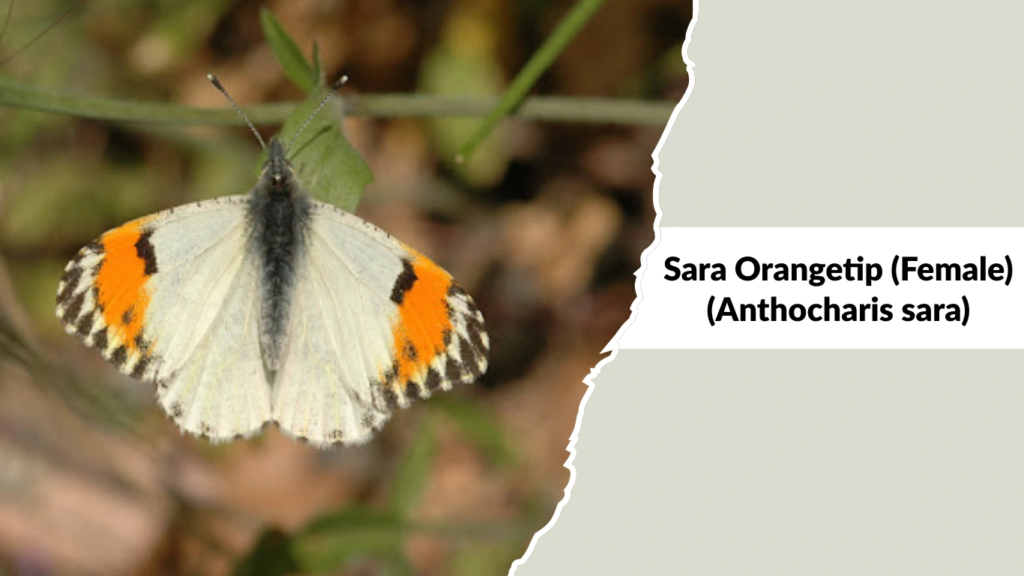
A western North American butterfly found along the Pacific coast and inland foothills. The female lacks the male’s orange patch, appearing mostly white with subtle gray markings and a beautifully mottled underside.
Identification
- White wings without orange tips
- Fine gray or black shading near forewing tips
- Underside marbled with green and yellow patterns
- Medium-sized with slightly pointed forewings
- Light, fluttering flight close to flowers and shrubs
Habitat
Females inhabit chaparral, coastal scrub, woodland edges, meadows, canyons, and foothill slopes. They thrive in warm, dry environments where their host plants—mainly native mustards—grow abundantly.
Behaviors
Sara Orangetip females fly low and slowly while searching for host plants, often weaving among shrubs. They avoid open areas patrolled by males and spend more time hidden within vegetation. Activity peaks in early to mid-spring.
Diet and Lifecycle
Adults feed on nectar from wildflowers such as phlox, fiddleneck, blue dicks, and various mustards. Females lay single eggs on the flower stalks of native mustards. Caterpillars feed on buds and seedpods, then pupate on stems. One generation appears each spring.
16. Caper White (Belenois aurota)
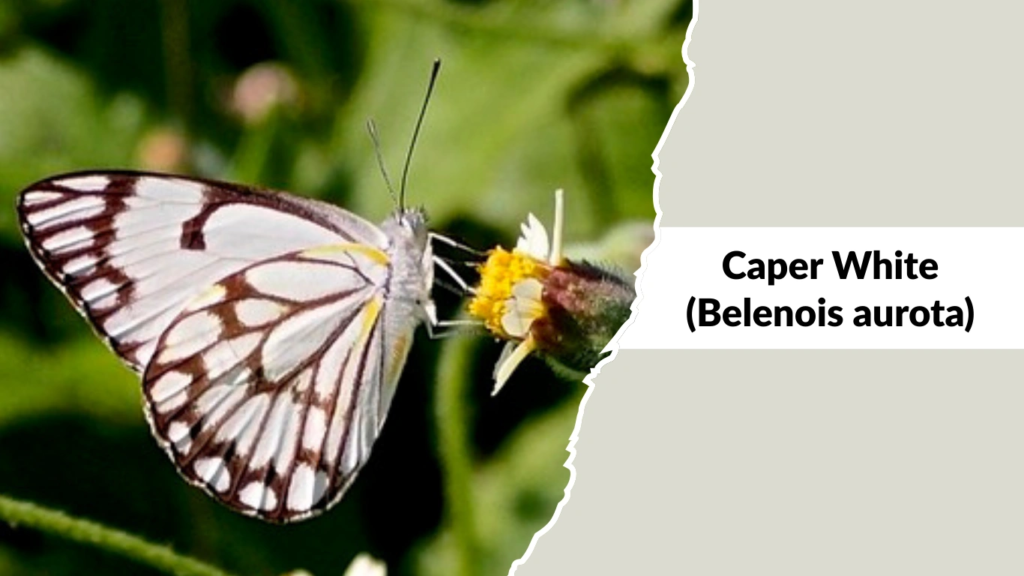
A migratory white butterfly widely distributed across Africa, the Middle East, and South Asia. Known for its striking black-and-white wing pattern and strong flight, it often forms large seasonal migrations.
Identification
- White wings with bold black borders
- Underside creamy with pale yellow patches
- Females show heavier markings than males
- Medium-sized with rounded wings
- Strong, purposeful flight
Habitat
Caper Whites inhabit savannas, open woodlands, dry scrublands, gardens, and cultivated areas. They are strongly associated with caper shrubs, which thrive in hot, arid, and semi-arid regions.
Behaviors
Highly migratory, they can appear in huge numbers during seasonal movements. Males patrol sunny open areas, while females search for caper shrubs for egg-laying. They often gather around flowering bushes during peak blooming.
Diet and Lifecycle
Adults feed on nectar from caper flowers, lantana, and various savanna wildflowers. Females lay eggs on caper shrubs (Capparis species). The caterpillars feed on young leaves and buds before pupating on stems. Several generations occur annually, especially in warm climates.
17. African Caper White (Belenois creona)
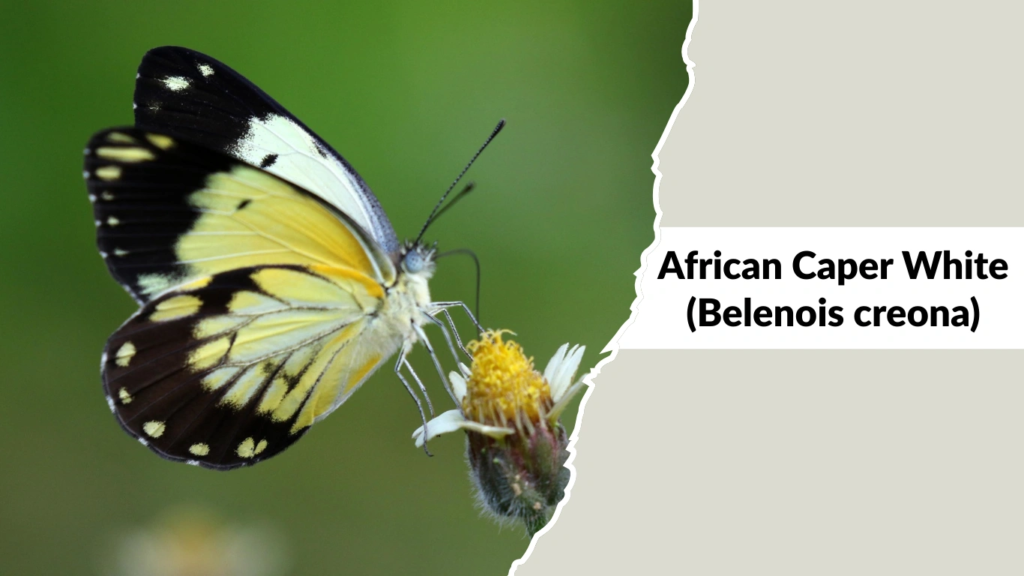
A common African white butterfly known for its crisp black-and-white patterning and strong adaptability. It thrives in diverse habitats and is often seen fluttering around flowering shrubs and open fields.
Identification
- White wings with distinct black borders
- Underside pale yellow or cream with soft markings
- Females have heavier dark patterns
- Medium-sized with rounded wing shape
- Fast, energetic flight
Habitat
African Caper Whites inhabit savannas, open forests, grasslands, farmlands, and suburban gardens. They are closely tied to caper bushes, which grow widely across tropical and subtropical Africa.
Behaviors
They are active, rapid fliers that move frequently between flowers and host plants. Males patrol open sunny spaces, while females search carefully among caper shrubs for egg-laying opportunities. They may form local swarms during favorable seasons.
Diet and Lifecycle
Adults nectar on caper flowers, lantana, senna, and other bright African wildflowers. Females lay eggs on Capparis species. Caterpillars feed on young leaves, then pupate on twigs or stems. Multiple generations occur each year in warm regions.
18. Pioneer White (Belenois aurota)
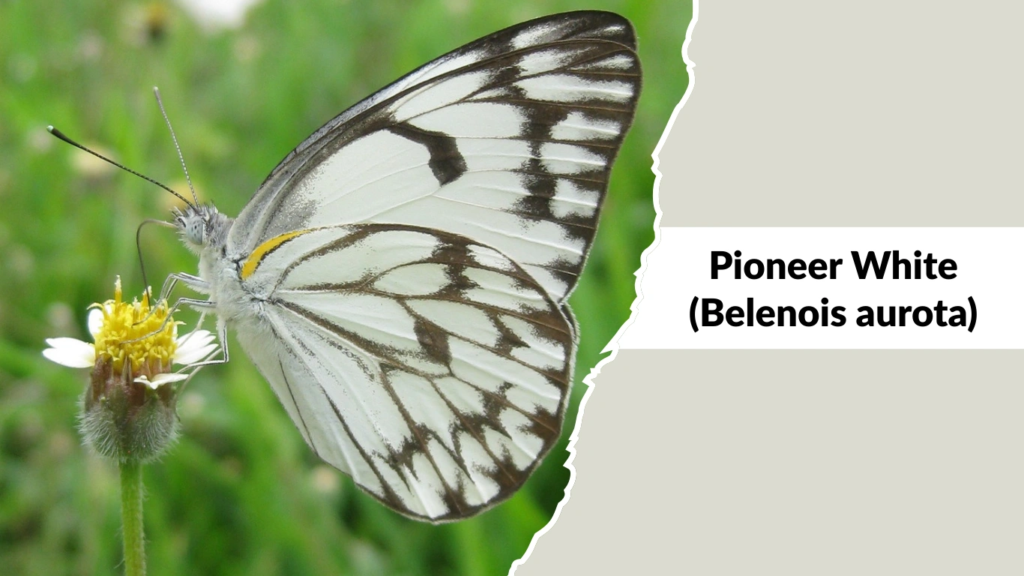
Often considered a regional form or common name of Belenois aurota, the Pioneer White is widely distributed across Africa, the Middle East, and South Asia. It is known for bold black-and-white patterning and strong seasonal movements.
Identification
- White wings with sharp black borders
- Underside creamy-yellow with soft mottling
- Females show more pronounced dark markings
- Medium-sized with rounded wings
- Strong, steady flight often in warm, open areas
Habitat
Pioneer Whites thrive in hot, dry environments including savannas, scrublands, agricultural fields, village gardens, and semi-desert landscapes. They stay close to their host plants—various species of caper shrubs.
Behaviors
They are highly migratory and may appear in large numbers, especially after rains. Males patrol open, sunny fields, while females remain near host plants for egg-laying. They are quick fliers and frequently gather at flowering bushes.
Diet and Lifecycle
Adults feed on nectar from caper flowers, lantana, wild mustard, and other heat-tolerant wildflowers. Females lay eggs on caper bushes (Capparis species). Caterpillars feed on young leaves and later pupate on stems or twigs. Several generations occur yearly in warm climates.
19. Yellow-Orange Tip (Female) (Ixias pyrene)
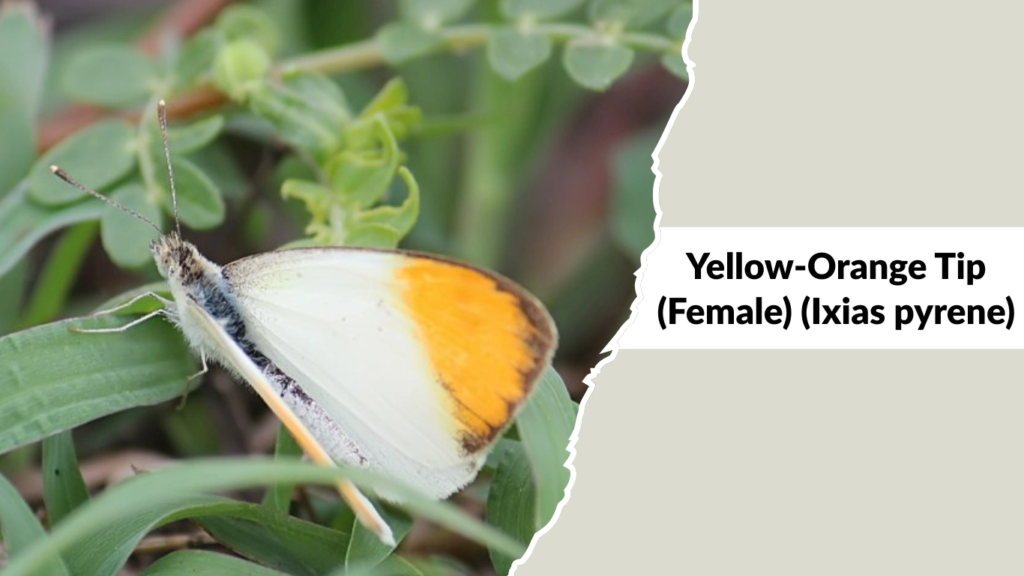
A South Asian butterfly known for its clean white female form. Unlike males, females lack the bright yellow-orange forewing patches, giving them a soft white appearance with subtle dark accents.
Identification
- Mostly white wings with faint dark tips
- Females lack the male’s orange/yellow forewing patch
- Underside pale yellow with mottled markings
- Medium-sized with rounded wings
- Slow, drifting flight around shrubs and flowers
Habitat
Females inhabit dry forests, scrublands, open fields, gardens, and plains. They prefer warm climates and are especially common in South Asia where cassias and senna plants grow.
Behaviors
They stay closer to vegetation compared to males, often weaving through shrubs while searching for host plants. Females avoid open sunny areas where males actively patrol and instead remain in more sheltered places.
Diet and Lifecycle
Adults feed on nectar from lantana, senna, jasmine, and small wildflowers. Females lay eggs on Cassia and Senna plants. Caterpillars feed on leaves before pupating under stems or leaves. One to several broods occur yearly depending on climate.
20. Hairy Green-veined White (Pieris melete)
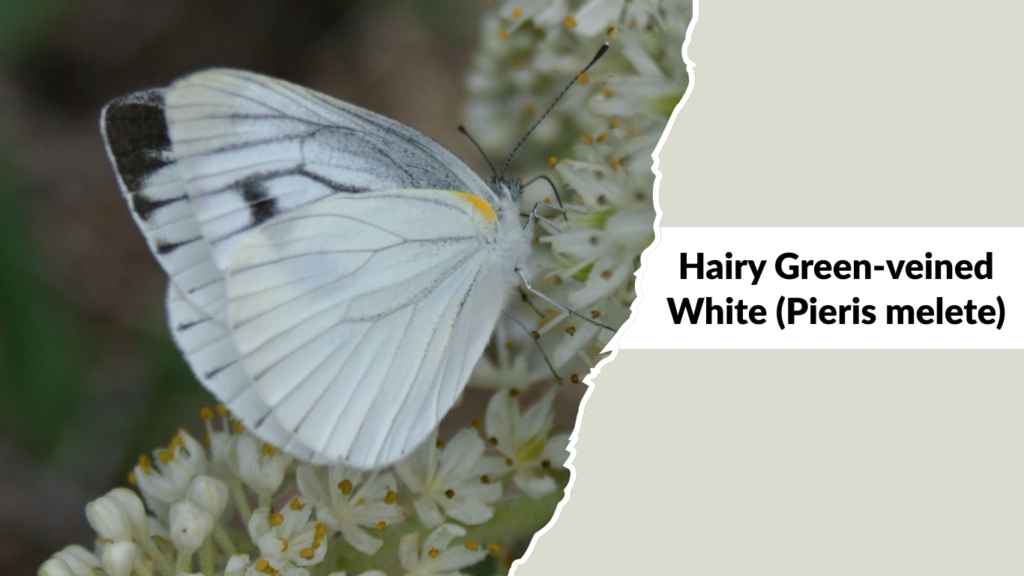
A widespread Asian white butterfly related to the Green-veined White. It is found from Japan and Korea across China and into parts of Southeast Asia. Known for stronger underside markings and a slightly hairier appearance.
Identification
- White wings with pronounced gray/green underside veining
- Upper side has soft gray wingtips
- Slightly hairier body than similar Pieris species
- Medium-sized with rounded wings
- Gentle, floating flight
Habitat
Hairy Green-veined Whites inhabit woodland edges, gardens, rice fields, riverbanks, and moist meadows. They prefer cooler or moderately warm regions with abundant crucifer plants.
Behaviors
They fly slowly and often stay near low vegetation. Males patrol moist areas and grassy edges, while females search near host plants for egg-laying. They avoid very open, exposed areas during hot weather.
Diet and Lifecycle
Adults feed on nectar from mustards, radish flowers, wild brassicas, and dandelions. Eggs are laid on wild crucifers. Caterpillars feed on leaves, then pupate on stems or nearby vegetation. Typically two or more generations occur yearly.
21. Taiwanese White (Pieris canidia)
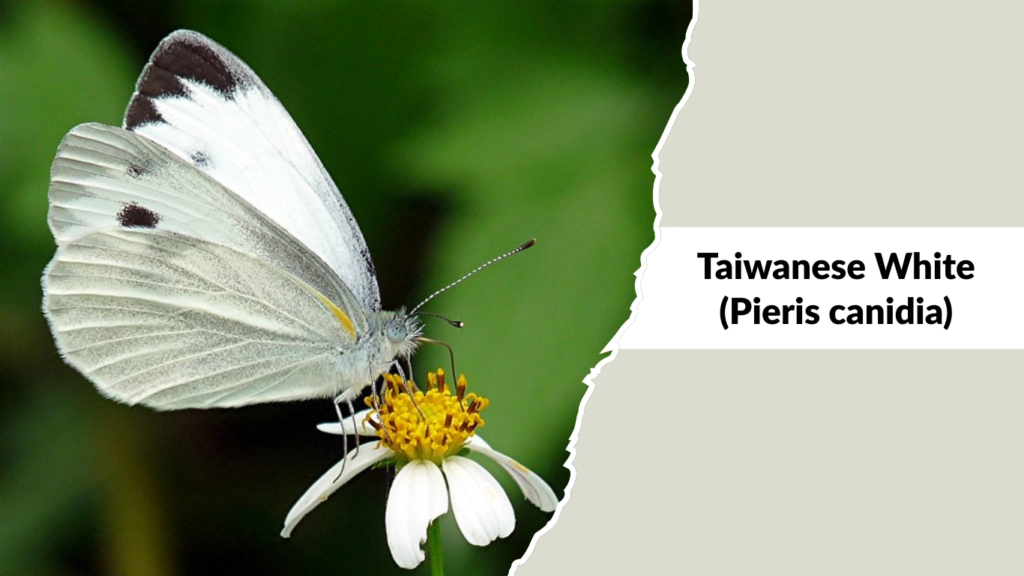
A common white butterfly found across Taiwan, southern China, and parts of Southeast Asia. It resembles the Small White but has slightly stronger markings and a more tropical range.
Identification
- White wings with gray or black wingtips
- Females have one or two dark spots on forewings
- Underside pale yellowish with light mottling
- Medium-sized with smooth wing edges
- Quick, fluttering flight near low plants
Habitat
Taiwanese Whites inhabit farmland, gardens, open fields, forest edges, and riverbanks. They prefer warm, humid environments where crucifer plants grow naturally or are cultivated.
Behaviors
Males patrol open sunny areas searching for females. They frequently land on flowers and low foliage. Females move more slowly among host plants, inspecting leaves for egg-laying. They are active year-round in warm regions.
Diet and Lifecycle
Adults feed on nectar from mustard flowers, radish blooms, and various garden flowers. Females lay single eggs on crucifer plants. Caterpillars feed on leaves, then pupate on stems or walls. Multiple generations occur each year in warm climates.
22. Indian Cabbage White (Pieris canidia indica)
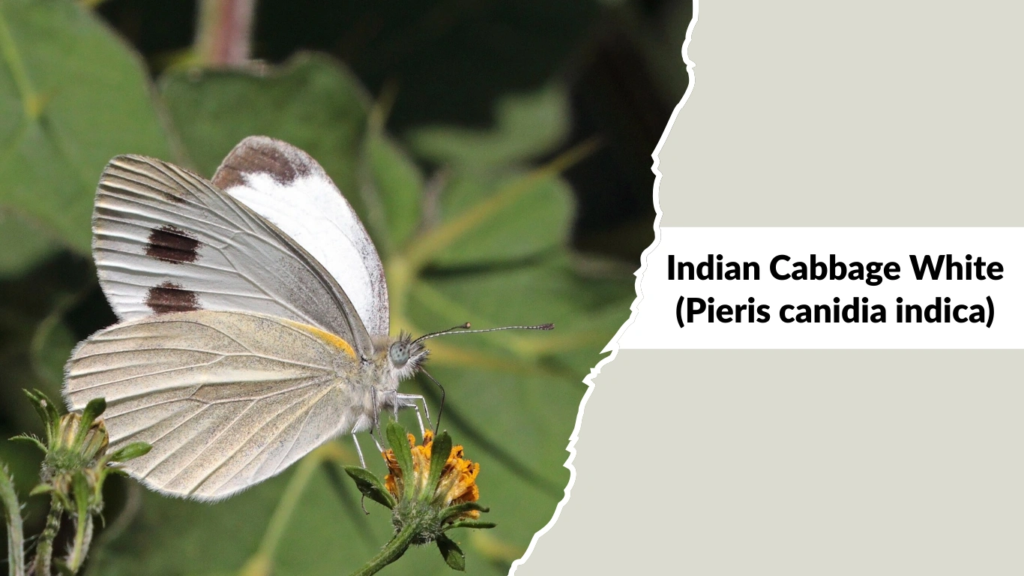
A southern Asian subspecies of Pieris canidia, found widely across India, Nepal, Bangladesh, and surrounding regions. It looks like a brighter, whiter version of similar Pieris species.
Identification
- Bright white wings with gray or black wingtips
- Females show one or two dark spots
- Underside yellowish or creamy with faint mottling
- Medium-sized with rounded wings
- Lively, fluttering flight over fields and gardens
Habitat
This butterfly thrives in farmland, grasslands, gardens, rice fields, and open scrublands. It is highly adaptable and flourishes anywhere its host plants—crucifers—are grown.
Behaviors
Indian Cabbage Whites are active, sun-loving fliers. Males patrol fields aggressively, while females glide slowly among crops searching for host plants. They tolerate human activity and often gather at flowering plants.
Diet and Lifecycle
Adults nectar on mustard, radish flowers, marigolds, and various field flowers. Females lay eggs singly on crucifer plants like mustard and cabbage. Caterpillars feed on leaves, then pupate on nearby surfaces. Several broods occur each year, especially during warm seasons.
23. Bath White (Pontia daplidice)
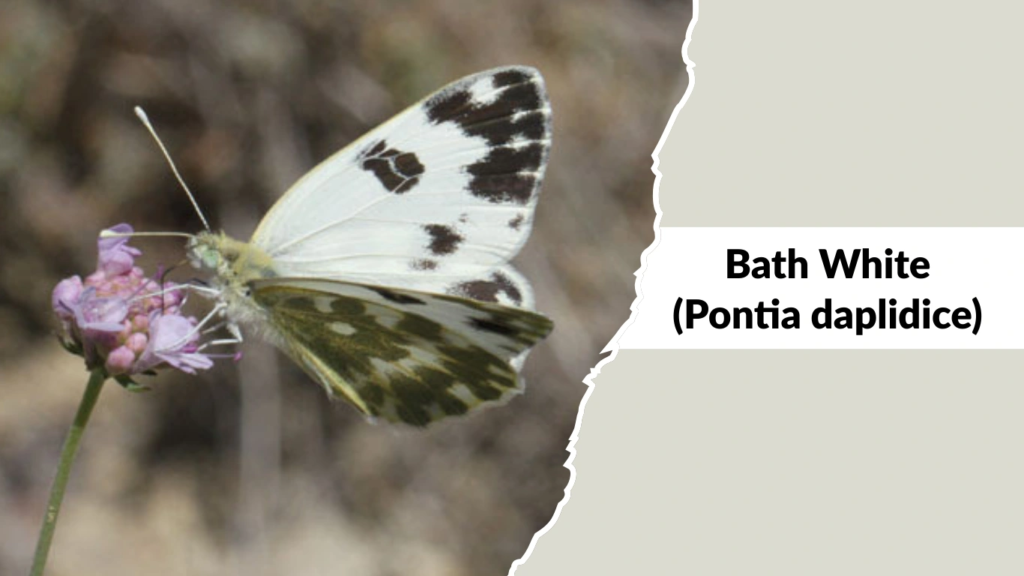
A scattered but widespread butterfly found across Europe, North Africa, and western Asia. Known for its distinctive green-marbled underside, it prefers warm, dry, and open landscapes.
Identification
- White wings with dark gray checkered markings
- Underside strongly marbled with green patches
- Females darker than males
- Medium-sized with angular wings
- Fast, low, erratic flight
Habitat
Bath Whites inhabit dry grasslands, rocky slopes, semi-deserts, farmland edges, and open scrublands. They favor hot, sunny environments and areas rich in mustards and rockcress.
Behaviors
They fly rapidly and close to the ground, darting between sparse vegetation. Males patrol dry open patches, while females remain near host plants. They frequently rest with wings closed, showing the green-marbled underside.
Diet and Lifecycle
Adults nectar on thistles, mustards, knapweed, and small wildflowers. Females lay eggs singly on rockcress and other mustard-family plants. Caterpillars feed on leaves and buds, then pupate on stems. One to two generations occur yearly.
24. Desert White (Pontia desserta)
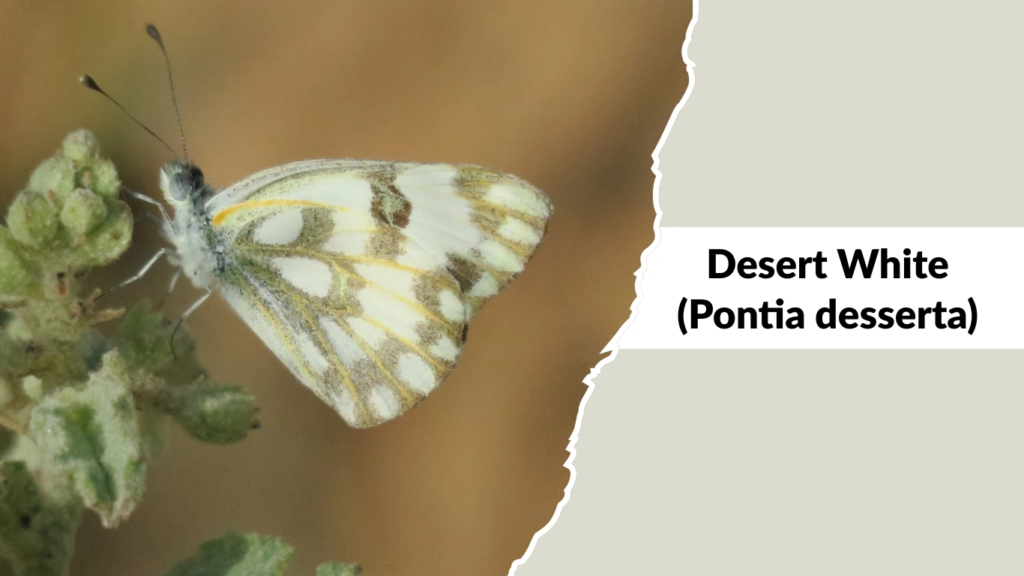
A butterfly adapted to desert and semi-desert regions of North Africa and the Middle East. It resembles the Bath White but is more specialized for extremely dry climates.
Identification
- White wings with reduced dark markings
- Underside pale, lightly marbled with green
- Smaller and paler than similar Pontia species
- Medium-sized with narrow wings
- Quick, skipping flight over desert plants
Habitat
Desert Whites live in sandy deserts, rocky wadis, dry plains, and semi-arid scrublands. They are strongly tied to hardy desert mustards and plants surviving in very hot, dry habitats.
Behaviors
They fly swiftly between sparse shrubs, often active during cooler morning and late afternoon periods. Males patrol open sandy ground, while females search low desert vegetation for egg-laying sites.
Diet and Lifecycle
Adults feed on nectar from desert mustards, saltbush flowers, and small drought-tolerant blooms. Females lay eggs on desert crucifers. Caterpillars feed on leaves before forming a chrysalis attached to stems. One or two generations occur depending on rainfall and temperature.
25. Striped White (Pieriballia viardi)
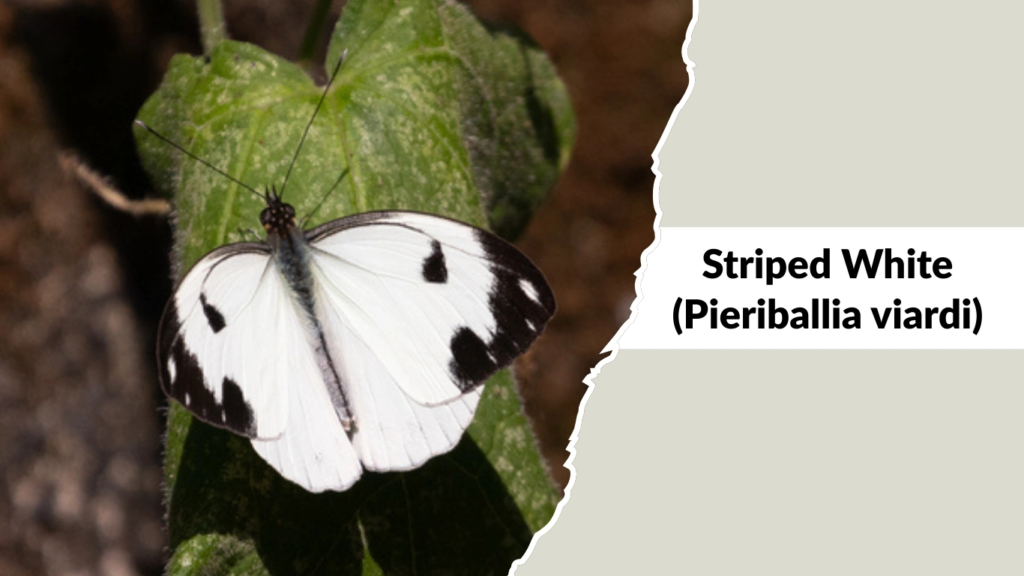
A tropical white butterfly found from Mexico through Central America and into parts of northern South America. It is easily recognized by its bold dark striping and bright white background.
Identification
- White wings with bold, narrow black stripes
- Underside pale with faint gray shading
- Medium-sized with elongated wings
- Females slightly darker than males
- Smooth, gliding flight in warm climates
Habitat
Striped Whites inhabit tropical forests, forest edges, riverbanks, shaded trails, and semi-open woodland areas. They prefer warm, humid environments rich in flowering plants and host vegetation.
Behaviors
They fly gracefully through shaded understories, often gliding between beams of sunlight. Males patrol along forest paths, while females explore lower vegetation for host plants. They rest frequently with wings closed.
Diet and Lifecycle
Adults feed on nectar from forest flowers such as lantana, verbena, and various tropical shrubs. Females lay eggs on host plants in the caper family. Caterpillars feed on young leaves before pupating on stems or twigs. Multiple generations can occur yearly in tropical regions.
