

Pink spiders are fascinating arachnids that stand out for their soft, pastel to vibrant rose-colored appearances. Their pink coloration often helps them blend into flowers, leaves, and natural surroundings, making them excellent ambush hunters or subtle web builders. Found in gardens, forests, grasslands, and even homes, these spiders vary greatly in size, behavior, and habitat. In this guide, we explore 12 types of pink spiders, focusing on their identification, color patterns, living environments, behaviors, and how dangerous their bites are to humans.
1. Pink Crab Spider
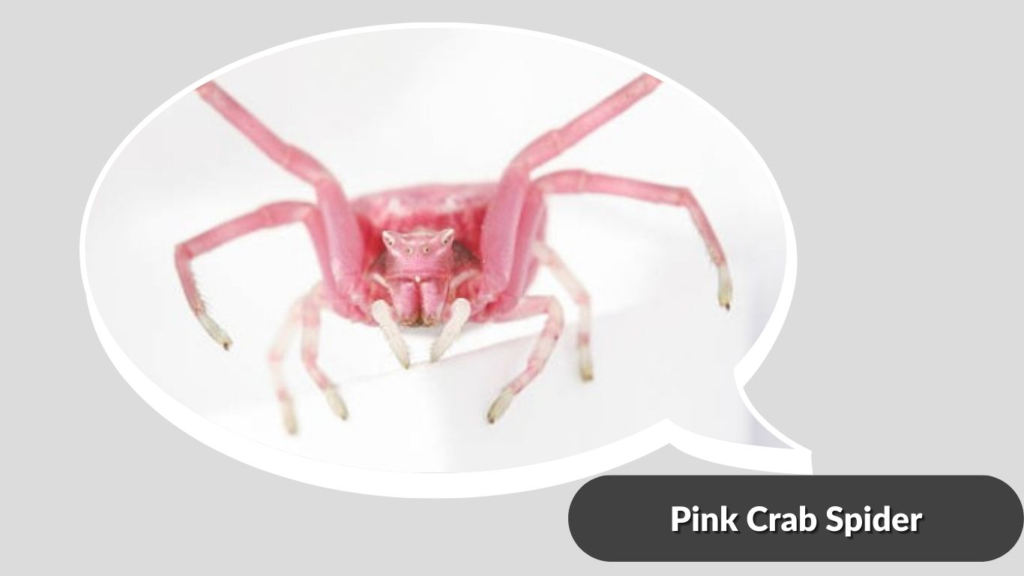
The Pink Crab Spider is a small but eye-catching spider known for its soft pink coloration and crab-like stance. Often found resting on flowers, it blends perfectly with petals, making it a skilled ambush predator and a favorite subject for nature observers.
Identification
- Scientific name: Misumena vatia
- Common name: Pink Crab Spider
- Body color: pale pink to deep rose
- Leg shape: long, sideways-oriented (crab-like)
- Size: small spider
Color Pattern
This pink spider displays shades ranging from light pastel pink to stronger rose tones. Some individuals can even shift between white and pink depending on their environment, helping them stay camouflaged on flowers.
Habitat
Pink Crab Spiders are commonly found on flowering plants, shrubs, and garden vegetation. They prefer areas with abundant pollinating insects such as bees and butterflies.
Behavior
This species does not spin webs to catch prey. Instead, it waits motionless on flowers and ambushes insects that come close. It moves sideways like a crab, which gives it its name.
Danger of Bite
Bites are very rare and harmless to humans. If a bite occurs, it may cause mild irritation but poses no medical risk.
2. Pink Jumping Spider

The Pink Jumping Spider is a tiny, energetic spider known for its alert personality and subtle pink tones. With excellent eyesight and quick movements, it is often seen actively exploring its surroundings rather than sitting still.
Identification
- Scientific name: Salticidae (family)
- Common name: Pink Jumping Spider
- Body color: pinkish, rose, or tan with pink hues
- Eyes: large, forward-facing
- Size: small spider
Color Pattern
This spider shows soft pink or rosy highlights mixed with brown, gray, or cream shades. The pink tones may appear more vibrant under sunlight or during courtship displays.
Habitat
Pink Jumping Spiders can be found in gardens, walls, tree trunks, and grassy areas. They prefer sunny, open spaces where their excellent vision helps them hunt.
Behavior
This species is curious and active. Instead of using webs to catch prey, it stalks insects and leaps onto them with precision. It often turns to face movement, giving it a “curious” appearance.
Danger of Bite
Bites are uncommon and not dangerous. If handled roughly, a bite may cause slight pain or redness but no serious medical effects.
3. Pink Flower Spider
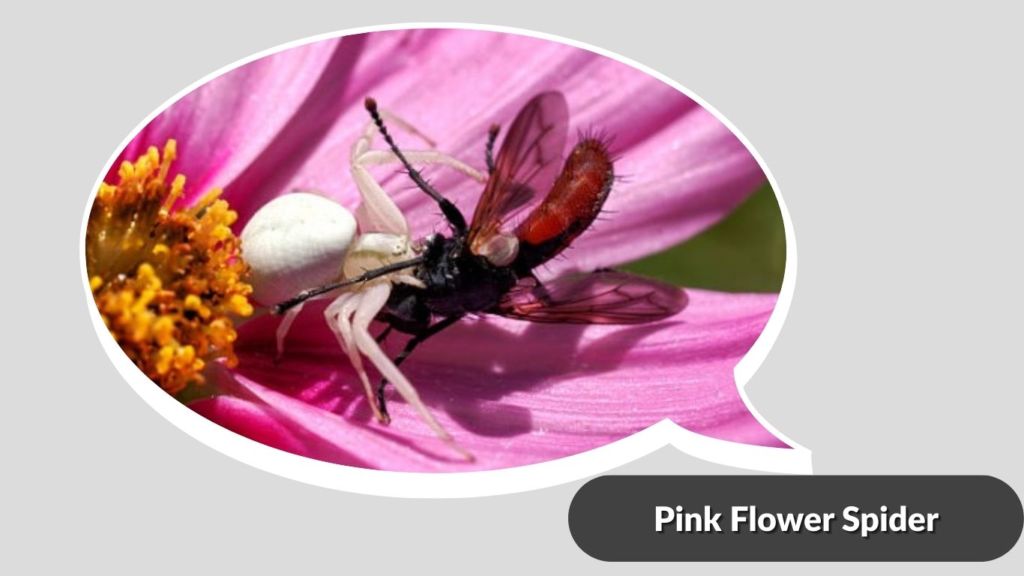
The Pink Flower Spider is a delicate-looking spider that blends beautifully with blossoms. Its pink coloration provides excellent camouflage, allowing it to remain nearly invisible to both predators and prey.
Identification
- Scientific name: Thomisidae (family)
- Common name: Pink Flower Spider
- Body color: light pink to rosy pink
- Body shape: compact with long front legs
- Size: small spider
Color Pattern
This spider features soft pink tones that closely match flower petals. The color may vary from pale blush to stronger pink shades, helping it stay concealed in floral environments.
Habitat
Pink Flower Spiders are most commonly found on flowers, flowering shrubs, and garden plants. They thrive in areas rich in nectar-feeding insects.
Behavior
This species is an ambush hunter. It remains still on flowers and waits for insects to land nearby, then strikes quickly without building a web.
Danger of Bite
Bites are extremely rare and harmless to humans. If bitten, symptoms are usually limited to mild irritation or redness.
4. Pink Orchard Spider
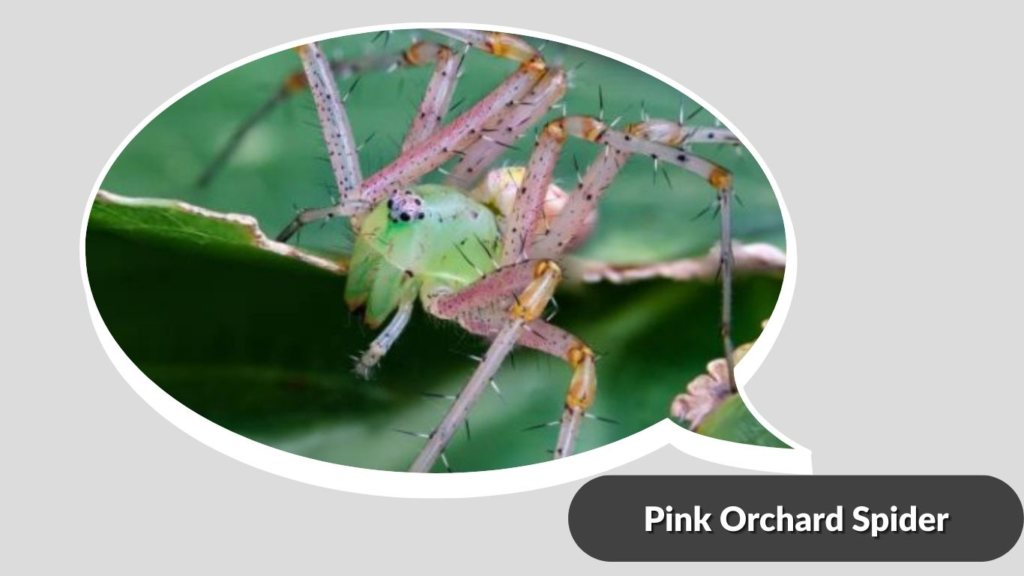
The Pink Orchard Spider is a slender, colorful spider often seen hanging in delicate webs. Its soft pink tones and graceful shape make it one of the more visually appealing orchard spiders.
Identification
- Scientific name: Leucauge venusta
- Common name: Pink Orchard Spider
- Body color: pinkish with silver or green highlights
- Abdomen shape: elongated
- Size: small to medium spider
Color Pattern
This spider displays a mix of pink, silver, and sometimes greenish hues on its abdomen. The colors reflect light, giving it a shiny and almost translucent appearance.
Habitat
Pink Orchard Spiders are commonly found in orchards, gardens, forest edges, and shrubs. They build horizontal orb webs in open, sheltered areas.
Behavior
This species is calm and non-aggressive. It spends much of its time resting in its web, waiting for flying insects to become trapped.
Danger of Bite
Bites are very rare and pose no medical risk. If a bite occurs, it may cause slight discomfort similar to a mild insect sting.
5. Pink Lynx Spider
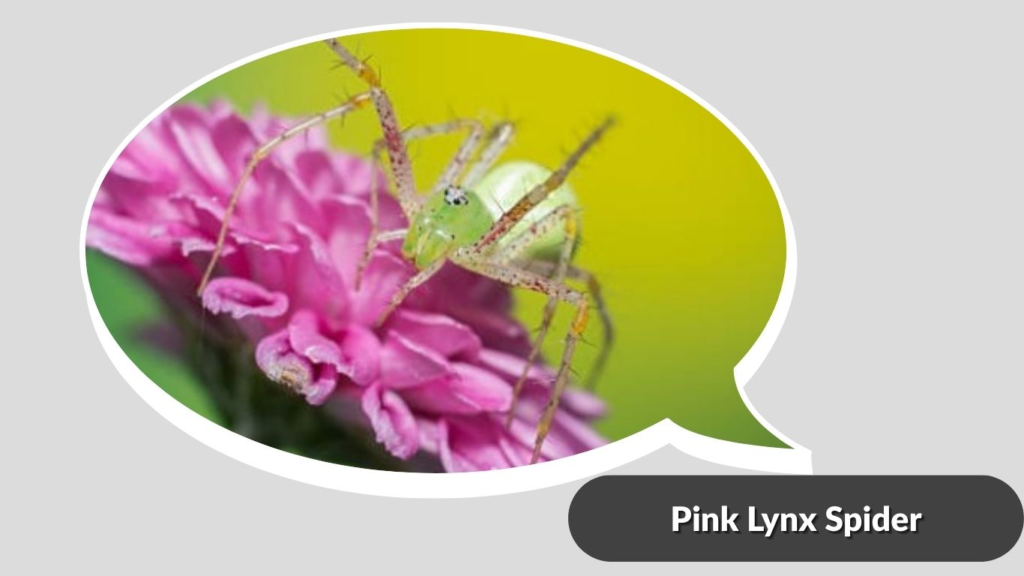
The Pink Lynx Spider is a fast-moving and spiny-legged spider recognized for its pinkish body tones and active hunting style. Unlike many spiders, it relies on speed rather than webs to capture prey.
Identification
- Scientific name: Oxyopes spp.
- Common name: Pink Lynx Spider
- Body color: pink to reddish-pink
- Legs: long with visible spines
- Size: medium spider
Color Pattern
This spider shows pink or rose-colored hues across its body, sometimes mixed with red or tan markings. The coloration helps it blend into plants and flowers.
Habitat
Pink Lynx Spiders are commonly found in shrubs, tall grasses, gardens, and flowering plants. They prefer open vegetation where insects are abundant.
Behavior
This species is an active daytime hunter. It stalks and pounces on prey rather than building webs. It is quick, alert, and often seen moving across leaves and stems.
Danger of Bite
Bites are uncommon and not dangerous to humans. If bitten, effects are usually mild, such as brief pain or slight swelling.
6. Pink Huntsman Spider
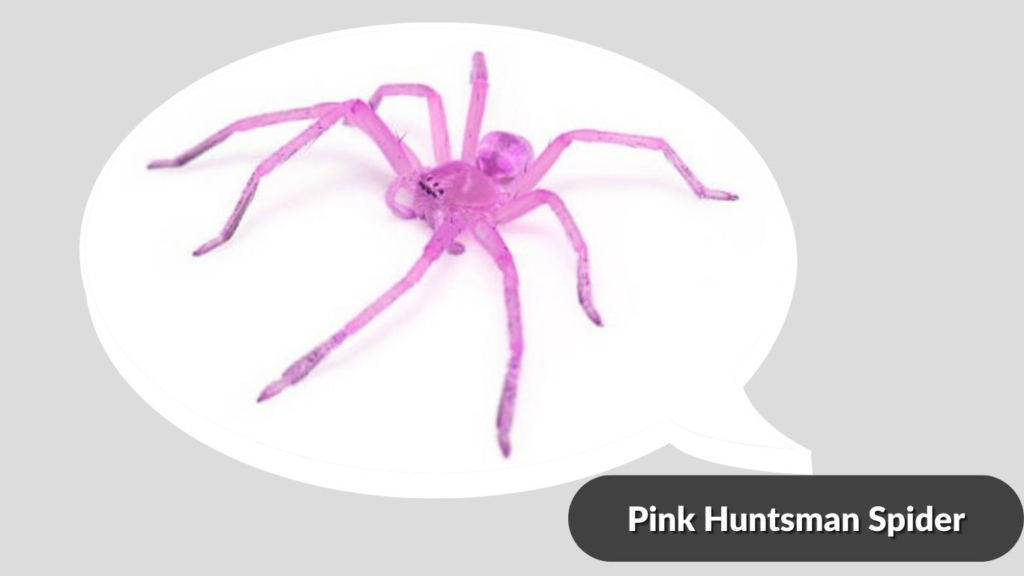
The Pink Huntsman Spider is a large, flat-bodied spider known for its long legs and subtle pinkish tones. Despite its intimidating size, it is generally calm and prefers to avoid human contact.
Identification
- Scientific name: Sparassidae (family)
- Common name: Pink Huntsman Spider
- Body color: pale pink to pinkish-brown
- Legs: very long and laterally spread
- Size: large spider
Color Pattern
This spider shows soft pink, blush, or pinkish-brown shades across its body and legs. The coloration is usually muted rather than bright, helping it blend into tree bark and walls.
Habitat
Pink Huntsman Spiders are found in forests, tree trunks, rocky areas, and sometimes inside homes. They favor warm climates and sheltered spaces.
Behavior
This species is fast-moving and nocturnal. It does not build webs for hunting, instead relying on speed to chase down prey. It may appear sudden when moving but is not aggressive.
Danger of Bite
Bites are rare and usually occur only when the spider is provoked. A bite may cause temporary pain and mild swelling but is not medically dangerous.
7. Pink Wolf Spider
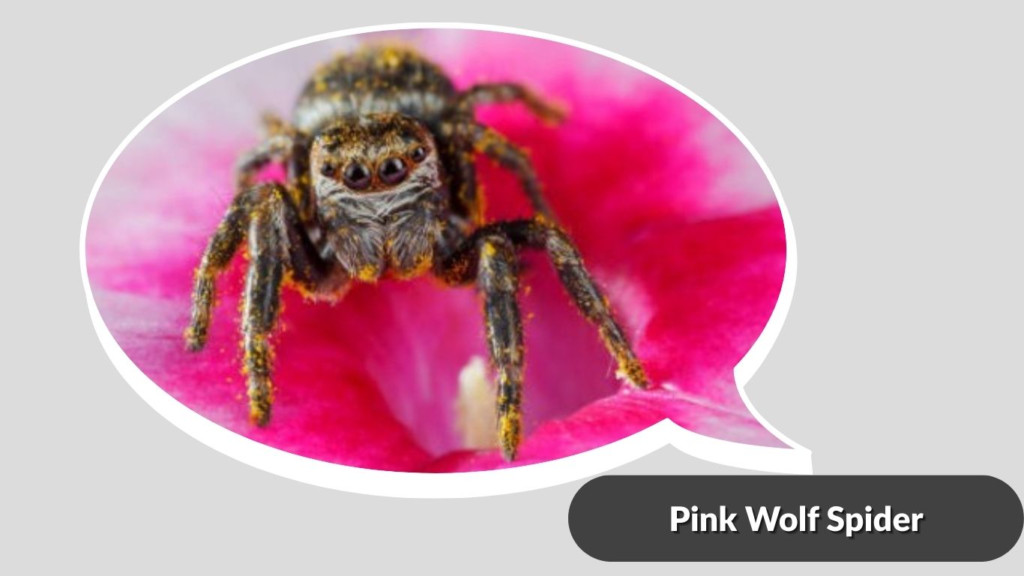
The Pink Wolf Spider is a ground-dwelling hunter recognized for its sturdy build and faint pink or rosy undertones. It is an active predator that relies on speed and vision rather than webs.
Identification
- Scientific name: Lycosidae (family)
- Common name: Pink Wolf Spider
- Body color: brown or gray with pinkish hues
- Eye pattern: large central eyes
- Size: medium to large spider
Color Pattern
This spider displays subtle pink or rose-colored highlights mixed with earthy brown or gray tones. The pink coloration is usually not vivid and becomes noticeable under certain lighting.
Habitat
Pink Wolf Spiders are commonly found in grasslands, gardens, forests, and open ground. They hide under rocks, logs, and leaf litter during the day.
Behavior
This species is a fast and efficient hunter. It does not spin webs for prey capture and is mostly nocturnal. Females are known for carrying their egg sacs and young on their bodies.
Danger of Bite
Bites are uncommon and not dangerous. If bitten, symptoms may include mild pain, redness, or swelling that fades quickly.
8. Pink Orb-Weaver Spider
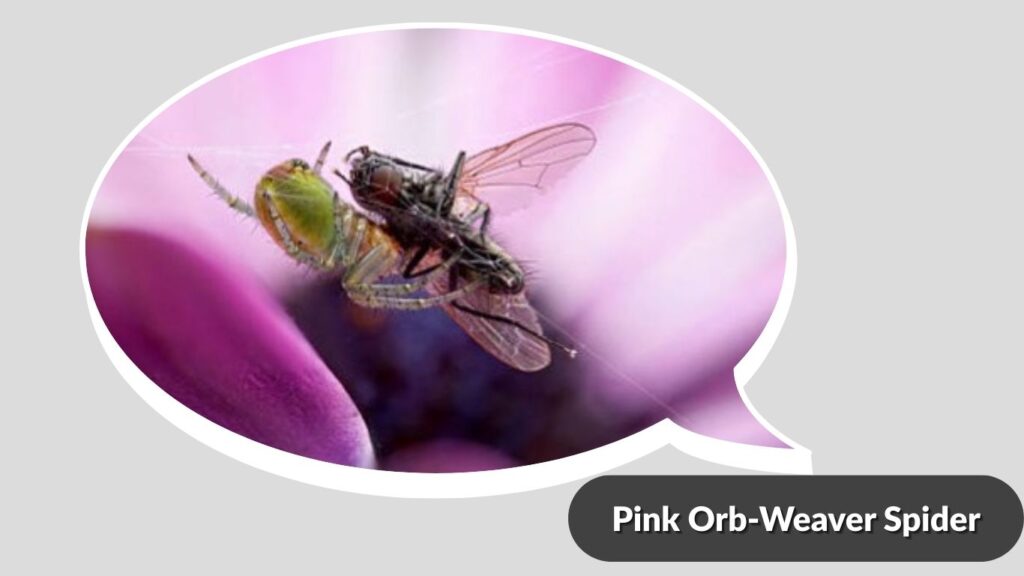
The Pink Orb-Weaver Spider is a graceful web-building spider known for its pinkish abdomen and large circular webs. It is commonly seen in gardens and open outdoor spaces.
Identification
- Scientific name: Araneidae (family)
- Common name: Pink Orb-Weaver Spider
- Body color: pink to pinkish-orange
- Abdomen shape: rounded
- Size: medium to large spider
Color Pattern
This spider features soft pink, rose, or peach tones on its abdomen, often combined with white, yellow, or brown markings. The colors can vary widely between individuals.
Habitat
Pink Orb-Weaver Spiders are found in gardens, fields, forests, and near outdoor lights. They build large orb-shaped webs between trees, shrubs, and structures.
Behavior
This species is calm and non-aggressive. It spends most of its time sitting at the center of its web or hiding nearby until prey becomes trapped.
Danger of Bite
Bites are very rare and harmless to humans. If a bite occurs, it may cause mild irritation but no serious medical effects.
9. Pink Garden Spider
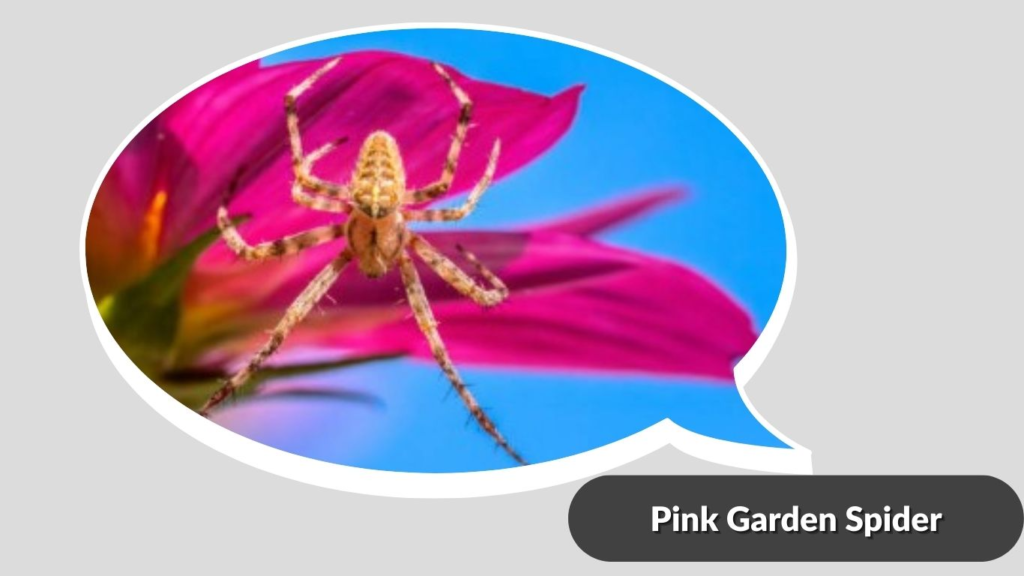
The Pink Garden Spider is an attractive spider often spotted in gardens due to its colorful body and large, decorative webs. Its pink tones make it stand out among flowering plants and greenery.
Identification
- Scientific name: Argiope spp.
- Common name: Pink Garden Spider
- Body color: pink with white, yellow, or black markings
- Abdomen shape: elongated and patterned
- Size: medium to large spider
Color Pattern
This spider shows soft to vivid pink shades combined with contrasting patterns on the abdomen. The coloration helps it appear striking when resting at the center of its web.
Habitat
Pink Garden Spiders are commonly found in gardens, fields, and open landscapes. They prefer areas with tall plants where they can anchor their large orb-shaped webs.
Behavior
This species is mostly stationary and non-aggressive. It waits patiently in its web for flying insects and may rebuild its web regularly.
Danger of Bite
Bites are extremely rare and not dangerous. If bitten, a person may experience minor pain or redness, similar to a mild insect bite.
10. Pink Sac Spider
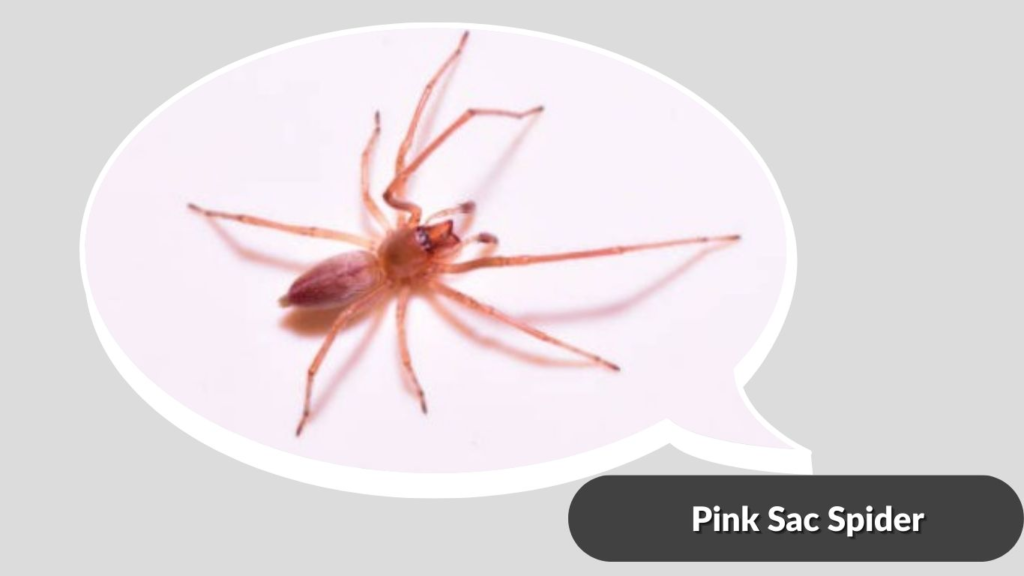
The Pink Sac Spider is a small, pale-colored spider known for its habit of creating silk “sacs” for shelter rather than large webs. Its light pink tones and indoor appearances often bring it to human attention.
Identification
- Scientific name: Cheiracanthium spp.
- Common name: Pink Sac Spider
- Body color: pale pink to light beige
- Legs: long and slender
- Size: small to medium spider
Color Pattern
This spider has a soft pink or flesh-toned body with slightly darker legs. The coloration is subtle and uniform, without bold markings.
Habitat
Pink Sac Spiders are found both outdoors and indoors. Outside, they live on leaves and shrubs; indoors, they may hide in corners, ceilings, or behind furniture.
Behavior
This species is nocturnal and active at night. Instead of building capture webs, it hunts by roaming and uses silk sacs as daytime retreats.
Danger of Bite
Bites are uncommon but can occur if the spider is trapped against skin. The bite may cause mild to moderate pain and temporary irritation, but it is not considered dangerous.
11. Pink Sac Spider
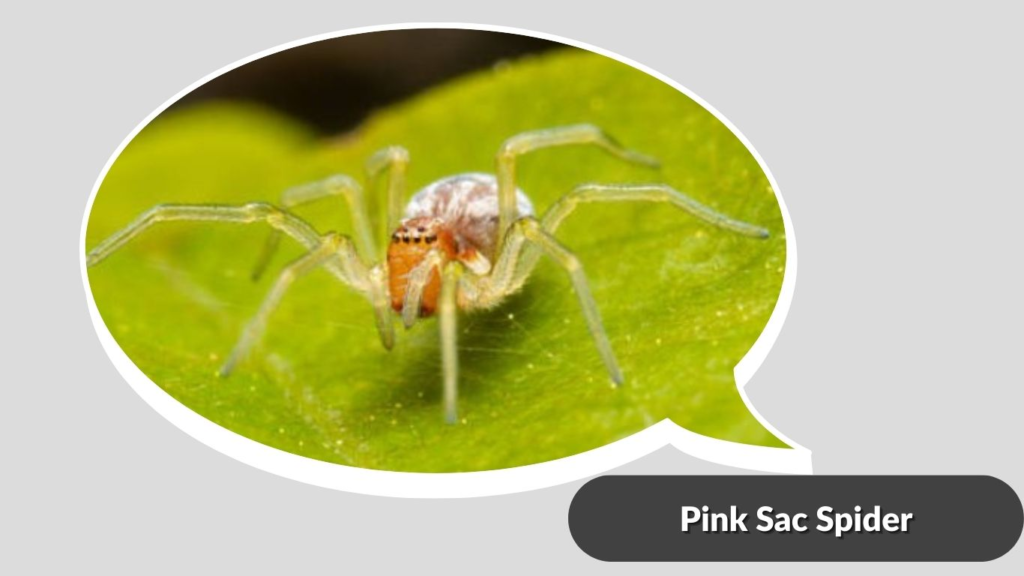
The Pink Sac Spider is a small, pale-colored spider known for its habit of creating silk “sacs” for shelter rather than large webs. Its light pink tones and indoor appearances often bring it to human attention.
Identification
- Scientific name: Cheiracanthium spp.
- Common name: Pink Sac Spider
- Body color: pale pink to light beige
- Legs: long and slender
- Size: small to medium spider
Color Pattern
This spider has a soft pink or flesh-toned body with slightly darker legs. The coloration is subtle and uniform, without bold markings.
Habitat
Pink Sac Spiders are found both outdoors and indoors. Outside, they live on leaves and shrubs; indoors, they may hide in corners, ceilings, or behind furniture.
Behavior
This species is nocturnal and active at night. Instead of building capture webs, it hunts by roaming and uses silk sacs as daytime retreats.
Danger of Bite
Bites are uncommon but can occur if the spider is trapped against skin. The bite may cause mild to moderate pain and temporary irritation, but it is not considered dangerous.
