

When we think of wasps, most of us imagine buzzing daytime hunters, active under the sun. But the Apoica genus, commonly known as night wasps, breaks that pattern. Native to Central and South America, these pale-bodied wasps come alive after sunset, swarming gracefully into the night sky in search of nectar and prey. Their unusually large eyes, calm daytime behavior, and delicate paper nests make them one of the most fascinating groups of social wasps in the world. In this guide, we’ll explore all the recognized Apoica species, their traits, habits, and the role they play in tropical ecosystems.
1. Apoica albimacula (Night Wasp)
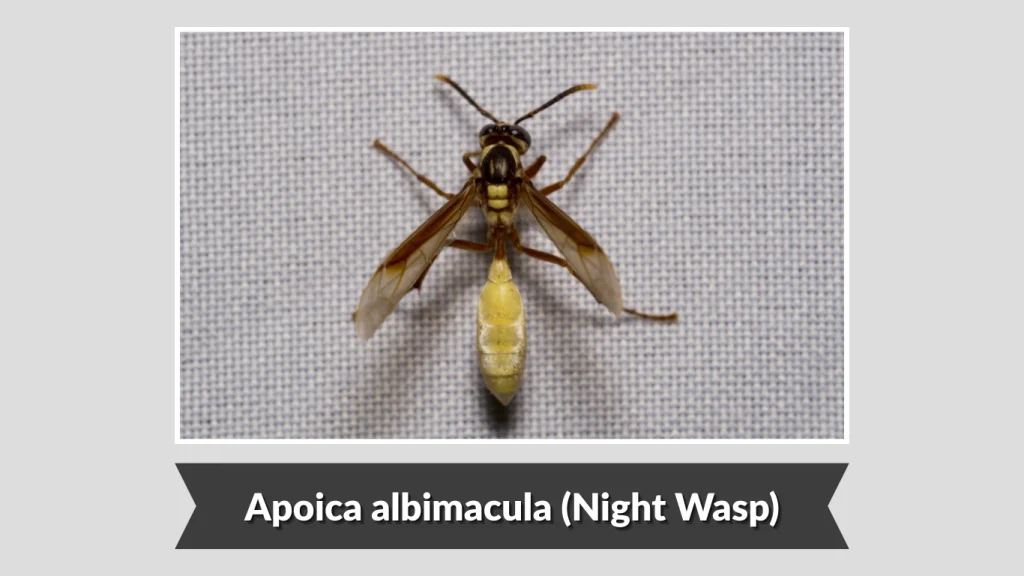
A nocturnal paper wasp known for its pale body and subtle whitish “spots” (the name means “white-spotted”). Like other Apoica, it forages after dusk and rests by day. Colonies build lightweight paper nests and often live in warm, humid Neotropical habitats.
Identification
- Medium size; slender body with pale yellow to cream coloration
- Whitish maculae (spots) on the thorax and sometimes the abdomen
- Relatively large, dark eyes adapted for low light
- Wings translucent to lightly smoky; rest folded lengthwise
- Antennae long and filiform; legs comparatively long
Distribution & Habitat
Found in the Neotropics, typically in lowland forests, woodland edges, and gardens with nearby vegetation that provides daytime shelter.
Behavior & Activity
Primarily nocturnal—workers depart shortly after dusk to forage. During the day, adults rest quietly under leaves or near the nest to avoid predators and heat.
Nest & Colony
Constructs papery, comb-based nests protected by a thin envelope, usually attached to branches or sheltered structures. Colonies are social, with a queen and cooperative workers.
Sting & Human Interaction
Generally non-aggressive if undisturbed. Stings are possible near the nest, so observe from a distance during nighttime activity when traffic is highest.
2. Apoica ambracarina
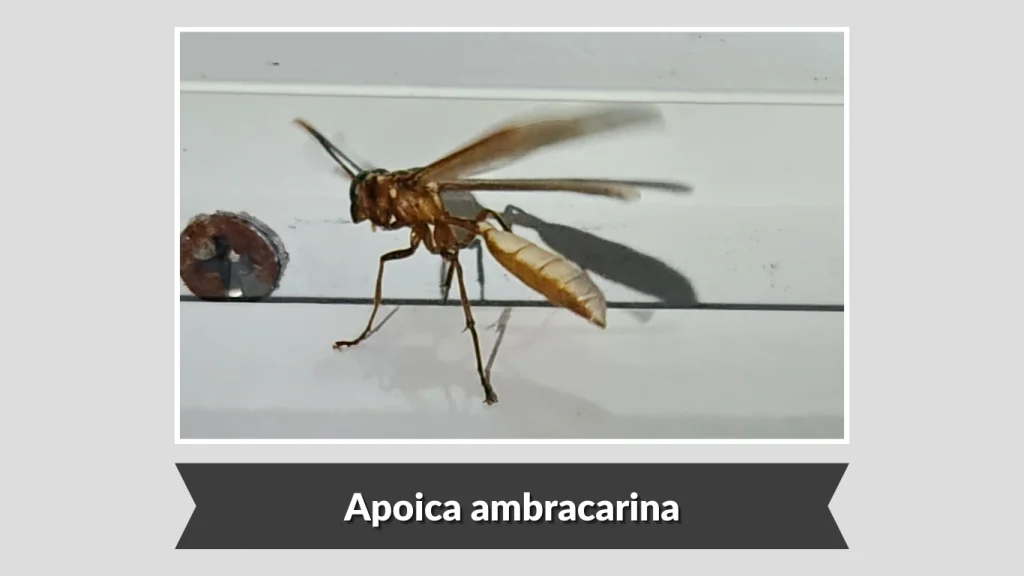
A relatively rare night wasp, Apoica ambracarina was described in the early 2000s and is distinguished by structural traits in its reproductive anatomy. Like other members of the genus, it is strictly nocturnal and constructs delicate paper nests in shaded forest areas.
Identification
- Medium-sized body with pale yellow tones
- Noticeable differences in male genitalia (used in taxonomy)
- Large compound eyes suited for night activity
- Long legs and slender antennae typical of the genus
Distribution & Habitat
Mostly reported from Central and South American forests, often in humid, shaded zones that provide ideal nesting and foraging conditions.
Behavior & Nesting
The colony follows typical Apoica behavior: foraging after dusk, remaining calm during daylight, and forming communal nests that hang under branches.
3. Apoica arborea
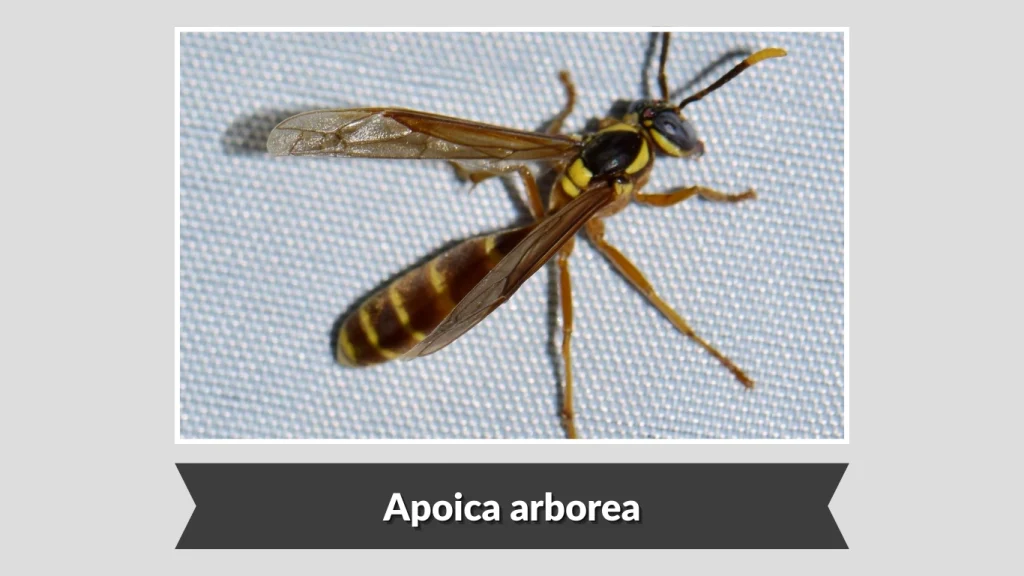
One of the more widespread Apoica species, Apoica arborea is known for nesting in trees—hence the name “arborea.” Colonies are often visible on tree trunks or branches, sometimes in large clusters.
Identification
- Body color pale yellow to ivory
- Strong association with arboreal nesting sites
- Large, dark eyes characteristic of nocturnal wasps
- Slender body and legs with lightly smoky wings
Distribution & Habitat
Found across much of tropical South America. Prefers wooded habitats and forest edges, nesting in trees at various heights.
Behavior & Nesting
Workers leave the nest at dusk in swarms to forage, creating noticeable nighttime activity. Nests are made of thin, layered paper and typically attached to tree branches.
4. Apoica flavissima
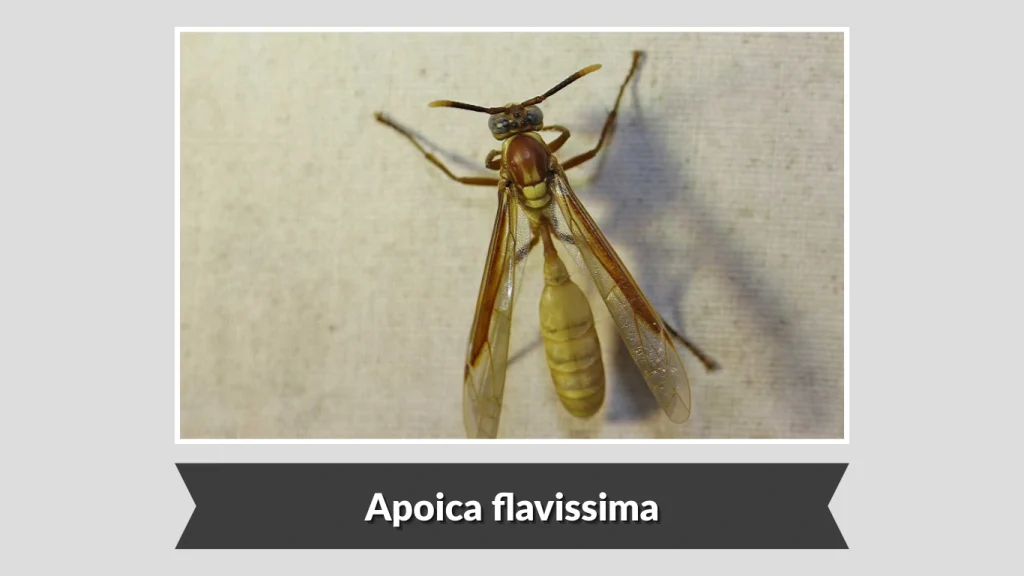
Known for its vivid pale-yellow body, Apoica flavissima is one of the most recognizable species in the genus. Its name means “very yellow,” reflecting the brighter hue compared to other night wasps. Colonies are often found in warm, open forested zones where the yellowish adults are highly noticeable under artificial light.
Identification
- Bright pale-yellow coloration over the entire body
- Large dark eyes specialized for nocturnal foraging
- Slender body with narrow waist and elongated legs
- Wings transparent to lightly tinted brown
- Antennae long, often darker at the tips
Distribution & Habitat
Primarily recorded in northern South America, extending into Central America. Nests are usually built in bushes or small trees close to open spaces.
Behavior & Nesting
Highly nocturnal foragers, leaving nests in large numbers after dusk. Nests are papery, circular, and relatively small, often well-hidden in foliage. Colonies are cooperative, with a clear queen-worker division.
5. Apoica gelida
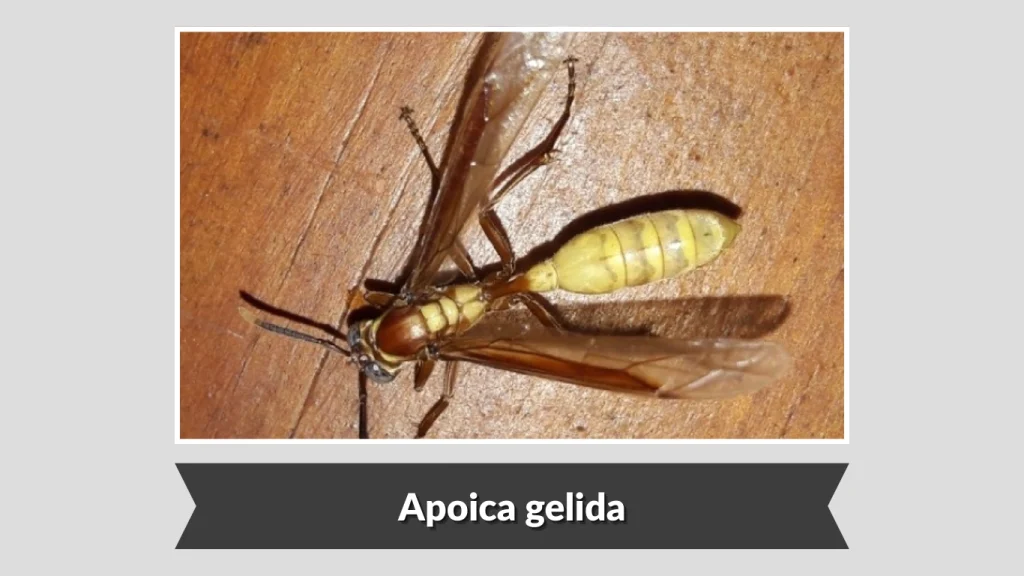
A less common member of the genus, Apoica gelida is notable for its cooler-toned pale body and relatively limited distribution. Its name “gelida” suggests a frosty or whitish appearance, distinguishing it from the more vividly yellow species.
Identification
- Pale cream to whitish body coloration
- Subtle grayish tones compared to other Apoica
- Medium-sized nocturnal wasp with large dark eyes
- Slender, elongated antennae and legs
- Wings semi-transparent with a slight smoky hue
Distribution & Habitat
Reported mainly from South America, particularly in forest interiors and shaded lowlands. It tends to avoid brightly lit or open areas.
Behavior & Nesting
Workers forage during the early hours of night, often in smaller swarms compared to A. pallens or A. flavissima. Nests are papery, sometimes attached under large leaves or within sheltered tree cavities, offering extra protection.
6. Apoica pallens
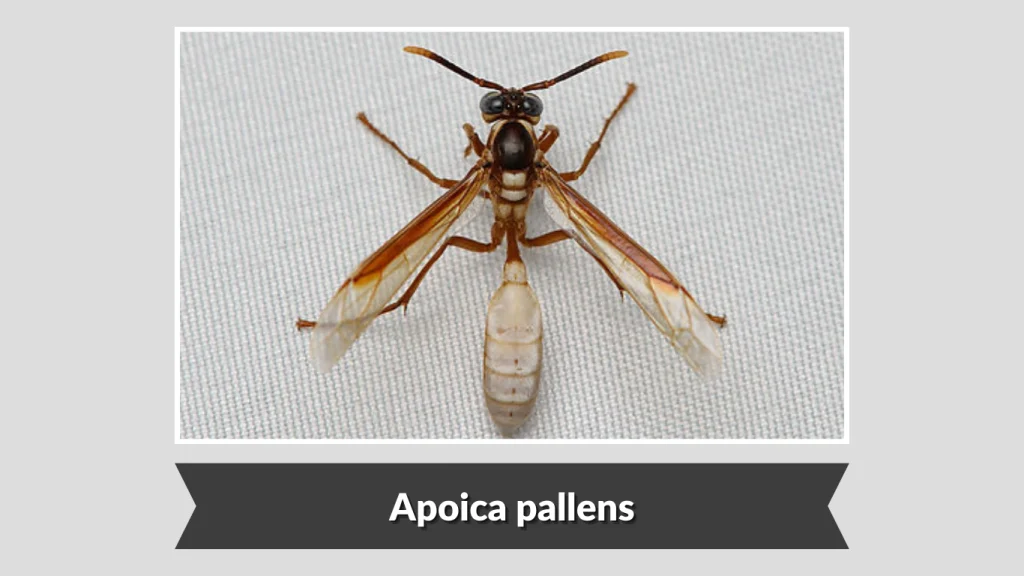
Perhaps the most well-known and widespread of the night wasps, Apoica pallens is often highlighted in studies of nocturnal social wasps. Its pale body and swarming behavior at dusk make it one of the most striking species of the genus.
Identification
- Pale yellow to ivory body color
- Large, rounded compound eyes well-adapted for night vision
- Long antennae and legs, giving it a slender appearance
- Wings translucent, folding neatly over the body
- Workers often slightly smaller than queens but otherwise similar in form
Distribution & Habitat
Widely distributed across Central and South America, from Mexico to Brazil. Found in forests, savannas, and even urban gardens where trees provide nesting support.
Behavior & Nesting
Colonies can be very large, sometimes with hundreds of workers. At dusk, swarms leave in coordinated waves to forage, an impressive sight near forest edges. Their nests are thin paper combs, often hanging from tree branches, partially protected by an envelope.
7. Apoica pallida
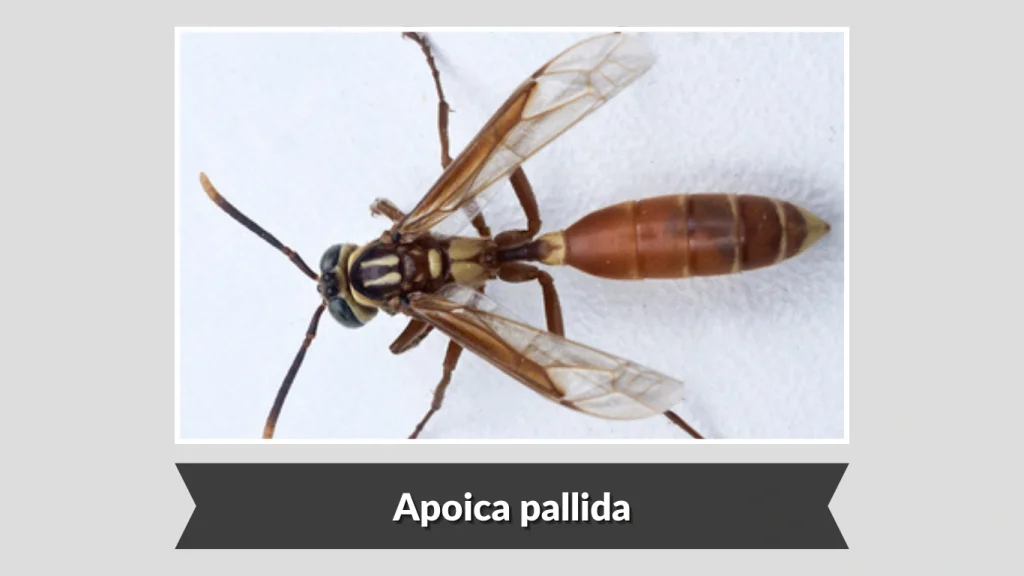
Closely related to A. pallens, Apoica pallida shares many features but can be distinguished by subtle differences in coloration and morphology. Its name “pallida” means “pale,” reflecting its very light body shade.
Identification
- Very pale, almost whitish-yellow body coloration
- Slightly smaller than A. pallens on average
- Large eyes adapted to low-light environments
- Slender body with long legs and narrow waist
- Wings clear or faintly smoky, held flat when at rest
Distribution & Habitat
Native to parts of South America, particularly Brazil and surrounding regions. Commonly nests in lowland forests and semi-wooded landscapes.
Behavior & Nesting
Follows a similar nocturnal pattern as A. pallens, with swarming activity at dusk. Colonies are moderately sized, and nests are typically attached to branches in shaded locations, crafted from a fine paper-like material.
8. Apoica strigata
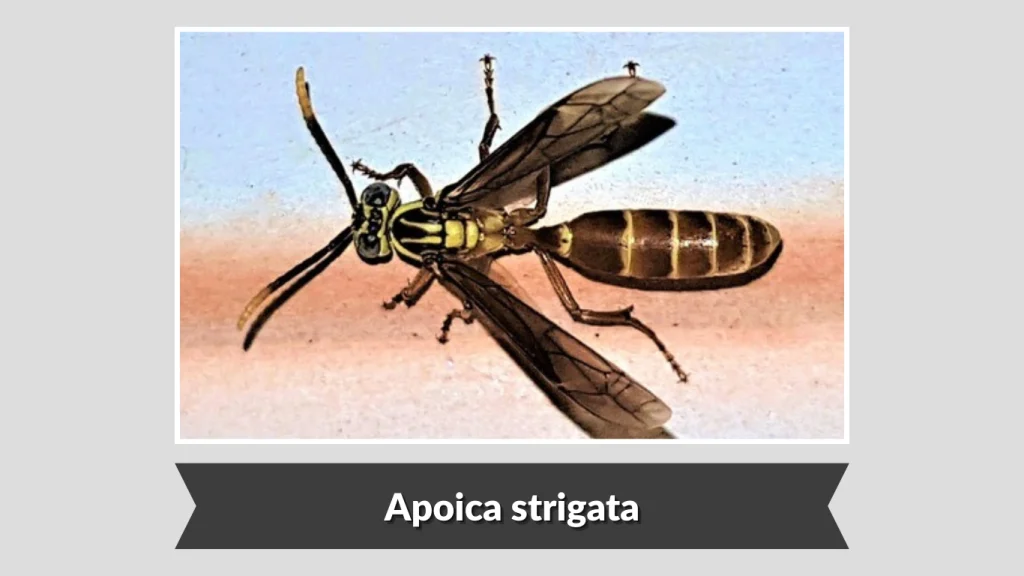
Apoica strigata is a distinctive night wasp named for the faint streaks or striations (“strigata”) visible on parts of its body. Though less common than A. pallens, it is an important species in the genus due to its unique body markings and nesting behavior.
Identification
- Pale yellow to creamy body, often with faint streak-like markings on thorax or abdomen
- Large compound eyes adapted for nocturnal foraging
- Slender build with long antennae and legs
- Wings transparent to lightly smoky, resting folded lengthwise
- Workers and queens similar in appearance, though queens are slightly larger
Distribution & Habitat
Found mainly in tropical South America, particularly in rainforest and forest-edge environments. Prefers areas with dense canopy where nests remain shaded during the day.
Behavior & Nesting
Forages in swarms after dusk. Colonies construct thin, layered nests that are well-camouflaged within tree foliage. Less aggressive than some other Apoica species, though defensive when nests are disturbed.
9. Apoica thoracica
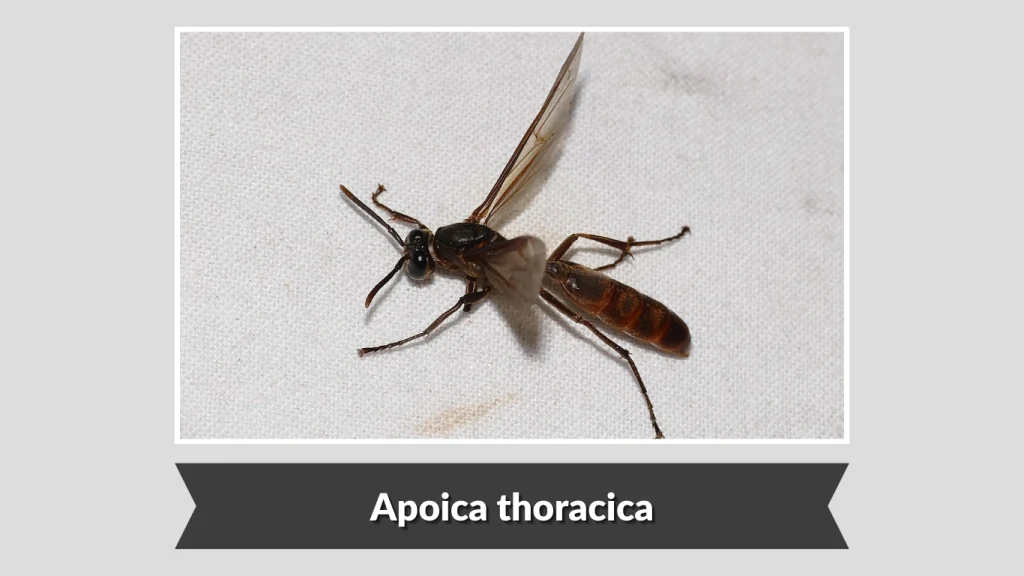
Recognized by its comparatively robust thorax, Apoica thoracica is another nocturnal paper wasp that thrives in tropical forests. Its name highlights its slightly larger thoracic region, which gives it a sturdier appearance than other species.
Identification
- Body pale yellow with a noticeably developed thorax
- Large blackish eyes for low-light navigation
- Long legs and antennae, typical of the genus
- Wings translucent, sometimes slightly smoky
- Strong thorax structure differentiates it from close relatives
Distribution & Habitat
Occurs in South America, with records from Brazil and surrounding regions. Typically inhabits warm, humid lowlands and constructs nests in trees or shrubs.
Behavior & Nesting
Highly nocturnal; colonies remain still during the day and become active after sunset. Nests are papery, attached under branches or within sheltered canopies. Colonies are moderately sized, and workers forage collectively.
10. Apoica traili
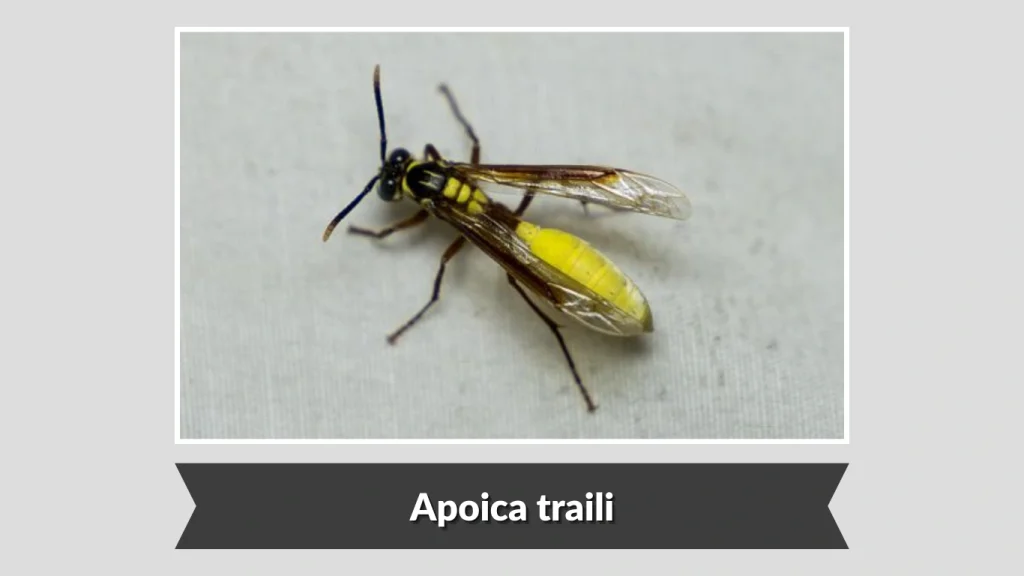
Apoica traili is a nocturnal social wasp named after the naturalist James William Helenus Trail. It is a relatively uncommon species but follows the same nocturnal pattern as its close relatives, swarming at dusk to forage.
Identification
- Pale yellow to whitish body, slender and elongated
- Large compound eyes, strongly adapted for night activity
- Long filiform antennae and elongated legs
- Wings clear to lightly tinted, resting flat over the abdomen
- Subtle structural differences in body shape used for taxonomic identification
Distribution & Habitat
Recorded mainly in the Amazon Basin and surrounding tropical forests of South America. Prefers lowland humid forests and often nests in branches of medium-sized trees.
Behavior & Nesting
Colonies are moderately sized and exhibit the characteristic swarming behavior after sunset. Nests are delicate, paper-based structures attached to branches, protected by a thin outer covering.
11. Apoica ujhelyii
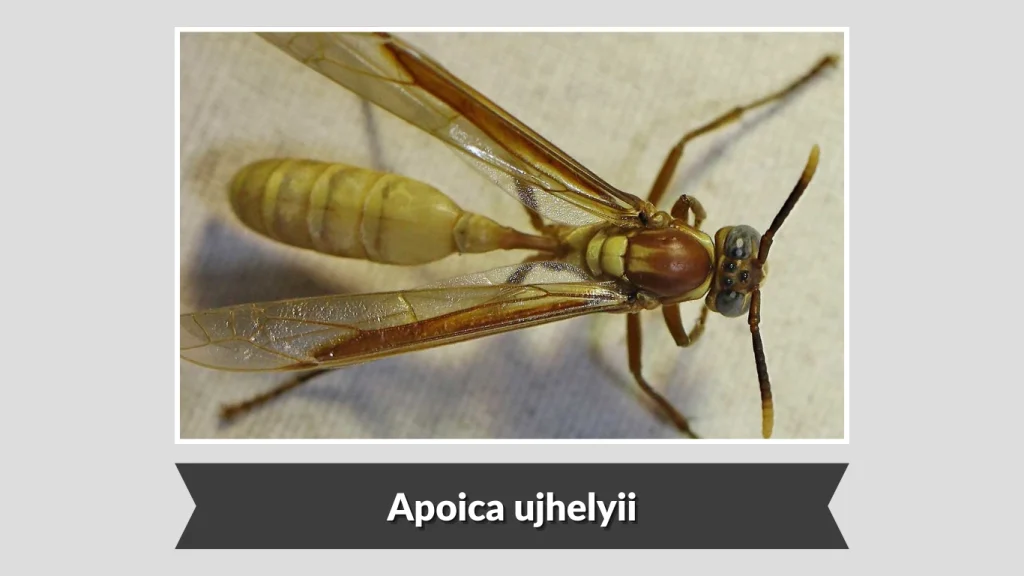
Apoica ujhelyii is a South American night wasp named in honor of the Hungarian entomologist Jenő Ujhelyi. This species is particularly interesting for its strong colony organization and preference for forest habitats.
Identification
- Body coloration pale yellow, sometimes cream with slight shading
- Medium size, slender build with long legs
- Eyes proportionally large, allowing effective night foraging
- Antennae thin and extended; wings translucent
- Morphological distinctions mostly noted in taxonomic studies
Distribution & Habitat
Found in South America, especially in Brazil and neighboring regions. Most common in humid lowland forests, but occasionally reported in semi-open woodland.
Behavior & Nesting
Primarily nocturnal foragers, often leaving the nest in coordinated groups. Nests are papery and may be positioned under tree canopies or in concealed spots to avoid predators. Colonies tend to be calm during the day but can defend vigorously if threatened.
12. Apoica ellenae
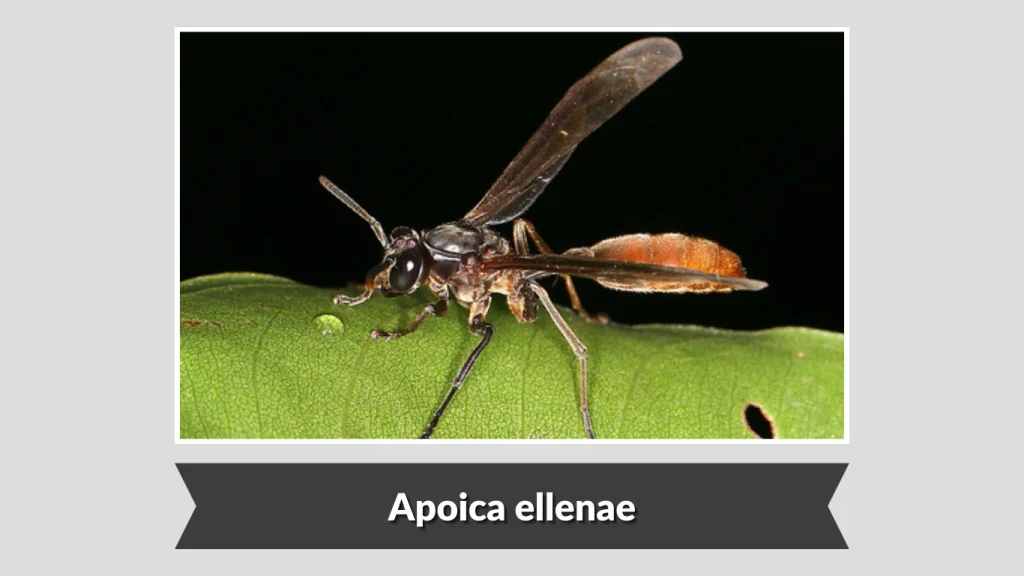
Apoica ellenae is the most recently described member of the night wasp genus, formally identified in 2007 by Pickett & Wenzel. It added new insights into the diversity of Apoica species, showing unique anatomical traits that distinguish it from its close relatives.
Identification
- Pale yellow body, typical of the genus, but with subtle morphological distinctions
- Large, rounded eyes adapted for nocturnal foraging
- Slender body with elongated legs and filiform antennae
- Wings transparent, folded neatly over the abdomen at rest
- Identified largely by differences in reproductive anatomy and thoracic features
Distribution & Habitat
Known from Central and South America, particularly in forested and semi-open tropical habitats. Distribution records are fewer due to its relatively recent recognition in taxonomy.
Behavior & Nesting
Follows the general Apoica pattern: swarms leave the nest at dusk to forage collectively, returning before dawn. Nests are delicate, papery structures attached under tree branches or concealed among leaves. Colonies exhibit strong social structure with cooperative brood care.
FAQs
What makes Apoica wasps different from other paper wasps?
Apoica wasps are nocturnal, unlike most paper wasps that are active during the day. They have unusually large compound eyes adapted to low-light conditions, allowing them to forage after dusk and remain still during daylight hours.
Are Apoica wasps dangerous to humans?
They are generally not aggressive unless their nest is disturbed. Like other social wasps, they can sting in defense, but they are less prone to chase intruders compared to more aggressive species. Their sting is painful but not usually life-threatening to healthy individuals.
Where are Apoica wasps found?
These wasps are native to Central and South America, with species distributed across tropical and subtropical forests, savannas, and semi-wooded areas. Some species are found as far north as Mexico and as far south as Brazil and Argentina.
What do Apoica wasps eat?
They primarily feed on nectar and other sugary plant secretions, but they also hunt insects and other arthropods to feed their larvae. Their nighttime activity helps them avoid competition with diurnal wasp species.
How do Apoica nests look?
Their nests are delicate, papery structures made from chewed plant fibers. They are often attached under tree branches or hidden in foliage. Unlike some other wasps, Apoica colonies are highly social, with cooperative brood care and swarming behavior at dusk.
