

Lice are tiny, wingless parasitic insects that live on mammals and birds, surviving by feeding on blood, skin, or feathers. Although most people associate lice only with humans, there are actually many different types of lice adapted to specific hosts such as pigs, dogs, cattle, birds, and rodents. Each type has unique features, behaviors, and life cycles shaped by its environment. In this article, we explore ten different types of louse insects, highlighting their identification, characteristics, and biological differences.
1. Head Louse (Pediculus humanus capitis)
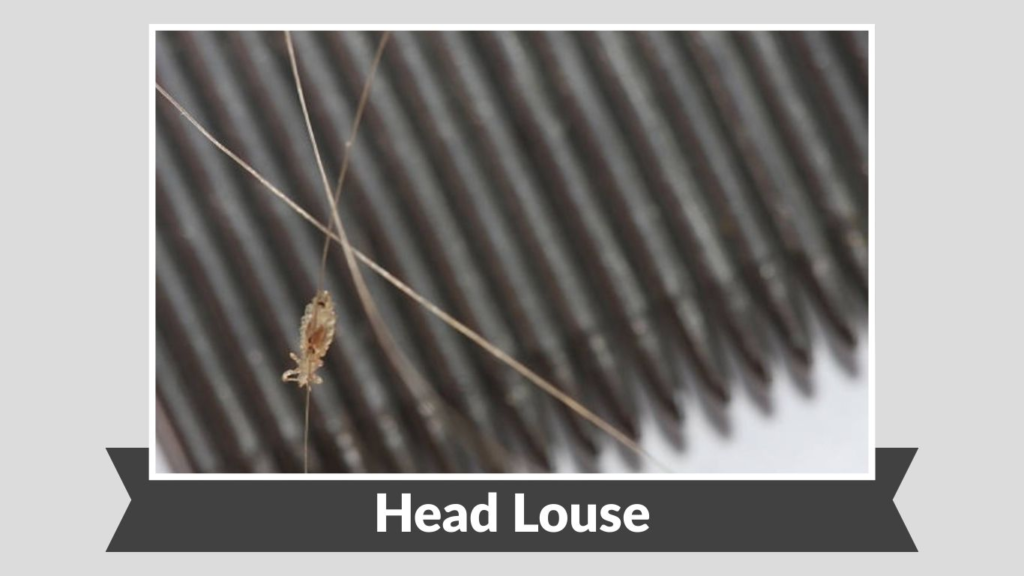
Head lice are tiny, wingless parasitic insects that live on the human scalp and feed exclusively on blood. They are most commonly found among school-aged children but can affect people of all ages. Head lice do not jump or fly; instead, they spread mainly through direct head-to-head contact or by sharing personal items such as combs, hats, and pillows. Although they are not dangerous and do not transmit serious diseases, infestations can be uncomfortable, irritating, and socially distressing if not treated promptly.
Identification
- Small, flat, wingless insects about the size of a sesame seed
- Color ranges from whitish to gray or brown, darkening after feeding
- Found close to the scalp, especially behind the ears and near the neck
- Eggs (nits) are oval, yellowish or white, and firmly attached to hair shafts
- Move quickly through hair but cannot jump or fly
Definition
A head louse is a blood-feeding ectoparasite that spends its entire life cycle on the human scalp. It survives by piercing the skin and feeding several times a day. Without a human host, head lice usually die within one to two days, making close contact essential for their survival and spread.
Features
Head lice have six legs equipped with strong claws that allow them to grip human hair tightly. Their flattened bodies help them move easily between hair strands. They inject saliva while feeding, which often causes itching and irritation. Unlike fleas, they cannot leap, and unlike flies, they have no wings.
Life Cycle
The life cycle consists of three stages: egg (nit), nymph, and adult. Eggs hatch in about 7–10 days into nymphs, which resemble smaller adults. Nymphs mature within another 7–10 days. Adult lice can live around 30 days on a person, laying several eggs daily to continue the infestation.
Species
The scientific name of the head louse is Pediculus humanus capitis. It is closely related to the body louse (Pediculus humanus corporis) but differs in habitat, as head lice live and lay eggs on hair rather than clothing.
2. Head Louse (Pediculus humanus capitis)
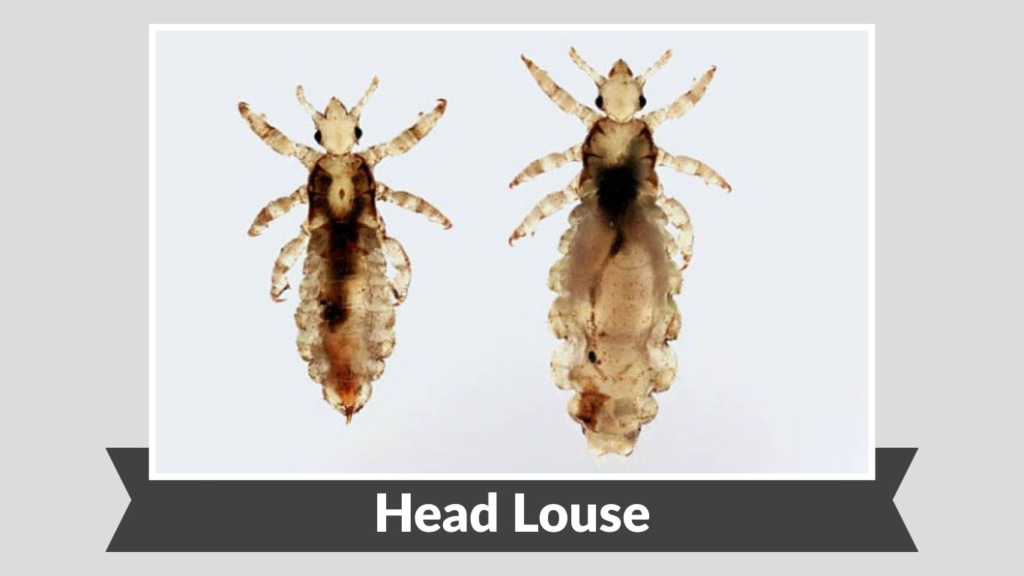
Head lice are tiny, wingless parasitic insects that live on the human scalp and feed exclusively on blood. They are most commonly found among school-aged children but can affect people of all ages. Head lice do not jump or fly; instead, they spread mainly through direct head-to-head contact or by sharing personal items such as combs, hats, and pillows. Although they are not dangerous and do not transmit serious diseases, infestations can be uncomfortable, irritating, and socially distressing if not treated promptly.
Identification
- Small, flat, wingless insects about the size of a sesame seed
- Color ranges from whitish to gray or brown, darkening after feeding
- Found close to the scalp, especially behind the ears and near the neck
- Eggs (nits) are oval, yellowish or white, and firmly attached to hair shafts
- Move quickly through hair but cannot jump or fly
Definition
A head louse is a blood-feeding ectoparasite that spends its entire life cycle on the human scalp. It survives by piercing the skin and feeding several times a day. Without a human host, head lice usually die within one to two days, making close contact essential for their survival and spread.
Features
Head lice have six legs equipped with strong claws that allow them to grip human hair tightly. Their flattened bodies help them move easily between hair strands. They inject saliva while feeding, which often causes itching and irritation. Unlike fleas, they cannot leap, and unlike flies, they have no wings.
Life Cycle
The life cycle consists of three stages: egg (nit), nymph, and adult. Eggs hatch in about 7–10 days into nymphs, which resemble smaller adults. Nymphs mature within another 7–10 days. Adult lice can live around 30 days on a person, laying several eggs daily to continue the infestation.
Species
The scientific name of the head louse is Pediculus humanus capitis. It is closely related to the body louse (Pediculus humanus corporis) but differs in habitat, as head lice live and lay eggs on hair rather than clothing.
3. Pubic Louse (Pthirus pubis)

Pubic lice, commonly known as crab lice, are small parasitic insects that infest coarse human hair, especially in the pubic region. They can also be found on underarm hair, chest hair, eyelashes, and eyebrows. Pubic lice are usually transmitted through close physical or sexual contact, but they can occasionally spread through shared bedding, towels, or clothing. Their presence often causes intense itching and visible irritation.
Identification
- Very small, broad-bodied lice about 1–2 mm long
- Yellowish-gray to tan in color, darkening after feeding
- Crab-like appearance with short, wide body and large front claws
- Usually found attached to coarse hair rather than scalp hair
- Eggs (nits) are firmly cemented to hair shafts
Definition
A pubic louse is a blood-feeding ectoparasite adapted to live on coarse human hair. It spends its entire life cycle on the human host and feeds frequently. Because of its strong claws and short body, it clings tightly to hair and skin, making it difficult to remove without treatment.
Features
Pubic lice are shorter and wider than head or body lice, giving them a crab-like look. Their powerful front claws are specially adapted for gripping thick hair. They move slowly but hold firmly to hair shafts. Their saliva can trigger allergic reactions, leading to itching, redness, and sometimes bluish bite marks on the skin.
Life Cycle
The life cycle consists of egg, nymph, and adult stages. Eggs hatch in about 6–10 days. Nymphs mature into adults within 10–14 days. Adult pubic lice live around three to four weeks and lay several eggs each day as long as they have access to human blood.
Species
The scientific name of the pubic louse is Pthirus pubis. It is biologically distinct from head and body lice of the genus Pediculus, differing in body shape, claw structure, and preferred hair type.
4. Elephant Louse (Haematomyzus elephantis)
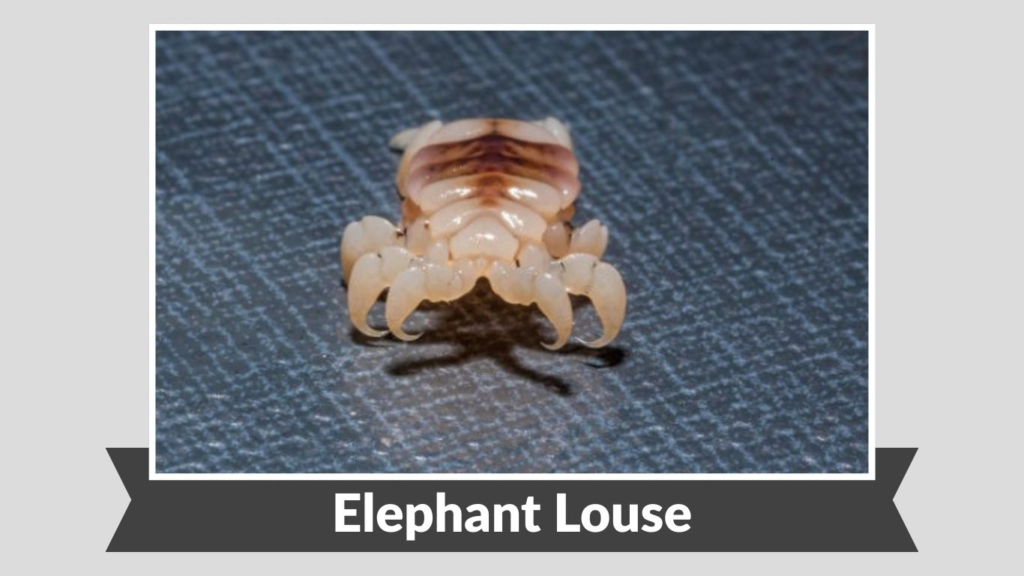
Elephant lice are specialized parasitic insects that live on elephants, feeding on their blood and skin secretions. Unlike human lice, elephant lice have unique mouthparts adapted for penetrating thick skin. They are rarely seen by people and have no role in human infestations, but they are important in understanding host-specific parasites and wildlife health.
Identification
- Small, flattened, wingless insects adapted to thick elephant skin
- Brownish to dark gray in color
- Found mainly in skin folds, behind ears, and around the base of the tail
- Strong legs with claws for gripping coarse skin and sparse hair
- Eggs attached to skin hairs or rough skin surfaces
Definition
An elephant louse is a host-specific ectoparasite that lives exclusively on elephants. It survives by feeding on blood and tissue fluids. Because it is highly adapted to elephants, it cannot survive or reproduce on humans or other animals.
Features
Elephant lice differ from most lice by having elongated, flexible mouthparts designed to pierce very thick skin. Their bodies are tough and flattened, helping them resist being crushed or brushed off. They move slowly but remain firmly attached to their host, often staying hidden in deep skin creases.
Life Cycle
The life cycle includes egg, nymph, and adult stages. Eggs hatch into nymphs that resemble smaller adults. Nymphs pass through several molts before maturity. The entire cycle takes several weeks and is completed entirely on the elephant’s body, with all stages depending on the host for survival.
Species
The best-known species is Haematomyzus elephantis. Another related species, Haematomyzus hopkinsi, is found on Asian elephants, showing how elephant lice have evolved separately with different elephant species.
5. Pig Louse (Haematopinus suis)
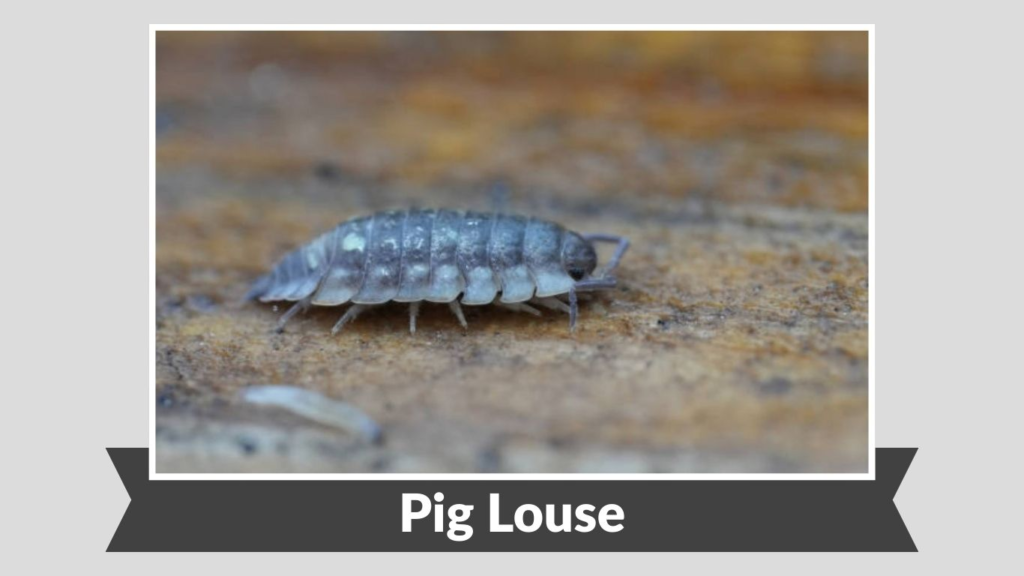
The pig louse is the largest species of louse known to infest mammals and is a common external parasite of domestic pigs and wild boars. It lives on the skin of its host, especially around the neck, ears, and flanks, where it feeds on blood. Heavy infestations can cause irritation, hair loss, thickened skin, and in young pigs may lead to weakness or anemia.
Identification
- Large, flattened, wingless insects up to 6 mm long
- Grayish-brown in color, darker after feeding
- Commonly found around the neck, shoulders, and inner thighs
- Strong legs with claws adapted for gripping coarse pig hair
- Eggs glued to hair shafts close to the skin
Definition
A pig louse is a blood-feeding ectoparasite that lives its entire life on pigs. It depends on constant access to the host’s blood and cannot survive long away from the animal. It is host-specific and does not establish infestations on humans.
Features
Pig lice have broad heads, thick bodies, and powerful claws that allow them to cling tightly to bristly hair and rough skin. Their bites cause irritation and itching, leading pigs to rub against surfaces. This rubbing can result in wounds that may become infected.
Life Cycle
The life cycle consists of egg, nymph, and adult stages. Eggs hatch in about one to two weeks. Nymphs pass through three molts over roughly two weeks before becoming adults. Adults can live for about a month, with females laying several eggs each day under favorable conditions.
Species
The scientific name of the pig louse is Haematopinus suis. It belongs to the genus Haematopinus, which includes several sucking lice species that parasitize large mammals such as cattle, horses, and dogs.
6. Dog Biting Louse (Trichodectes canis)
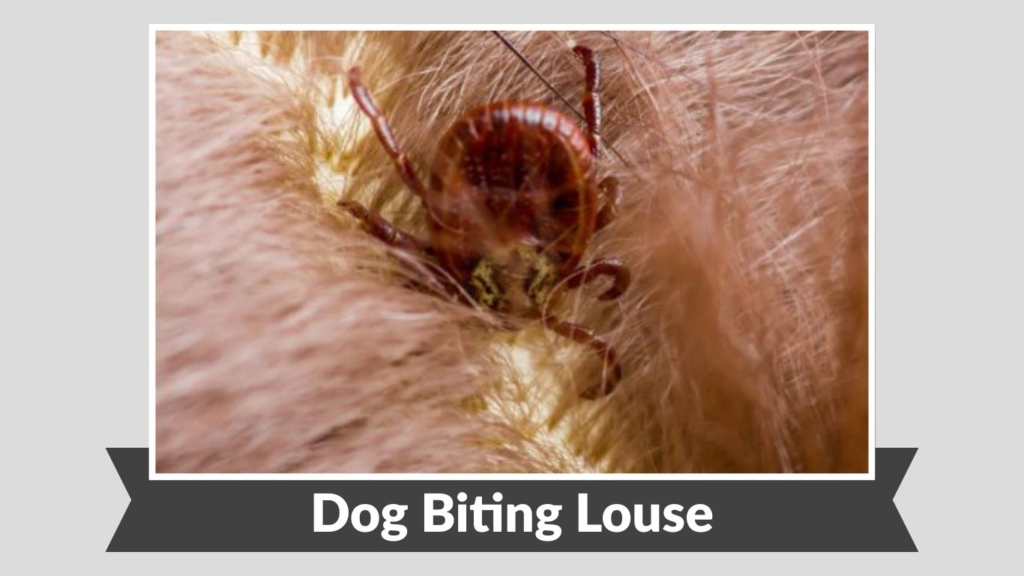
The dog biting louse is a common external parasite of domestic dogs and wild canids. Unlike human and pig lice, this species feeds mainly on skin debris, hair, and secretions rather than blood. Infestations are more frequent in puppies, elderly dogs, or animals living in crowded or unsanitary conditions. Heavy infestations can lead to intense itching, restlessness, and patchy hair loss.
Identification
- Small, flattened, wingless insects about 1.5–2 mm long
- Pale yellow to light brown in color
- Broad head wider than the thorax
- Found crawling through fur, especially around the neck and shoulders
- Eggs cemented to dog hairs near the skin
Definition
The dog biting louse is a chewing louse that lives permanently on dogs, feeding on skin scales and hair. It does not suck blood and survives only on canine hosts. It spreads mainly through direct contact between dogs or by sharing bedding and grooming tools.
Features
This louse has strong chewing mouthparts rather than piercing ones. Its broad head allows it to scrape skin and feed on debris. Infested dogs often scratch, bite, or rub their skin due to irritation. In severe cases, the coat becomes dull, and small wounds may develop from constant scratching.
Life Cycle
The life cycle includes egg, nymph, and adult stages. Eggs hatch within about one week. Nymphs resemble adults but are smaller and molt three times over two to three weeks before reaching maturity. Adults live around one month if they remain on the host.
Species
The scientific name of the dog biting louse is Trichodectes canis. It belongs to the group of chewing lice and is also known for acting as an intermediate host of the dog tapeworm (Dipylidium caninum).
7. Bird Feather Louse (Menopon gallinae)
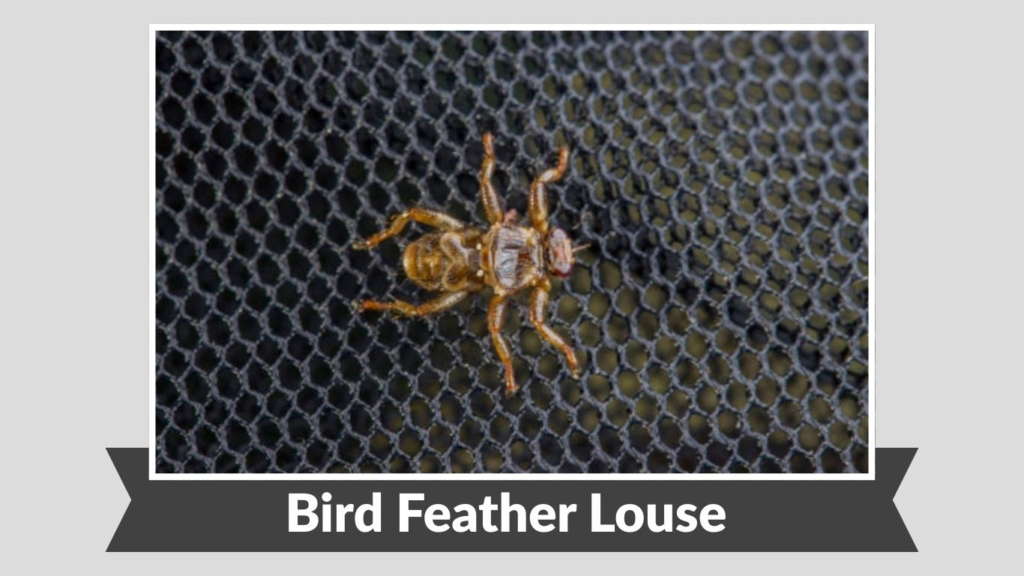
Bird feather lice are common external parasites of poultry and many wild birds. They live among feathers and on the skin, feeding on feather material, skin scales, and dried secretions rather than blood. In domestic chickens, heavy infestations can cause constant irritation, feather damage, reduced egg production, and general weakness.
Identification
- Small, flattened, wingless insects about 2–3 mm long
- Yellowish to light brown in color
- Found moving quickly through feathers, especially near the vent and under wings
- Broad head with chewing mouthparts
- Eggs attached to feather shafts in clusters
Definition
A bird feather louse is a chewing louse that spends its entire life on birds, feeding on feathers and skin debris. It is highly host-adapted and cannot survive on mammals. Transmission occurs mainly through direct bird-to-bird contact or shared nesting areas.
Features
Bird feather lice have chewing mouthparts designed to rasp feathers and skin scales. Their flattened bodies allow them to move easily between feather barbs. Infested birds often preen excessively, shake their feathers, and may develop ragged plumage and irritated skin.
Life Cycle
The life cycle consists of egg, nymph, and adult stages. Eggs hatch in about 4–7 days. Nymphs molt three times over roughly two weeks before becoming adults. The entire cycle is completed on the bird, and adults can live for several weeks under suitable conditions.
Species
The scientific name Menopon gallinae refers to the common chicken body louse. There are thousands of bird louse species worldwide, each usually adapted to specific bird hosts and feather types.
8. Cattle Louse (Haematopinus eurysternus)
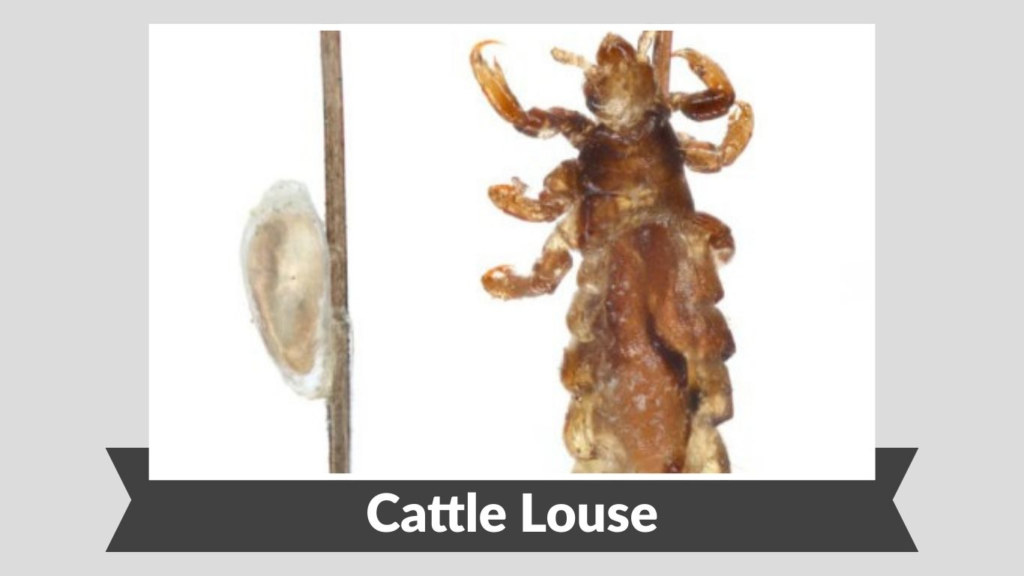
The cattle louse is a common sucking louse that parasitizes cattle worldwide. It lives on the skin and feeds on blood, especially during colder months when cattle grow thicker coats. Heavy infestations can lead to intense itching, hair loss, reduced weight gain, and in severe cases, anemia. Because of its economic impact, it is an important parasite in livestock management.
Identification
- Large, flattened, wingless insects about 3–4 mm long
- Bluish-gray to dark brown in color
- Found mainly on the neck, shoulders, and back
- Narrow head adapted for piercing skin and sucking blood
- Eggs attached firmly to hair shafts near the skin
Definition
A cattle louse is a blood-feeding ectoparasite that spends its entire life on cattle. It depends on frequent blood meals and survives poorly away from its host. Transmission occurs primarily through close contact between animals, especially in crowded conditions.
Features
Cattle lice have strong claws that grip coarse hair and a narrow head with piercing mouthparts. Their bites irritate the skin, causing cattle to scratch and rub against objects. This behavior can result in wounds, damaged hides, and secondary infections.
Life Cycle
The life cycle includes egg, nymph, and adult stages. Eggs hatch in about 7–14 days. Nymphs molt three times over two to three weeks before becoming adults. Adults live roughly one month and females lay several eggs daily.
Species
One well-known cattle louse is Haematopinus eurysternus, commonly called the short-nosed cattle louse. Other species, such as Linognathus vituli, also infest cattle, showing the diversity of lice adapted to bovines.
9. Horse Louse (Haematopinus asini)
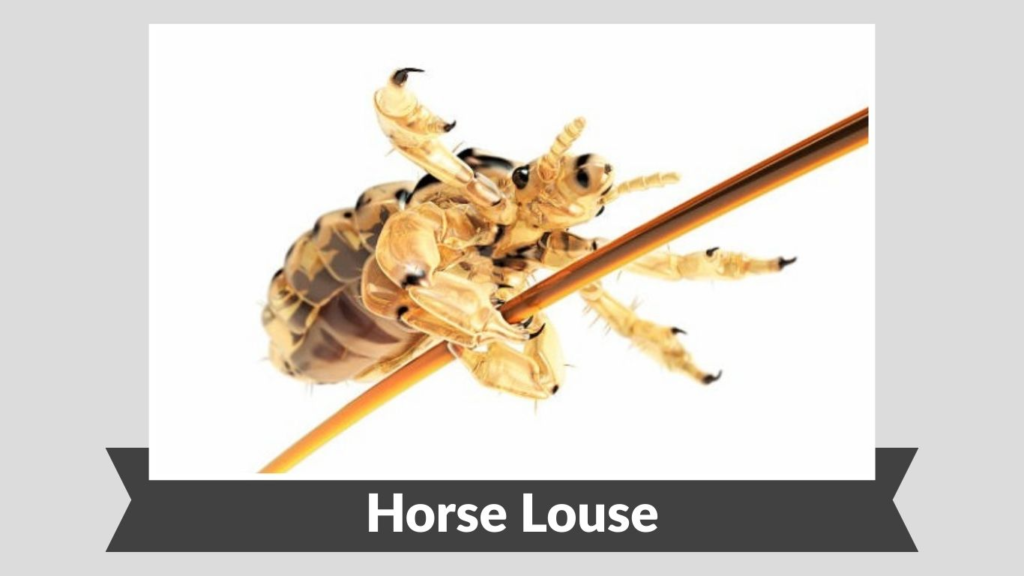
The horse louse is a blood-feeding external parasite that infests horses, donkeys, and mules. It is more commonly seen during colder seasons when animals have longer, thicker coats. Infestations cause irritation, hair loss, and restlessness, which can affect the animal’s comfort and overall condition. Poor grooming, overcrowding, and weakened health increase the risk of horse lice.
Identification
- Medium to large, flattened, wingless insects about 3–4 mm long
- Yellowish-brown to dark gray in color
- Commonly found along the mane, tail base, neck, and shoulders
- Narrow head adapted for piercing skin and sucking blood
- Eggs cemented to hair shafts close to the skin
Definition
A horse louse is a sucking louse that lives permanently on equines and feeds on their blood. It cannot survive long away from the host and spreads mainly through close contact or shared grooming equipment, blankets, and saddles.
Features
Horse lice have elongated bodies and strong claws for gripping coarse hair. Their piercing mouthparts allow them to feed several times a day. Infested horses often rub against fences or walls, leading to broken hair, raw skin patches, and sometimes secondary infections.
Life Cycle
The life cycle consists of egg, nymph, and adult stages. Eggs hatch in about one to two weeks. Nymphs pass through three molts over two to three weeks before becoming adults. Adults can live about a month, laying eggs continuously if conditions are suitable.
Species
A common species is Haematopinus asini, known as the horse sucking louse. Another species, Bovicola equi, is a chewing louse that also infests horses, showing that both biting and sucking lice occur on equines.
10. Rat Louse (Polyplax spinulosa)
The rat louse is a common external parasite of rats and other rodents. It lives on the skin and fur of its host, feeding on blood. This species is important not only for animal health but also because it can act as a vector for certain rodent-borne diseases. Infestations are most common in crowded rodent populations, laboratories, and poorly managed storage or waste areas.
Identification
- Small, flattened, wingless insects about 1–2 mm long
- Pale gray to yellowish-brown in color
- Found mainly around the neck, shoulders, and belly of rats
- Narrow head with piercing mouthparts
- Eggs attached firmly to rodent hair shafts
Definition
A rat louse is a blood-feeding ectoparasite that lives permanently on rats and closely related rodents. It depends entirely on its host for survival and spreads mainly through direct contact between animals or shared nesting materials.
Features
Rat lice have slender bodies and strong claws adapted for gripping fine rodent hair. Their bites can cause irritation, itching, and restlessness in infested animals. Heavy infestations may lead to hair loss, skin inflammation, and in severe cases, anemia, especially in young or weak rodents.
Life Cycle
The life cycle includes egg, nymph, and adult stages. Eggs hatch within about a week. Nymphs pass through three molts over 10–14 days before becoming adults. Adults can live around three weeks on the host, with females laying several eggs each day.
Species
One of the most common rat lice is Polyplax spinulosa. Other related species, such as Polyplax serrata, infest different rodent hosts, showing strong host specificity among rodent lice.
