

Leafcutter ants are among the most fascinating insects in the natural world, known for their ability to cut and carry fresh leaves to cultivate a nutritious fungus. Found across the Americas, these ants form massive colonies with complex social structures and division of labor. Their behavior, ecological importance, and diversity make them a remarkable subject of study, especially across the many species found in Atta and Acromyrmex genera.
1. Atta cephalotes
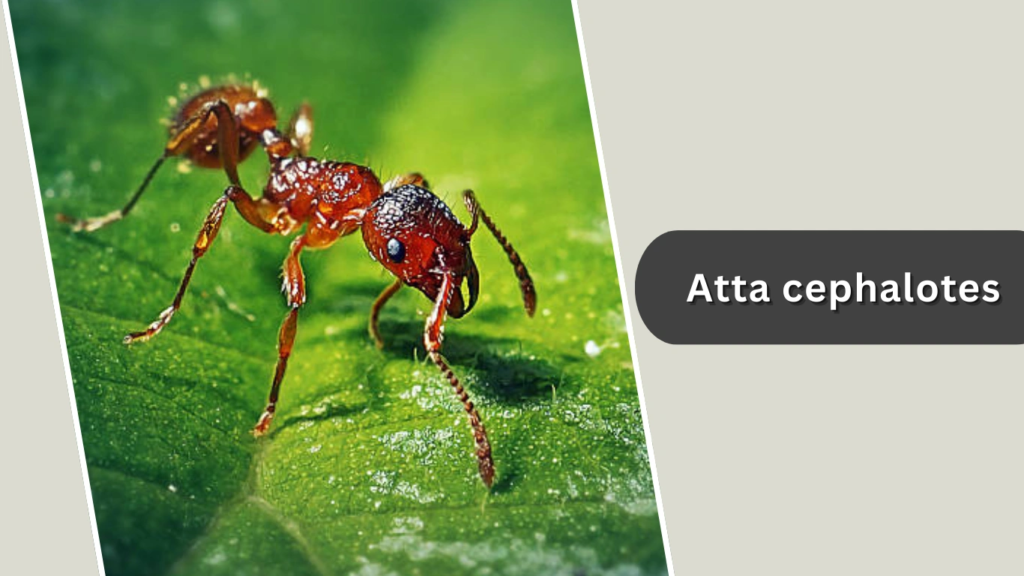
Atta cephalotes—often called the leafcutter ant or parasol ant—is one of the most studied species of fungus-growing ants. Known for carrying leaf fragments above their heads, these ants form massive colonies and play an essential role in tropical forest ecosystems.
Identification
- Large workers with distinct castes (minims, medias, soldiers)
- Soldiers have oversized, powerful heads and mandibles
- Workers carry leaf pieces over their bodies while traveling
- Reddish-brown coloration
- Strongly sculptured head and thorax
Habitat
Atta cephalotes inhabit tropical rainforests and humid lowland regions from Central to South America. Their underground nests can grow to enormous sizes, containing millions of ants and complex tunnel networks. Colonies often extend several meters underground and may occupy large soil mounds.
Behaviors
These ants are famous for cutting fresh vegetation and transporting it back to the nest. Instead of eating the leaves, they use them to grow a specialized fungus, which serves as their primary food source. They have a strict division of labor, and trails can extend up to hundreds of meters. They also maintain the fungal garden meticulously and defend trails aggressively.
Diet and Lifecycle
The colony’s diet revolves almost entirely around cultivated fungus, grown on chewed leaf pulp. Queens establish new colonies after a mating flight and can live for over a decade. Workers progress through roles as they age, while larvae depend on fungal nourishment. Colonies may persist for many years if conditions are favorable.
2. Atta colombica
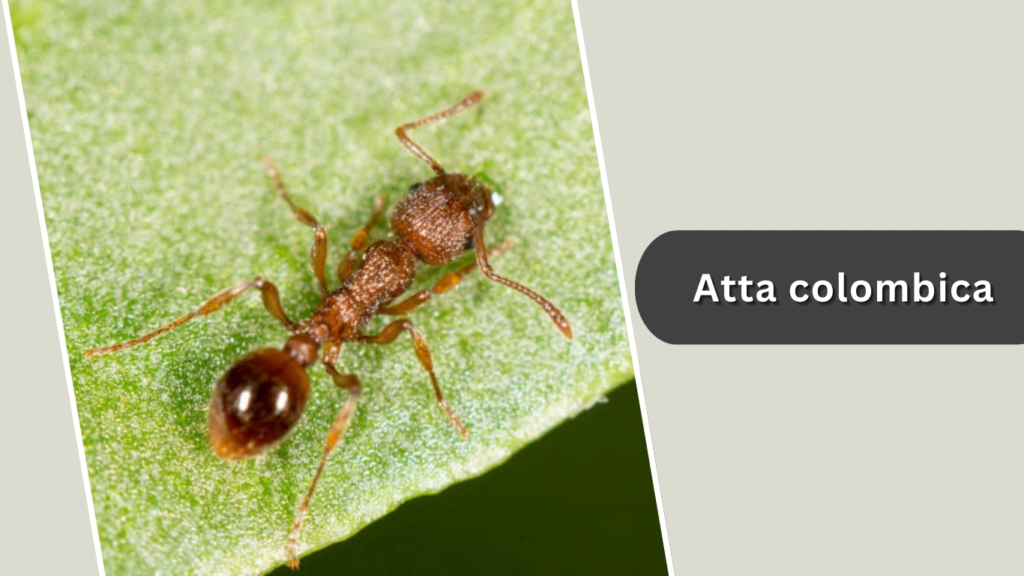
Atta colombica is a widespread leafcutter ant found throughout Central and northern South America. Known for its impressive foraging trails and massive underground nests, this species is a key ecosystem engineer in tropical forests.
Identification
- Medium to large workers with pronounced caste differences
- Soldiers have broad heads and strong mandibles
- Workers often appear reddish-brown to dark brown
- Foragers carry fresh leaf fragments held above the body
- Trails are typically well-worn and highly organized
Habitat
This species thrives in tropical rainforests, moist forests, plantations, and disturbed habitats. Their colonies occupy large subterranean chambers with multiple entrances. They prefer warm, humid environments and often build nests near areas with abundant vegetation.
Behaviors
Atta colombica forms long, orderly foraging lines that can stretch for many meters. Workers cut leaves, flowers, and plant material to cultivate their mutualistic fungus. Colonies maintain a strict caste-based labor system and defend their territory vigorously. They also clear vegetation around nest openings to reduce predator cover.
Diet and Lifecycle
Their diet centers on the fungus cultivated within the nest, which grows on chewed leaf substrate. Queens start new colonies after nuptial flights and may produce millions of workers over time. Colony growth is gradual, with workers shifting roles as they age. These ants can live for many years and expand their nests dramatically.
3. Atta sexdens
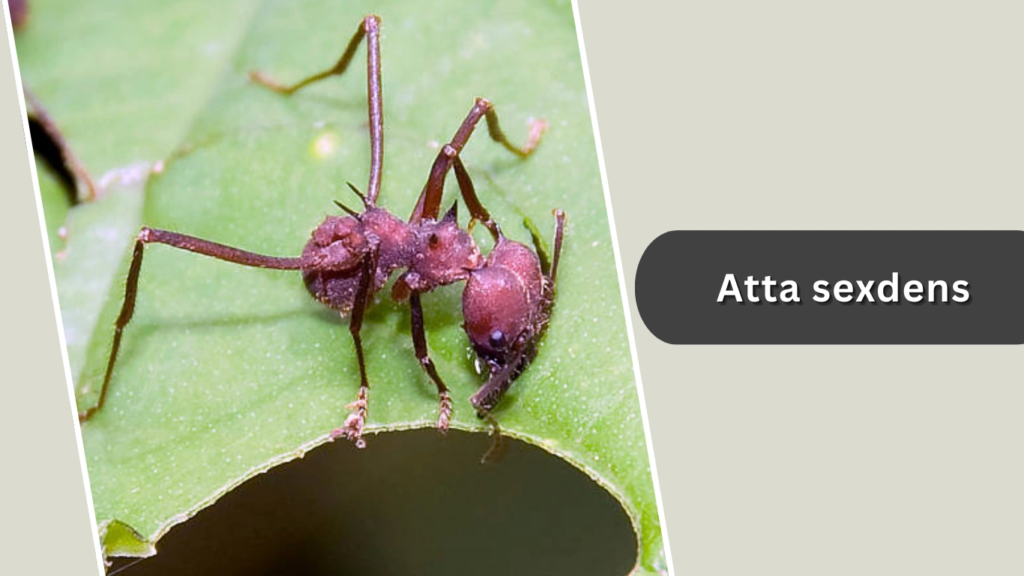
Atta sexdens, commonly called the saúva ant, is one of the most widely distributed and economically significant leafcutter ants in South America. Its impressive colonies and extensive foraging trails make it one of the most recognizable species in the genus Atta.
Identification
- Workers vary greatly in size, showing clear caste polymorphism
- Soldiers have very large, smooth heads with powerful mandibles
- Workers are reddish-brown to dark brown
- Foragers carry relatively large leaf fragments compared to their size
- Trails often appear heavily worn and well-established
Habitat
This species inhabits savannas, rainforests, dry forests, agricultural areas, and disturbed habitats. Atta sexdens adapts well to a variety of environments but prefers warm climates with adequate vegetation. Colonies form extensive underground systems with multiple chambers and visible soil mounds.
Behaviors
Known for its aggressive foraging, Atta sexdens maintains long, active trails both day and night. Workers harvest large quantities of plant material to cultivate their fungal gardens. Their division of labor is highly organized, and soldiers protect trails and nest entrances from predators. They also clear vegetation around their nests to reduce threats.
Diet and Lifecycle
The colony depends on fungus cultivated from chewed leaves, which serves as the primary food source for larvae and workers. Queens establish new colonies through nuptial flights and may live more than a decade. Colonies grow slowly at first but eventually reach millions of individuals, forming one of the largest ant societies in the region.
4. Atta laevigata
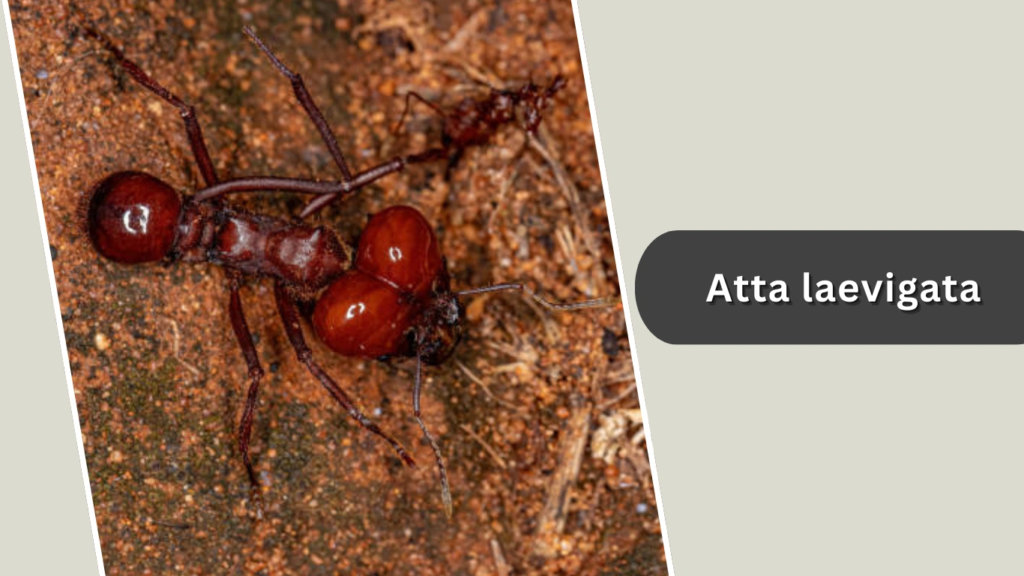
Atta laevigata, often known as the smooth leafcutter ant, is a major leaf-harvesting species found across South America. Its enormous colonies and preference for diverse plant materials make it one of the most ecologically influential leafcutter ants.
Identification
- Workers show strong caste variation from tiny minims to large soldiers
- Soldiers have smooth, rounded heads with powerful mandibles
- Overall coloration ranges from light reddish-brown to dark brown
- Foragers carry neatly cut leaf pieces above their bodies
- Trails are wide, polished, and well-defined
Habitat
This species thrives in savannas, dry forests, rainforests, and agricultural landscapes. Atta laevigata is especially common in open, sunlit areas with abundant vegetation. Colonies may build extensive soil mounds and deep subterranean chambers that support millions of individuals.
Behaviors
Atta laevigata forms large, well-coordinated foraging lines that transport vast amounts of vegetation. Workers cultivate a mutualistic fungus inside the nest, which serves as the colony’s main food source. These ants exhibit strong nest defense, vegetation clearing around entrances, and highly organized division of labor.
Diet and Lifecycle
Their diet centers on the fungal cultivar maintained on processed leaf material. Queens begin colonies after mating flights, and mature nests can last many years. Worker ants progress through roles as they age, from tending fungus to foraging. Colonies expand gradually but eventually become massive and long-lived.
5. Atta mexicana
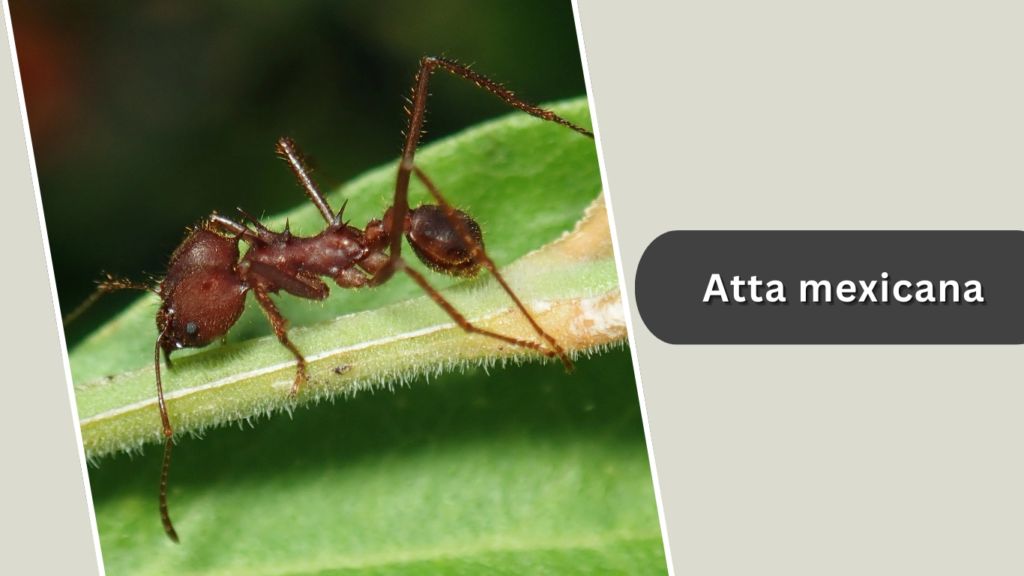
Atta mexicana is one of the most prominent leafcutter ants in Mexico and Central America. Known for creating massive soil mounds and transporting impressive quantities of vegetation, this species plays a major ecological role in its native regions.
Identification
- Workers display strong caste differences, from tiny gardeners to large-headed soldiers
- Soldiers have robust, darkened mandibles and broad heads
- Coloration ranges from dark reddish-brown to almost black
- Foragers carry medium to large leaf fragments above their heads
- Trails are wide, busy, and well-maintained
Habitat
Atta mexicana inhabits dry forests, scrublands, tropical forests, agricultural zones, and semi-arid regions. It is adaptable but prefers warmer climates with seasonal vegetation. Colonies excavate large subterranean nests with multiple openings and impressive soil mounds visible from a distance.
Behaviors
This species forms long and active foraging trails that transport fresh plant material back to the nest. Workers cultivate a mutualistic fungus on processed leaves, forming the foundation of the colony’s diet. They maintain strict labor divisions and aggressively defend nest entrances and trails.
Diet and Lifecycle
The colony depends on a specialized fungal crop for nourishment. Queens start new colonies after nuptial flights and may live for many years. Young colonies grow slowly but eventually develop into massive superorganisms containing millions of workers. Lifecycle roles shift with age, ensuring efficient colony management.
6. Atta texana
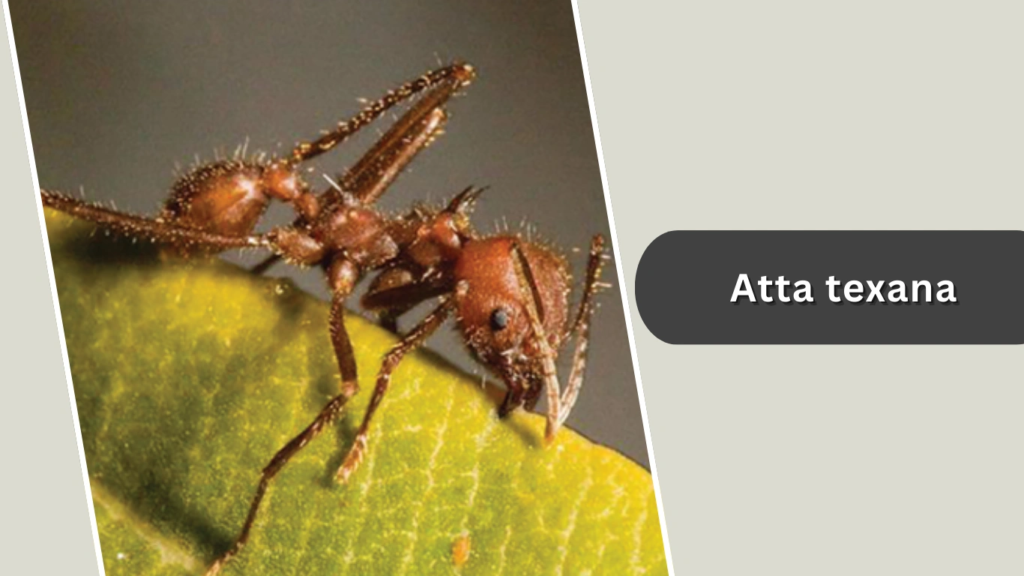
Atta texana, commonly called the Texas leafcutter ant, is the northernmost species of leafcutter ant, found primarily in the southern United States and northern Mexico. It is known for its large, long-lasting colonies and extensive foraging networks.
Identification
- Workers vary widely in size, showing strong caste differences
- Soldiers have very large heads with powerful mandibles
- Color ranges from reddish-brown to dark brown
- Foragers carry leaf or grass fragments above their bodies
- Trails are deeply worn into the ground and highly structured
Habitat
This species inhabits grasslands, prairies, oak-juniper woodlands, and semi-arid regions of Texas, Louisiana, and northern Mexico. Colonies build large subterranean nests with dozens of entrances and extensive tunnel systems. They prefer sandy or loose soils and warm climates.
Behaviors
Atta texana forages primarily at night during hot months to avoid overheating. Workers gather leaves, grasses, and flower petals to cultivate their fungal gardens. They maintain strict caste roles and defend trails aggressively. Colonies often clear vegetation around nest entrances for visibility and airflow.
Diet and Lifecycle
The colony relies on a cultivated fungal crop grown on chewed plant material. Queens establish new colonies after mating flights and may live more than a decade. Colony growth is gradual, but mature nests can contain millions of ants and persist for many years. Workers shift roles as they age, ensuring smooth colony function.
7. Atta insularis
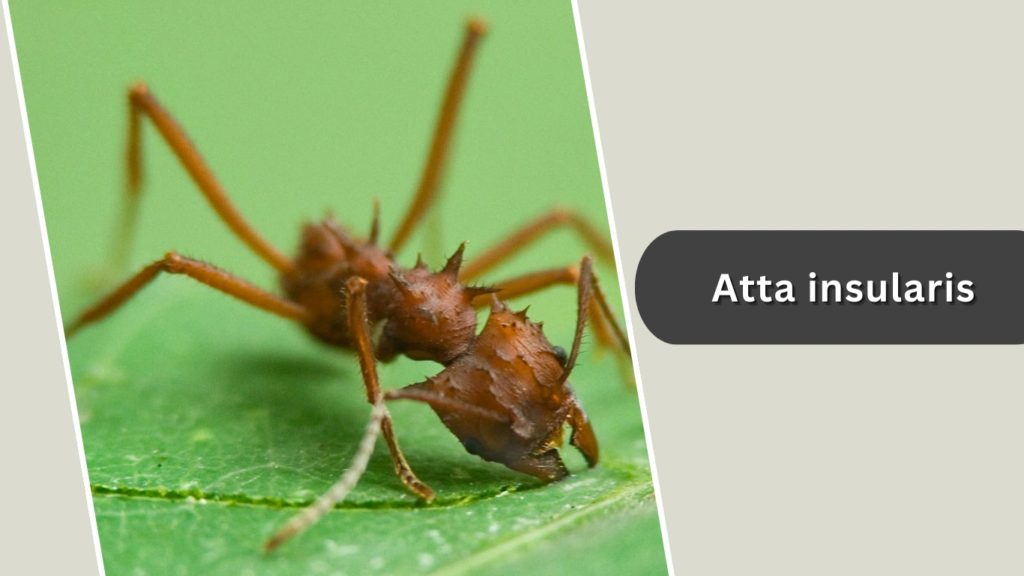
Atta insularis, commonly known as the Cuban leafcutter ant, is an important species native to the Caribbean. It forms large colonies and is known for its extensive foraging activity and ecological impact on local vegetation.
Identification
- Workers range widely in size, showing strong caste variation
- Soldiers have large, rounded heads with thick mandibles
- Typically dark brown to nearly black in color
- Foragers carry neatly cut leaf fragments above their bodies
- Trails are well-worn and highly active, especially at night
Habitat
This species is found mainly in Cuba and neighboring Caribbean islands, occupying forests, scrublands, and agricultural landscapes. Colonies build deep underground nests with multiple chambers and entrances. They prefer warm, humid environments with steady plant availability.
Behaviors
Atta insularis maintains long, organized foraging columns that harvest large quantities of leaves and flowers. Like other leafcutters, they cultivate a mutualistic fungus, which forms the basis of their diet. They defend their trails aggressively and maintain clean, vegetation-free zones around their nest entrances.
Diet and Lifecycle
The colony feeds on a specialized fungus grown on processed leaf pulp. Queens begin new colonies after nuptial flights and can live for many years. Workers transition through roles as they age, from tending fungus to foraging. Mature colonies grow large and can persist for long periods, shaping local plant communities.
8. Atta bisphaerica
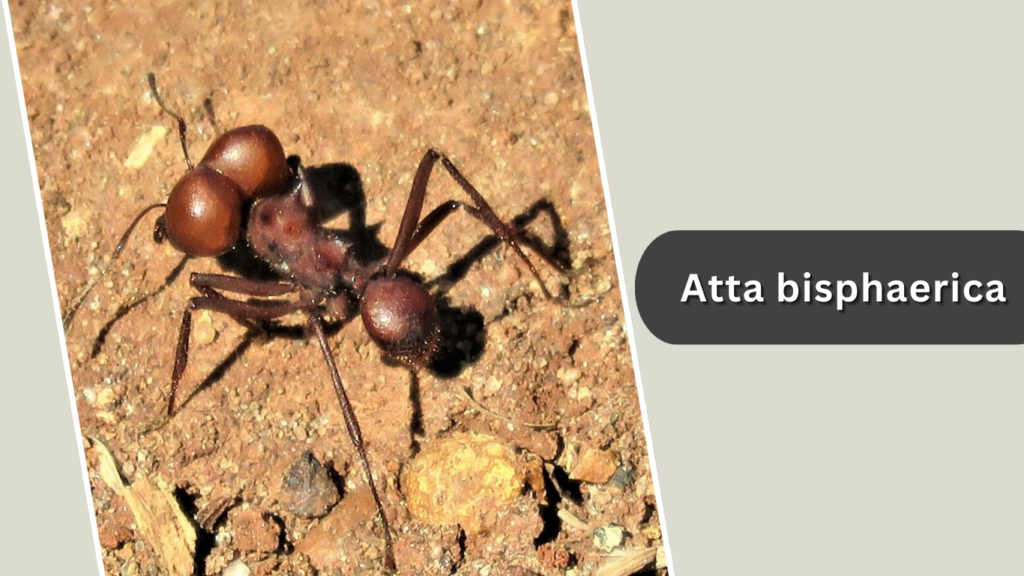
Atta bisphaerica is a widespread South American leafcutter ant known for its massive earth mounds and highly organized foraging trails. It plays a major ecological role in grassland and savanna ecosystems.
Identification
- Workers show strong polymorphism, with distinct minims, medias, and soldiers
- Soldiers have large, rounded heads with smooth surfaces
- Coloration is typically reddish-brown to dark brown
- Foragers carry sizable leaf fragments above their bodies
- Trails are wide, polished, and heavily used
Habitat
This species inhabits savannas, grasslands, cerrado regions, and open forests, especially in Brazil. Colonies create impressive soil mounds and deep underground chambers. They prefer open, sunlit areas with abundant herbaceous plants.
Behaviors
Atta bisphaerica forms extensive foraging line networks that stretch long distances from the nest. Workers harvest leaves and grasses to cultivate their fungal gardens. They exhibit strong nest defense, maintain vegetation-free zones around nest openings, and operate under strict caste-based labor division.
Diet and Lifecycle
The colony’s primary food source is the mutualistic fungus grown on processed leaf matter. Queens initiate colonies after mating flights and may live for over a decade. As workers age, they shift from internal tasks to foraging. Mature colonies contain millions of ants and exert major ecological influence.
9. Atta opaciceps
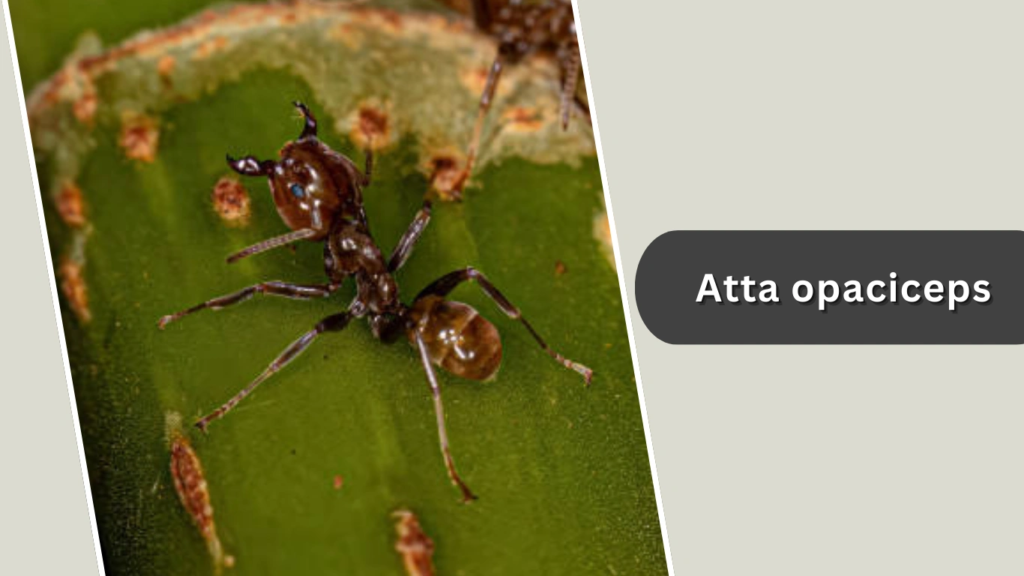
Atta opaciceps is a lesser-known but ecologically important leafcutter ant species native to parts of South America. It forms large subterranean colonies and participates in significant vegetation turnover through its constant foraging.
Identification
- Workers vary greatly in size, showing clear caste distinctions
- Soldiers possess broad, opaque-looking heads with strong mandibles
- Coloration ranges from medium to dark brown
- Foragers typically carry small to medium leaf fragments
- Trails are neat, highly organized, and frequently traveled
Habitat
This species is found in tropical forests, woodland areas, savannas, and transitional habitats. It prefers warm climates and soils that allow deep nest construction. Colonies often create multiple surface openings connected to large underground chambers.
Behaviors
Atta opaciceps forms structured foraging columns that transport fresh plant material back to the nest for fungal cultivation. Workers maintain a strict division of labor and defend both nest entrances and foraging paths. They keep vegetation low around the nest to reduce predator cover and improve airflow.
Diet and Lifecycle
Like all leafcutter ants, this species relies on a cultivated fungal crop grown on chewed leaf substrate. Colony founding begins with a queen after a nuptial flight, and successful colonies may last many years. Workers transition through roles as they age, allowing efficient colony growth and maintenance.
10. Atta robusta
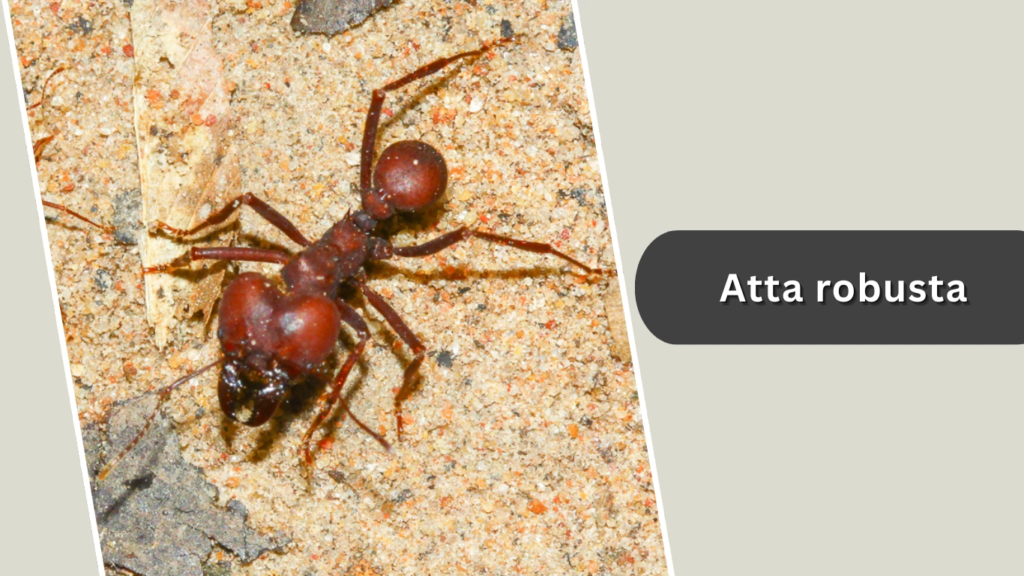
Atta robusta is a rare and geographically restricted leafcutter ant species found mainly in southeastern Brazil. Known for its distinctive workers and highly localized distribution, it contributes to the ecological balance within its native forest habitats.
Identification
- Workers show strong size variation, with large-headed soldiers
- Soldiers have exceptionally broad, robust heads—true to the species name
- Typically dark brown in coloration
- Foragers carry small to medium-sized leaf fragments
- Trails are compact but well-organized and active
Habitat
This species inhabits Atlantic Forest regions, humid woodlands, and transitional forest zones. Atta robusta prefers moist, shaded areas with rich vegetation. Colonies build deep subterranean nests with several entrances but often less extensive soil mounding compared to other Atta species.
Behaviors
Atta robusta maintains steady, coordinated foraging lines that harvest fresh plant material for fungus cultivation. Workers display a well-defined caste system and strong defensive behaviors. The species is efficient at clearing vegetation around nest entrances and maintaining clean, navigable trails.
Diet and Lifecycle
The colony depends on a specialized fungal crop grown from processed leaf fragments. Queens begin new colonies after nuptial flights and may live for many years. Workers transition from internal tasks to external foraging as they age. Colonies grow slowly but can persist long-term within stable forest ecosystems.
11. Acromyrmex octospinosus
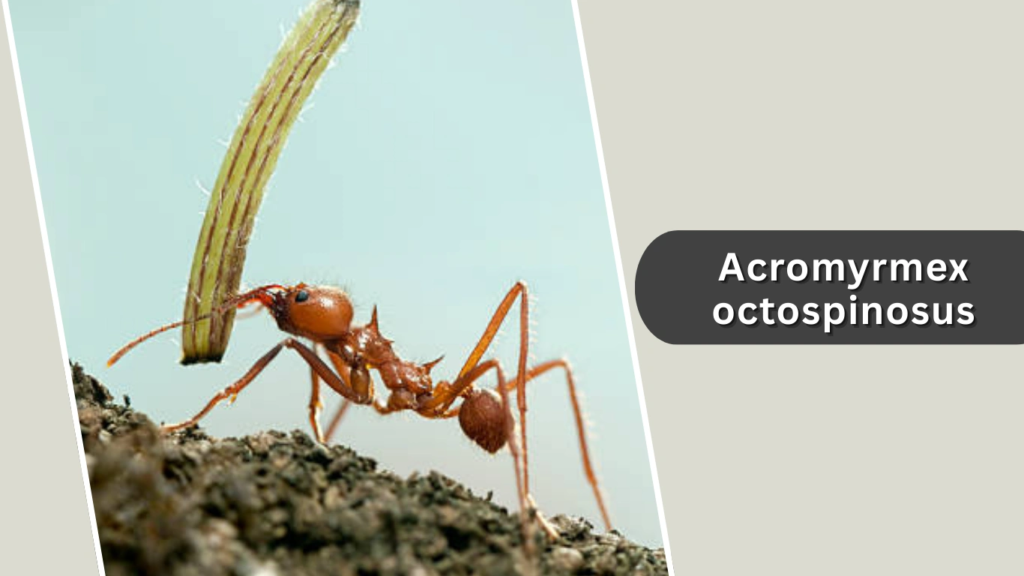
Acromyrmex octospinosus is one of the most recognizable leafcutter ants in the Acromyrmex genus, known for its spiny appearance and extensive role in decomposition and vegetation management throughout tropical ecosystems.
Identification
- Workers possess multiple pairs of spines along the thorax—one of the species’ key features
- Distinct caste sizes from small gardeners to larger foragers
- Coloration ranges from reddish-brown to dark brown
- Foragers carry leaf fragments and flower petals
- Trails are narrow but extremely active
Habitat
This species inhabits tropical rainforests, moist woodlands, secondary forests, and plantations across Central and northern South America. Colonies typically build smaller but numerous chambers, often under logs, soil mounds, or within soft earth.
Behaviors
Acromyrmex octospinosus forms long, consistent foraging trails to gather vegetation for fungus cultivation. Workers are highly cooperative and maintain strict division of labor. They defend their fungus gardens carefully, and the species is known for its strong nighttime foraging activity.
Diet and Lifecycle
The colony feeds on a specialized mutualistic fungus grown on chewed plant material. Queens begin colonies after mating flights, and successful nests may last many years. Workers transition through tasks as they mature. Colonies are smaller than Atta species but still highly efficient and ecologically impactful.
12. Acromyrmex lundi
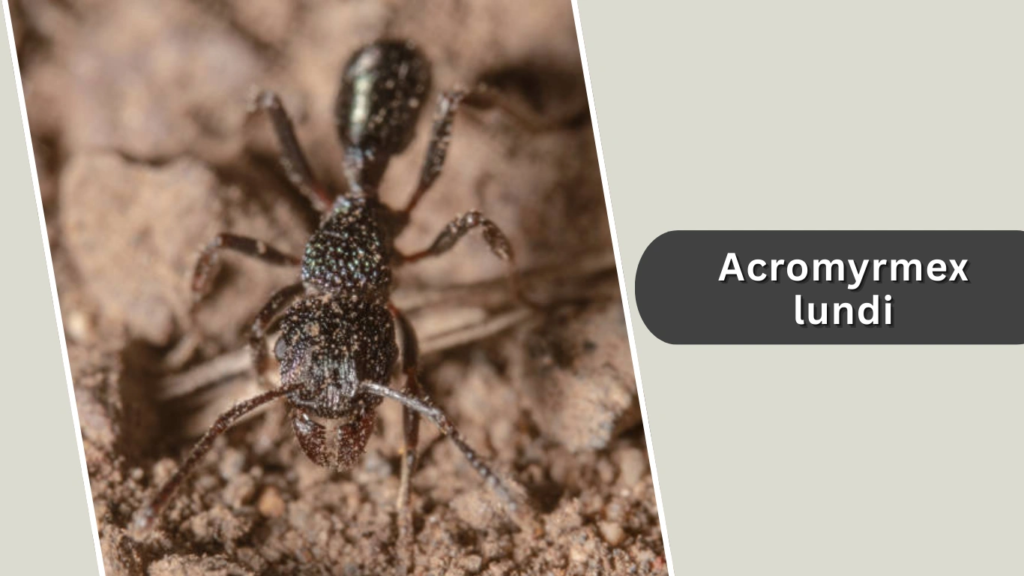
Acromyrmex lundi is a widespread leafcutter ant species in South America, known for its adaptability and characteristic spiny body structure. Though smaller than many Atta species, it plays an important ecological role in soil turnover and vegetation processing.
Identification
- Workers have several sharp spines along the thorax—a hallmark of Acromyrmex ants
- Caste sizes range from tiny gardeners to larger foragers
- Typically reddish-brown to dark brown
- Foragers carry small to medium leaf fragments
- Trails are narrow, branching, and moderately busy
Habitat
This species occupies grasslands, savannas, forests, agricultural fields, and disturbed areas across Argentina, Uruguay, and nearby regions. Colonies often nest in soil mounds or beneath vegetation, with multiple small chambers rather than massive underground networks.
Behaviors
Acromyrmex lundi maintains organized foraging lines that gather leaves, flowers, and grass blades to support their fungal gardens. Workers divide tasks according to caste and age, showing strong teamwork. They are defensive of nest entrances and maintain vegetation-clear zones around them.
Diet and Lifecycle
The colony relies on a cultivated fungus grown on processed plant material. Queens start new colonies after mating flights and may live several years. Workers change roles as they mature, contributing to brood care, fungal tending, and foraging. Colonies stay smaller than those of Atta, but remain stable and long-lived.
13. Acromyrmex echinatior
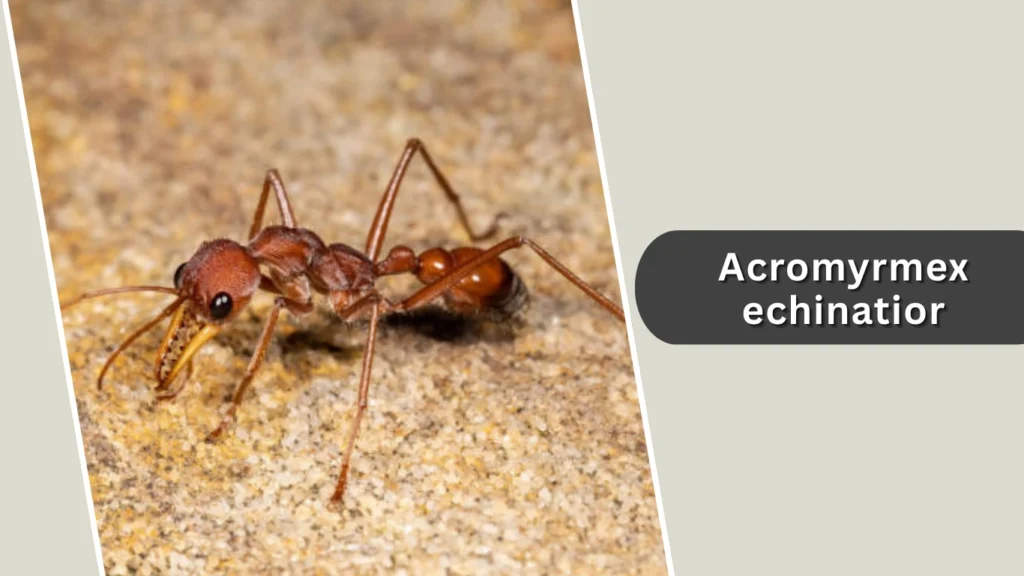
Acromyrmex echinatior is a well-studied leafcutter ant species native to Central America. Known for its distinctive spiny body and smaller colony size compared to Atta species, it remains an important contributor to forest nutrient cycling.
Identification
- Workers have pronounced thoracic spines, typical of Acromyrmex ants
- Caste system includes small gardeners, medium workers, and larger foragers
- Body coloration usually reddish-brown to dark brown
- Foragers carry small leaf fragments or flower petals
- Trails are narrow, branching, and very active
Habitat
This species inhabits tropical rainforests, moist lowland forests, and secondary growth areas throughout Panama and nearby regions. Colonies nest in shallow soil chambers, under logs, or within leaf litter, forming multiple small fungus gardens instead of one large complex.
Behaviors
Acromyrmex echinatior forms coordinated foraging lines that collect various plant materials for fungal cultivation. Workers follow a strict division of labor and defend both their nest entrances and fungus gardens. The species often forages during cooler hours and is highly efficient despite smaller colony size.
Diet and Lifecycle
The colony feeds on a symbiotic fungus grown on masticated plant material. Queens begin new colonies after nuptial flights and may live several years. Workers transition through roles with age, ensuring brood care, fungus maintenance, and foraging efficiency. Colonies remain small but stable and persistent in suitable habitats.
FAQs
1. What do leafcutter ants eat?
Leafcutter ants do not eat the leaves they collect. Instead, they use the leaf fragments to cultivate a specialized fungus, which becomes the colony’s main food source. Both larvae and adult workers rely on this fungus for nutrients, making it essential for colony survival.
2. How large can leafcutter ant colonies grow?
Some leafcutter ant colonies—especially species in the Atta genus—can reach populations of several million individuals. Their underground nests may extend many meters deep and wide, containing thousands of interconnected chambers used for fungus farming, brood care, and waste management.
3. Why do leafcutter ants carry leaves above their heads?
The iconic leaf-carrying behavior allows workers to efficiently transport plant material back to the nest while keeping their vision and antennae free for navigation. Carrying leaves high also helps avoid obstacles and reduces ground friction as they travel along busy foraging trails.
4. Do leafcutter ants damage plants or crops?
Yes. In agricultural areas, some Atta and Acromyrmex species can cause significant crop damage by cutting large quantities of leaves, flowers, and seedlings. Their foraging can defoliate plants quickly, making them major pests in some regions, though they also play important ecological roles in nature.
5. How long do leafcutter ant queens live?
Leafcutter ant queens are among the longest-lived insects. Some can live over 10–15 years, continuously laying eggs to support the growing colony. During this time, the queen rarely leaves the central nest chamber and depends entirely on workers for food, grooming, and protection.
