
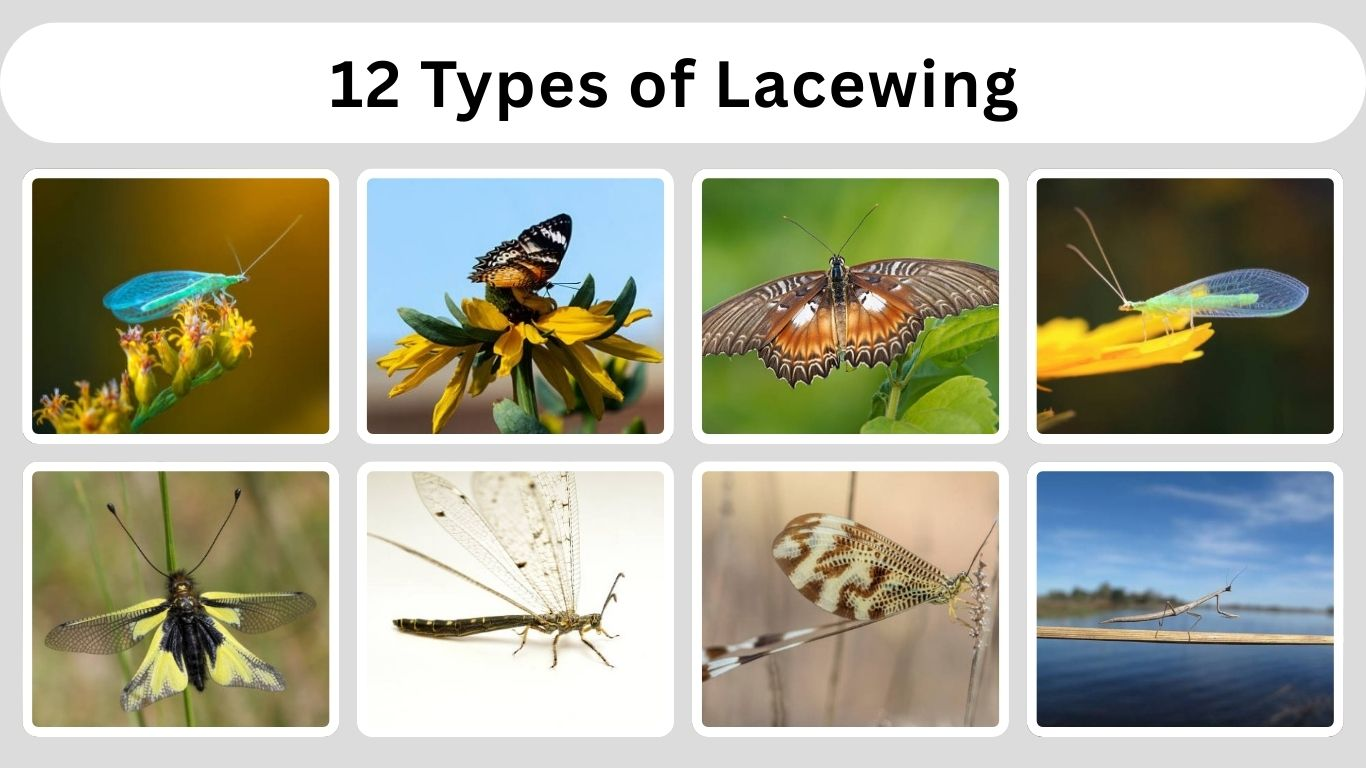
Lacewings are delicate, fascinating insects best known for their transparent, net-veined wings and their important role as natural predators. Belonging to the order Neuroptera, lacewings include many different groups such as green lacewings, antlions, owlflies, and mantidflies. They are found in a wide variety of habitats, from gardens and forests to deserts and freshwater environments. Many lacewing larvae feed on harmful pests, making these insects extremely valuable to ecosystems and agriculture.
1. Green Lacewing (Family: Chrysopidae)

Green lacewings are among the most common and beneficial lacewing insects in the world. They are well known for their delicate, bright green bodies, large transparent wings, and golden eyes. Both adults and larvae are frequently found in gardens, farms, and natural vegetation, where they play an important role in controlling pest populations.
Identification
- Slender, soft-bodied insect with bright green coloration
- Large, transparent wings with fine net-like veins
- Wings held roof-like over the body when resting
- Prominent golden or copper-colored compound eyes
- Long, thin antennae
- Larvae resemble small alligators with curved, hollow jaws
Habitat
Green lacewings live in a wide range of habitats, including gardens, crop fields, forests, grasslands, and wetlands. They are most abundant where plants support aphids and other small insects. Adults often rest on leaves, grasses, and tree branches, while larvae roam plant surfaces in search of prey.
Behaviors
Adults are mostly nocturnal and are strongly attracted to lights at night. During the day, they hide among foliage. Larvae are active hunters and move quickly across leaves and stems. They use their sharp jaws to seize prey and suck out body fluids, making them highly effective natural pest controllers.
Diet and Lifecycle
Green lacewing larvae feed mainly on aphids, mites, thrips, whiteflies, and insect eggs. Adults may feed on nectar, pollen, and honeydew, although some also eat small insects. Females lay eggs on thin stalks attached to leaves. The lifecycle includes egg, larva, pupa, and adult stages, usually completed within several weeks.
2. Brown Lacewing (Family: Hemerobiidae)

Brown lacewings are close relatives of green lacewings but are generally smaller, darker, and more commonly found in cooler climates and forested areas. Although less noticeable than their green counterparts, brown lacewings are equally important predators of agricultural and garden pests, especially in trees and shrubs.
Identification
- Small to medium-sized insect with brown or grayish body
- Wings transparent but tinted brown with dense net-like veins
- Wings held roof-like over the body
- Head small with long, thread-like antennae
- Eyes dark, not metallic like green lacewings
- Larvae elongated, flattened, with curved piercing jaws
Habitat
Brown lacewings are most commonly found in forests, orchards, hedgerows, and shrubs. They prefer cooler, shaded habitats and are often associated with trees such as pines, oaks, and fruit trees. Adults rest on bark, leaves, and needles, while larvae hunt among foliage and crevices.
Behaviors
Adults are mainly active during the evening and night, though they can sometimes be seen during cool daytime conditions. They are less strongly attracted to bright lights than green lacewings. Larvae are stealthy predators that slowly stalk aphids, scale insects, and mites on leaves and branches.
Diet and Lifecycle
Brown lacewing larvae feed on aphids, scale insects, mites, and insect eggs. Adults also prey on small insects and may supplement their diet with honeydew or pollen. Females lay eggs singly on leaves or bark without stalks. The lifecycle includes egg, larva, pupa, and adult stages, often synchronized with cooler seasons.
3. Giant Lacewing (Family: Polystoechotidae)

Giant lacewings are impressive members of the lacewing group, known for their large size, broad wings, and strong flight. Although they are far less common than green or brown lacewings, they are remarkable insects often found near forests and mountainous regions. Their larvae are active predators and play a role in controlling other insect populations.
Identification
- Much larger than common lacewings
- Body brown to dark brown with lighter markings
- Wings very broad, transparent, and heavily veined
- Wings held roof-like over the body
- Long, well-developed antennae
- Larvae elongated, flattened, with strong curved jaws
Habitat
Giant lacewings are usually found in forested areas, especially near rivers, lakes, and mountain regions. Adults rest on tree trunks, large leaves, and rocky surfaces. Larvae live in leaf litter, under bark, or on vegetation where prey insects are abundant.
Behaviors
Adults are mainly nocturnal and are attracted to lights, although they are encountered far less often than other lacewings. They are strong flyers and can travel considerable distances. Larvae actively roam their habitat, hunting insects and hiding in debris or bark crevices when not feeding.
Diet and Lifecycle
Larvae feed on a variety of small insects and soft-bodied arthropods. Adults may prey on small insects and possibly consume nectar or honeydew. Females lay eggs on vegetation or hidden surfaces. The lifecycle follows complete metamorphosis: egg, larva, pupa, and adult, usually completed over several weeks to months.
4. Dusty Lacewing (Family: Coniopterygidae)
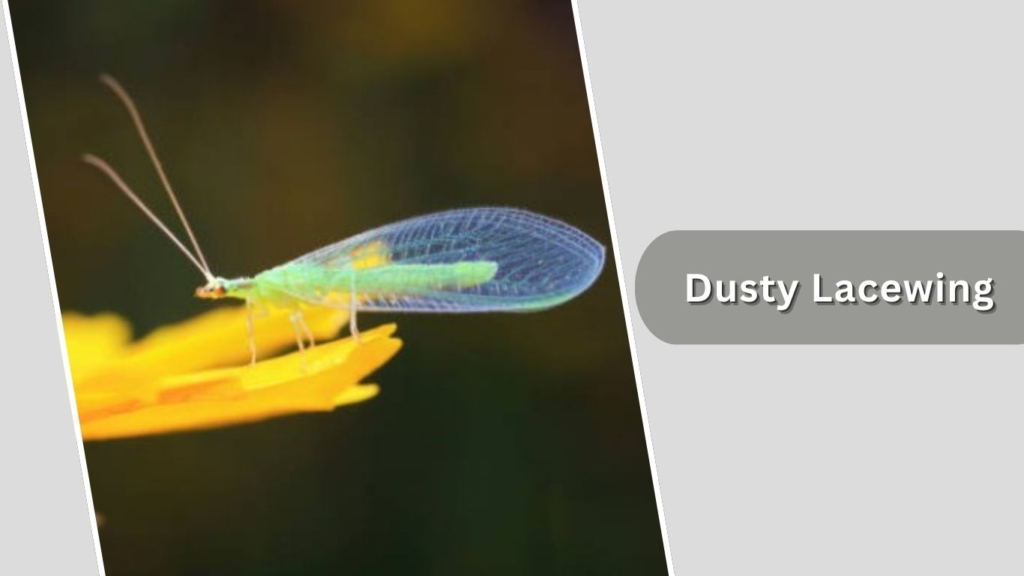
Dusty lacewings are tiny, delicate insects named for the white, powdery wax that often coats their wings and bodies, giving them a “dusty” appearance. They are much smaller than most other lacewings but are very important predators of plant pests. Because of their size, they often go unnoticed, even though they are widespread.
Identification
- Very small lacewings, usually only a few millimeters long
- Wings appear whitish or gray due to waxy coating
- Body soft and pale, often covered with fine powder
- Wings narrow, transparent underneath the wax
- Antennae short compared to other lacewings
- Larvae tiny, elongated, with curved piercing jaws
Habitat
Dusty lacewings live in gardens, forests, orchards, and agricultural fields. They are commonly found on the undersides of leaves, on bark, and among dense plant growth. Both adults and larvae prefer habitats where aphids, mites, and scale insects are abundant.
Behaviors
Adults are weak fliers and usually move short distances, often remaining hidden among leaves and branches. They are less attracted to lights than larger lacewings. Larvae are active predators that crawl over plant surfaces, searching for tiny prey and piercing them with their sharp mouthparts.
Diet and Lifecycle
Larvae feed mainly on mites, aphids, scale insects, whiteflies, and insect eggs. Adults may also prey on small insects and sometimes feed on honeydew. Females lay eggs on leaves or bark. The lifecycle includes egg, larva, pupa, and adult stages, often completed quickly in warm conditions.
5. Beaded Lacewing (Family: Berothidae)
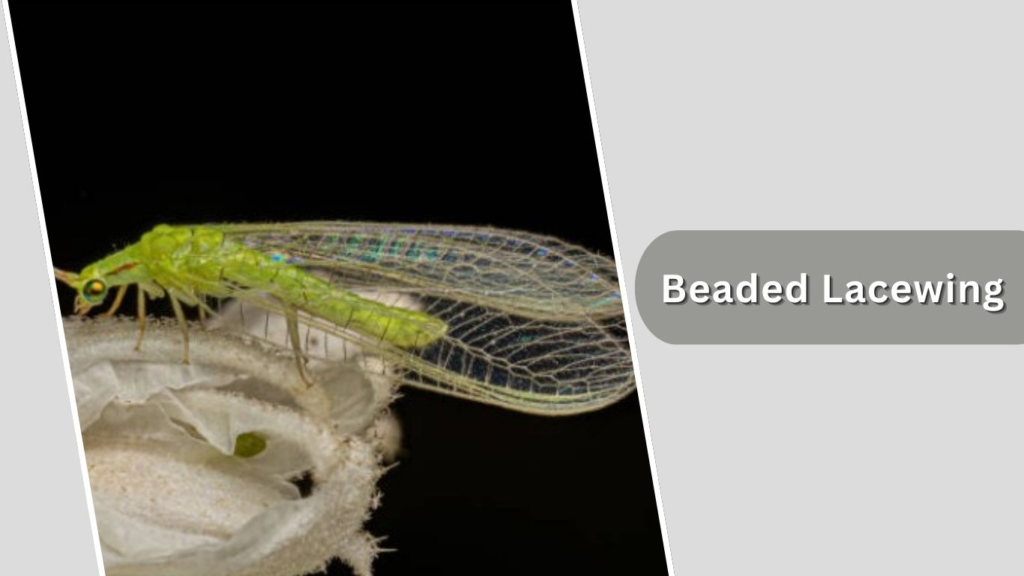
Beaded lacewings are unusual lacewing relatives recognized by their bead-like antennae and distinctive life habits. Unlike most lacewings, whose larvae hunt on plants, many beaded lacewing larvae are associated with termite nests, where they prey on termites and other small insects. They are rarely seen but are widely distributed.
Identification
- Medium-sized lacewing with soft, brown to gray body
- Wings transparent with fine net-like veins
- Antennae distinctly beaded in appearance
- Wings held roof-like over the body
- Head small with chewing mouthparts
- Larvae elongated, with curved jaws adapted for predation
Habitat
Beaded lacewings are found in forests, grasslands, and tropical habitats. Adults are usually seen resting on vegetation or attracted to lights at night. Larvae are often found in soil, leaf litter, rotting wood, or inside termite galleries, depending on the species.
Behaviors
Adults are mostly nocturnal and are attracted to lights. They are weak to moderate fliers and often rest quietly during the day. Larvae exhibit specialized hunting behavior, invading termite tunnels and feeding within nests, making them unique among lacewing relatives.
Diet and Lifecycle
Larvae mainly feed on termites and other small soft-bodied insects. Adults may feed on nectar, pollen, or small insects. Females lay eggs in soil, rotting wood, or near termite habitats. The lifecycle includes egg, larva, pupa, and adult stages, with development often taking several weeks or longer.
6. Owlfly (Family: Ascalaphidae)
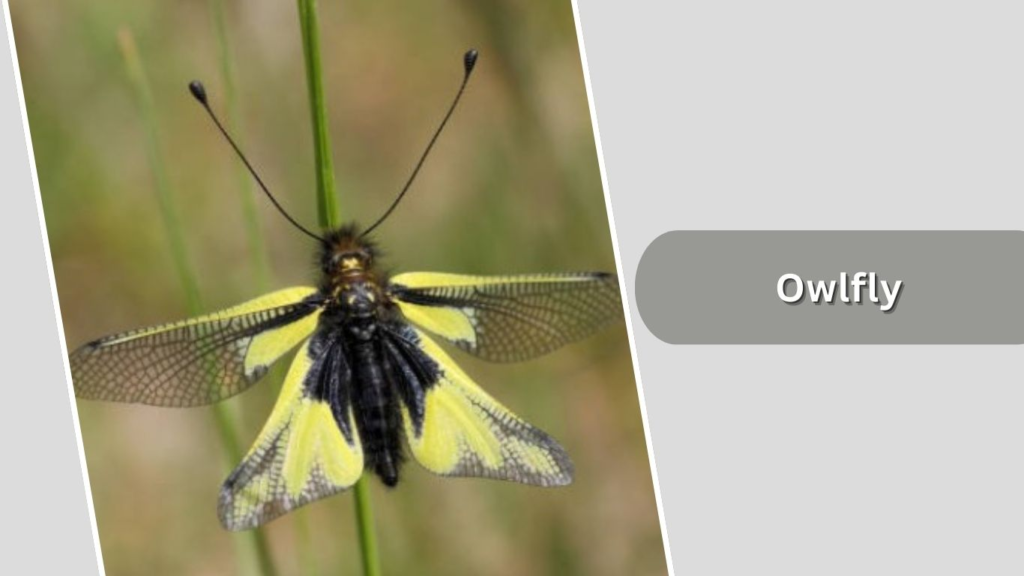
Owlflies are striking, dragonfly-like relatives of lacewings, easily recognized by their long bodies, large bulging eyes, and clubbed antennae. They are strong aerial predators as adults and are often seen flying at dusk over open fields, forest edges, and grasslands. Their fierce appearance and agile flight make them one of the most impressive lacewing relatives.
Identification
- Large insect with long, slender body
- Very large compound eyes giving an “owl-like” look
- Long antennae ending in distinct clubs
- Two pairs of long, narrow, heavily veined wings
- Wings often patterned or lightly tinted
- Larvae robust, flattened, with strong curved jaws
Habitat
Owlflies are commonly found in open habitats such as grasslands, savannas, forest edges, and scrublands. They often perch on tall grasses, twigs, or branches near sunny clearings. Larvae live on the ground, under debris, or in sandy soil, where they ambush passing insects.
Behaviors
Adults are powerful fliers and active predators, hunting other insects in midair, especially during twilight hours. They often perch head-down while resting. Larvae are ambush predators that lie in wait and seize prey with lightning-fast strikes, similar to antlion larvae.
Diet and Lifecycle
Owlfly larvae feed on ants and other small ground-dwelling insects. Adults prey on flying insects such as flies, moths, and small beetles. Females lay eggs on plant stems or other elevated objects. The lifecycle includes egg, larva, pupa, and adult stages, with larvae often taking a long time to mature.
7. Antlion Lacewing (Family: Myrmeleontidae)
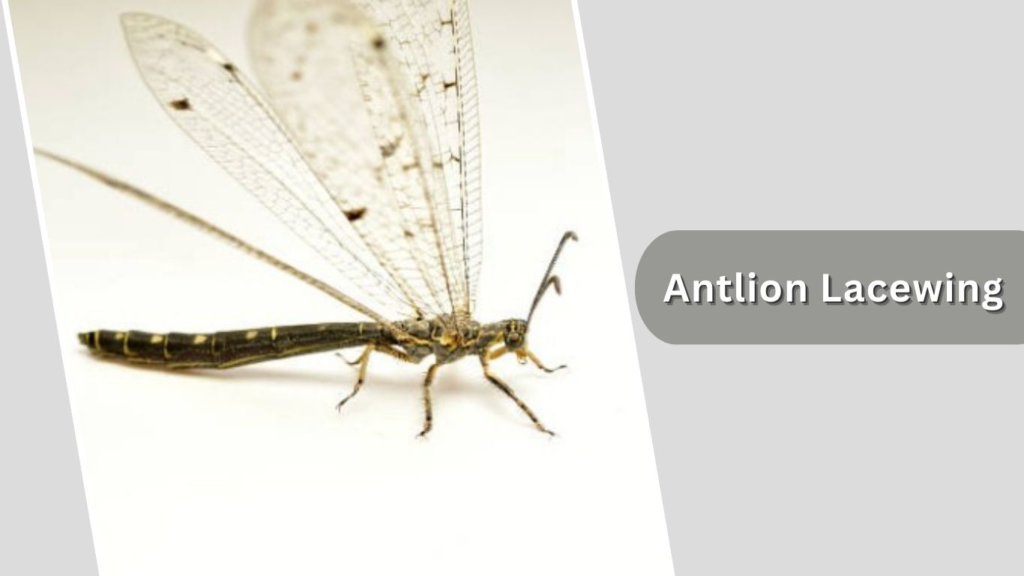
Antlions are one of the most famous lacewing relatives, best known for their pit-building larvae that trap ants and other small insects. While the adults resemble delicate dragonflies, the larvae are fierce ambush predators. Antlions are widespread across warm and temperate regions and are common in sandy, dry habitats.
Identification
- Adults slender with long, narrow, transparent wings
- Body soft, brown to gray, resembling a small damselfly
- Antennae moderately long, slightly clubbed
- Wings held roof-like when resting
- Larvae stout, flattened, with very large sickle-shaped jaws
- Larvae often found at the bottom of sandy pits
Habitat
Antlions live mainly in dry, sandy environments such as riverbanks, deserts, forest edges, beaches, and open fields. Larvae prefer loose, dry sand where they can easily dig funnel-shaped pits. Adults are usually found resting on vegetation near these habitats.
Behaviors
Larvae construct cone-shaped pits and bury themselves at the bottom, waiting for insects to fall in. When prey slips, the larva flicks sand to prevent escape and seizes it with powerful jaws. Adults are mostly nocturnal and weak fliers, often attracted to lights at night.
Diet and Lifecycle
Larvae feed mainly on ants and other small ground-dwelling insects. Adults prey on small flying insects. After months or even years as larvae, they pupate in sandy cocoons. Adults emerge, mate, lay eggs in sand, and usually live only a few weeks.
8. Spongilla Lacewing (Family: Sisyridae)
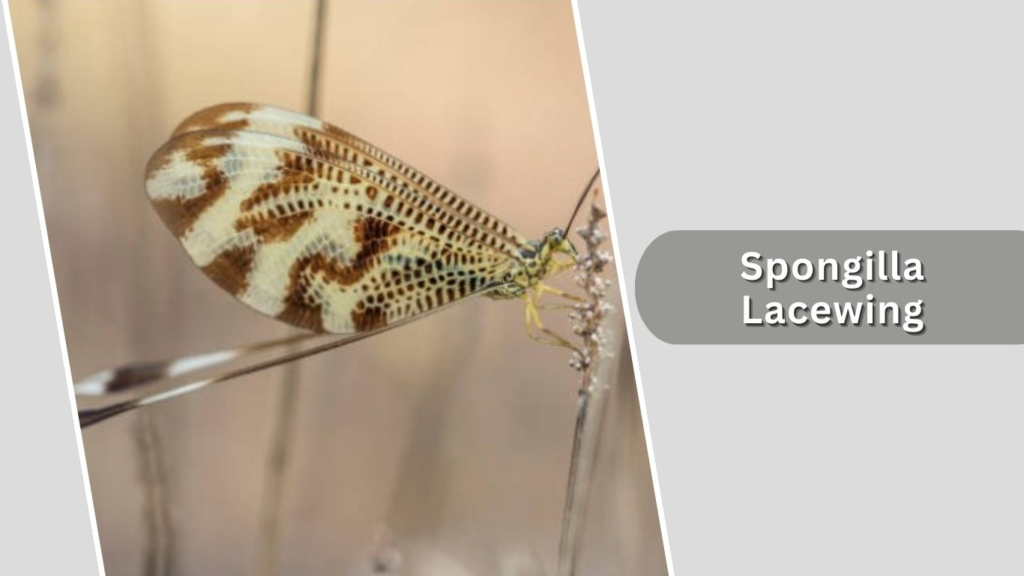
Spongilla lacewings are unique among lacewing relatives because their larvae are aquatic and specialize in feeding on freshwater sponges. This unusual lifestyle makes them important components of aquatic ecosystems. Adults are small, delicate insects often found near ponds, lakes, and slow-moving streams where freshwater sponges grow.
Identification
- Small, slender lacewing with pale brown or gray body
- Wings narrow, transparent, with fine net-like veins
- Wings held roof-like over the body
- Antennae long and thin
- Larvae aquatic, slender, with piercing mouthparts
- Larvae often found on or near freshwater sponges
Habitat
Spongilla lacewings are found around ponds, lakes, marshes, and slow-flowing rivers. Larvae live underwater, attached to freshwater sponges growing on submerged wood, rocks, or plants. Adults stay close to water, resting on vegetation near shorelines.
Behaviors
Adults are weak fliers and usually remain near aquatic habitats. They are mostly active at dusk and night. Larvae move slowly across sponge surfaces, feeding and hiding among the sponge structure. They breathe through specialized structures that allow them to survive underwater.
Diet and Lifecycle
Larvae feed primarily on freshwater sponges, piercing sponge cells and sucking out their contents. Adults may feed on nectar, pollen, or small insects. Eggs are laid near water, and larvae enter the aquatic environment after hatching. The lifecycle includes egg, larva, pupa, and adult stages.
9. Mantidfly (Family: Mantispidae)
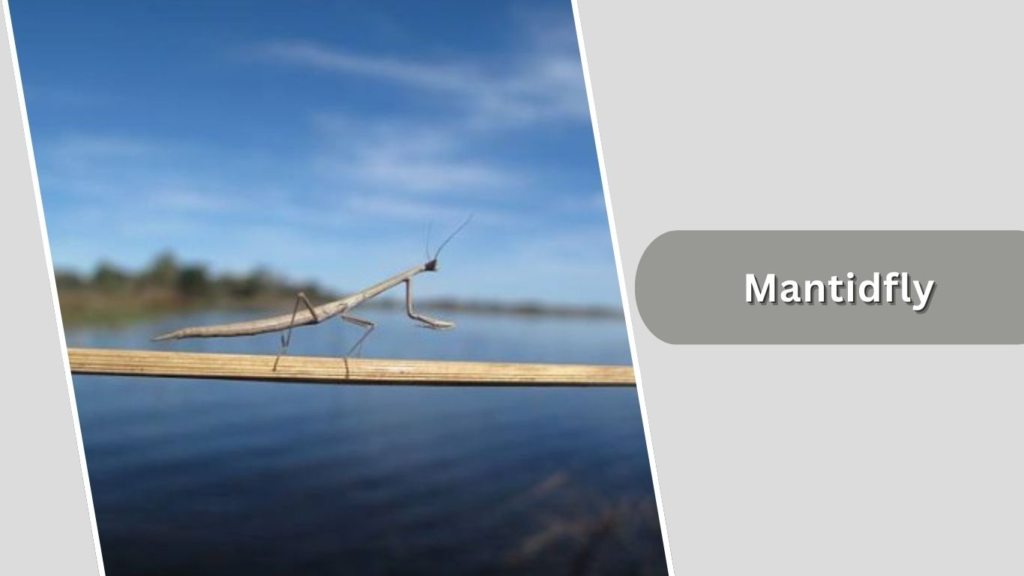
Mantidflies are unusual lacewing relatives that closely resemble praying mantises because of their elongated bodies and raptorial front legs. Despite their mantis-like appearance, they are true lacewing relatives. Mantidflies are active predators both as larvae and adults and are found in warm regions around the world.
Identification
- Slender insect with long “neck” and triangular head
- Front legs enlarged and folded like a praying mantis
- Two pairs of clear, finely veined wings
- Body yellowish, brown, or green with markings
- Antennae long and thread-like
- Larvae small, elongated, and highly mobile
Habitat
Mantidflies are commonly found in forests, gardens, grasslands, and shrublands. Adults often rest on flowers and foliage where insects are abundant. Larvae have a very different lifestyle and are often associated with spider egg sacs or wasp nests, depending on species.
Behaviors
Adults are ambush predators, waiting motionless before seizing prey with their raptorial legs. They can capture flies, moths, and other small insects. Larvae are specialized parasites or predators, often infiltrating spider egg sacs to feed on eggs and spiderlings.
Diet and Lifecycle
Mantidfly larvae feed mainly on spider eggs or wasp larvae. Adults prey on a variety of flying insects. Females lay large numbers of eggs on plant surfaces. The lifecycle includes egg, larva, pupa, and adult stages, with dramatic changes in behavior between life stages.
10. Split-Footed Lacewing (Family: Nymphidae)
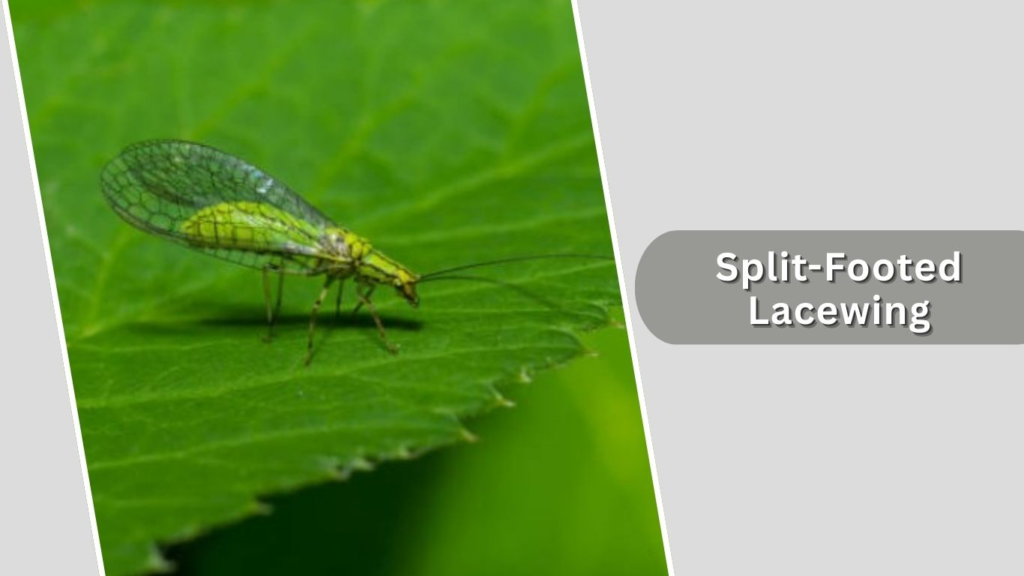
Split-footed lacewings are elegant and relatively rare lacewing relatives, recognized by the divided structures on their feet and their long, narrow wings. They are mostly found in Australia and nearby regions. Both adults and larvae are predators and play a role in controlling insect populations in forest and woodland ecosystems.
Identification
- Medium to large lacewing with slender body
- Long, narrow, transparent wings with fine veins
- Distinct split structures on the feet (tarsi)
- Body brown, gray, or yellowish
- Antennae long and thread-like
- Larvae elongated with curved, piercing jaws
Habitat
Split-footed lacewings are most often found in forests, woodlands, and shrublands. Adults rest on leaves, tree trunks, and branches. Larvae live in leaf litter, bark crevices, and on vegetation where prey insects are present.
Behaviors
Adults are mainly nocturnal and are attracted to lights. During the day, they remain still on vegetation. Larvae actively hunt small insects, moving through leaf litter and plant surfaces. They are quick predators, seizing prey with sharp jaws.
Diet and Lifecycle
Larvae feed on small insects and soft-bodied arthropods. Adults prey on flying insects and may also consume nectar. Females lay eggs on leaves or bark. The lifecycle includes egg, larva, pupa, and adult stages, usually completed over several weeks to months.
11. Thread-Winged Lacewing (Family: Nemopteridae)
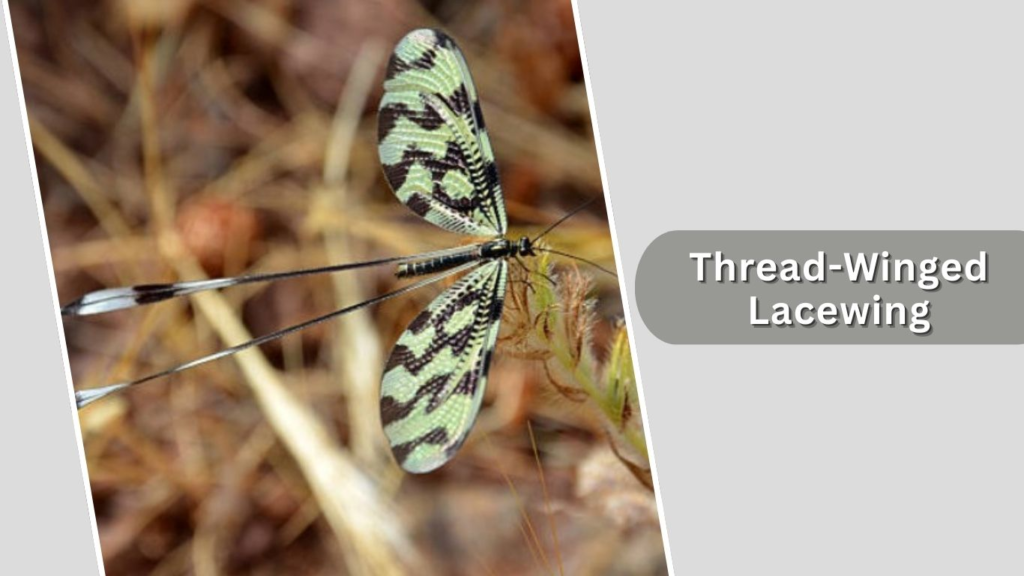
Thread-winged lacewings are among the most visually striking lacewing relatives, famous for their extremely long, ribbon-like hindwings that trail behind them in flight. They are mostly found in dry, warm regions and are gentle fliers often seen hovering over flowers or open ground.
Identification
- Slender body with very narrow front wings
- Hindwings extremely long, thread-like, or ribbon-shaped
- Body pale brown, yellowish, or gray
- Head small with long, thin antennae
- Adults delicate and lightweight in appearance
- Larvae stout, flattened, with strong curved jaws
Habitat
Thread-winged lacewings are commonly found in deserts, grasslands, savannas, and dry open woodlands. Adults are often seen near flowers, rocky slopes, and sandy ground. Larvae live on the ground, under stones, or in dry soil where they hunt small insects.
Behaviors
Adults are slow, floating fliers and are mostly active during daylight or twilight. Their long hindwings trail behind them and may help with balance and signaling. Larvae are ground-dwelling ambush predators that wait for passing insects before striking.
Diet and Lifecycle
Larvae feed mainly on ants and other small ground insects. Adults often consume nectar and pollen, and some may also eat tiny insects. Females lay eggs on soil or low vegetation. The lifecycle includes egg, larva, pupa, and adult stages, with larvae often taking a long time to mature.
12. Ithonid Lacewing (Family: Ithonidae)
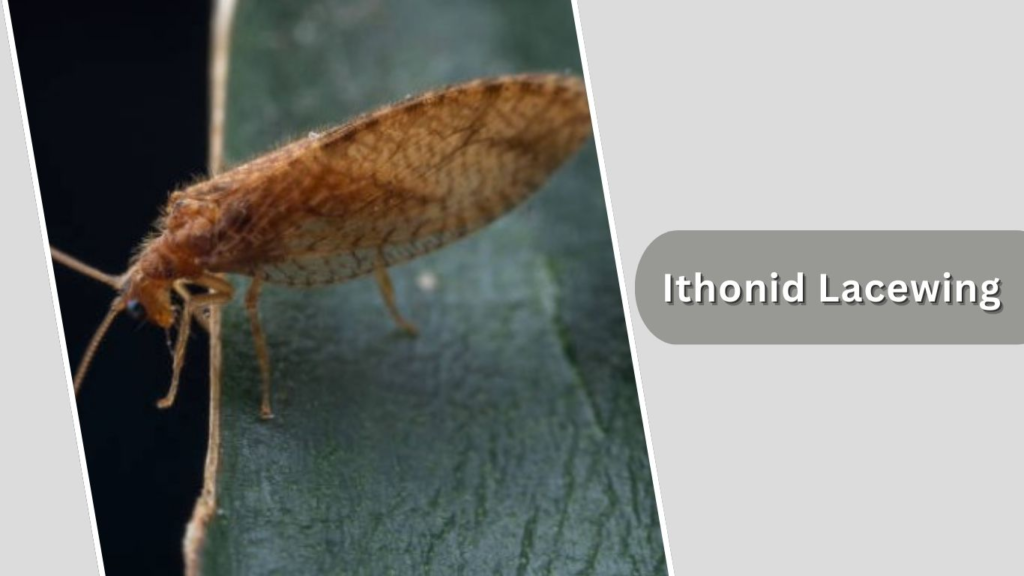
Ithonid lacewings, sometimes called moth lacewings, are unusual members of the lacewing group because many species resemble small moths rather than delicate green lacewings. They have soft, often hairy bodies and broad wings. These insects are relatively rare and are mainly found in Australia and parts of Asia.
Identification
- Medium-sized lacewing with moth-like appearance
- Body soft, often covered with fine hairs
- Wings broad, rounded, and densely veined
- Color usually brown, gray, or cream
- Antennae short to medium in length
- Larvae thick-bodied, with strong chewing jaws
Habitat
Ithonid lacewings are most often found in forests, woodlands, and shrublands. Adults rest on tree trunks, leaves, and low vegetation. Larvae live in soil or leaf litter and are believed to feed on roots or soil-dwelling insects, depending on species.
Behaviors
Adults are weak fliers and are usually active at night, often coming to lights. During the day, they remain hidden on bark or among leaves. Larvae live a hidden underground lifestyle and are rarely seen.
Diet and Lifecycle
Larvae may feed on plant roots or small soil invertebrates. Adults likely feed little, possibly taking nectar or not feeding at all. Females lay eggs in soil or leaf litter. The lifecycle includes egg, larva, pupa, and adult stages, with development often taking a long time.
FAQs
What is a lacewing?
A lacewing is an insect belonging to the order Neuroptera, known for its delicate, transparent wings with a net-like pattern of veins. Lacewings include green lacewings, antlions, owlflies, and mantidflies. Many species are beneficial predators that help control pest insects.
Are lacewings good for gardens?
Yes, lacewings are extremely beneficial for gardens and farms. Their larvae are voracious predators that feed on aphids, mites, thrips, whiteflies, and insect eggs. Because of this, lacewings are often called “aphid lions” and are widely used in biological pest control.
Where do lacewings live?
Lacewings are found worldwide in forests, grasslands, gardens, wetlands, deserts, and even near rivers and lakes. Different groups occupy different habitats, from aquatic sponge-feeding larvae to desert-dwelling antlion larvae that live in sand.
What do lacewing larvae eat?
Most lacewing larvae are predators. They eat aphids, mites, small caterpillars, insect eggs, ants, and other soft-bodied insects. Some specialized types feed on freshwater sponges or spider eggs, showing how diverse lacewing lifestyles can be.
How long do lacewings live?
The lacewing lifecycle includes egg, larva, pupa, and adult stages. Larvae usually develop over several weeks, though some take much longer. Adults often live from a few weeks to a couple of months, mainly focusing on feeding and reproduction.
