

Hornets build a variety of nests depending on their species and environment—ranging from aerial paper structures to hidden underground colonies. Understanding the different types of hornet nests is essential for safe identification and removal.
This guide covers 10 distinct hornet nest types, including their appearance, location, life cycle, and how to get rid of them safely. Whether you’re dealing with bald-faced hornets or invasive Asian species, each section offers clear, practical insights.
1. Bald-faced Hornet Nest

Bald-faced hornets (Dolichovespula maculata) are actually a type of yellowjacket, but they build large, aerial paper nests that are commonly associated with hornets. These hornets are black with white markings and are known for their aggressive nest defense.
Location and Nesting Habits
Bald-faced hornets typically build their nests in trees, shrubs, or on buildings. The nests are aerial and can be found 3 to 60 feet above ground. They prefer quiet, undisturbed areas.
Size and Structure
These nests are usually football-shaped and can reach up to 24 inches in length and 14 inches in diameter by late summer. They’re constructed from chewed wood fibers mixed with saliva, forming a paper-like texture.
Identification
- Shape: Teardrop or football-shaped
- Size: Up to 2 feet long
- Color: Gray with layered patterns
- Location: Usually aerial – in trees, shrubs, or building overhangs
- Entrance: A single hole near the bottom of the nest
Life Cycle Inside the Nest
The queen starts the nest in spring. As the colony grows, more workers are produced to expand and protect the nest. The colony peaks in late summer and dies off after the first frost, except for new queens that hibernate.
How to Get Rid of a Bald-faced Hornet Nest
- Wait until night when hornets are less active and inside the nest
- Wear protective clothing including a bee suit or thick layers
- Use a commercial wasp/hornet spray from a safe distance
- Spray directly into the nest entrance, then retreat immediately
- Wait 24–48 hours, then check for activity
- Carefully remove the nest using a long pole or stick if it’s inactive
- Dispose of the nest in a sealed trash bag
- Call a professional pest control service if the nest is large or hard to reach
2. European Hornet Nest
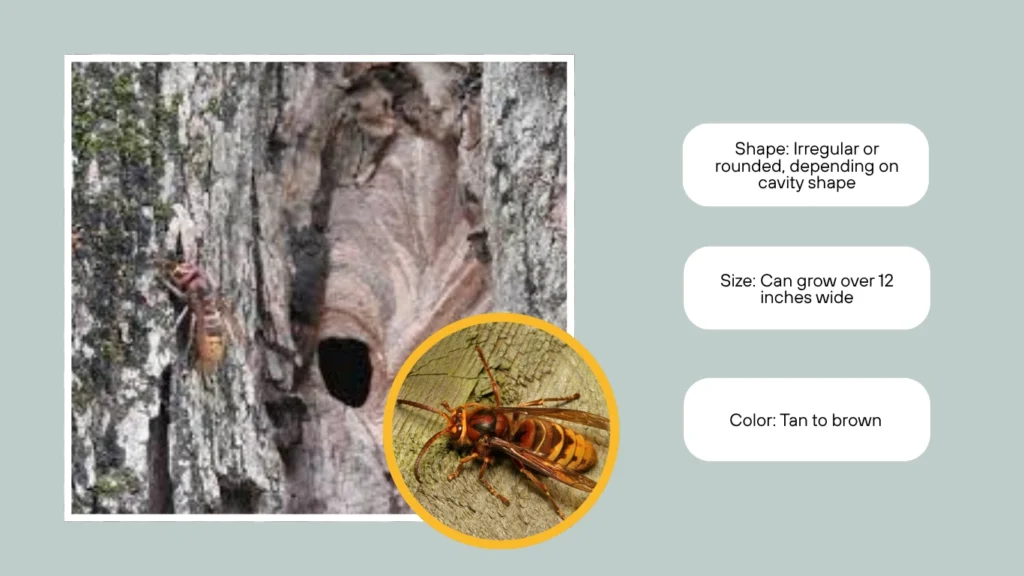
The European hornet (Vespa crabro) is the only true hornet species native to Europe and also found in parts of North America. These hornets are large, reddish-brown, and less aggressive than bald-faced hornets but will still defend their nest if disturbed.
Location and Nesting Habits
European hornets prefer to build their nests in hollow trees, wall voids, attics, sheds, or other enclosed spaces. Unlike many hornets, they often nest in cavities rather than open-air environments.
Size and Structure
Their nests are made of chewed wood pulp, like other hornets, but are usually hidden inside dark voids. The nest can expand to fill the cavity and grow up to a foot or more in diameter.
Identification
- Shape: Irregular or rounded, depending on cavity shape
- Size: Can grow over 12 inches wide
- Color: Tan to brown
- Location: Inside wall voids, hollow trees, barns, or attics
- Entrance: Small opening near nest location, often hard to see
Life Cycle Inside the Nest
In spring, the queen emerges from hibernation and starts the colony. Workers take over by summer, and the nest grows rapidly. In fall, new queens and males emerge, and the colony dies after the first frost.
How to Get Rid of a European Hornet Nest
- Identify the exact nest location (look for hornet traffic)
- Wait until night to take any action
- Seal yourself in protective clothing
- Apply insecticidal dust or foam into the nest entrance
- Do not block the entrance immediately—let the poison work
- Monitor for activity over the next few days
- Remove the nest if safely accessible
- Hire professionals for indoor or hard-to-access nests
3. Asian Giant Hornet Nest
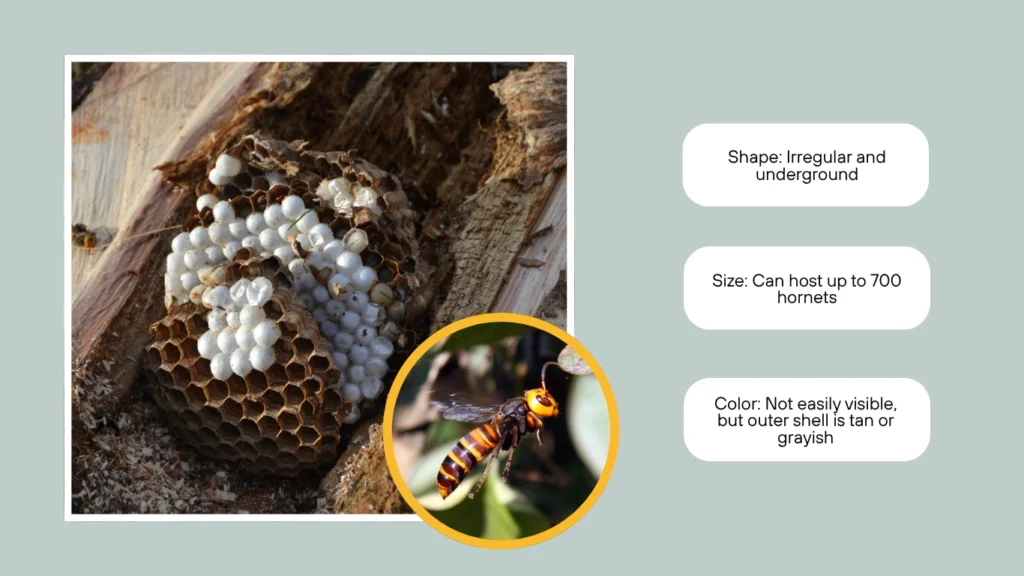
The Asian giant hornet (Vespa mandarinia), often sensationalized as the “murder hornet,” is the world’s largest hornet species. Native to East Asia, it can be aggressive if its nest is disturbed and poses a serious threat to honeybee colonies.
Location and Nesting Habits
Unlike many hornets, Asian giant hornets build their nests underground. They often choose abandoned rodent burrows, root cavities, or soil-covered areas in forests and rural locations.
Size and Structure
These nests can be expansive, with several tiers of combs and hundreds of hornets by late summer. The underground chamber is lined with paper-like material created from wood fibers.
Identification
- Shape: Irregular and underground
- Size: Can host up to 700 hornets
- Color: Not easily visible, but outer shell is tan or grayish
- Location: Underground in wooded or rural areas
- Entrance: Small ground-level hole, often hidden in grass or leaves
Life Cycle Inside the Nest
Queens start new colonies in spring. Workers emerge as temperatures rise, and the colony reaches peak size in late summer. By autumn, the colony produces new queens and males, then dies off before winter.
How to Get Rid of an Asian Giant Hornet Nest
- Do not approach the nest without protection—they are highly aggressive
- Mark the nest location during daytime from a safe distance
- Wait until night when hornets are inactive
- Use a professional-grade insecticidal dust specifically for ground nests
- Apply the dust directly into the entrance hole
- Do not disturb the soil around the nest immediately
- Repeat treatment if necessary after 2–3 days
- Contact professional pest control for confirmed Asian giant hornet nests
4. Vespa velutina (Asian Hornet) Nest
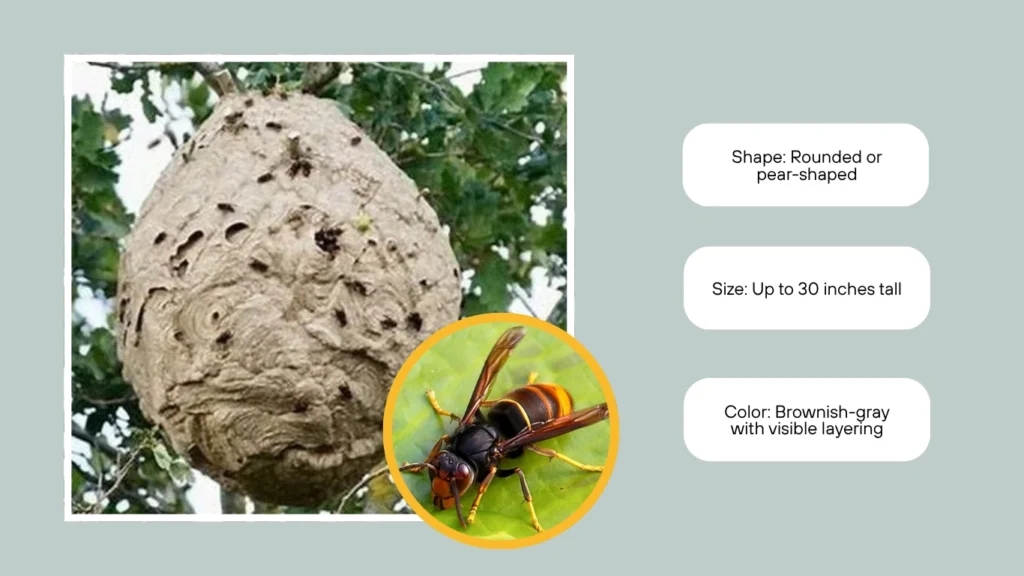
Vespa velutina, also known as the Asian hornet or yellow-legged hornet, is an invasive species in Europe. It poses a significant threat to honeybee populations due to its aggressive hunting behavior.
Location and Nesting Habits
Asian hornets typically build their nests high in trees or tall structures, though secondary nests may also be found in sheds, garages, or under roofs. They prefer warm, sheltered outdoor environments.
Size and Structure
The nests are large, round, and made of a papery material. Mature nests can be more than 30 inches in height and contain thousands of hornets.
Identification
- Shape: Rounded or pear-shaped
- Size: Up to 30 inches tall
- Color: Brownish-gray with visible layering
- Location: Tree canopies, rooftops, or wall cavities
- Entrance: Single entrance usually on the side of the nest
Life Cycle Inside the Nest
The queen begins nest construction in early spring. Workers emerge by summer and expand the nest rapidly. By late summer, the colony may contain over 6,000 individuals. It dies off in winter, except for mated queens.
How to Get Rid of a Vespa velutina Nest
- Locate the nest entrance from a distance during daylight
- Schedule removal at night when hornets are less active
- Wear full-body protective gear to avoid stings
- Use an extendable pole with insecticidal dust or foam
- Spray directly into the entrance hole
- Avoid shaking or disturbing the nest
- Repeat application if needed after 24–48 hours
- Call licensed pest control for nests high in trees or buildings
5. Japanese Hornet Nest
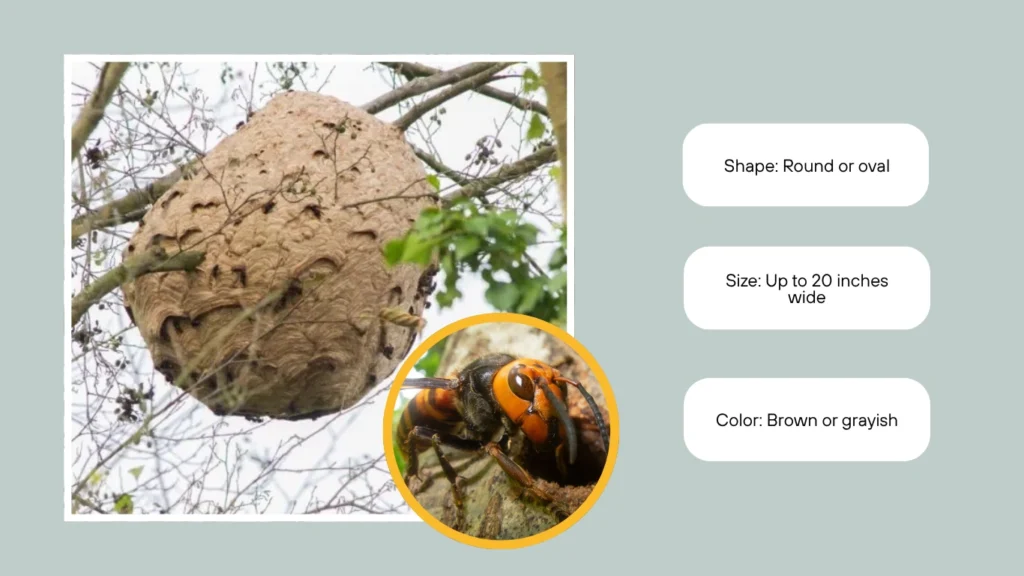
The Japanese hornet (Vespa simillima) is commonly found in Japan and parts of East Asia. Though smaller than the Asian giant hornet, it is still large and aggressive, especially when defending its nest.
Location and Nesting Habits
Japanese hornets prefer nesting underground or in hidden locations like tree hollows, wall crevices, and low bushes. They often use abandoned burrows and natural cavities in forested areas.
Size and Structure
Their nests are generally round or oval in shape, constructed from chewed plant fibers, and contain multiple layers of combs. The outer layer is papery and blends with the environment.
Identification
- Shape: Round or oval
- Size: Up to 20 inches wide
- Color: Brown or grayish
- Location: Underground, tree hollows, or wall voids
- Entrance: Small opening at the bottom or side
Life Cycle Inside the Nest
The queen begins the nest in spring, producing workers who expand it throughout summer. Colonies grow large by late summer and die off in winter, except for mated queens who hibernate.
How to Get Rid of a Japanese Hornet Nest
- Identify nest location carefully (look for hornet activity)
- Treat at night when hornets are less aggressive
- Use protective gear covering your entire body
- Apply insecticidal dust or foam directly into the entrance
- Avoid disturbing the nest physically
- Check for remaining activity after 1–2 days
- Seek professional help for underground or hidden nests
6. Oriental Hornet Nest

The Oriental hornet (Vespa orientalis) is native to the Middle East, North Africa, and parts of Southern Europe. It thrives in warm climates and is known for its shiny reddish-brown body with yellow markings.
Location and Nesting Habits
Oriental hornets usually nest underground or in crevices of buildings, stone walls, and abandoned structures. They prefer dry, warm environments and often build nests in urban areas.
Size and Structure
The nests are relatively small compared to other hornet species but can still house hundreds of individuals. They’re made from a papery substance created by mixing saliva and plant fibers.
Identification
- Shape: Irregular, depends on cavity
- Size: Medium (less than 12 inches across)
- Color: Light brown or gray
- Location: Underground, walls, attics, or cracks in buildings
- Entrance: Small and often hidden from view
Life Cycle Inside the Nest
Colonies begin in spring, expand rapidly in summer, and reach their peak by early autumn. Workers, males, and new queens emerge in late summer. The nest dies off in winter.
How to Get Rid of an Oriental Hornet Nest
- Locate the entrance hole by observing hornet movement
- Apply treatment after dark when hornets are inside
- Wear thick protective clothing
- Inject insecticidal dust or foam into the entrance
- Do not block the hole immediately
- Observe for hornet activity over the next 2–3 days
- Use professionals for nests in buildings or wall voids
7. Median Wasp (Hornet-like) Nest
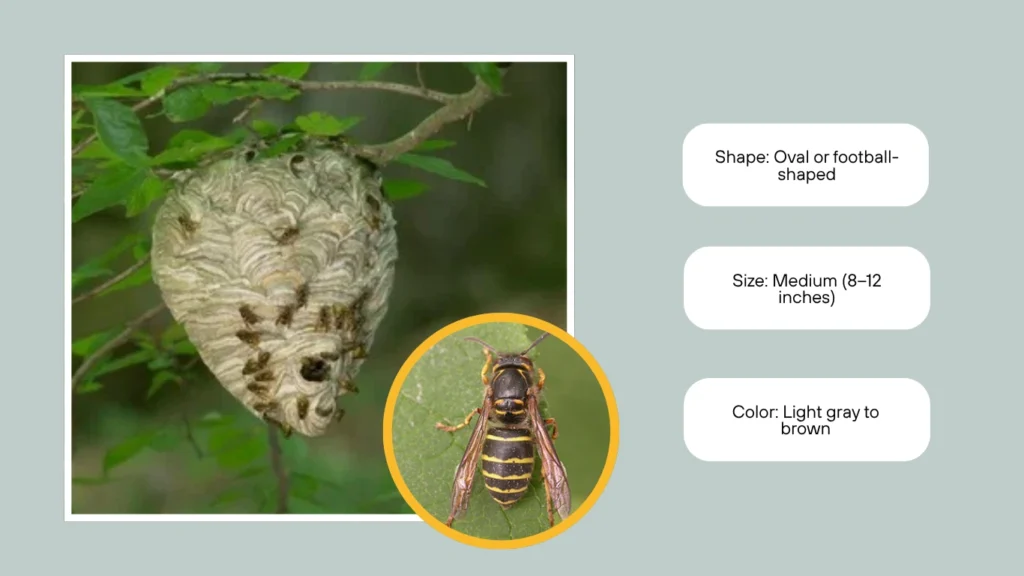
The Median wasp (Dolichovespula media) is often mistaken for a hornet due to its size and nesting habits. It is native to Europe and prefers elevated outdoor locations for nest building.
Location and Nesting Habits
Median wasps build their nests in hedges, bushes, trees, and under building eaves. They prefer sunny, sheltered spots and often construct their nests in open, visible areas.
Size and Structure
The nest is typically football-shaped, made from masticated wood fibers, and hangs from a branch or structure. It can grow up to 12 inches or more depending on colony size.
Identification
- Shape: Oval or football-shaped
- Size: Medium (8–12 inches)
- Color: Light gray to brown
- Location: Trees, shrubs, eaves, or open garden areas
- Entrance: Small hole near the bottom
Life Cycle Inside the Nest
The queen starts the nest in spring, and the colony grows over summer. It reaches full size by late summer and declines in autumn. Only mated queens survive the winter.
How to Get Rid of a Median Wasp Nest
- Wait until nighttime when wasps are inactive
- Wear proper protective clothing
- Use a wasp spray with long-range jet
- Spray directly into the entrance hole
- Do not knock down the nest immediately
- Check for activity after 48 hours
- Remove nest carefully if inactive
- Call pest control for large or hard-to-reach nests
8. Vespa bicolor Nest
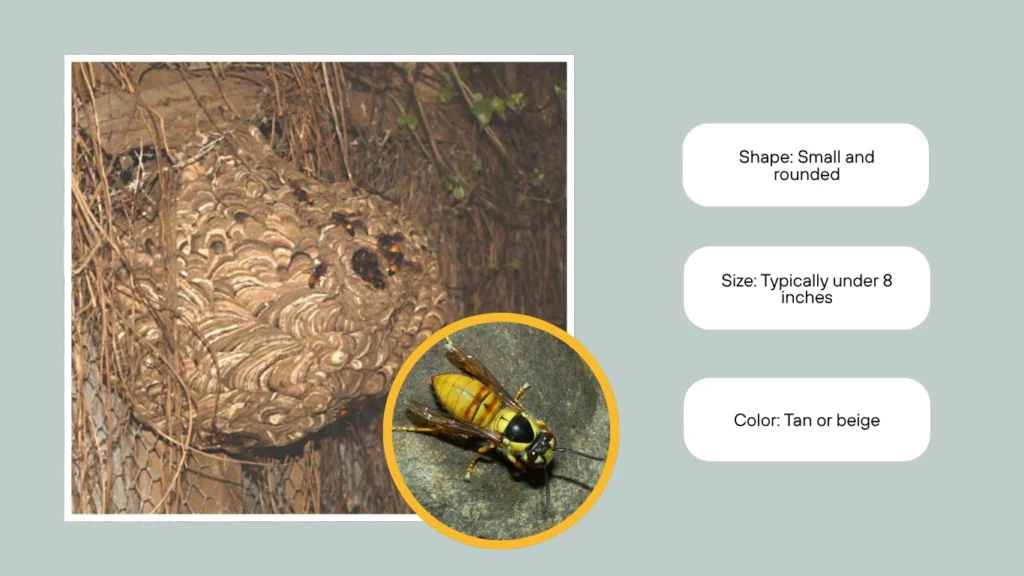
Vespa bicolor, also called the black shield wasp or two-toned hornet, is found in parts of Southeast Asia. It is a solitary hornet species, but when nesting communally, it builds distinctive nests in protected outdoor areas.
Location and Nesting Habits
These hornets often choose tree branches, under eaves, or protected garden spaces. They are more frequently seen in rural or suburban environments and sometimes near human dwellings.
Size and Structure
Vespa bicolor nests are compact and less elaborate than those of larger hornet species. The outer layer is papery and tan, covering a small series of combs.
Identification
- Shape: Small and rounded
- Size: Typically under 8 inches
- Color: Tan or beige
- Location: Tree limbs, under eaves, garden posts
- Entrance: Small hole near the bottom
Life Cycle Inside the Nest
The colony starts small, founded by a queen in early spring. The population grows modestly throughout summer and declines in autumn. These nests are less aggressive but still territorial.
How to Get Rid of a Vespa bicolor Nest
- Treat the nest after dark when hornets are inside
- Wear face and body protection
- Use aerosol insecticide labeled for wasps/hornets
- Apply thoroughly at the nest entrance
- Leave the nest undisturbed for 24–48 hours
- Remove nest cautiously once inactive
- Use professional help if in a sensitive or public area
9. Black-bellied Hornet Nest
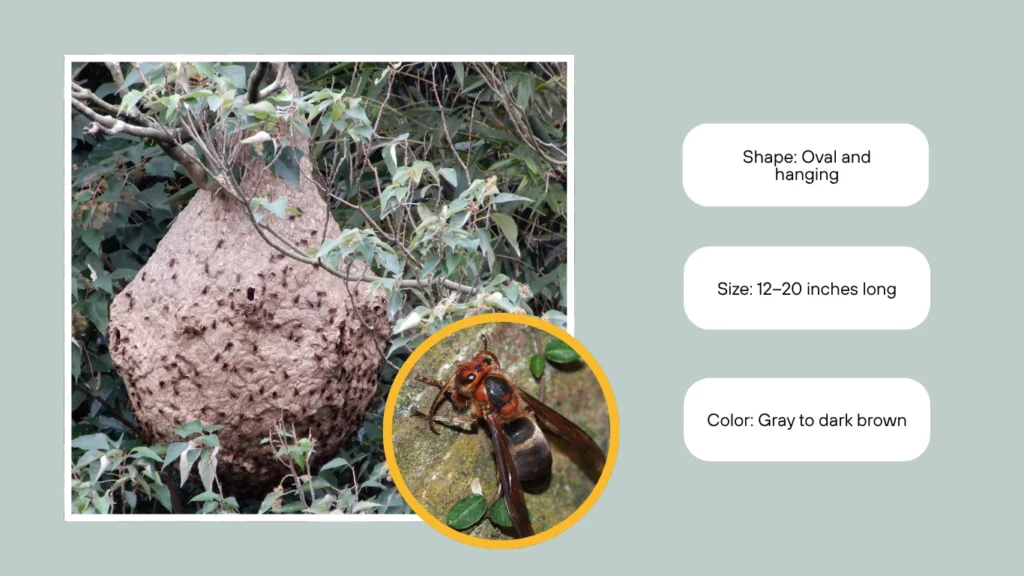
The Black-bellied hornet (Vespa basalis) is a less commonly known species found primarily in parts of Southeast Asia. It gets its name from the distinctive dark coloration on its abdomen and builds aerial nests similar to other true hornets.
Location and Nesting Habits
Black-bellied hornets prefer constructing their nests on tree branches, tall shrubs, and occasionally on man-made structures like balconies or rooftops. They select locations that are high and sheltered.
Size and Structure
Their nests are papery, oval-shaped, and suspended from a single attachment point. By late summer, nests may grow large and house hundreds of individuals.
Identification
- Shape: Oval and hanging
- Size: 12–20 inches long
- Color: Gray to dark brown
- Location: Tree branches, rooftops, overhangs
- Entrance: One hole near the base of the nest
Life Cycle Inside the Nest
Queens start building in early spring. The colony grows through summer with worker hornets expanding the nest. In autumn, new queens emerge, and the colony declines as cold sets in.
How to Get Rid of a Black-bellied Hornet Nest
- Inspect from a distance to confirm hornet activity
- Wait until night to reduce sting risk
- Wear thick protective gear
- Use long-range hornet spray or foam
- Spray into the entrance and back away quickly
- Observe nest for 2–3 days before removal
- Remove only if no activity is present
- Hire pest control for large or high-up nests
10. Greater Banded Hornet Nest

The Greater banded hornet (Vespa tropica) is found throughout tropical Asia and is known for its striking yellow-orange band and aggressive nest defense behavior. It’s larger than many hornet species and builds hidden nests.
Location and Nesting Habits
These hornets often build nests in dark, concealed places such as tree cavities, wall voids, underground burrows, or abandoned buildings. They avoid open, visible areas.
Size and Structure
The nests are hidden, compact, and made of wood pulp. They consist of layered combs and can house a significant number of hornets, depending on the space.
Identification
- Shape: Depends on cavity (usually round or irregular)
- Size: Medium to large, based on space
- Color: Grayish-brown paper shell
- Location: Underground, trees, walls, or abandoned buildings
- Entrance: Small hole, often hidden or in a crevice
Life Cycle Inside the Nest
The colony is established in spring by a solitary queen. The nest grows throughout summer, peaking in late summer or early fall. The colony dies off in winter, with new queens surviving to restart the cycle.
How to Get Rid of a Greater Banded Hornet Nest
- Locate the entrance carefully during the day
- Apply treatment at night when all hornets are inside
- Wear full protective clothing including face shield
- Inject insecticidal dust or foam into the entrance
- Leave the area immediately after treatment
- Monitor for any remaining activity over the next few days
- Do not attempt removal if deeply hidden—contact professionals
