

Grass spiders are fast-moving funnel weavers commonly found in lawns, gardens, fields, and grassy landscapes. They are best known for their flat, sheet-like webs that narrow into a funnel where the spider waits for prey. Although often mistaken for more dangerous spiders, grass spiders are harmless and play an important role in controlling insect populations. In this guide, we explore 7 types of grass spiders, focusing on their identifying features, habitats, behaviors, and how safe they are around humans.
1. Common Grass Spider
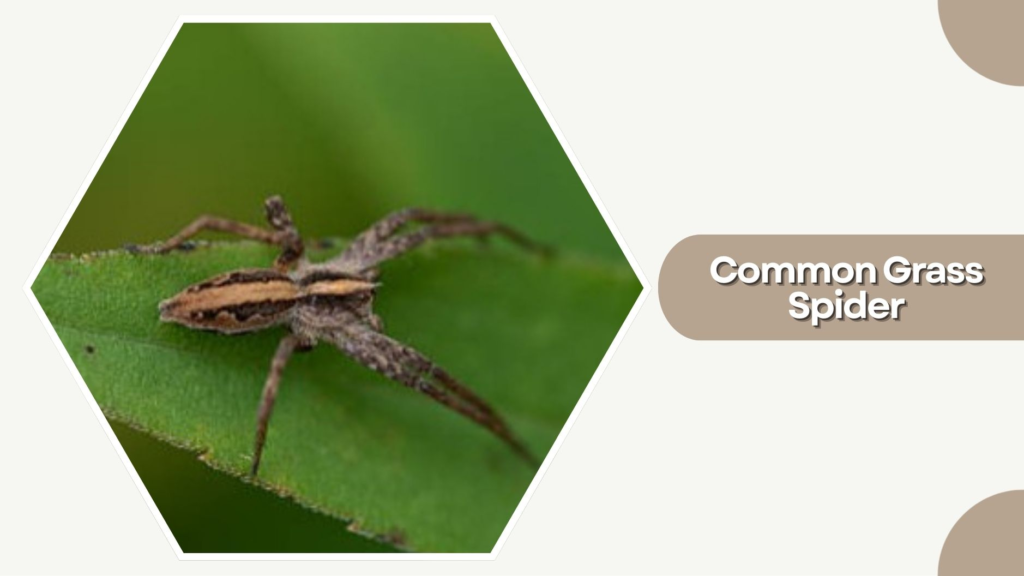
The Common Grass Spider is a widespread and well-studied spider known for its funnel-shaped web and quick movements. It is commonly found in lawns, gardens, and grassy areas and is often mistaken for more dangerous spiders, though it is harmless to humans.
Identification
- Scientific name: Agelenopsis pennsylvanica
- Common name: Common Grass Spider
- Body color: brown to gray with dark stripes
- Legs: long, slender, and hairy
- Size: medium spider
Color Pattern
The Common Grass Spider has a brown or gray body with darker longitudinal stripes running along the cephalothorax and abdomen. Its coloration helps it blend well into grass and soil.
Habitat
This species lives primarily in grassy areas such as lawns, fields, meadows, and along sidewalks. It builds funnel-shaped webs anchored in grass, shrubs, or low vegetation.
Behavior
Common Grass Spiders are fast runners and retreat quickly into their funnel web when disturbed. They wait at the mouth of the funnel for insects to land on the web, then rush out to capture prey.
Danger of Bite
Bites are very rare and not medically significant. If a bite occurs, it may cause mild redness or irritation, similar to a minor insect bite. The Common Grass Spider is not considered dangerous to humans.
2. American Grass Spider

The American Grass Spider is one of the most common grass-dwelling spiders in North America. It is well known for its flat, sheet-like web with a funnel retreat and its extremely quick response when prey lands on the web.
Identification
- Scientific name: Agelenopsis spp.
- Common name: American Grass Spider
- Body color: brown or gray with darker striping
- Legs: long, slender, and spiny
- Spinnerets: long and clearly visible
- Size: medium spider
Color Pattern
This spider has earthy brown or gray coloring with distinct dark stripes running lengthwise along the body. The pattern provides excellent camouflage among grass and soil.
Habitat
American Grass Spiders are commonly found in lawns, fields, gardens, road edges, and shrubs. They build horizontal sheet webs with a funnel-shaped retreat hidden in grass or cracks.
Behavior
This species is non-aggressive and very fast. It waits at the entrance of its funnel web and rushes out instantly when vibrations signal trapped prey.
Danger of Bite
Bites are extremely rare and not dangerous. If bitten, symptoms are usually limited to minor redness or irritation. The American Grass Spider poses no medical threat to humans.
3. Funnel Weaver Grass Spider
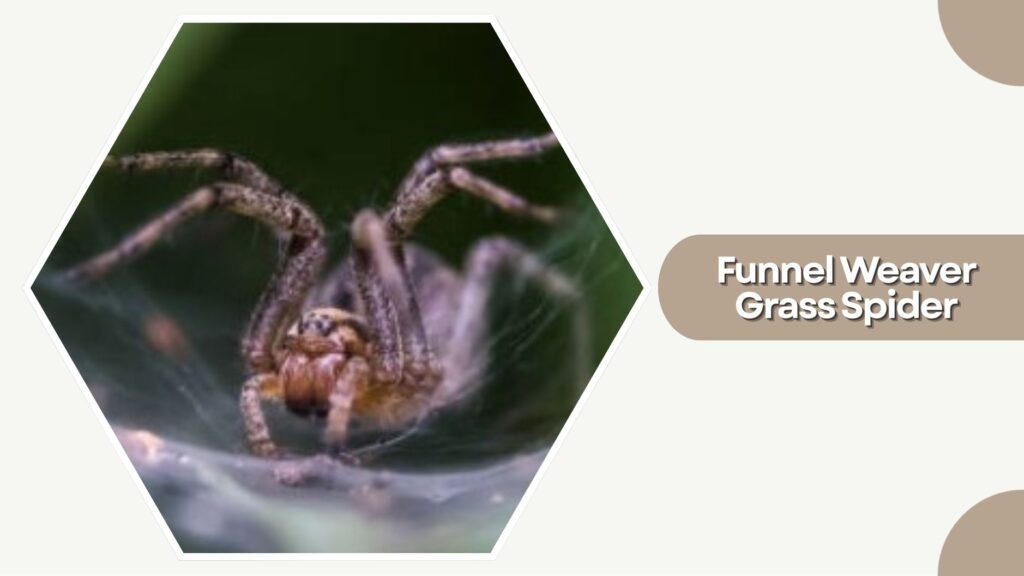
The Funnel Weaver Grass Spider is a fast-moving spider best known for its distinctive funnel-shaped web. It belongs to the funnel weaver family and is commonly seen in grassy areas where its web is stretched close to the ground.
Identification
- Scientific name: Agelenidae (family)
- Common name: Funnel Weaver Grass Spider
- Body color: brown to gray
- Legs: long and slender
- Spinnerets: long and noticeable
- Size: medium spider
Color Pattern
This spider typically shows muted brown or gray coloring with darker striping along the body. The dull coloration helps it blend seamlessly into grass, soil, and dried vegetation.
Habitat
Funnel Weaver Grass Spiders live in lawns, fields, gardens, and grassy edges of buildings. Their webs consist of a flat sheet that narrows into a funnel retreat where the spider hides.
Behavior
This species is extremely quick and shy. It waits inside the funnel and rushes out when insects land on the web, then drags the prey back into the retreat.
Danger of Bite
Bites are very uncommon and not medically significant. If a bite does occur, it may cause mild redness or irritation, but the Funnel Weaver Grass Spider is considered harmless to humans.
4. Desert Grass Spider

The Desert Grass Spider is a well-known grass spider species adapted to dry, open environments. It is famous in scientific studies for its speed and aggressive prey-capture behavior, while remaining harmless to humans.
Identification
- Scientific name: Agelenopsis aperta
- Common name: Desert Grass Spider
- Body color: tan to light brown with darker markings
- Legs: long and powerful
- Spinnerets: long and visible
- Size: medium to large spider
Color Pattern
This species has pale brown or sandy coloration with darker stripes and markings. The coloring helps it blend into dry grass, soil, and desert vegetation.
Habitat
Desert Grass Spiders are commonly found in arid and semi-arid regions, including deserts, dry grasslands, and scrub areas. They build funnel-shaped webs close to the ground, often near rocks or sparse plants.
Behavior
This spider is extremely fast and alert. It waits at the funnel entrance and rapidly attacks prey that lands on the web. It is more bold in prey capture compared to other grass spiders but avoids humans.
Danger of Bite
Bites are rare and not medically significant. If bitten, a person may experience mild pain or redness. The Desert Grass Spider is not dangerous to humans.
5. Western Grass Spider
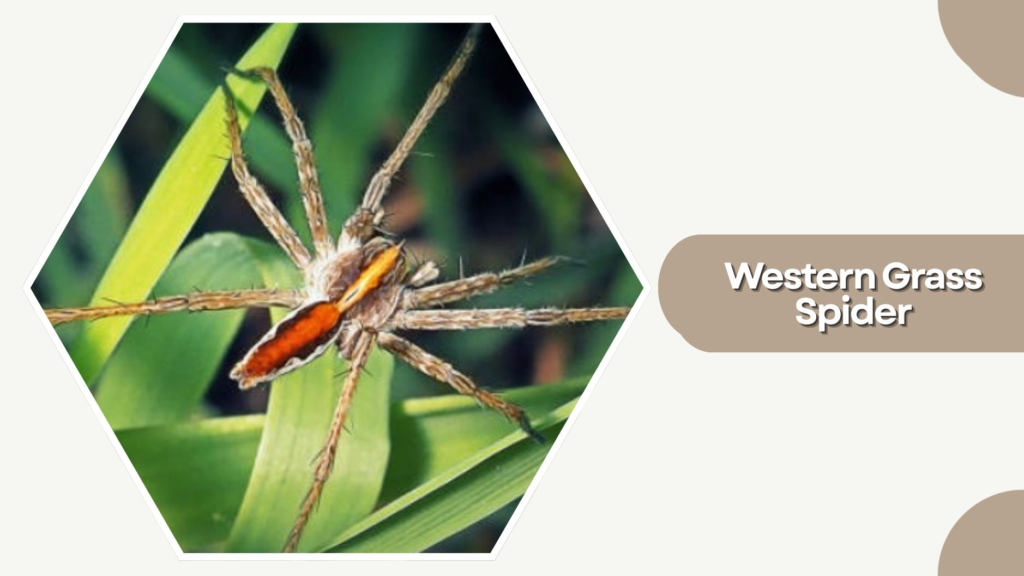
The Western Grass Spider is a common funnel-weaving spider found in western regions of North America. Like other grass spiders, it is known for its speed, distinctive web structure, and harmless nature.
Identification
- Scientific name: Agelenopsis spp.
- Common name: Western Grass Spider
- Body color: brown or gray with dark longitudinal stripes
- Legs: long, thin, and spiny
- Spinnerets: elongated and visible
- Size: medium spider
Color Pattern
This species has muted brown or gray coloring with darker stripes running along the body. The pattern provides excellent camouflage in grass and dry vegetation.
Habitat
Western Grass Spiders live in lawns, fields, gardens, and roadside grass. They construct flat sheet webs with a funnel retreat hidden in grass, soil cracks, or low plants.
Behavior
This spider is fast and reclusive. It stays near the funnel entrance and rushes out to seize prey when vibrations are detected on the web.
Danger of Bite
Bites are extremely rare and not dangerous. If a bite occurs, it may cause minor redness or irritation, similar to a small insect bite.
6. Eastern Grass Spider
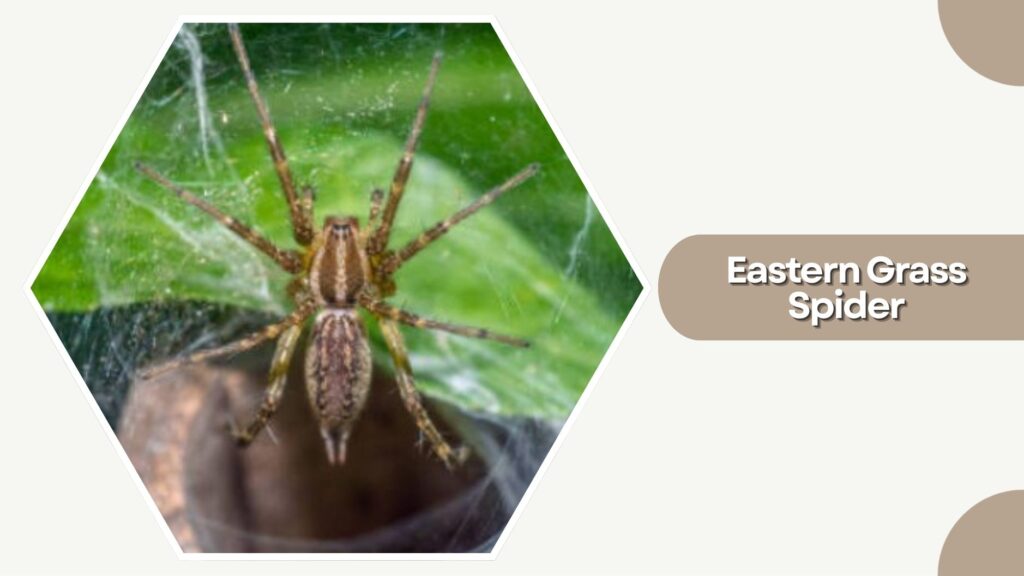
The Eastern Grass Spider is a common funnel-weaving spider found in the eastern parts of North America. It is frequently seen in yards and gardens, where its web is stretched low across grass and shrubs.
Identification
- Scientific name: Agelenopsis spp.
- Common name: Eastern Grass Spider
- Body color: brown to gray with dark stripes
- Legs: long, thin, and hairy
- Spinnerets: long and clearly visible
- Size: medium spider
Color Pattern
This spider has a gray or brown body with dark longitudinal striping along the cephalothorax and abdomen. The neutral tones provide excellent camouflage in grass and soil.
Habitat
Eastern Grass Spiders are commonly found in lawns, gardens, fields, and along building foundations. They build flat sheet webs with a funnel retreat hidden in grass, mulch, or cracks.
Behavior
This species is very fast and shy. It waits inside the funnel and rushes out to capture insects that land on the web, then quickly retreats with its prey.
Danger of Bite
Bites are very rare and not medically significant. If bitten, effects are usually limited to mild redness or irritation. The Eastern Grass Spider is harmless to humans.
7. Giant Grass Spider

The Giant Grass Spider is an informal name often used for the largest species within the grass spider group. These spiders are known for their impressive leg span, fast movement, and large funnel-shaped webs, especially in late summer.
Identification
- Scientific name: Agelenopsis spp.
- Common name: Giant Grass Spider
- Body color: brown or gray with dark stripes
- Legs: very long and slender
- Spinnerets: long and clearly visible
- Size: medium to large (one of the largest grass spiders)
Color Pattern
The Giant Grass Spider has brown or gray coloration with dark longitudinal stripes along the body. Its colors help it blend into grass, soil, and dried vegetation.
Habitat
This spider is commonly found in lawns, meadows, gardens, and fields. It builds large sheet webs with a deep funnel retreat, often more noticeable than those of smaller grass spiders.
Behavior
Giant Grass Spiders are extremely fast and shy. They stay near the funnel entrance and rush out to capture insects that land on the web, retreating quickly when disturbed.
Danger of Bite
Bites are very rare and not medically dangerous. If a bite occurs, it may cause mild pain or redness, similar to a minor insect bite. This spider is harmless to humans.
FAQs
1. Are grass spiders dangerous to humans?
No, grass spiders are not dangerous. Their bites are rare and usually cause only mild irritation, similar to a mosquito bite.
2. How can you identify a grass spider?
Grass spiders are identified by their long legs, visible spinnerets, brown or gray striped bodies, and their distinctive funnel-shaped webs in grass.
3. Do grass spiders come inside houses?
They usually stay outdoors, but may occasionally wander indoors by accident, especially during late summer or fall.
4. What is the difference between a grass spider and a wolf spider?
Grass spiders build funnel webs and have long spinnerets, while wolf spiders do not build webs and actively hunt prey on the ground.
5. Why are grass spider webs common in lawns and gardens?
Lawns and gardens provide ideal support for funnel webs and attract many insects, making them perfect hunting grounds for grass spiders.
