
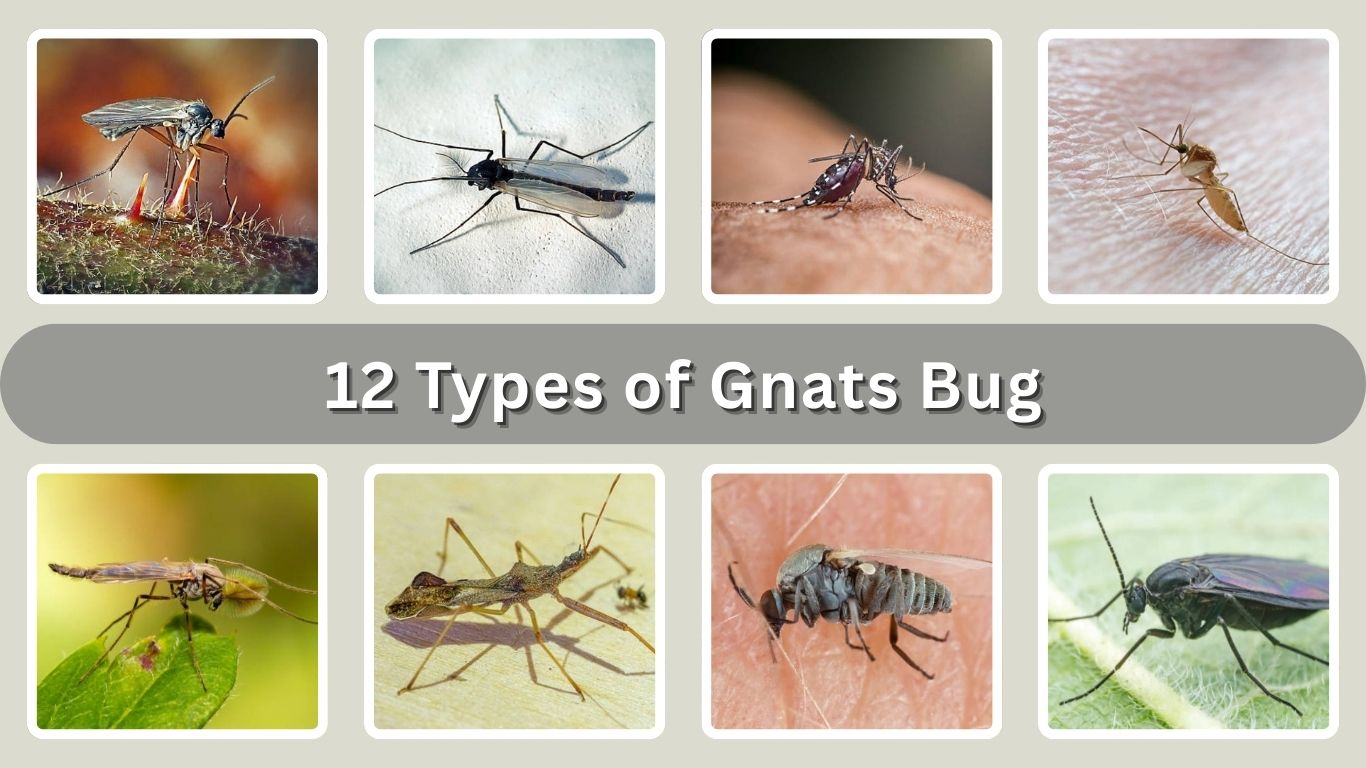
Gnats are tiny flying insects often mistaken for mosquitoes, yet they include a wide range of species with very different habits and impacts. Some gnats are harmless and simply annoying, while others can bite humans, affect livestock, or damage plants. They are commonly found around moisture, decaying organic matter, and vegetation, which makes homes, gardens, forests, and wetlands ideal environments for them. Understanding the different types of gnats helps with proper identification, control, and prevention.
1. Fungus Gnat
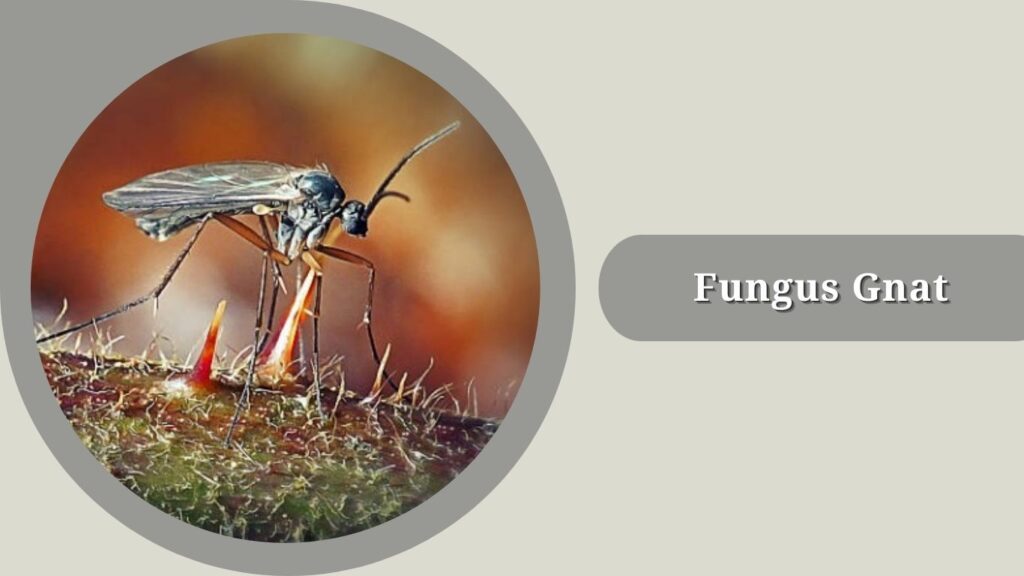
Fungus gnats are tiny, mosquito-like insects commonly found around houseplants, greenhouses, compost piles, and other damp environments. They are best known for hovering in small clouds near soil surfaces and for their larvae, which live in moist potting mix where they feed on fungi and organic matter.
Identification
- Small, delicate black or dark gray flies, usually 2–4 mm long
- Slender bodies with long legs and long, thread-like antennae
- Clear or smoky wings with visible veins
- Weak, fluttering flight, often seen near soil or plant pots
- Larvae are transparent to white with shiny black heads, living in moist soil
Habitat
Fungus gnats thrive in wet, organic-rich environments. Indoors, they are most common in overwatered houseplants, seed trays, and greenhouses. Outdoors, they live in damp soil, leaf litter, rotting wood, compost, and areas with heavy fungal growth, especially in shaded, humid places.
Behaviors
Adult fungus gnats are attracted to moisture, decaying organic matter, and light. They often fly in short, erratic patterns close to soil surfaces. While adults do not bite humans, they can be a nuisance indoors. Larvae remain hidden in the soil, feeding continuously and sometimes damaging plant roots.
Lifecycle
The fungus gnat lifecycle includes four stages: egg, larva, pupa, and adult. Females lay eggs in moist soil. Eggs hatch into larvae that feed for about two weeks before pupating. Adults emerge shortly after, living around one week. Under warm, damp conditions, the full cycle can complete in 3–4 weeks.
2. Drain Gnat (Moth Fly)

Drain gnats, often called moth flies, are tiny, fuzzy-looking insects commonly seen resting on bathroom walls, kitchen sinks, and near floor drains. They are associated with moist, organic buildup inside pipes, where their larvae develop and feed.
Identification
- Very small flies, about 2–5 mm long
- Fuzzy, moth-like bodies with short, broad wings
- Gray, tan, or light brown coloration
- Wings held roof-like over the body when resting
- Slow, weak flyers that prefer crawling on surfaces
Habitat
Drain gnats live wherever stagnant water and organic residue collect. Typical habitats include bathroom and kitchen drains, sewer lines, septic systems, wet mop buckets, and damp basement floors. Outdoors, they may also be found near polluted ponds, clogged gutters, and rotting organic matter.
Behaviors
Adult drain gnats are most active at night and are strongly attracted to moisture and dimly lit areas. They often rest on walls near sinks and showers. While harmless and non-biting, they can become annoying when populations increase indoors.
Lifecycle
Females lay eggs in the gelatinous film lining drains or other wet surfaces. The larvae feed on bacteria, algae, and decomposing organic material. After pupation, adults emerge within days. The full lifecycle usually takes about 1–3 weeks under warm, damp conditions.
3. Eye Gnat

Eye gnats are tiny, fast-moving flies known for their habit of swarming around the faces of people and animals, especially near the eyes, nose, and mouth. They do not bite, but they can be extremely irritating and are capable of spreading certain eye-related infections.
Identification
- Very small flies, about 1–2 mm long
- Dark gray to black bodies with clear wings
- Large, prominent reddish or dark eyes
- Short antennae and compact body shape
- Rapid, darting flight around faces and animals
Habitat
Eye gnats prefer warm, sunny outdoor environments. They are commonly found around farms, grassy fields, livestock areas, beaches, and areas with exposed soil. Larvae develop in decaying vegetation, manure, and moist soil rich in organic material.
Behaviors
Adult eye gnats are strongly attracted to moisture, including tears, sweat, mucus, and open wounds. They often swarm around humans and animals, feeding on eye and nasal secretions. Although they do not bite, their activity can cause stress to animals and severe irritation to people.
Lifecycle
Females lay eggs on moist soil or decaying organic matter. Larvae feed on decomposing material before pupating in the soil. Adults emerge in warm conditions and can appear in large seasonal populations. The full lifecycle is typically completed in about 2–3 weeks.
4. Biting Midge (No-See-Um)

Biting midges are extremely small gnats famous for their painful bites and their ability to pass through ordinary window screens. Often called “no-see-ums,” they are common in coastal, marshy, and humid regions and are active mostly at dawn and dusk.
Identification
- Extremely tiny flies, about 1–3 mm long
- Gray, brown, or black bodies
- Narrow wings, often with faint spotting
- Short legs and short antennae compared to mosquitoes
- Females have piercing mouthparts for biting
Habitat
Biting midges live in moist, organic-rich environments. Common habitats include salt marshes, mangroves, swamps, muddy shorelines, wet pastures, and damp forest floors. Larvae develop in wet soil, decaying vegetation, tree holes, and along the edges of ponds and streams.
Behaviors
Only female biting midges bite, using blood to develop their eggs. They are most active during early morning and evening and are attracted to body heat, carbon dioxide, and movement. Their bites can cause intense itching, swelling, and irritation.
Lifecycle
Females lay eggs in wet soil or shallow water. Larvae hatch and feed on microorganisms and organic debris before pupating. Adults emerge within days. In warm climates, the complete lifecycle can occur in 2–4 weeks, allowing rapid population growth.
5. Non-Biting Midge
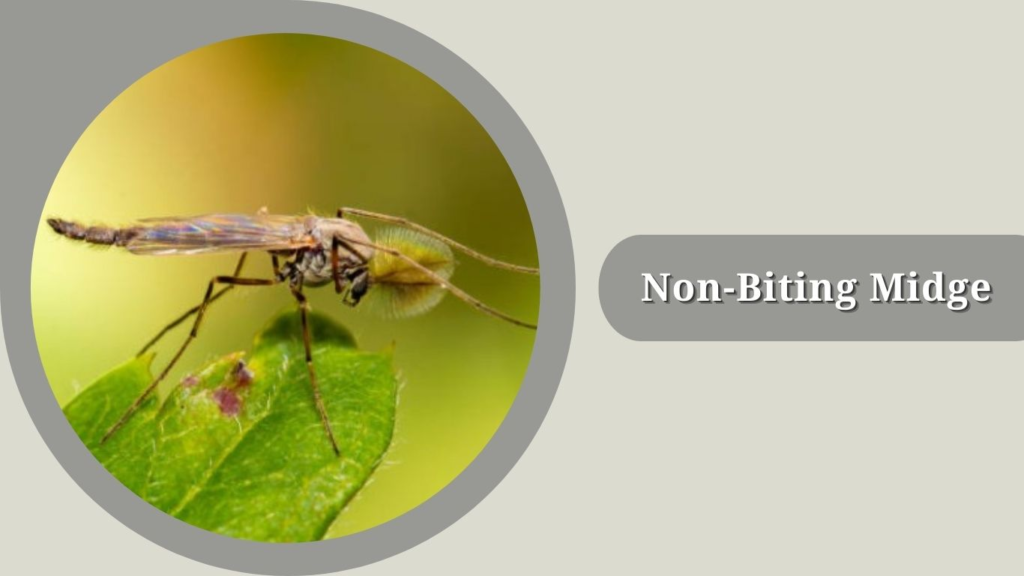
Non-biting midges are small, mosquito-like gnats often mistaken for mosquitoes, but they lack biting mouthparts and do not feed on blood. They are commonly seen in large swarms near lights, lakes, and rivers, especially during warm seasons.
Identification
- Small, slender flies, usually 3–8 mm long
- Pale green, brown, or black bodies
- Long front legs often held forward
- Narrow wings without scales
- Males have feathery antennae; females have thread-like antennae
Habitat
Non-biting midges are strongly associated with water. They are abundant near ponds, lakes, rivers, wetlands, and reservoirs. Larvae, often called “bloodworms” when red, live in mud or sediment at the bottom of water bodies where they feed on organic material and algae.
Behaviors
Adults do not bite and generally live only a few days. They often form dense mating swarms, especially in the evening. Large emergences can become a nuisance, covering buildings, cars, and outdoor lights near water.
Lifecycle
Females lay eggs on the surface of water. The larvae develop in aquatic sediments before pupating underwater. Adults emerge in massive numbers, sometimes all at once. Depending on species and temperature, the lifecycle can take several weeks to a few months.
6. Sand Gnat
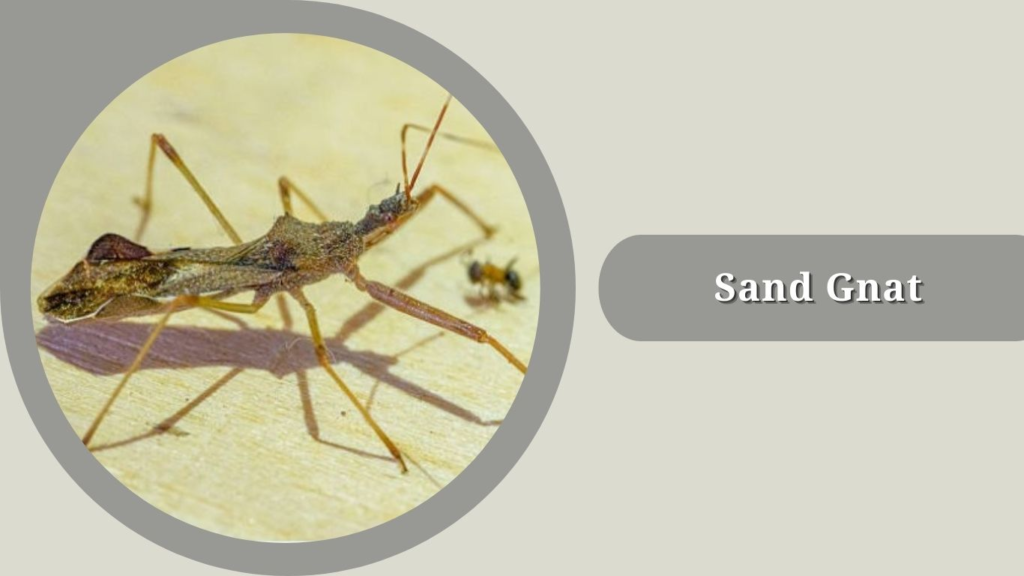
Sand gnats are tiny coastal gnats commonly encountered on beaches, dunes, and near saltwater environments. They are often confused with biting midges because many species bite humans and animals, causing itchy, irritating welts.
Identification
- Very small flies, usually 1–3 mm long
- Light brown, gray, or nearly black bodies
- Delicate wings held flat over the body
- Short, stout bodies compared to mosquitoes
- Females possess piercing mouthparts for biting
Habitat
Sand gnats primarily inhabit coastal and sandy environments. They are common around beaches, salt marshes, mangroves, sand dunes, and tidal flats. Larvae develop in damp sand, decaying seaweed, and moist soil influenced by seawater.
Behaviors
Female sand gnats feed on blood and are most active during early morning and evening hours. They are attracted to body heat and carbon dioxide and often swarm around exposed skin. Their bites can be painful and may result in redness, swelling, and intense itching.
Lifecycle
Eggs are laid in moist sand or soil near coastal water sources. Larvae feed on microorganisms and organic debris before pupating in the substrate. Adults emerge quickly in warm weather, and several generations may occur each year in coastal regions.
7. Buffalo Gnat (Black Fly)
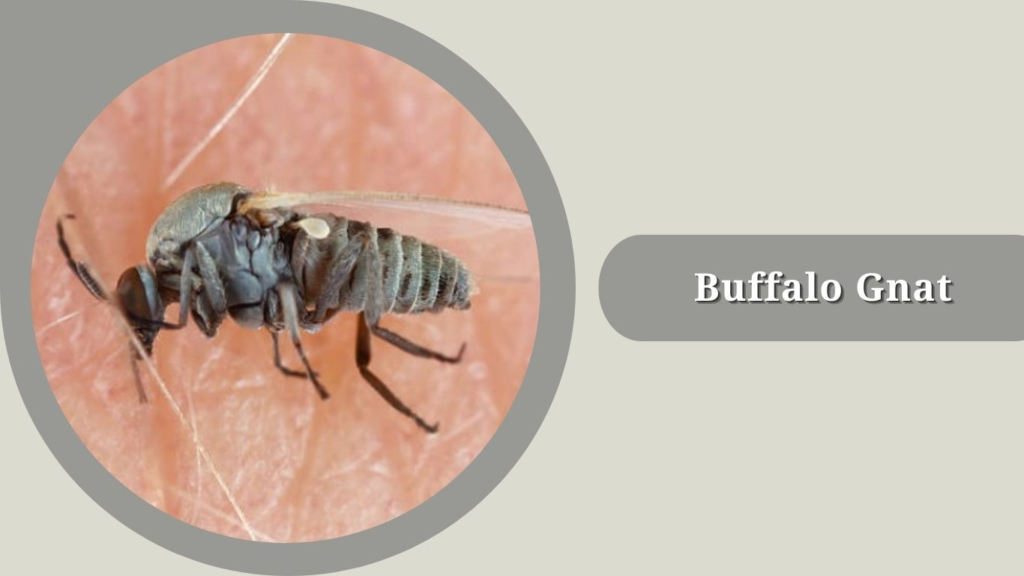
Buffalo gnats are small, hump-backed gnats best known for their painful bites and their tendency to swarm in large numbers near rivers and streams. They are sometimes called black flies and can be a serious nuisance to humans, livestock, and wildlife.
Identification
- Small, stout flies, about 2–5 mm long
- Dark gray to black bodies with a distinct “hump-backed” shape
- Short antennae and broad, clear wings
- Females have sharp, cutting mouthparts
- Stronger, more direct flight than most gnats
Habitat
Buffalo gnats develop near flowing water. Larvae attach themselves to rocks, plants, and debris in rivers, streams, and creeks with good oxygen flow. Adults are usually found near these waterways but can travel several miles in search of hosts.
Behaviors
Only females bite, feeding on blood to produce eggs. They are active during daylight hours and often attack in swarms, targeting exposed skin, ears, and hairlines. Their bites can be painful and may cause swelling, bleeding, and allergic reactions in sensitive individuals.
Lifecycle
Females lay eggs in or near running water. The larvae attach to submerged surfaces and filter-feed on microorganisms. After pupation, adults emerge at the water’s surface. The full lifecycle usually takes 2–6 weeks, depending on water temperature and species.
8. Black Gnat
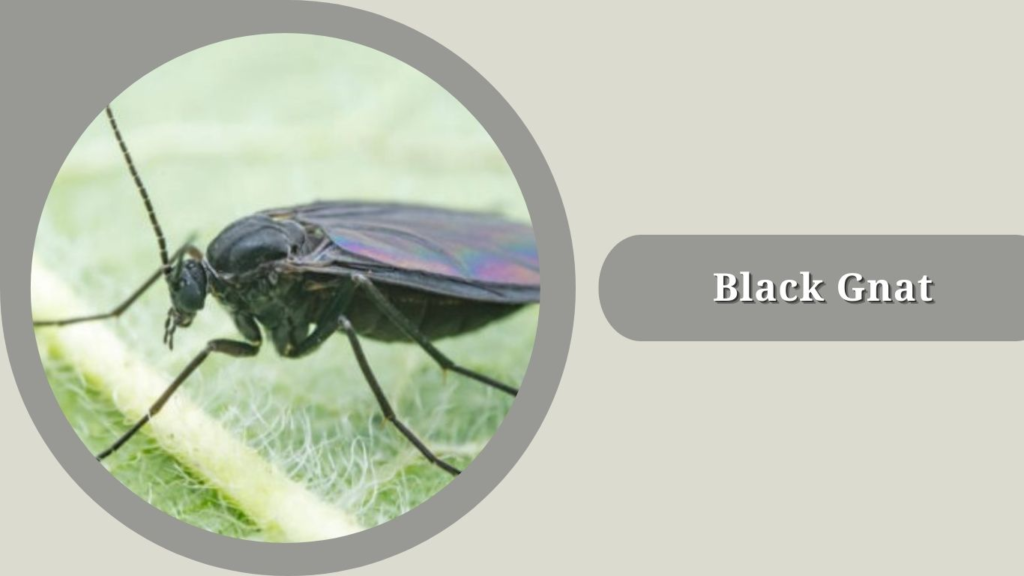
Black gnats are small, dark-colored flying insects commonly seen hovering around people, plants, and animals, especially in warm, humid conditions. The name “black gnat” is often used broadly for several dark gnat species that may or may not bite.
Identification
- Tiny flies, usually 1–4 mm long
- Solid black or very dark brown bodies
- Slender legs and narrow wings
- Clear to slightly smoky wings
- Often seen in swarms or hovering clouds
Habitat
Black gnats thrive in moist, organic-rich environments. They are frequently found near wetlands, lakes, gardens, compost piles, livestock areas, and damp forests. Many species breed in wet soil, decaying vegetation, or along the edges of water bodies.
Behaviors
Some black gnats bite while others are harmless nuisance flies. They are attracted to moisture, warmth, and carbon dioxide, often swarming around faces and animals. Large numbers can interfere with outdoor activities and may stress livestock.
Lifecycle
Eggs are laid in moist soil, plant debris, or near water. Larvae feed on microorganisms and decompose organic matter. After pupation, adults emerge and form seasonal populations. The complete lifecycle typically takes several weeks under favorable conditions.
9. Gall Gnat
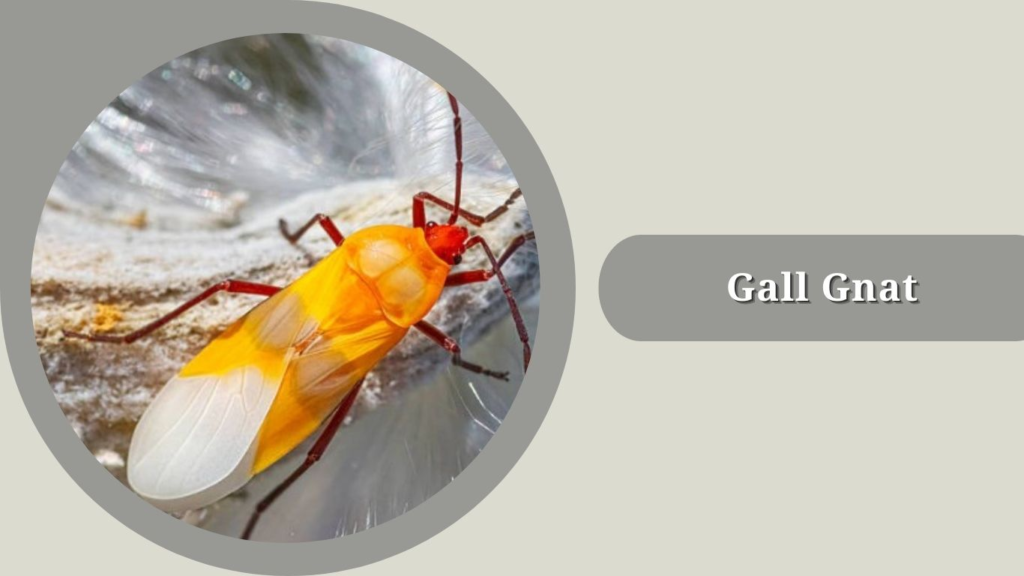
Gall gnats, also known as gall midges, are tiny delicate flies best known for their larvae, which cause abnormal plant growths called “galls.” These galls form on leaves, stems, flowers, or roots and serve as both food and shelter for the developing larvae.
Identification
- Extremely small flies, usually 1–3 mm long
- Slender, fragile bodies with long legs
- Clear, narrow wings with fine veins
- Long, beaded antennae
- Often orange, brown, or black in color
Habitat
Gall gnats live wherever their host plants grow. They are found in forests, gardens, crop fields, orchards, and grasslands. Larvae develop inside plant tissues, while adults are usually seen resting on leaves, stems, and flowers near host plants.
Behaviors
Adult gall gnats are weak flyers and are usually active during calm, warm conditions. Females lay eggs on specific plant parts. The larvae then stimulate plant cells to form galls, which protect them from predators and harsh environmental conditions.
Lifecycle
Eggs are deposited on or inside plant tissue. Larvae hatch and begin feeding, triggering gall formation. After completing development, larvae pupate either inside the gall or in the soil. Adults emerge to mate, and several generations may occur each growing season.
10. Wood Gnat
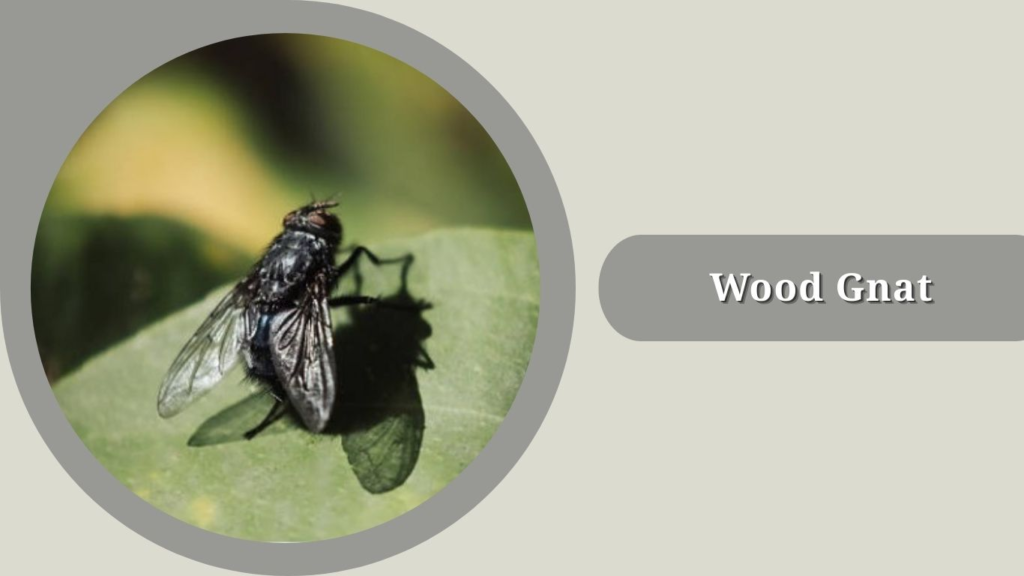
Wood gnats are small, delicate flies commonly found in forests, gardens, and shaded outdoor areas. They are harmless gnats that do not bite humans and are often seen resting on tree trunks, logs, walls, or flying slowly in woodland environments.
Identification
- Small flies, usually 2–5 mm long
- Slender bodies with long legs and long antennae
- Gray, brown, or yellowish coloration
- Clear wings held flat or slightly angled at rest
- Weak, slow, drifting flight pattern
Habitat
Wood gnats prefer damp, shaded habitats rich in decaying organic matter. They are commonly found in forests, wooded gardens, compost piles, leaf litter, rotting logs, and under bark. Larvae develop in moist soil, decaying leaves, fungi, and rotting wood.
Behaviors
Adult wood gnats are non-biting and mostly active in calm weather. They often gather on walls, tree trunks, and windows, especially in wooded or garden areas. While they do not harm people, large numbers can become a seasonal nuisance outdoors.
Lifecycle
Females lay eggs in damp organic material. Larvae feed on fungi and decomposing plant matter before pupating in the soil or rotting wood. Adults emerge after pupation and live for a short period, mainly to mate and reproduce.
11. Leaf Gnat
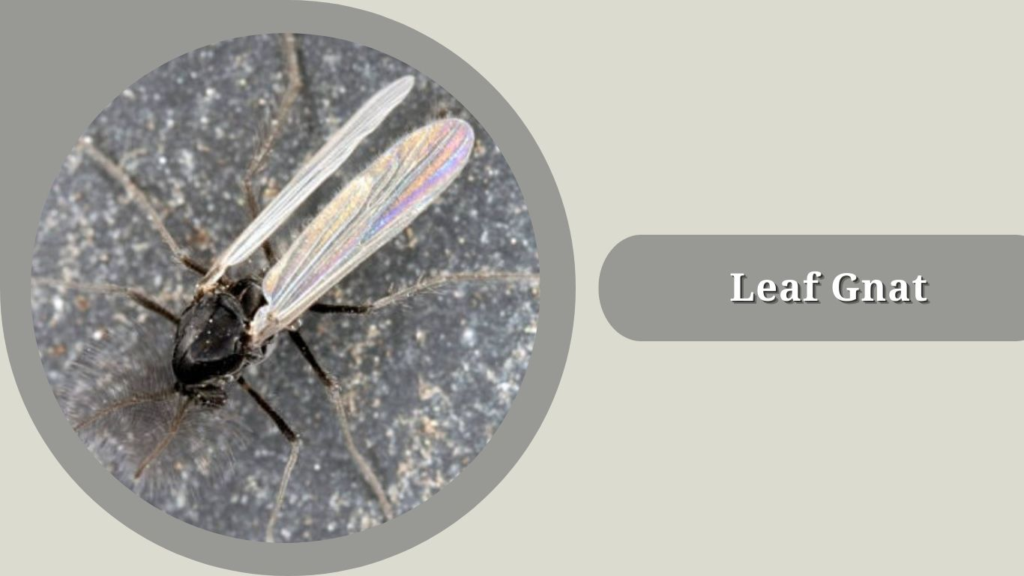
Leaf gnats are tiny, delicate flies commonly found around foliage, shrubs, and forest vegetation. They are closely associated with leaves, decaying plant matter, and moist organic environments where their larvae develop and feed.
Identification
- Very small flies, usually 1–3 mm long
- Slender bodies with long legs and fine antennae
- Pale brown, gray, or black coloration
- Clear, narrow wings with fine veins
- Often seen resting on leaves or flying weakly around plants
Habitat
Leaf gnats thrive in leafy, shaded, and humid environments. They are commonly found in forests, gardens, hedgerows, crop fields, and areas with dense vegetation. Larvae live in moist leaf litter, decaying plant material, compost, and sometimes within soft plant tissues.
Behaviors
Adult leaf gnats are non-biting and mostly active during calm, warm conditions. They stay close to plants, often hovering near leaves or settling on the undersides of foliage. Large numbers may appear after rain or during periods of high humidity.
Lifecycle
Females lay eggs on damp leaves, soil, or decomposing plant matter. The larvae feed on fungi and organic debris before pupating in the surrounding material. Adults emerge shortly after, and multiple generations can occur during warm, wet seasons.
12. Highland Gnat
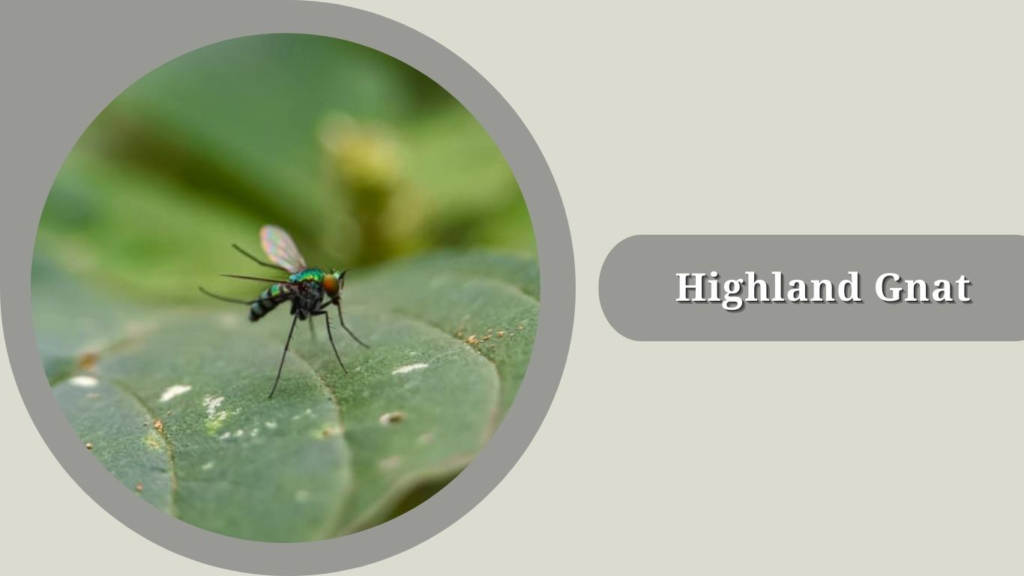
Highland gnats are small biting gnats commonly associated with cool, damp upland and mountainous regions. In some areas, especially in parts of northern Europe, they are infamous for forming dense swarms and delivering irritating bites.
Identification
- Very small flies, about 1–3 mm long
- Dark gray to black bodies
- Slender legs and compact body shape
- Clear, narrow wings
- Females equipped with biting mouthparts
Habitat
Highland gnats prefer cool, moist environments. They are commonly found in highlands, moorlands, forests, peat bogs, and grassy upland areas. Larvae develop in wet soil, moss, leaf litter, and areas with consistently high moisture.
Behaviors
Female highland gnats feed on blood and are most active during calm, cloudy, and humid weather. They often swarm around people and animals, especially near the head and exposed skin. Their bites can cause itching, redness, and discomfort.
Lifecycle
Eggs are laid in damp soil or moss. Larvae feed on microorganisms and organic material before pupating. Adults emerge seasonally, often in large numbers, and usually live only long enough to reproduce.
FAQs
What is the main difference between gnats and mosquitoes?
Gnats are generally smaller and more delicate than mosquitoes, with many species that do not bite at all. Mosquitoes are specialized blood feeders, while most gnats feed on plant material, fungi, or organic debris. Only certain gnats, like biting midges and buffalo gnats, bite humans.
Are all gnats harmful to humans?
No, most gnats are harmless nuisance insects that do not bite or transmit disease. Fungus gnats, drain gnats, and non-biting midges mainly cause annoyance indoors or outdoors. Only specific types, such as biting midges, sand gnats, and buffalo gnats, are known for painful bites.
Where do gnats usually breed?
Gnats typically breed in moist environments. Common breeding sites include damp soil, overwatered houseplants, rotting leaves, compost, drains, wetlands, and the edges of lakes or streams. Moisture and organic matter are the most important factors for gnat reproduction and survival.
Why do gnats swarm around faces and lights?
Gnats are attracted to moisture, carbon dioxide, body heat, and light. Sweat, tears, and breath draw them toward faces, while outdoor lights attract large numbers at night. Swarming behavior is also linked to mating, especially in non-biting midges and similar species.
How can gnat infestations be reduced naturally?
Reducing moisture is the most effective natural control. Allowing soil to dry between watering, cleaning drains, removing decaying organic matter, and improving air circulation helps disrupt breeding. Sticky traps, vinegar traps, and biological controls like beneficial nematodes can also lower gnat populations.
