
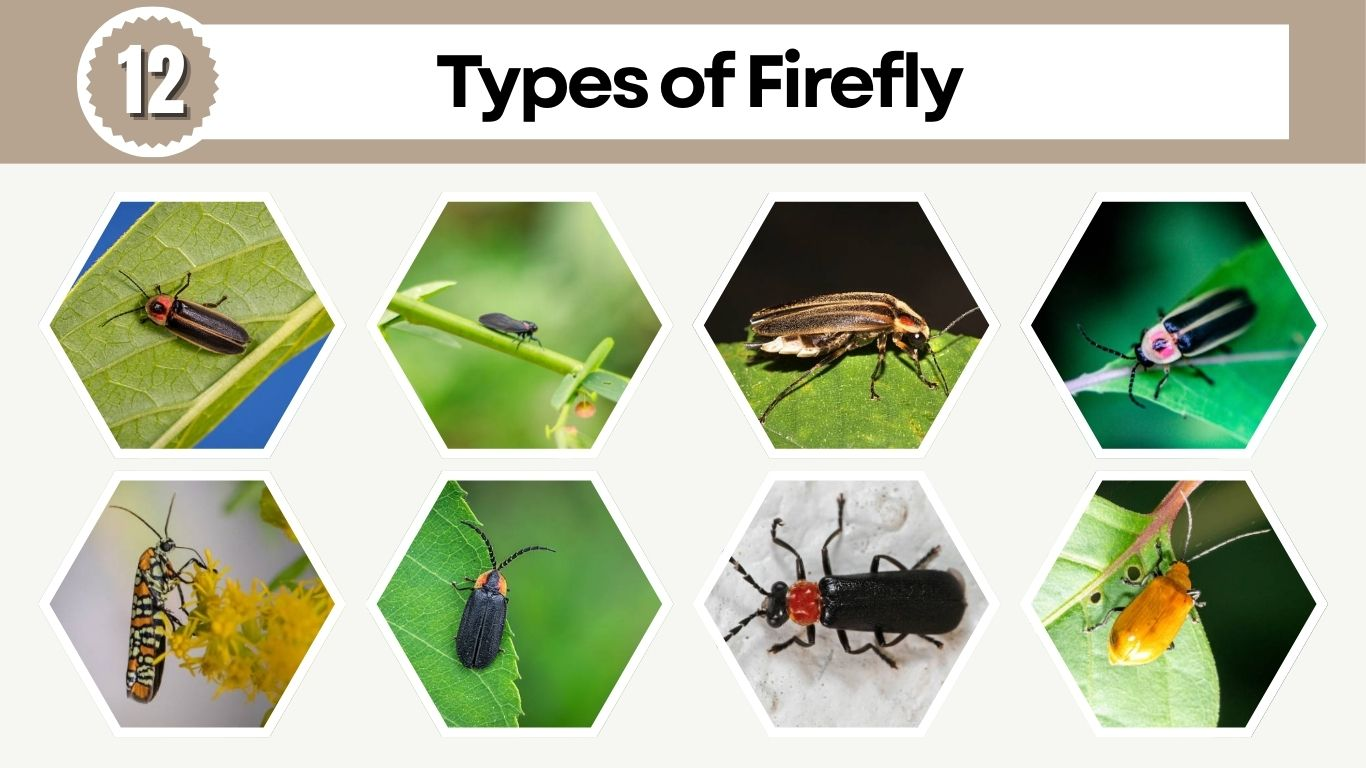
Fireflies are fascinating bioluminescent insects best known for lighting up warm evenings with their natural glow. Found in forests, fields, wetlands, and even backyards, each firefly species uses light in a unique way to communicate, attract mates, or defend itself. While many people are familiar with their flashing displays, few know how diverse fireflies truly are. This guide explores 12 common types of fireflies, highlighting their identification, habitats, behavior, and life cycles in a clear and easy-to-follow format.
1. Common Eastern Firefly
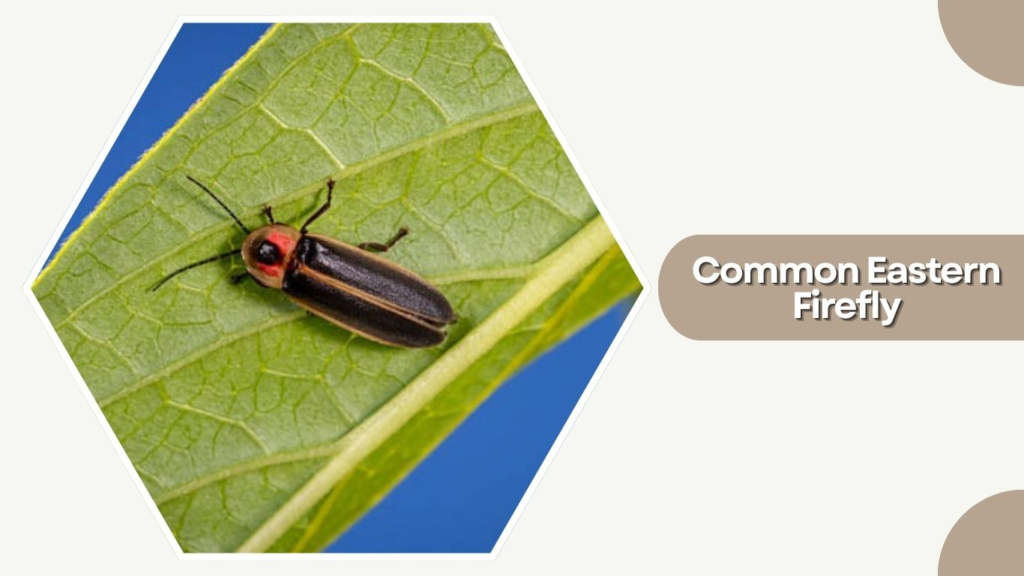
The Common Eastern Firefly is the most familiar firefly species in North America and is often seen lighting up summer evenings. Known for its soft yellow-green glow, this species is especially active during warm, humid nights and is a favorite among backyard observers.
Identification
- Medium-sized beetle with a soft, elongated body
- Brown to black wing covers with pale edges
- Yellow-green light produced from the lower abdomen
- Males flash while flying; females respond from vegetation
Habitat
This firefly is commonly found in grassy fields, gardens, meadows, forest edges, and suburban yards. It prefers moist environments with tall grass or low plants where larvae can develop safely.
Behavior
Males fly slowly while producing rhythmic flashes to attract females. Each flash pattern is species-specific, helping individuals find the correct mates during twilight hours.
Life Cycle
Most of the firefly’s life is spent in the larval stage, where it lives on or below the ground feeding on small invertebrates. Adults emerge in early summer, focusing mainly on mating before their short lifespan ends.
2. Big Dipper Firefly
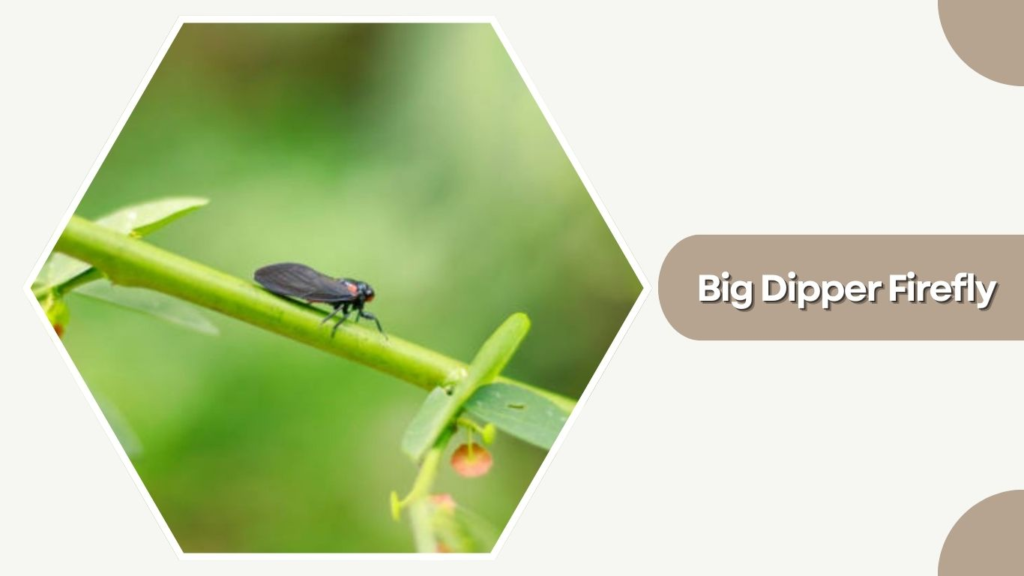
The Big Dipper Firefly is well known for its slow, looping flight pattern that resembles a gentle arc in the air. Its glowing displays are a common sight on warm summer nights, making it one of the most recognizable fireflies in its range.
Identification
- Elongated, soft-bodied beetle
- Dark brown to black wing covers
- Bright yellow-green light emitted from the abdomen
- Distinctive slow, dipping flight while flashing
Habitat
This species is typically found in open grassy areas such as meadows, fields, lawns, and forest clearings. It favors moist environments that support larval development.
Behavior
Males produce long, glowing flashes while flying in a curved pattern to attract females. Females usually remain perched on vegetation and respond with short flashes.
Life Cycle
Larvae live in soil and leaf litter, feeding on worms, snails, and other small invertebrates. After pupation, adults emerge in early to mid-summer and live only a few weeks.
3. Blue Ghost Firefly
The Blue Ghost Firefly is a rare and enchanting species best known for its continuous blue-white glow rather than quick flashes. Its mysterious light display makes it one of the most unusual and sought-after fireflies by nature enthusiasts.
Identification
- Small to medium-sized firefly
- Dark brown or black body coloration
- Emits a steady blue-white glow instead of flashes
- Light is softer and more prolonged than other species
Habitat
This species is primarily found in dense, mature forests with high humidity. It prefers wooded slopes and areas with rich leaf litter where larvae can thrive undisturbed.
Behavior
Male Blue Ghost Fireflies glow continuously while flying low to the ground to attract females. Females typically remain stationary and respond faintly from vegetation or the forest floor.
Life Cycle
Larvae develop in moist soil and leaf litter, feeding on small invertebrates. The larval stage lasts much longer than the adult stage, while adults are active only for a short period in early summer.
4. Photuris Firefly
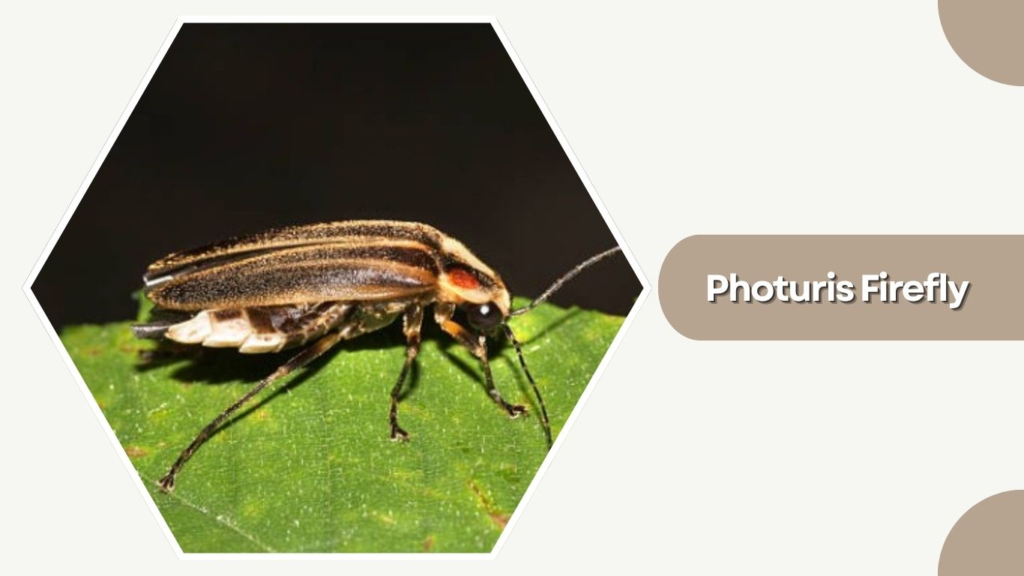
The Photuris Firefly is notable for its advanced light signaling and deceptive behavior. Unlike many other fireflies, this species is both a skilled flasher and an active predator, using light patterns for more than just mating.
Identification
- Medium-sized body with dark brown to black coloring
- Yellowish or pale markings along the edges of the wings
- Produces sharp, quick flashes of yellow-green light
- Females are slightly larger than males
Habitat
Photuris Fireflies are commonly found in moist habitats such as wetlands, marshes, forest edges, and grassy fields. They prefer areas with abundant insect life and vegetation.
Behavior
This species is famous for mimicking the flash patterns of other firefly species to lure prey. Males use species-specific flashes to find mates, while females may imitate other signals to capture unsuspecting fireflies.
Life Cycle
Larvae live in soil or leaf litter and feed on small invertebrates. After pupation, adults emerge in summer and spend their short adult lives feeding, mating, and displaying complex light signals.
5. Pennsylvania Firefly
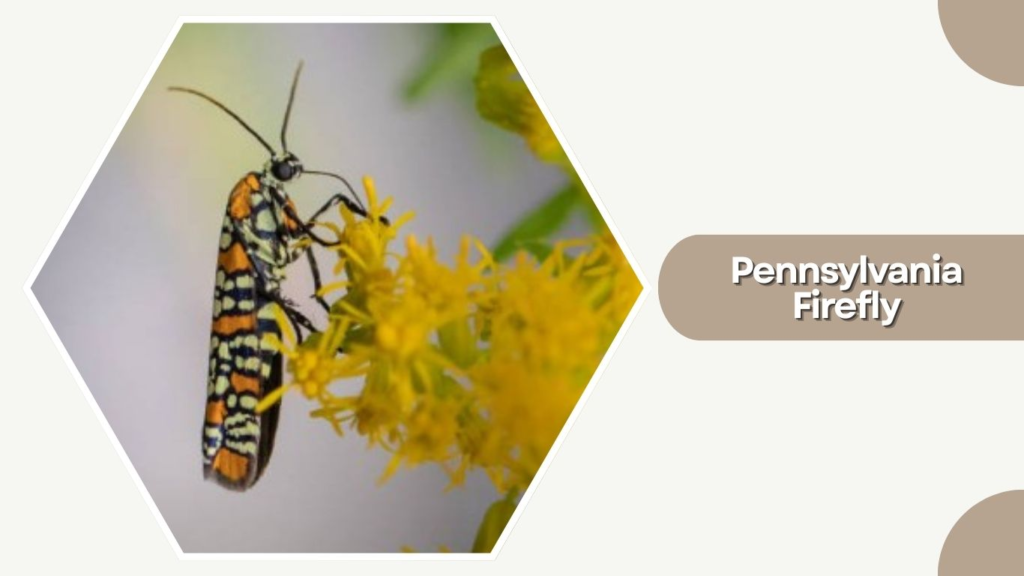
The Pennsylvania Firefly is one of the most scientifically significant fireflies, as it was the first species whose light-producing chemistry was studied in detail. Its familiar glow is a classic feature of summer nights in the northeastern United States.
Identification
- Medium-sized firefly with an elongated body
- Dark brown or black wing covers
- Yellow-green light emitted from the abdomen
- Males produce regular, rhythmic flashes
Habitat
This species is commonly found in fields, gardens, forest edges, and grassy yards. It prefers damp soil and areas with leaf litter that support larval development.
Behavior
Pennsylvania Fireflies are active shortly after sunset. Males flash while flying to attract females, who usually respond from low vegetation with brief flashes.
Life Cycle
Larvae live underground for most of the year, feeding on snails, worms, and other soft-bodied invertebrates. Adults emerge in early summer and live only a few weeks, focusing mainly on reproduction.
6. Spring Firefly
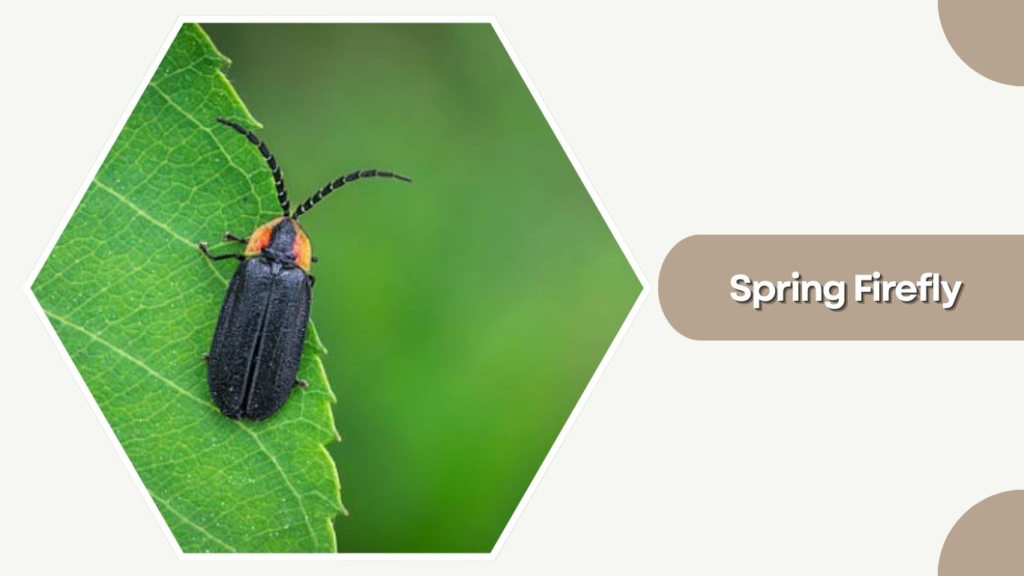
The Spring Firefly is one of the earliest firefly species to appear each year, often emerging before most other fireflies. Its activity during cooler evenings makes it a unique sight compared to the more familiar summer fireflies.
Identification
- Small to medium-sized body
- Dark brown to black coloration
- Produces soft yellow-green flashes
- Shorter flight duration than summer species
Habitat
This species is commonly found in wooded areas, forest edges, and grassy clearings. It prefers moist soil and leaf litter where larvae can develop during colder months.
Behavior
Spring Fireflies are active at dusk rather than full darkness. Males produce brief flashes while flying low, and females respond from nearby vegetation.
Life Cycle
Larvae develop in soil and leaf litter throughout winter and early spring. Adults emerge early in the season, mate quickly, and die shortly after, completing a short adult phase.
7. Winter Firefly
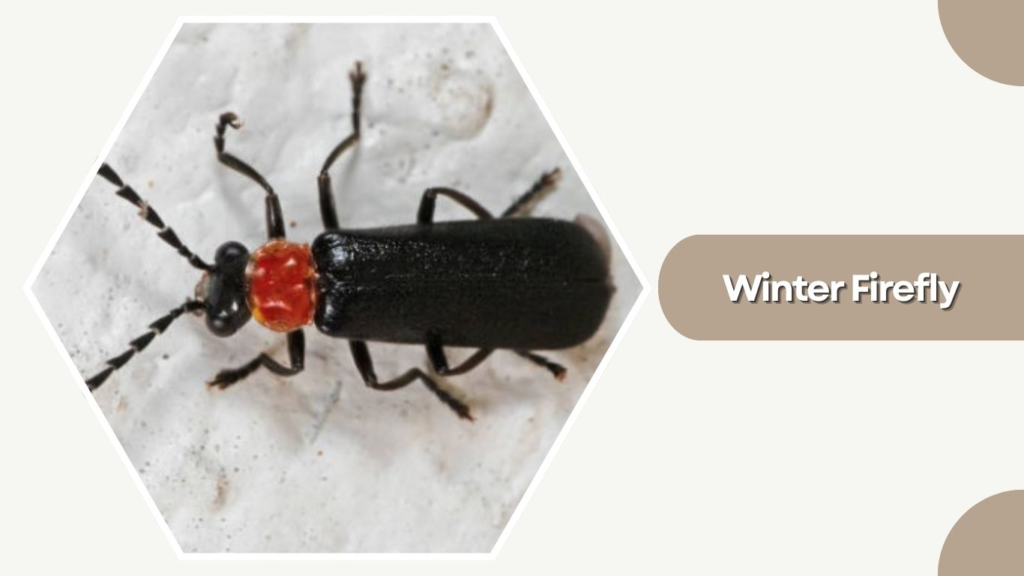
The Winter Firefly is an unusual species adapted to cooler seasons, with adults sometimes appearing when most insects are inactive. Its subtle glow and timing make it far less commonly observed than summer fireflies.
Identification
- Small, soft-bodied beetle
- Dark brown to black coloration
- Emits faint yellow-green light
- Short wings with limited flight ability
Habitat
This species is typically found in woodland areas, forest floors, and leaf litter. It prefers moist, sheltered environments that protect it from extreme cold.
Behavior
Winter Fireflies are slow-moving and often remain close to the ground. Light displays are weaker and less frequent, likely due to lower temperatures and reduced activity levels.
Life Cycle
Larvae develop over an extended period, often lasting more than a year. Adults emerge during cooler months, reproduce, and complete their life cycle with minimal above-ground activity.
8. Chinese Firefly
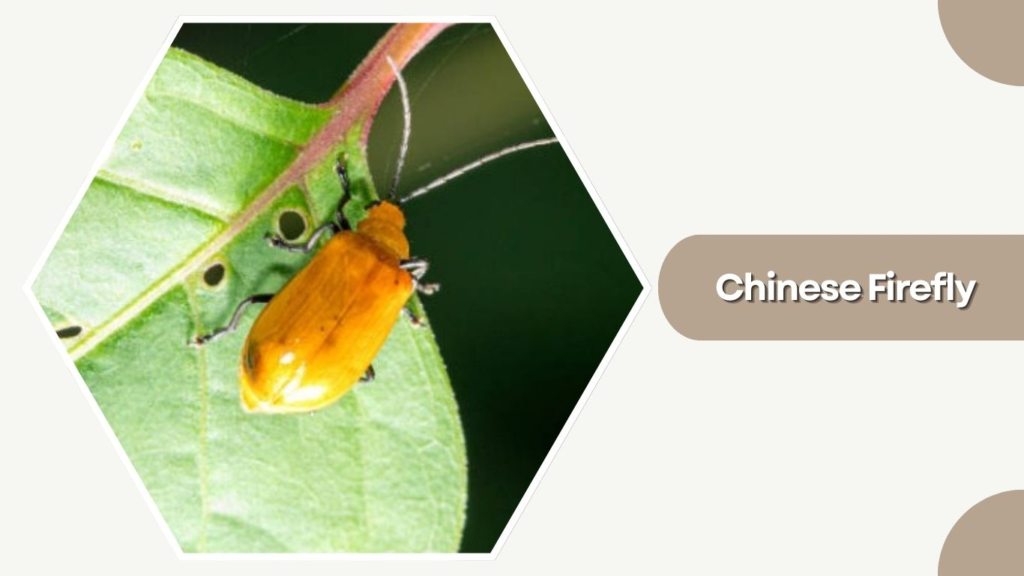
The Chinese Firefly is widely known for its cultural significance and its use in scientific studies related to bioluminescence. It produces a steady, bright glow and is often associated with wetlands and rice-growing regions.
Identification
- Medium-sized firefly with a soft, elongated body
- Dark brown or black wing covers
- Bright yellow to greenish light from the abdomen
- Glow appears steadier than rapid flashing species
Habitat
This species is commonly found near ponds, wetlands, rice fields, and slow-moving freshwater bodies. It prefers humid environments with abundant vegetation.
Behavior
Chinese Fireflies are most active at night, producing steady glows or slow flashes to communicate. They are less erratic fliers and often remain close to vegetation near water.
Life Cycle
Larvae develop in moist soil or shallow water, feeding on small aquatic and semi-aquatic organisms. Adults emerge during warm seasons and focus on mating before their short lifespan ends.
9. Synchronous Firefly
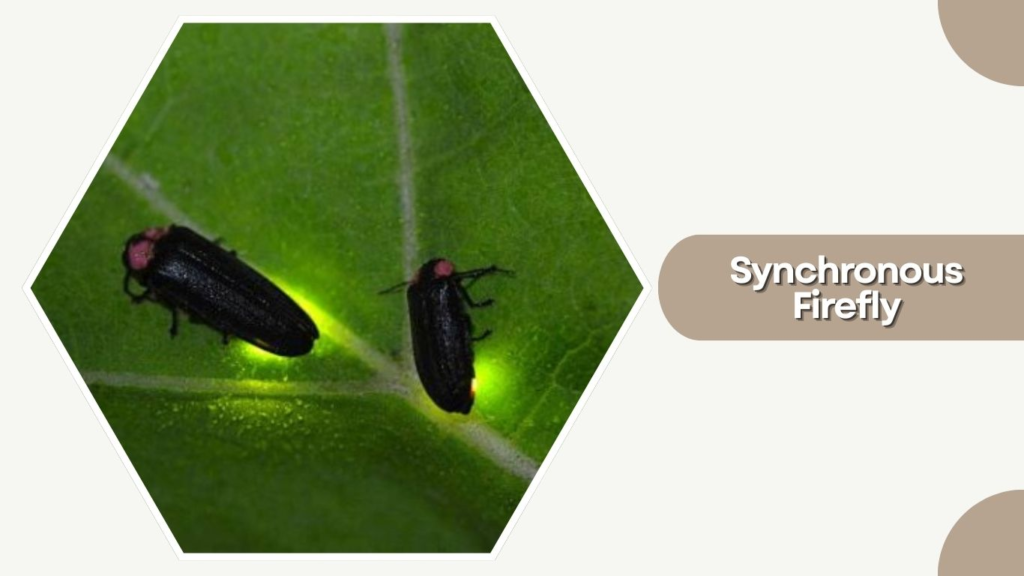
The Synchronous Firefly is famous for its rare and mesmerizing behavior, where large groups flash their lights in perfect unison. This natural spectacle attracts researchers and visitors alike and occurs only in specific regions under ideal conditions.
Identification
- Medium-sized firefly with elongated body
- Dark brown to black wing covers
- Produces bright yellow-green light
- Flashes occur simultaneously in groups
Habitat
This species is typically found in moist forests, river valleys, and mountainous regions. It favors areas with high humidity, dense vegetation, and minimal artificial light.
Behavior
Synchronous Fireflies coordinate their flashing patterns with nearby individuals, creating waves of light across the landscape. This synchronized display is primarily used for mating communication.
Life Cycle
Larvae live in moist soil and leaf litter, feeding on small invertebrates. Development can take several months to over a year before adults emerge to participate in synchronized mating displays.
10. Luciola Firefly
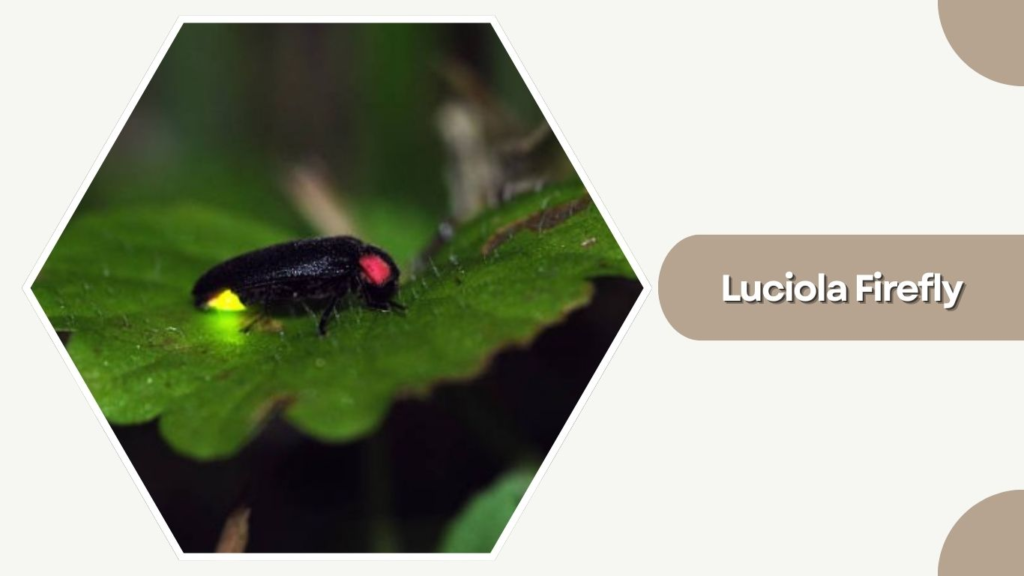
The Luciola Firefly is a well-known genus-based firefly type, especially common in parts of Asia. It is admired for its bright glow and frequent appearance near water, making it one of the most easily observed fireflies in its range.
Identification
- Medium-sized body with a soft, elongated shape
- Dark brown or black wing covers
- Bright yellow-green light from the lower abdomen
- Males usually brighter than females
Habitat
This firefly is commonly found near rivers, ponds, wetlands, and rice paddies. It prefers clean, humid environments with plenty of low vegetation.
Behavior
Luciola Fireflies are active after sunset and produce rhythmic flashes while flying slowly. Their light signals are used mainly for mate attraction and species recognition.
Life Cycle
Larvae often develop in moist soil or shallow water, feeding on small invertebrates. Adults emerge during warm months and live briefly, focusing on mating and reproduction.
11. Aquatic Firefly
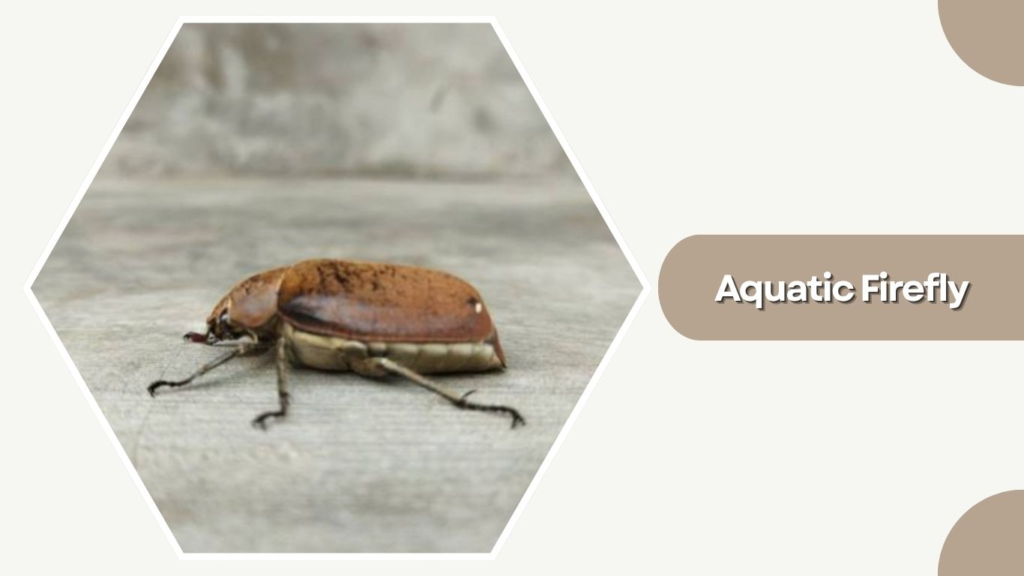
The Aquatic Firefly is unique among fireflies because its larvae develop in or near water rather than entirely on land. This adaptation allows it to thrive in wet environments where many other firefly species cannot survive.
Identification
- Medium-sized firefly with soft-bodied structure
- Dark brown to black wing covers
- Yellow-green bioluminescent glow
- Larvae are often aquatic or semi-aquatic
Habitat
This species is found near streams, ponds, wetlands, and marshes. It requires clean, oxygen-rich water for larval development and surrounding vegetation for adult activity.
Behavior
Adults are typically active at night, producing gentle flashes while flying low over water or nearby plants. Larvae may also glow faintly as a defensive warning.
Life Cycle
Larvae live in aquatic or semi-aquatic environments, feeding on small invertebrates. After pupation, adults emerge and spend a short time reproducing before completing their life cycle.
12. Railroad Worm Firefly
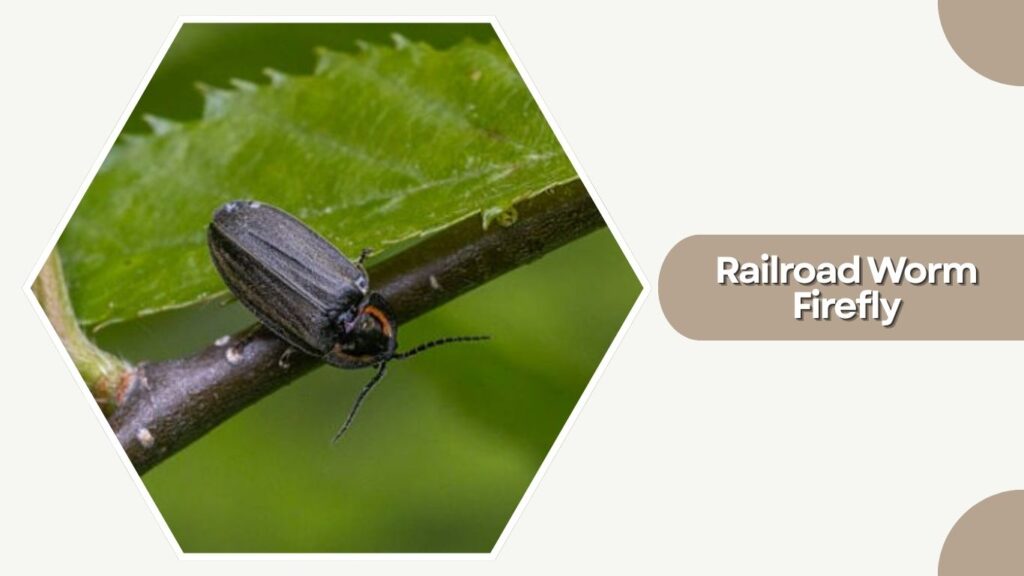
The Railroad Worm Firefly is an unusual and fascinating species, easily recognized by its multiple glowing segments. Unlike typical fireflies, both the larvae and adult females glow brightly, creating a striking visual effect.
Identification
- Long, flattened body with multiple glowing segments
- Red lights on the head and greenish lights along the body
- Dark brown or black body coloration
- Adult females are wingless and larva-like
Habitat
This species is commonly found in forests, grasslands, and moist soil environments. It prefers areas with loose soil, leaf litter, and minimal disturbance.
Behavior
Railroad Worm Fireflies use their glowing segments primarily for defense and communication. Adult males fly, while females remain ground-dwelling and highly luminous.
Life Cycle
Larvae live in soil and feed on small invertebrates. Females retain larval characteristics into adulthood, while males undergo full metamorphosis, completing a unique life cycle among fireflies.
FAQs
What makes fireflies produce light?
Fireflies produce light through a chemical reaction in their abdomen involving luciferin, oxygen, and an enzyme called luciferase. This process creates bioluminescence with very little heat.
Do all fireflies flash their lights?
No, not all fireflies flash. Some species produce steady glows instead of flashes, and a few species rarely use light at all for communication.
Are fireflies harmful to humans?
Fireflies are harmless to humans. They do not bite or sting, and their light is used only for communication, defense, and mating.
Where do firefly larvae live?
Most firefly larvae live in soil, leaf litter, or moist ground, while some species have aquatic or semi-aquatic larvae that develop near water.
Why are fireflies disappearing in some areas?
Firefly populations are declining due to habitat loss, pesticide use, light pollution, and reduced moisture levels, all of which disrupt their life cycle and mating signals.
