

Fire ants are aggressive, stinging insects known for their painful venom, rapid colony expansion, and ability to thrive in warm climates. With dozens of species found worldwide, each varies in color, size, behavior, and habitat. This guide highlights 26 different fire ant species, providing identification clues, nesting habits, behavior patterns, and dietary details to help you recognize and understand these impactful and often challenging ants.
1. Solenopsis invicta
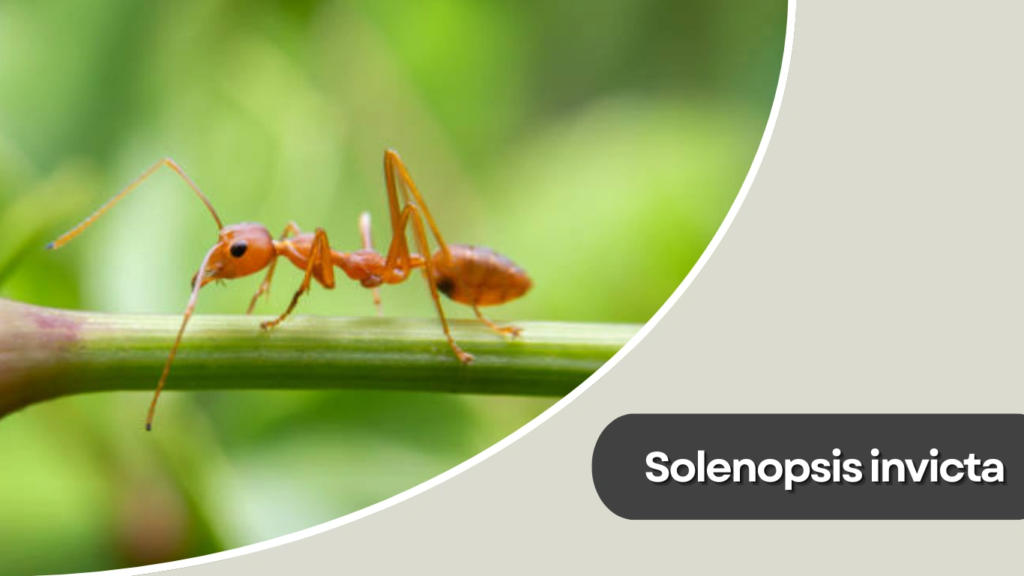
The red imported fire ant (Solenopsis invicta) is one of the most aggressive and widely known fire ant species. Native to South America but now established in many regions worldwide, it is recognized for its painful stings, rapid colony growth, and ability to thrive in disturbed habitats.
Identification
- Small workers measuring 2–6 mm
- Reddish-brown body with a darker abdomen
- Polymorphic workers with varying sizes
- Two-segmented waist with a smooth, shiny appearance
- Mandibles equipped with strong biting capability
Habitat
Solenopsis invicta constructs large soil mounds in open, sunny areas such as lawns, pastures, agricultural fields, and roadsides. They prefer warm climates and moist soil but can adapt to a variety of environments, including urban landscapes. Colonies often relocate after heavy rains or disturbances.
Behaviors
This species is highly aggressive and responds rapidly to disturbances. Workers swarm intruders and deliver painful stings that can cause allergic reactions. Colonies may be monogyne (single queen) or polygyne (multiple queens), influencing colony size and territorial behavior. They often outcompete native ants.
Diet
Their diet includes insects, earthworms, seeds, plant matter, and sugary substances. They are opportunistic omnivores and will scavenge food scraps, dead animals, and household foods. They actively hunt live prey, contributing to ecosystem disruption in invaded regions.
Lifecycle
Fire ant colonies develop from a single fertilized queen or multiple queens. Eggs hatch into larvae, then pupae, and finally adult workers or reproductive ants. Colonies grow rapidly, reaching tens of thousands of workers. Nuptial flights occur seasonally, where winged males and females mate and establish new colonies.
2. Solenopsis richteri
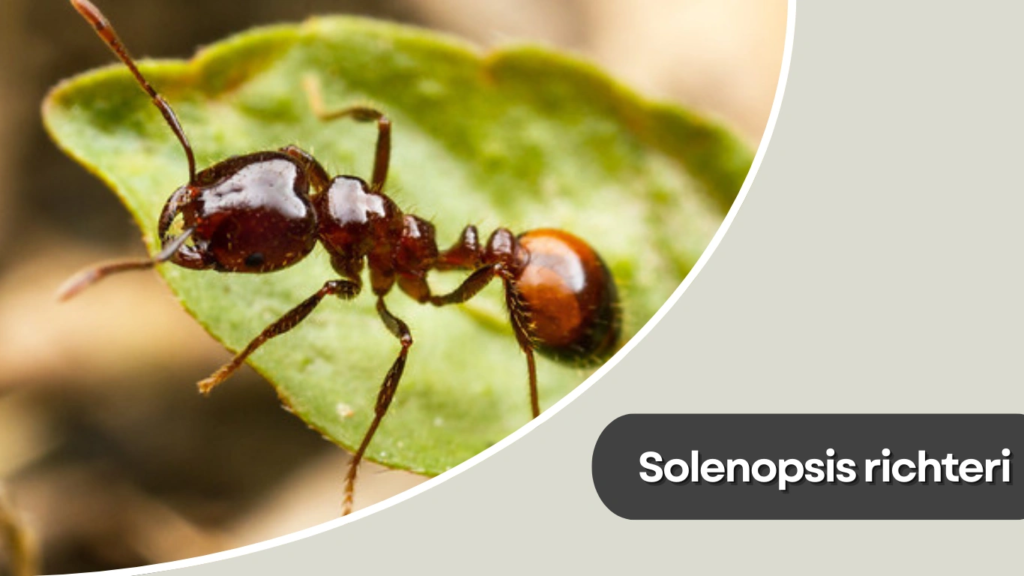
The black imported fire ant (Solenopsis richteri) is closely related to the red imported fire ant but is darker in color and slightly less aggressive. Native to South America, it has established populations in parts of the southern United States and is recognized for its painful sting and competitive nature.
Identification
- Workers measure 2–6 mm
- Dark brown to nearly black body
- Slight reddish tint sometimes visible on the thorax
- Polymorphic workers with noticeable size variation
- Smooth, shiny body with two-segmented waist
Habitat
Solenopsis richteri prefers open, sunny habitats such as fields, pastures, lawns, and roadsides. It constructs soil mounds, often slightly smaller and firmer than those of S. invicta. The species thrives in cooler climates than the red imported fire ant and may hybridize where ranges overlap.
Behaviors
These ants exhibit aggressive defensive behavior but generally respond slightly slower than S. invicta. Colonies may be monogyne or polygyne, influencing territory size and population density. Workers swarm quickly when disturbed, using coordinated attacks and repeated stings to repel threats.
Diet
Their diet consists of insects, seeds, plant material, sugars, and proteins. They actively hunt small invertebrates and scavenge available food sources. Like other fire ants, they tend honeydew-producing insects such as aphids for a steady carbohydrate supply.
Lifecycle
Colonies develop from one or multiple queens. Eggs hatch into larvae, then pupae, and finally adult workers or reproductive forms. Nuptial flights occur seasonally, allowing new colonies to spread. Colony growth can be rapid, especially in favorable climates with abundant food.
3. Solenopsis geminata
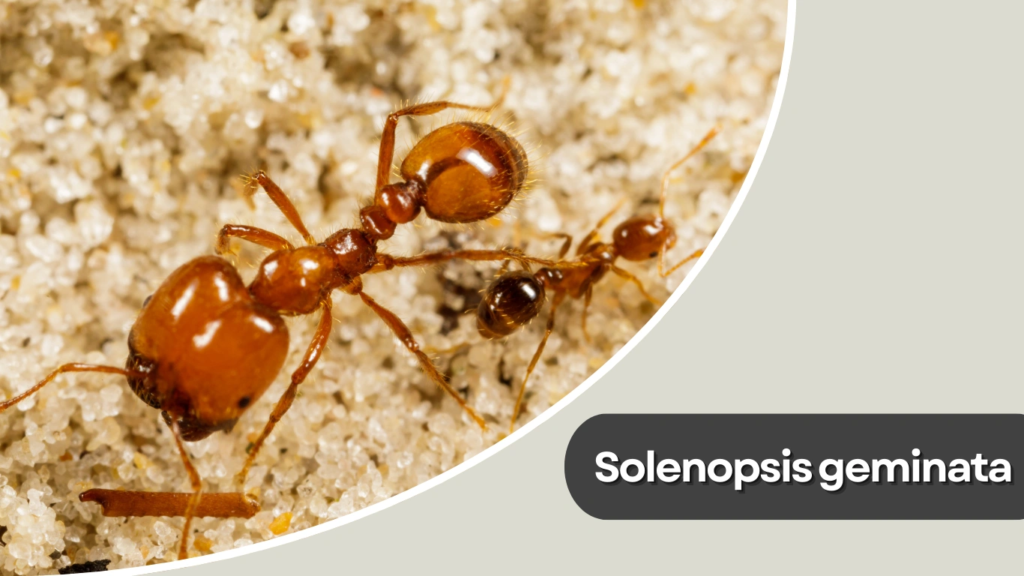
The tropical fire ant (Solenopsis geminata) is a widespread and highly adaptable fire ant species found across tropical and subtropical regions. Known for its reddish coloration and large-headed major workers, it thrives in disturbed habitats and often becomes a nuisance around homes and farms.
Identification
- Workers range from 2–6 mm
- Reddish to dark brown body
- Major workers have unusually large, square-shaped heads
- Polymorphic caste with clear size differentiation
- Shiny body with a two-segmented waist
Habitat
Solenopsis geminata prefers open, sunny habitats such as fields, farmlands, lawns, and roadsides. It constructs loose soil mounds, often with multiple entrances. This species adapts well to dry, sandy soils but also thrives in humid tropical environments. It frequently colonizes disturbed sites and agricultural land.
Behaviors
This species is aggressive when disturbed, though generally less so than S. invicta. Colonies grow quickly and may form multiple satellite nests. Workers forage both day and night, depending on temperature. Major workers with large heads assist in seed processing—a unique trait among fire ants.
Diet
Its diet includes seeds, insects, plant matter, sugars, and scavenged foods. Major workers specialize in cracking large seeds, while smaller workers hunt insects and collect honeydew. Indoors, they may target sweets, oils, and proteins.
Lifecycle
Colonies begin with one or more queens following nuptial flights. Eggs develop into larvae, pupae, and then workers or reproductive ants. Colonies can reach thousands of workers and expand rapidly. Reproductive flights occur seasonally, often triggered by rain and warm temperatures.
4. Solenopsis xyloni
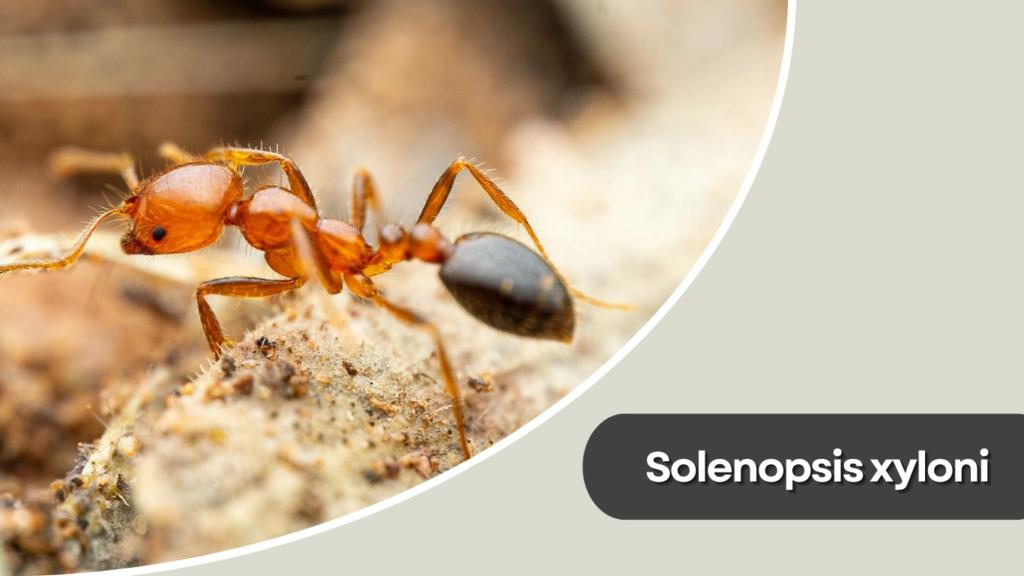
The southern fire ant (Solenopsis xyloni) is a widespread species native to the southern United States and northern Mexico. Known for its reddish-brown color and painful sting, it is commonly found in both natural and urban environments.
Identification
- Workers measure 2–5 mm
- Reddish-brown body with a darker abdomen
- Polymorphic workers with noticeable size differences
- Smooth, shiny exoskeleton
- Two-segmented waist typical of fire ants
Habitat
Solenopsis xyloni is highly adaptable and nests in soil, under logs, in leaf litter, or beneath rocks. It prefers warm climates and is common in grasslands, agricultural areas, and suburban landscapes. Mounds are often inconspicuous, blending into loose soil or debris.
Behaviors
This species is aggressive and quick to defend its nest. Workers swarm rapidly and deliver painful stings. Although similar in behavior to S. invicta, they tend to form smaller colonies. They forage in persistent trails and actively hunt small insects.
Diet
Their diet includes insects, seeds, honeydew, plant material, and various proteins. They scavenge food scraps and frequently collect sugary substances. Outdoors, they tend honeydew-producing insects on plants and shrubs.
Lifecycle
Colonies begin when queens establish new nests after nuptial flights. Eggs develop into larvae, pupae, and workers. Colonies may contain thousands of ants and expand steadily. Reproductive flights occur seasonally, influenced by temperature and rainfall.
5. Solenopsis aurea
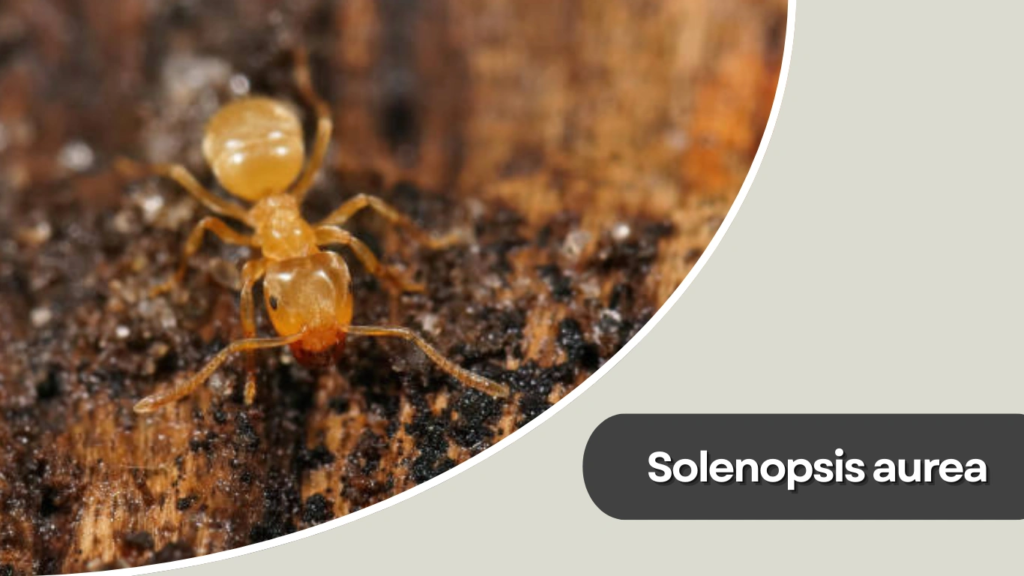
Solenopsis aurea is a golden-hued fire ant species native to the southwestern United States. It is known for its striking coloration, relatively mild aggression compared to invasive fire ants, and preference for dry, open habitats.
Identification
- Workers measure 2–5 mm
- Golden-yellow to light reddish-brown body
- Slightly darker abdomen
- Polymorphic workers with size variations
- Smooth, shiny cuticle with fine hairs
Habitat
This species thrives in arid and semi-arid regions, nesting in sandy soils, desert scrub, grasslands, and open fields. Nests are often shallow and built under rocks, logs, or loose soil. They prefer warm climates and are commonly found in dry ecosystems across the American Southwest.
Behaviors
Solenopsis aurea is moderately aggressive but less defensive than invasive species like S. invicta. Workers forage during cooler parts of the day, forming loose trails. Colonies are smaller and more dispersed, often relocating in response to temperature or moisture changes.
Diet
Their diet includes seeds, insects, plant material, nectar, and honeydew. They frequently forage for dead arthropods and may collect sugars when available. Indoors, they rarely become pests but may seek sweets or proteins during hot, dry conditions.
Lifecycle
Colonies begin with a single queen or multiple queens after nuptial flights. Eggs hatch into larvae, then pupae, and finally adult workers. Colonies grow slowly and typically remain smaller than those of more aggressive fire ant species. Reproductive flights occur seasonally, triggered by heat and rainfall.
6. Solenopsis amblychila
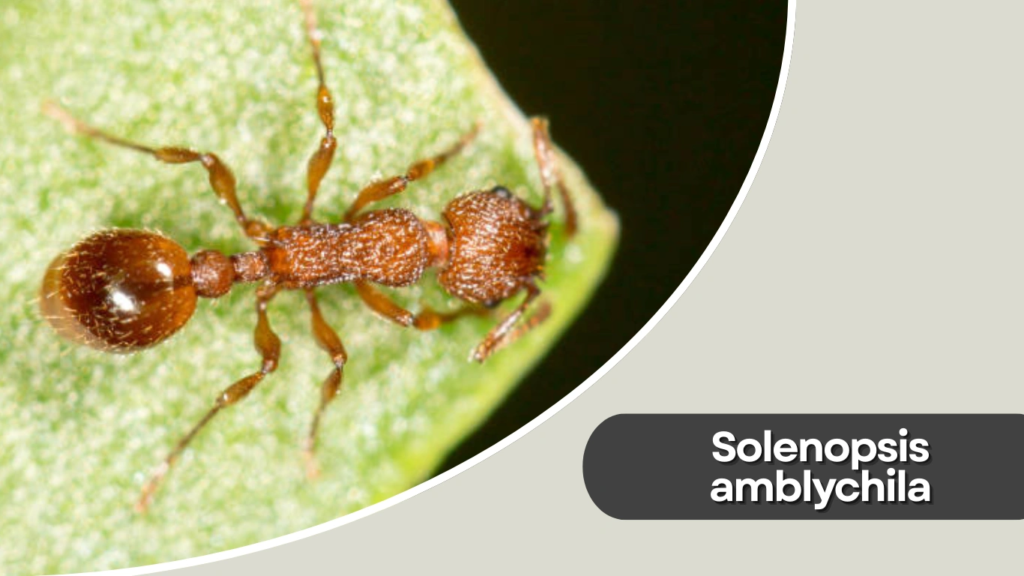
Solenopsis amblychila is a desert-adapted fire ant species native to the southwestern United States. It is known for its pale coloration, tolerance to extreme heat, and preference for sandy, arid environments.
Identification
- Workers measure 2–6 mm
- Pale yellowish to light orange body
- Darker abdomen compared to the thorax and head
- Polymorphic workers with distinct size differences
- Smooth, shiny exoskeleton typical of fire ants
Habitat
This species thrives in hot, dry regions—including deserts, scrublands, and sandy plains. Nests are usually constructed beneath rocks, within loose sandy soil, or around plant roots. It prefers open, sun-exposed areas but can also inhabit lightly vegetated zones with sparse shade.
Behaviors
Solenopsis amblychila is less aggressive than the invasive fire ant species but still capable of delivering painful stings when disturbed. Workers are active primarily during early morning and evening when temperatures are more favorable. Colonies remain relatively small and may move frequently in search of better moisture conditions.
Diet
Their diet includes seeds, small insects, nectar, and plant juices. They also scavenge arthropod remains and collect honeydew from sap-feeding insects. They are opportunistic feeders and adjust their foraging based on seasonal food availability.
Lifecycle
Colonies begin with one or several queens following nuptial flights. Eggs develop into larvae, pupae, and then adult workers. Colony expansion is slow, reflecting the harsh desert environment. Reproductive flights occur seasonally, often after rare rainfall events in desert regions.
7. Solenopsis molesta

The thief ant (Solenopsis molesta) is a tiny species known for infiltrating the nests of other ants to steal food and brood. Although grouped with fire ants, its extremely small size and unique parasitic behavior set it apart from typical mound-building fire ants.
Identification
- Workers measure 1–2 mm (very small)
- Pale yellow to light brown body
- Shiny, smooth exoskeleton
- Tiny head and slender body shape
- Two-segmented waist typical of Solenopsis species
Habitat
Solenopsis molesta nests in soil, under stones, within rotting wood, and especially near the colonies of larger ant species. Indoors, they may nest in wall voids, under floors, or near moisture sources. They prefer warm environments and often go unnoticed due to their tiny size and subtle nesting habits.
Behaviors
This species exhibits parasitic foraging behavior, often stealing food and larvae from neighboring ant colonies—hence the name “thief ant.” Workers move in narrow, inconspicuous trails and rarely become aggressive. They do not build large mounds and typically form small, scattered nests.
Diet
Their diet consists of greasy foods, proteins, dead insects, seeds, and sweets. They are notorious indoor pests because they invade kitchens and pantries to feed on oils, meats, and sugary items. They also prey on the brood of nearby ant colonies.
Lifecycle
Thief ant colonies are small, developing slowly from one or multiple queens. Eggs hatch into larvae, pupae, and then adults. Nuptial flights occur in summer, during which new queens establish additional small colonies. Their lifecycle continues year-round in warm indoor environments.
8. Solenopsis texana
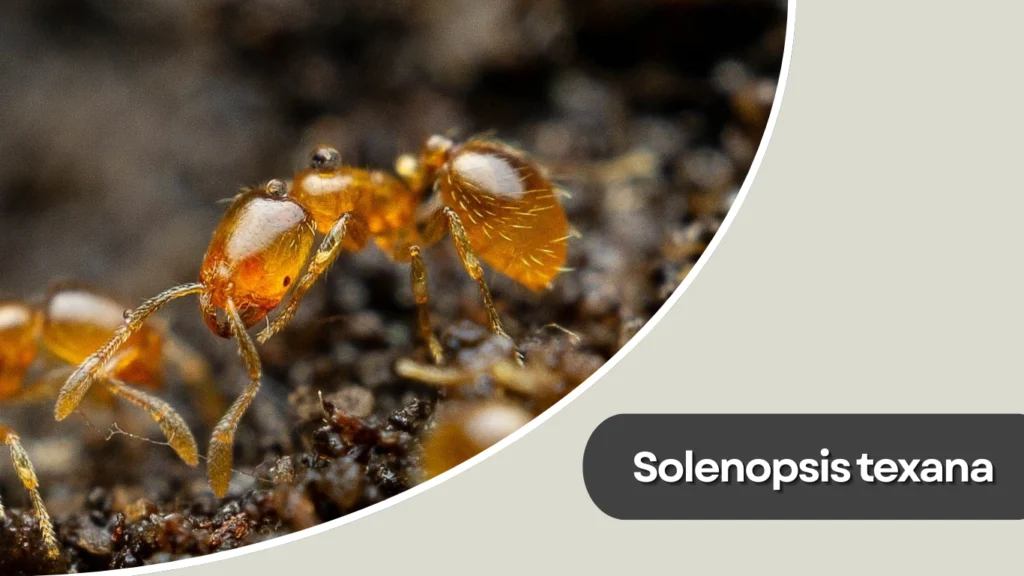
Solenopsis texana, commonly known as the Texas fire ant, is a native species found throughout the south-central United States. While less aggressive than invasive fire ants, it can still deliver painful stings and often nests in warm, open environments.
Identification
- Workers measure 2–5 mm
- Yellowish to reddish-brown body
- Slightly darker abdomen
- Polymorphic workers with moderate size variation
- Smooth, shiny exoskeleton typical of fire ants
Habitat
This species prefers open fields, prairies, pastures, and sandy soils. It builds inconspicuous nests under rocks, logs, or loose soil rather than large mounds. Near homes, it may nest in lawns, gardens, and around foundations. It thrives in warm climates and moderately dry areas.
Behaviors
Solenopsis texana is moderately aggressive and will sting when the nest is disturbed. Workers forage along narrow trails and are active during cooler morning and evening hours. Colonies tend to be smaller than those of S. invicta, and their defensive response is less intense.
Diet
Their diet includes insects, seeds, plant material, honeydew, and scavenged food items. They forage for sugary and protein-rich foods and may visit kitchen areas if they enter homes. Outdoors, they often tend aphids and other sap-feeding insects.
Lifecycle
Colonies are established by one or multiple queens after nuptial flights. Eggs develop into larvae, pupae, and then workers. Colonies grow steadily and produce winged reproductives seasonally. In warm climates, reproduction may occur multiple times per year.
9. Solenopsis pergandei
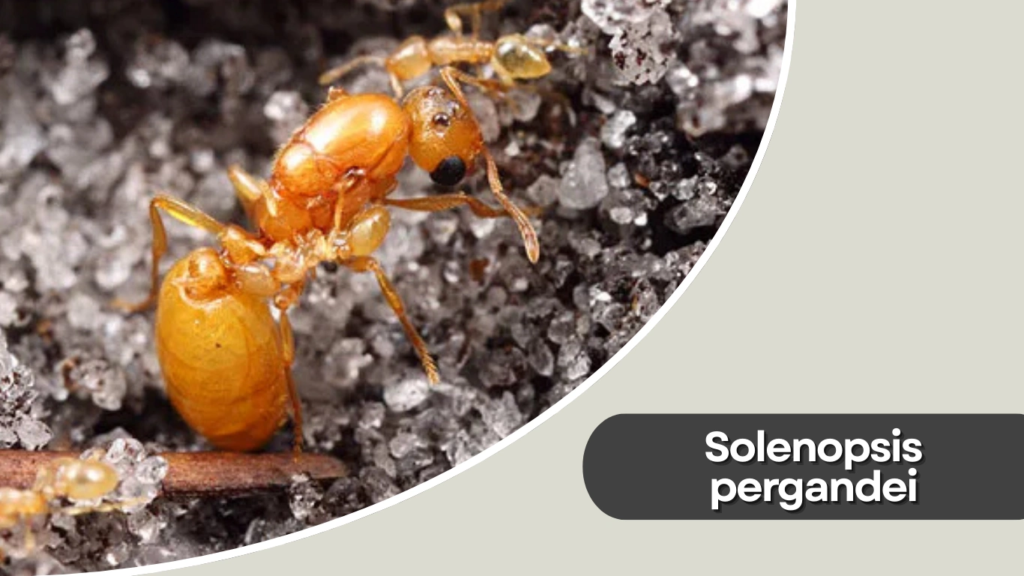
Solenopsis pergandei is a small, inconspicuous fire ant species found across the eastern and central United States. It often nests near or inside the colonies of larger ants, displaying subtle behaviors typical of the “thief ant” group.
Identification
- Workers measure 1.5–3 mm
- Pale yellow to light brown body
- Slender, delicate appearance
- Polymorphic workers with slight size variation
- Smooth, shiny cuticle with minimal body hairs
Habitat
This species nests in soil, under stones, in rotting wood, and frequently near or within the nests of other ant species. It prefers warm, dry areas such as lawns, gardens, and field edges. Indoors, it may inhabit wall voids, baseboards, and floor crevices, especially near food sources.
Behaviors
Solenopsis pergandei is known for its secretive habits. Workers avoid confrontation and often steal food or broods from other ant colonies. They form small nests and forage discreetly in narrow trails. Their defensive response is weak compared to larger fire ant species.
Diet
Their diet consists of proteins, dead insects, oily foods, honeydew, and sweets. Indoors, they target greasy or protein-rich foods such as meats, cheese, and crumbs. Outdoors, they scavenge for insects and tend honeydew-producing insects.
Lifecycle
Colonies begin with one or several queens following nuptial flights. Eggs develop into larvae, pupae, and then adult workers. Colony size is generally small, growing slowly over time. Reproductive flights occur seasonally, typically during warm weather.
10. Solenopsis thief ant group
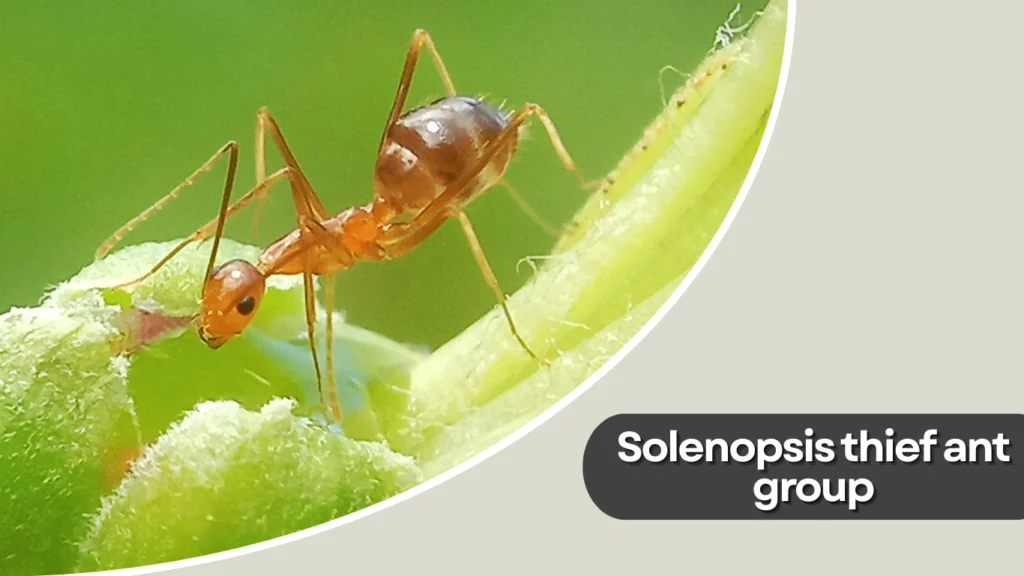
The Solenopsis “thief ant group” includes several very small, pale species known for infiltrating other ants’ nests to steal food, brood, and resources. These ants are widespread and often overlooked due to their tiny size and hidden nesting habits.
Identification
- Workers generally 1–2.5 mm (extremely small)
- Pale yellow to light brown coloration
- Smooth, shiny body with minimal hairs
- Slender build with a two-segmented waist
- Difficult to distinguish species without microscopy
Habitat
Members of the thief ant group nest in soil, beneath stones, inside wood, and near larger ant colonies where food theft is easier. Indoors, they may nest in wall voids, behind baseboards, and near warm, hidden spaces. They prefer dry environments and subtle nesting sites that allow close access to food.
Behaviors
These ants are stealthy foragers and avoid direct conflict. They infiltrate neighboring ant colonies to steal eggs, larvae, and food. Colonies remain small and scattered. They rarely build visible mounds and move in thin, barely noticeable trails.
Diet
Their diet includes proteins, oily foods, dead insects, seeds, and sweets. Indoors, they target grease, meats, pet food, and sugary materials. Outdoors, they gather honeydew and scavenge insect remains.
Lifecycle
Thief ant colonies are founded by single or multiple queens. Eggs develop through larval and pupal stages into tiny workers. Colonies grow slowly, with reproductive flights occurring during warm seasons. In heated indoor spaces, their lifecycle can continue year-round.
11. Solenopsis carolinensis
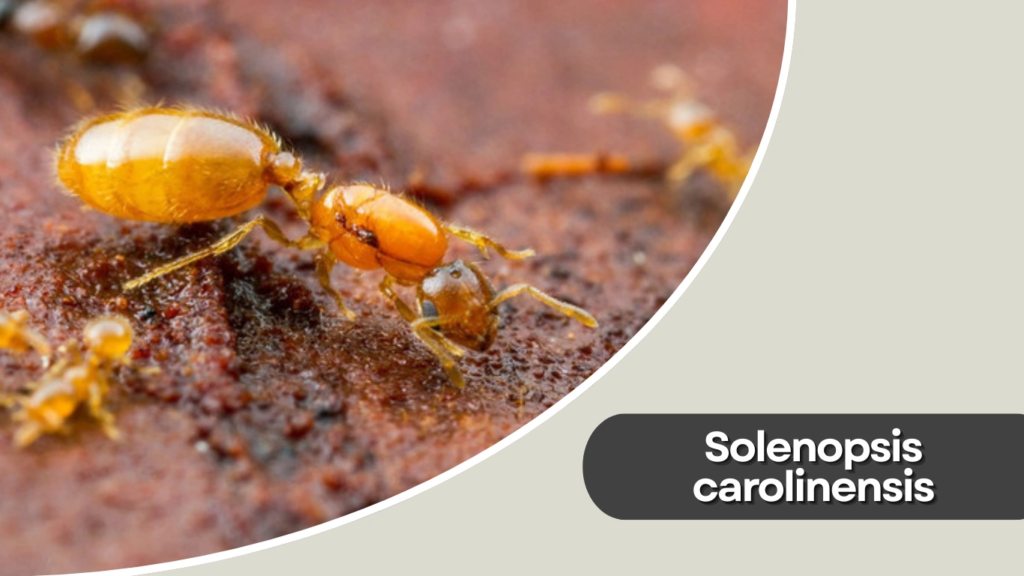
Solenopsis carolinensis is a small fire ant species commonly found in the southeastern United States. Often associated with the thief ant group, it is known for its tiny size, subtle trails, and habit of nesting close to or within other ant colonies.
Identification
- Workers measure 1.5–3 mm
- Light yellow to orange-brown coloration
- Smooth, shiny exoskeleton
- Slender body with minimal hair
- Polymorphic workers, though size variation is subtle
Habitat
This species nests in soil, leaf litter, rotting wood, or beneath rocks. It frequently establishes nests near larger ant colonies, which it exploits for food. In urban areas, it may nest inside walls, baseboards, or beneath flooring, especially in warm, dry conditions.
Behaviors
Solenopsis carolinensis is non-aggressive and avoids confrontation. Workers forage quietly, often stealing food or brood from neighboring ant nests. Colonies are small with dispersed nests. Their trails are faint and easily missed, contributing to their reputation as a hidden household pest.
Diet
Their diet consists of insects, oily foods, proteins, seeds, honeydew, and sweets. Indoors, they are attracted to grease, meats, peanut butter, and sugary crumbs. They are versatile scavengers and take advantage of any accessible food source.
Lifecycle
Colonies begin with a single queen or multiple queens after nuptial flights. Eggs develop into larvae, pupae, and eventually workers. Colonies remain small and grow slowly, producing reproductive ants seasonally. Indoors, colonies may persist for long periods due to stable temperatures.
12. Solenopsis tennesseensis
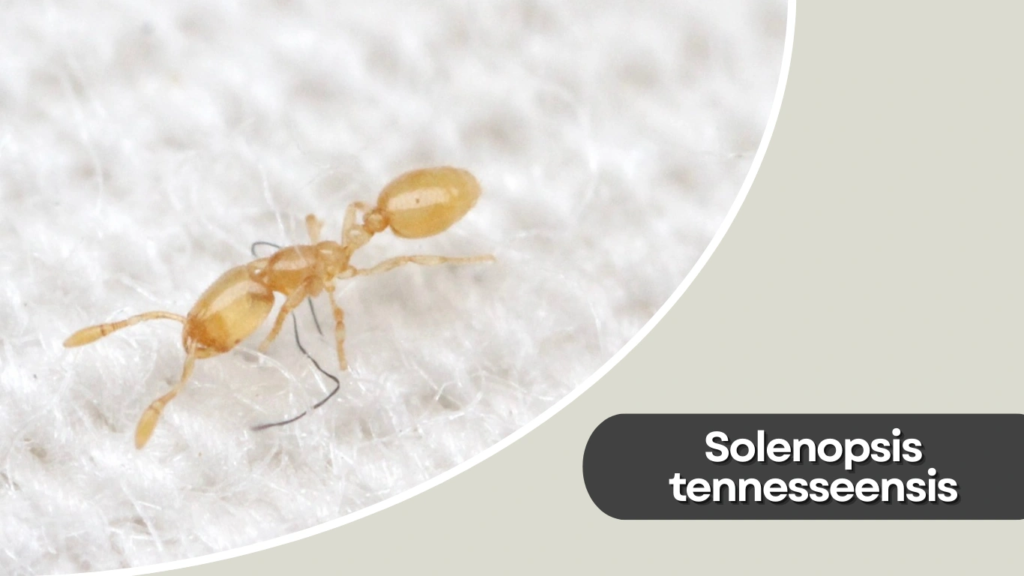
Solenopsis tennesseensis is a small, inconspicuous fire ant species found mainly in the central and southeastern United States. Like other thief ants, it often nests near larger ant colonies and is known for its secretive habits.
Identification
- Workers measure 1.5–3 mm
- Pale yellow to light brown coloration
- Smooth, shiny body with minimal hair
- Slender build with a two-segmented waist
- Subtle size variation among workers
Habitat
This species nests in soil, leaf litter, under stones, and within decomposing wood. It often establishes colonies near other ant species to steal food and larvae. In residential areas, it may enter homes through tiny cracks and nest in wall voids, baseboards, or beneath flooring.
Behaviors
Solenopsis tennesseensis is non-aggressive and avoids open foraging. Workers move in thin, discreet trails and frequently raid nearby ant colonies for brood and food. Colonies remain small and are easily overlooked unless feeding trails lead indoors.
Diet
Their diet consists of proteins, oily foods, insects, honeydew, and sweets. Indoors, they commonly target greasy foods such as meats, cheese, and oils. Outdoors, they scavenge insect remains and tend honeydew-producing insects on vegetation.
Lifecycle
Colonies begin with one or more queens following seasonal nuptial flights. Eggs develop into larvae, pupae, and adult workers. Colony growth is slow and limited in size. Winged reproductives are produced seasonally and dispersed to form new colonies.
13. Solenopsis globularia
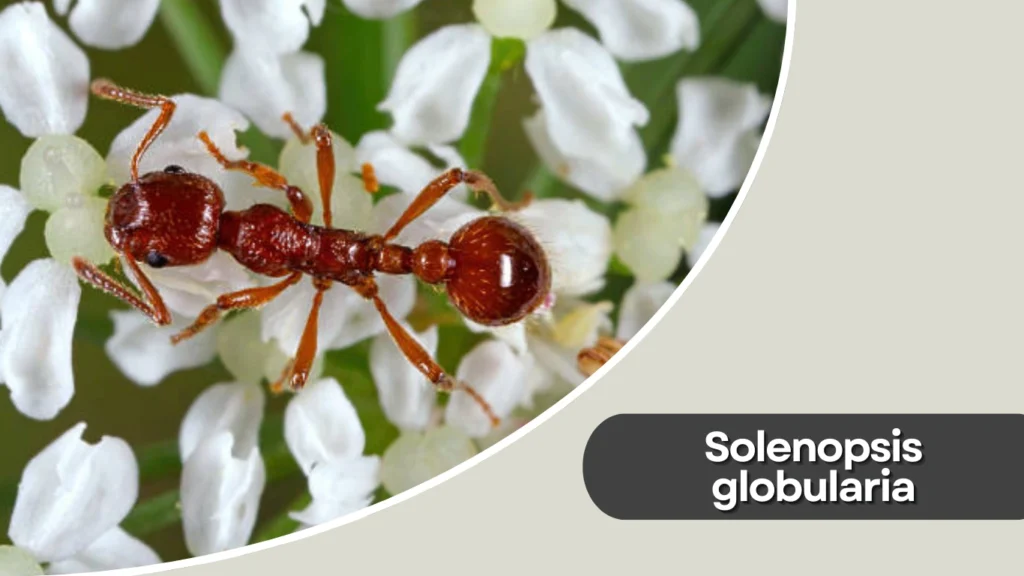
Solenopsis globularia is a small, discreet fire ant species found in the southeastern United States. Known for its tiny size and preference for moist environments, it is commonly grouped with other thief ants due to its subtle behavior.
Identification
- Workers measure 1.5–3 mm
- Yellowish to light brown coloration
- Smooth, shiny exoskeleton
- Slender body with minimal hairs
- Two-segmented waist characteristic of Solenopsis
Habitat
This species prefers moist soils in forests, fields, and shaded areas. Nests are often found under rocks, leaf litter, or decaying wood. In wet environments, they may nest near tree roots or beneath logs. While they occasionally enter homes, they are less commonly indoor pests than some related species.
Behaviors
Solenopsis globularia is non-aggressive and timid. Workers move in faint trails and often forage unnoticed. They may steal brood or food from neighboring colonies but do so discreetly. Colonies are small and rarely form prominent mounds.
Diet
Their diet includes proteins, dead insects, seeds, honeydew, and sugary substances. Indoors, they may feed on grease or sweets if they invade kitchens. Outdoors, they rely heavily on small arthropods and plant-based resources.
Lifecycle
Colonies begin with one or more queens after nuptial flights. Eggs progress through larval and pupal stages before becoming adult workers. Colonies grow slowly and remain small, producing reproductive ants seasonally in warm climates.
14. Solenopsis daguerrei
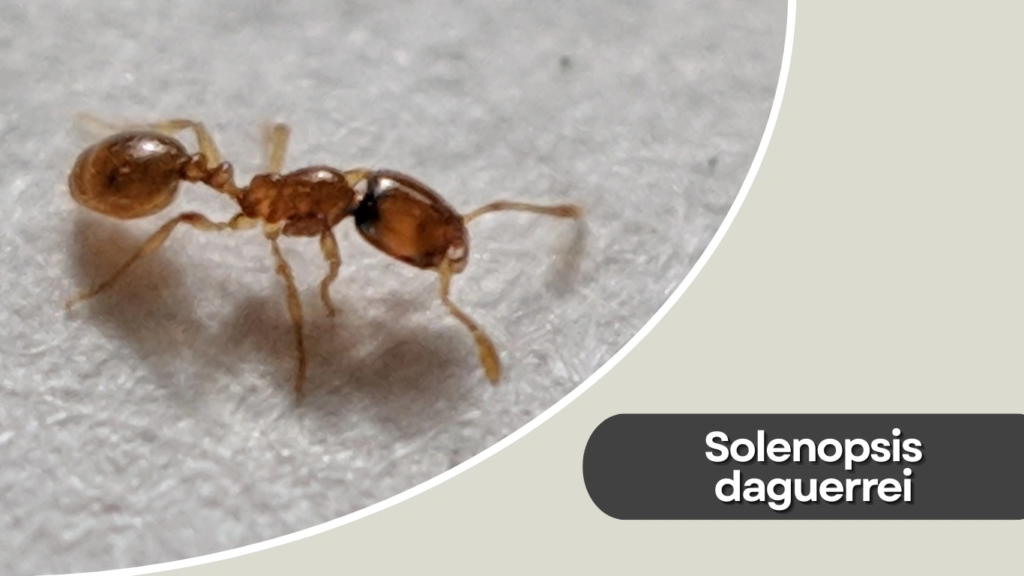
Solenopsis daguerrei is a unique parasitic fire ant species native to South America. Unlike most fire ants, it does not build its own colony; instead, it invades and depends on the colonies of other fire ant species, particularly Solenopsis invicta and Solenopsis saevissima.
Identification
- Workers are absent (workerless parasitic species)
- Queens measure about 4–6 mm
- Dark brown to black body
- Smooth, shiny exoskeleton
- Distinctive flattened, compact body shape suited for parasitism
Habitat
This species lives exclusively within the colonies of host fire ants. It does not construct its own mound or nest. Instead, queens infiltrate established fire ant colonies and rely on the host workers for protection, food, and raising their brood. Their distribution depends entirely on the availability of suitable host colonies.
Behaviors
Solenopsis daguerrei queens mimic the chemical signals of their host species, allowing them to infiltrate colonies without immediate detection. Once accepted, they replace or coexist with the host queen and exploit the host workers to raise their offspring. This parasitism weakens the host colony over time.
Diet
Since this species lacks workers, it relies fully on host fire ants for feeding. Host workers provide food through trophallaxis (liquid food exchange). Their nutritional intake depends entirely on what the host colony forages—typically insects, honeydew, seeds, and proteins.
Lifecycle
The lifecycle is closely tied to host availability. Queens enter host colonies during nuptial flight periods. After infiltration, they lay eggs, which are raised by the host workers. Because S. daguerrei has no worker caste, all development depends on the host species. Colony success varies with host strength and environmental conditions.
15. Solenopsis saevissima
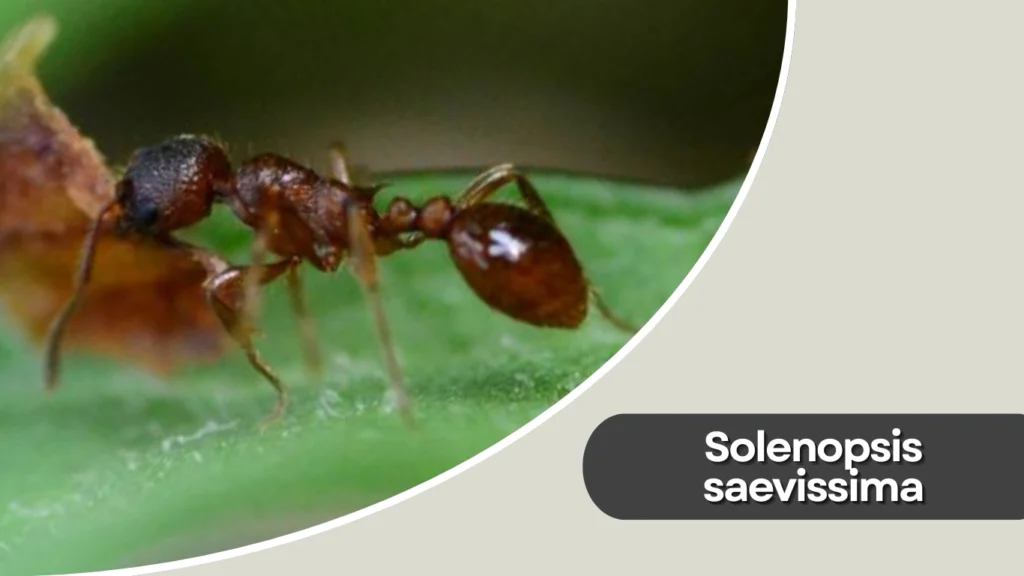
Solenopsis saevissima is a major South American fire ant species and one of the most aggressive members of the Solenopsis genus. It closely resembles the red imported fire ant and is considered part of the same complex of powerful stinging ants.
Identification
- Workers range from 2–6 mm
- Reddish-brown to dark brown body
- Polymorphic workers with strong size variation
- Smooth, shiny exoskeleton
- Distinct two-segmented waist typical of fire ants
Habitat
This species prefers warm, humid environments and nests in open fields, forest edges, pastures, and disturbed areas. It builds large soil mounds similar to those of S. invicta. Its range includes tropical and subtropical regions across South America, often forming dense populations.
Behaviors
Solenopsis saevissima is extremely aggressive and delivers painful stings when disturbed. Colonies may be monogyne or polygyne, influencing their size and spread. Workers are highly active foragers and vigorously defend both nest and food sources. Their behavior contributes significantly to their ecological dominance.
Diet
Their diet includes insects, seeds, honeydew, plant juices, and scavenged organic material. They aggressively hunt small invertebrates and tend aphids for carbohydrates. Indoors, they may target sugary foods, oils, and proteins.
Lifecycle
Colonies begin when queens establish new nests after nuptial flights. Eggs transition to larvae, pupae, and then adult workers or reproductive individuals. Colonies expand rapidly, often reaching tens of thousands of workers. Seasonal mating flights allow widespread dispersal.
16. Solenopsis megergates
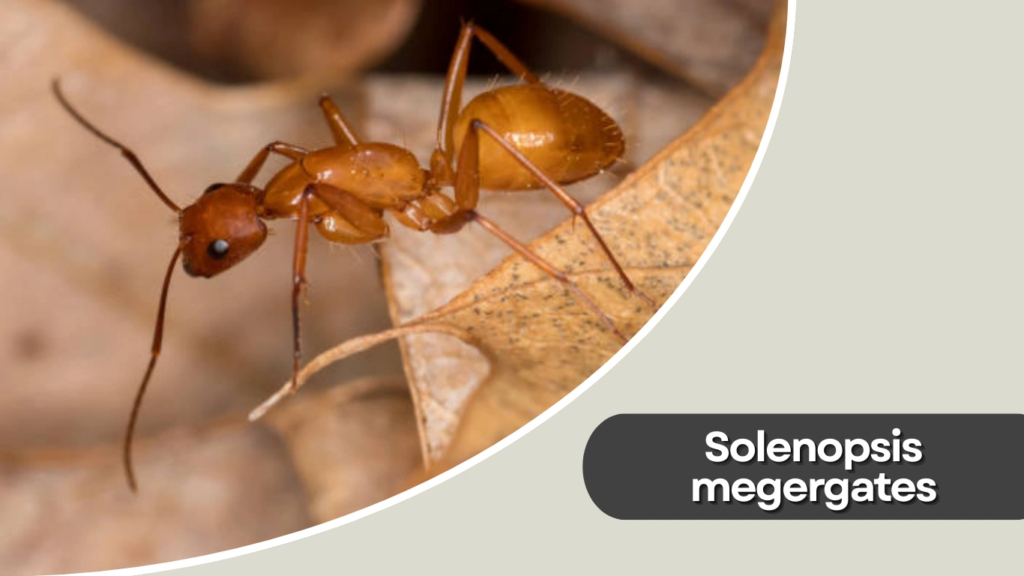
Solenopsis megergates is a rare and lesser-known fire ant species native to parts of South America. It is closely related to the Solenopsis saevissima complex and is notable for its moderate size and aggressive defensive behavior.
Identification
- Workers measure 2–6 mm
- Reddish-brown to dark brown coloration
- Smooth, shiny exoskeleton
- Polymorphic worker caste
- Two-segmented waist typical of Solenopsis
Habitat
This species inhabits warm, humid environments such as forest edges, open fields, and disturbed soils. Nests are usually built in loose soil, forming small to medium mounds. It prefers tropical and subtropical climates and is often found near human settlements and agricultural areas.
Behaviors
Solenopsis megergates is aggressive and quick to defend its nest. Workers swarm rapidly when disturbed and deliver painful stings similar to other South American fire ants. Foraging trails are active and well-defined, especially during early morning and late afternoon.
Diet
Their diet consists of insects, seeds, honeydew, plant material, and scavenged organic matter. They are opportunistic feeders and often tend aphids for carbohydrates. Indoors, they may target sweets, proteins, and grease.
Lifecycle
Colonies begin when queens establish nests after nuptial flights. Eggs develop into larvae, pupae, and adults. Colonies grow steadily and produce winged reproductives seasonally. Mature nests may contain thousands of workers, depending on environmental conditions.
17. Solenopsis truncorum
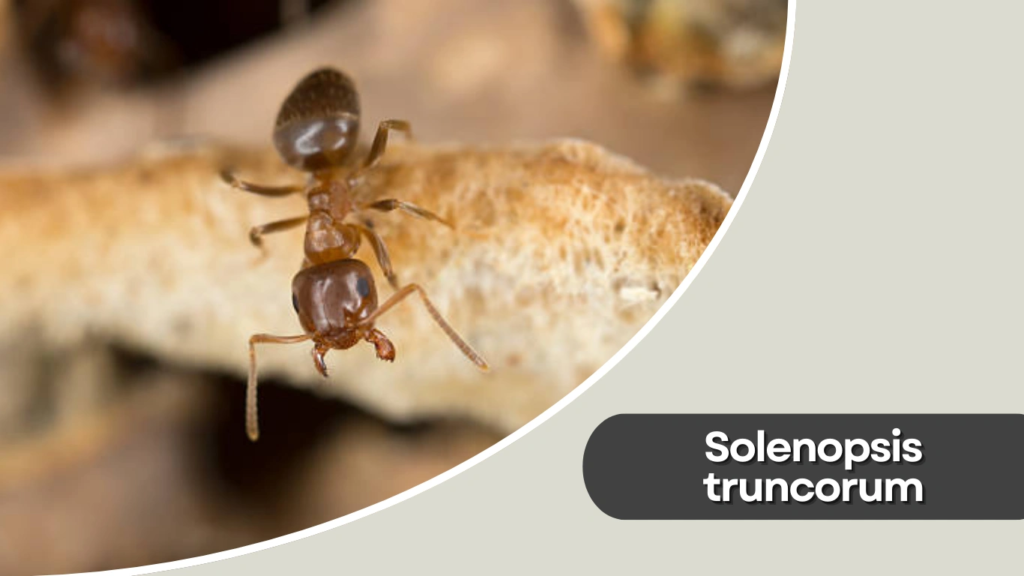
Solenopsis truncorum is a small, discreet fire ant species found primarily in South America. Belonging to the thief ant group, it is known for its subtle behavior, tiny size, and preference for nesting in soil near other ant colonies.
Identification
- Workers measure 1.5–3 mm
- Pale yellow to light brown coloration
- Smooth, shiny exoskeleton
- Slender body with minimal hairs
- Subtle size variation among workers
Habitat
This species nests in soil, leaf litter, decomposing wood, and beneath rocks. It often positions its colonies near larger ant species to exploit their food resources. In natural environments, it prefers shaded or semi-shaded areas with moderate moisture.
Behaviors
Solenopsis truncorum is timid and avoids direct conflict. Workers forage in faint, narrow trails and frequently steal food or brood from neighboring colonies. They construct small, inconspicuous nests and move quietly within their environment.
Diet
Their diet includes proteins, dead insects, honeydew, small seeds, and sweets. Indoors, they occasionally appear near grease or sugary food sources but are less commonly indoor pests than other thief ants.
Lifecycle
Colonies begin with one or several queens after nuptial flights. Eggs progress to larvae, pupae, and then adult workers. Colony growth is slow and remains small, often consisting of a few hundred individuals. Reproductive ants are produced seasonally.
18. Solenopsis virulens
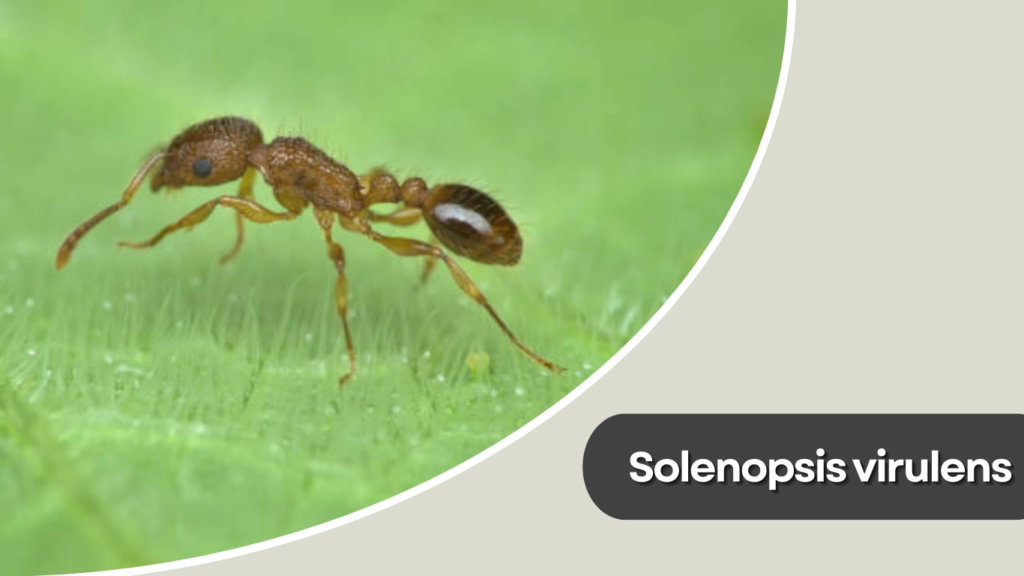
Solenopsis virulens is a moderately aggressive South American fire ant species known for its reddish coloration and active foraging behavior. Though not as notorious as Solenopsis invicta or Solenopsis saevissima, it can still deliver painful stings and form sizable colonies.
Identification
- Workers measure 2–5 mm
- Reddish-brown body, sometimes with a darker abdomen
- Smooth, shiny exoskeleton
- Polymorphic workers with noticeable size differences
- Typical two-segmented waist seen in fire ants
Habitat
This species nests in soil, often forming small to medium mounds in open sunny areas. It prefers warm climates and is found in fields, pastures, forest edges, and disturbed environments. It adapts well to human-altered landscapes.
Behaviors
Solenopsis virulens is quick to defend its nest and will swarm when disturbed. Workers forage actively throughout the day, forming organized trails. Colonies are moderately large and competitive, often dominating smaller, less aggressive ant species.
Diet
Their diet includes insects, seeds, honeydew, plant juices, and scavenged organic material. They readily hunt small invertebrates and feed on sugary substances. Indoors, they may seek sweets, oils, and proteins if they invade homes.
Lifecycle
Colonies begin when queens establish new nests after mating flights. Eggs progress through larval and pupal stages to become adult workers or reproductives. Colonies expand steadily and produce winged males and females seasonally for dispersal.
19. Solenopsis quinquecuspis
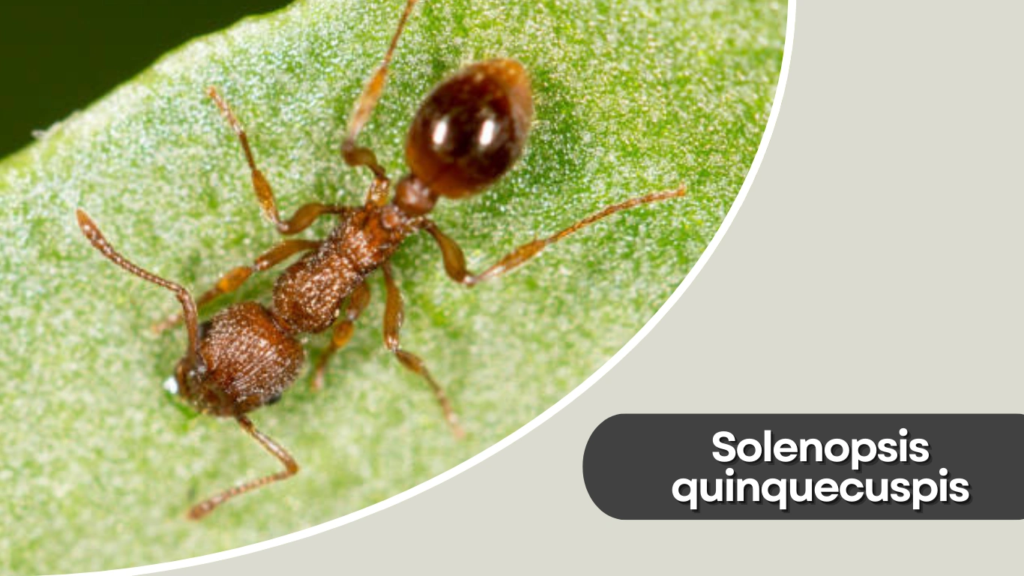
Solenopsis quinquecuspis is a South American fire ant species belonging to the saevissima complex. It is known for its aggressive behavior, painful sting, and ability to form dense, competitive colonies in warm climates.
Identification
- Workers measure 2–6 mm
- Reddish-brown to dark brown coloration
- Smooth, shiny exoskeleton
- Polymorphic worker caste with noticeable size variation
- Distinct two-segmented waist typical of fire ants
Habitat
This species favors warm, humid environments and nests in soil, forming medium to large mounds. It thrives in open fields, agricultural areas, disturbed sites, and forest edges. It often overlaps in habitat with other aggressive fire ants, leading to competition or hybridization.
Behaviors
Solenopsis quinquecuspis is highly aggressive and responds quickly when disturbed. Workers swarm in large numbers and deliver painful stings. Colonies are strong competitors and may displace other ant species, especially in disturbed environments.
Diet
Their diet includes insects, seeds, honeydew, plant material, and scavenged food sources. They actively hunt small arthropods and tend honeydew-producing insects for carbohydrates. Indoors, they may target sweets, meats, and oily foods if they enter homes.
Lifecycle
Colonies begin when queens establish new nests after mating flights. Eggs develop into larvae, pupae, and then adult workers. Colonies grow rapidly and can reach large populations. Seasonal nuptial flights allow the species to spread across wide areas.
20. Solenopsis macdonaghi
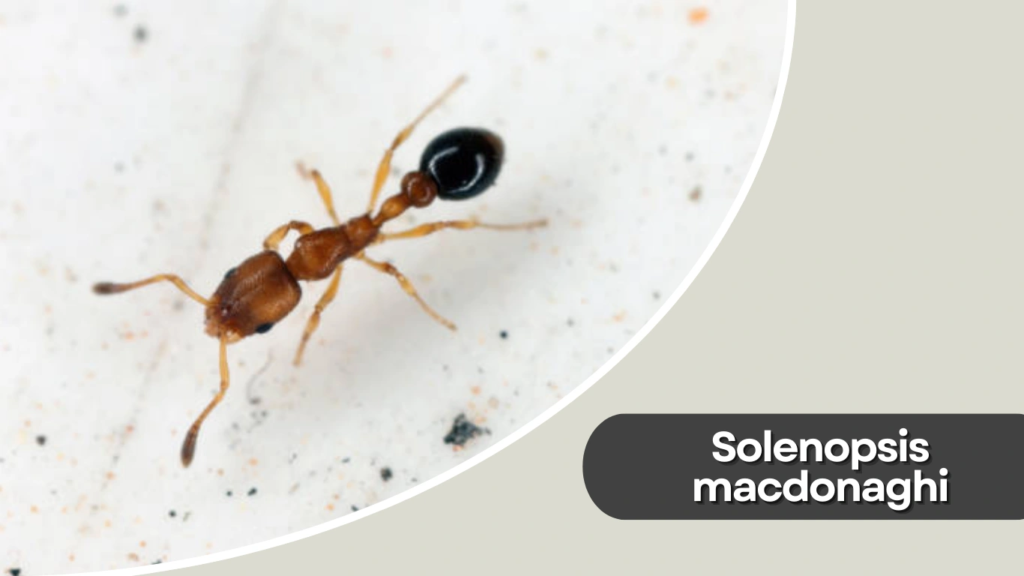
Solenopsis macdonaghi is a South American fire ant species closely related to S. saevissima and S. invicta. It is known for its aggressive behavior, robust colonies, and painful stings, making it a strong competitor in its native habitat.
Identification
- Workers measure 2–6 mm
- Reddish-brown to dark brown body
- Polymorphic worker caste with clear size variation
- Smooth, shiny exoskeleton
- Two-segmented waist typical of fire ants
Habitat
This species nests in soil, forming medium to large mounds in open, sunny locations. It prefers warm, humid climates and is commonly found in grasslands, agricultural fields, forest edges, and disturbed areas. It thrives in environments altered by human activity.
Behaviors
Solenopsis macdonaghi is aggressive and quick to defend its nest. Workers swarm rapidly when disturbed and deliver painful stings. Colonies are strong competitors and may dominate the surrounding ant community. Foraging occurs along organized trails throughout the day.
Diet
Their diet includes insects, seeds, honeydew, plant juices, and scavenged animal matter. They actively hunt small arthropods and collect sugary substances from plants and aphids. Indoors, they may target sweets, proteins, and oils if they enter homes.
Lifecycle
Colonies begin when queens establish new nests after nuptial flights. Eggs progress through larval and pupal stages before becoming workers or reproductives. Colonies expand steadily, often reaching large populations. Seasonal mating flights facilitate dispersal.
21. Solenopsis interrupta
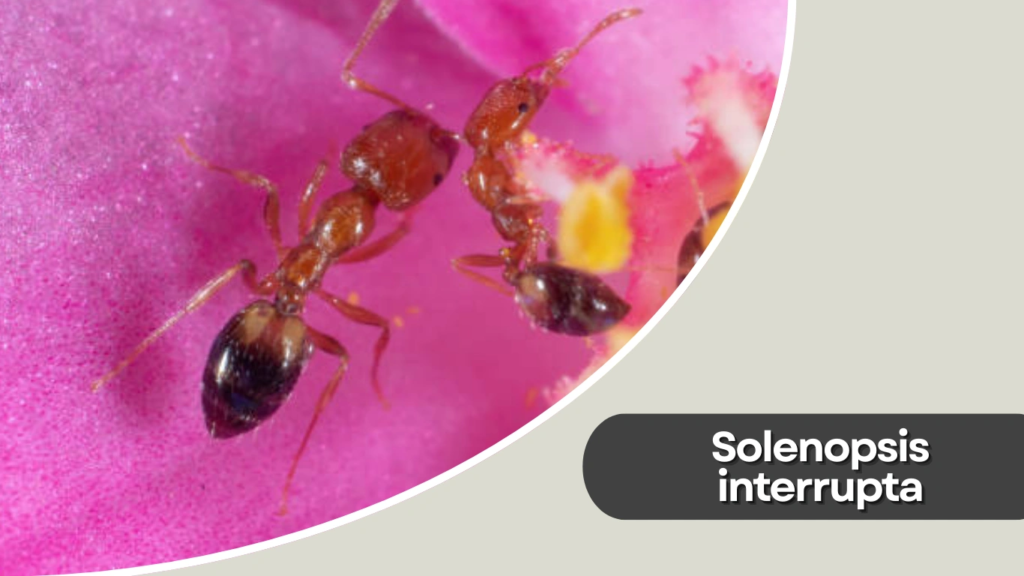
Solenopsis interrupta is a South American fire ant species known for its reddish coloration and moderate aggression. It inhabits warm regions and often forms colonies in disturbed or open environments.
Identification
- Workers measure 2–5 mm
- Reddish-brown body with a slightly darker abdomen
- Smooth, shiny exoskeleton
- Polymorphic workers with noticeable size variation
- Two-segmented waist typical of fire ants
Habitat
This species nests in soil, forming small to medium mounds in sunny, open areas. It thrives in grasslands, agricultural fields, and forest edges. It adapts well to human-altered environments and may be found near homes, gardens, and pastures.
Behaviors
Solenopsis interrupta is moderately aggressive and responds quickly when disturbed. Workers defend their nest with painful stings and forage actively along narrow trails. Colonies are competitive and may displace smaller ant species in favorable environments.
Diet
Their diet consists of insects, seeds, honeydew, plant juices, and scavenged organic material. They hunt small arthropods and seek out sugary foods. Indoors, they may target sweets, meats, and oils when food is accessible.
Lifecycle
Colonies start with one or more queens after nuptial flights. Eggs develop into larvae, pupae, and adult workers. Colony growth is steady, and reproductive ants are produced seasonally. Mature colonies can contain thousands of workers.
22. Solenopsis electra
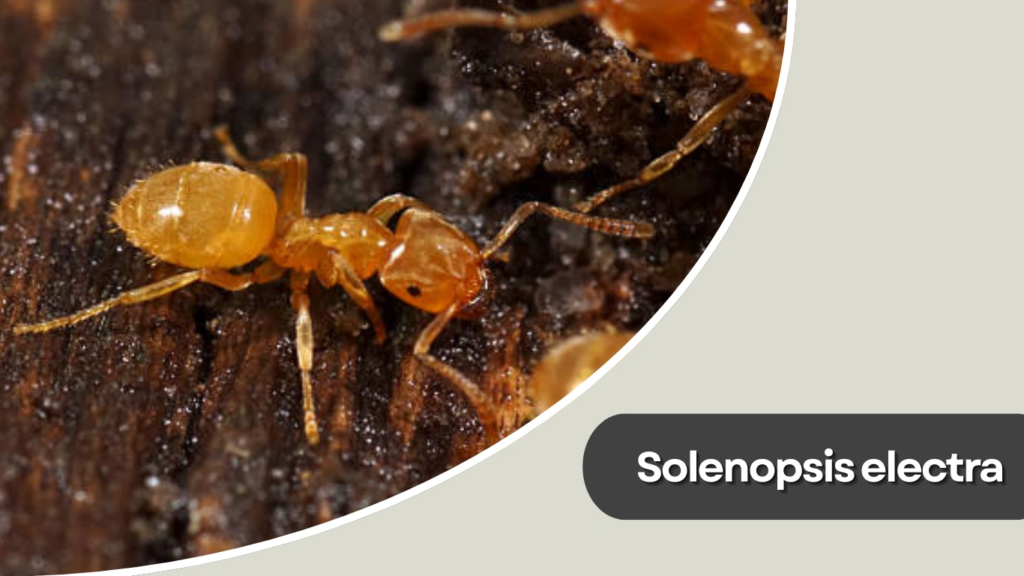
Solenopsis electra is a lesser-known South American fire ant species belonging to the saevissima complex. It is recognized for its reddish coloration, aggressive behavior, and preference for warm, humid environments.
Identification
- Workers measure 2–5 mm
- Reddish-brown to copper-toned body
- Smooth, shiny exoskeleton
- Polymorphic worker caste
- Two-segmented waist typical of Solenopsis
Habitat
This species nests in soil and forms small to medium mounds. It is typically found in open areas, forest edges, and disturbed habitats. It prefers warm climates and may occur near agricultural land, pastures, and human settlements.
Behaviors
Solenopsis electra is aggressive and forages in organized trails. Workers swarm quickly when disturbed and deliver painful stings. Colonies are competitive and can dominate the local ant community, especially in disturbed soils.
Diet
Their diet includes insects, honeydew, seeds, plant material, and scavenged organic matter. They hunt small arthropods and frequently collect sugary resources from plants and aphid colonies.
Lifecycle
Colonies begin after queens establish new nests following nuptial flights. Eggs develop into larvae, pupae, and adults. Colonies grow steadily and produce winged reproductives seasonally, enabling dispersal.
23. Solenopsis picea
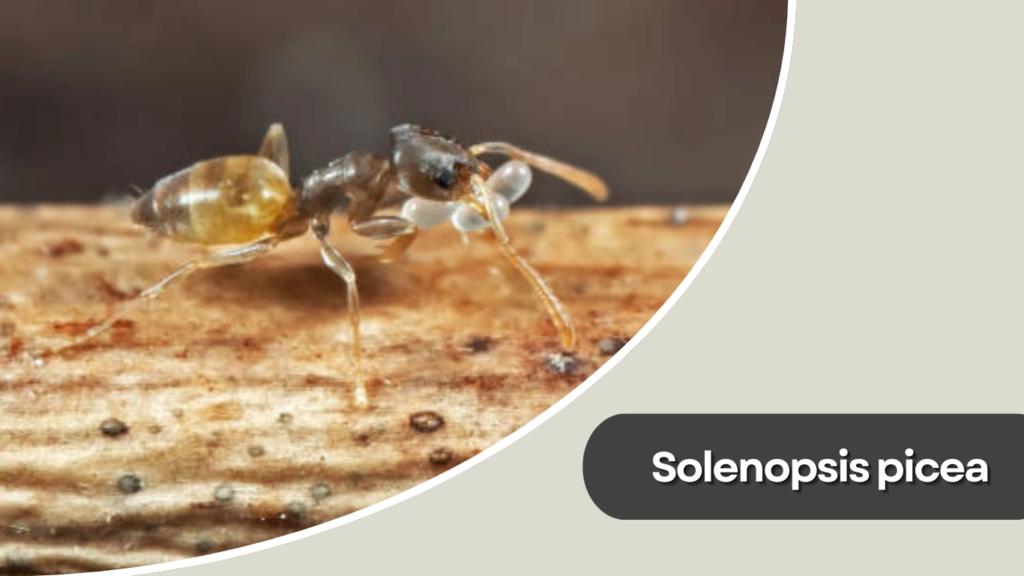
Solenopsis picea is a small, discreet fire ant species found in parts of Central and South America. Often grouped with thief ants, it is known for its tiny size, secretive nesting habits, and subtle foraging behavior.
Identification
- Workers measure 1.5–3 mm
- Dark yellow to light brown coloration
- Smooth, shiny exoskeleton
- Slender body with minimal body hairs
- Slight size variation among workers
Habitat
This species nests in soil, leaf litter, decomposing wood, and beneath rocks. It favors moist, shaded environments such as forest floors and riparian areas. While it occasionally enters homes, it is not a common indoor pest compared to other thief ant species.
Behaviors
Solenopsis picea is timid and avoids confrontation. Workers forage in faint trails and often steal food or brood from neighboring ant colonies. Their nests are small and inconspicuous, making them easy to overlook.
Diet
Their diet consists of small insects, seeds, honeydew, proteins, and sugary substances. Outdoors, they rely heavily on scavenging and honeydew collection. Indoors, they may seek out sweets, oils, and proteins if food sources are accessible.
Lifecycle
Colonies are founded by one or more queens after seasonal nuptial flights. Eggs develop into larvae, pupae, and adult workers. Colony growth is slow, and populations remain relatively small. Reproductive ants are produced during warm periods.
24. Solenopsis papuana
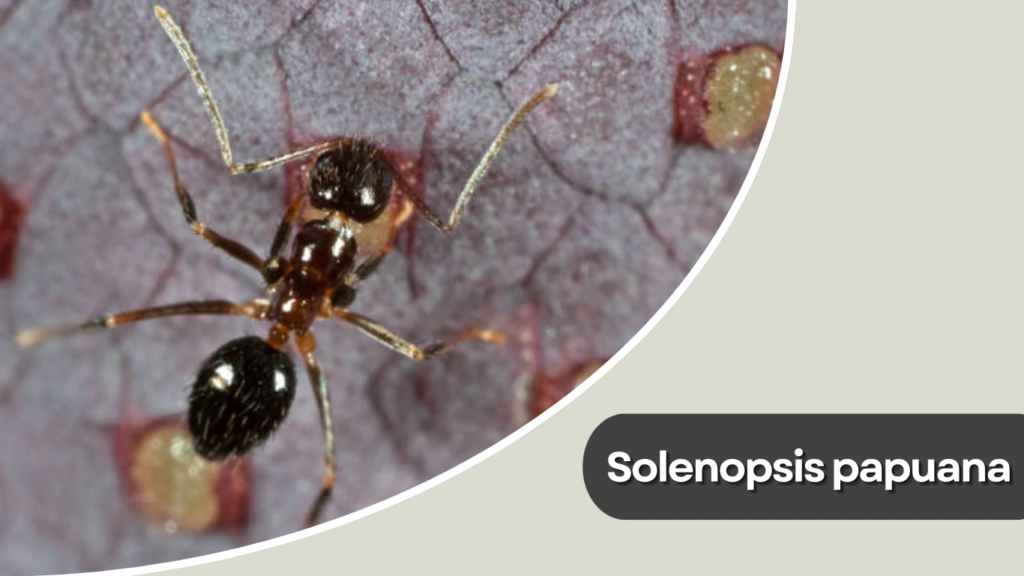
Solenopsis papuana is a fire ant species native to Papua New Guinea and parts of Oceania. It is known for its adaptability, small size, and potential to become an invasive pest when introduced to new environments.
Identification
- Workers measure 1.5–3.5 mm
- Yellowish-orange to light brown body
- Smooth, shiny surface with few hairs
- Slender body with minimal polymorphism
- Typical two-segmented waist
Habitat
This species nests in soil, leaf litter, rotting logs, and moist ground debris. It thrives in tropical and subtropical climates, including forests, plantations, and urban gardens. As an adaptable species, it can exploit many microhabitats.
Behaviors
Solenopsis papuana is moderately aggressive and forms small to medium colonies. Workers respond quickly when disturbed but are less intense than larger fire ant species. They forage in narrow, active trails and may spread rapidly in disturbed environments.
Diet
Their diet includes insects, nectar, honeydew, seeds, and scavenged organic material. They actively hunt tiny arthropods and feed on sugary plant secretions. Indoors, they may target sweets and proteins.
Lifecycle
Queens establish new colonies after nuptial flights. Eggs develop into larvae, pupae, and adults. Colony sizes vary but tend to remain moderate. Reproductive flights occur seasonally in warm climates.
25. Solenopsis punctaticeps
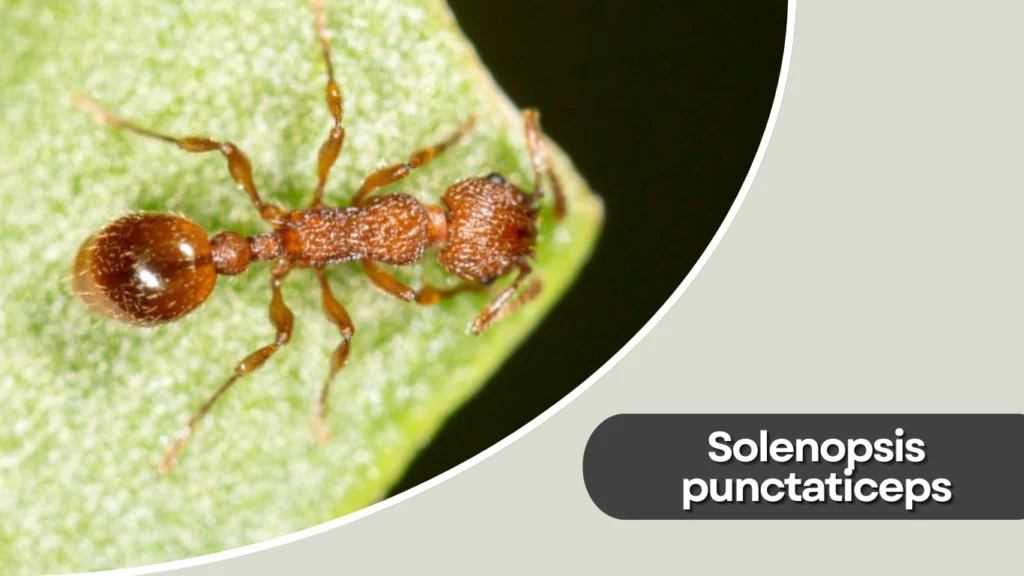
Solenopsis punctaticeps is a South American fire ant species known for its reddish coloration and discreet nesting habits. Although not as aggressive as some of its relatives, it can sting and is often found in warm, open environments.
Identification
- Workers measure 2–5 mm
- Reddish-brown to orange-brown body
- Smooth, shiny exoskeleton
- Polymorphic workers with moderate size variation
- Two-segmented waist typical of fire ants
Habitat
This species prefers warm climates and nests in soil, leaf litter, or under stones. It is commonly found in open fields, forest edges, and disturbed areas. Colonies may also occur in agricultural lands and near human settlements.
Behaviors
Solenopsis punctaticeps is moderately aggressive and will defend its nest when provoked. Workers forage along narrow trails and are active during warmer parts of the day. Colonies are generally smaller than those of highly invasive fire ants.
Diet
Their diet consists of insects, seeds, honeydew, plant matter, and scavenged food sources. They hunt small arthropods and seek sugary or protein-rich foods. Indoors, they may occasionally forage for sweets and oils.
Lifecycle
Colonies begin when queens establish nests following nuptial flights. Eggs develop into larvae, then pupae, and finally adult workers. Colonies grow gradually and produce reproductives seasonally, allowing for dispersal and new colony formation.
26. Solenopsis metallica
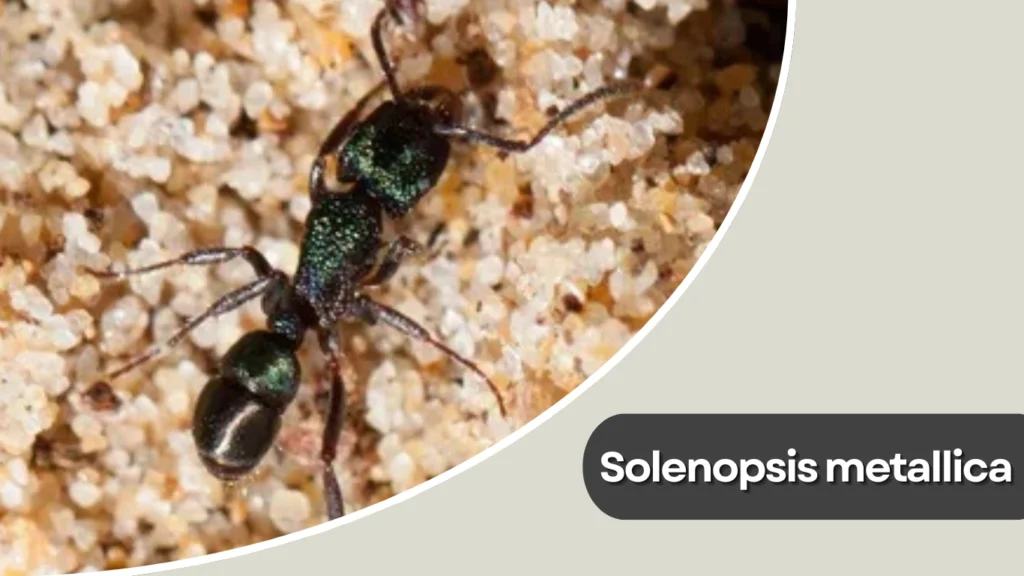
Solenopsis metallica is a striking fire ant species recognized for its metallic sheen and small size. Native to South America, it is part of the thief ant group and often nests near other ant species.
Identification
- Workers measure 1.5–3 mm
- Metallic golden to bronze sheen on the body
- Smooth, shiny exoskeleton
- Slender build with minimal hairs
- Subtle worker polymorphism
Habitat
This species nests in soil, leaf litter, decaying logs, and shaded forest floors. It prefers moist, humid environments but can also survive in slightly drier habitats. Colonies remain small and often form near other ant nests for access to food resources.
Behaviors
Solenopsis metallica is non-aggressive and avoids open confrontation. Workers forage quietly in faint trails and may steal food or brood from neighboring colonies. Their nests are hidden and difficult to detect.
Diet
Their diet includes honeydew, small insects, seeds, proteins, and sugary substances. Outdoors, they rely heavily on scavenging and aphid tending. Indoors, they may occasionally seek sweets or oils.
Lifecycle
Colonies begin with one or more queens after nuptial flights. Eggs develop through larval and pupal stages into adult workers. Colony growth is slow and limited, producing reproductive ants seasonally in warm conditions.
FAQs
What makes fire ants different from other ant species?
Fire ants are known for their aggressive behavior, painful stings, and ability to form large colonies. Unlike many ants that primarily bite, fire ants sting repeatedly, injecting venom that causes burning, swelling, and sometimes allergic reactions. They also build noticeable soil mounds and quickly swarm when disturbed.
Are fire ant stings dangerous?
Fire ant stings can be painful and cause itchy, pus-filled blisters. For most people, symptoms are mild to moderate, but some may experience severe allergic reactions, including anaphylaxis. Immediate medical attention is required if symptoms such as dizziness, difficulty breathing, or swelling of the throat occur.
How can I identify fire ants?
Fire ants range from 1.5–6 mm depending on species, usually with reddish-brown to dark brown bodies and smooth, shiny exoskeletons. Their mounds are often dome-shaped and lack visible openings. Disturbing the nest causes rapid swarming, a key behavior distinguishing them from other ant types.
What attracts fire ants to certain areas?
Fire ants prefer warm climates, moist soil, and sunny open spaces such as lawns, fields, and pastures. They are also attracted to areas rich in food sources—such as insects, seeds, sugary substances, and proteins. Food waste, garden pests, and disturbed soil can increase fire ant activity.
How do I control or prevent fire ant infestations?
Effective control includes using bait treatments, mound drenches, and granular insecticides. Regular lawn maintenance, removing food sources, and eliminating moisture problems help prevent colonies from settling. Severe infestations often require professional pest management to fully eradicate the colony and its satellites.
