
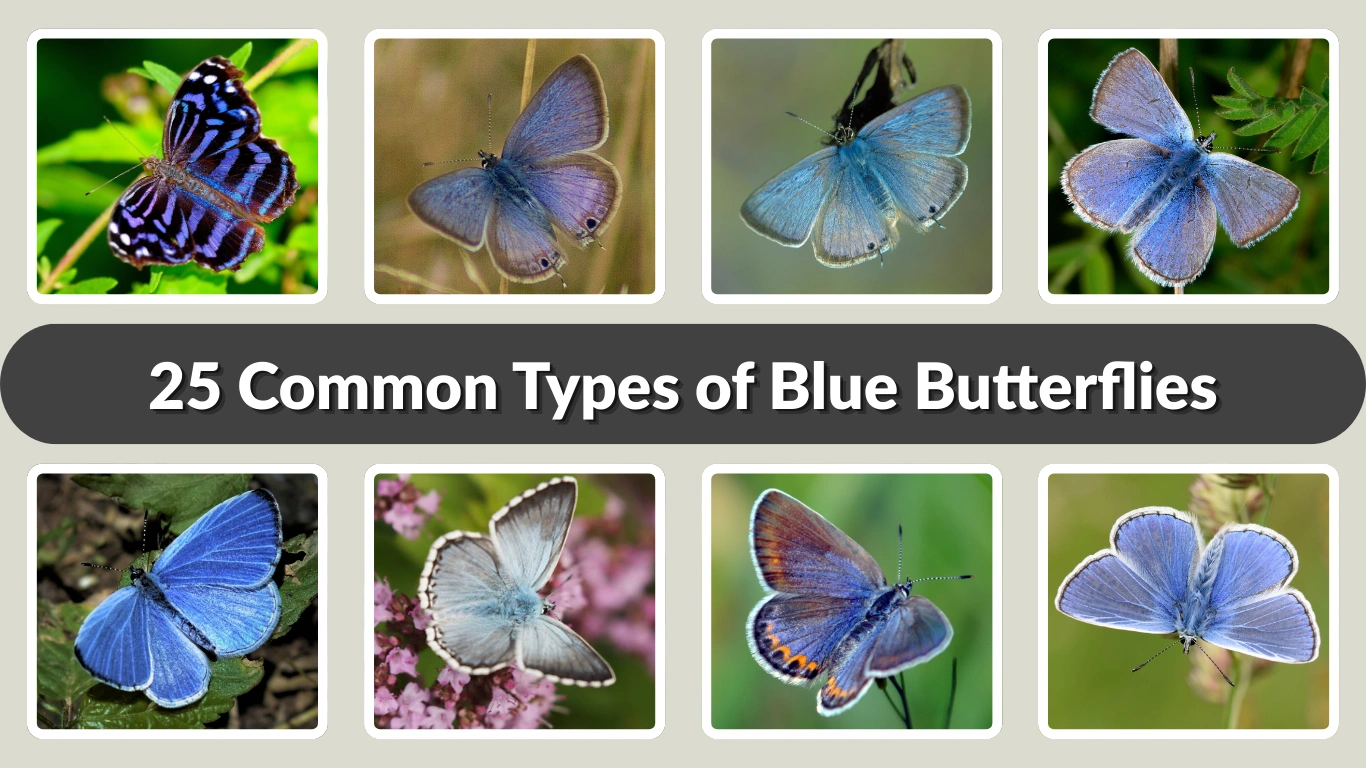
Blue butterflies are among the most eye-catching insects in the world, admired for their shimmering wings, delicate flight, and vibrant shades ranging from pale sky-blue to deep metallic sapphire. Found across forests, meadows, mountains, and gardens, these species reveal the incredible diversity within the Lycaenidae family. This list highlights 25 common blue butterflies, offering a glimpse into the beauty and variety of these brilliantly colored creatures.
1. Common Blue
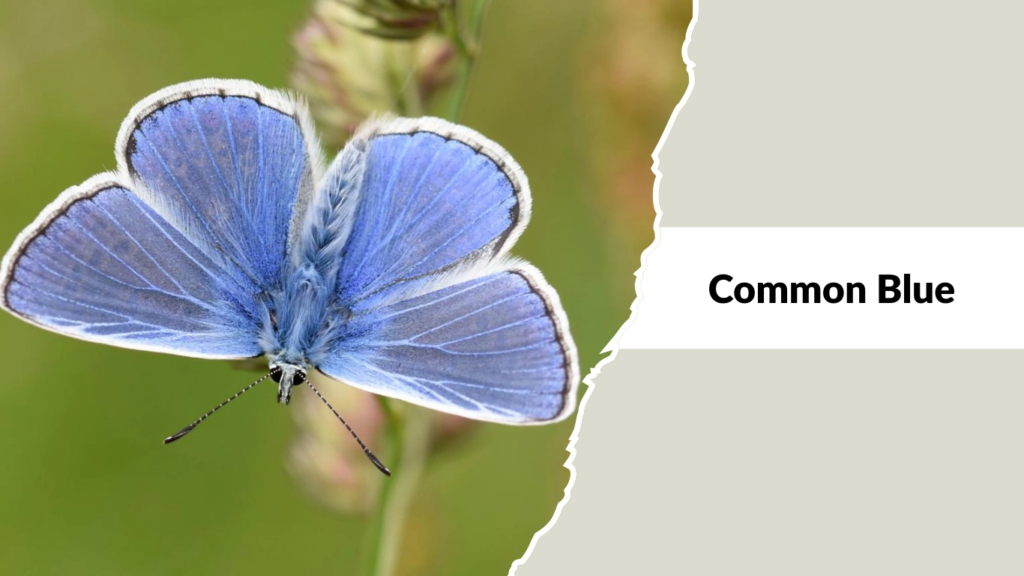
The Common Blue is one of the most widespread and recognizable blue butterflies in Europe and parts of Asia. Males display bright sky-blue wings, while females vary from brown to bluish, making this species easy to spot in grassy habitats.
Identification
- Males bright sky-blue with white borders
- Females brown with orange spots and variable blue shading
- Underside pale beige with black spots and orange crescents
- Small, delicate body
- No tails on wings
Color Pattern
Males show vivid blue upperwings bordered by crisp white edges, giving them a striking appearance in flight. Females are more subdued, typically brown with orange crescents, though some populations have noticeable blue scaling. The underside of both sexes is cream-gray with black spots, offering excellent camouflage.
Habitat
The Common Blue thrives in grasslands, meadows, roadside edges, dunes, parks, and urban fields. It prefers areas rich in legume plants, especially bird’s-foot trefoil, which serves as its primary larval host.
Lifecycle
Eggs are laid singly on host plant leaves. Caterpillars feed on trefoil and other legumes, developing slowly. Pupation occurs in leaf litter or low vegetation. The species produces two to three broods per year, with adults flying from spring through late summer, and some pupae overwintering.
2. Eastern Tailed Blue
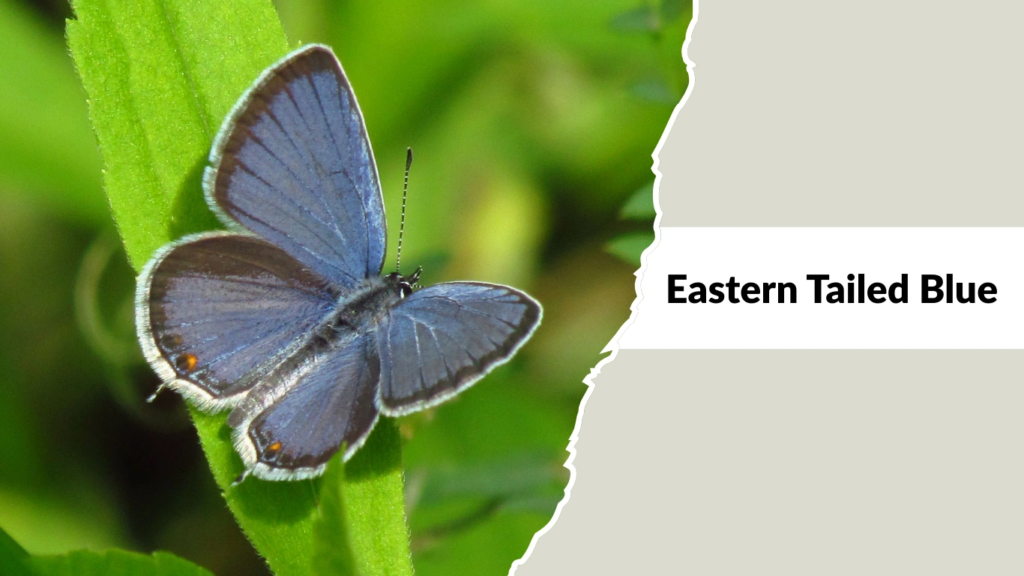
The Eastern Tailed Blue is a small, delicate butterfly found across North America. Its tiny tails and bright blue male coloration make it easy to identify in grassy and urban habitats.
Identification
- Males bright blue; females gray-brown with slight blue
- Two tiny tails on hindwings
- Underside pale gray with black spots and orange patches
- Very small and slender
- Caterpillars green and smooth
Color Pattern
Males have vibrant blue upperwings edged with thin black borders. Females are more muted, often showing dusty gray-brown wings with a hint of blue near the body. The underside of both sexes features black spots and orange markings, aiding camouflage.
Habitat
Found in grassy fields, roadsides, gardens, vacant lots, and open meadows throughout eastern and central North America. Highly adaptable, it often thrives in disturbed or suburban environments.
Lifecycle
Eggs are laid on legumes such as clover and vetch. Caterpillars feed on buds and flowers. Pupation occurs near the base of plants. Multiple broods are produced yearly, with adults active from spring through fall.
3. Western Tailed Blue
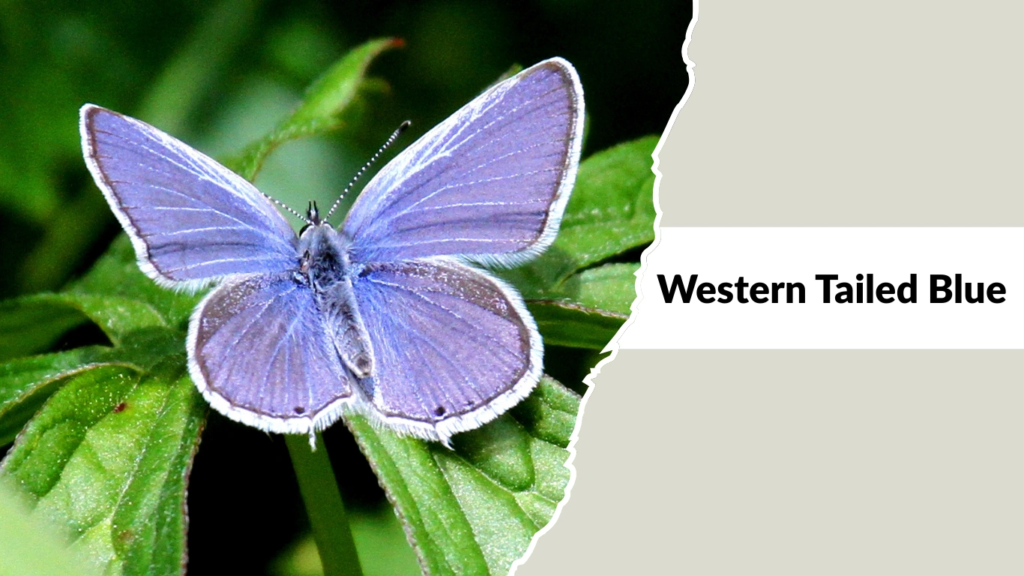
The Western Tailed Blue resembles the Eastern species but occupies the western regions of North America. It is known for its tiny hindwing tails and soft sky-blue coloration in males.
Identification
- Males light sky-blue; females gray-brown
- Small hindwing tails present
- Underside gray-white with black spots
- Slight orange near hindwing bases
- Caterpillars green with faint striping
Color Pattern
Males display pale sky-blue wings with thin dark margins. Females possess brownish upperwings with limited blue shading. The underside of the wings is cream to gray, marked by small black spots and occasional orange smudges.
Habitat
Common in prairies, foothills, sagebrush areas, woodland openings, and grasslands across western North America. Often found near host plants in the pea family.
Lifecycle
Eggs are laid on legumes such as lupines and vetch. Caterpillars feed primarily on developing flowers. Pupation occurs close to the ground. The species produces multiple broods, usually from spring to late summer.
4. Holly Blue
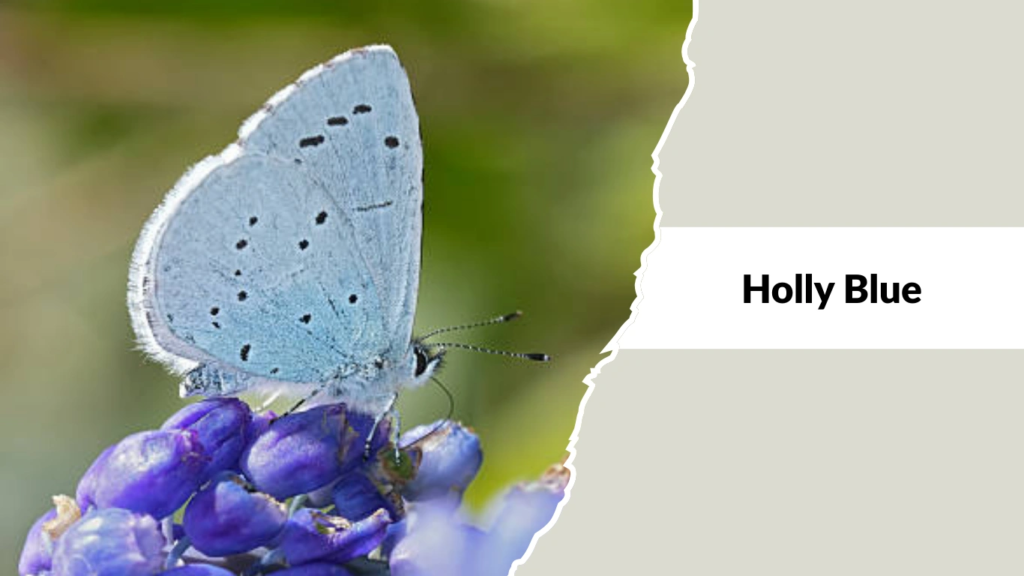
The Holly Blue is a small, bright butterfly common in Europe and parts of Asia. It is known for its shimmering blue wings and habit of flying higher than most other blue species.
Identification
- Upperwings bright, silvery blue (males brighter than females)
- Underside pale gray with small black dots
- No orange spots on underside (a key distinction)
- Slender body and smooth flight
- Caterpillars green with faint patterning
Color Pattern
The upper wings shine silvery to sky blue, with males showing stronger coloration and females slightly darker or dustier. The underside is clean pale gray with a scattering of black dots, lacking the orange crescents found in many other blues.
Habitat
Found in woodlands, gardens, parks, hedgerows, and urban areas, often flying near holly and ivy—its primary seasonal host plants. It typically flies higher than ground-level species.
Lifecycle
Two broods occur annually. Spring females lay eggs on holly buds, and summer generations use ivy. Caterpillars feed on flower buds before pupating. Chrysalises often overwinter, emerging the following spring.
5. Karner Blue
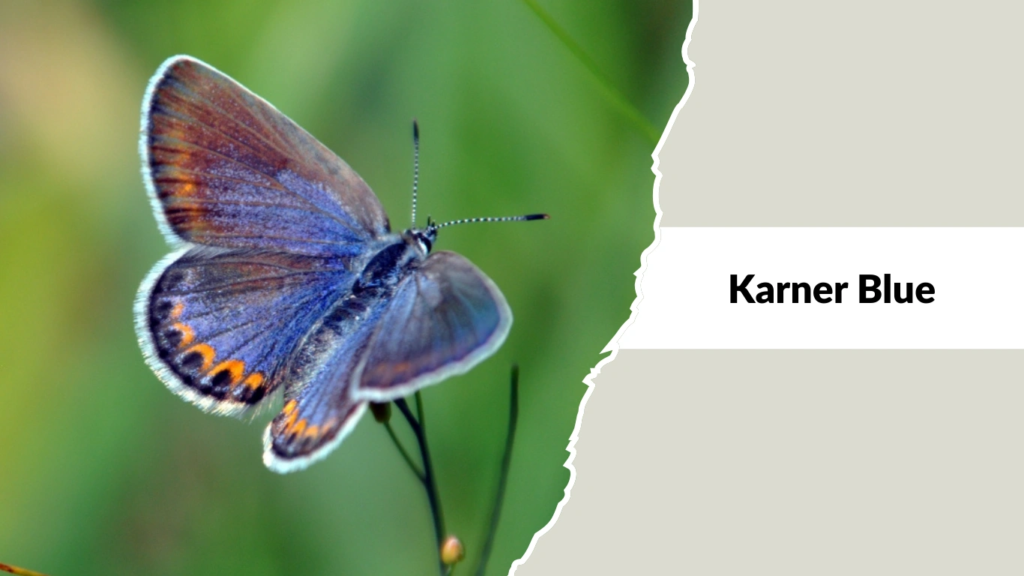
The Karner Blue is a rare and federally endangered butterfly in North America, known for its deep blue wings and strict dependence on wild lupine.
Identification
- Males deep silvery-blue with narrow black borders
- Females darker with orange crescents on hindwings
- Underside pale gray with white-ringed black spots
- Small and delicate
- Caterpillars green with fine white hairs
Color Pattern
Males display rich silvery-blue wings, while females are brownish-black with orange crescents and a bluish center. The underside is pale gray decorated with black spots and faint orange, offering excellent camouflage among vegetation.
Habitat
Occurs in pine barrens, oak savannas, and sandy meadows where wild lupine grows. Its range is limited to the Great Lakes region, including Wisconsin, Michigan, and parts of New York.
Lifecycle
Two broods per year. Eggs hatch into caterpillars that feed exclusively on wild lupine leaves. Pupation occurs low in vegetation. The second generation’s eggs overwinter and hatch in spring, making the butterfly highly dependent on stable lupine populations.
6. Adonis Blue
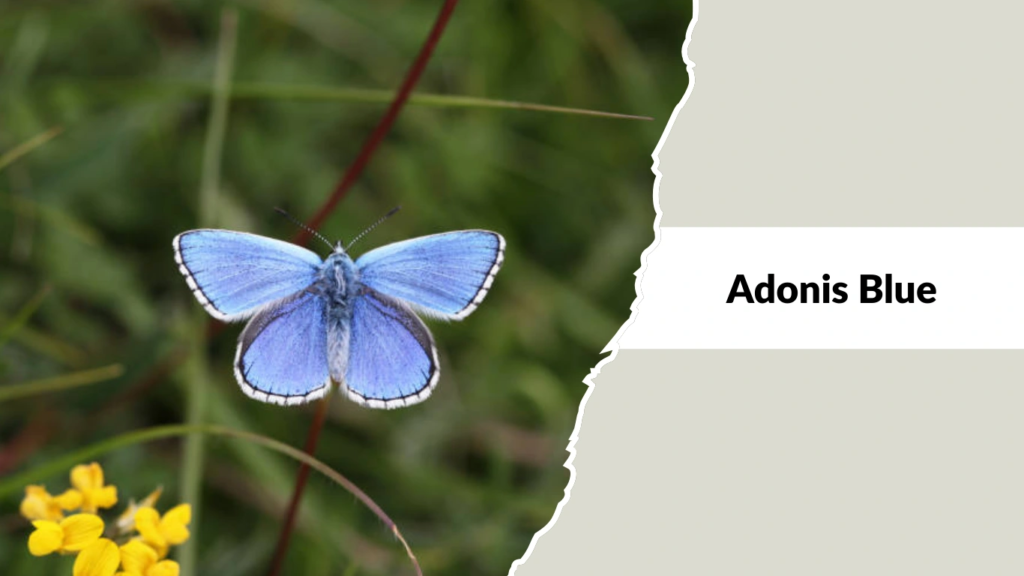
The Adonis Blue is a brilliantly colored European butterfly known for its electric sky-blue wings. It is especially common in chalk grasslands where warm, dry conditions support its preferred host plants.
Identification
- Males vivid electric blue with white-black borders
- Females brown with faint blue dusting
- Underside pale gray with black spots and orange crescents
- Slender body with fast fluttering flight
- Caterpillars green with fine hairs
Color Pattern
Males exhibit intense, glowing blue wings edged with clean white borders and a thin black outline. Females appear mostly brown with subtle blue shading. The underside of both sexes features pale gray bases, black spots, and orange crescents along the hindwings.
Habitat
Found in chalk and limestone grasslands, sunny slopes, dry meadows, and open valleys throughout Europe. Most abundant in warm regions where horseshoe vetch thrives.
Lifecycle
Eggs are laid on horseshoe vetch. Caterpillars feed at night and rest at plant bases. Pupation takes place among ground vegetation. Typically has two broods per year, with one generation overwintering as eggs.
7. Silver-studded Blue
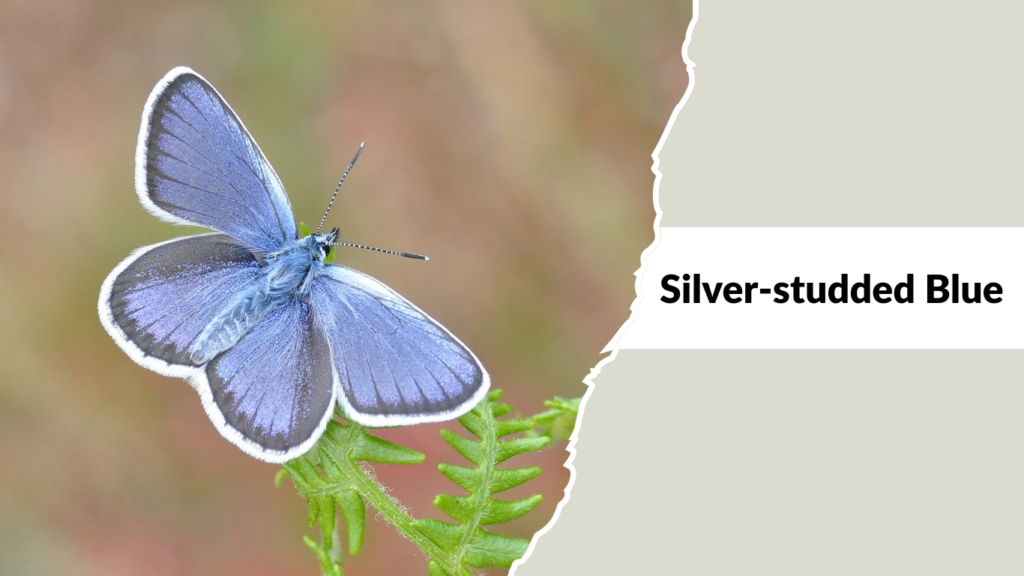
The Silver-studded Blue is a small European butterfly recognized for the shiny silver spots on the underside of its wings. It occupies heathlands, dunes, and dry grasslands.
Identification
- Males bright blue; females brown with orange arcs
- Underside with distinctive metallic silver spots
- Small, rounded wings
- Caterpillars green and tended by ants
- No tails
Color Pattern
The upperwings of males are vibrant blue, while females show rich brown wings with orange crescents near the margins. The underside is pale gray-beige with silver metallic studs, giving the species its name.
Habitat
Common in heathlands, coastal dunes, dry grasslands, and open scrub. Strongly associated with warm, low-nutrient soils and host plants like heather and gorse.
Lifecycle
Eggs are laid near host plants. Caterpillars live mutually with ants, which protect them. Pupation occurs underground or in leaf litter. Usually one brood annually, with eggs overwintering.
8. Chalkhill Blue
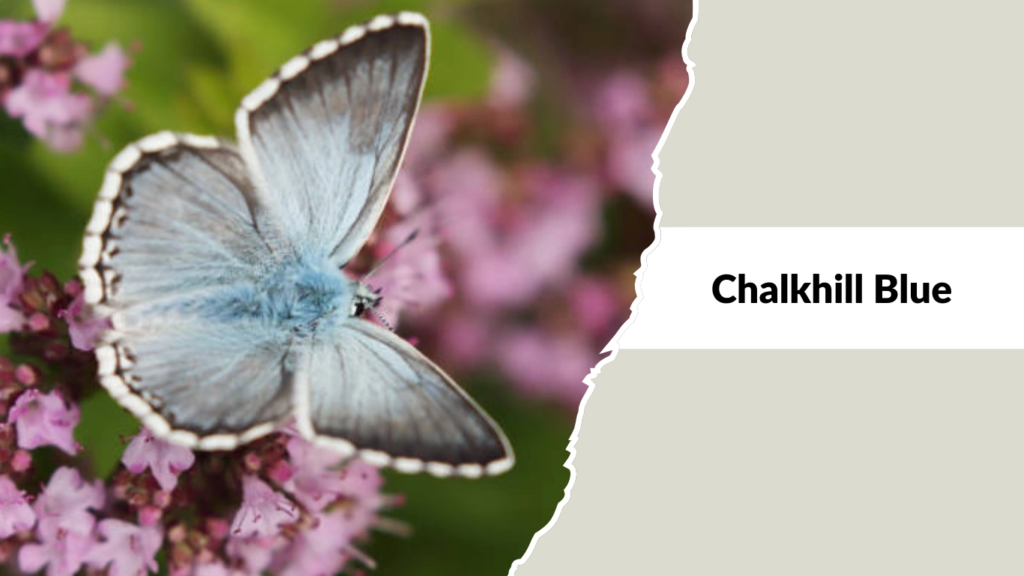
The Chalkhill Blue is a medium-sized European butterfly commonly found on chalk and limestone hillsides. Males display a distinctive powder-blue color, making them highly noticeable in their open, sunny habitats.
Identification
- Males pale powder-blue with broad black borders
- Females brown with subtle blue shading
- Underside beige with black spots and orange crescents
- No tails on wings
- Caterpillars green and slug-like
Color Pattern
Males show a soft, powdery sky-blue upperwing with thick black borders and white fringes. Females appear mostly brown, sometimes with a hint of blue near the body. The underside is patterned with black-ringed spots and orange crescents, especially along the hindwing edges.
Habitat
Common in chalk grasslands, limestone slopes, meadows, and sunny hillsides throughout Europe. Strongly associated with horseshoe vetch, its primary larval host.
Lifecycle
Eggs are laid on horseshoe vetch. Caterpillars are tended by ants for protection. Pupation often occurs in the soil. The species has one main brood per year, with adults flying midsummer.
9. Cassius Blue

The Cassius Blue is a small, widespread butterfly found across the southern United States, the Caribbean, and Central America. Its delicate blue wings and spotted underside make it easy to identify.
Identification
- Males pale blue with dark borders
- Females blue-gray or brownish
- Underside white-gray with black spots and two orange hindwing patches
- Tiny size with narrow wings
- Caterpillars smooth and green
Color Pattern
The upper wings of males are light sky-blue, while females range from brownish to bluish-gray. The underside shows bold black spots and two orange patches near the hindwing margin. The contrast of white-gray and black markings is distinctive.
Habitat
Found in gardens, scrublands, open fields, coastal areas, and disturbed sites. It thrives near host plants such as plumbago and legumes.
Lifecycle
Eggs are laid on flower buds and young leaves. Caterpillars feed on buds and blossoms. Pupation occurs near the plant base. Several broods occur yearly in warm climates, with activity peaking in summer.
10. Atala Blue
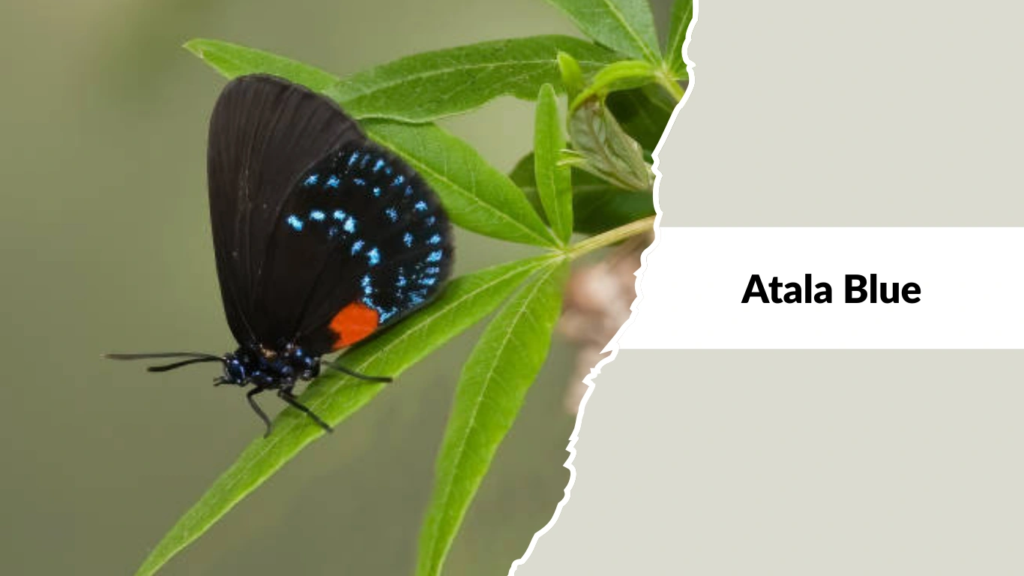
The Atala Blue is a small, brilliantly marked butterfly native to Florida, the Bahamas, and parts of the Caribbean. Although often recognized for its black wings and red abdomen, its hindwing spots are a vivid electric blue, placing it among notable blue-marked butterflies.
Identification
- Black wings with small iridescent blue hindwing spots
- Bright red abdomen
- Short, rounded wings
- Caterpillars bright red with yellow spots
- No tails
Color Pattern
The upper wings are velvety black, contrasting with glowing blue spots on the hindwings and a scarlet-red abdomen. The underside mirrors this pattern, though slightly duller. Its blue spots catch the light, making the butterfly stand out in flight.
Habitat
Found in pine rocklands, coastal hammocks, gardens, and suburban landscapes where coontie, its sole host plant, grows. The species thrives in warm, humid climates.
Lifecycle
Eggs are laid in clusters on coontie leaves. Caterpillars feed on toxic cycads, retaining defensive chemicals. Pupation occurs on plant surfaces or nearby structures. Multiple broods occur throughout the year in warm regions.
11. Marine Blue
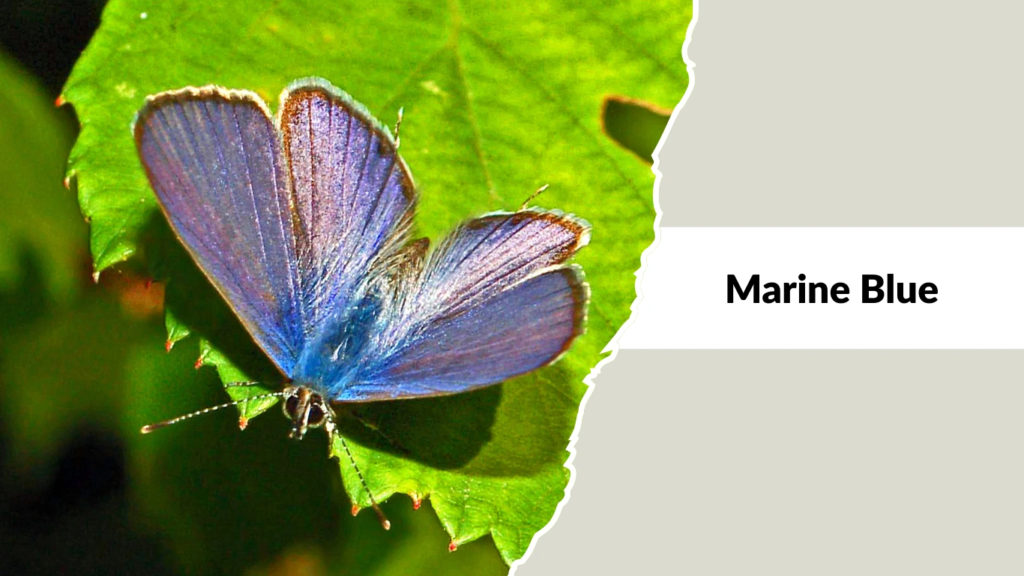
The Marine Blue is a tiny butterfly native to the Americas, easily recognized by its streaked blue coloration and striped underside. It is highly adaptable and often found in sunny, open areas.
Identification
- Upperwings blue-gray with narrow dark borders
- Hindwings have two tiny tails
- Underside beige with brown stripes and two orange spots
- Very small, slender body
- Caterpillars green with subtle striping
Color Pattern
The upper wings are soft blue-gray, sometimes appearing silvery in bright light. The underside is more dramatic, featuring brown stripes, black spots, and two orange markings near the hindwing edge. The tails add a delicate finishing touch.
Habitat
Common in fields, gardens, dry scrub, meadows, river edges, and desert oases across the southern United States, Mexico, Central America, and South America.
Lifecycle
Eggs are laid on legumes and various flowering plants. Caterpillars feed on buds and petals before pupating in leaf litter or stems. The species produces multiple broods per year, especially in warmer climates.
12. Spring Azure
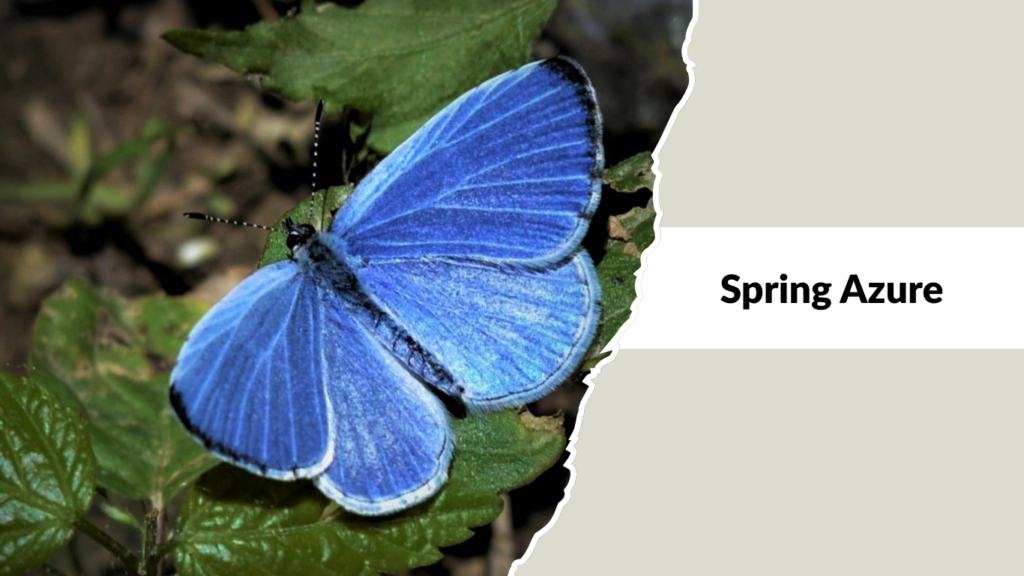
The Spring Azure is one of North America’s earliest blue butterflies to appear each year. Its delicate blue wings and pale undersides make it a familiar sight in woodlands and gardens during early spring.
Identification
- Upperwings light blue in males; gray-blue in females
- Underside pale gray-white with fine gray speckles
- No orange markings
- Small, rounded wings
- Caterpillars green or pinkish with slug-like shape
Color Pattern
Males display soft sky-blue wings, while females show a more muted gray-blue. The underside is nearly white with subtle gray speckles, offering camouflage against bark and stones. Unlike many blues, it lacks orange crescents.
Habitat
Found in open woods, forest edges, gardens, parks, and shrublands across North America. Often appears near dogwood, meadowsweet, and other flowering shrubs used by its caterpillars.
Lifecycle
Eggs are laid on flower buds of various shrubs. Caterpillars feed inside blossoms and later pupate on the ground. Many populations have one brood, while others produce two depending on climate.
13. Summer Azure
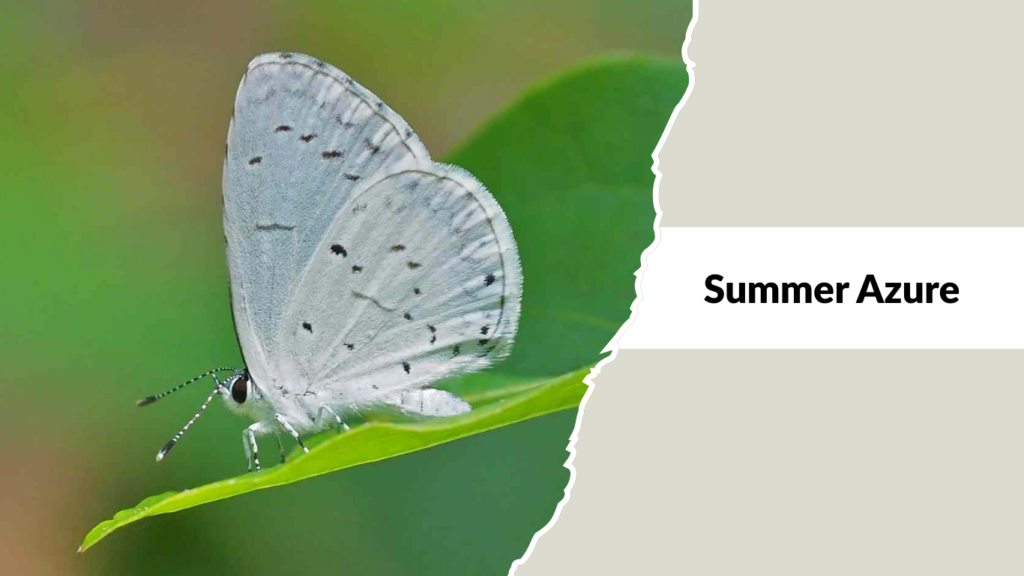
The Summer Azure emerges later in the season and is slightly paler than the Spring Azure. It is widespread across North America, occupying both wooded and open habitats.
Identification
- Upperwings pale blue to whitish-blue
- Females slightly grayer with faint borders
- Underside very pale with minimal speckling
- Small and delicate
- Caterpillars smooth and green
Color Pattern
The upper wings are light powder-blue, sometimes appearing almost whitish, especially in males. The underside is extremely pale with very fine gray spots or nearly none at all. Its soft coloration distinguishes it from earlier spring species.
Habitat
Found in forests, gardens, river edges, fields, and suburban landscapes. It is highly adaptable and often seen visiting nectar plants throughout summer.
Lifecycle
Eggs are laid on a variety of flowering shrubs. Caterpillars feed on buds and blossoms. Pupation occurs near the soil surface. Typically produces two or more broods per year, especially in warmer climates.
14. Northern Azure
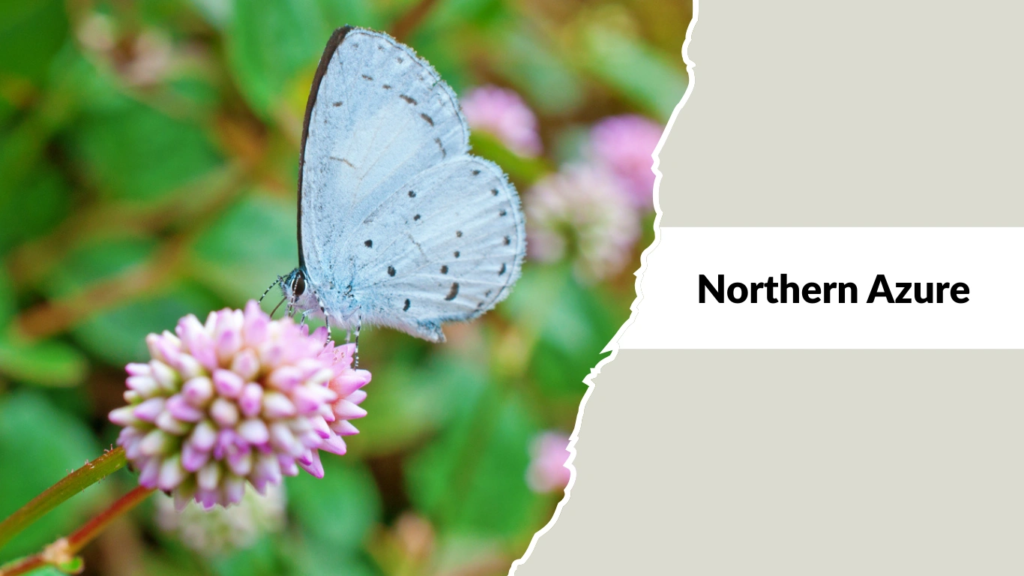
The Northern Azure is a cool-climate butterfly found across Canada and the northern United States. It resembles other azure species but is slightly darker and emerges in early spring.
Identification
- Males medium blue; females grayish-blue
- Underside pale gray with scattered dark speckles
- No orange markings
- Small, rounded wings
- Caterpillars green with faint striping
Color Pattern
The upperwings show medium blue tones in males and dusty gray-blue in females. The underside is light gray-white with small, dark speckles. Overall, it appears slightly darker than other azure species.
Habitat
Found in boreal forests, forest edges, meadows, shrublands, and moist woodland clearings. Often stays near host plants like viburnum and dogwood.
Lifecycle
Eggs are laid on flower buds. Caterpillars feed within blossoms, then drop to the ground to pupate. Usually one brood per year, with overwintering in the pupal stage.
15. Appalachian Azure
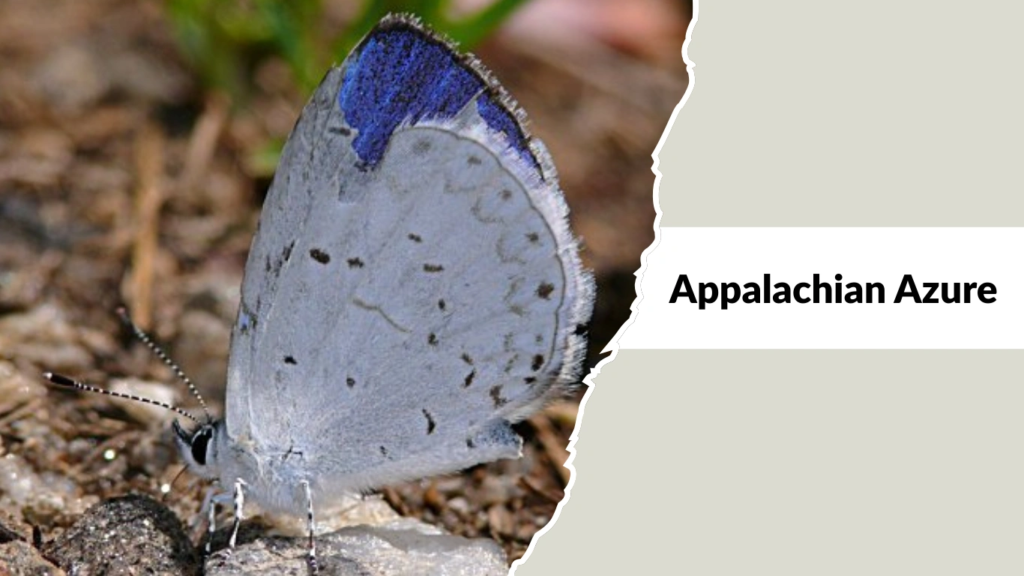
The Appalachian Azure is a rare and localized blue butterfly confined to the Appalachian Mountains. It is larger and paler than many related species.
Identification
- Males light pearly blue; females dusky blue
- Underside very pale with faint gray markings
- Slightly larger than most azures
- No tails on wings
- Caterpillars green and plump
Color Pattern
The upperwings are soft, pearly blue, especially in males. The underside is nearly white with faint gray dots, giving it a clean, delicate appearance. Compared to other azures, it appears lighter and more washed-out.
Habitat
Restricted to moist forest edges, cool ravines, streamside thickets, and mountain meadows within the Appalachian range. Strongly tied to its host plant, black cohosh.
Lifecycle
Eggs are laid on black cohosh clusters. Caterpillars feed mainly on flowers and developing fruits. Pupation happens in leaf litter. Typically produces one brood per year, with adults flying from late spring to early summer.
16. Silvery Blue
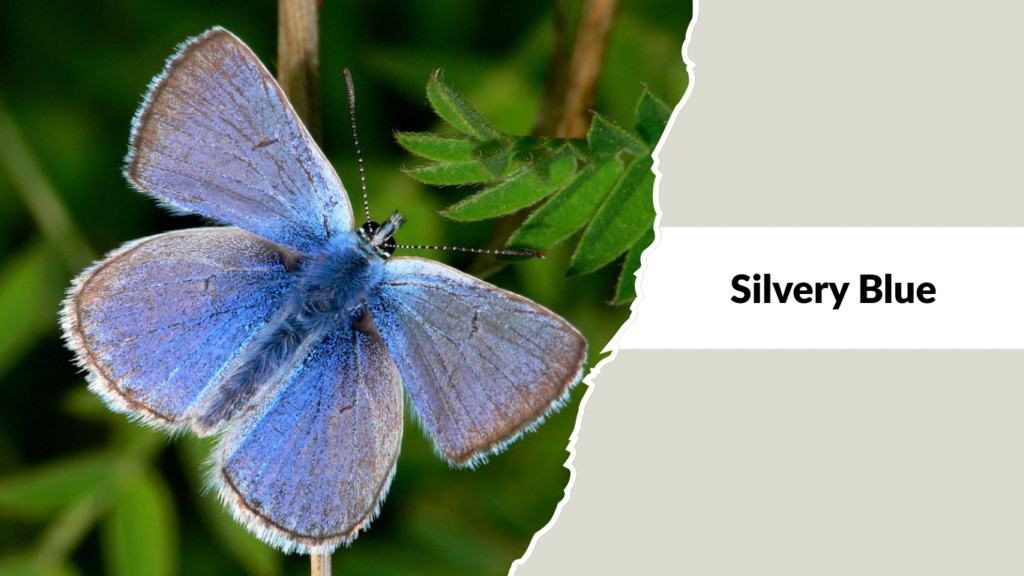
The Silvery Blue is a small North American butterfly known for its metallic blue wings. It commonly inhabits open, sunny areas where legumes grow.
Identification
- Males bright metallic blue
- Females brownish with slight blue tint
- Underside gray with bold black spots
- No tails on wings
- Caterpillars green and ant-tended
Color Pattern
Males exhibit a shimmering, metallic blue upperwing surface, while females appear brown with light blue shading near the body. The underside is pale gray with dark, clearly defined spots.
Habitat
Found in prairies, fields, roadsides, forest openings, and mountain meadows across Canada and the northern U.S. Often stays near legumes such as lupine and vetch.
Lifecycle
Eggs are laid on host plants. Caterpillars live in association with ants for protection. Pupation occurs near the ground. Typically one brood per year, with overwintering in the pupal stage.
17. Green-underside Blue
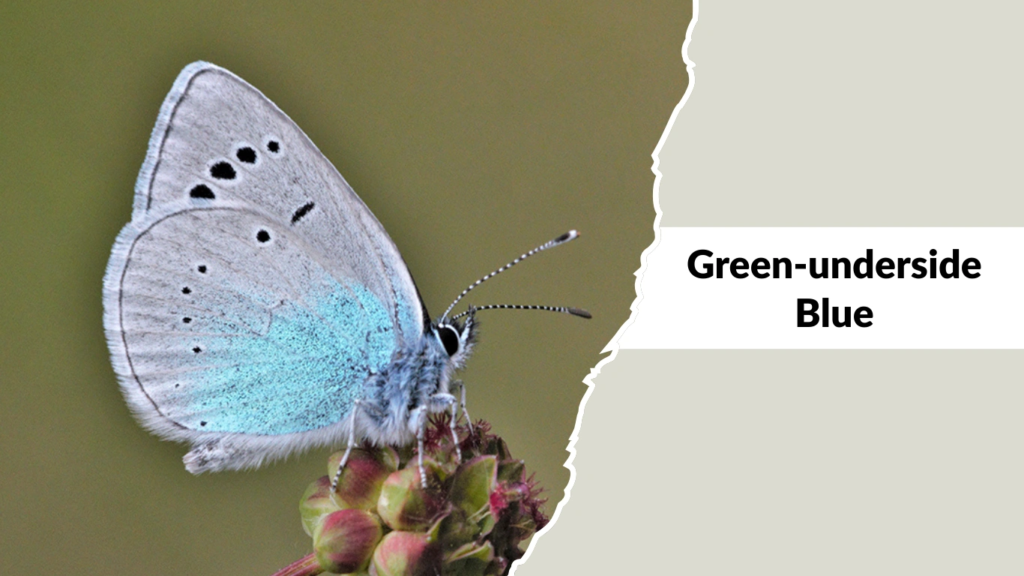
The Green-underside Blue is a European butterfly known for its dazzling blue upperwings and green-tinted undersides, making it one of the most colorful of the Lycaenidae family.
Identification
- Males bright blue; females duller blue-brown
- Underside greenish with white streaks
- Small, rounded wings
- No tails
- Caterpillars green and cryptic
Color Pattern
The upper wings of males are vivid blue, contrasting sharply with the green-tinted underside patterned with white streaks. Females show more muted coloring. This underside pattern is unique among European blues.
Habitat
Found in flower-rich meadows, alpine slopes, grasslands, and sunny forest edges throughout Europe. Strongly associated with host plants like horseshoe vetch and kidney vetch.
Lifecycle
Eggs are laid on flower buds. Caterpillars feed on developing blooms. Pupation occurs near soil level. Usually one brood per year, with adults emerging in spring and early summer.
18. Long-tailed Blue
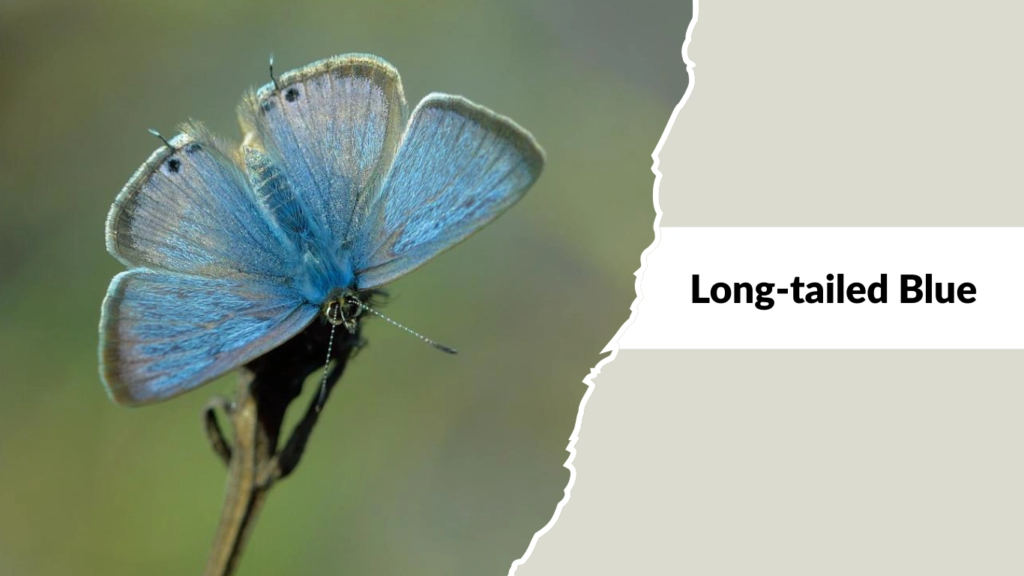
The Long-tailed Blue is a widespread butterfly found across Europe, Asia, Africa, and Australia. Its elegant hindwing tails and shimmering blue wings make it one of the most distinctive members of the blue family.
Identification
- Males bright violet-blue; females brown-blue
- Two long tails on each hindwing
- Underside tan with white streaks and two orange eye-spots
- Slender, fast-flying butterfly
- Caterpillars green with faint striping
Color Pattern
Males display a vivid violet-blue sheen, while females show brown upperwings with a hint of blue. The underside is beautifully patterned with white streaks, black spots, and orange eye-spots, along with long, thin tails that enhance its appearance.
Habitat
Found in meadows, gardens, farmlands, open grasslands, scrublands, and coastal areas. It is highly migratory and occupies a wide geographical range across multiple continents.
Lifecycle
Eggs are laid on legumes. Caterpillars feed on buds and flowers, often hidden within pods. Pupation occurs near plant bases. Multiple broods occur annually in warm climates.
19. Ceraunus Blue
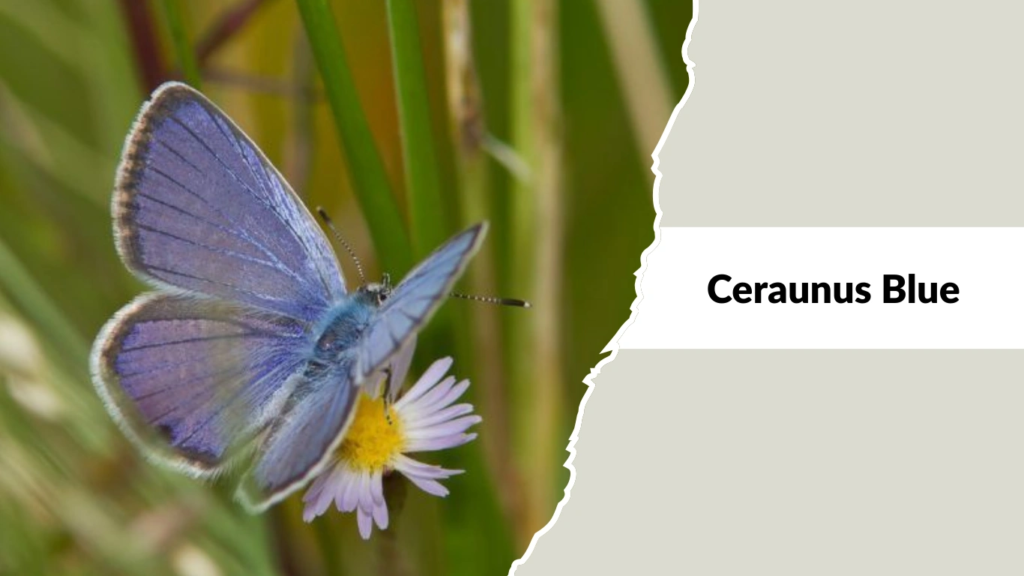
The Ceraunus Blue is a small butterfly common in the southern United States, Mexico, and the Caribbean. It is known for its bluish wings and distinctive underside eye-spots.
Identification
- Males bright blue; females brown with blue centers
- Tiny hindwing tails
- Underside tan with bold black spots and two orange patches
- Very small and delicate
- Caterpillars smooth, green, and slug-like
Color Pattern
Males show bright sky-blue upperwings, while females have brown wings with blue near the body. The underside is tan or beige, decorated with black dots and two distinct orange spots near the hindwing margin.
Habitat
Found in fields, pastures, gardens, dunes, scrublands, and roadside vegetation. Often abundant in sunny, warm regions with plenty of legumes.
Lifecycle
Eggs are placed on flower buds. Caterpillars feed on flowers and seed pods. Pupation occurs on stems or in leaf litter. The species produces several broods each year, especially in tropical and subtropical climates.
20. Reakirt’s Blue
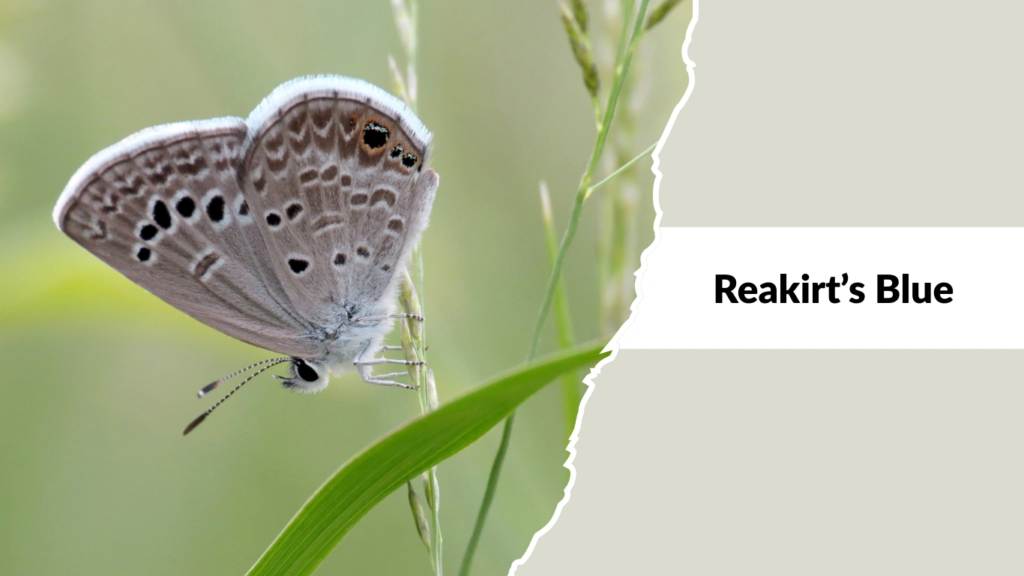
The Reakirt’s Blue is a tiny butterfly native to North and Central America. It has delicate blue wings and a finely patterned underside, often seen flitting close to the ground in sunny areas.
Identification
- Males pale blue; females brownish with some blue
- Small hindwing tails present
- Underside tan with white-rimmed black spots
- Very small size
- Caterpillars green and smooth
Color Pattern
Males display a soft pale blue upperwing, while females show brown wings with bluish shading near the body. The underside features tan coloring, fine white lines, and white-outlined black spots, adding a delicate texture to its appearance.
Habitat
Common in dry fields, desert edges, meadows, gardens, and open scrublands. Especially abundant in the southwestern United States and Mexico.
Lifecycle
Eggs are laid on legumes. Caterpillars feed on buds, flowers, and seed pods. Pupation occurs near host plants. Multiple broods occur each year in warm environments.
21. Boisduval’s Blue
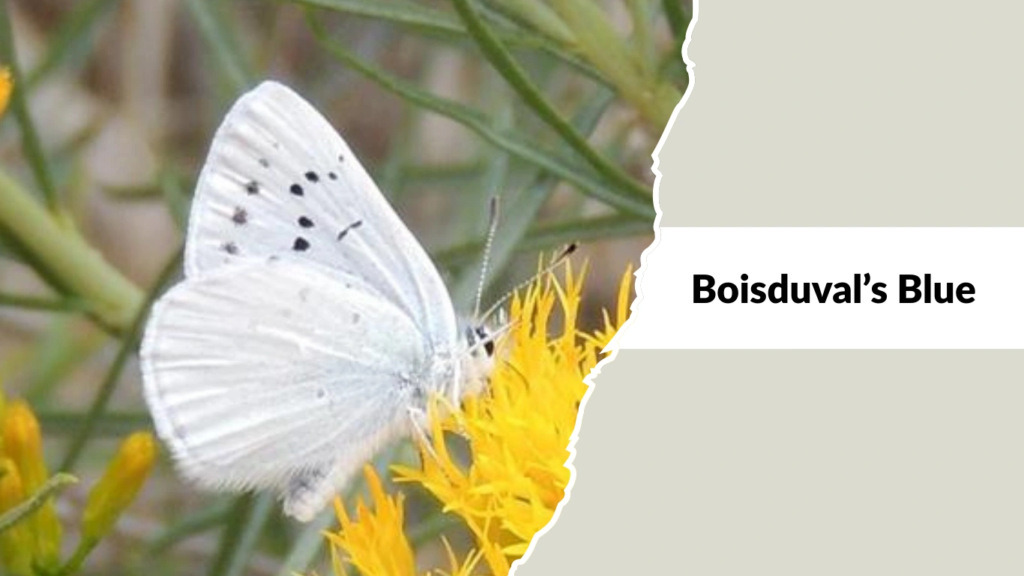
The Boisduval’s Blue is a striking butterfly native to western North America. Known for its deep blue wings and bold underside markings, it inhabits arid regions and open meadows.
Identification
- Males deep sapphire-blue
- Females brown with blue centers
- Underside pale with bold black spots and orange crescents
- No tails on wings
- Caterpillars green and ant-associated
Color Pattern
Males show a rich, sapphire-blue upperwing, while females are chocolate-brown with a blue patch near the thorax. The underside is pale gray with strong black spots and a row of orange crescents, giving it a classic “blue butterfly” look.
Habitat
Found in sagebrush scrub, mountain meadows, open forests, and dry grasslands across the western United States and British Columbia.
Lifecycle
Eggs are laid on lupines and related plants. Caterpillars live in mutual association with ants. Pupation occurs in leaf litter. Usually one brood per year, with overwintering in the pupal stage.
22. Arrowhead Blue

The Arrowhead Blue is a small butterfly found across western North America. It is named for the distinctive triangular shape of its forewings and its crisp blue coloration.
Identification
- Males bright sky-blue; females brown with blue centers
- Short, rounded wings with triangular forewing shape
- Underside gray with fine black spots and faint orange
- No hindwing tails
- Caterpillars green with white stripes
Color Pattern
Males display clear sky-blue wings, while females show brown wings with some blue near the body. The underside is soft gray with neat black spots and lightly faded orange crescents along the hindwing edge.
Habitat
Found in mountain slopes, meadows, sagebrush areas, dry grasslands, and forest openings. Often associated with buckwheat plants, its common larval hosts.
Lifecycle
Eggs are laid on buckwheat. Caterpillars feed on flowers and leaves. Pupation occurs near the base of plants. The species often has multiple broods, especially in warmer regions.
23. Acmon Blue
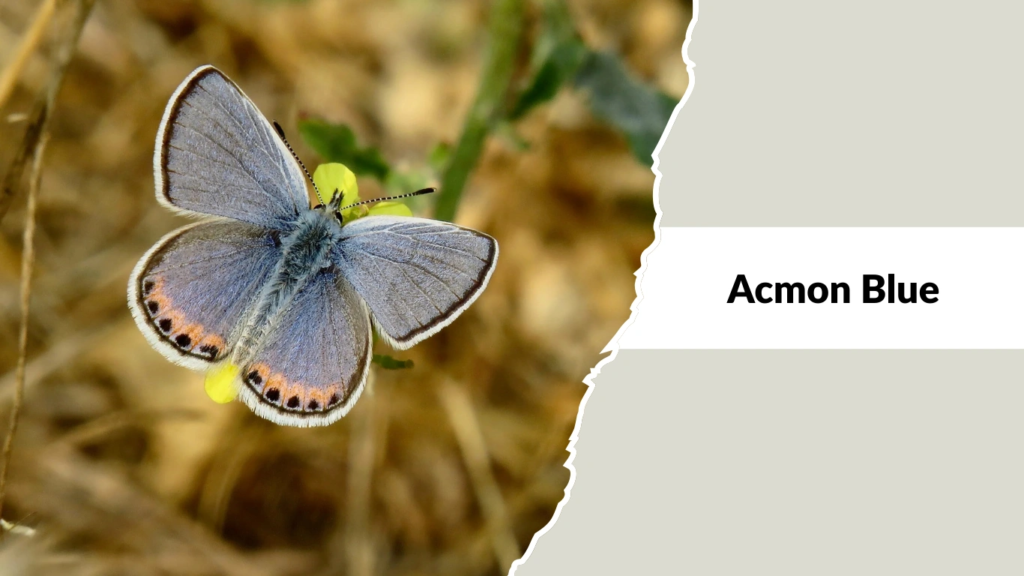
The Acmon Blue is a colorful western North American butterfly recognized for its bright blue males and orange-banded hindwings. It is abundant in dry, open habitats.
Identification
- Males vivid blue; females brown with blue centers
- Hindwings have orange crescents on both sexes
- Underside pale gray with black spots
- Small and compact
- Caterpillars green and often ant-tended
Color Pattern
Males show brilliant blue wings with dark borders, while females have brown wings with a central blue patch. Both sexes exhibit orange crescents on the hindwings and bold black spots on the underside.
Habitat
Found in chaparral, grasslands, sagebrush flats, desert edges, and open woodlands across the western United States.
Lifecycle
Eggs are laid on buckwheat and lotus plants. Caterpillars form mutual relationships with ants. Pupation occurs on or near the ground. This species can produce several broods per year, especially in warm climates.
24. Southern Blue
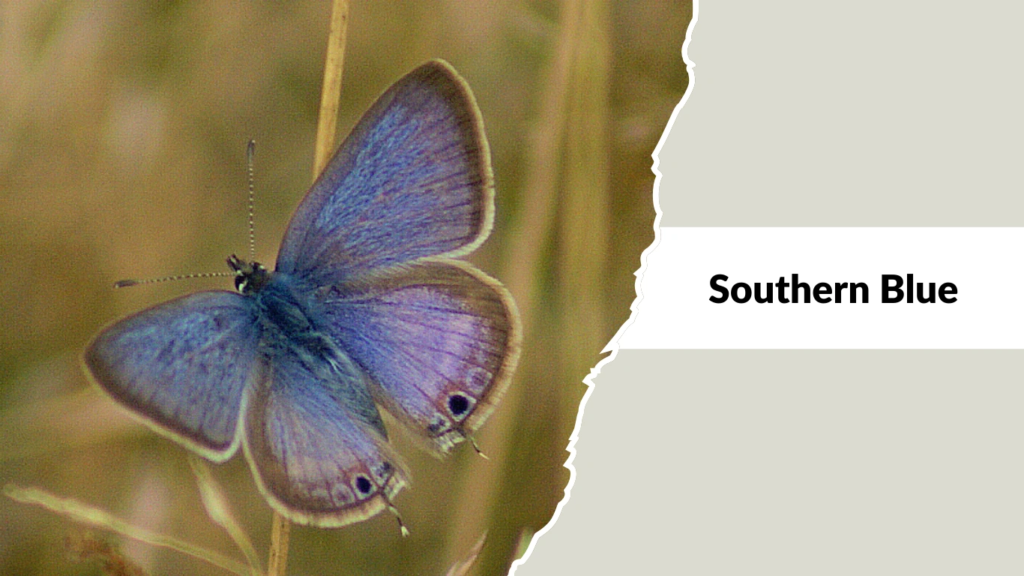
The Southern Blue is a delicate butterfly found across southern Europe, North Africa, and parts of Asia. Its soft blue wings and finely spotted underside make it a graceful member of the Lycaenidae family.
Identification
- Males light sky-blue; females gray-brown with blue near the body
- Underside pale gray with small black spots
- Thin white wing fringes
- Small, rounded wings
- Caterpillars green and camouflaged
Color Pattern
Males display a soft, powdery blue upperwing, while females appear brownish with limited blue shading. The underside is pale gray, dotted with neatly spaced black spots. Its subtle tones help it blend into dry, grassy landscapes.
Habitat
Common in dry meadows, rocky slopes, warm grasslands, and Mediterranean scrub. It often stays near low-growing plants that serve as larval hosts, such as clovers and medicks.
Lifecycle
Eggs are laid on host legumes. Caterpillars feed on leaves and buds. Pupation occurs on stems or leaf litter. The species usually has two broods per year, depending on climate.
25. Mexican Bluewing
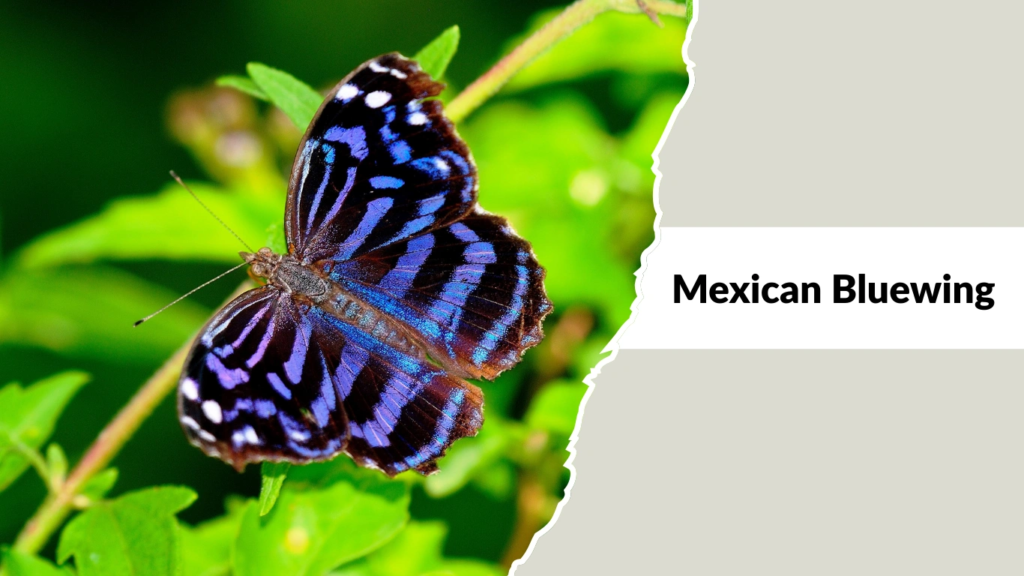
The Mexican Bluewing is one of the most visually stunning blue butterflies, found in Mexico, Central America, and occasionally the southern United States. Its wings display bold, iridescent blue bands framed by deep black.
Identification
- Upperwings black with bright blue or violet bands
- Underside brown with maze-like patterns
- Medium-sized with broad wings
- Caterpillars green with spiny projections
- No tails
Color Pattern
The upper wings are jet black with brilliant electric-blue bands that flash vibrantly in sunlight. The underside is entirely different—rich brown with intricate, maze-like markings, providing camouflage when the wings are closed.
Habitat
Found in tropical forests, shaded trails, riparian zones, and dense shrublands. Occasionally strays into Texas and southern Arizona.
Lifecycle
Eggs are laid on Dalechampia plants. Caterpillars feed on foliage before pupating on stems. Multiple broods occur annually in warm climates, with adults active most of the year.
