
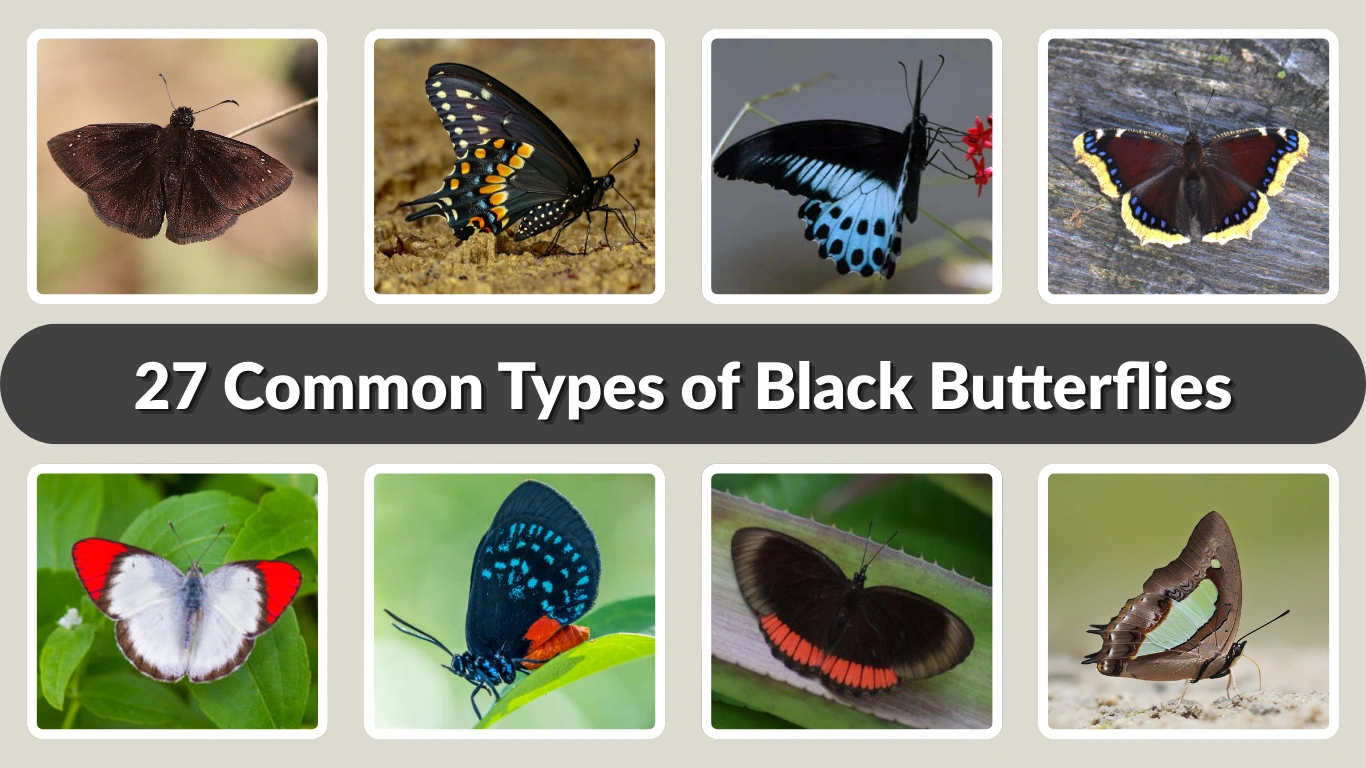
Black butterflies are some of the most striking and mysterious insects in the natural world. Their deep, velvety wing colors, contrasting patterns, and elegant shapes make them stand out in forests, gardens, and meadows across the globe. This collection highlights 27 common black butterfly species, each with its own unique markings, habitats, and life cycles—helping you recognize and appreciate these beautiful creatures more easily.
1. Black Swallowtail
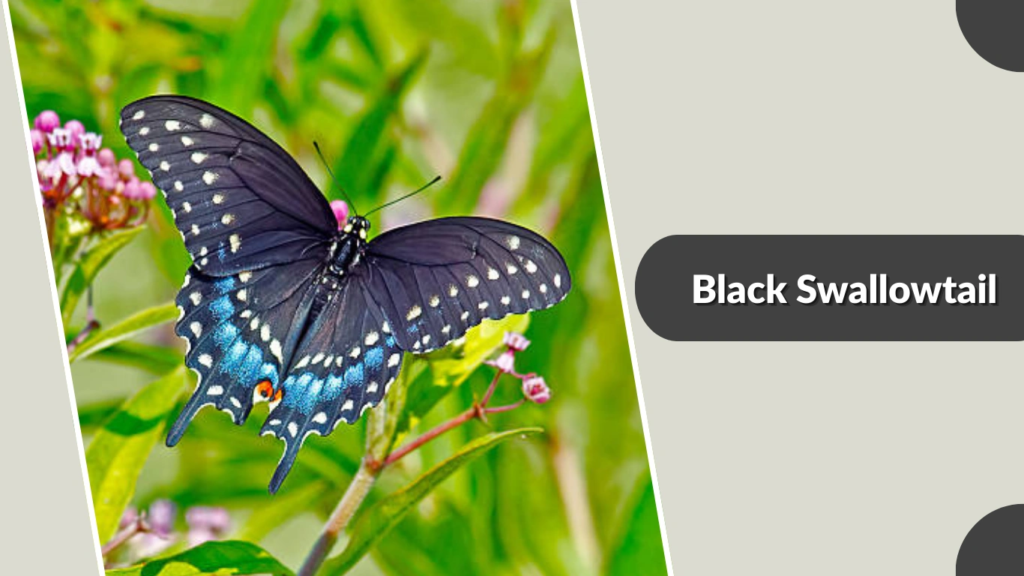
The Black Swallowtail is a striking North American butterfly known for its velvety black wings, bright yellow accents, and elegant tail-like extensions. Common in gardens, meadows, and open fields, it is often attracted to host plants like parsley, dill, and fennel. This species is admired for its bold coloration and easily observed life cycle.
Identification
- Black wings with two rows of yellow spots
- Blue scaling on hindwings (more vivid in females)
- Red-orange eyespots near tail
- Hindwings have long swallow-like tails
- Males have more yellow patterning; females appear darker
Color Pattern
The Black Swallowtail displays deep black wings contrasted by yellow spots that curve along the edges. Females exhibit blue iridescence on the hindwings, while males show a stronger yellow band. Red-orange eyespots near the hindwing tails add an additional splash of color, making it one of the most recognizable butterflies in North America.
Habitat
This species thrives in open, sunny environments such as fields, gardens, farmlands, roadsides, and prairies. Because its caterpillars feed on plants in the carrot family, it is often found near human-cultivated herbs like parsley, dill, fennel, and celery. The adaptable nature of the Black Swallowtail allows it to inhabit a wide range of elevations and climates.
Lifecycle
The lifecycle begins when females lay single eggs on host plants. After hatching, the caterpillar progresses through several instars, transforming from a bird-dropping mimic to a green, striped larva. Pupation occurs in a chrysalis attached to stems or twigs, where the butterfly completes metamorphosis. Black Swallowtails typically have 2–3 broods per year, with some chrysalises overwintering until spring.
2. Pipevine Swallowtail
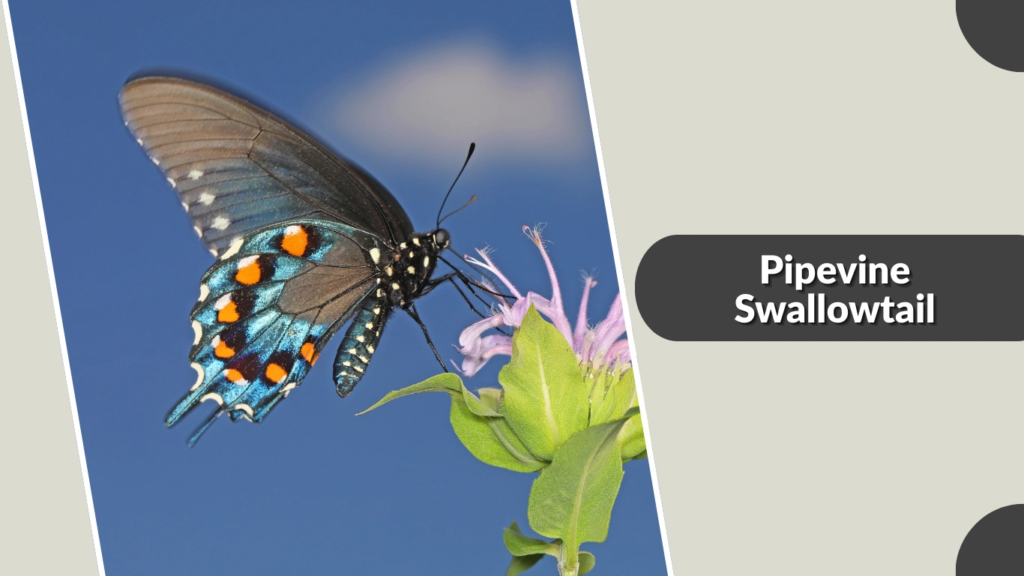
A glossy, iridescent black butterfly commonly found in the Americas, the Pipevine Swallowtail is known for its metallic blue hindwings and its dependence on pipevine plants, which provide toxic protection to both caterpillars and adults.
Identification
- Velvety black forewings
- Metallic blue hindwings (more intense in males)
- Single row of pale spots on forewings
- Orange spots on underside of hindwings
- Long swallowtail extensions
Color Pattern
The upper wings appear mostly black, transitioning into shimmering blue on the hindwings. The underside features vivid orange spots bordered by iridescent blue. These bright warning colors signal toxicity to predators.
Habitat
Pipevine Swallowtails prefer woodlands, meadows, streamsides, and gardens where pipevine plants grow. They thrive in warm climates and are common across the southern and eastern United States, Mexico, and parts of Central America.
Lifecycle
Females lay eggs in clusters on pipevine leaves. Caterpillars hatch as dark, spiny larvae and feed on toxic foliage, which they retain as chemical defense. Pupation occurs in a loosely attached chrysalis. Multiple broods occur yearly in warm regions, with some pupae overwintering.
3. Spicebush Swallowtail
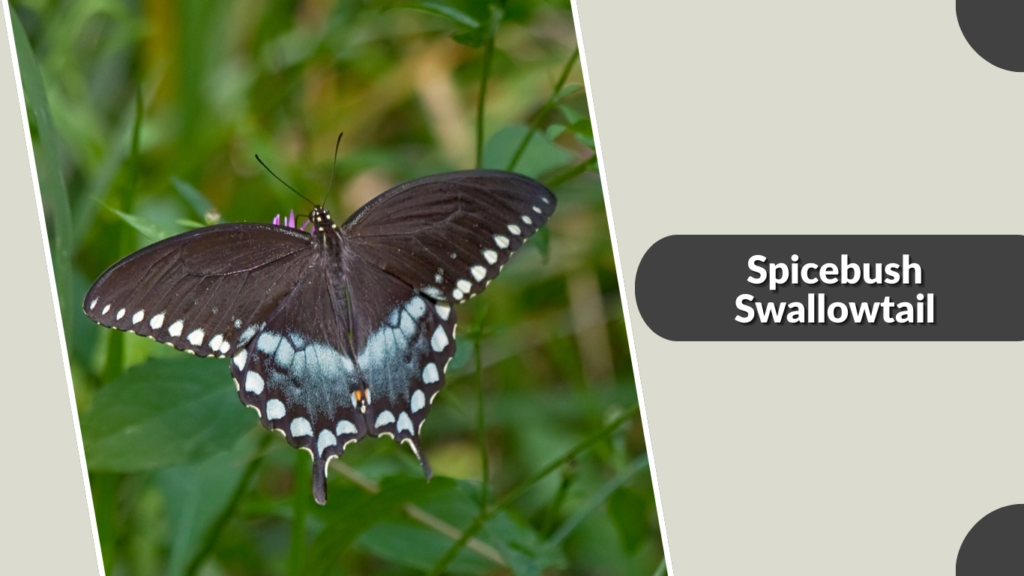
A smooth, elegant black butterfly, the Spicebush Swallowtail is recognized by its unique green-blue hindwing wash and its association with spicebush and sassafras plants.
Identification
- Black wings with curved pale spots
- Blue or blue-green hindwing band (more vibrant in females)
- Two orange spots near the hindwing tails
- Caterpillars resemble snake eyes for defense
- Shorter tails compared to other swallowtails
Color Pattern
The upper wings are predominantly deep black, accented with rows of pale spots and a green-blue iridescent patch on the hindwings. The underside shows two bright orange eyespots and powdery blue shading, giving the species a distinctive appearance.
Habitat
Common in deciduous forests, shaded wetlands, woodland edges, and gardens, the Spicebush Swallowtail stays close to areas where spicebush and sassafras grow. It is widespread across the eastern and southeastern United States.
Lifecycle
Eggs are laid singly on host plants. Caterpillars progress from bird-dropping mimics to bright green larvae with dramatic eyespots. They form a leaf-wrapped chrysalis for pupation. Typically, two to three broods occur annually, and late-season chrysalises overwinter.
4. Polydamas Swallowtail
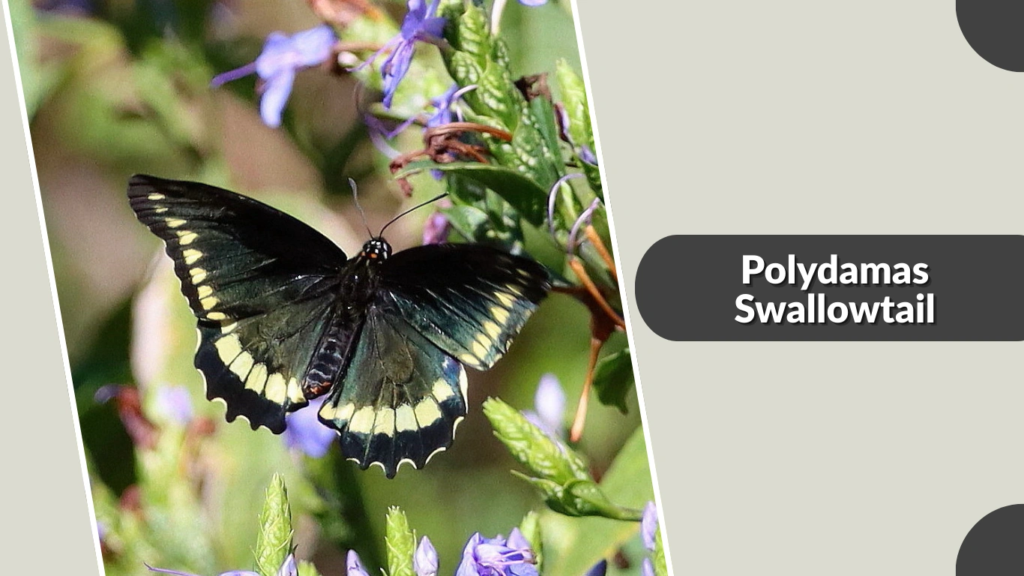
The Polydamas Swallowtail, also known as the Tailless Swallowtail, is a distinctive black butterfly lacking the typical tail extensions. It is widespread in tropical and subtropical regions and is closely tied to Aristolochia (pipevine) host plants.
Identification
- Broad black wings with no tails
- Yellow or pale cream spots along wing margins
- Underside mirrors the upper pattern
- Robust body with strong flight
- Caterpillars are dark with orange tubercles
Color Pattern
The wings are sooty black with a band of pale yellow spots tracing the edges. Lacking tails, it has a more triangular appearance compared to other swallowtails. The underside follows the same color placement but is slightly duller.
Habitat
Found in tropical forests, gardens, open fields, and disturbed areas, especially where Aristolochia plants grow. Its range includes the southern United States, Central America, South America, and the Caribbean.
Lifecycle
Eggs are laid in clusters on host plants. Caterpillars feed on toxic pipevine leaves, gaining chemical protection. After several molts, they form a chrysalis attached to stems. Multiple broods occur yearly in warm climates.
5. Indra Swallowtail
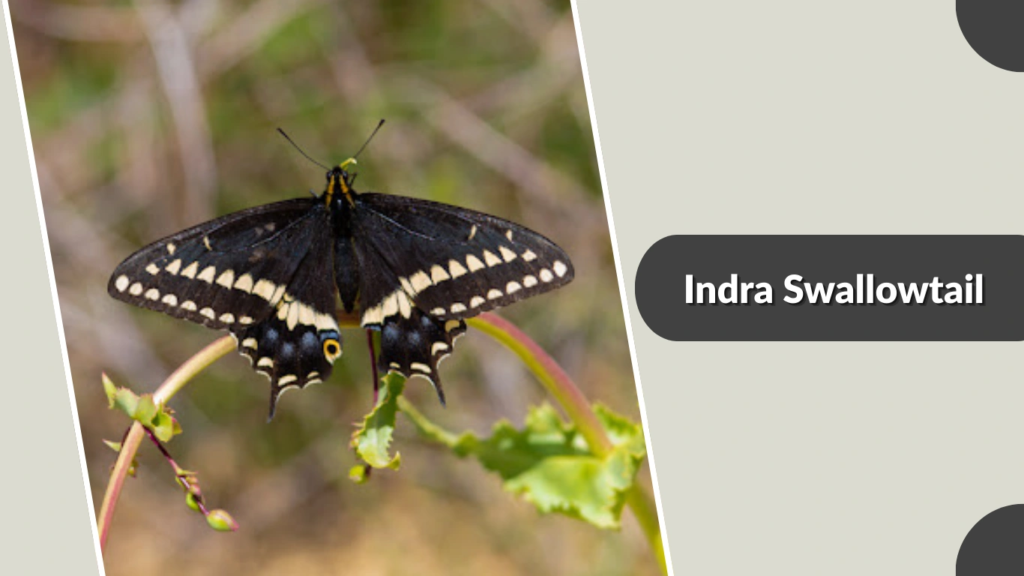
The Indra Swallowtail is a rare, striking black butterfly native to western North America. Known for its sharp wing shape and minimalistic pattern, it inhabits rugged, dry landscapes.
Identification
- Deep black wings with pale cream or yellow spots
- Strongly pointed hindwings with short tails
- Sparse patterning compared to other swallowtails
- Underside is dark with subtle banding
- Caterpillars have green bodies with dark bands
Color Pattern
The upper wings are jet black with a minimal row of faint cream spots. The hindwings show a subtle dusting of pale color near the margins. The underside echoes the pattern but is darker and more matte.
Habitat
This species lives in arid deserts, rocky canyons, foothills, and high-elevation slopes. It favors areas near its host plants, primarily species of desert parsley (Lomatium).
Lifecycle
Females lay single eggs on host plants. Caterpillars feed slowly in harsh environments and camouflage well. The chrysalis blends with rock or bark, often overwintering. Only one brood per year is typical due to its dry, limited habitat.
6. Old World Swallowtail (Dark Morph)
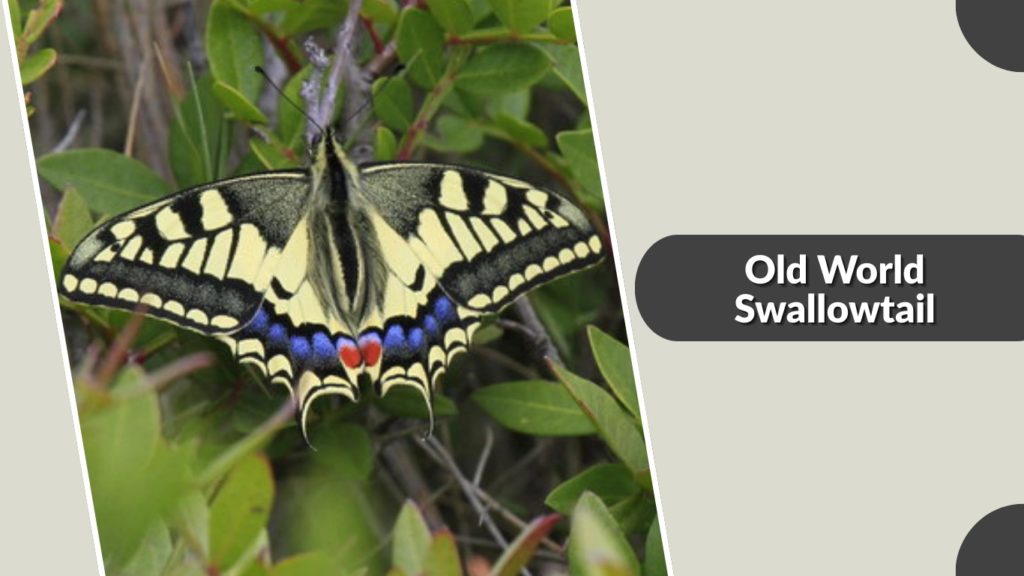
The Old World Swallowtail occasionally appears in a dark morph form, displaying richer black tones than the typical yellow form. This variation occurs mainly in cooler or mountainous regions where darker pigmentation provides adaptive advantages.
Identification
- Darkened wings with muted yellow patches
- Prominent black veining
- Blue and red spots near hindwing tails
- Longer, narrow tails
- Caterpillars similar to typical form but slightly darker
Color Pattern
The dark morph features deep black wings with subdued yellow areas, giving a more shadowed, dramatic appearance. Hindwings show blue crescents and red eyespots, though less bright than the standard form.
Habitat
Found in meadows, alpine valleys, grasslands, and hill slopes across Europe, Asia, and North Africa. Dark morphs appear more often in cooler microclimates, particularly mountains and northern ranges.
Lifecycle
Eggs are laid singly on host plants in the carrot family. Caterpillars pupate as exposed or sheltered chrysalises, depending on climate. Usually two broods per year, with northern populations sometimes limited to one. Overwintering occurs in the chrysalis stage.
7. Common Mormon (Female, Dark Form)

The Common Mormon female often mimics toxic swallowtails, producing multiple forms—one of which is a striking dark morph that resembles the unpalatable Common Rose butterfly.
Identification
- Predominantly black wings
- White or pale spots forming curved bands
- Hindwings may show red or orange patches
- No tails in some forms; short tails in others
- Caterpillars resemble bird droppings early on
Color Pattern
The wings are rich black, crossed by white streaks and spots, especially on the hindwings. Some morphs display scarlet patches near the lower margin, enhancing the mimicry effect. The patterns vary depending on geographic region and mimic model.
Habitat
Common in tropical forests, villages, gardens, plantations, and open woodlands across South Asia and Southeast Asia. The species thrives near citrus plants, its primary larval hosts.
Lifecycle
Females lay eggs singly on citrus leaves. Caterpillars transition from camouflaged brown-and-white young larvae to vibrant green late instars. They pupate on nearby branches. Most regions support multiple broods year-round, especially in warm tropical climates.
8. Great Mormon
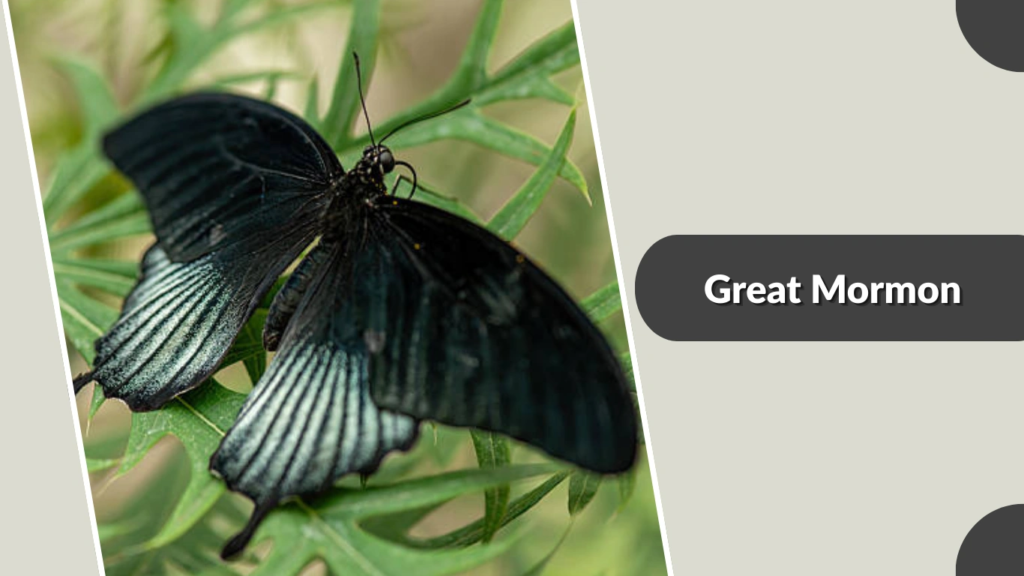
The Great Mormon is a large, impressive black butterfly with multiple female forms, many of which mimic other toxic species. It is widespread in South and Southeast Asia and is known for its bold wing shape and shimmering colors.
Identification
- Black wings with broad surface area
- Males have uniform black wings with blue sheen
- Females show variable patterns: white bands, red spots, or blue patches
- Long swallowtail extensions
- Caterpillars are green with fleshy projections
Color Pattern
Males display velvety black wings with a subtle blue iridescent shine, especially on the hindwings. Female morphs vary greatly, featuring white streaks, red patches, or blue highlights depending on region. The underside typically bears red and white markings.
Habitat
Found in evergreen forests, gardens, rural plantations, and river valleys, especially in humid tropical regions of India, Myanmar, Thailand, and surrounding countries. They stay close to host plants like citrus and wild lime.
Lifecycle
Eggs are laid singly on tender citrus leaves. Caterpillars evolve from bird-dropping mimics to plump green larvae. Pupation occurs on stems or leaves in a seasonal chrysalis. Most tropical populations have continuous broods year-round.
9. Blue Mormon
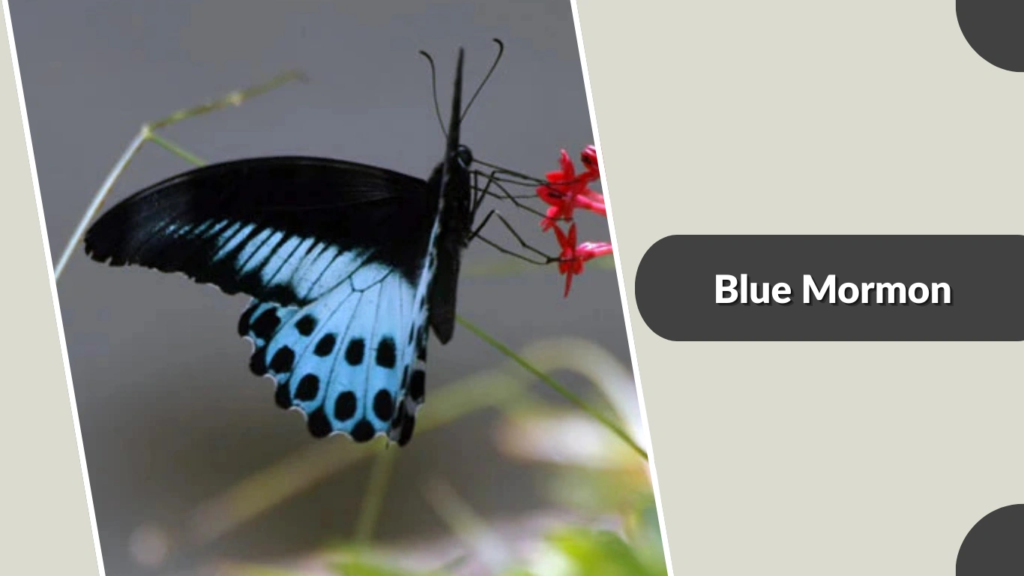
The Blue Mormon is a striking black butterfly with bold blue patches, making it one of India’s most visually dramatic swallowtails. It is the second-largest swallowtail in India and often seen in shaded, moist areas.
Identification
- Deep black wings with large blue patches
- Hindwings feature red and white streaks near the margins
- Long, rounded tails
- Males show stronger blue coloration
- Caterpillars green with spines and smooth texture
Color Pattern
Upper wings are jet black with brilliant blue panels stretching across the hindwings and occasionally the forewings. Red and white accents appear on the underside. The blue iridescence shifts with light, creating a vivid contrast.
Habitat
Prefers moist forests, shaded gardens, plantations, and riparian zones. Common in southern India and Sri Lanka, especially near citrus plants and humid woodland environments.
Lifecycle
Eggs are laid singly on citrus family plants. Caterpillars feed and grow rapidly in warm climates. Pupation takes place on leaves or branches. The species often produces multiple broods per year, continuing through most of the warm season.
10. Red Helen
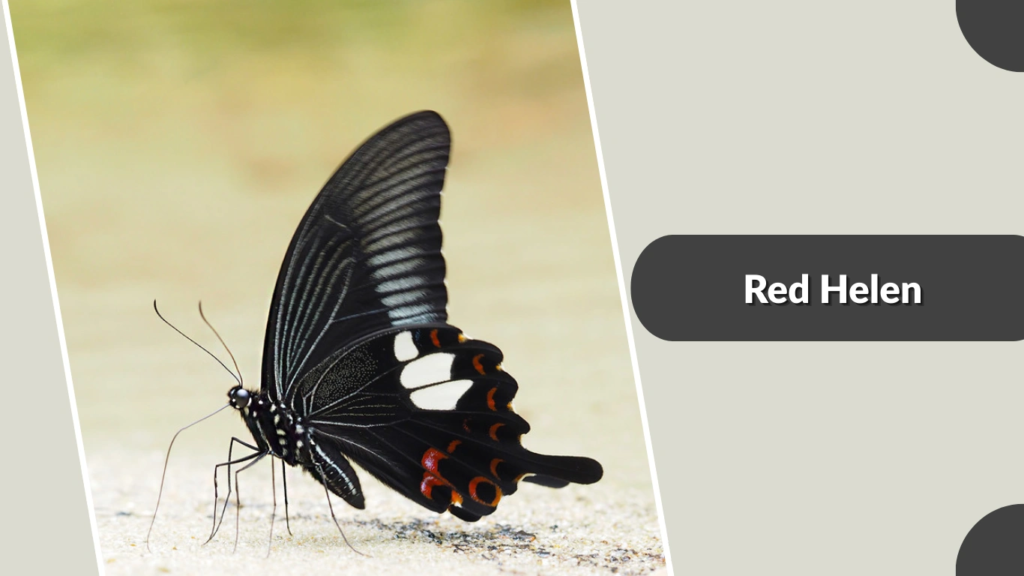
The Red Helen is a bold, dark swallowtail marked by distinctive red patches on its hindwings. Found throughout South and Southeast Asia, it is known for its strong, gliding flight and preference for forested regions.
Identification
- Broad black wings with curved forewing tips
- Prominent red patches on hindwings
- White or pale streaks near the wing bases
- Long tails with rounded tips
- Caterpillars green with a large saddle-shaped marking
Color Pattern
The wings are deep black, accented by bright red patches on the hindwings and occasional white streaks on the forewings. The underside mirrors these markings but appears slightly muted. The red patches serve as both warning and distraction mechanisms against predators.
Habitat
Common in evergreen forests, hilly woodlands, coastal forests, and shaded plantations. It is widely distributed across India, Southeast Asia, and parts of southern China. The butterfly often appears near streams and moist forest edges.
Lifecycle
Eggs are laid singly on host plants such as citrus and wild lime. Caterpillars grow quickly in warm climates and pupate on twigs or leaves. Most populations have multiple broods throughout the year, especially in tropical regions.
11. Great Helen
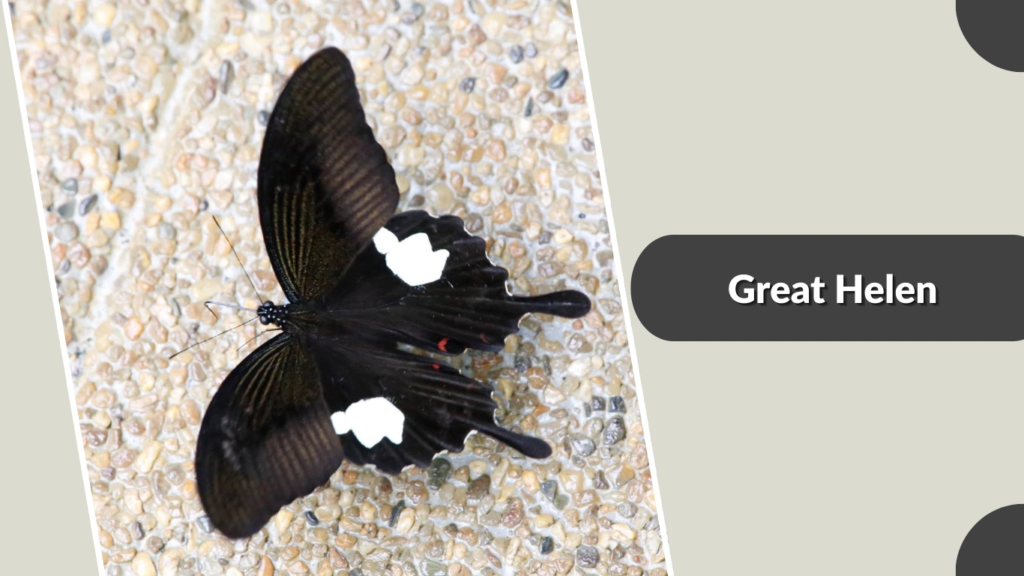
The Great Helen is a large, swift-flying black swallowtail recognized by its flowing tail structure and white spots on the hindwings. It primarily inhabits forests and wooded valleys across Asia.
Identification
- Large black wings with long, curved tails
- White or pale yellow spots on hindwings
- Smooth black forewings with minimal markings
- Males and females similar in appearance
- Caterpillars green with spines and a saddle-like hump
Color Pattern
The butterfly exhibits velvety black wings, highlighted by a row of white or pale cream spots across the hindwings. The forewings remain mostly unmarked, creating a clean contrast. The underside displays similar white spots and a soft reddish tint.
Habitat
Found in dense forests, deep valleys, moist hillsides, and shaded pathways. Its range extends from India through Southeast Asia to southern China and Indonesia. Prefers humid environments with plenty of host plants in the citrus family.
Lifecycle
Eggs are laid on the leaves of Citrus species and other Rutaceae plants. Caterpillars develop rapidly in warm, moist climates. Pupation occurs in a loosely attached chrysalis. The species typically produces several broods annually, depending on local climate conditions.
12. Malabar Raven
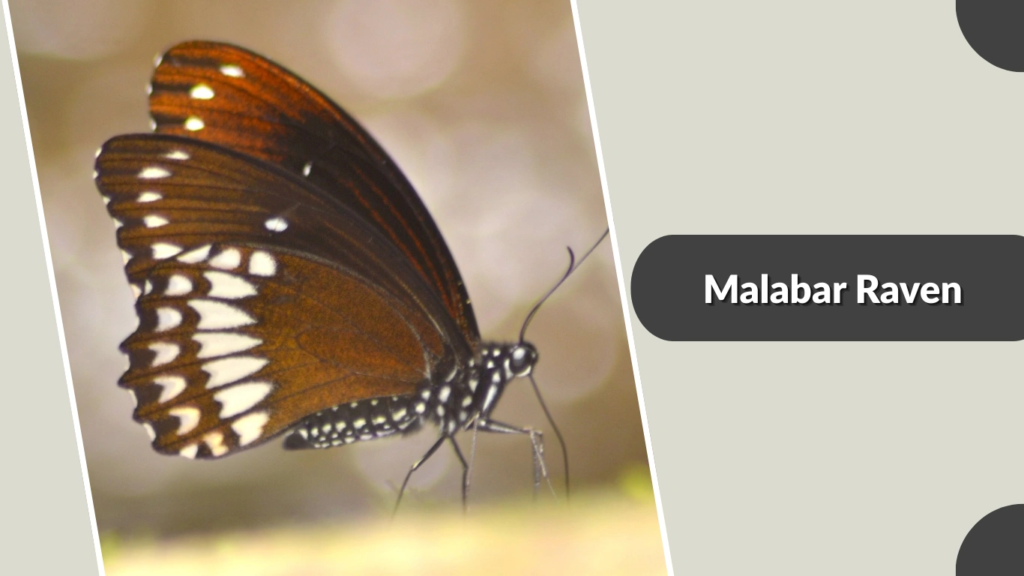
The Malabar Raven is a glossy black butterfly native to the Western Ghats of India. Its sleek appearance and white markings make it a distinctive species of the crow and raven butterfly group.
Identification
- Jet-black wings with distinct white spots on forewings
- Hindwings plain black with small marginal dots
- Slender body with smooth flight pattern
- Caterpillars green with spines and white bands
- No tails on wings
Color Pattern
The wings are predominantly black, with a row of white, rounded spots on the forewings forming a clean contrast. The hindwings are solid black, sometimes showing faint marginal dots. The underside repeats the pattern but appears slightly duller.
Habitat
Common in the Western Ghats’ evergreen forests, plantations, village edges, and moist shrublands. Often seen near its host plants such as Glycosmis and other Rutaceae species.
Lifecycle
Eggs are laid singly on tender leaves. Larvae develop through several green instars with banded markings. Pupation occurs on stems or leaf surfaces. The species produces multiple broods through most of the year, especially in humid seasons.
13. Common Raven
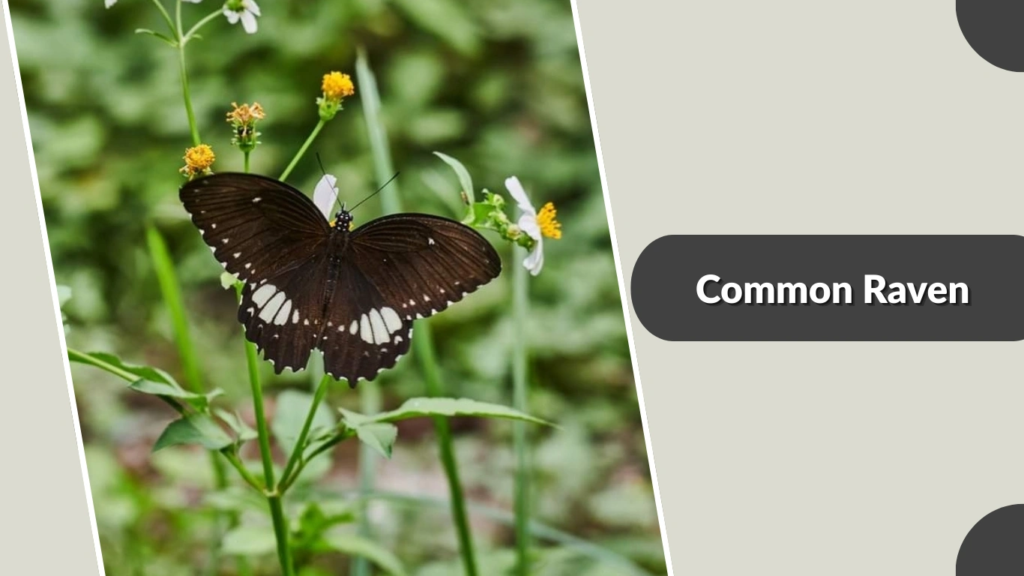
The Common Raven butterfly, despite its simple name, is a striking black species found across South and Southeast Asia. It resembles the Common Crow but has bolder white patterns.
Identification
- Black wings with large white patches on forewings
- Hindwings mostly black with small pale spots
- Robust body with steady soaring flight
- Caterpillars spiny with red and white markings
- No tail extensions
Color Pattern
The upper wings are deep black with wide, creamy-white patches on the forewings that create a strong visual contrast. Hindwings are mostly black with a scattered row of pale dots. The underside is similar but softer in tone.
Habitat
Found in tropical forests, plantations, gardens, and open rural landscapes. Frequently seen basking or feeding on flowers and rotting fruits. Prefers habitats with dense shrubs and host plants from the Rutaceae family.
Lifecycle
Eggs are laid on leaves of host plants in sunny locations. Caterpillars feed actively and develop bold coloration. Pupation occurs on stems or walls. The butterfly usually has continuous broods in warm climates, emerging throughout the year.
14. Common Crow Butterfly
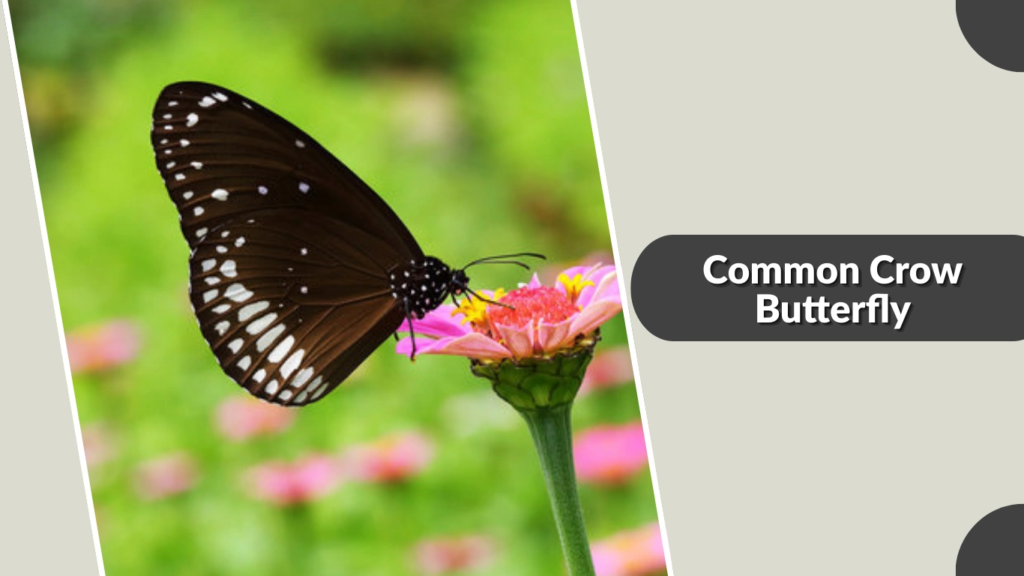
The Common Crow is a widespread black butterfly known for its glossy wings and smooth, unhurried flight. It is part of the Danaid group and often seen migrating in large numbers.
Identification
- Shiny black wings with rows of white spots
- Forewings elongated with neat white margins
- Hindwings rounded with smaller spot patterns
- Caterpillars striped with yellow, white, and black bands
- No wing tails
Color Pattern
The wings are deep, glossy black, bordered by white, evenly spaced spots, especially along the forewing edges. The hindwings show a cluster of white dots near the margins. The underside repeats this pattern but appears more matte.
Habitat
Found in open forests, gardens, agricultural fields, scrublands, and coastal zones. It is common across India, Southeast Asia, and Australia. The species is highly adaptable and often thrives in urban green spaces.
Lifecycle
Eggs are laid singly on milkweed plants. The caterpillars feed on toxic foliage, gaining chemical defenses. Pupation occurs in a beautiful golden chrysalis. The species produces multiple broods annually and may migrate seasonally in large groups.
15. Brown King Crow
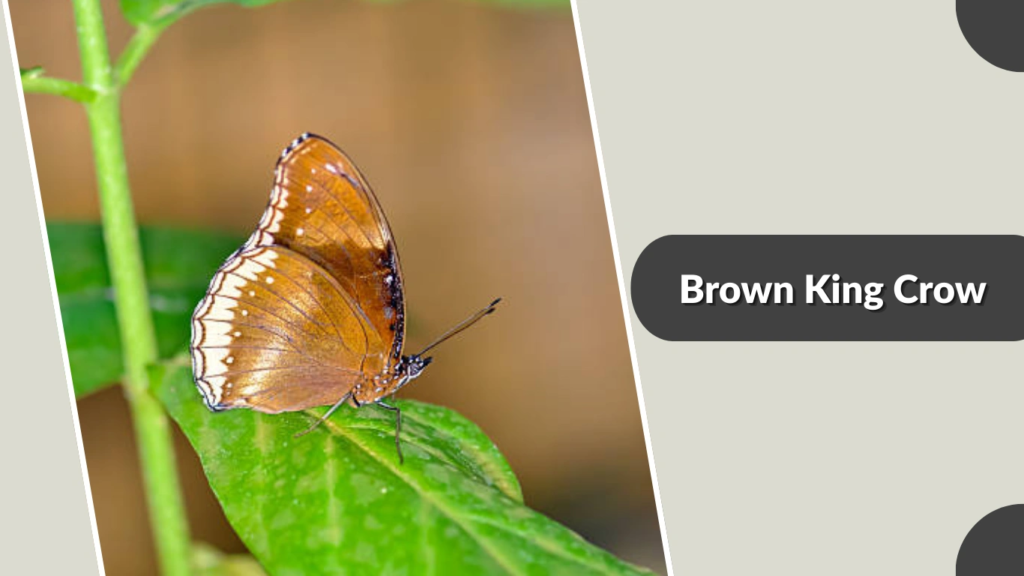
The Brown King Crow is a dark butterfly closely related to the Common Crow but distinguished by its brown-black wing tone and bluish sheen.
Identification
- Dark brown to black wings with small white spots
- Slight bluish or purplish sheen in sunlight
- Hindwings rounded and smooth-edged
- Caterpillars striped with yellow and black
- No tails
Color Pattern
The wings appear rich brown-black, sometimes shimmering with bluish iridescence. White spots are fewer and smaller compared to the Common Crow, giving it a more subdued appearance. The underside is similar but paler.
Habitat
Common in moist forests, mangroves, coastal areas, gardens, and shaded plantations. Distributed across South Asia, Southeast Asia, and parts of Oceania. Often seen feeding on nectar, rotting fruits, and tree sap.
Lifecycle
Eggs are laid on milkweed relatives. Caterpillars absorb toxins that protect both larva and adult. They pupate into a metallic greenish-gold chrysalis. Typically, the species produces many broods throughout the warm months, especially in tropical regions.
16. Black Rajah

The Black Rajah is a swift-flying black butterfly recognized by its bold white bands and sharp wing shape. It is commonly found in South and Southeast Asia, especially in forested and semi-urban areas.
Identification
- Black wings with prominent white diagonal bands
- Angular, pointed forewings
- Hindwings with small tails and fine spotting
- Caterpillars spiny with leaf-mimicking coloration
- Strong, rapid flight pattern
Color Pattern
The wings are dark black, slashed by a wide white band that runs diagonally across the forewings and continues onto the hindwings. Small white dots appear along the margins. The underside mirrors the pattern but in softer brown and cream tones.
Habitat
Found in forests, gardens, wooded parks, and roadside vegetation, with a preference for areas containing its host plants such as Trema and Grewia. Often seen basking on sunlit ground or feeding on fermenting fruit.
Lifecycle
Eggs are laid on young leaves of host trees. The caterpillars develop through spiny instars, blending well with foliage. Pupation occurs on twigs or bark. The species typically produces several broods per year, depending on climate.
17. Common Nawab (Dark Morph)
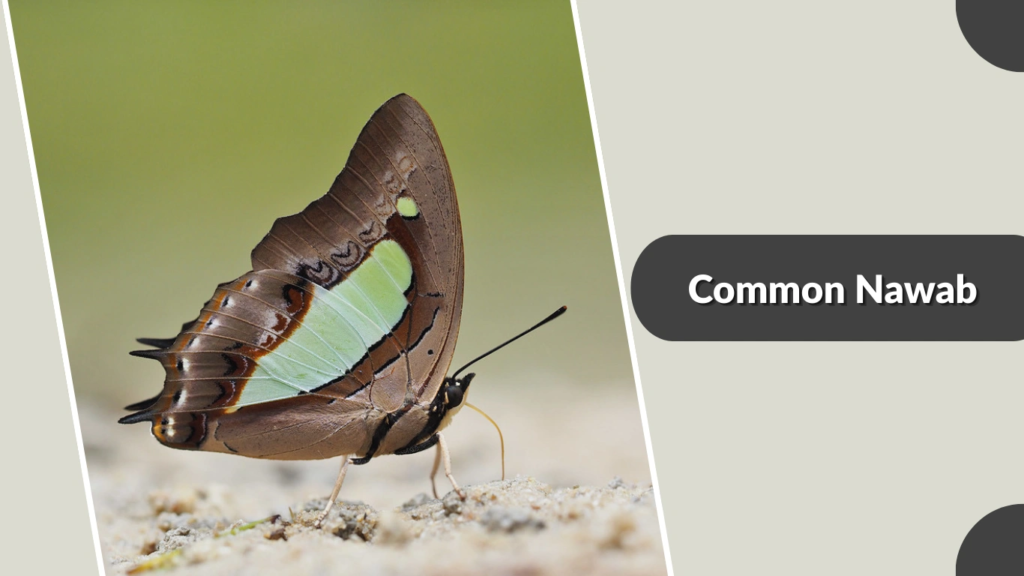
The Common Nawab is a fast-flying forest butterfly known for its angular wings and green bands. Its dark morph replaces the usual brown and green contrast with deeper, darker tones.
Identification
- Dark brown to black wings with green or bluish band
- Sharp, triangular forewings
- Hindwings have short tails
- Caterpillars bright green with eye-like spots
- Strong, gliding flight
Color Pattern
In the dark morph, the wings are nearly black, crossed by a green or blue-green band running diagonally across both wings. The underside shows richer brown shades with pale green highlights and delicate spotting near the edges.
Habitat
Common in tropical forests, bamboo thickets, plantations, and shaded pathways across South and Southeast Asia. Often seen mud-puddling near streams or resting on tree trunks.
Lifecycle
Females lay eggs on young leaves of Dillenia and other host plants. Caterpillars develop quickly, forming a distinctive green form with eye-spots. Pupation occurs on stems or leaf surfaces. Multiple broods occur annually in warm, humid climates.
18. Black Hairstreak
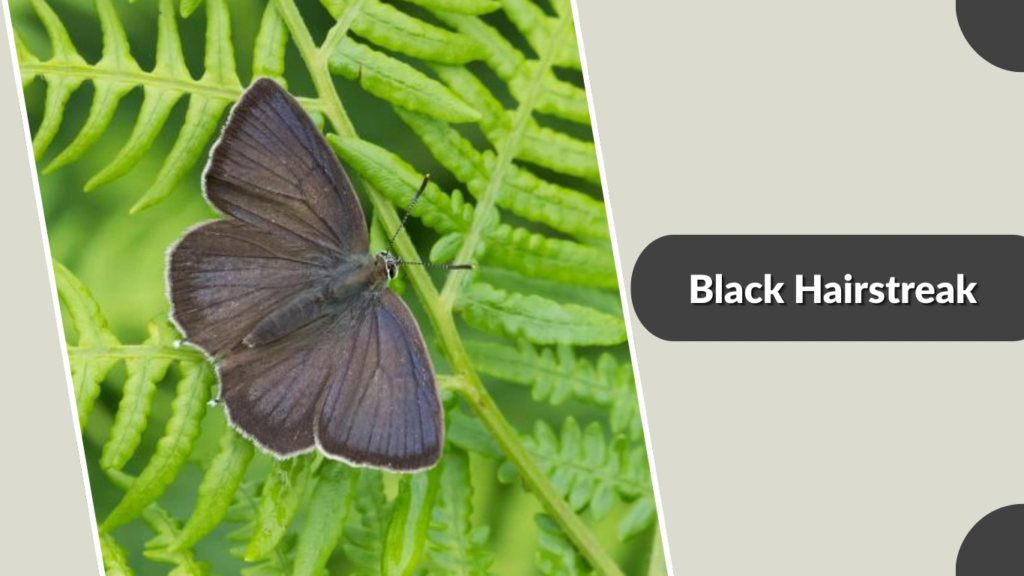
The Black Hairstreak is a small, dark butterfly native to parts of Europe. Though not completely black, its deep brown-black wings and delicate tails place it among the darker hairstreak species.
Identification
- Dark brown-black wings with fine white fringe
- Small orange crescents on hindwings
- Tiny tail filaments
- Caterpillars green and well-camouflaged
- Slender body with fluttering flight
Color Pattern
The wings appear dark brown to near-black, edged with a delicate white margin. The hindwings carry orange crescents near the tails. The underside is paler brown with clean white streaks typical of hairstreak species.
Habitat
Found in hazel and blackthorn thickets, woodland edges, scrublands, and hedgerows. It is most common in the UK and parts of central Europe, requiring warm, sheltered patches of vegetation.
Lifecycle
Eggs are laid on blackthorn twigs. Caterpillars feed on tender buds and leaves, developing slowly. Pupation occurs near the ground in leaf litter. The species has one brood per year, with adults emerging in early summer.
19. Atala Butterfly
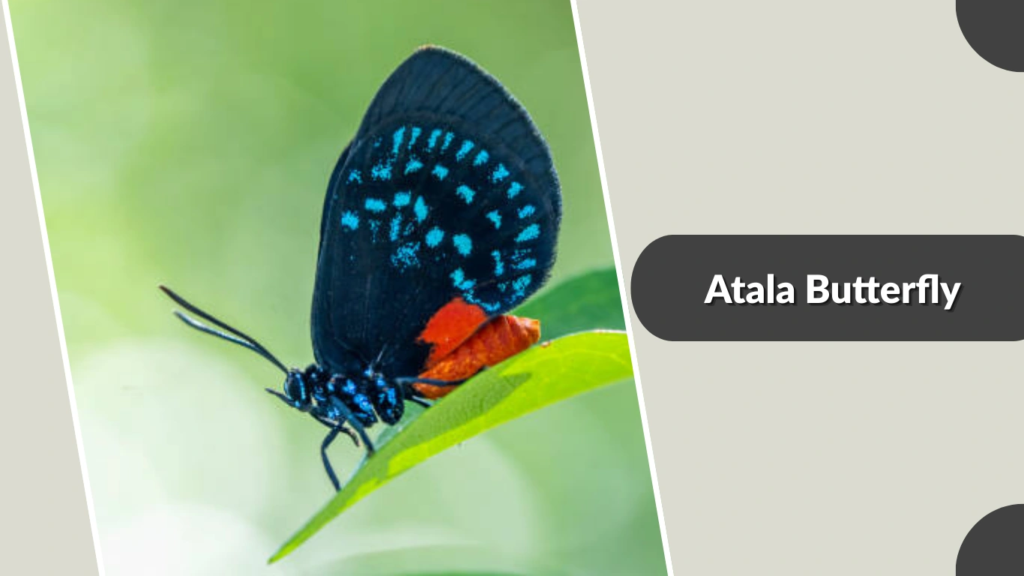
The Atala Butterfly is a small, jewel-like black butterfly native to southern Florida, the Bahamas, and the Caribbean. Its velvety black wings and vivid red abdomen make it unmistakable.
Identification
- Black wings with subtle iridescence
- Bright red abdomen
- Small blue spots on hindwings
- Caterpillars bright red with yellow spots
- No wing tails
Color Pattern
The wings are velvety black, contrasted by tiny blue hindwing spots. The abdomen is a striking scarlet red, visible both in flight and at rest. The underside mirrors the black coloration with slightly brighter blue spotting.
Habitat
Lives in pine rocklands, coastal hammocks, gardens, and areas with coontie plants, its primary host. It thrives in warm, subtropical climates and has rebounded from near-extinction due to restoration of native plants.
Lifecycle
Eggs are laid in clusters on coontie leaves. Caterpillars feed on toxic cycads, gaining chemical protection. Pupation occurs on leaves or nearby surfaces. Multiple broods occur annually in warm regions, with populations active most of the year.
20. Red-rim Butterfly
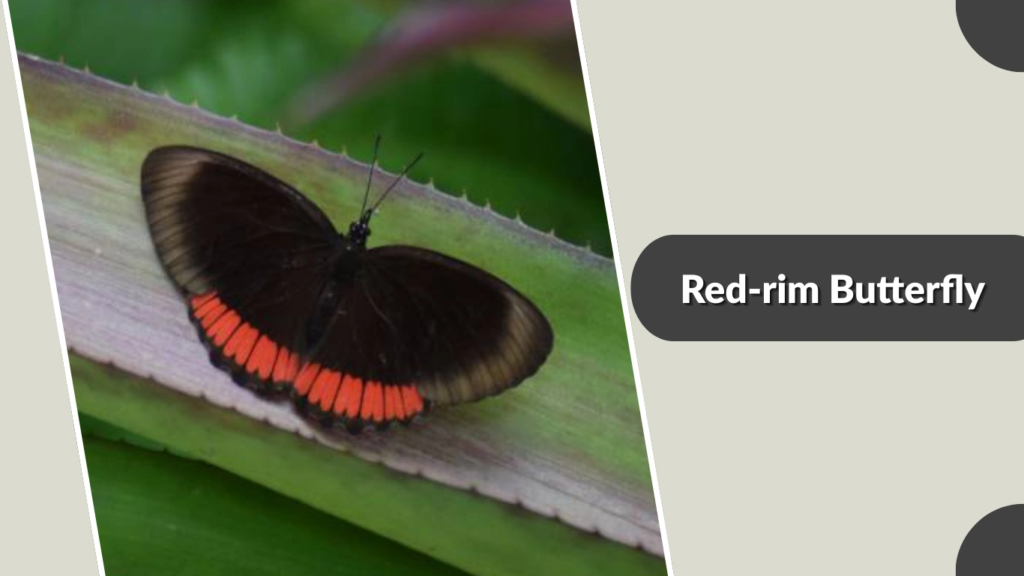
The Red-rim Butterfly, also known as the Biblis hyperia, is a striking black butterfly with bold red margins around its wings. Found throughout Central and South America, it is known for its fast, erratic flight and vivid coloration.
Identification
- Jet-black wings with bright red outer rims
- Forewings sharply angled
- Hindwings rounded with clean margins
- Caterpillars spiny with brown and white bands
- No tails on wings
Color Pattern
The wings are primarily deep black, bordered by vivid red margins that resemble painted edges. The underside displays a similar pattern but with lighter tones and finer details. The dramatic red border makes it easy to identify even in quick flight.
Habitat
Common in tropical forests, woodland edges, open clearings, and sunny pathways across Central America, South America, and the Caribbean. Often found near host plants such as Tragia species.
Lifecycle
Eggs are laid singly on the underside of host plant leaves. Caterpillars progress through spiny stages and pupate on stems or leaves. Warm environments support multiple broods per year, allowing the butterfly to remain active for much of the year.
21. Scarlet-tip Butterfly (Dark Morph)
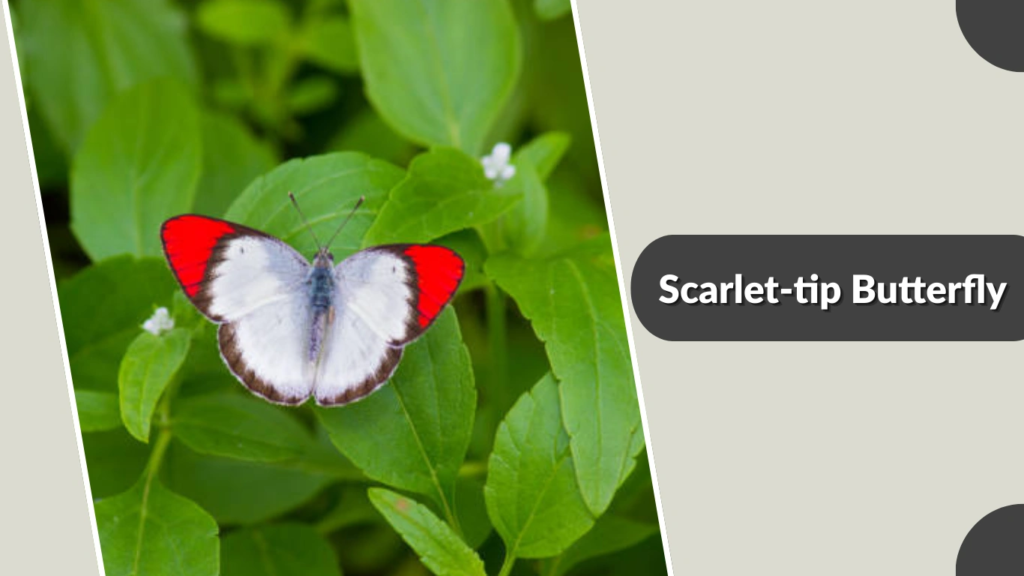
The Scarlet-tip Butterfly, primarily known for its orange-tipped wings, sometimes produces a dark morph form featuring deeper black coloration and reduced orange patterns.
Identification
- Forewings mostly black with reduced orange tips
- Hindwings dark with faint pale speckles
- Slender build with swift, fluttering flight
- Caterpillars green with pale lateral stripes
- No tails on wings
Color Pattern
In the dark morph, the butterfly exhibits dominant black wings, with smaller or muted scarlet patches confined to the tips of the forewings. The hindwings remain almost entirely black. The underside is paler with scattered gray spots.
Habitat
Found in grasslands, open woodland, riverbanks, and cultivated fields throughout Africa and South Asia. They favor sunny areas with abundant nectar sources and low vegetation.
Lifecycle
Eggs are laid on host plants from the caper family. Caterpillars feed rapidly and pupate on leaves or stems. The species generally produces several broods annually, especially in warm climates where food is abundant.
22. Large Tortoiseshell (Dark Morph)
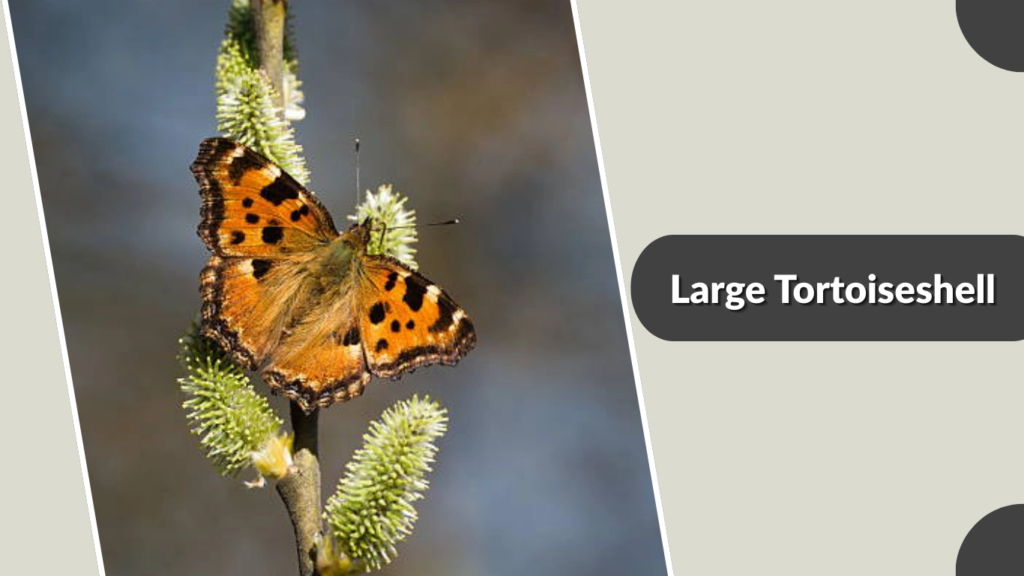
The Large Tortoiseshell is typically an orange-brown butterfly, but in cooler regions some individuals develop a darker, melanic appearance. This dark morph features deeper black shading and reduced orange tones.
Identification
- Darkened wings with muted orange patches
- Strong, scalloped wing edges
- Hindwings with reduced pale banding
- Caterpillars black with white dots and spines
- No wing tails
Color Pattern
The dark morph shows rich black-brown wings with only faint hints of the typical orange. The hindwings are especially dark, with subtle cream speckles. The underside is heavily mottled in browns and blacks, giving superb camouflage against bark.
Habitat
Found in deciduous woodlands, orchards, forest clearings, gardens, and rocky slopes across Europe and parts of Asia. Dark morphs are more common in colder northern habitats or shaded forest regions.
Lifecycle
Eggs are laid in clusters on elm, willow, or aspen leaves. Caterpillars develop in groups before dispersing. Pupation occurs in crevices or under bark. Typically, one brood per year, with the adult overwintering in sheltered structures.
23. Mourning Cloak
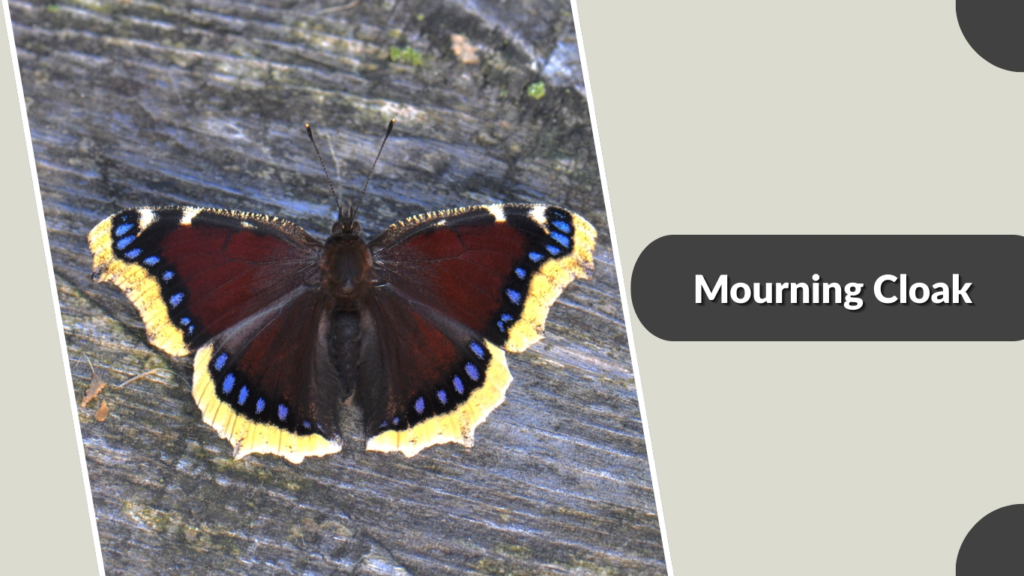
The Mourning Cloak is a well-known dark butterfly with rich, velvety black-brown wings bordered by pale edges. Found across North America, Europe, and Asia, it is one of the longest-lived butterflies.
Identification
- Dark black-brown wings with creamy yellow borders
- Row of bright blue spots near margins
- Rough, scalloped wing edges
- Caterpillars black with red stripes and spines
- No tails
Color Pattern
Its wings are deep brown-black, edged by a pale yellow border and lined with a row of blue iridescent spots. The underside is cryptic, resembling aged tree bark. This dual coloring aids both display and camouflage.
Habitat
Found in woodlands, parks, riparian zones, suburban areas, and forest openings. Mourning Cloaks are hardy butterflies that appear even in early spring or late winter, often basking on sunny tree trunks.
Lifecycle
Eggs are laid in clusters on willow, elm, or poplar. Caterpillars feed gregariously before pupating on nearby structures. Adults can live up to 10–12 months, overwintering as adults and producing one or two broods per year.
24. Black-veined White (Melanic Form)
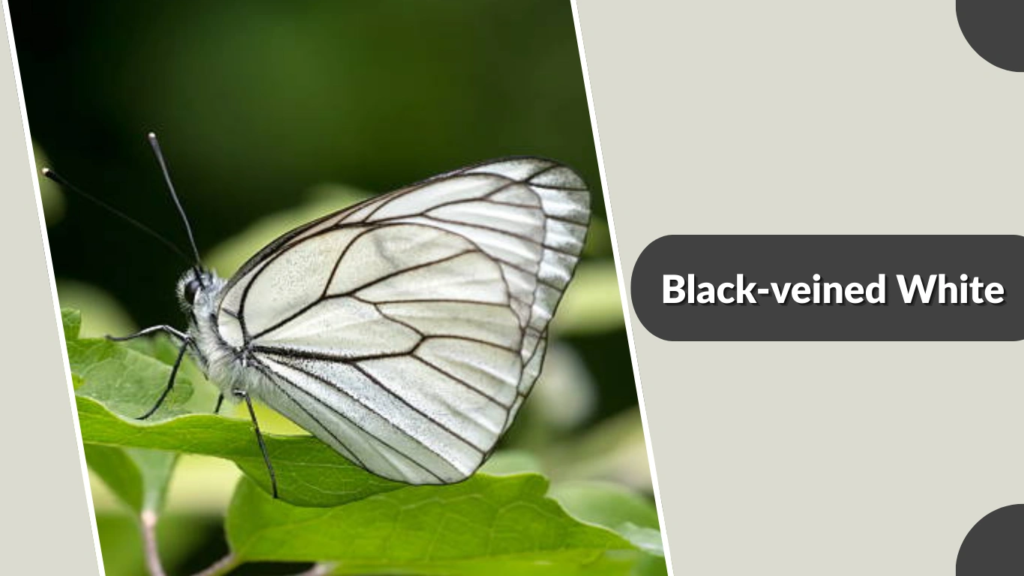
The Black-veined White is normally a white butterfly with bold dark veins, but in some regions and climatic conditions it produces a melanic form, where the wings appear far darker than usual.
Identification
- White wings heavily shaded with black
- Prominent dark veining throughout wings
- Females often darker than males
- Caterpillars hairy with yellow and black markings
- No tails on wings
Color Pattern
In the melanic form, the wings show extensive black shading, sometimes giving the butterfly an almost smoky or gray-black appearance. The veins appear thicker and more pronounced. The underside is similarly darkened, though slightly more muted.
Habitat
Common in meadows, orchards, grasslands, woodland edges, and open hillsides across Europe and temperate Asia. Melanic forms appear more frequently in cooler, cloudier climates or polluted regions where dark coloration may provide survival advantages.
Lifecycle
Eggs are laid in clusters on hawthorn, apple, pear, and related host plants. Caterpillars feed communally before dispersing to pupate. Usually one to two broods per year, with overwintering occurring in the pupal stage.
25. Cabbage White (Melanic Form)
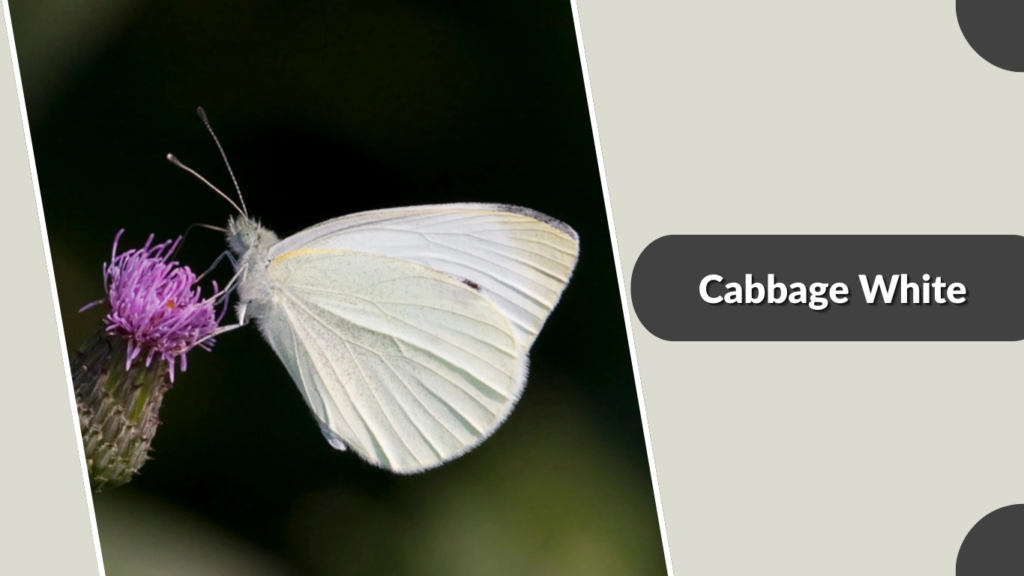
The Cabbage White, best known as a pale garden butterfly, can occasionally show a melanic form, where the wings darken significantly—particularly in females or in cooler climates.
Identification
- Wing surfaces heavily dusted with black
- Darkened tips on forewings appear expanded
- One or two bold black spots on forewings
- Caterpillars green and smooth with faint yellow lines
- No tails on wings
Color Pattern
Melanic individuals display strong black shading across both wings, reducing the typical white appearance. The dark dusting may cover the entire forewing tip and spread inward. The underside remains pale yellowish but may show darker mottling.
Habitat
Found in gardens, croplands, parks, grasslands, and disturbed habitats worldwide. Melanic forms are more common in cooler northern regions or areas with reduced sunlight.
Lifecycle
Eggs are laid singly on cabbage and other brassica plants. Caterpillars feed quickly and pupate on stems, walls, or leaves. Several broods occur annually, sometimes three to five in warm regions, making this one of the most widespread butterfly species.
26. Eastern Black Swallowtail
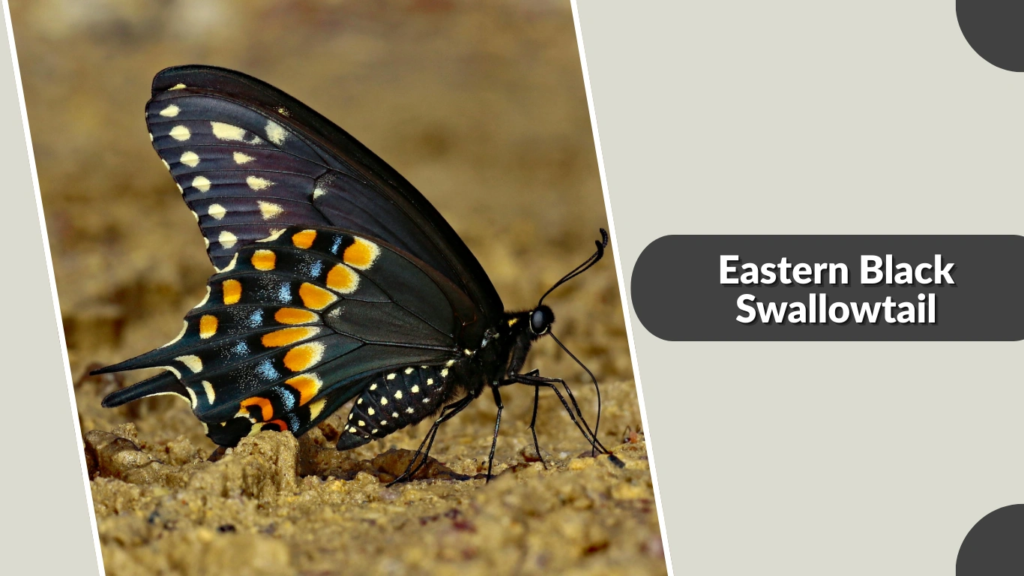
The Eastern Black Swallowtail is a close relative of the Black Swallowtail and is often considered the same species in many regions. It is known for its deep black wings, bright yellow bands, and distinct blue scaling.
Identification
- Deep black wings with yellow spot rows
- Vibrant blue hindwing scaling (stronger in females)
- Red-orange eyespots near tail tips
- Long swallowtail extensions
- Caterpillars green with black bands and yellow spots
Color Pattern
The wings are jet black with two curved yellow spot chains across the forewings and hindwings. Females feature intense blue shading on the hindwings, while males show more dominant yellow bands. The underside includes bold orange eyespots and pale spotting.
Habitat
Found in gardens, meadows, prairies, open fields, and farmland edges across eastern North America. Highly attracted to plants in the carrot family such as dill, fennel, and parsley.
Lifecycle
Eggs are laid singly on host plants. Caterpillars evolve from bird-dropping mimics to striped green larvae. Pupation occurs on stems or supports, where the chrysalis may overwinter. Usually two to three broods per year.
27. Duskywing Skipper (Group)
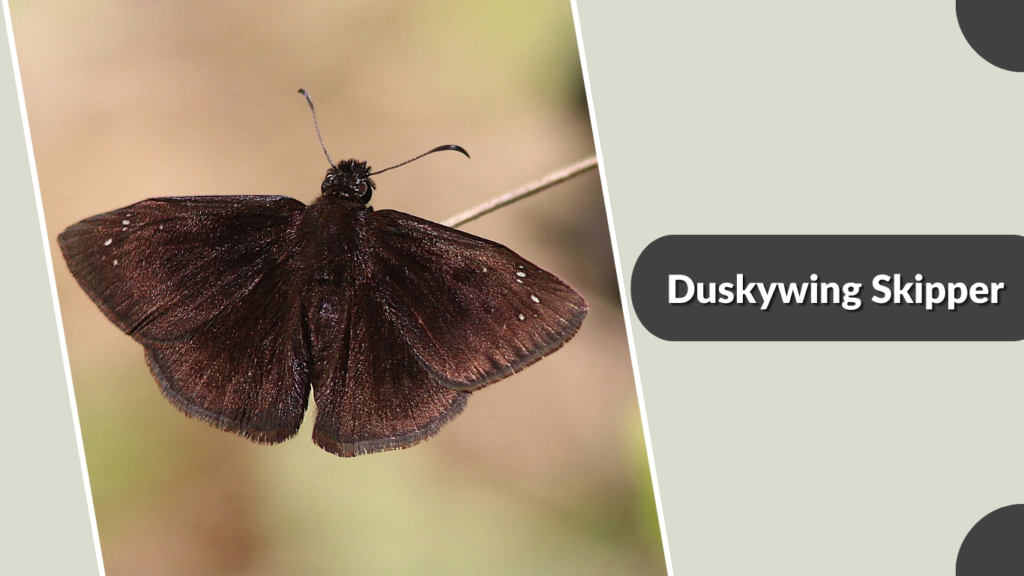
“Duskywing Skipper” refers to a group of small, dark butterflies within the Erynnis genus. Though not all individuals are fully black, many species exhibit deep chocolate-black wings with mottled patterns.
Identification
- Small, triangular wings with dark brown-black shading
- Forewings with pale mottled spots
- Short, stout body with rapid, darting flight
- Caterpillars greenish with brown heads
- No tails
Color Pattern
Most Duskywings show dark brown to black wings, patterned with pale gray or tan spots. Some species appear nearly solid black. The underside is more muted with fine mottling that blends with bark or soil.
Habitat
Found in dry woodlands, scrubby fields, oak forests, grassy clearings, and forest edges across North America. Different species prefer certain host plants, mostly in the oak family.
Lifecycle
Eggs are laid on host plant leaves. Caterpillars often create leaf shelters to hide in. Pupation occurs in folded leaves or leaf litter. Many species produce two or more broods per year, with some overwintering as pupae or partially grown caterpillars.
