
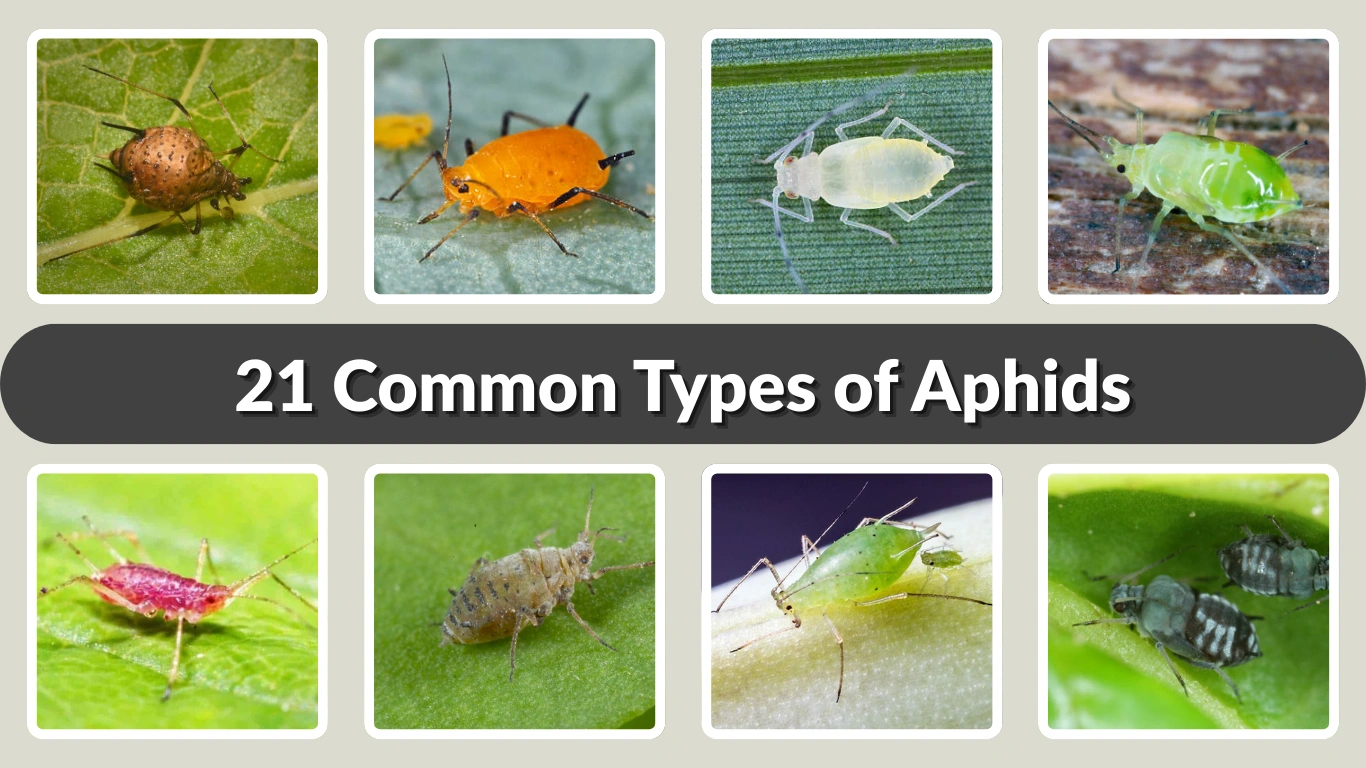
Aphids are small, sap-sucking insects that infest a wide variety of plants, from vegetables and fruit trees to ornamentals and field crops. They reproduce rapidly and often form large colonies, causing leaf distortion, stunted growth, and honeydew buildup. Many aphid species are also serious plant virus vectors, making them some of the most destructive pests in agriculture and home gardens worldwide.
1. Green Peach Aphid (Myzus persicae)
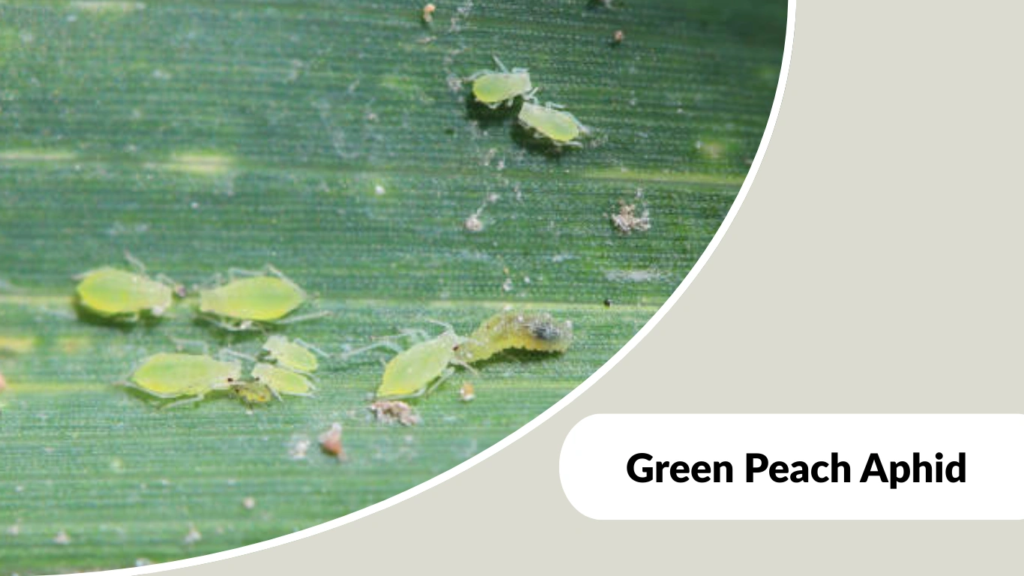
The green peach aphid is one of the most widespread and destructive aphid species worldwide. It attacks hundreds of plant species, especially vegetables, fruits, and ornamentals. Known for rapid reproduction and virus transmission, it is a major agricultural pest in both outdoor fields and greenhouses.
Identification
- Small, soft-bodied insects usually 1.5–2.5 mm long
- Body color varies: light green, yellowish, pink, or pale red
- Long antennae, often as long as the body
- Cornicles (tube-like structures) are slender and slightly swollen at the tips
- Winged forms appear darker with black markings on the thorax
Host Plants
Green peach aphids feed on over 400 plant species. Common hosts include peaches, potatoes, tomatoes, peppers, spinach, cabbage, lettuce, and many ornamental plants. They are especially problematic on crops in the nightshade and mustard families.
Behavior and Damage
These aphids feed by sucking plant sap, which weakens plants and causes leaf curling, yellowing, and stunted growth. They also excrete honeydew, promoting sooty mold growth. More importantly, they transmit numerous plant viruses, making infestations particularly harmful.
Distribution and Habitat
The green peach aphid is found worldwide, thriving in temperate and warm regions. It commonly inhabits crop fields, gardens, greenhouses, and orchards. In colder climates, it overwinters on peach trees and migrates to other plants during warmer seasons.
2. Black Bean Aphid (Aphis fabae)
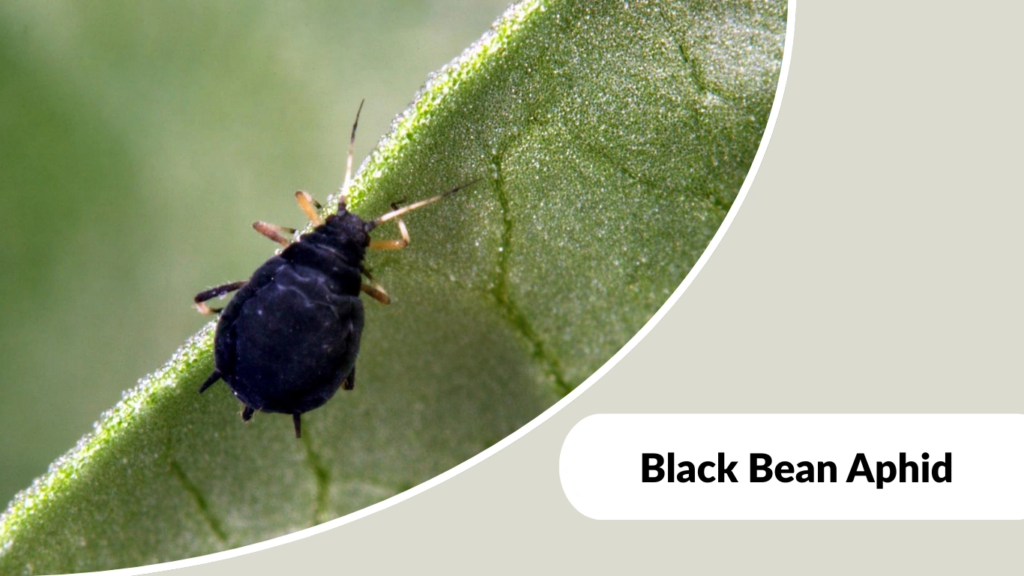
The black bean aphid is a common and damaging pest of legumes and many garden plants. It is easily recognized by its dark coloration and tendency to form dense colonies on young plant growth, especially during spring and early summer.
Identification
- Small, oval-bodied aphids about 1.5–3 mm long
- Body color is dull black to dark olive-green
- Short legs and antennae compared to body size
- Cornicles are short, thick, and black
- Often found in dense clusters on stems and leaf undersides
Host Plants
Primary hosts include broad beans, common beans, peas, sugar beets, spinach, and many ornamental plants. It also infests weeds, which help populations survive between crop cycles.
Behavior and Damage
Black bean aphids feed heavily on young shoots, causing leaf curling, wilting, and reduced plant vigor. Heavy infestations can stunt growth and reduce yields. Honeydew production leads to sooty mold, further affecting photosynthesis.
Distribution and Habitat
This species is widespread across Europe, Asia, Africa, and North America. It thrives in gardens, agricultural fields, and wild vegetation, favoring cool to moderate climates.
3. Cotton Aphid (Aphis gossypii)

The cotton aphid is a highly adaptable species known for infesting a wide range of crops. It is a serious pest in both tropical and temperate regions and is notorious for developing resistance to insecticides.
Identification
- Small aphids measuring 1–2 mm in length
- Body color varies widely: yellow, green, dark green, or black
- Cornicles are short, dark, and slightly tapered
- Antennae are shorter than the body
- Winged forms appear when populations are crowded
Host Plants
Cotton aphids attack cotton, cucumbers, melons, squash, peppers, citrus, and many ornamental plants. They are especially common on cucurbits and greenhouse crops.
Behavior and Damage
They damage plants by sucking sap, leading to leaf distortion, yellowing, and reduced growth. Cotton aphids also transmit several plant viruses, making them particularly harmful even at low population levels.
Distribution and Habitat
This aphid has a global distribution, thriving in warm climates and protected environments such as greenhouses. It is commonly found on the undersides of leaves in agricultural fields and home gardens.
4. Rose Aphid (Macrosiphum rosae)

The rose aphid is a well-known pest of roses, often appearing in large numbers on tender new growth. Its relatively large size and preference for ornamental plants make it a common problem in home gardens and nurseries.
Identification
- Large aphids, about 2.5–3.5 mm long
- Body color usually green, sometimes pinkish
- Long legs and antennae, giving a slender appearance
- Cornicles are long, dark, and slightly swollen
- Often clustered on buds and young stems
Host Plants
This species primarily feeds on roses but may occasionally infest related ornamental plants. It favors young shoots, flower buds, and soft stems where sap flow is high.
Behavior and Damage
Feeding causes curling and distortion of leaves and flower buds, reducing bloom quality. Heavy infestations lead to sticky honeydew deposits and encourage sooty mold growth, diminishing the plant’s ornamental value.
Distribution and Habitat
Rose aphids are widely distributed in temperate regions worldwide. They are commonly found in gardens, parks, greenhouses, and commercial rose production areas.
5. Potato Aphid (Macrosiphum euphorbiae)

The potato aphid is a major agricultural pest known for its large size and ability to transmit plant viruses. It commonly infests vegetable crops and can quickly build up populations under favorable conditions.
Identification
- Large aphids measuring 2.5–4 mm in length
- Body color ranges from green to pink
- Long legs, antennae, and cornicles
- Cornicles are cylindrical and slightly darker than the body
- Winged forms develop during overcrowding
Host Plants
Potato aphids feed on potatoes, tomatoes, peppers, eggplants, lettuce, and many weeds. They are especially problematic in solanaceous crops.
Behavior and Damage
They weaken plants by removing sap, causing leaf curling, yellowing, and reduced growth. More significantly, they are efficient vectors of several plant viruses, which can severely impact crop yields.
Distribution and Habitat
This species is found across North America, Europe, Asia, and parts of Africa. It thrives in crop fields, vegetable gardens, and greenhouses, particularly in mild to warm climates.
6. Cabbage Aphid (Brevicoryne brassicae)

The cabbage aphid is a serious pest of cruciferous vegetables and is easily recognized by its grayish, waxy appearance. It often forms dense colonies that can rapidly overwhelm plants if left unmanaged.
Identification
- Small aphids about 2–2.5 mm long
- Body color gray-green with a powdery, waxy coating
- Short antennae compared to body length
- Cornicles are very short and often hard to see
- Colonies appear dusty or ash-covered
Host Plants
This aphid mainly attacks cabbage, cauliflower, broccoli, kale, mustard, and other members of the Brassicaceae family. It rarely feeds on non-crucifer plants.
Behavior and Damage
Feeding causes yellowing, curling, and distortion of leaves and heads. Heavy infestations contaminate produce with aphids and waxy residue, reducing market value and overall plant health.
Distribution and Habitat
Cabbage aphids are found worldwide, especially in temperate regions. They inhabit vegetable fields, home gardens, and commercial brassica crops.
7. Pea Aphid (Acyrthosiphon pisum)

The pea aphid is a common pest of legumes and is known for its relatively large size and bright green coloration. It is also widely studied in scientific research due to its genetics and symbiotic relationships.
Identification
- Medium to large aphids, 2–3.5 mm long
- Bright green body, sometimes pink forms occur
- Long legs and antennae
- Cornicles are long, cylindrical, and pale
- Winged forms develop under crowded conditions
Host Plants
Pea aphids primarily feed on peas, lentils, alfalfa, clover, beans, and other leguminous plants. They rarely infest plants outside this group.
Behavior and Damage
They cause wilting, leaf deformation, and reduced growth by sucking plant sap. Pea aphids also transmit plant viruses, which can significantly reduce legume crop yields.
Distribution and Habitat
This species is widely distributed across North America, Europe, Asia, and Australia. It is commonly found in agricultural fields, pastures, and home gardens where legumes are grown.
8. Apple Aphid (Aphis pomi)
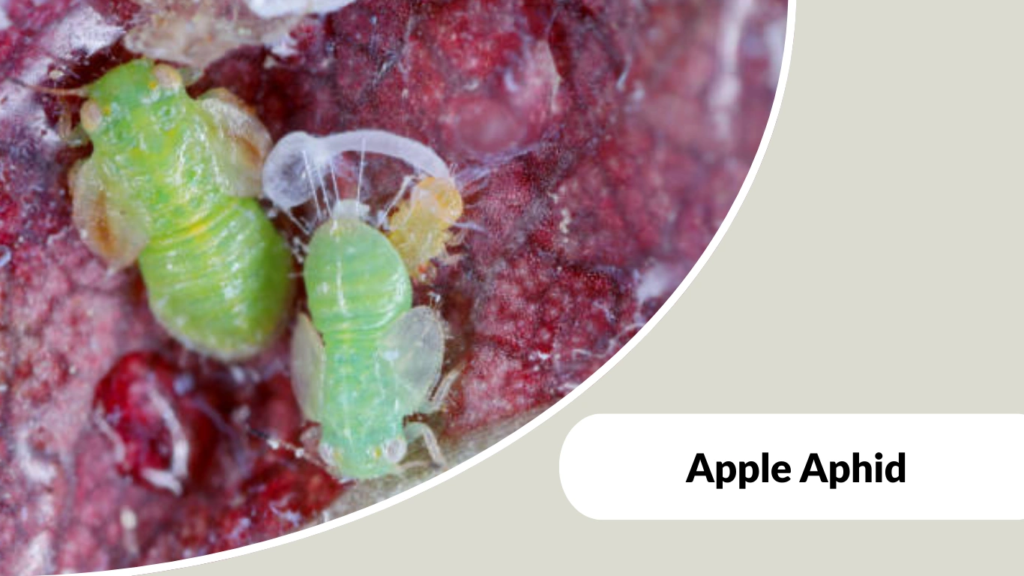
The apple aphid is a common pest of apple trees, especially affecting young shoots and leaves. It is most damaging in spring when populations increase rapidly on new growth.
Identification
- Small aphids measuring about 1.5–2.5 mm
- Body color bright green to yellow-green
- Antennae shorter than body length
- Cornicles are short, cylindrical, and dark
- Usually found in clusters on young leaves
Host Plants
This species primarily feeds on apple trees but may also infest pear, quince, and related fruit trees. It prefers tender shoots, leaf undersides, and developing buds.
Behavior and Damage
Feeding causes leaf curling, puckering, and reduced shoot growth. Honeydew production leads to sooty mold development, which interferes with photosynthesis and fruit quality.
Distribution and Habitat
Apple aphids are widely distributed in temperate regions worldwide. They inhabit orchards, home gardens, and nurseries where apple trees are cultivated.
9. Oleander Aphid (Aphis nerii)
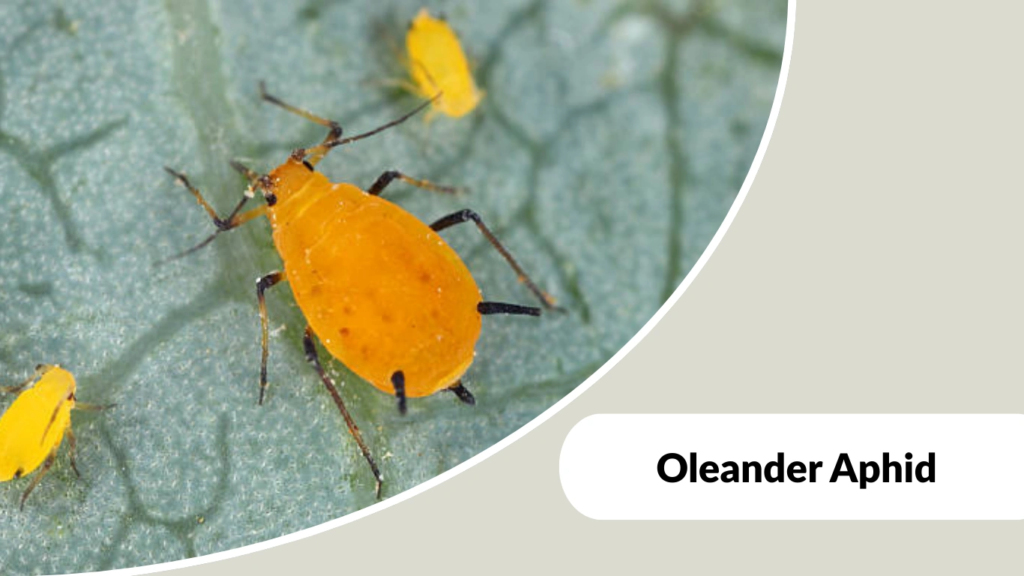
The oleander aphid is a bright-colored aphid commonly seen on milkweed and oleander plants. Its distinctive yellow body makes it easy to identify even by non-experts.
Identification
- Medium-sized aphids about 2–2.5 mm long
- Bright yellow to orange body
- Black legs, antennae, and cornicles
- Cornicles are long and slightly curved
- Often forms dense, visible colonies
Host Plants
Oleander aphids mainly feed on oleander, milkweed, and related plants in the dogbane family. They rarely infest unrelated plant species.
Behavior and Damage
They feed heavily on plant sap, causing leaf distortion and reduced vigor. Large amounts of honeydew promote sooty mold, which can cover leaves and stems.
Distribution and Habitat
This aphid is found worldwide in warm and temperate regions. It commonly occurs in gardens, landscapes, roadsides, and natural areas where milkweed grows.
10. Corn Leaf Aphid (Rhopalosiphum maidis)
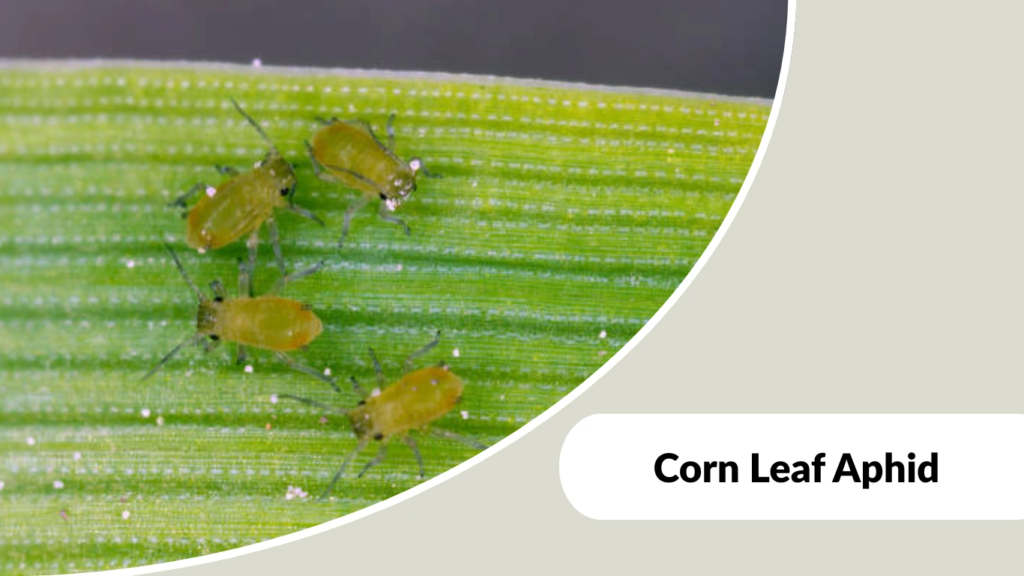
The corn leaf aphid is a major pest of cereal crops, especially maize. It commonly infests the upper leaves and tassels, where it can rapidly build large populations under warm conditions.
Identification
- Small aphids about 1.5–2 mm long
- Body color bluish-green to dark green
- Short antennae relative to body length
- Cornicles are short, dark, and slightly swollen
- Often found clustered in whorls and tassels
Host Plants
This species primarily feeds on corn, sorghum, barley, wheat, and other grasses. It may also survive on wild grass species between cropping seasons.
Behavior and Damage
Feeding reduces plant vigor and can interfere with pollination when aphids infest tassels. Honeydew accumulation promotes sooty mold, and the species also transmits several viral diseases.
Distribution and Habitat
Corn leaf aphids are distributed worldwide, particularly in tropical and subtropical regions. They inhabit agricultural fields, grasslands, and cereal crop systems.
11. Russian Wheat Aphid (Diuraphis noxia)
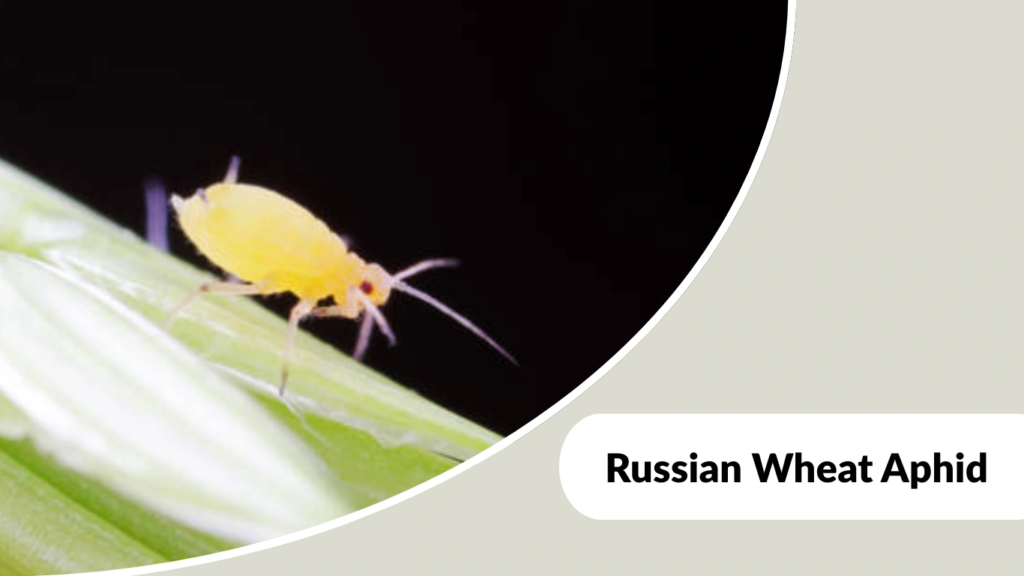
The Russian wheat aphid is a highly destructive pest of wheat and barley, known for causing distinctive leaf rolling and white streaking symptoms.
Identification
- Small aphids measuring about 1.5–2 mm
- Pale green body with an elongated shape
- Short antennae and legs
- Cornicles are extremely short, appearing almost absent
- Characteristic double-tailed appearance at the rear
Host Plants
This aphid mainly attacks wheat, barley, rye, and other small grains. It can also survive on wild grasses that act as reservoirs.
Behavior and Damage
Feeding injects toxins that cause leaves to roll tightly and develop white or purple streaks. Severe infestations can lead to plant death and significant yield losses.
Distribution and Habitat
Originally from Eurasia, this species is now found in North America, Africa, and parts of Asia. It thrives in dry, temperate regions and cereal-growing areas.
12. Cowpea Aphid (Aphis craccivora)
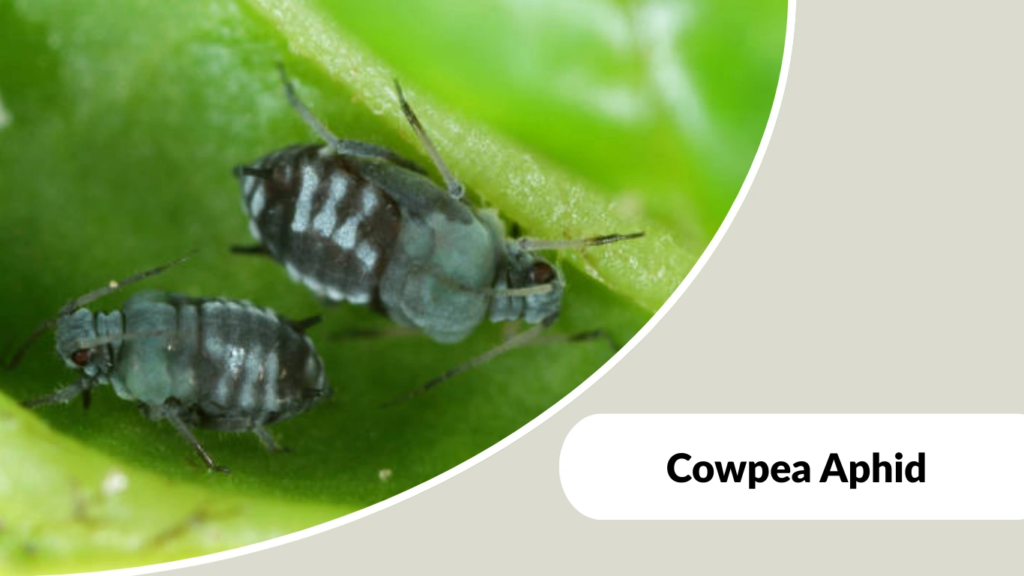
The cowpea aphid is a widespread pest of legumes and is especially damaging in warm climates. It is known for forming dense colonies on tender plant parts and for transmitting several plant viruses.
Identification
- Small aphids about 1.5–2.5 mm long
- Body color dark brown to shiny black
- Antennae and legs are pale with dark tips
- Cornicles are short, dark, and slightly tapered
- Often clustered on young shoots and flower buds
Host Plants
This species primarily feeds on cowpea, beans, peanuts, lentils, chickpeas, and other legumes. It can also infest some ornamental and weed species.
Behavior and Damage
Feeding causes leaf curling, stunted growth, and flower drop. Heavy infestations produce large amounts of honeydew, encouraging sooty mold and reducing photosynthesis.
Distribution and Habitat
Cowpea aphids are found worldwide, particularly in tropical and subtropical regions. They inhabit crop fields, gardens, and wild legume habitats.
13. Cherry Aphid (Myzus cerasi)
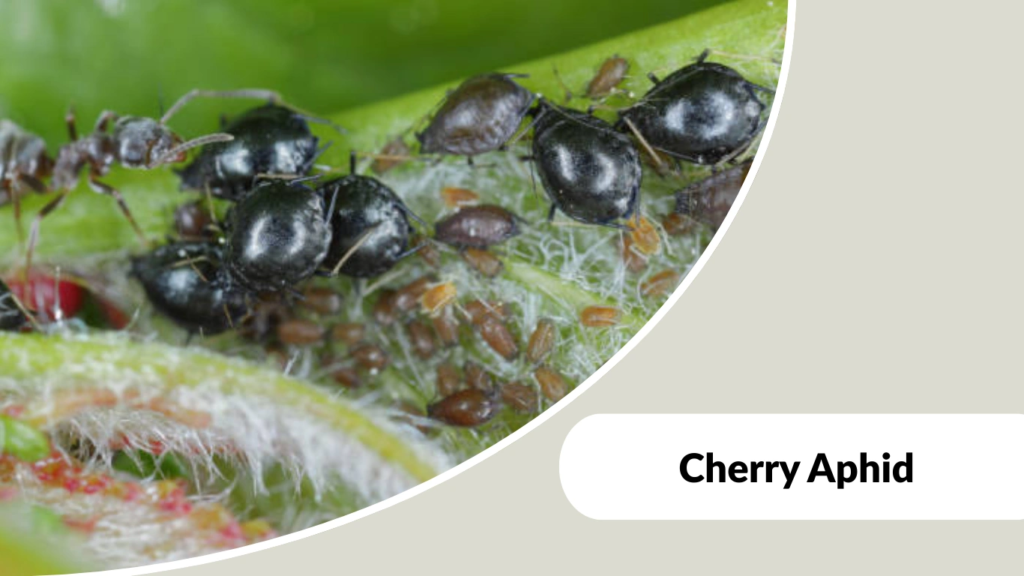
The cherry aphid is a common pest of cherry trees, especially during spring. It is known for causing severe leaf curling that protects colonies from predators and sprays.
Identification
- Medium-sized aphids about 2–3 mm long
- Shiny black body with a rounded shape
- Legs and antennae are pale with dark joints
- Cornicles are short and black
- Colonies often hidden inside curled leaves
Host Plants
This aphid mainly attacks sweet and sour cherry trees. It may also survive on certain weed hosts during part of its life cycle.
Behavior and Damage
Feeding leads to tightly curled leaves, reduced shoot growth, and weakened trees. Honeydew buildup supports sooty mold, affecting leaf function and fruit quality.
Distribution and Habitat
Cherry aphids are widely distributed in Europe, Asia, and North America. They occur in orchards, home gardens, and wild cherry stands.
14. Melon Aphid (Aphis gossypii)
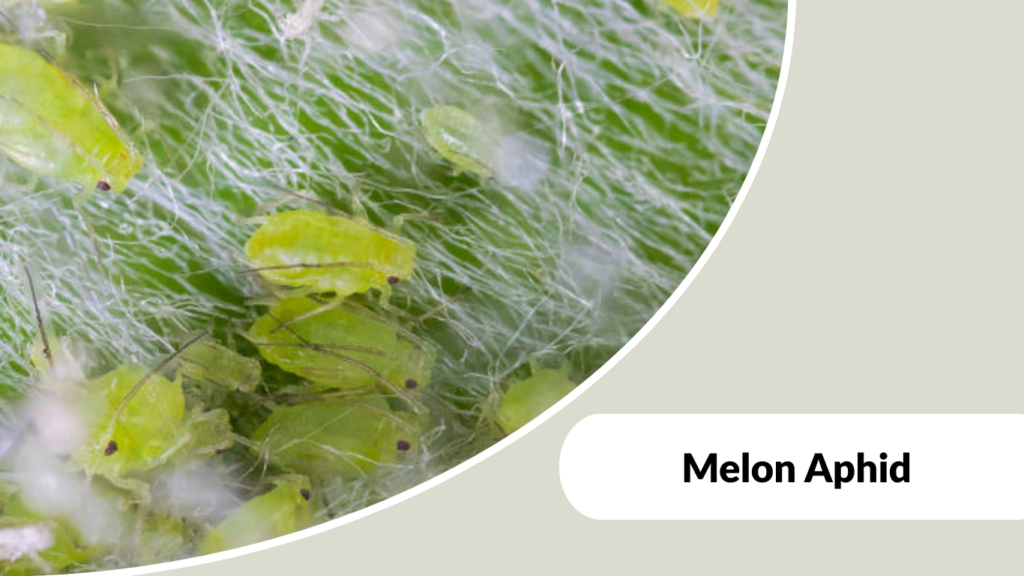
The melon aphid is a highly adaptable and destructive pest, especially problematic on cucurbit crops. It reproduces rapidly and is a major vector of plant viruses in warm growing regions.
Identification
- Small aphids about 1–2 mm long
- Body color varies from yellow to green or dark green
- Antennae shorter than the body
- Cornicles are short, dark, and slightly swollen
- Winged forms appear during overcrowding
Host Plants
Melon aphids feed on cucumbers, melons, squash, pumpkins, peppers, cotton, and many ornamental plants. They are particularly damaging in greenhouses and protected cultivation.
Behavior and Damage
They cause leaf curling, yellowing, and stunted growth by sucking plant sap. This species is an efficient transmitter of multiple plant viruses, making infestations especially harmful.
Distribution and Habitat
This aphid is found worldwide, thriving in tropical, subtropical, and temperate regions. It inhabits crop fields, greenhouses, and home gardens.
15. Lettuce Aphid (Nasonovia ribisnigri)
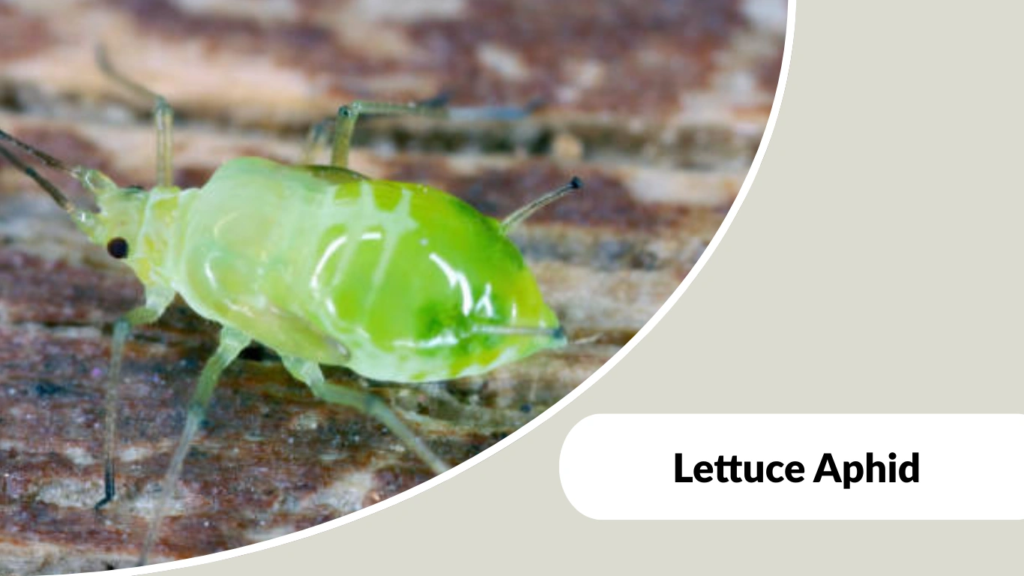
The lettuce aphid is a serious pest of lettuce crops, often hiding deep within plant heads where it is difficult to control.
Identification
- Small aphids measuring about 2–3 mm
- Body color green, yellow-green, or pink
- Long antennae relative to body size
- Cornicles are medium-length and slightly swollen
- Often concealed inside folded leaves
Host Plants
This species primarily attacks lettuce but can also feed on currants and gooseberries during parts of its life cycle.
Behavior and Damage
Feeding contaminates lettuce heads and reduces market quality. Damage includes leaf distortion, reduced growth, and honeydew buildup within the plant.
Distribution and Habitat
Lettuce aphids are found in Europe, North America, Australia, and parts of Asia. They inhabit lettuce fields, greenhouses, and commercial vegetable farms.
16. Soybean Aphid (Aphis glycines)
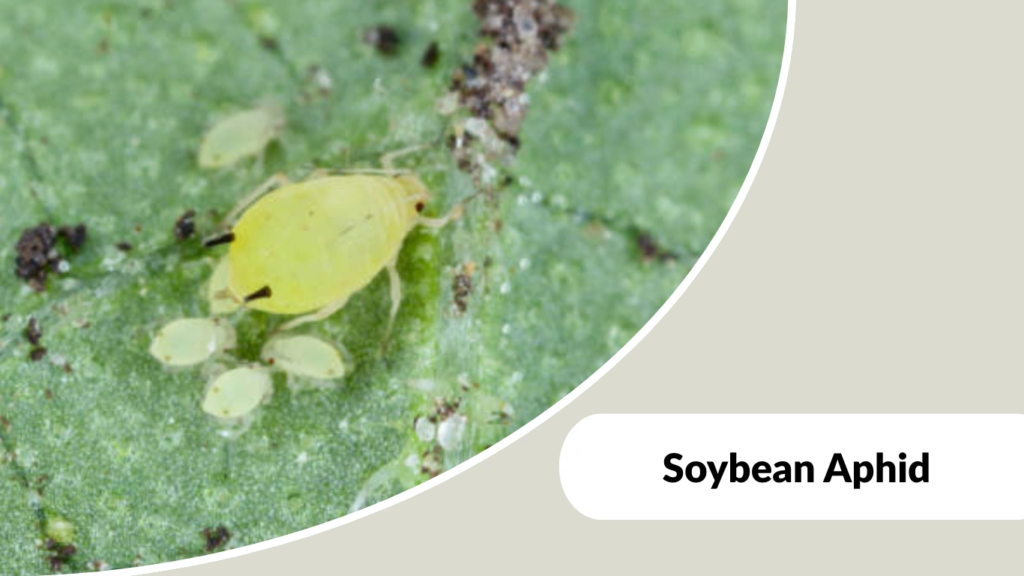
The soybean aphid is one of the most economically important pests of soybean crops. It can rapidly reach high population levels and significantly reduce yields if not properly managed.
Identification
- Small aphids about 1–2 mm long
- Body color pale yellow to light green
- Antennae with dark bands near the tips
- Cornicles are short, cylindrical, and dark
- Often found in large colonies on leaf undersides
Host Plants
This species primarily feeds on soybeans. It also uses buckthorn as an alternate host during parts of its life cycle.
Behavior and Damage
Soybean aphids remove sap, causing leaf yellowing, curling, and reduced plant vigor. Heavy infestations can lead to significant yield loss and increased susceptibility to disease.
Distribution and Habitat
Originally from Asia, soybean aphids are now widespread in North America. They are commonly found in soybean fields and surrounding vegetation.
17. Bamboo Aphid (Pseudoregma bambusicola)
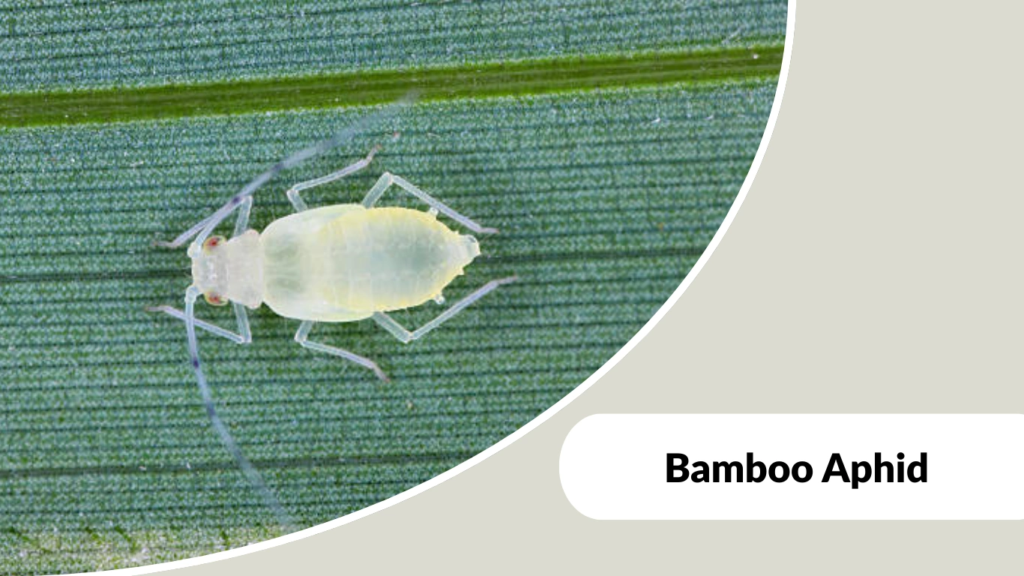
The bamboo aphid is a distinctive species that primarily infests bamboo plants. It is notable for its large size compared to many other aphids.
Identification
- Large aphids measuring 3–5 mm
- Body color dark brown to black
- Thick, robust body shape
- Cornicles are short and stout
- Often attended by ants
Host Plants
This aphid mainly feeds on bamboo species, rarely infesting other types of plants.
Behavior and Damage
Feeding weakens bamboo shoots and leaves, reducing growth and vigor. Honeydew production attracts ants, which protect aphid colonies from predators.
Distribution and Habitat
Bamboo aphids are found mainly in Asia, especially in regions where bamboo is widely cultivated. They inhabit bamboo forests, gardens, and plantations.
18. Brown Citrus Aphid (Toxoptera citricida)
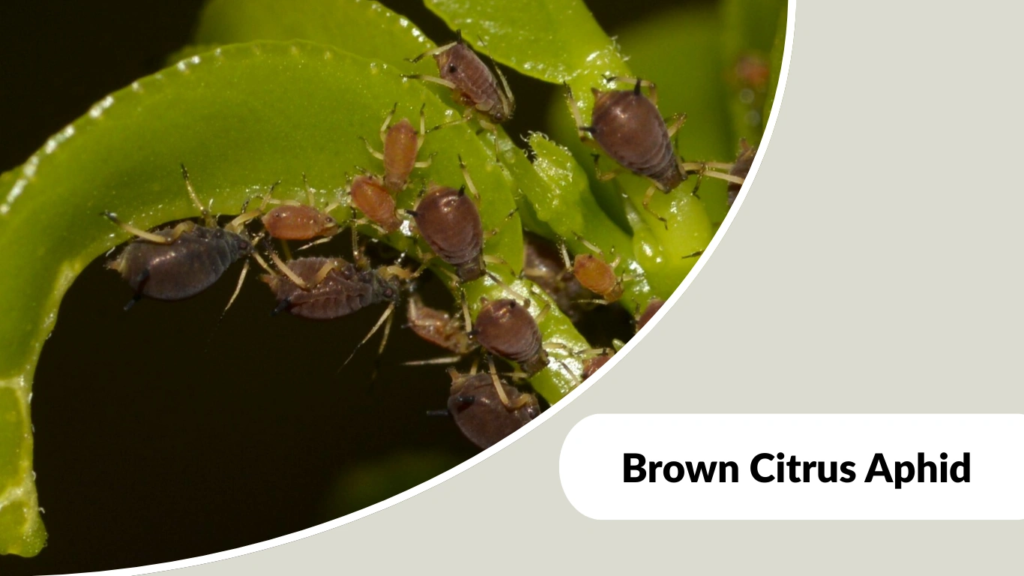
The brown citrus aphid is a highly destructive pest of citrus crops and is especially feared for its ability to spread citrus tristeza virus. Even small populations can have serious economic impacts.
Identification
- Medium-sized aphids about 2–3 mm long
- Body color dark brown to black
- Shiny, smooth body surface
- Cornicles are short, thick, and black
- Legs and antennae are dark with pale joints
Host Plants
This species primarily feeds on citrus trees, including oranges, lemons, limes, and grapefruits. It rarely infests non-citrus plants.
Behavior and Damage
Feeding causes leaf curling, shoot distortion, and reduced tree vigor. Its role as an efficient vector of citrus tristeza virus makes it extremely dangerous to citrus production.
Distribution and Habitat
Brown citrus aphids are found in tropical and subtropical citrus-growing regions worldwide. They inhabit orchards, nurseries, and backyard citrus trees.
19. Woolly Apple Aphid (Eriosoma lanigerum)
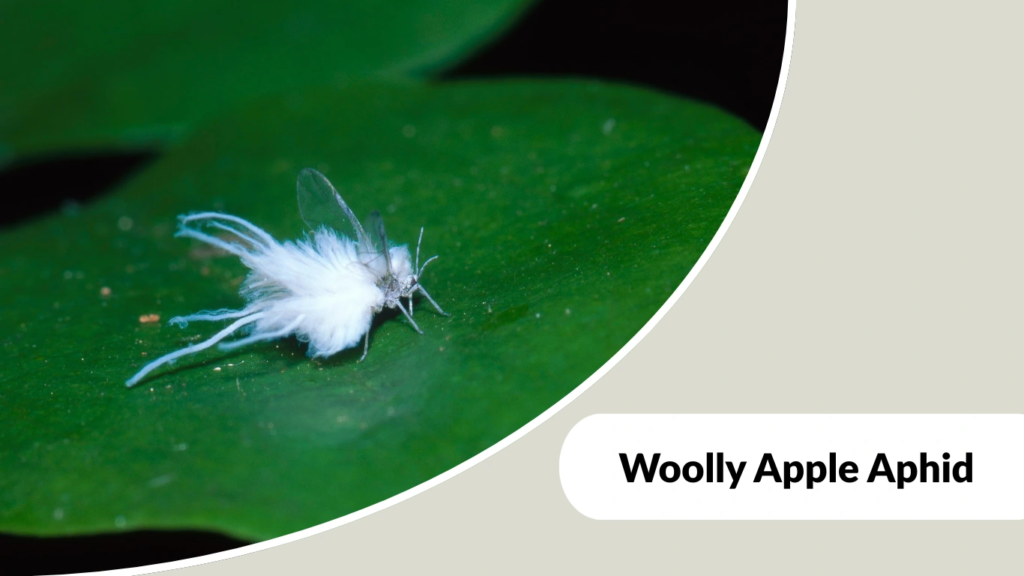
The woolly apple aphid is easily recognized by the cotton-like wax it produces. It is a serious pest of apple trees, affecting both above-ground parts and roots.
Identification
- Small aphids about 1–2 mm long
- Body color reddish-brown to purple
- Covered with white, wool-like waxy filaments
- Cornicles are reduced and not easily visible
- Colonies appear as cottony masses
Host Plants
This aphid mainly attacks apple trees but may also infest pear and quince. Both roots and aerial parts of the tree can be affected.
Behavior and Damage
Feeding causes galls, swellings, and cracks on branches and roots. These wounds can allow fungal and bacterial infections, leading to long-term tree decline.
Distribution and Habitat
Woolly apple aphids are distributed worldwide wherever apples are grown. They are common in orchards, nurseries, and home gardens.
20. Oleander Milkweed Aphid (Aphis nerii)
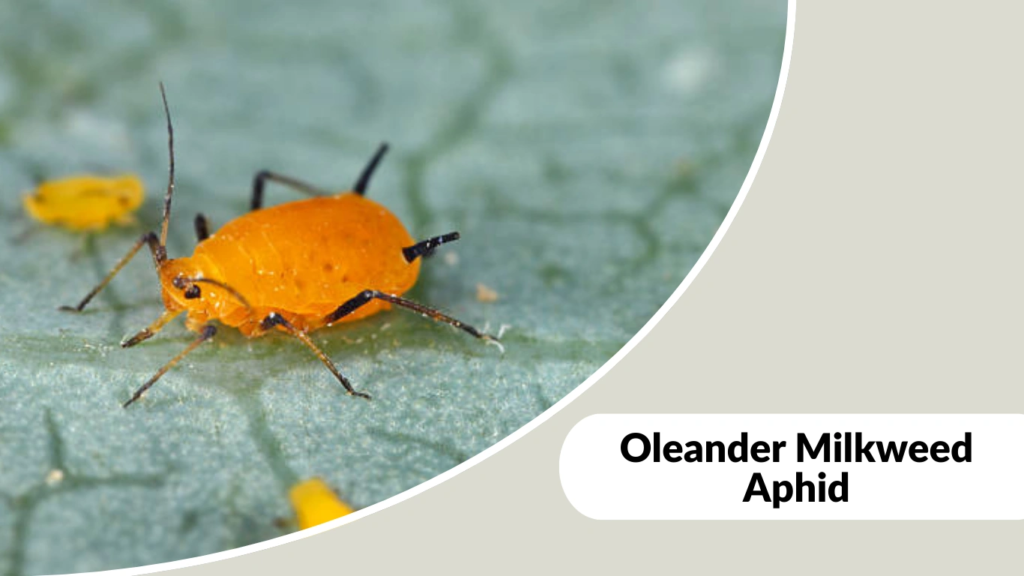
The oleander milkweed aphid is a bright, easily recognizable species commonly found on milkweed and oleander plants. Its vivid coloration and dense colonies make it one of the most noticeable aphids in gardens.
Identification
- Medium-sized aphids about 2–2.5 mm long
- Bright yellow to orange body
- Black legs, antennae, and cornicles
- Cornicles are long and cylindrical
- Often forms large, exposed colonies
Host Plants
This species feeds mainly on milkweed, oleander, and related plants in the dogbane family. It is rarely found on unrelated plant species.
Behavior and Damage
Feeding causes leaf curling, yellowing, and reduced plant vigor. Heavy honeydew production leads to sooty mold, which can cover leaves and stems.
Distribution and Habitat
Oleander milkweed aphids are found worldwide in warm and temperate regions. They commonly occur in gardens, landscapes, and natural habitats with milkweed.
21. Turnip Aphid (Lipaphis erysimi)
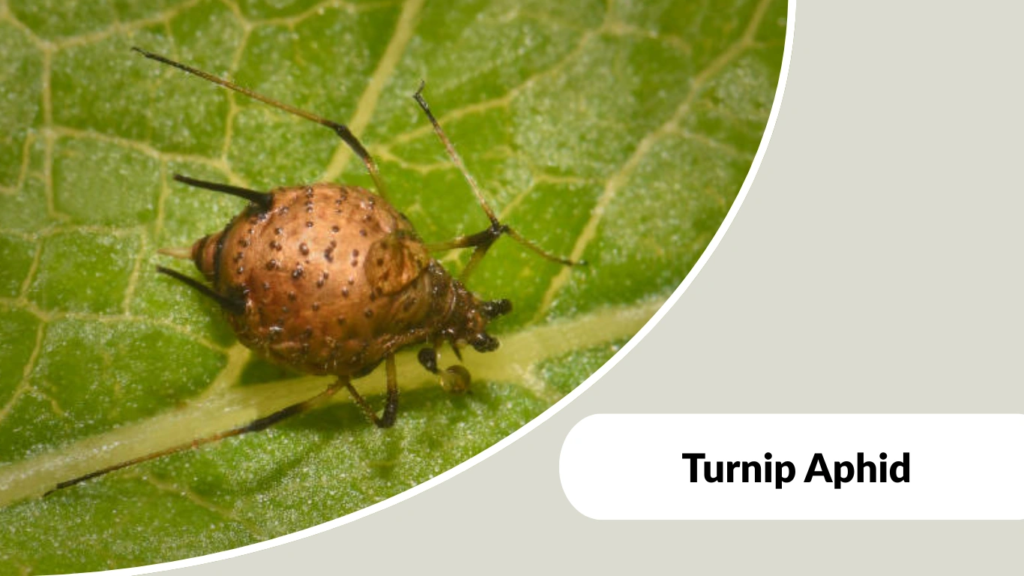
The turnip aphid is a significant pest of mustard and brassica crops. It is often confused with the cabbage aphid but differs in appearance and feeding behavior.
Identification
- Small aphids about 1.5–2.5 mm long
- Body color green to olive-green
- Smooth body surface without heavy wax coating
- Cornicles are medium-length and slightly tapered
- Typically found on leaf undersides
Host Plants
This aphid primarily attacks turnip, mustard, radish, cabbage, and other cruciferous vegetables.
Behavior and Damage
Feeding leads to leaf yellowing, curling, and reduced plant growth. Heavy infestations can severely affect crop quality and yield.
Distribution and Habitat
Turnip aphids are widely distributed across Asia, Europe, and parts of Africa. They inhabit agricultural fields, home gardens, and wild brassica plants.
