
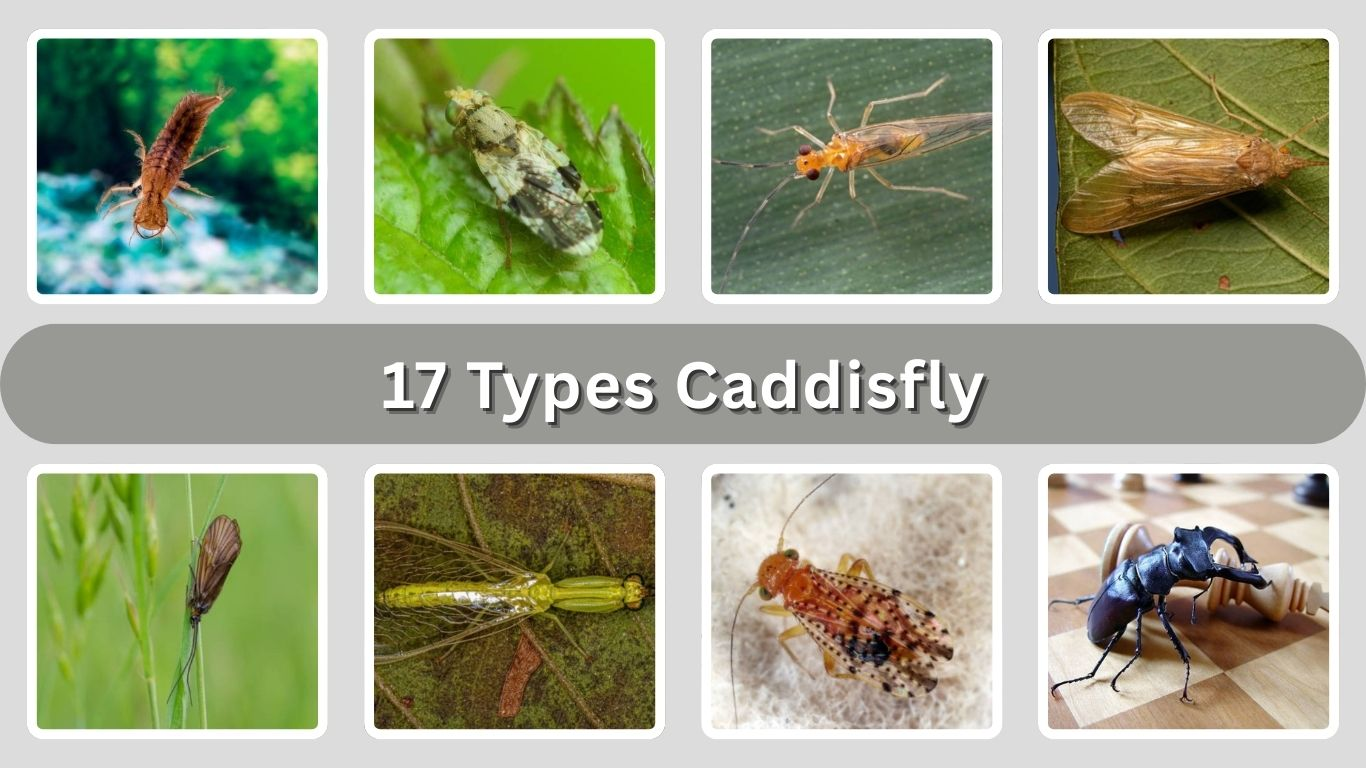
Caddisflies are fascinating freshwater insects best known for their aquatic larvae, which build protective cases or silk nets from natural materials like sand, leaves, and twigs. Belonging to the order Trichoptera, caddisflies are closely related to moths and butterflies. They are found worldwide in rivers, streams, lakes, and wetlands, where they play a vital role in aquatic ecosystems. Their presence often reflects water quality, making them important indicators for scientists and nature enthusiasts.
1. Hydropsyche (Net-Spinning Caddisfly)
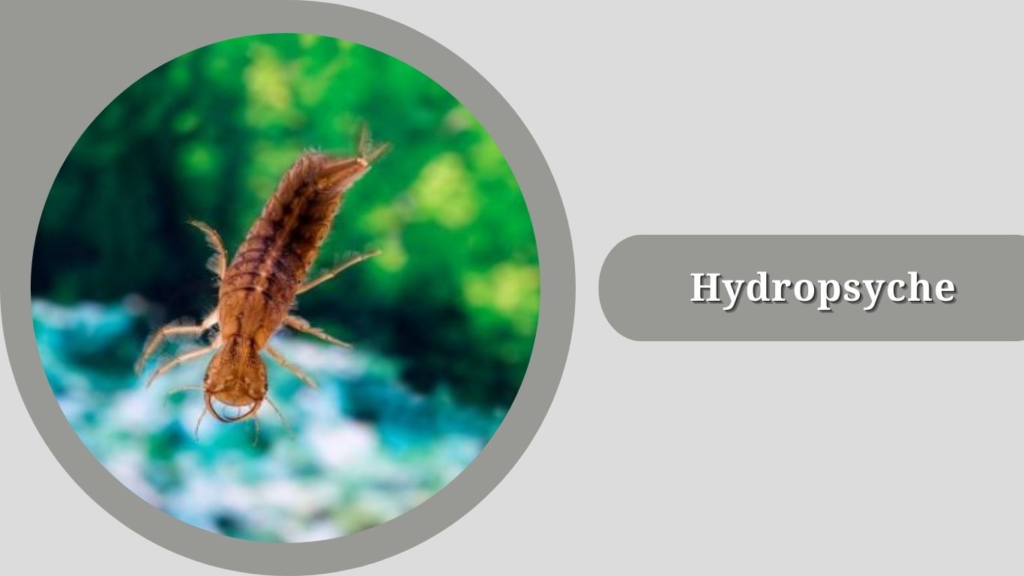
Hydropsyche is one of the most well-known and widely distributed caddisfly genera in the world. These caddisflies are famous for their net-spinning larvae, which build silk capture nets in flowing water to trap food particles. They play an important ecological role in freshwater ecosystems and are often used by scientists as indicators of water quality.
Identification
- Medium-sized caddisfly with mottled brown or gray wings
- Adults resemble small moths and hold wings roof-like over the body
- Larvae are soft-bodied, usually greenish to brown
- Hardened head and thorax, with a flexible segmented abdomen
- No portable case; larvae live in fixed retreats with silk nets
- Strong anal hooks at the tail end for anchoring to rocks
Habitat
Hydropsyche species are primarily found in clean, well-oxygenated freshwater systems. They prefer rivers, streams, and fast-flowing creeks where current is strong enough to carry food particles. Larvae attach themselves to the undersides of rocks, logs, and submerged debris, building silk retreats in riffles and runs. Adults usually stay near water sources, resting on nearby vegetation, bridges, or rocks.
Behaviors
Hydropsyche larvae are active filter feeders. Instead of roaming widely, they remain in one location and rely on water flow to bring food to them. They spin fine silk nets that act like underwater traps, catching algae, tiny invertebrates, and organic debris. Adults are mostly nocturnal, often attracted to lights at night, and live only long enough to reproduce.
Diet and Lifecycle
Larvae mainly feed on microscopic algae, detritus, and small aquatic organisms captured in their silk nets. The lifecycle includes four stages: egg, larva, pupa, and adult. Females lay eggs on or near water. The larval stage lasts several months, followed by pupation inside a sealed retreat. Adults emerge, mate, lay eggs, and typically die within a few days to weeks.
2. Rhyacophila (Free-Living Green Caddisfly)
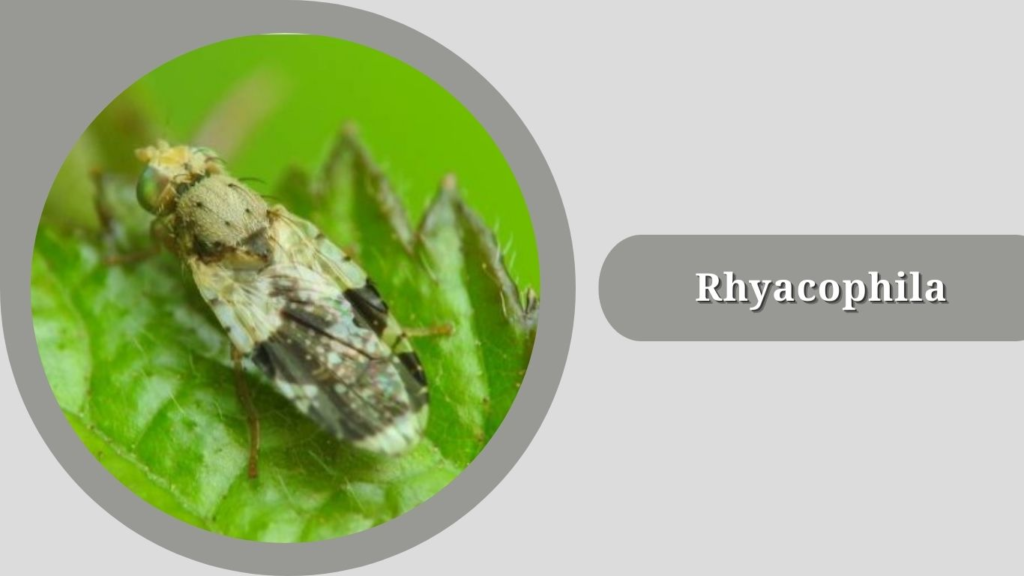
Rhyacophila is a distinctive group of caddisflies best known for their free-living larvae, which do not build protective cases like many other caddisflies. Their bright green larvae are active predators in cold, fast-flowing streams and are an important part of freshwater food webs. Because they require high oxygen levels, their presence often indicates very clean water.
Identification
- Adults are medium-sized with narrow, brownish or gray wings
- Wings held roof-like over the body when resting
- Larvae are bright green and worm-like in appearance
- No portable case at any life stage
- Well-developed head with strong jaws
- Long, slender body adapted for crawling on rocks
Habitat
Rhyacophila species live mainly in cold, clear, fast-flowing streams and mountain rivers. Larvae are usually found under stones, among gravel, or on submerged wood where oxygen levels are high. They avoid stagnant or polluted waters and are most abundant in shaded forest streams. Adults remain close to water, resting on nearby plants, rocks, and streamside structures.
Behaviors
Unlike net-spinning or case-building caddisflies, Rhyacophila larvae actively roam their habitat in search of prey. They crawl over stones and through crevices, using their strong legs and streamlined bodies to resist current. Adults are mostly nocturnal, flying at dusk and night to mate and lay eggs, often returning directly to clean running water.
Diet and Lifecycle
Rhyacophila larvae are predators, feeding on mayfly nymphs, small insect larvae, and other tiny aquatic invertebrates. Their lifecycle includes egg, larva, pupa, and adult stages. Pupation occurs in a sheltered cocoon under stones. After emerging, adults live briefly, focusing on reproduction before the cycle begins again.
3. Limnephilus (Northern Case-Making Caddisfly)
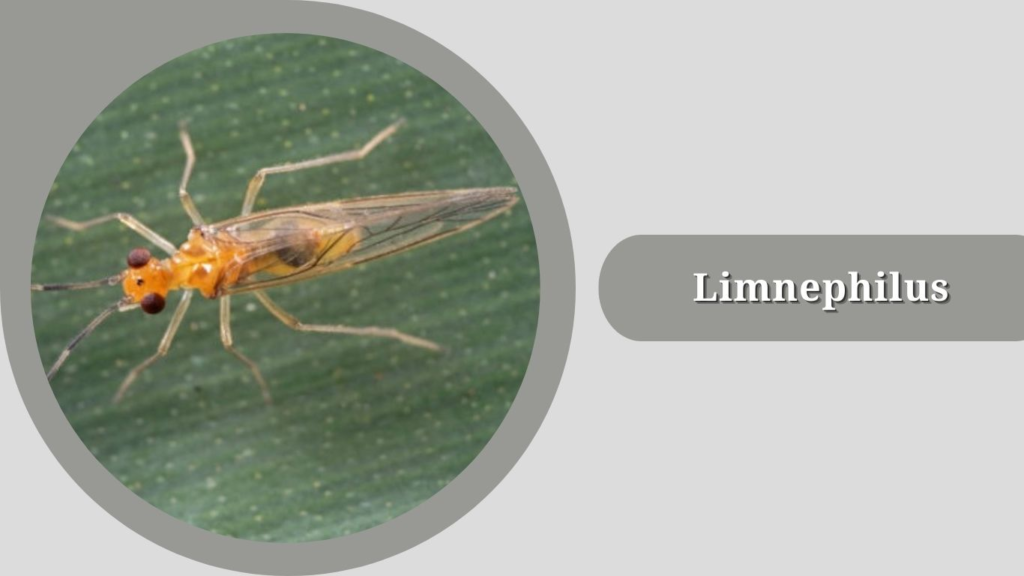
Limnephilus is a large and diverse genus of caddisflies commonly found in cooler regions of the world. These caddisflies are best known for their case-making larvae, which build portable shelters from plant fragments, sand, and small stones. Because they tolerate a wide range of freshwater habitats, Limnephilus species are often among the most frequently observed caddisflies in ponds, lakes, and slow-moving streams.
Identification
- Adults are medium to large with brown, tan, or gray patterned wings
- Wings appear hairy and are held tent-like over the body
- Larvae live inside tube-shaped portable cases
- Cases often made from plant pieces, sticks, or sand grains
- Soft, segmented body with a hardened head and thorax
- Strong hooked legs for gripping the inside of the case
Habitat
Limnephilus larvae are commonly found in ponds, marshes, lakes, and slow-flowing streams. They prefer areas rich in aquatic plants, leaf litter, and organic debris, which provide both food and building materials for their cases. Some species can tolerate slightly lower oxygen levels than fast-water caddisflies, making them widespread across many freshwater environments. Adults usually stay near vegetation along shorelines.
Behaviors
Limnephilus larvae move slowly along the bottom while carrying their protective cases. When threatened, they withdraw completely inside. They frequently modify or enlarge their cases as they grow, adding new material. Adults are mainly active at night and are often attracted to lights. After mating, females lay egg masses directly on the water surface or on submerged plants.
Diet and Lifecycle
Most Limnephilus larvae are shredders and grazers, feeding on decaying leaves, aquatic plants, and algae. Some species also consume small invertebrates. Their lifecycle includes egg, larva, pupa, and adult stages. Pupation occurs inside a sealed case attached to vegetation or debris. Adults emerge, reproduce, and typically live only a short time.
4. Phryganea (Giant Case-Making Caddisfly)
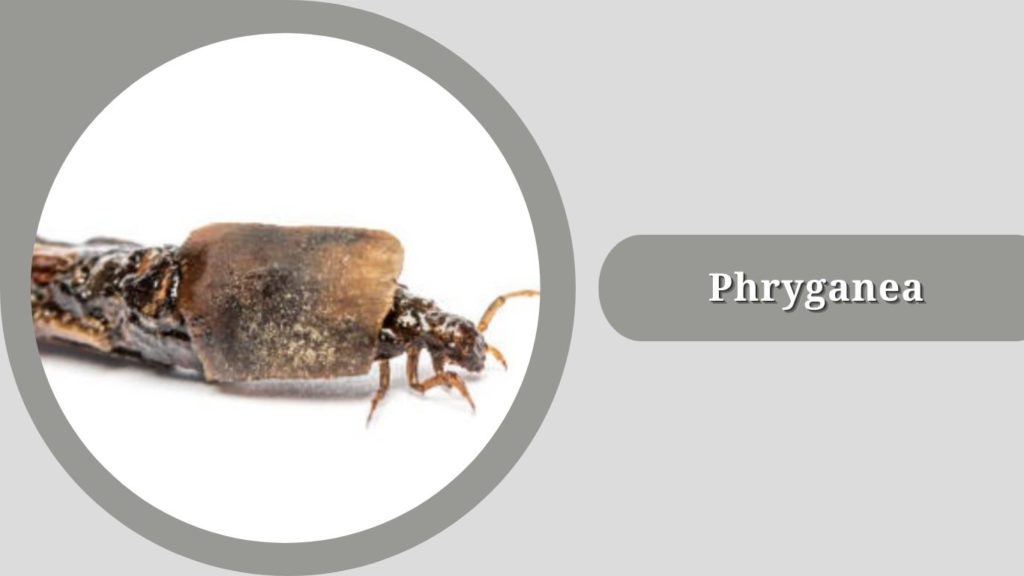
Phryganea is a genus of large caddisflies often referred to as giant case-making caddisflies because of their impressive size and bulky larval cases. They are commonly found in still or slow-moving freshwater habitats, where their larvae construct long tube-shaped cases from plant fragments. These caddisflies are important recyclers of plant material in ponds and wetlands.
Identification
- Adults are large, with long, narrow, brown or gray wings
- Wings densely hairy and held roof-like over the body
- Larvae live in long, cylindrical portable cases
- Cases usually built from reed pieces, leaves, or hollow stems
- Soft-bodied larva with hardened head and thorax
- Strong anal hooks used to anchor inside the case
Habitat
Phryganea species mainly inhabit ponds, lakes, marshes, and slow-moving sections of rivers. Larvae are usually found among aquatic plants, reeds, and submerged vegetation, where they can easily gather materials for case building. They prefer calm, well-vegetated waters rather than fast-flowing streams. Adults typically remain close to wetlands and are often seen resting on tall plants.
Behaviors
Phryganea larvae move slowly through vegetation, dragging their long cases behind them. When disturbed, they quickly retreat inside. They are mostly active at night, feeding and repositioning their cases among plant stems. Adult caddisflies are nocturnal flyers and are often attracted to lights, especially near lakes and marshy areas.
Diet and Lifecycle
Larvae primarily feed on decaying plant matter, soft aquatic plants, and algae growing on vegetation. Their lifecycle follows the typical caddisfly pattern: egg, larva, pupa, and adult. Pupation takes place inside a sealed case attached to plant material. After emergence, adults mate, lay eggs on water or plants, and die within a short lifespan.
5. Brachycentrus (Humpless Case-Making Caddisfly)
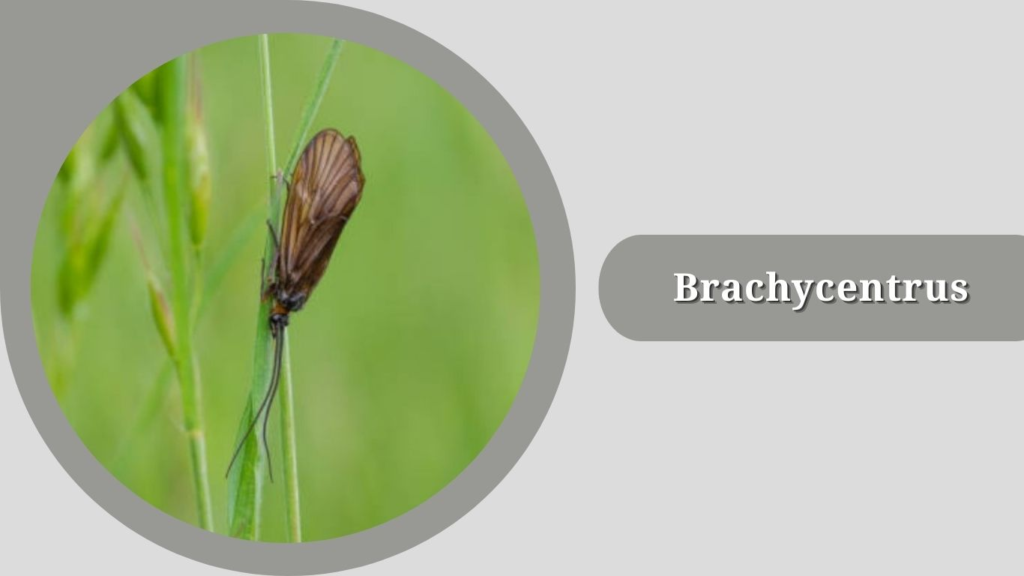
Brachycentrus is a well-known genus of caddisflies whose larvae build distinctive four-sided cases, often made from neatly arranged plant fragments. These insects are especially famous among anglers because their larvae and adults closely resemble many popular fishing flies. They are common in cool streams and rivers and are considered good indicators of healthy freshwater ecosystems.
Identification
- Adults are small to medium-sized with dark brown to black wings
- Wings held roof-like, giving a compact, moth-like appearance
- Larvae live in square or box-shaped portable cases
- Cases built from sticks, bark, or plant strips arranged in flat panels
- Larvae have a dark, hardened head and thorax
- Soft, pale abdomen with strong hooks for holding the case
Habitat
Brachycentrus larvae are mainly found in cool, clear streams and rivers, especially in areas with moderate current. They often cling to submerged wood, rocks, and aquatic plants where food is abundant. Some species also occur in spring-fed creeks and slow sections of rivers. Adults usually stay close to water, resting on streamside vegetation.
Behaviors
Larvae are mostly stationary, anchoring their cases to rocks or wood while extending their bodies to feed. They may reposition their cases if water levels or current change. Adults are most active at dusk and during the night, flying short distances over water to mate. Mass emergences can occur, sometimes covering nearby vegetation.
Diet and Lifecycle
Brachycentrus larvae are primarily filter feeders and grazers, consuming fine organic particles, algae, and microscopic organisms. The lifecycle includes egg, larva, pupa, and adult stages. Pupation happens inside the case, which is firmly attached to a solid surface. Adults emerge, reproduce, and live only briefly, completing the cycle.
6. Glossosoma (Saddlecase Caddisfly)
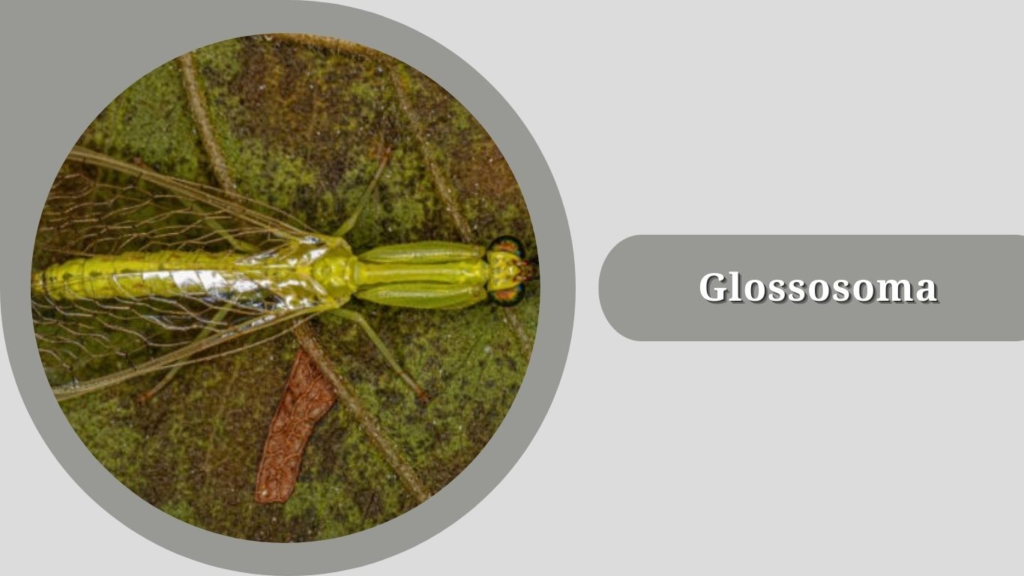
Glossosoma is a distinctive genus of small caddisflies known for their unique dome-shaped “saddle” cases. Unlike long tube cases, these larvae build low, rounded shelters that fit closely over their bodies, allowing them to cling tightly to rocks in fast-flowing streams. They are important grazers of algae and are often used as indicators of clean, well-oxygenated water.
Identification
- Adults are small with dark gray to brown, finely hairy wings
- Wings narrow and held roof-like over the body
- Larvae live in low, dome-shaped portable cases
- Cases usually built from tiny sand grains or mineral particles
- Larvae have a flattened, slug-like appearance
- Hardened head and thorax with a broad, shield-like shape
Habitat
Glossosoma larvae are mainly found in cold, fast-flowing streams and rivers. They strongly prefer rocky riffles where water is clear and rich in oxygen. Their flattened cases allow them to resist strong currents and cling closely to stone surfaces. Adults usually stay near streams, resting on rocks, tree trunks, and riparian vegetation.
Behaviors
These larvae spend most of their time attached to rocks, slowly moving across surfaces while grazing. Their low-profile cases reduce drag and help them avoid being swept away. They are not active hunters but steady feeders. Adults are mostly nocturnal, emerging in large numbers during certain seasons and flying short distances to mate.
Diet and Lifecycle
Glossosoma larvae mainly feed on algae and biofilm scraped from rock surfaces, along with fine organic particles. Their lifecycle follows the standard caddisfly stages: egg, larva, pupa, and adult. Pupation occurs inside the case, which is firmly attached to a rock. Adults emerge, mate, lay eggs, and die shortly afterward.
7. Cheumatopsyche (Little Sister Caddisfly)
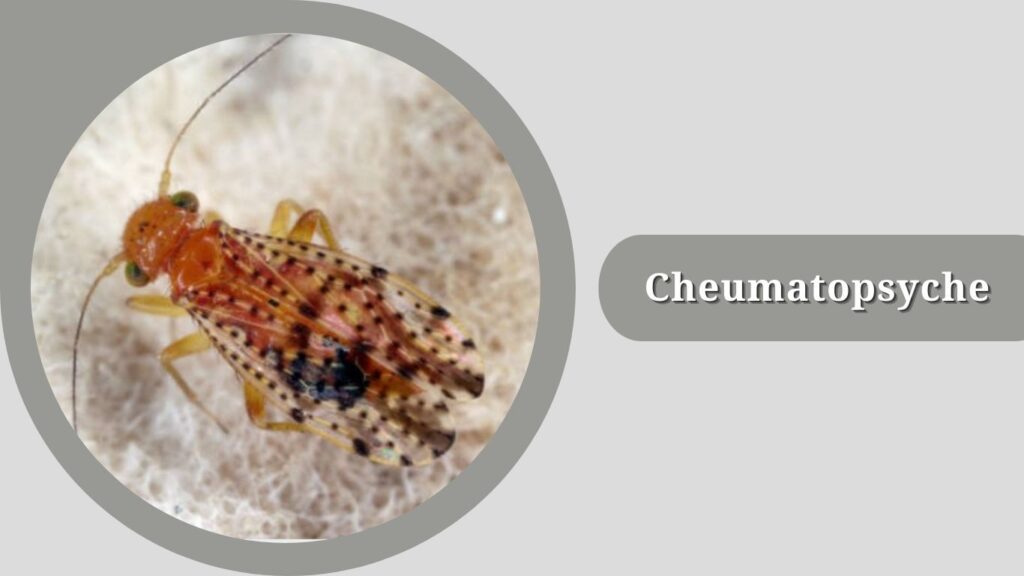
Cheumatopsyche is a close relative of Hydropsyche and is often called the “little sister” caddisfly because of its similar net-spinning behavior but smaller size. These caddisflies are very common in streams and rivers, where their larvae build silk capture nets to filter food from flowing water. They are an important food source for fish and other aquatic animals.
Identification
- Adults are small to medium-sized with grayish-brown wings
- Wings hairy and held tent-like over the body
- Larvae do not build portable cases
- Fixed retreats made of silk and small stones
- Hardened head and thorax with soft, segmented abdomen
- Prominent anal hooks used for anchoring
Habitat
Cheumatopsyche larvae mainly inhabit streams, rivers, and creeks with moderate to fast current. They are especially common on rocks, logs, and bridge pilings where water flow constantly brings suspended food. They tolerate a wider range of conditions than many caddisflies and can be found in both clean and moderately impacted waters. Adults stay close to waterways.
Behaviors
Larvae construct silken nets stretched across small openings in their retreats. They regularly repair or replace these nets as debris builds up. Instead of roaming, they depend on current to deliver food. Adults are mostly nocturnal and are often attracted to artificial lights, sometimes gathering in large numbers near rivers.
Diet and Lifecycle
Cheumatopsyche larvae feed on fine organic particles, algae, and tiny aquatic organisms caught in their silk nets. Their lifecycle includes egg, larva, pupa, and adult stages. Pupation occurs inside the fixed retreat. Adults emerge, mate, lay eggs on the water surface, and usually live only a short time.
8. Halesus (Autumn Sedge Caddisfly)
Halesus is a genus of caddisflies commonly known as autumn sedges because many species emerge later in the year compared to other caddisflies. They are medium to large insects whose larvae build sturdy portable cases, often from plant materials. These caddisflies are important components of stream ecosystems and are well known among fly fishers for their late-season activity.
Identification
- Adults are medium to large with long, brown or olive wings
- Wings hairy and held roof-like over the body
- Larvae live in strong, tube-shaped portable cases
- Cases commonly built from leaf pieces, bark, or plant stems
- Larvae have a hardened head and thorax with soft abdomen
- Dark legs adapted for crawling along stream bottoms
Habitat
Halesus larvae are mainly found in cool streams, rivers, and spring-fed creeks, especially where leaf litter accumulates. They favor shaded areas with abundant plant debris, which provides both food and case-building material. Some species can also be found in lakes and slow sections of rivers. Adults usually remain near riparian vegetation.
Behaviors
Larvae slowly crawl along the bottom while carrying their cases, often hiding among leaves and submerged roots. They are mostly active at night, feeding and moving more freely after dark. Adult Halesus emerge in late summer to autumn, flying during cool evenings and resting on streamside plants during the day.
Diet and Lifecycle
Halesus larvae are mainly shredders, feeding on decaying leaves, woody debris, and aquatic plants. Their lifecycle includes egg, larva, pupa, and adult stages. Pupation occurs inside a sealed case attached to stones or vegetation. Adults emerge, mate, lay eggs on or near water, and die after a short lifespan.
9. Molanna (Helmet Caddisfly)
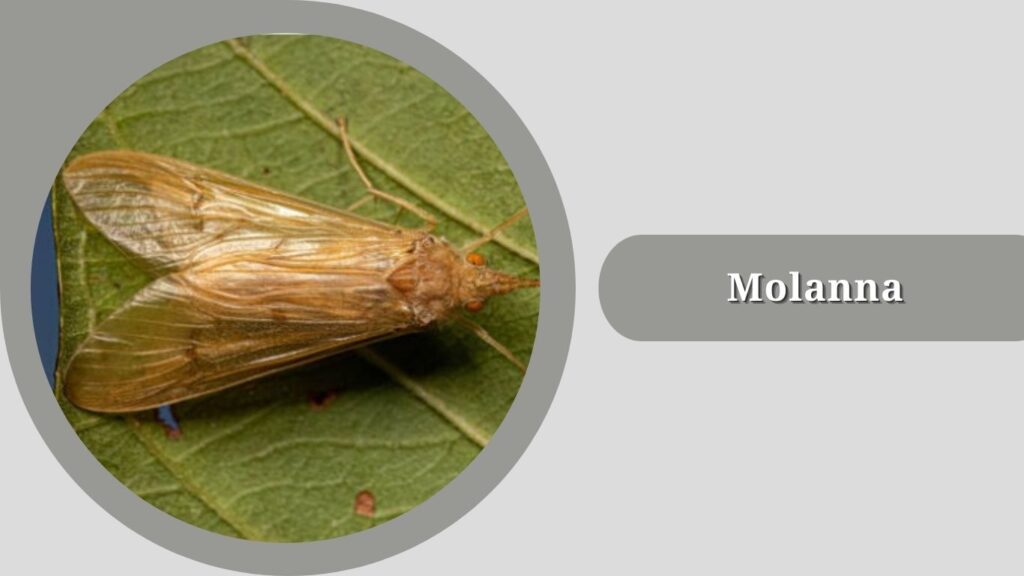
Molanna is a unique genus of caddisflies known as helmet caddisflies because of the broad, flattened shape of their larval cases. These cases resemble small helmets or shields and are built mainly from sand grains. Molanna larvae are bottom-dwellers that move slowly across sediments in lakes and slow streams, playing an important role in processing organic material.
Identification
- Adults are small to medium-sized with narrow, brownish wings
- Wings finely hairy and held roof-like over the body
- Larvae live in wide, flattened portable cases
- Cases constructed mostly from fine sand and mineral particles
- Larvae have a flattened body adapted for bottom life
- Hardened head with short, sturdy legs
Habitat
Molanna larvae are commonly found in lakes, ponds, marshes, and slow-moving sections of rivers. They prefer sandy or muddy bottoms where their flattened cases blend well with the substrate. These caddisflies are usually absent from fast, rocky streams. Adults typically stay near calm freshwater habitats, resting on shoreline vegetation.
Behaviors
Larvae crawl slowly over the bottom, pushing their broad cases along the sediment surface. Their case shape helps prevent sinking into soft mud and offers protection from predators. They are not strong swimmers and rely on camouflage and their case structure for safety. Adults are mostly nocturnal and fly short distances near water.
Diet and Lifecycle
Molanna larvae feed mainly on fine organic matter, algae, and microscopic organisms collected from sediments. Their lifecycle includes egg, larva, pupa, and adult stages. Pupation occurs inside the case, which is often attached to the substrate. Adults emerge, reproduce, and usually live only briefly.
10. Leptocerus (Long-Horned Caddisfly)
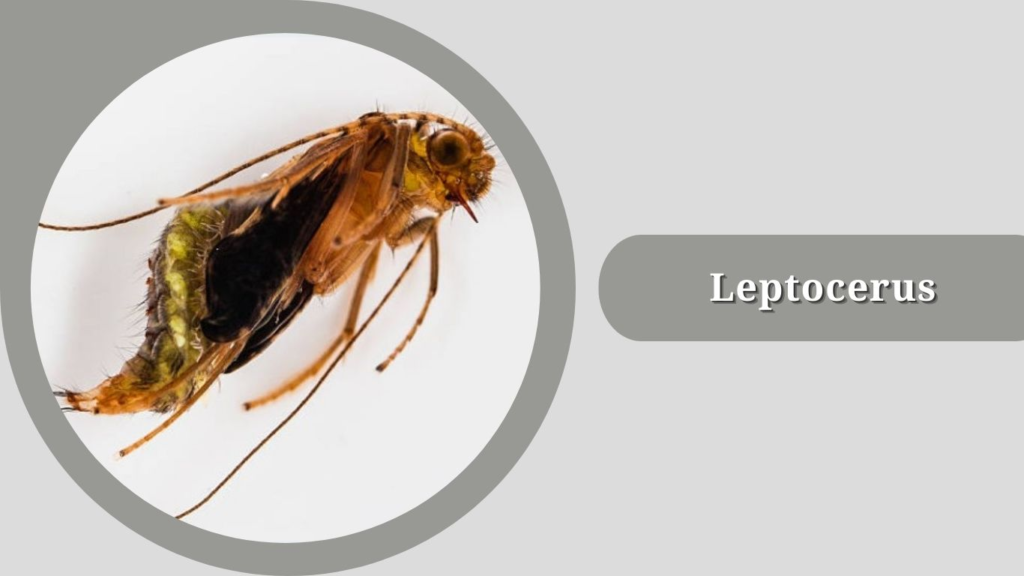
Leptocerus belongs to the long-horned caddisflies, named for the extremely long antennae of the adults, which are often longer than their bodies. This genus is widespread and commonly seen near lakes, ponds, and slow-moving streams. Their larvae are case builders and are important grazers and detritus feeders in freshwater ecosystems.
Identification
- Adults slender with very long, thread-like antennae
- Wings narrow, brown to tan, and held roof-like over the body
- Larvae live in long, thin, portable tube-shaped cases
- Cases often made from plant stems or fine sand
- Soft-bodied larva with hardened head and thorax
- Long, slender legs adapted for crawling among vegetation
Habitat
Leptocerus larvae are mainly found in ponds, lakes, marshes, and slow-flowing streams. They are especially common among aquatic plants, reeds, and submerged grasses. These habitats provide both shelter and abundant material for case construction. Adults remain close to water, often resting on tall vegetation near shorelines.
Behaviors
Larvae move slowly among plants, dragging their thin cases behind them. They frequently adjust and lengthen their cases as they grow. Adults are mostly active at dusk and during the night, flying low over water surfaces. Because of their long antennae, adults are easy to recognize when seen resting on leaves or walls.
Diet and Lifecycle
Leptocerus larvae mainly feed on algae, decaying plant matter, and fine organic particles. Some species may also consume tiny invertebrates. Their lifecycle includes egg, larva, pupa, and adult stages. Pupation takes place inside a sealed case attached to vegetation. Adults emerge, mate, lay eggs, and die after a short adult life.
11. Oecetis (Long-Horned Sedge)
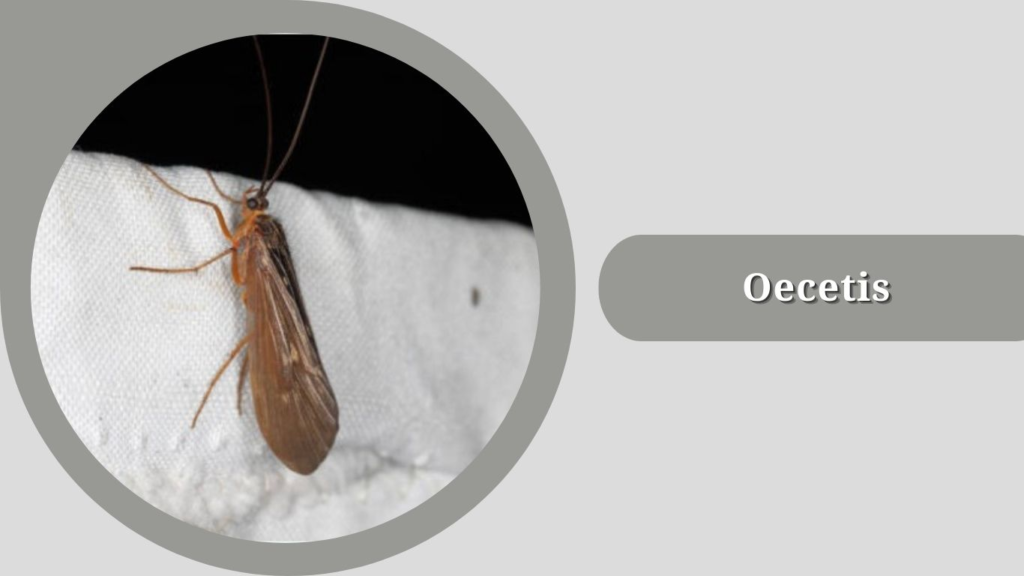
Oecetis is another well-known genus of long-horned caddisflies, closely related to Leptocerus. These caddisflies are recognized by their slender bodies, very long antennae, and narrow wings. Their larvae build portable cases and are common inhabitants of quiet freshwater habitats, where they contribute to nutrient cycling and serve as prey for fish and amphibians.
Identification
- Adults slender with very long, hair-like antennae
- Wings narrow, light brown to gray, and held roof-like
- Larvae live in straight, tube-shaped portable cases
- Cases often built from sand grains or fine plant pieces
- Larvae soft-bodied with hardened head and thorax
- Pale abdomen with short, gripping legs
Habitat
Oecetis larvae are mainly found in ponds, lakes, marshes, and slow-flowing rivers. They favor areas with abundant aquatic vegetation and fine sediments. These calm habitats provide both food and building materials. Adults usually stay near water, resting on plants, tree trunks, and man-made structures close to shorelines.
Behaviors
Larvae crawl slowly over plant surfaces and sediments while carrying their cases. They may hide among stems and leaves during the day and become more active at night. Adults are mostly nocturnal and are frequently attracted to lights, sometimes appearing in large numbers near lakes and rivers.
Diet and Lifecycle
Oecetis larvae feed primarily on algae, detritus, and fine organic matter, though some species are more predatory. Their lifecycle includes egg, larva, pupa, and adult stages. Pupation occurs inside the case, which is attached to vegetation or debris. Adults emerge, reproduce, and live only briefly.
12. Polycentropus (Trumpet-Net Caddisfly)
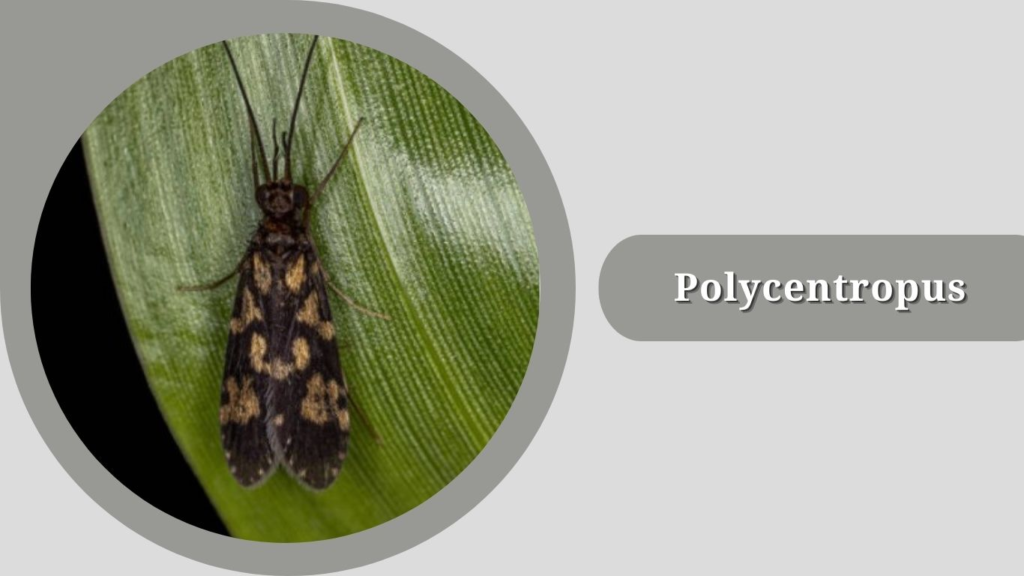
Polycentropus is a genus of caddisflies known for the unusual trumpet-shaped silk nets built by their larvae. Instead of portable cases, these larvae construct fixed retreats with funnel-like capture nets that guide food particles toward them. They are common in a variety of freshwater habitats and play an important role in filtering organic material from the water.
Identification
- Adults small to medium-sized with brown or smoky-gray wings
- Wings narrow, hairy, and held roof-like over the body
- Larvae do not carry portable cases
- Fixed silk retreats with trumpet-shaped capture nets
- Hardened head and thorax with soft abdomen
- Strong anal hooks for anchoring to silk structures
Habitat
Polycentropus larvae are found in streams, rivers, and sometimes lakes, usually in areas with moderate current. They build their silk retreats on rocks, submerged wood, or aquatic plants. Some species prefer flowing water, while others can live in still or slow habitats. Adults typically remain close to freshwater sources.
Behaviors
Larvae stay mostly inside their retreats, extending only the front of the body to tend their nets and collect food. The trumpet-shaped net helps direct fine particles and small organisms toward the larva. Adults are mostly nocturnal, flying near water at dusk and night, and are often attracted to lights.
Diet and Lifecycle
Polycentropus larvae feed on fine organic matter, algae, and small aquatic invertebrates trapped in their silk nets. Their lifecycle includes egg, larva, pupa, and adult stages. Pupation occurs within a sealed retreat. Adults emerge, mate, lay eggs on water or nearby surfaces, and die after a short lifespan.
13. Chimarra (Fingernet Caddisfly)
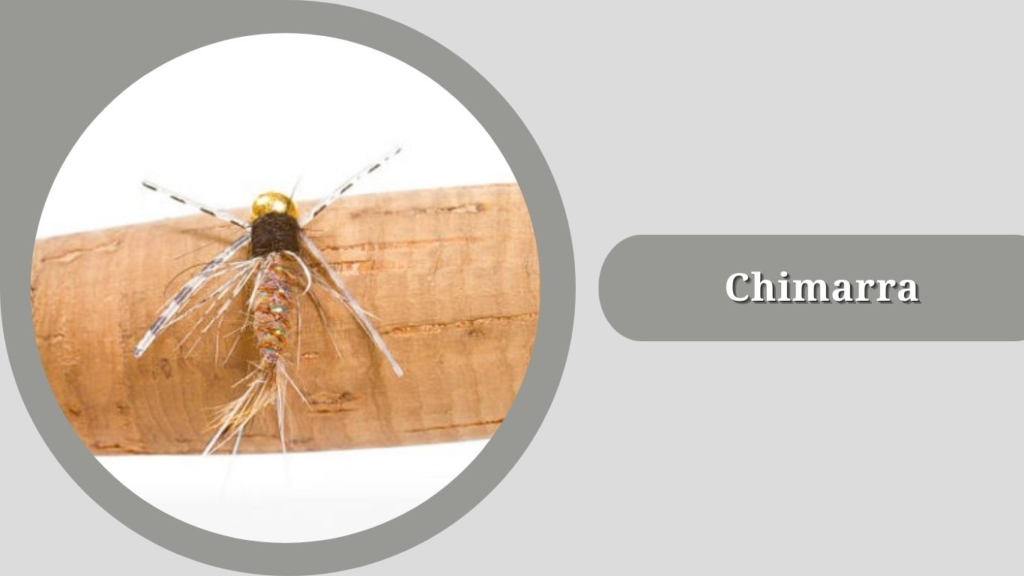
Chimarra is a widespread genus of small caddisflies whose larvae build fine-meshed silk nets, often called finger nets, to capture food from flowing water. They are closely associated with clean streams and rivers and are important filter feeders in freshwater ecosystems. Their delicate nets allow them to collect very fine organic particles.
Identification
- Adults small with dark brown to blackish wings
- Wings narrow, finely hairy, and held roof-like
- Larvae do not build portable cases
- Fixed retreats with fine-meshed silk capture nets
- Hardened head and thorax, soft segmented abdomen
- Slender body adapted for living in narrow crevices
Habitat
Chimarra larvae are mainly found in clear, fast-flowing streams and rivers. They typically live on the undersides of rocks, in crevices, or on submerged wood where current brings a steady supply of food. These habitats are usually well-oxygenated and relatively unpolluted. Adults stay close to streams and rest on nearby vegetation.
Behaviors
Larvae remain in or near their silk retreats, maintaining and cleaning their fine nets to ensure efficient feeding. They depend on water flow rather than movement to gather food. Adults are mostly nocturnal and are often seen flying close to the water surface at dusk or attracted to lights at night.
Diet and Lifecycle
Chimarra larvae feed on very fine organic particles, algae, and microorganisms trapped in their nets. Their lifecycle follows the typical caddisfly pattern: egg, larva, pupa, and adult. Pupation occurs inside a sealed retreat. Adults emerge, mate, lay eggs, and live only a short time.
14. Triaenodes (Narrow-Winged Long-Horned Caddisfly)
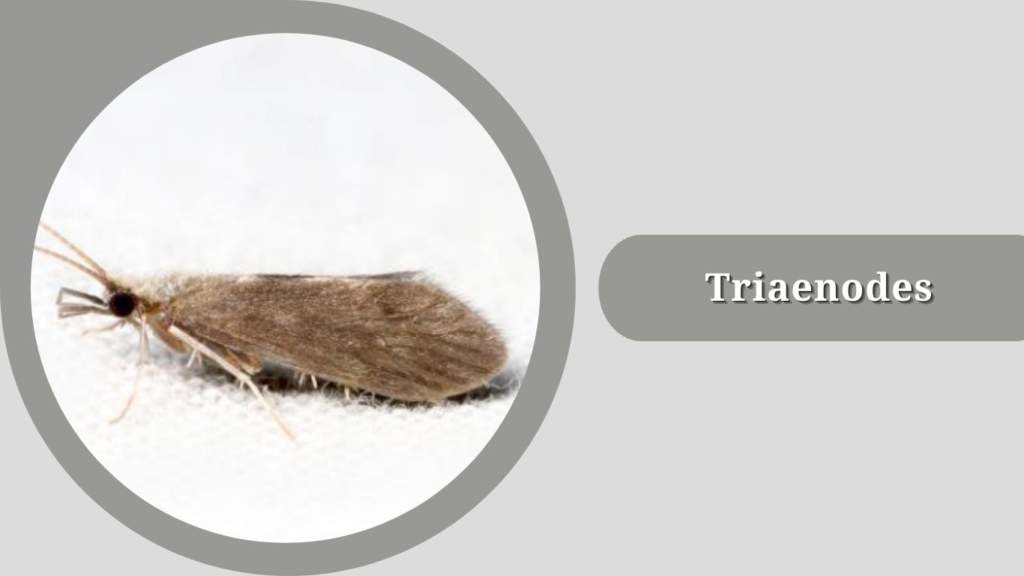
Triaenodes is a genus of long-horned caddisflies recognized for their very narrow wings and extremely long antennae. Their larvae are case builders and are commonly found among aquatic vegetation in quiet freshwater habitats. These caddisflies contribute to the breakdown of plant material and are a regular part of pond and wetland insect communities.
Identification
- Adults slender with very narrow, elongated wings
- Antennae extremely long, often several times body length
- Wings light brown to gray and finely hairy
- Larvae live in long, thin, portable cases
- Cases built from plant stems or fine debris
- Soft-bodied larva with hardened head and thorax
Habitat
Triaenodes larvae are mainly found in ponds, marshes, lakes, and slow-moving streams. They prefer densely vegetated areas where they can hide among stems and leaves. These calm waters provide abundant plant material for both food and case construction. Adults usually stay near wetlands and pond margins.
Behaviors
Larvae crawl slowly over aquatic plants while dragging their slender cases. They often remain hidden among vegetation, which protects them from predators. Adults are mostly nocturnal and fly low over water in the evening. During the day, they rest quietly on leaves and stems near the shoreline.
Diet and Lifecycle
Triaenodes larvae mainly feed on algae, decaying plant matter, and fine organic debris. Some species also consume small invertebrates. Their lifecycle includes egg, larva, pupa, and adult stages. Pupation occurs inside the sealed case. Adults emerge, mate, lay eggs on water or plants, and die after a short adult stage.
15. Sericostoma (Little Grey Sedge)
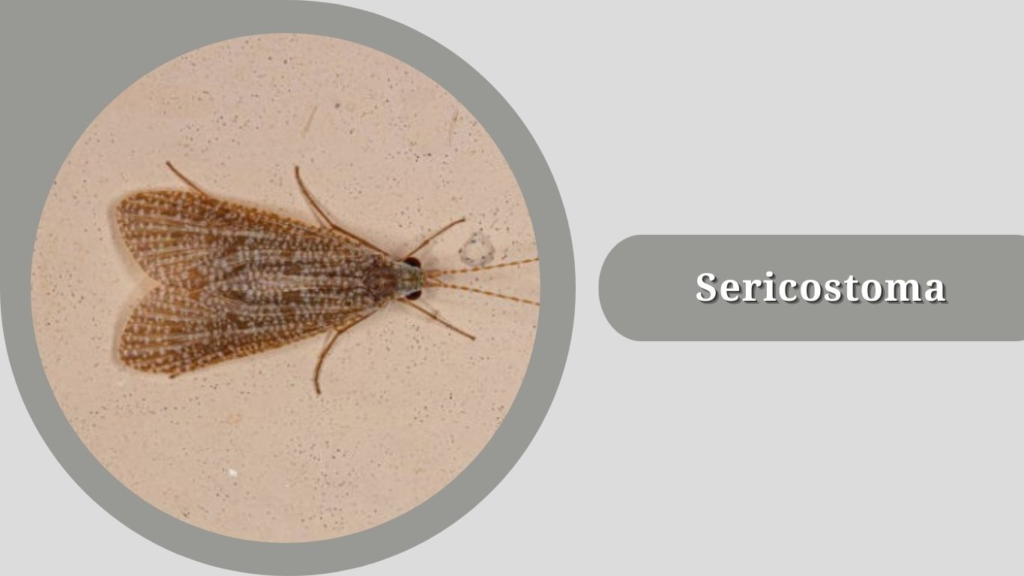
Sericostoma is a genus of caddisflies commonly called little grey sedges. Their larvae are well-known case builders that create sturdy tube-shaped shelters from sand grains. These insects are widespread in Europe and parts of Asia and are important components of stream ecosystems, helping process organic material and serving as food for fish.
Identification
- Adults medium-sized with gray to smoky-brown wings
- Wings densely hairy and held roof-like over the body
- Larvae live in firm, tube-shaped portable cases
- Cases usually constructed from sand grains and small stones
- Hardened head and thorax with soft, pale abdomen
- Short, strong legs adapted for crawling on the bottom
Habitat
Sericostoma larvae are mainly found in clean streams and rivers, especially in areas with moderate current and gravel or sandy bottoms. They often occur near submerged roots, stones, and leaf packs. These habitats provide both shelter and abundant organic material. Adults usually remain close to streams and riparian vegetation.
Behaviors
Larvae move slowly across the streambed while carrying their cases, often hiding among stones or debris. When disturbed, they quickly withdraw inside. They are mostly active at night. Adult Sericostoma typically emerge in late spring or summer and fly mainly in the evening, resting on vegetation during the day.
Diet and Lifecycle
Sericostoma larvae are mainly shredders and collectors, feeding on decaying leaves, fine organic matter, and algae. Their lifecycle includes egg, larva, pupa, and adult stages. Pupation takes place inside the case, which is attached to stones or debris. Adults emerge, reproduce, and live for a short time.
16. Micrasema (Little Case-Making Caddisfly)
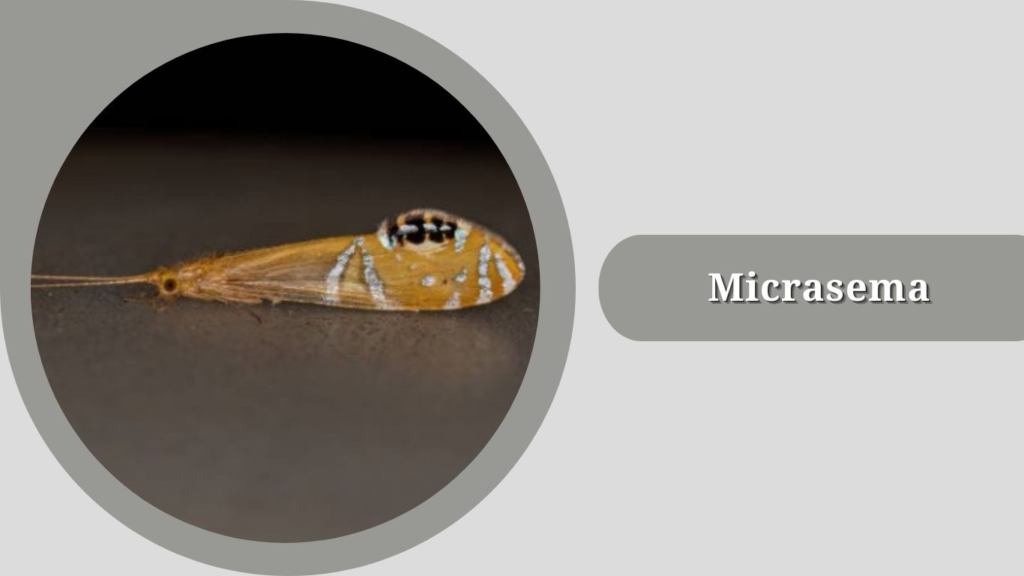
Micrasema is a genus of small caddisflies whose larvae build tiny, neatly constructed portable cases, often from sand grains and fine plant material. These insects are common in cool, well-oxygenated streams and are especially important grazers of algae. Because they are sensitive to pollution, they are frequently used as indicators of good water quality.
Identification
- Adults small with brown to dark gray, finely hairy wings
- Wings narrow and held roof-like over the body
- Larvae live in very small, tube-shaped portable cases
- Cases usually made from fine sand grains or tiny plant fragments
- Hardened head and thorax with pale, soft abdomen
- Compact body adapted for clinging to rocks
Habitat
Micrasema larvae mainly inhabit cold, clear streams and small rivers. They are most often found in riffles and shallow runs where current is steady and oxygen levels are high. Larvae cling to stones and gravel, scraping food from surfaces. Adults usually stay near stream margins, resting on rocks and vegetation.
Behaviors
Larvae crawl slowly across rock surfaces, carrying their small cases. Their movements are deliberate, and they often remain firmly attached to stones to resist current. They spend much of their time grazing rather than roaming widely. Adults are mostly nocturnal and are active during evening hours.
Diet and Lifecycle
Micrasema larvae feed primarily on algae, biofilm, and fine organic matter. Their lifecycle includes egg, larva, pupa, and adult stages. Pupation occurs inside the sealed case attached to a rock. Adults emerge, mate, lay eggs, and usually die within a short period.
17. Agrypnia (Giant Long-Horned Caddisfly)
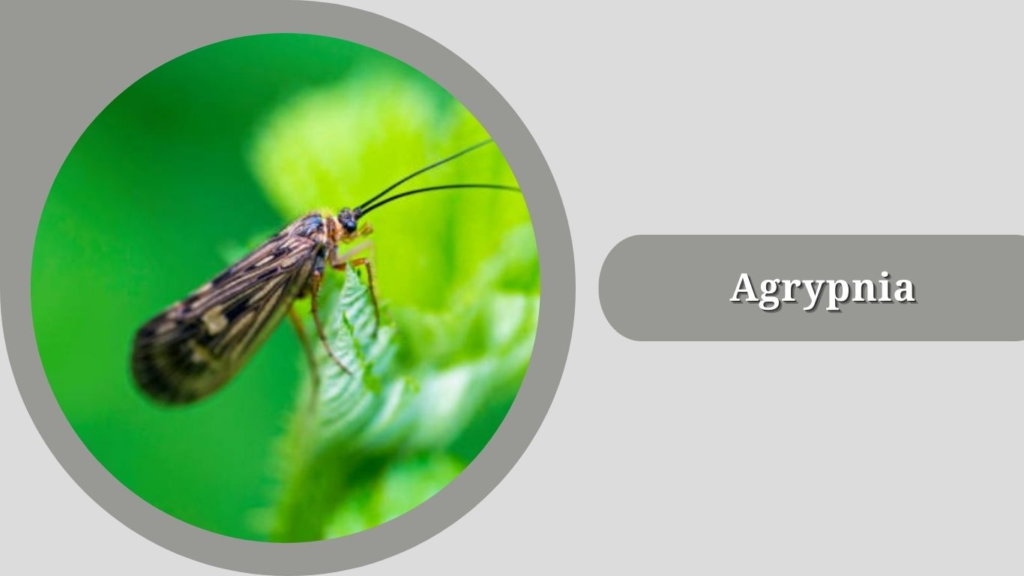
Agrypnia is one of the largest genera of long-horned caddisflies and includes some of the biggest caddisfly species in the world. Adults are notable for their very long antennae and large wingspans, while larvae build long, strong portable cases from plant materials. These impressive insects are most often found in quiet freshwater habitats rich in vegetation.
Identification
- Adults very large with long, narrow brown wings
- Antennae extremely long, often much longer than the body
- Body slender, moth-like in appearance
- Larvae live in long, thick, portable cases
- Cases commonly built from twigs, leaves, and reed pieces
- Large, soft-bodied larvae with hardened head and thorax
Habitat
Agrypnia larvae mainly inhabit lakes, ponds, marshes, and slow-moving sections of rivers. They are especially common among dense aquatic vegetation where they can find both shelter and abundant case-building materials. These calm waters support their slow-moving lifestyle. Adults usually remain near wetlands and lake margins.
Behaviors
Larvae move slowly through vegetation while dragging their heavy cases. When threatened, they retreat fully inside. They are mostly nocturnal and are more active at night. Adult Agrypnia are strong flyers but usually stay close to their natal waters, emerging mainly in late spring and summer.
Diet and Lifecycle
Agrypnia larvae primarily feed on decaying plant matter, soft aquatic plants, and algae. Their lifecycle follows the standard caddisfly pattern: egg, larva, pupa, and adult. Pupation occurs inside the sealed case attached to vegetation. Adults emerge, mate, lay eggs on or near water, and live only a short adult life.
FAQs
What is a caddisfly?
A caddisfly is a small insect belonging to the order Trichoptera. It spends most of its life as an aquatic larva in freshwater habitats. Adult caddisflies resemble moths and usually live only long enough to mate and lay eggs near water.
Where are caddisflies commonly found?
Caddisflies are found worldwide, mainly around rivers, streams, lakes, ponds, and wetlands. Their larvae live underwater, often on rocks, plants, or sediments. Different species prefer different conditions, ranging from fast, cold mountain streams to calm, plant-filled ponds.
Why are caddisflies important to ecosystems?
Caddisflies play a major role in freshwater food webs. Larvae help break down leaves, algae, and organic matter, improving nutrient cycling. They are also a vital food source for fish, amphibians, and birds, making them ecologically very important.
Do all caddisfly larvae build cases?
No, not all caddisfly larvae build portable cases. Many species do, using sand, twigs, or leaves. Others construct fixed retreats with silk nets, and some are completely free-living. These differences help scientists classify caddisflies into ecological groups.
Are caddisflies indicators of water quality?
Yes, many caddisfly species are sensitive to pollution and low oxygen levels. Their presence often indicates clean, healthy freshwater systems. Because of this, scientists frequently use caddisflies, along with mayflies and stoneflies, to assess stream and river health.
