

Black and white bees, and even bee-like mimics, are often confused with wasps or other insects due to their bold striping and fuzzy appearance. While some, like the Rustic Miner Bee or Ashy Mining Bee, are true solitary bees, others such as the Bee Fly only imitate bees for protection. This guide highlights eleven black-and-white bee species and look-alikes, explaining their identification, habitats, sting risks, and interactions with humans.
1. Rustic Miner Bee (Andrena cineraria)

The Rustic Miner Bee is a solitary species often noticed as a black and white striped bee in gardens and meadows. Its striking appearance sometimes causes confusion with wasps, but it is a harmless pollinator that plays an important role in supporting biodiversity.
Identification
- Medium-sized bee, about 10–14 mm long.
- Distinct black body with broad white or grayish hair bands.
- Females are more robust, while males appear slimmer.
- Covered with fuzzy hairs, giving a velvety look.
- Active mainly in spring and early summer.
Habitat
Rustic Miner Bees prefer sandy or loose soil, where females dig tunnels to build their nests. They favor sunny, open areas such as gardens, lawns, and meadows. Though many nests may appear close together, each bee is solitary and manages her own burrow.
Sting and Danger
Rustic Miner Bees are not aggressive and almost never sting. Females possess stingers but will only use them if directly handled or threatened. Their sting is mild compared to honeybees or wasps. For humans and pets, they are considered safe and non-dangerous.
Interactions
These bees are excellent pollinators, visiting fruit trees, wildflowers, and ornamental plants. Gardeners benefit from their presence as they enhance crop and flower pollination. Unlike social bees, they do not produce honey or live in hives, so they rarely come into conflict with people.
2. Ashy Mining Bee (Andrena cineraria)

The Ashy Mining Bee is another striking black and white bee often found in gardens, fields, and parks. It closely resembles the Rustic Miner Bee but is especially noted for its bold ash-gray and black striping. This solitary bee is harmless and highly valued for pollination.
Identification
- Medium-sized bee, about 10–13 mm long.
- Distinctive black body with dense ash-gray hairs forming clear stripes.
- Fuzzy and soft-bodied, often mistaken for a wasp or bumblebee.
- Active during spring, especially when fruit trees bloom.
Habitat
Ashy Mining Bees prefer light, sandy soils where they dig nesting burrows. They thrive in sunny, open spaces like gardens, lawns, and orchards. Females create individual nests, sometimes in clusters, without forming true colonies.
Sting and Danger
Ashy Mining Bees are non-aggressive and rarely sting. Their sting is weak and only occurs if they are pressed or handled roughly. They are not considered dangerous to humans or pets.
Interactions
These bees are excellent early-season pollinators, especially for fruit trees like apples and cherries. Gardeners benefit from their presence, as they contribute to higher yields and healthier blooms. Since they are solitary and non-destructive, they coexist well with humans.
3. Leafcutter Bee (Megachile species)
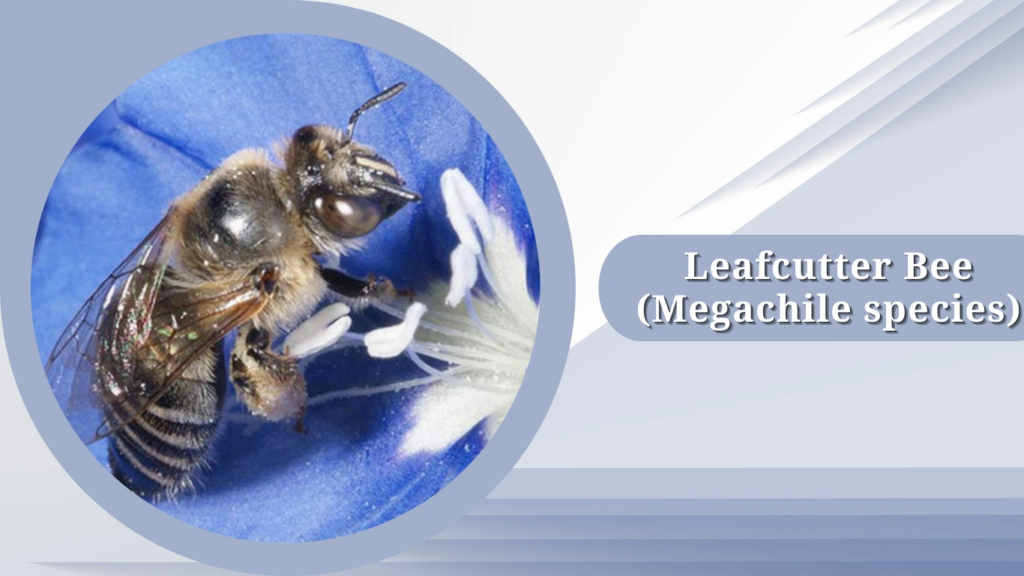
Leafcutter Bees are easily recognized as small black and white bees often seen carrying leaf pieces. They are solitary pollinators, famous for cutting neat, circular leaf segments to build their nests. Unlike honeybees, they do not produce honey but are powerful pollinators of flowers and vegetables.
Identification
- Small to medium-sized bees, about 6–18 mm long.
- Dark black body with pale or white hair bands across the abdomen.
- Strong jaws used for cutting leaf pieces.
- Females carry pollen on their bellies, unlike honeybees that use leg baskets.
Habitat
Leafcutter Bees nest in pre-existing cavities such as hollow plant stems, cracks in wood, or man-made bee hotels. They line their nests with circular leaf or petal cuttings, creating chambers for their larvae.
Sting and Danger
Leafcutter Bees are docile and rarely sting. If they do, the sting is mild and much less painful than that of honeybees or wasps. They are not aggressive and pose no real danger to people.
Interactions
These bees are outstanding pollinators, particularly for vegetables like tomatoes, peppers, and cucumbers, as well as ornamental flowers. Their unique leaf-cutting habit may cause minor cosmetic damage to plants, but it does not harm overall growth. Gardeners often encourage their presence with bee hotels.
4. Wool Carder Bee (Anthidium species)
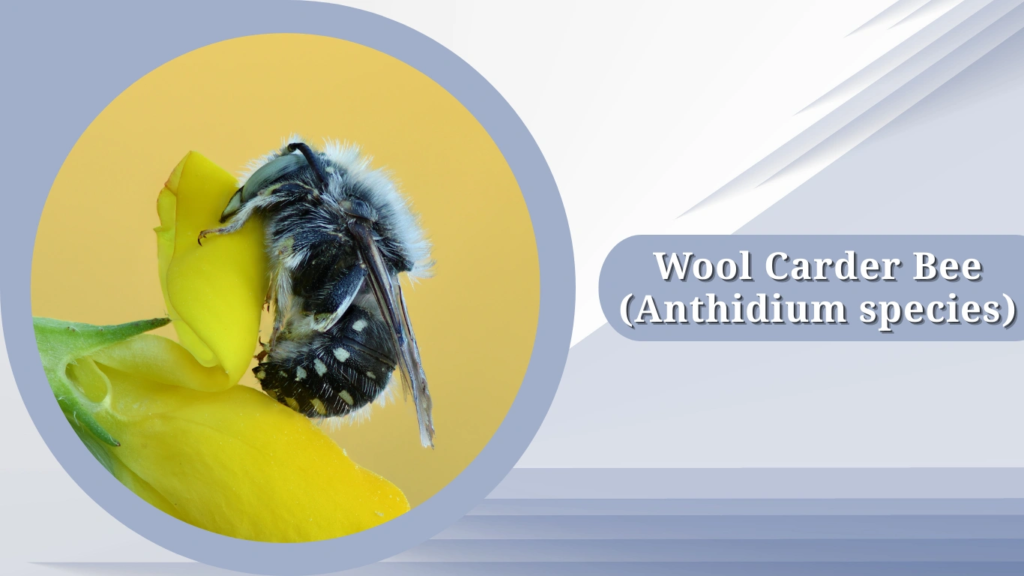
The Wool Carder Bee is often confused with a black and white bee looking bug due to its pale markings and fuzzy appearance. Unlike honeybees, it is solitary and does not form colonies. Males are territorial and guard flower patches, while females collect plant fibers to build nests.
Identification
- Medium-sized bee, 10–14 mm long.
- Black body with pale white or yellow markings along the abdomen.
- Males are larger than females and more aggressive in defending territory.
- Fuzzy body, often seen hovering around flowers like lamb’s ear or mint.
Habitat
Wool Carder Bees prefer sunny gardens, meadows, and areas with soft, hairy-leaved plants. Females scrape plant fibers (“wool”) from leaves to line their nests, usually in cavities like hollow stems or crevices.
Sting and Danger
Females can sting but are non-aggressive, and their sting is mild. Males do not sting but may “body slam” intruding insects to defend territory. For humans, they are harmless and not dangerous.
Interactions
These bees are excellent pollinators, especially for garden flowers and herbs. Their unique nesting behavior benefits biodiversity, and gardeners often encourage them by planting woolly plants and providing bee hotels.
5. Carpenter Bee (Xylocopa species)
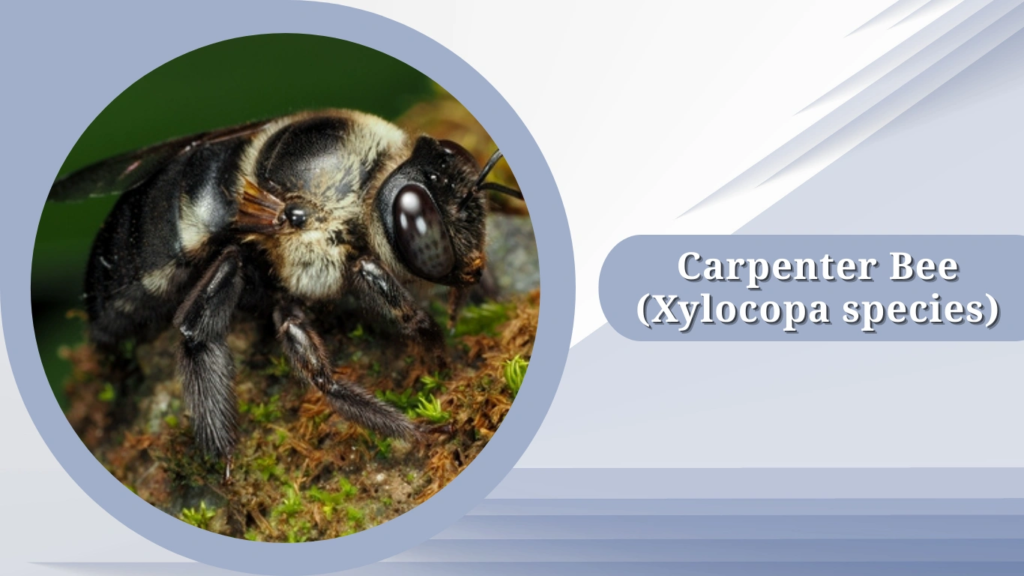
Carpenter Bees, sometimes mistaken for a large black and white striped bee, are robust pollinators that resemble bumblebees but with shinier abdomens. Some species have pale or whitish markings. They are solitary and nest by drilling into wood, which sometimes causes concern for homeowners.
Identification
- Large bees, 12–25 mm long.
- Black body with occasional white or pale hair patches.
- Shiny, hairless abdomen compared to fuzzy bumblebees.
- Strong fliers, often hovering near wooden structures.
Habitat
Carpenter Bees excavate tunnels in untreated wood, dead branches, or wooden structures to lay eggs. They are found in gardens, forests, and urban areas with exposed wood.
Sting and Danger
Males cannot sting, while females can sting but rarely do unless provoked. Stings are mild compared to wasps. They are not considered dangerous to people but may cause minor structural damage if nesting in wooden beams.
Interactions
Carpenter Bees are vital pollinators for flowers, fruit trees, and crops. While their nesting in wood may worry homeowners, they are ecologically beneficial. Providing untreated wood or bee blocks can encourage them to nest away from structures.
6. Cuckoo Bee (Nomada species)

The Cuckoo Bee is sometimes mistaken for a black and white bee or wasp because of its slim body and striking coloration. Unlike other bees, it does not build its own nest. Instead, it lays eggs in the nests of other solitary bees, much like a cuckoo bird does with other birds’ nests.
Identification
- Small to medium-sized, 6–15 mm long.
- Slim body, often black with white, yellow, or red markings.
- Less hairy than most bees, giving a wasp-like appearance.
- No pollen-carrying hairs, as they don’t gather food for larvae.
Habitat
Cuckoo Bees live wherever host bees (like mining bees or leafcutter bees) are found. They patrol flowers and nesting areas, looking for opportunities to lay eggs in existing burrows.
Sting and Danger
They are not aggressive and rarely sting. Since they don’t defend colonies, there’s little risk of being stung unless directly handled. Their sting is mild and not considered dangerous.
Interactions
Though they don’t provide as much pollination as other bees, Cuckoo Bees still visit flowers for nectar. Their presence is a natural part of bee ecosystems, balancing solitary bee populations.
7. Fuzzy White-Faced Bee (Anthophora plumipes)

The Fuzzy White-Faced Bee is often described as a fuzzy black and white bee, noted for its hairy body and pale facial markings. It is a fast-flying solitary bee often seen darting among spring flowers.
Identification
- Medium-sized, about 12–15 mm long.
- Black, hairy body with pale gray or white hairs on the face.
- Males often appear paler than females.
- Strong, rapid fliers, hovering like small hummingbirds.
Habitat
These bees prefer gardens, meadows, and orchards with plenty of spring-blooming flowers. They nest in soil banks, walls, or old burrows and are especially active in early spring.
Sting and Danger
Fuzzy White-Faced Bees are gentle and non-aggressive. While females can sting, they rarely do, and the sting is mild. They are considered harmless to humans and pets.
Interactions
They are excellent pollinators of fruit trees, early spring flowers, and ornamental plants. Gardeners often appreciate their buzzing presence in orchards and cottage gardens.
8. Woolly Bee (Anthidium species)
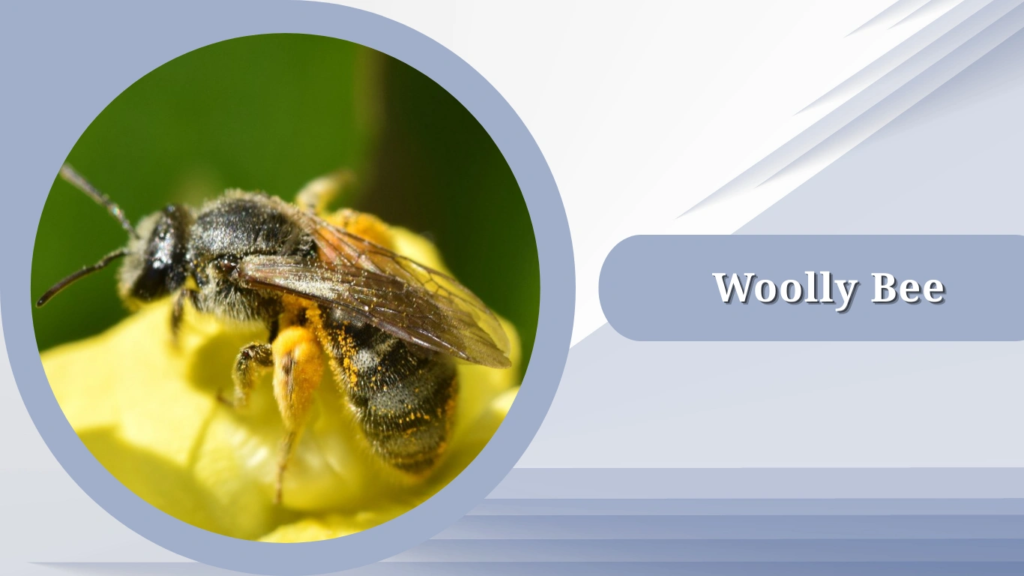
The Woolly Bee is sometimes identified as a black and white honey bee because of its pale striping and fuzzy appearance. It belongs to the same family as Wool Carder Bees and is known for collecting plant fibers to line its nests.
Identification
- Small to medium-sized, about 8–14 mm long.
- Black body with pale white or grayish bands across the abdomen.
- Covered in dense hair, giving a fuzzy look.
- Strong mandibles used for scraping fibers from plants.
Habitat
Woolly Bees prefer gardens, meadows, and areas with soft-leaved plants. They nest in pre-existing cavities such as hollow stems, wood crevices, or even man-made bee hotels. Their nests are lined with plant fibers, which give them their name.
Sting and Danger
They are non-aggressive and only sting if directly handled. Their sting is mild and not considered dangerous. Males cannot sting but may defend their territory against other insects.
Interactions
Woolly Bees are efficient pollinators of wildflowers and ornamentals. Gardeners benefit from their presence, as they improve plant health and biodiversity. Their leaf- or fiber-gathering habits cause no real harm to plants.
9. Valley Carpenter Bee (Xylocopa varipuncta, female)

The female Valley Carpenter Bee is sometimes mistaken for a large black and white bee because of its dark body covered in pale hairs. Found in North America, it is one of the largest solitary bees, well known for its powerful flight and wood-nesting habits.
Identification
- Very large bee, 20–25 mm long.
- Females are shiny black with patches of pale or whitish hairs.
- Males are golden-brown and fuzzier, making them easy to tell apart.
- Robust body and strong wings, often heard buzzing loudly.
Habitat
Valley Carpenter Bees excavate tunnels in untreated wood, dead branches, or fence posts. They are common in warm regions, particularly gardens, orchards, and wooded areas.
Sting and Danger
Females can sting but rarely do unless handled roughly. The sting is moderate but less aggressive than wasps. Males cannot sting at all. They are generally not dangerous to humans.
Interactions
These bees are excellent pollinators for flowering plants, fruit trees, and crops. Although their tunneling into wood may cause cosmetic damage, their ecological benefits far outweigh the risks. Gardeners often welcome their presence for pollination.
10. Bee Fly (Bombyliidae family)
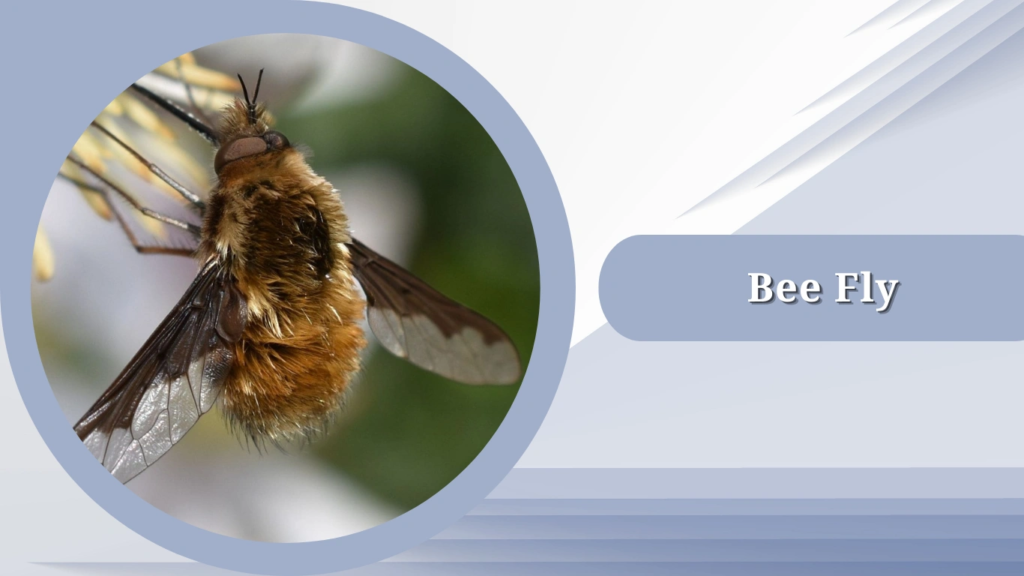
The Bee Fly is not a true bee but a mimic, often mistaken for a black and white bee fly because of its striped or spotted body. Its harmless appearance disguises a parasitic lifestyle, as larvae develop inside other insects’ nests. Adults, however, feed only on nectar and act as pollinators.
Identification
- Small to medium-sized, 6–12 mm long.
- Black or dark body with white or gray stripes or spots.
- Hairy, fuzzy appearance resembling bees.
- Long, thin proboscis used for sipping nectar.
- Flight pattern is hovering, similar to a hummingbird.
Habitat
Bee Flies are found in gardens, meadows, and woodland edges where flowers are abundant. Females lay eggs near the nests of solitary bees or wasps, where larvae parasitize the host’s brood.
Sting and Danger
Bee Flies are harmless to humans and cannot sting or bite. Their mimicry simply protects them from predators.
Interactions
Though their larvae are parasitic, adults are beneficial pollinators. They visit spring flowers like primroses and violets, helping with early-season pollination.
11. Cuckoo Wasp (Chrysididae family – often mistaken for bees)
The Cuckoo Wasp is sometimes confused with a black and white wasp or bee, although many species are metallic green or blue. Some darker, striped species resemble black-and-white bees. Like Cuckoo Bees, they lay their eggs in the nests of other insects.
Identification
- Small, usually 4–15 mm long.
- Black, metallic, or striped appearance, occasionally with pale markings.
- Tough exoskeleton to protect against host stings.
- Winged and often seen hovering near solitary bee nests.
Habitat
Cuckoo Wasps are found in sunny, dry habitats, including gardens, sandy soils, and forest edges. They follow solitary bees and wasps to locate host nests.
Sting and Danger
They are not dangerous to humans. Most species cannot sting, and those that can are too small to cause harm.
Interactions
Cuckoo Wasps have little direct interaction with humans but are part of natural ecosystems. While parasitic to other insects, they do not harm people or plants. Their occasional mimicry leads to confusion with small black-and-white bees.
