
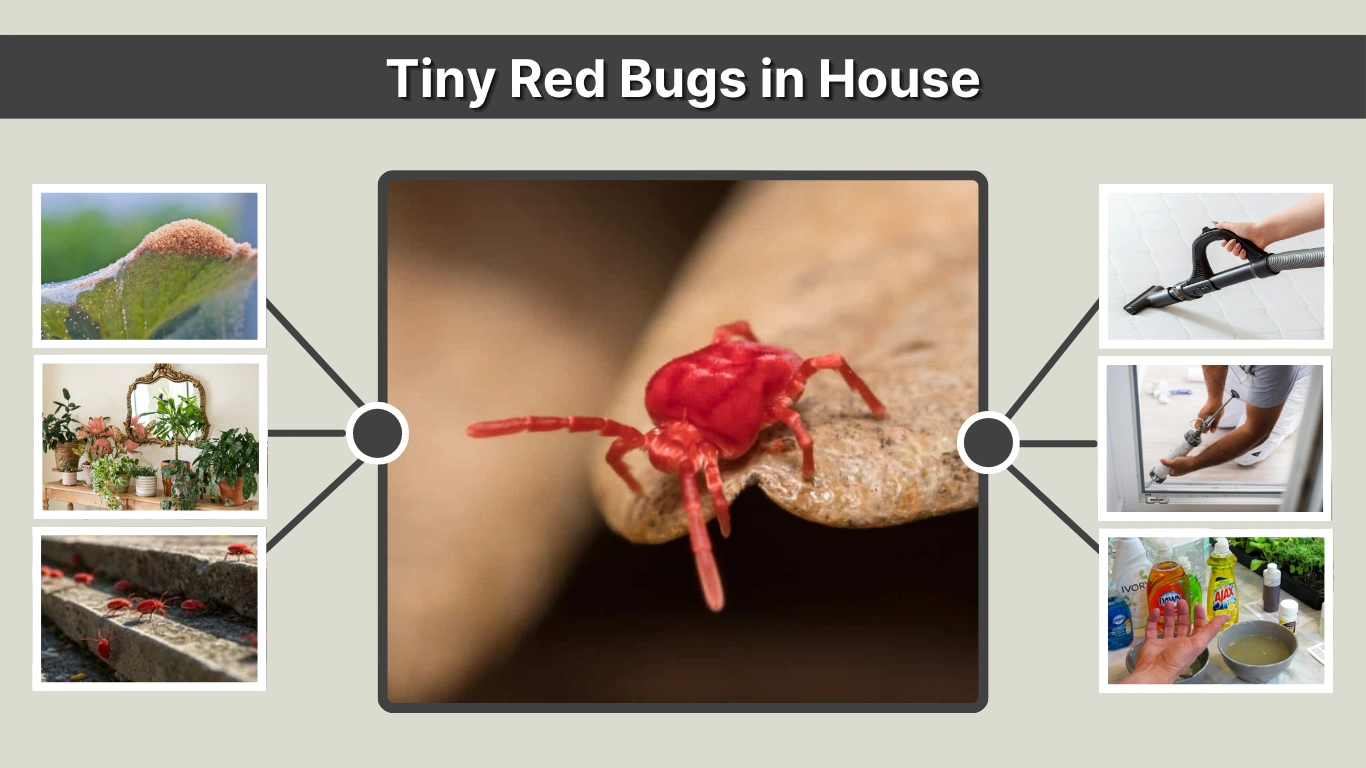
Tiny red bugs appearing on your walls, windows, or plants can be alarming. These minuscule pests—often clover mites, red velvet mites, or spider mites—find their way indoors seeking warmth or moisture. While most are harmless to humans, they can stain surfaces or damage plants if ignored. Knowing how to identify, manage, and prevent them is essential for keeping your home pest-free and comfortable.
Identification
Common Types of Tiny Red Bugs
Clover Mites: These are among the most common tiny red bugs found indoors. They’re oval, bright red, and smaller than a pinhead. Clover mites often invade homes in large numbers, especially during spring and fall. You’ll usually spot them crawling on sunny windowsills or exterior walls.
Red Velvet Mites: Larger than clover mites and covered in fine red hairs, these outdoor mites appear after rainfall. They rarely infest homes but might wander inside through open windows or cracks.
Spider Mites: Known for infesting houseplants, spider mites are reddish or brownish and produce delicate webs. Infestations can cause leaves to turn yellow and fall off.
Carpet Beetle Larvae: Though not true “mites,” their small reddish-brown bodies sometimes cause confusion. They prefer fabrics, carpets, and stored clothing.
Physical Characteristics
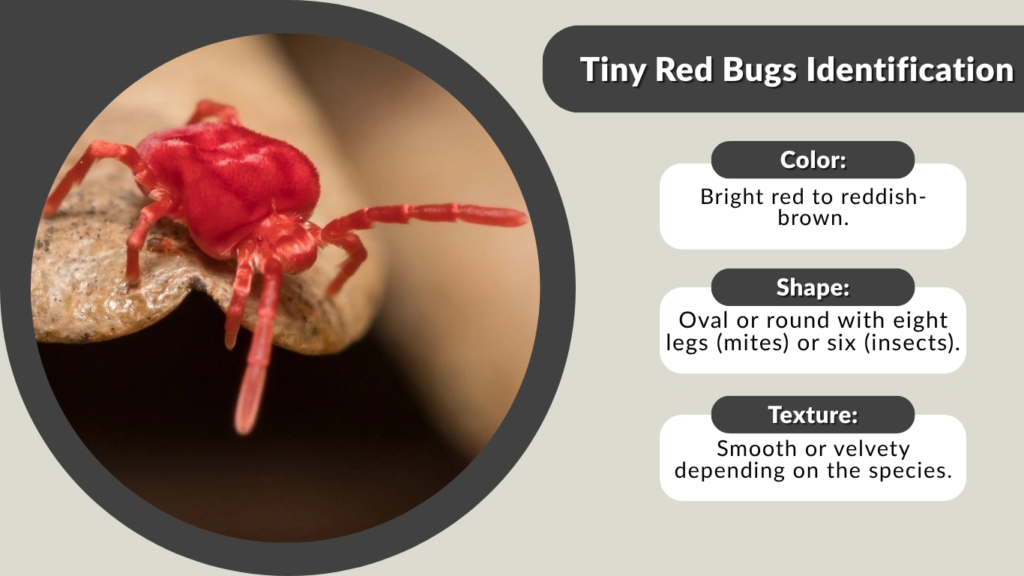
Tiny red bugs typically measure less than one millimeter, making them difficult to notice at first. Most species have:
- Color: Bright red to reddish-brown.
- Shape: Oval or round with eight legs (mites) or six (insects).
- Texture: Smooth or velvety depending on the species.
Their small size allows them to slip easily through screens, cracks, and crevices.
Where They Come From
Outdoor Sources
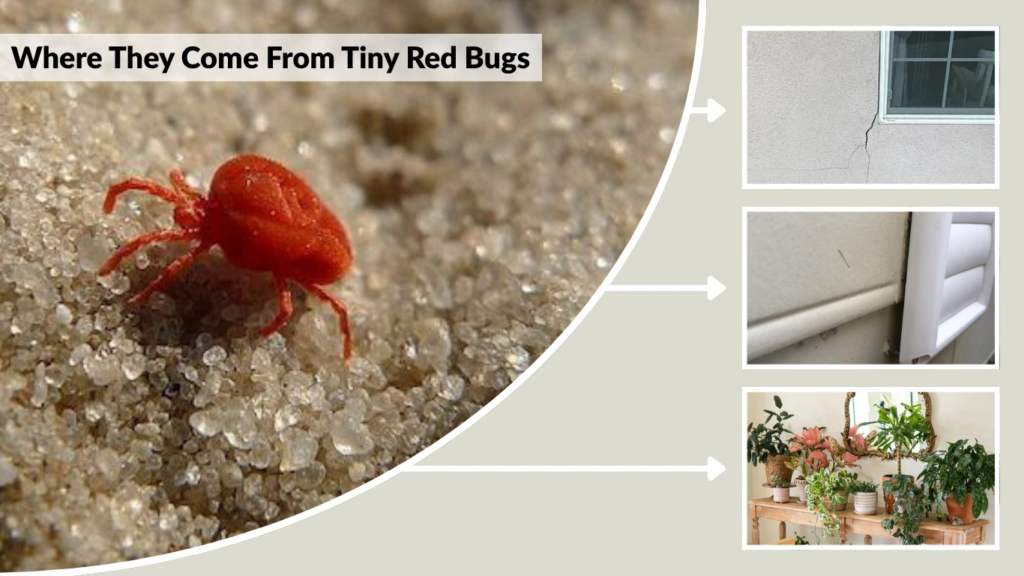
Clover mites and other red pests originate outdoors, thriving in lawns, gardens, and foundation walls. They feed on grass, weeds, and plant sap. When populations grow or the weather turns unfavorable—too dry, hot, or cold—they migrate indoors for shelter. Dense grass and thick vegetation close to your home provide the perfect environment for them to breed.
Indoor Entry Points
These bugs commonly enter through:
- Tiny cracks around windows and doors.
- Gaps near siding, vents, or screens.
- Houseplants brought indoors that harbor spider mites.
- Infested materials like old boxes or furniture stored in garages.
Once inside, they are attracted to sunny areas such as windowsills, ceilings, and light-colored walls. They rarely survive long indoors but can appear in large numbers, creating nuisance infestations.
Behavior and Habits

Habitat Preferences
Tiny red bugs prefer warm, dry, and sunny locations. They often gather near window frames, walls, or sliding doors, where sunlight is abundant. Outdoors, they cluster around the foundation and siding of homes or in grassy areas. Indoors, they do not reproduce much but can remain active for several days.
Seasonal Activity
Clover mites are most active in spring and fall when temperatures are moderate. During extreme heat or cold, they hide in cracks and crevices. After rainfall, red velvet mites may emerge from soil and appear on patios or driveways. If weather conditions push them toward your house, you may notice sudden infestations.
Are They Harmful?
Despite their alarming color, most tiny red bugs are not harmful to humans or pets.
- Non-biting: Clover mites and red velvet mites do not bite or sting.
- Allergic risk: Some people may experience mild irritation if sensitive.
- Damage potential: When crushed, they leave reddish stains on walls, fabrics, or furniture.
- Plant impact: Spider mites can cause serious harm to indoor plants by feeding on sap and weakening leaves.
While these pests don’t spread diseases, their rapid multiplication and staining tendencies make them an undesirable household nuisance.
How to Get Rid of Tiny Red Bugs
Natural Remedies
Start with simple, non-toxic solutions to eliminate minor infestations:
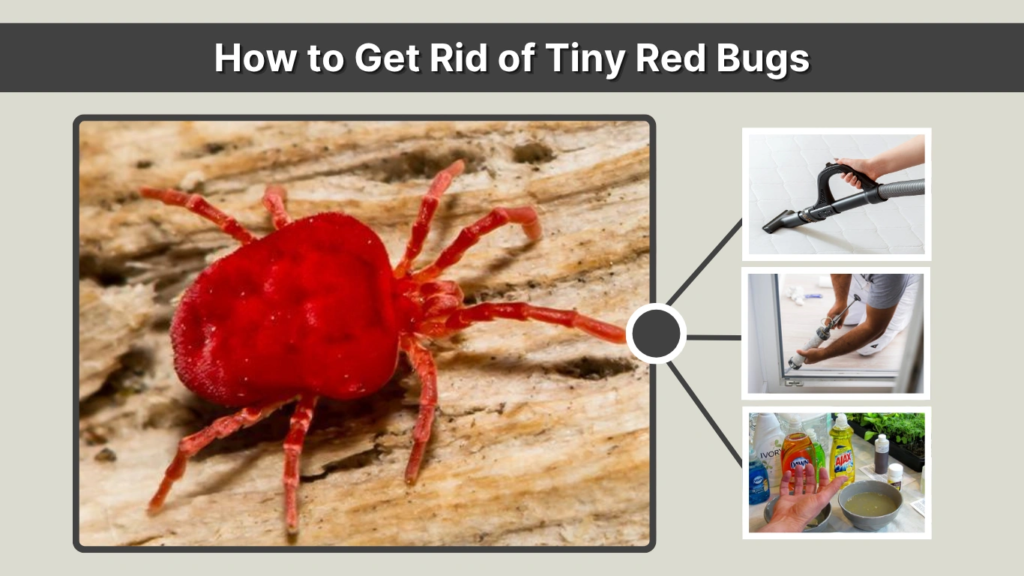
- Vacuum frequently: Removes mites from surfaces without smearing them.
- Seal entry points: Use caulk or weather stripping around windows and doors.
- Clean with soapy water: A mild dish soap solution kills mites on contact.
- Remove outdoor attractants: Keep grass, mulch, and vegetation trimmed at least 18 inches from the foundation.
These preventive measures not only remove current bugs but also help deter future ones.
Chemical Control Methods
For severe infestations, natural remedies may not be enough. In such cases, chemical treatments can help eliminate the remaining bugs. Apply residual insecticides—formulated for mites or crawling pests—around windows, foundations, and entry points. Products containing bifenthrin, permethrin, or lambda-cyhalothrin are commonly effective. When using sprays, avoid direct contact with plants unless labeled safe for vegetation. Always read instructions carefully and ventilate the area afterward.
For indoor plants infested by spider mites, consider miticides or insecticidal soaps. These are gentle enough for indoor use but potent against mites. Repeat applications every few days until no signs of activity remain. If you have recurring problems despite treatments, it may be best to call a licensed pest control expert to inspect and treat your home.
Preventive Measures
Preventing tiny red bugs from returning is as important as getting rid of them. Simple maintenance and preventive steps can keep your home protected year-round.
- Trim vegetation: Maintain at least 18–24 inches of clear space between grass and your home’s foundation.
- Seal cracks and gaps: Regularly inspect window frames, doors, and siding for tiny openings. Use caulk or weather-resistant sealants.
- Clean regularly: Vacuum floors, windowsills, and corners where mites often gather. Dispose of vacuum bags immediately.
- Monitor humidity: Mites thrive in moist areas. Use a dehumidifier to keep indoor air dry.
- Inspect plants: Before bringing any potted plants indoors, check leaves for spider mites or webs.
Additionally, ensure that exterior walls are free from algae, moss, or excess mulch buildup. These materials trap moisture and attract mites. By combining cleanliness, barrier treatments, and good landscaping habits, you can minimize infestations.
FAQs
What are the tiny red bugs in my house?
Tiny red bugs commonly found indoors are clover mites or spider mites. They’re small, oval-shaped, and bright red. While clover mites feed on plants and don’t bite humans, spider mites can harm indoor vegetation. Both can enter through small gaps and windows.
Why do I have tiny red bugs in my house?
They’re usually drawn inside when outdoor conditions—heat, drought, or rain—disturb their habitat. These mites live in grass and plants near your foundation, and cracks or window gaps allow them to slip inside seeking shelter and moisture.
Do tiny red bugs bite humans?
Most tiny red bugs such as clover mites and red velvet mites do not bite. However, chiggers—tiny outdoor red mites—can cause itchy rashes. If the bugs are inside your home and don’t bite, they’re most likely clover mites or spider mites.
How can I get rid of tiny red bugs naturally?
Vacuuming, sealing cracks, and cleaning with mild soapy water are effective natural solutions. For plant infestations, rinse leaves thoroughly and isolate infected pots. Keeping humidity low and trimming vegetation near your house helps prevent re-infestation.
Are tiny red bugs dangerous to pets or plants?
They pose no risk to pets or humans, but spider mites can weaken plants by feeding on their sap. Over time, this leads to yellow leaves and stunted growth. Wiping leaves with neem oil or insecticidal soap helps control them safely.
