

A wasp sting can be painful, unexpected, and sometimes dangerous. Whether you’re gardening, hiking, or simply enjoying the outdoors, knowing exactly what to do in those first few minutes after a sting can make all the difference. Immediate action helps reduce pain, prevent infection, and avoid severe allergic reactions. In this guide, you’ll learn the essential steps to take right after being stung by a wasp, how to recognize warning signs, and when to seek medical attention. Stay calm—here’s what you should do next.
Step 1: Move Away from the Area
Wasps release a chemical scent when they sting that can attract other wasps. Staying in the same place increases your chances of getting stung again—especially if you’re near a nest. Move away calmly but quickly to avoid further attacks.
Where to Go After a Sting
Find a safe, shaded, and cool location where you can sit down and treat the sting. Avoid panicking or swatting wildly as that may provoke more stings if wasps are still nearby.
Step 2: Check and Remove the Stinger (If Present)
Wasp stings typically don’t leave a stinger behind, but it’s important to check just in case. Bee stings do leave a stinger, and removing it quickly helps reduce the spread of venom.
How to Inspect the Sting Site
Gently examine the sting area. If you see a small black dot or a tiny barb-like object sticking out, it could be a stinger. Wasps rarely leave them, but it’s possible.
Safe Ways to Remove a Stinger
If a stinger is present, use a credit card or the edge of a clean, dull knife to scrape it out. Do not use tweezers or pinch it, as this can squeeze more venom into the skin.
Step 3: Wash the Area Thoroughly
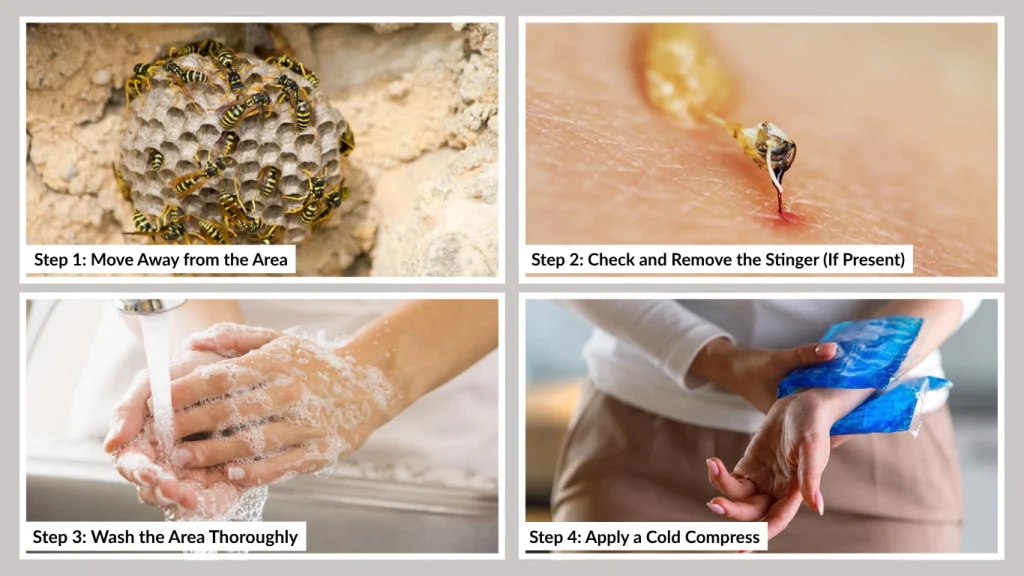
Cleaning the sting site is a crucial first step to prevent infection and remove any surface venom or debris.
What to Use for Cleaning
Use mild soap and cool running water. Gently wash the sting area for 30 seconds to 1 minute. Avoid using harsh chemicals or scrubbing too hard.
Drying and Protecting the Area
Pat the area dry with a clean towel. Do not rub the skin. If you have antiseptic cream available, you can apply a small amount at this stage.
Step 4: Apply a Cold Compress
Cold therapy helps reduce swelling, numbs the pain, and slows down the venom’s spread in the tissue.
How to Use a Cold Compress
Wrap some ice cubes in a clean cloth or use a cold gel pack. Apply it to the sting site for 10–15 minutes. Remove for a few minutes and repeat if needed.
What to Avoid
Never place ice directly on the skin as it can cause frostbite. Also avoid hot water or heat packs, which can worsen inflammation.
Step 5: Use Over-the-Counter Remedies
Medications can help reduce pain, swelling, and itching after a wasp sting. These are especially useful if symptoms persist for more than a few hours.
Topical Treatments for Relief
Apply hydrocortisone cream, calamine lotion, or antihistamine creams directly to the sting site. These help soothe itching and minimize redness.
Oral Medications That Help
If you’re experiencing significant swelling or itching, take an oral antihistamine like diphenhydramine (Benadryl) or cetirizine. For pain, over-the-counter options like ibuprofen or acetaminophen are effective.
Step 6: Watch for Allergic Reactions
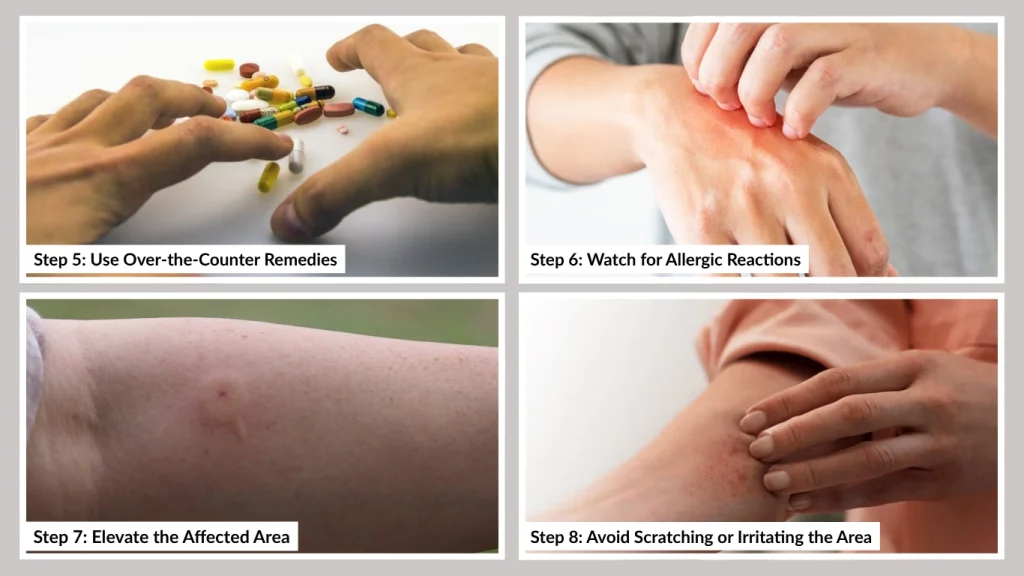
While most wasp stings cause only mild discomfort, some individuals may experience allergic reactions that can become severe.
Mild vs. Severe Reactions
Mild symptoms include redness, warmth, or swelling beyond the sting area. Severe reactions may involve breathing difficulty, dizziness, nausea, or swelling of the lips or throat.
What to Do if Allergic Symptoms Appear
If you notice signs of anaphylaxis (tight chest, swollen face, trouble breathing), call emergency services immediately. Use an epinephrine auto-injector (EpiPen) if prescribed.
Step 7: Elevate the Affected Area
Raising the area where you were stung can help reduce swelling, especially if the sting is on an arm or leg.
How Elevation Helps
Elevation reduces blood flow to the area, which in turn minimizes inflammation and throbbing. It also encourages lymphatic drainage to clear the venom faster.
Best Practices for Elevation
Use a pillow or cushion to raise the limb above heart level. Do this while sitting or lying down, and combine with cold compresses for better effect.
Step 8: Avoid Scratching or Irritating the Area
Scratching the sting site may feel relieving in the moment but can lead to infection, prolonged swelling, and scarring.
Why Scratching Makes It Worse
Scratching breaks the skin’s surface, allowing bacteria to enter. It also spreads any venom remaining on the surface and increases irritation.
How to Control the Itch Safely
Apply anti-itch creams or take antihistamines to manage discomfort. Keep nails trimmed and consider covering the area with a loose bandage to prevent unconscious scratching, especially in children.
Step 9: Consider Natural Remedies (Optional)
Some natural options may help soothe the sting site, though they should not replace proper first aid or medical care.
Popular Natural Soothers
- Baking soda paste (1:1 ratio with water) can help neutralize venom.
- Aloe vera gel cools and moisturizes the skin.
- Vinegar or lemon juice may relieve itching, but only use if skin isn’t broken.
Precautions with Natural Remedies
Always test a small patch first to ensure you’re not allergic. Do not apply any acidic or harsh ingredient to open wounds or broken skin.
Step 10: Monitor for Infection Over the Next Few Days
Infections can develop if bacteria enter the sting site—especially if the area was scratched or not cleaned well.
Early Signs of Infection
- Increasing redness or warmth
- Pus or cloudy discharge
- Swelling that worsens instead of improves
What to Do If Infection Occurs
Apply an antibiotic ointment and cover with a clean bandage. If symptoms persist or worsen after 48 hours, consult a doctor for further treatment.
Ask ChatGPT
FAQs
1. Can a wasp sting more than once?
Yes, unlike bees, wasps don’t lose their stinger after stinging. They can sting multiple times, especially when provoked or defending a nest.
2. Should I squeeze the sting site to remove venom?
No. Squeezing can push venom deeper into the skin. If there’s a visible stinger (rare with wasps), gently scrape it out with a flat object like a credit card.
3. How long does a wasp sting hurt?
Pain from a wasp sting usually lasts a few hours. However, swelling or itching may persist for up to 1–3 days, depending on your body’s reaction.
4. What if a child is stung by a wasp?
Follow the same steps: move them away, clean the sting, and apply ice. Monitor closely for allergic reactions and call a doctor if you’re unsure or symptoms worsen.
5. Is it safe to use ice directly on the sting?
No, applying ice directly can cause skin damage. Always wrap the ice in a thin towel or cloth before applying to the sting area for 10–15 minutes at a time.
