

The bald-faced hornet (Dolichovespula maculata) is a large, black-and-white wasp found across North America. Despite its name, it’s not a true hornet but a relative of the yellowjacket. Known for their highly defensive behavior, bald-faced hornets aggressively protect their paper nests. Unfortunately, anyone who gets too close may experience their painful sting. If you’ve been stung, it’s important to know what to expect, how to treat it, and when to seek medical attention.
What Happens When You Get Stung by a Bald-Faced Hornet?
When a bald-faced hornet stings, it injects venom directly into the skin through its smooth stinger. Unlike honeybees, these hornets can sting multiple times without losing their stinger.
- Venom effects: The venom contains acetylcholine, enzymes, and histamines that cause intense pain, burning, and swelling.
- Multiple stings: Since they can sting repeatedly, a single encounter may result in several painful welts.
- Colony defense: Hornets often attack in groups, so people who disturb nests may face dozens of stings in seconds.
This combination makes their sting far more serious than that of many common wasps or bees.
Symptoms of a Bald-Faced Hornet Sting
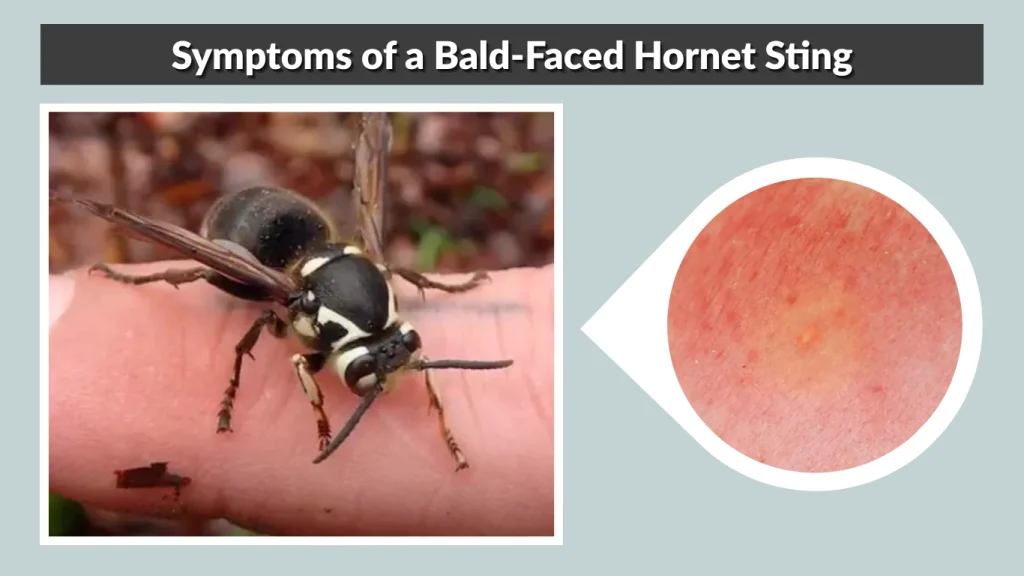
The reaction to a sting can vary depending on the number of stings and the person’s sensitivity.
- Immediate symptoms:
- Sharp, burning pain at the sting site
- Redness and swelling within minutes
- Warmth around the affected area
- Sharp, burning pain at the sting site
- Later symptoms (hours after sting):
- Itching as the swelling persists
- Tenderness and soreness around the sting site
- Itching as the swelling persists
- Severe reactions (in allergic individuals):
- Hives away from the sting site
- Nausea or stomach cramps
- Swelling of the face, lips, or throat
- Difficulty breathing
- Hives away from the sting site
While most stings resolve within a few hours to days, allergic reactions can escalate quickly and require urgent treatment.
Why Bald-Faced Hornet Stings Are Considered Dangerous

Many people wonder, “What if I get stung by a bald-faced hornet?” The main reasons their stings are feared include:
- Multiple Stings: Unlike honeybees, hornets can sting repeatedly without dying.
- Potent Venom: Their venom is stronger and often more painful than that of yellowjackets or paper wasps.
- Aggressive Defense: Even mild disturbance of their nest can provoke a swarm attack.
- Allergic Risks: People allergic to wasp venom may develop life-threatening anaphylaxis.
- Impact of Multiple Stings: For children, elderly, or immunocompromised individuals, numerous stings can overwhelm the body and lead to serious complications.
This is why bald-faced hornets are considered one of the most dangerous stinging insects in North America.
What to Do Immediately After Being Stung

If you’ve been stung by a bald-faced hornet, quick action helps reduce pain and prevent complications.
Step 1: Move Away from the Nest
The first and most important step is to get to safety. Bald-faced hornets will continue stinging as long as you remain close to their colony.
Step 2: Clean the Sting Area
Wash the sting site with soap and cool water to remove venom residue and reduce infection risk.
Step 3: Apply a Cold Compress
Place an ice pack wrapped in cloth on the area for 10–15 minutes. This reduces pain, swelling, and redness.
Step 4: Use Over-the-Counter Remedies
- Antihistamines (like diphenhydramine) can help with itching and swelling.
- Pain relievers (such as ibuprofen or acetaminophen) can ease soreness.
- Topical creams (calamine lotion or hydrocortisone) reduce irritation.
These simple measures often bring quick relief and minimize the discomfort of the sting.
Home Remedies for Relief
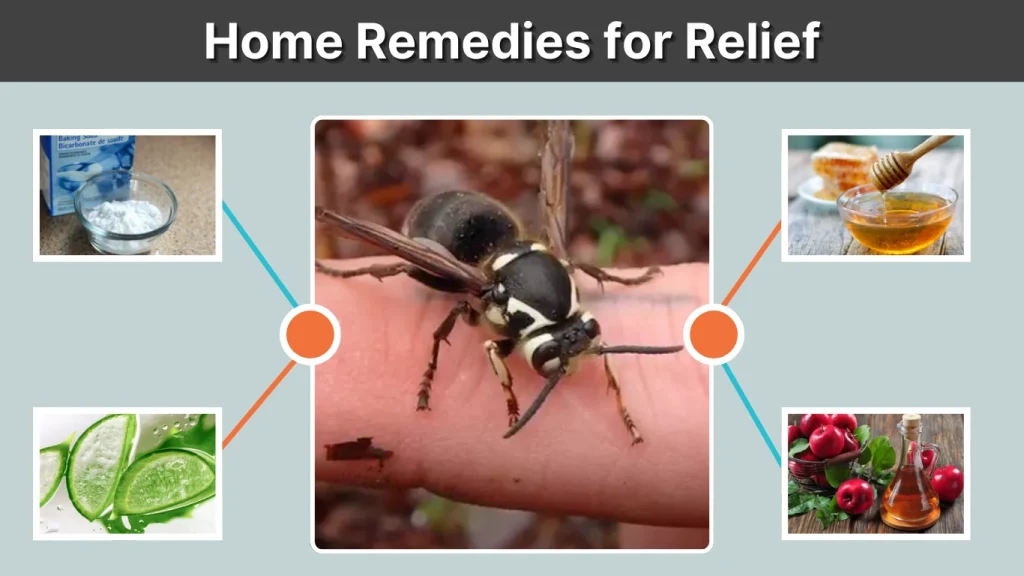
Some natural remedies can also soothe hornet stings:
- Baking Soda Paste: Neutralizes venom acidity and reduces swelling.
- Aloe Vera Gel: Cools and soothes irritated skin.
- Honey: Natural antibacterial and anti-inflammatory properties.
- Apple Cider Vinegar: Can help break down venom toxins when applied to the sting site.
While these remedies aren’t replacements for medical treatment, they are helpful in reducing irritation and accelerating recovery.
When to Seek Medical Attention
While most bald-faced hornet stings heal with basic care, some situations require urgent medical attention:
- Severe Allergic Reaction (Anaphylaxis):
- Swelling of lips, tongue, or throat
- Wheezing or shortness of breath
- Dizziness or fainting
- Rapid heartbeat
- Swelling of lips, tongue, or throat
Anyone with these symptoms needs emergency care immediately. If you have a known allergy to wasp or bee venom, always carry an epinephrine auto-injector (EpiPen).
- Multiple Stings:
If you’ve received more than 10–15 stings, especially as a child or older adult, seek medical attention. The venom load can cause nausea, fever, or systemic effects. - Persistent Swelling or Infection:
If redness, swelling, or pus increases after 2–3 days, it may indicate an infection requiring antibiotics.
Preventing Future Stings
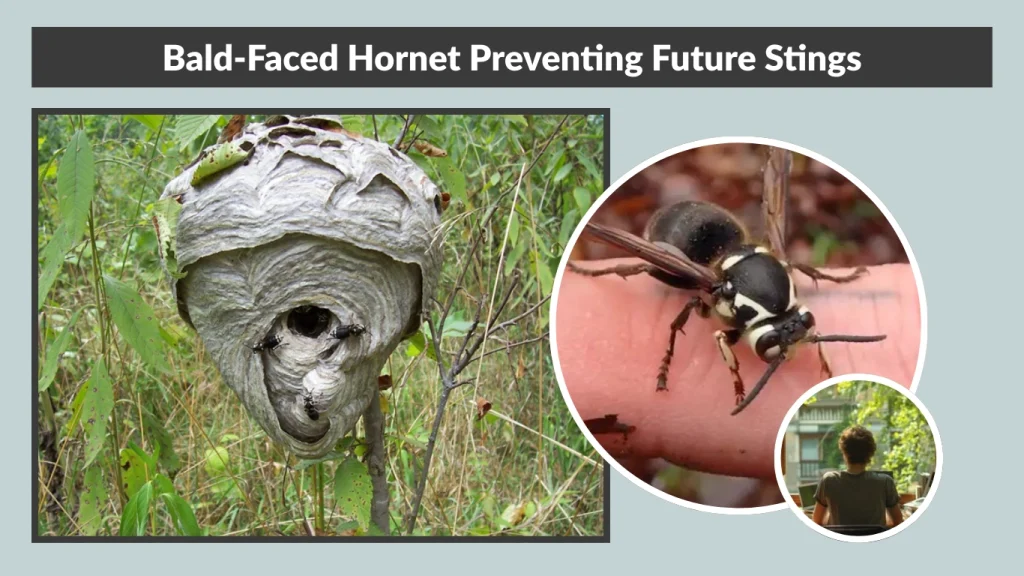
The best way to handle bald-faced hornets is avoidance and prevention.
- Avoid Nests: These insects often build large, gray paper nests in trees, bushes, or under eaves. Keep your distance if you spot one.
- Don’t Disturb Colonies: Vibrations from lawnmowers, trimming bushes, or throwing objects can provoke attacks.
- Cover Food Outdoors: Bald-faced hornets are attracted to sweet drinks and meat at picnics. Keep food sealed and garbage bins closed.
- Wear Protective Clothing: Long sleeves, closed shoes, and hats reduce sting risk when working outdoors.
- Professional Removal: Never attempt to destroy a hornet nest on your own. Call a licensed pest control service for safe removal.
Bald-Faced Hornet Stings vs Other Insect Stings

It helps to understand how their sting compares with others:
- Vs. Honeybee Sting:
- Honeybees sting once and die, while bald-faced hornets can sting multiple times.
- Hornet venom is more painful and longer lasting.
- Honeybees sting once and die, while bald-faced hornets can sting multiple times.
- Vs. Yellowjacket Sting:
- Both are aggressive, but bald-faced hornets defend larger aerial nests.
- Yellowjackets are more likely to scavenge around food, leading to casual stings.
- Both are aggressive, but bald-faced hornets defend larger aerial nests.
- Vs. Paper Wasp Sting:
- Paper wasp stings are painful but less severe than hornets’.
- Bald-faced hornets inject more venom, causing stronger swelling.
- Paper wasp stings are painful but less severe than hornets’.
This comparison shows why bald-faced hornet encounters are feared more than most other stinging insects.
My Experience: “I Got Stung by a Bald-Faced Hornet”
Many people who share their experiences describe the sting as one of the most painful insect stings they’ve ever felt. The sharp pain is immediate and can last for hours, often followed by swelling that lingers for days.
One common scenario is mowing the lawn or trimming a hedge without noticing a nest nearby. Once the hornets feel threatened, several workers may attack at once. Victims often recall panic, running for cover, and learning to respect hornet territory.
This reminder underscores the importance of staying alert outdoors and not underestimating these insects.
FAQs
How long does swelling last after a bald-faced hornet sting?
Swelling usually peaks within 24 hours and subsides in 2–3 days. In some cases, mild swelling may persist for up to a week.
Can a bald-faced hornet sting kill you?
While rare, severe allergic reactions (anaphylaxis) or dozens of stings at once can be life-threatening if not treated quickly.
What’s the best quick home remedy for a sting?
Applying an ice pack immediately is the best first step. Baking soda paste or aloe vera can also soothe pain and itching.
Are bald-faced hornets more aggressive than wasps?
Yes. They are highly protective of their nests and often attack in swarms when disturbed, making them more aggressive than paper wasps or bees.
How can I avoid bald-faced hornet nests in my yard?
Inspect trees, bushes, and eaves during summer. If you see a large gray paper nest, avoid the area and call a professional for removal.
