
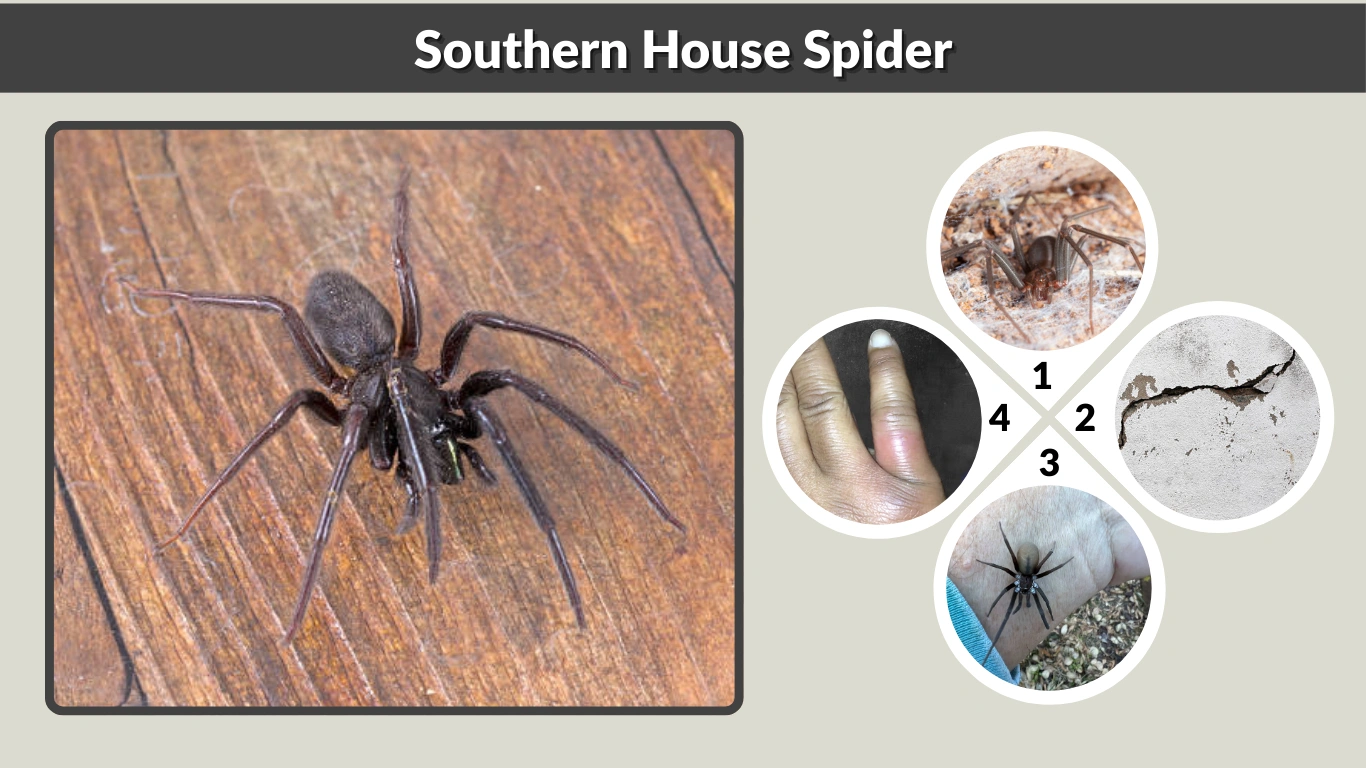
The southern house spider (Kukulcania hibernalis) is a common spider found in homes throughout the southern United States. It often causes alarm because it closely resembles the brown recluse, a medically significant spider. This resemblance has led to widespread misidentification and unnecessary fear. In reality, the southern house spider is largely harmless. Learning how to properly identify this spider, understand male and female differences, and recognize its behavior can help homeowners feel more confident and informed.
Identification of the Southern House Spider
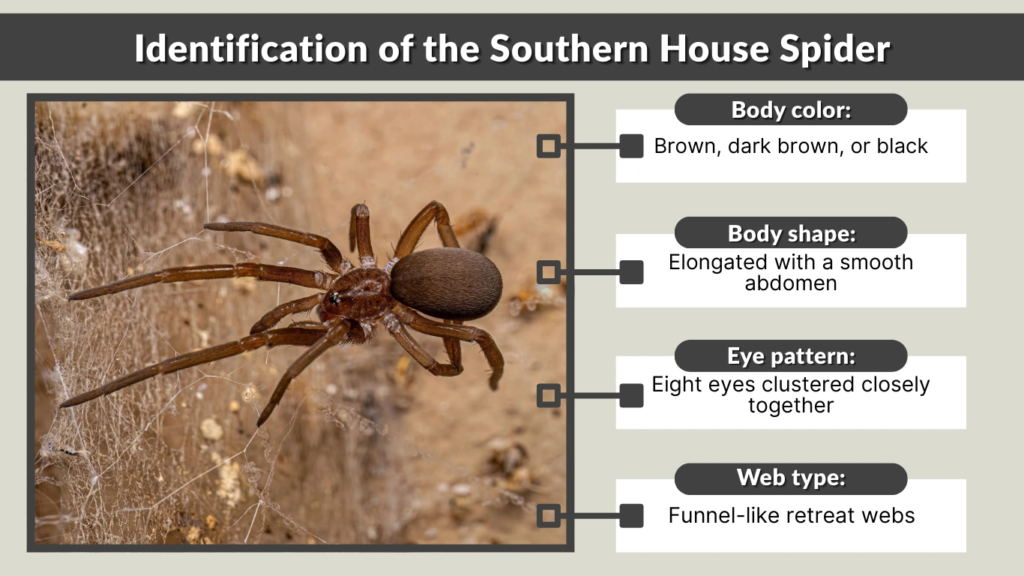
- Scientific name: Kukulcania hibernalis
- Common names: Southern house spider, common southern house spider
- Body color: Brown, dark brown, or black
- Body shape: Elongated with a smooth abdomen
- Legs: Long, slender, and slightly glossy
- Eye pattern: Eight eyes clustered closely together
- Web type: Funnel-like retreat webs
- Male vs female appearance: Noticeably different
Southern house spiders have a flattened, streamlined appearance that allows them to hide in narrow crevices. Their smooth bodies and long legs often cause confusion with other spider species.
Male vs Female Southern House Spider
Male Southern House Spider
Male southern house spiders are lighter in color, usually appearing light brown or tan. They have long legs and slim bodies, giving them a lanky appearance. Males are frequently mistaken for brown recluse spiders due to their similar size and shape. Unlike females, males are often seen wandering indoors, especially during mating season, which increases encounters with humans.
Female Southern House Spider
Female southern house spiders are larger and more robust than males. They are typically dark brown or nearly black and remain hidden inside their webs. Because of their darker color, females are sometimes called black southern house spiders. Females rarely leave their retreat webs and are less commonly seen moving around homes.
Southern House Spider Male vs Female Size
Females have a thicker body and heavier appearance, while males appear longer due to their extended legs. This difference explains why males often look larger even though their body size is smaller than that of females.
Common Color Variations and Names
Southern house spiders can vary significantly in color, which often leads to confusion. Some individuals appear black, especially mature females, while others are brown or dark tan. Names such as southern black house spider, southern brown house spider, and brown southern house spider are all commonly used to describe the same species. Lighting conditions, age, and sex all influence how dark or light a spider appears.
Size and Physical Characteristics
Southern house spiders are medium-sized spiders. Adult females typically have a body length of about 10 to 15 millimeters, while males are slightly smaller in body size but appear longer because of their legs. When seen on walls or ceilings, their leg span can make them look much larger than they actually are.
Despite common myths, southern house spiders are not giant spiders. Their slender legs and flat bodies exaggerate their size, particularly when compared to more compact species. They lack the thick, hairy appearance of wolf spiders and the rounded abdomen seen in many cobweb spiders.
Habitat and Geographic Range
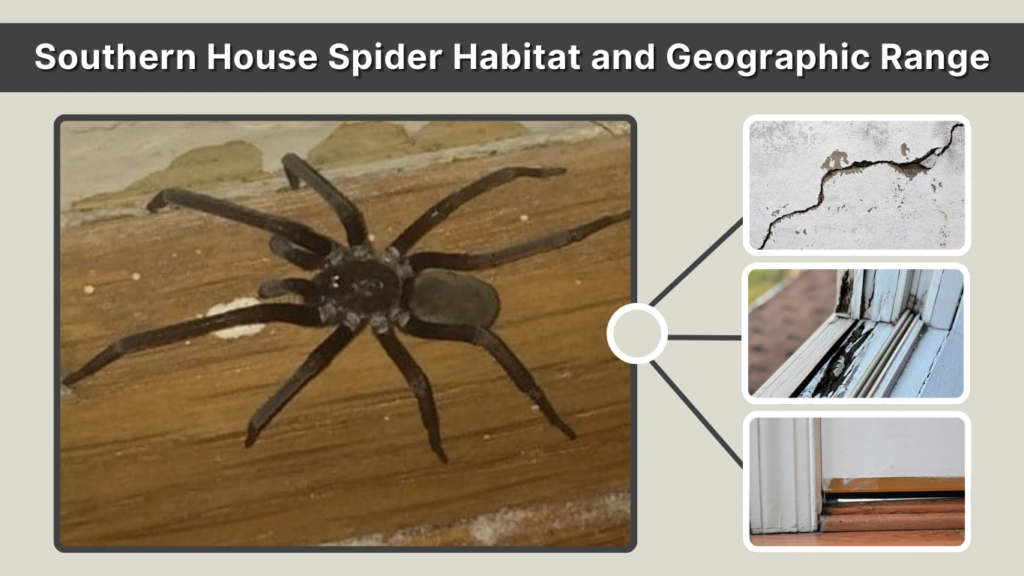
Southern house spiders are commonly found throughout the southern and southwestern United States. Their range includes states such as Arizona, California, Florida, Georgia, and Alabama.
Southern House Spider Habitat
These spiders prefer sheltered areas where they can build hidden retreat webs, including:
- Cracks in walls
- Window frames
- Door gaps
- Garages and sheds
- Crawl spaces and attics
Homes provide warmth, protection, and access to insects, making them ideal habitats. In places like southern California and Florida, southern house spiders may be found indoors year-round.
Southern House Spider Webs
Southern house spiders build funnel-like webs that serve as a retreat rather than a trap. The web usually extends from a crack or crevice, allowing the spider to quickly retreat when disturbed. Unlike messy cobwebs, these webs are often hidden and go unnoticed unless closely examined.
Behavior and Diet
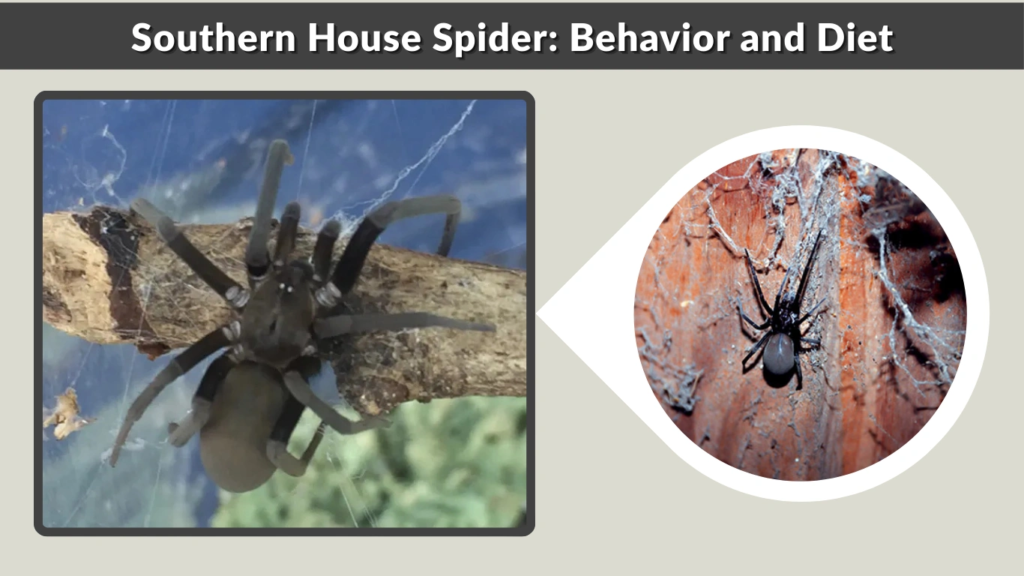
Southern house spiders are nocturnal and non-aggressive. Females remain inside their webs for most of their lives, while males roam in search of mates. They rely on vibration and movement to detect prey.
Their diet consists mainly of insects and other small arthropods. By feeding on household pests, they play a beneficial role in natural pest control.
Southern House Spider Lifespan and Natural Predators
Southern House Spider Lifespan
Southern house spiders have relatively long lifespans compared to many household spiders. Females can live several years when protected indoors, while males typically live for a much shorter period. Males often die shortly after mating, which is why they are usually seen only seasonally.
Natural Predators
Despite their ability to hide in crevices, southern house spiders have several natural predators. These include birds, lizards, and larger spider species. Indoors, their biggest threats are human disturbance and pest control efforts.
Southern House Spider Bite
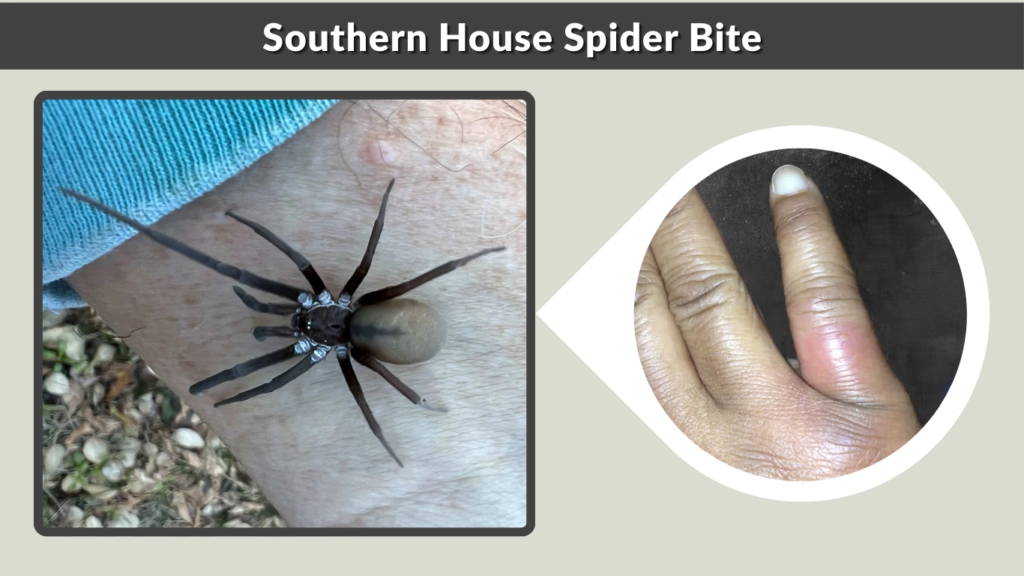
Do Southern House Spiders Bite?
Southern house spiders are shy and non-aggressive. Bites are extremely rare and usually occur only if the spider is accidentally trapped against skin. Most encounters result in the spider fleeing rather than biting.
Southern House Spider Bite Symptoms
When a bite does occur, symptoms are typically mild and temporary. Reported symptoms may include:
- Slight redness
- Minor swelling
- Itching or mild irritation
- Discomfort that fades within hours
Southern house spider bites do not cause necrotic wounds or severe reactions associated with brown recluse bites.
Southern House Spider Bite Pictures and Misidentification
Many images online labeled as southern house spider bites are misidentified. Skin reactions are often caused by insects, allergic responses, or infections rather than spiders. Without witnessing the spider bite, accurate identification is difficult.
Is the Southern House Spider Poisonous or Dangerous?
The southern house spider is venomous but not poisonous and not dangerous to humans. Like most spiders, it uses venom to immobilize prey, but its venom is mild and medically insignificant. Bites do not pose a threat to children, adults, or pets.
Compared to spiders with medically important venom, such as the brown recluse, the southern house spider presents no serious health risk.
Southern House Spider Venom Explained
Venom allows the southern house spider to subdue insects captured near its web. The venom is not strong enough to affect large mammals. Even in the rare case of a bite, the amount of venom delivered is minimal, which is why symptoms are mild and short-lived.
Comparison With Similar Spiders
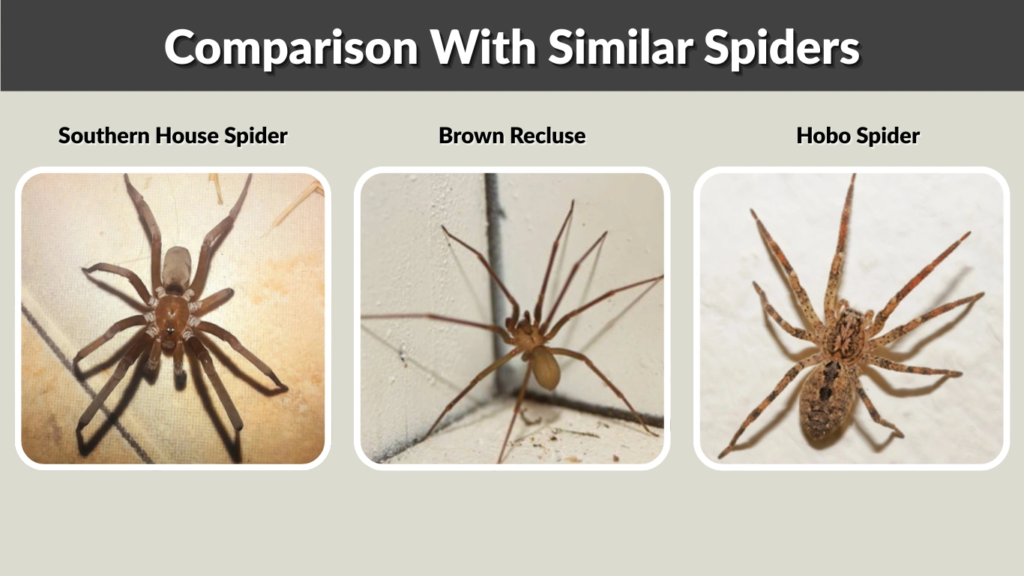
Southern House Spider vs Brown Recluse
The southern house spider is one of the most commonly mistaken spiders for the brown recluse. Brown recluses have six eyes arranged in pairs and do not build webs, while southern house spiders have eight clustered eyes and live in funnel-like webs. Recluse bites can cause tissue damage, whereas southern house spider bites do not.
Male Southern House Spider vs Brown Recluse
Male southern house spiders are responsible for most misidentifications. Their long legs and roaming behavior resemble those of brown recluses. However, males have eight eyes and lack the violin-shaped marking found on brown recluses.
Southern House Spider or Brown Recluse?
A quick way to tell them apart is by observing web presence. If a spider is found in a web near a crack or crevice, it is likely a southern house spider. Brown recluses rarely build webs and prefer to roam freely.
Hobo Spider vs Southern House Spider
Hobo spiders are funnel weavers that live closer to the ground and build large sheet webs. Southern house spiders stay in wall crevices and are not associated with aggressive behavior or dangerous bites.
Common Misidentifications
Southern house spiders are often confused with:
- Brown recluse spiders
- Hobo spiders
- Wolf spiders
- Southern swamp spiders
Proper identification helps prevent unnecessary extermination and fear.
Southern House Spider in Homes
Southern house spiders enter homes through cracks and gaps in search of shelter and insects. They are commonly seen in garages, basements, and near windows. In states such as California and Florida, they are especially common in warm climates and older buildings.
How to Get Rid of Southern House Spiders
Natural Prevention Methods
- Seal cracks and gaps
- Remove existing webs
- Reduce indoor insect populations
- Keep storage areas clean
When Pest Control Is Needed
Professional pest control is rarely necessary unless spiders become persistent or indicate a larger insect problem.
Interesting Facts About the Southern House Spider
- Females rarely leave their webs
- Males are most often mistaken for brown recluses
- They help reduce household insects
- They can live for years indoors
FAQs
Is the southern house spider poisonous?
No. The southern house spider is venomous but not poisonous. Its venom is mild and harmless to humans.
Is the southern house spider dangerous?
No. It poses no medical threat and is not aggressive.
How do you tell a southern house spider from a brown recluse?
Look at the eyes and web. Southern house spiders have eight eyes and build webs; brown recluses have six eyes and do not.
Do southern house spiders bite humans?
Bites are extremely rare and usually occur only when the spider is trapped against skin.
Are southern house spiders common in California and Florida?
Yes. They are commonly found in warm southern states, including California and Florida.
Conclusion
The southern house spider is a harmless and beneficial species often mistaken for more dangerous spiders. By learning to identify male and female differences, understanding its web behavior, and recognizing its mild venom, homeowners can avoid unnecessary fear. Proper identification is key to coexisting safely with this common southern spider.
