
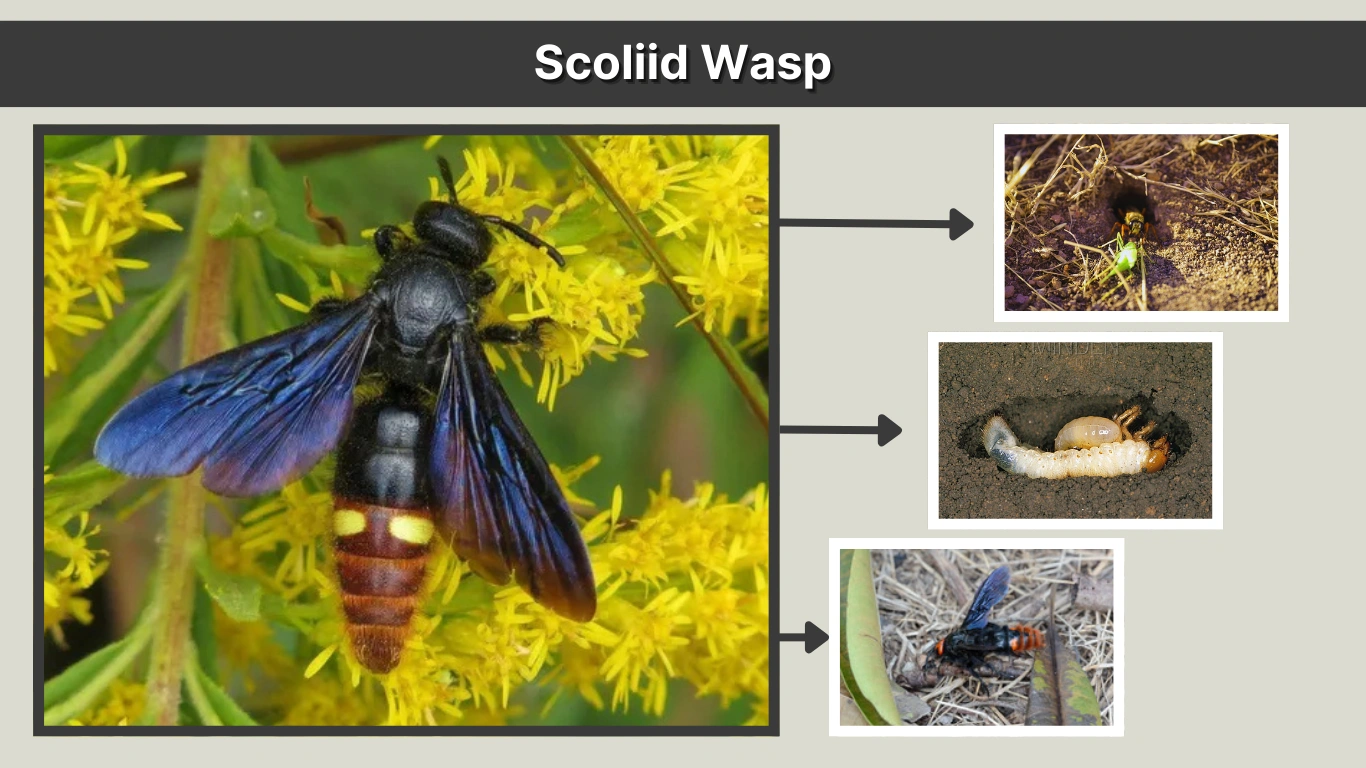
Scoliid wasps are often mistaken for dangerous stinging insects, but in reality, they are one of the most beneficial wasp groups you can encounter in a garden. With their striking metallic colors, unique markings, and important role in pest control, these solitary wasps are both fascinating and misunderstood. Many people worry about their sting, but scoliid wasps are generally non-aggressive and rarely sting unless directly provoked. This article explores their appearance, life cycle, nesting habits, sting, and ecological importance in detail.
What is a Scoliid Wasp?
Scoliid wasps belong to the family Scoliidae, a group of parasitoid wasps best known for preying on scarab beetle larvae hidden in the soil. Unlike social wasps such as hornets and yellowjackets, scoliid wasps are solitary, meaning each female lives and works independently rather than in large colonies.
They are often spotted hovering low over lawns or flower beds in search of beetle grubs, which they paralyze and use as a food source for their larvae. With more than 300 species worldwide, scoliid wasps play a crucial role in controlling pest populations, especially Japanese beetles and June beetles, which damage crops and turf.
Scientific Classification and Name

Scoliid wasps fall under the following classification:
- Kingdom: Animalia
- Phylum: Arthropoda
- Class: Insecta
- Order: Hymenoptera
- Family: Scoliidae
- Common Species: Scolia dubia (Blue-winged Wasp), Scolia quadripunctata (Four-spotted Scoliid Wasp)
These wasps are often region-specific, with Scolia dubia being one of the most widely recognized species in North America.
Physical Appearance and Size
Scoliid wasps are among the most beautiful wasps, displaying bold colors and unique markings.
- Body Color: Typically black with metallic blue or violet wings.
- Markings: Bright yellow or orange spots on the abdomen (depending on the species).
- Size: Adults measure between 0.6 to 1.2 inches (15–30 mm).
- Sex Differences: Males are usually smaller and lack a functional stinger, while females are larger and capable of stinging.
Their bright coloring often causes confusion with more aggressive wasps, but their behavior sets them apart.
Habitat and Distribution
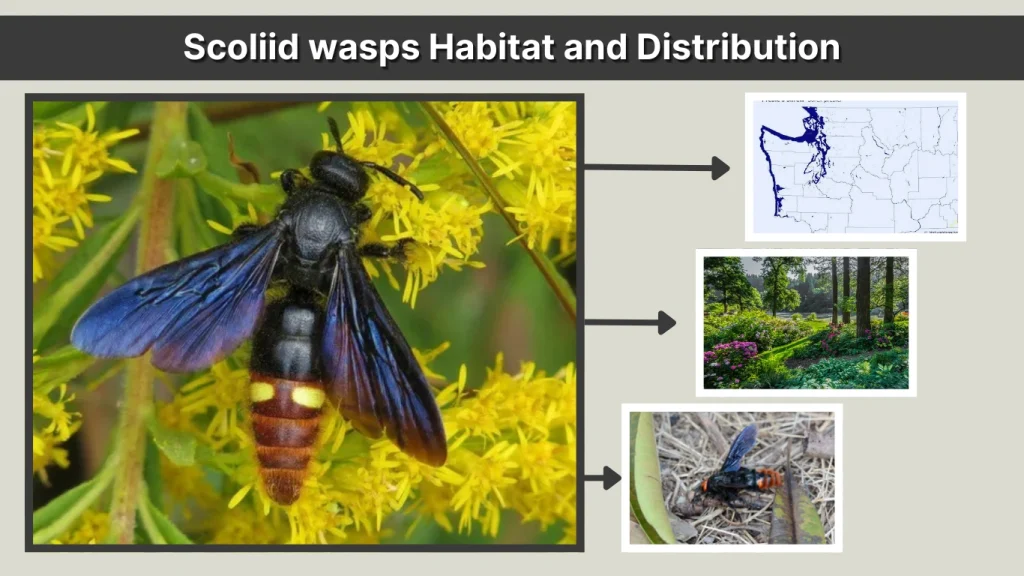
Scoliid wasps thrive in warm, sandy, or grassy environments where scarab beetle grubs are plentiful.
- Geographic Range: Found across North America, Central and South America, Europe, Asia, and Africa.
- Preferred Habitats: Gardens, fields, forest edges, and areas with loose, sandy soil.
- Seasonal Activity: Most active in the summer and early fall, when beetle grubs are present underground.
In the United States, sightings are common in Florida, Texas, and Pennsylvania, with occasional reports in other states. Some species, like the Four-spotted Scoliid, are also found in Europe.
Life Cycle of Scoliid Wasps

Like other parasitoid wasps, scoliid wasps have a unique and fascinating life cycle:
- Egg Stage – Females search for scarab beetle grubs underground. Once located, they sting and paralyze the grub, then lay a single egg on its body.
- Larval Stage – The egg hatches into a larva, which consumes the immobilized beetle grub as food.
- Pupal Stage – After feeding, the larva pupates in the soil, forming a protective cocoon.
- Adult Stage – The adult emerges from the soil, ready to feed on nectar and repeat the cycle.
This parasitic relationship makes them highly effective natural pest controllers.
Nesting Behavior
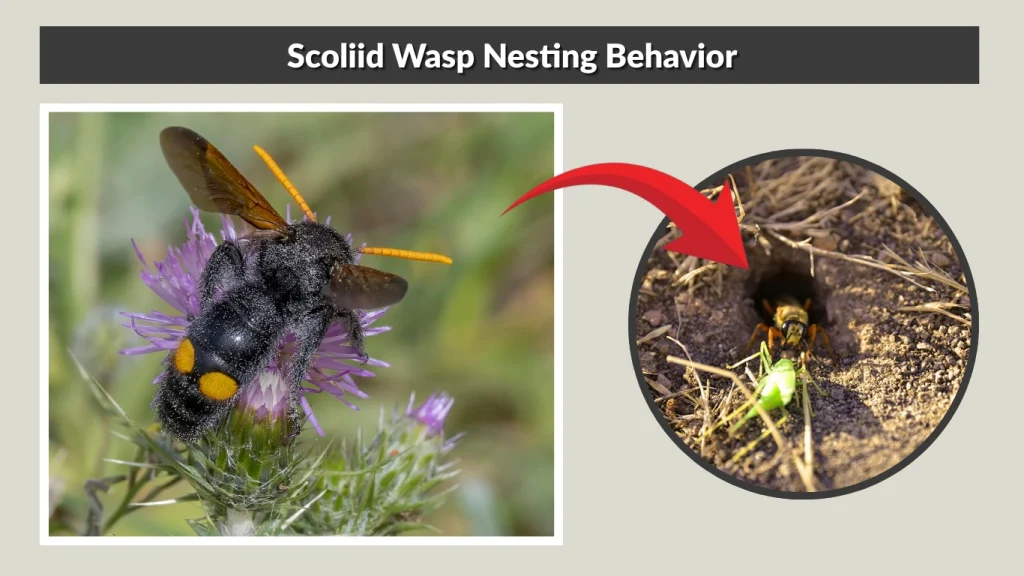
Unlike hornets or yellowjackets that build large paper nests, scoliid wasps do not create visible nests. Instead, females use soil burrows as their base of operation.
- They dig small tunnels into sandy or loose soil.
- Each burrow is provisioned with a paralyzed beetle grub.
- Only one egg is laid per host, ensuring the larva has enough food to develop.
- They are solitary, meaning there is no colony defense, which makes them far less aggressive toward humans.
Because of their nesting habits, scoliid wasps are rarely noticed until seen hovering near the ground in search of grubs.
Diet and Feeding Habits
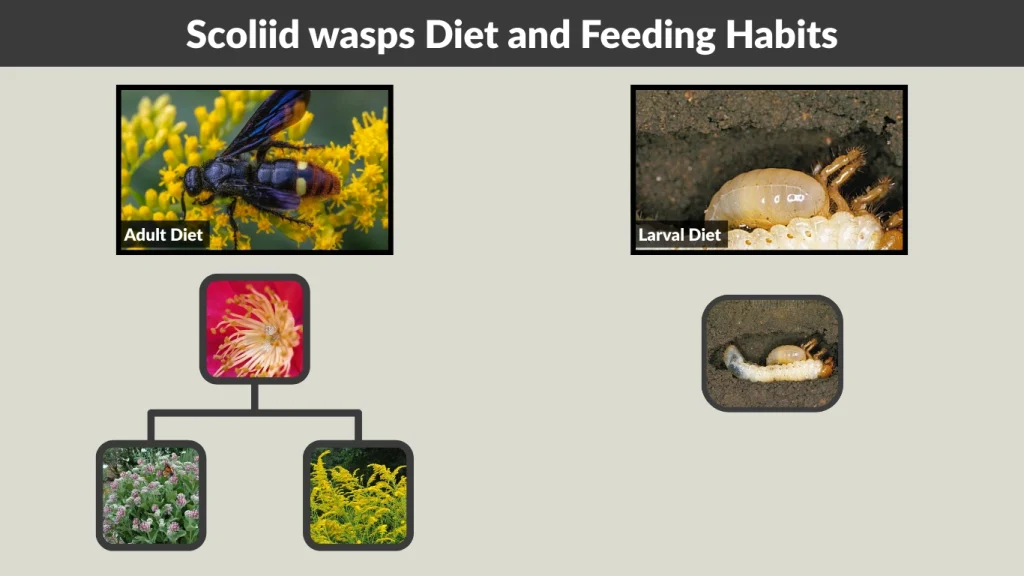
Scoliid wasps are beneficial both as adults and larvae:
- Adults: Primarily feed on nectar, making them important pollinators for wildflowers and garden plants. They are often seen on goldenrod, milkweed, and clover.
- Larvae: Feed exclusively on scarab beetle grubs, which are major pests in lawns and agricultural fields.
By reducing beetle populations and promoting pollination, scoliid wasps contribute significantly to ecological balance.
Are Scoliid Wasps Dangerous?
Despite their intimidating size and bright markings, scoliid wasps are generally harmless to humans. Unlike aggressive wasps such as hornets or yellowjackets, scoliid wasps are solitary and do not defend large colonies.
Aggression Level: Very low; they only sting when directly handled or threatened.
Around Humans: They often ignore people while foraging on flowers or flying close to the ground in search of beetle grubs.
Misconceptions: Their size and buzzing flight sometimes cause unnecessary alarm, but they rarely cause harm.
In fact, they are more of an ally to gardeners than a threat.
Scoliid Wasp Sting
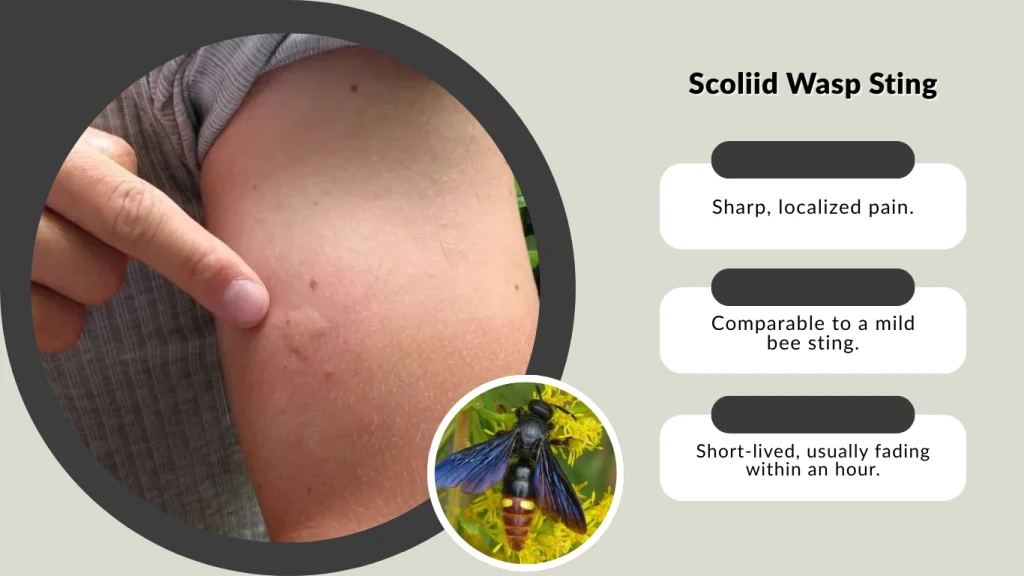
Do Scoliid Wasps Sting?
Yes, females are capable of stinging, but it is not their preferred defense. Unlike social wasps, they do not swarm or chase intruders. Males cannot sting at all.
Sting Pain Level
On the Schmidt Sting Pain Index, scoliid wasps rank relatively low compared to tarantula hawks or hornets. Most reports describe the sting as:
- Sharp, localized pain.
- Comparable to a mild bee sting.
- Short-lived, usually fading within an hour.
Symptoms and Reactions
- Mild Reactions: Redness, swelling, and itching around the sting site.
- Moderate Reactions: Warmth and tenderness for a few hours.
- Severe Reactions: Rare cases of allergic responses, including hives or difficulty breathing, requiring medical attention.
First Aid and Treatment
- Wash the sting site with soap and water.
- Apply a cold compress to reduce swelling.
- Use antihistamines or hydrocortisone cream if itching persists.
- Seek emergency care if allergic symptoms develop.
Types of Scoliid Wasps

While there are many species worldwide, a few are particularly well-known:
Blue-winged Scoliid Wasp (Scolia dubia)
Found widely in North America, recognized by its metallic blue wings and two yellow abdominal spots.
Four-spotted Scoliid Wasp (Scolia quadripunctata)
Common in Europe, easily identified by four distinct yellow spots on the abdomen.
Giant Scoliid Wasps
Larger tropical species that can measure over 1 inch, though they share the same solitary and non-aggressive traits.
Each species plays a similar ecological role in controlling beetle larvae.
Scoliid Wasp in Different Locations
Scoliid Wasp in Florida
Abundant due to the warm climate and sandy soil. They thrive in gardens and fields, helping control the destructive June beetle population.
Scoliid Wasp in Texas & Pennsylvania
Frequently observed in late summer. Gardeners often spot them hovering near lawns where beetle grubs are present.
Scoliid Wasp in the UK
Sightings are rare but occasionally reported. They are not native but may appear during warm seasons.
Benefits of Scoliid Wasps
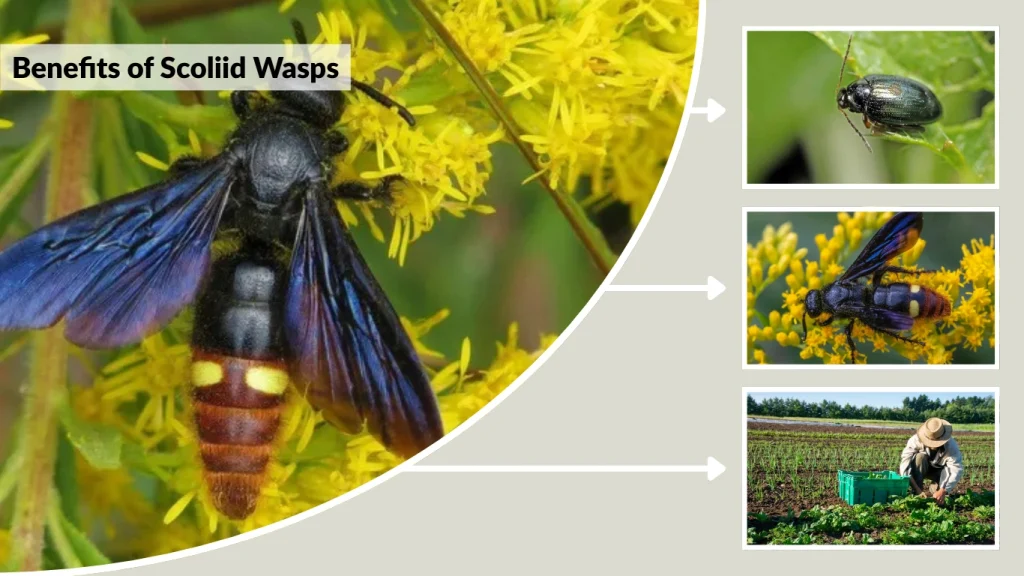
Scoliid wasps provide multiple ecological and agricultural benefits:
- Pest Control: They naturally reduce populations of scarab beetle larvae, which damage turf and crops.
- Pollination: While feeding on nectar, they contribute to the pollination of wildflowers and ornamental plants.
- Eco-friendly Allies: Their presence reduces the need for chemical pesticides in gardens and fields.
For gardeners and farmers, they are considered highly beneficial insects.
Difference Between Scoliid Wasps and Similar Wasps
Scoliid Wasps vs Hornets: Hornets are social, aggressive, and build nests, while scoliid wasps are solitary and rarely sting.
Scoliid Wasps vs Mud Daubers: Mud daubers build mud nests and prey on spiders, whereas scoliid wasps dig soil burrows and target beetle larvae.
Scoliid Wasps vs Bees: Bees are hairy and adapted for pollen collection, while scoliid wasps are sleeker with metallic wings.
Recognizing these differences helps prevent unnecessary fear.
Conservation and Human Interaction
Scoliid wasps are not considered endangered, but their populations can be impacted by habitat destruction and pesticide use.
- Why Conservation Matters: They provide natural pest control and pollination services.
- Tips for Coexistence:
- Avoid using broad-spectrum insecticides.
- Encourage wildflowers to support nectar feeding.
- Leave patches of sandy soil for nesting.
- Avoid using broad-spectrum insecticides.
By protecting their habitats, humans indirectly benefit from their pest-controlling abilities.
FAQs
Are scoliid wasps aggressive?
No, scoliid wasps are solitary and very gentle compared to hornets or yellowjackets. They do not defend large colonies and generally ignore humans. A sting only occurs if they are handled or provoked. Their calm behavior makes them safe to have around gardens and yards.
Can a scoliid wasp kill you?
No, a scoliid wasp sting is not fatal. The pain is mild to moderate and usually fades quickly. Only people with severe insect sting allergies might face a serious reaction. For most individuals, their sting is harmless and requires only simple first-aid treatment.
How big do scoliid wasps get?
Scoliid wasps vary in size but are generally large compared to other solitary wasps. Adults measure between 0.6 and 1.2 inches (15–30 mm). Some tropical species can grow slightly larger, making them appear more intimidating, but their size does not make them more aggressive.
Do scoliid wasps live in colonies?
No, scoliid wasps are solitary. Each female digs into soil and uses beetle grubs to feed her offspring. Unlike hornets or yellowjackets, they do not build paper nests or live in groups. This solitary behavior explains why they rarely sting or bother humans.
Are scoliid wasps good for gardens?
Yes, scoliid wasps are highly beneficial for gardens. Their larvae consume scarab beetle grubs, which damage turf and crops. Adults also pollinate flowers while feeding on nectar. By naturally controlling pests and supporting pollination, they reduce the need for chemical pesticides and improve garden health.
