

Rose sawflies are small, wasp-like insects that can cause major damage to rose bushes. Their larvae, often mistaken for caterpillars, chew through leaves and weaken plants, leaving behind skeletonized foliage. Found worldwide, including in the UK and North America, these pests appear mainly in spring and early summer. Understanding how to recognize and manage rose sawflies is vital for keeping rose gardens lush and thriving.
What Is a Rose Sawfly?
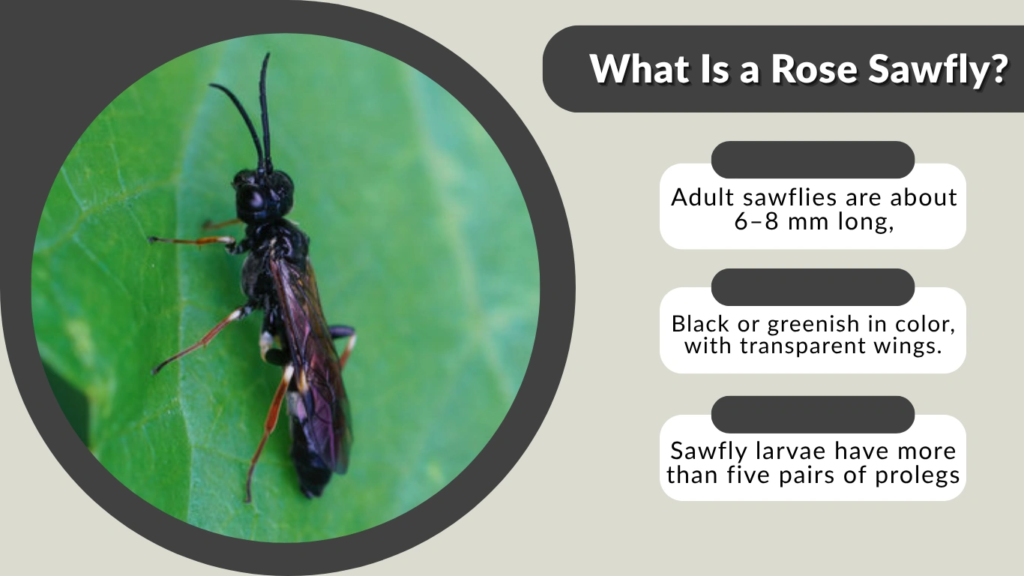
Description and Identification
A rose sawfly belongs to the wasp family Tenthredinidae. Adult sawflies are about 6–8 mm long, black or greenish in color, with transparent wings. However, the real damage comes from the larvae—small, slug-like creatures ranging from pale green to translucent white. These larvae typically measure about 1–2 cm and feed on the undersides of rose leaves, leaving thin, papery remnants.
They are often confused with caterpillars but differ in several ways. Sawfly larvae have more than five pairs of prolegs, while caterpillars have fewer. They also move smoothly rather than looping their bodies like inchworms. Recognizing these details helps in choosing the correct treatment, as biological insecticides like Bt are ineffective against sawflies.
Sawfly Eggs on Roses
Female rose sawflies use a saw-like organ (ovipositor) to insert eggs into leaf tissues, leaving behind small white or blister-like spots. These eggs hatch within a few days, releasing larvae that begin feeding immediately. Early detection at the egg stage is crucial—removing leaves with visible egg marks can prevent infestations before they start.
Rose Sawfly Species

Rose Slug Sawfly
The rose slug sawfly (Endelomyia aethiops) is the most common species. Its larvae resemble tiny green slugs with shiny, slimy skin. They skeletonize rose leaves, leaving behind a transparent film. As feeding continues, leaves turn brown and drop, weakening the plant.
Control methods include handpicking the larvae, spraying neem oil, or using insecticidal soap. For heavier infestations, a targeted insecticide labeled for sawflies may be necessary.
Bristly and Curled Rose Sawflies
The bristly rose slug sawfly (Cladius difformis) has a rougher, bristly body and can cause significant defoliation. It appears in late spring and sometimes produces multiple generations in one season.
The curled rose sawfly causes distinct curling or rolling of rose leaves. The larvae feed along the leaf edges, causing the foliage to distort and roll up. These are often mistaken for signs of disease, but closer inspection reveals feeding larvae inside the curled leaves.
Large Rose Sawfly
The large rose sawfly (Arge pagana) is more visible than other types, with yellowish wings and a black body. Its larvae are pale green with small black dots along the sides. Though they look intimidating, they do not bite or sting humans. However, they can rapidly strip rose bushes bare if left uncontrolled.
Early intervention—such as spraying neem oil or using horticultural soap—can stop larvae before they mature and drop into the soil to pupate.
Rose Sawfly Life Cycle
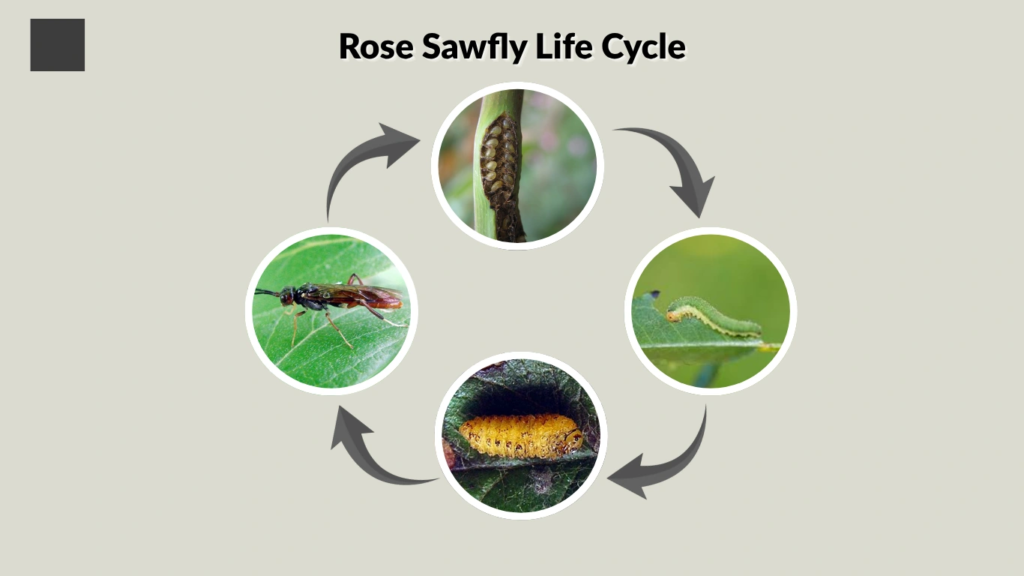
Development Stages
The life cycle of the rose sawfly includes four main stages: egg, larva, pupa, and adult. Females lay eggs in spring on the undersides of rose leaves. After hatching, larvae feed for two to three weeks before dropping to the soil, where they pupate in cocoons. Adults emerge later in the season, repeating the cycle.
In warmer regions, there can be two to three generations per year, making continuous monitoring essential. Overwintering pupae in the soil often reappear the next spring if not removed.
Seasonal Activity
Rose sawflies are most active from April to July, depending on the climate. In the UK and cooler regions, a single generation is common, while in warmer zones like the southern U.S., multiple waves can occur throughout summer. Early signs include skeletonized leaves, clusters of larvae, and white egg spots. Detecting these early prevents serious leaf loss.
Rose Sawfly Damage
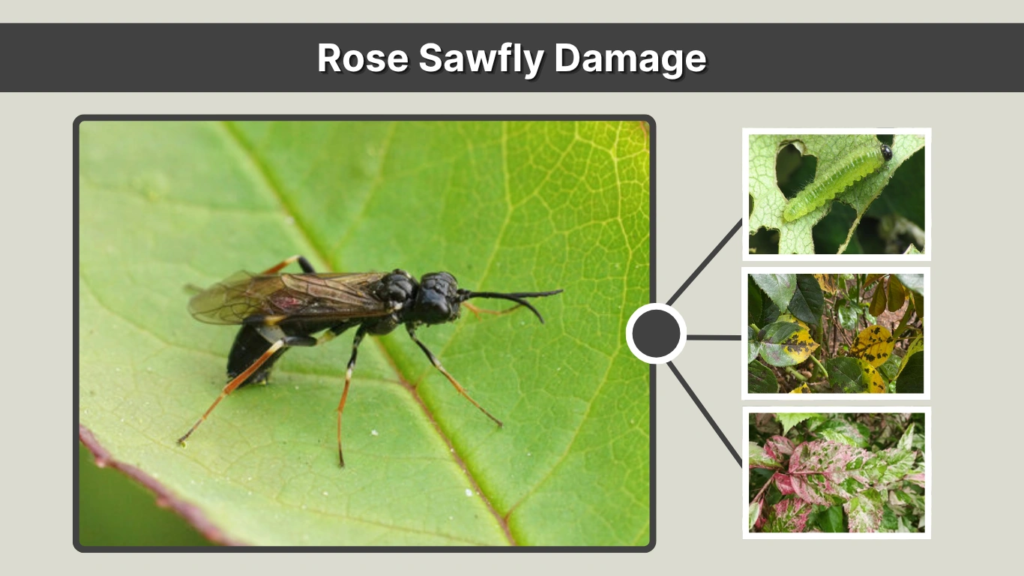
Symptoms and Signs
Rose sawfly damage is easy to recognize once you know what to look for. The larvae feed on the soft tissue between leaf veins, leaving behind thin, transparent layers. These “windowpane” leaves soon turn brown and crumble.
In heavier infestations, the larvae consume entire leaves, causing severe defoliation. Repeated attacks over several seasons can weaken rose bushes, reduce flowering, and make plants more vulnerable to diseases.
Sawfly Damage on Roses vs Other Pests
| Feature | Sawfly Damage | Caterpillar Damage |
| Feeding Style | Skeletonized, transparent leaves | Irregular holes or edges |
| Affected Area | Underside of leaves | Both sides |
| Movement | Smooth crawling | Inchworm looping |
| Common Season | Spring to early summer | Variable |
Roses Most Commonly Affected
Sawflies attack nearly all rose varieties, including:
- Hybrid tea roses – thin leaves make them easy targets.
- Climbing roses – larvae feed along long stems and leaves.
- Shrub and knockout roses – often experience large-scale infestations.
Some species also target wild or ornamental roses, making vigilance important in both home and public gardens.
How to Get Rid of Rose Sawfly
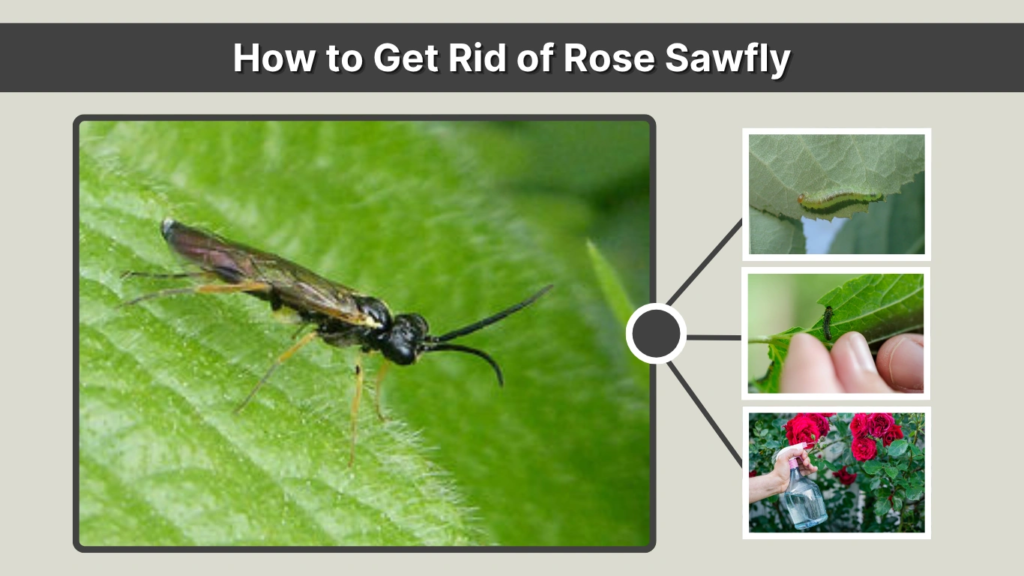
Manual and Physical Removal
For small infestations, manual removal is the simplest and most effective method. Check the undersides of rose leaves daily in spring and early summer. Pick off visible larvae and crush them or drop them into a bucket of soapy water. If many larvae are present, use a strong jet of water from a garden hose to wash them away.
Prune and dispose of affected leaves and stems—never compost them, as larvae and pupae can survive and reinfest next season.
Natural and Organic Control
Neem oil is one of the best organic solutions for controlling rose sawfly larvae. It interferes with their feeding and growth, causing them to stop eating and eventually die. Mix according to label instructions and spray in the early morning or evening to protect pollinators. Repeat applications every 7–10 days during infestation periods.
Insecticidal soap is another effective treatment for soft-bodied larvae. Spray the solution directly on affected leaves, focusing on the undersides where larvae hide. It works by suffocating the pests and is safe for most beneficial insects when applied properly.
Diatomaceous earth (DE) can also help. Lightly dust the leaves and soil around rose bushes to create a barrier that dehydrates larvae. Reapply after rainfall for ongoing protection.
You can also encourage natural predators—ladybugs, lacewings, birds, and parasitic wasps—by planting nectar-rich companion flowers such as yarrow, dill, or fennel nearby. These beneficial insects help control sawfly populations naturally.
Chemical and Insecticide Treatments
When infestations are severe, chemical control may be necessary. Look for insecticides specifically labeled for sawfly larvae, as not all general-purpose sprays are effective. Options include products containing spinosad, permethrin, or pyrethrin.
Apply sprays during the early larval stage when larvae are small and actively feeding. Always target the undersides of leaves and repeat treatment if needed. Avoid using broad-spectrum insecticides during the day to prevent harming pollinators.
Systemic insecticides can be used for large or established rose bushes where reaching all leaves is difficult. These are absorbed through the roots and kill larvae as they feed on treated foliage. However, use them sparingly, as they can impact beneficial insects.
Prevention and Long-Term Protection
Preventing Rose Sawfly Infestations
Prevention begins with regular garden monitoring. Inspect rose bushes every few days during spring, focusing on new growth and leaf undersides. Remove any eggs or larvae as soon as they appear.
Keep the garden clean—rake up fallen leaves and debris where larvae might pupate and overwinter. Tilling the soil around rose bushes in late autumn helps destroy buried pupae before they hatch in spring.
Healthy, well-fertilized roses are more resistant to pests. Avoid excessive nitrogen fertilizers, as they promote tender new growth that attracts sawflies. Instead, use a balanced fertilizer and proper watering practices to keep plants strong.
Rose Sawfly Prevention Tips
- Spray neem oil every few weeks during spring as a preventive measure.
- Remove plant litter and old mulch to eliminate hiding spots.
- Encourage natural predators like birds and beneficial insects.
- Avoid planting heavily infested varieties in the same location year after year.
- Use sticky traps nearby to monitor adult sawfly activity.
Good garden hygiene combined with early detection is the most effective long-term defense.
Regional Insights
Rose Sawfly in the UK
In the UK, rose slug sawfly and large rose sawfly are the most common species. Infestations typically occur between April and June, coinciding with new rose leaf growth. Organic control methods like neem oil and insecticidal soaps are widely recommended, especially in environmentally conscious gardens. Removing leaf litter in autumn helps reduce overwintering populations.
Rose Sawfly in North America and Australia
In North America, multiple sawfly species thrive, including bristly and curled rose sawflies. In warmer climates, there may be two or more generations per year, so consistent monitoring is essential. In Australia, similar pests like the spitfire sawfly can cause damage on related plants, but treatment strategies remain the same—manual removal, neem sprays, and biological control.
FAQs
What does a rose sawfly look like?
Rose sawflies are small, black, or greenish wasps, while their larvae resemble tiny green slugs or caterpillars. They measure about 1–2 cm long and feed on the underside of rose leaves. You’ll notice skeletonized or transparent leaves as an early sign of infestation.
How do you get rid of sawflies on roses naturally?
Use neem oil or insecticidal soap to target larvae directly. Handpick visible sawflies and prune heavily infested areas. Attract natural predators like ladybugs and parasitic wasps to help reduce populations. Diatomaceous earth can also be sprinkled on leaves as a non-toxic deterrent.
Does neem oil kill rose sawfly larvae?
Yes. Neem oil is highly effective against sawfly larvae when applied correctly. It disrupts their hormonal system, stopping feeding and reproduction. Spray in the early morning or late evening, coating both sides of the leaves, and repeat every week until no new larvae appear.
What causes white spots on rose leaves—are they sawfly eggs?
Yes. Female sawflies use a saw-like organ to insert eggs into rose leaves, creating white or blister-like spots. Removing these leaves early can prevent larvae from hatching and reduce future damage.
How can I prevent sawfly damage on roses permanently?
Monitor roses regularly, prune affected foliage, and maintain clean soil. Use preventive neem oil sprays in spring and encourage beneficial predators. Tilling soil in autumn to destroy pupae and removing leaf litter are key steps to preventing future outbreaks.
