
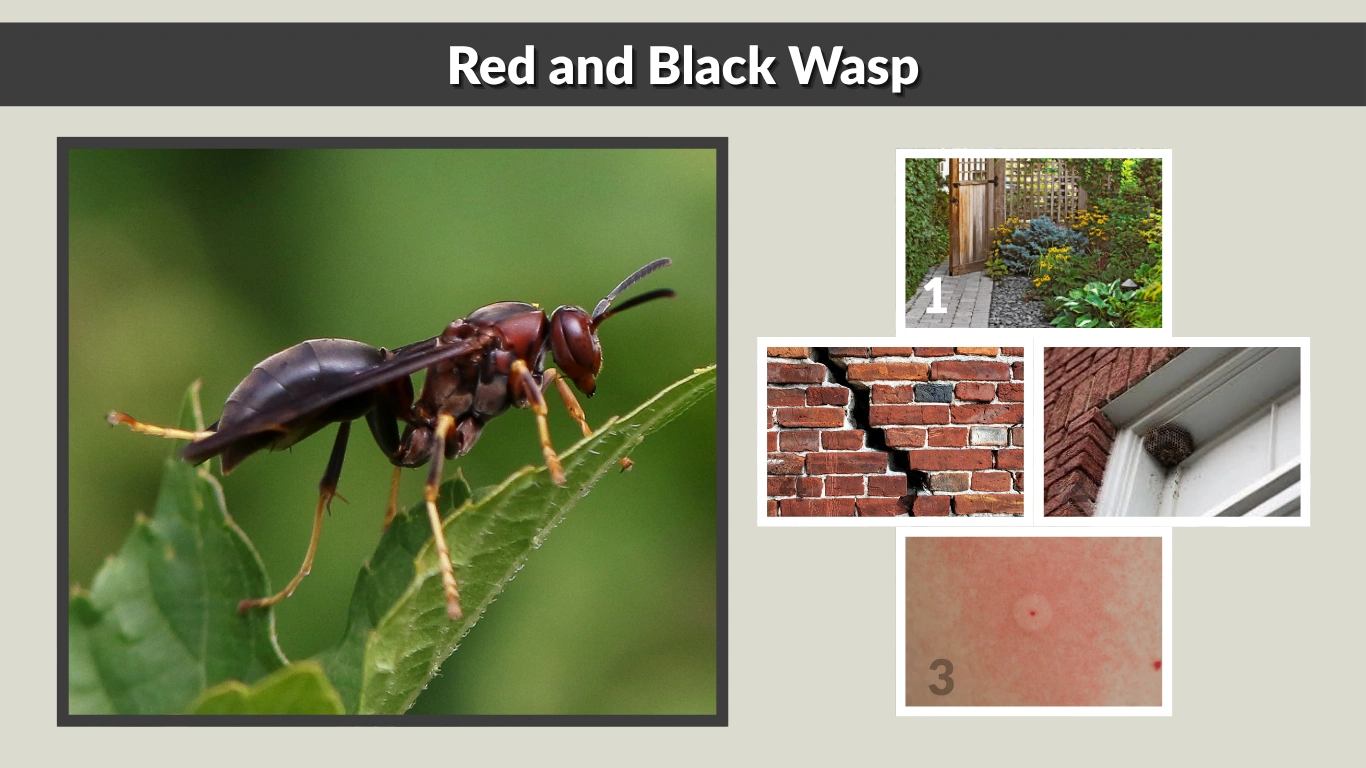
The red and black wasp is one of the most eye-catching insects in North America, easily recognized by its bold coloration and graceful flight. Though their appearance can be intimidating, not all red and black wasps are dangerous. In fact, many play an important role in pollination and pest control. This guide explores how to identify them, understand their behavior, and stay safe if you encounter or get stung by one.
Understanding the Red and Black Wasp
What Is a Red and Black Wasp?
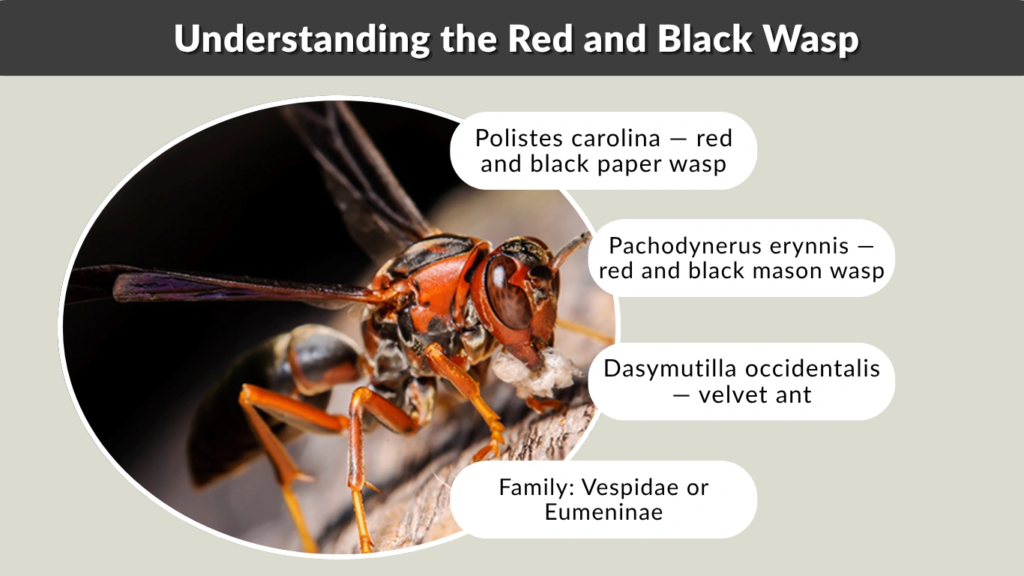
The term “red and black wasp” doesn’t refer to a single species but rather several different types of wasps that share similar coloring. These include paper wasps, mason wasps, and even velvet ants (a wingless wasp species). Each type varies in behavior and aggression, but all are known for their striking contrast of red and black hues.
Red and black wasps are common across southern and central U.S. regions, especially in Texas, Florida, Alabama, and Georgia, where warm climates provide perfect nesting conditions. Despite their fearsome reputation, many of these wasps are beneficial, helping to control pest populations by feeding on insects and caterpillars.
Scientific Overview
- Family: Vespidae or Eumeninae (depending on species)
- Common Types:
- Polistes carolina — red and black paper wasp
- Pachodynerus erynnis — red and black mason wasp
- Dasymutilla occidentalis — velvet ant or “cow killer” wasp
- Polistes carolina — red and black paper wasp
- Distribution: Found throughout North America, particularly in warm and humid areas
Each species varies in lifestyle — some build open paper nests, while others are solitary and nest in mud or hollow spaces.
Physical Identification
General Appearance
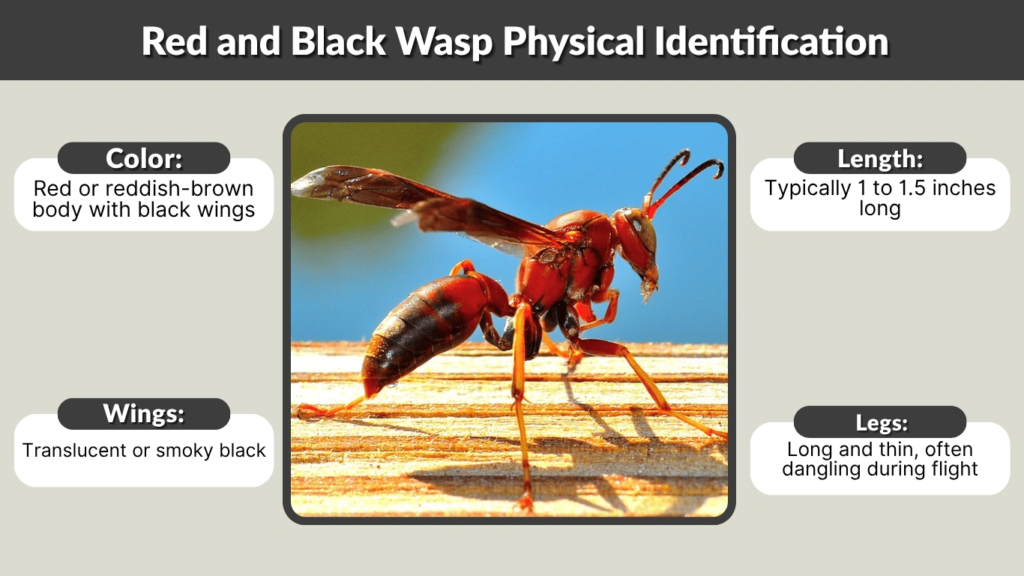
Red and black wasps are admired for their vivid color contrast. Most species have reddish-brown thoraxes with black-tipped abdomens or wings, creating a distinct look that often warns predators of their defensive abilities.
Common traits include:
- Color: Red or reddish-brown body with black wings, legs, or stripes
- Body Shape: Slender waist with a narrow midsection
- Length: Typically 1 to 1.5 inches long
- Wings: Translucent or smoky black
- Legs: Long and thin, often dangling during flight
Their warning colors serve as a natural defense mechanism called aposematism, signaling predators to stay away.
Flight and Behavior
Red and black wasps fly slowly and gracefully, often with their legs hanging below their body. Unlike hornets or yellow jackets, they do not dart rapidly or swarm aggressively unless provoked. Most prefer to mind their own business, feeding on nectar or hunting small insects.
Common Species of Red and Black Wasps
Red and Black Paper Wasp (Polistes carolina)
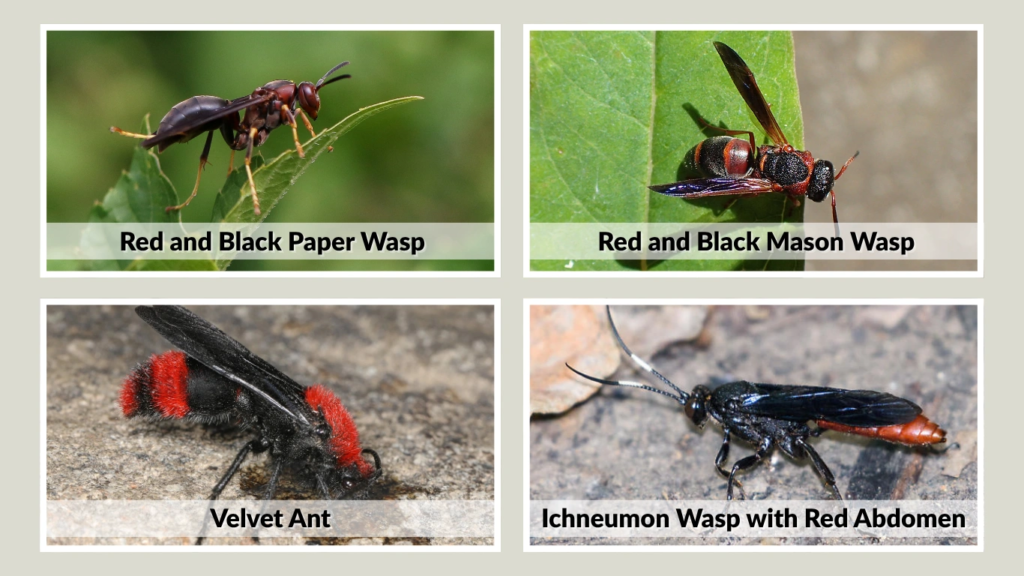
This species is one of the most frequently encountered red and black wasps in the U.S. It has a reddish-brown body, black-tinted wings, and long legs. Paper wasps are social insects that live in small colonies, constructing open, umbrella-shaped nests made from chewed wood fibers and saliva.
They are moderately defensive and will sting only if their nest is disturbed. Despite their sting, they are beneficial — feeding on caterpillars and other garden pests.
Identifying Traits:
- Bright red thorax with black markings
- Nests under eaves, porches, and branches
- Smooth flight and visible legs while flying
Red and Black Mason Wasp (Pachodynerus erynnis)
The red and black mason wasp is a solitary wasp, meaning it does not live in colonies. It has a glossy black body with bright red bands across the abdomen or thorax. Unlike paper wasps, mason wasps prefer holes, bricks, or wooden crevices to build nests, which they seal with mud.
They are non-aggressive and rarely sting humans. Females use their sting primarily to paralyze caterpillars, which they store as food for their larvae.
Identifying Traits:
- Shiny black body with vivid red patterns
- Nests in hollow stems, wood, or cracks
- Solitary and beneficial for gardens
Velvet Ant (Cow Killer Wasp) (Dasymutilla occidentalis)
Despite the name, the velvet ant is not an ant but a wingless female wasp. It has a bright red and black fuzzy body that looks soft but warns of its potent sting. Found mostly in sandy regions of the southern U.S., it is infamous for its nickname “cow killer,” due to the excruciating pain of its sting.
However, velvet ants are solitary and non-aggressive. They do not seek out humans and sting only when physically handled or trapped.
Identifying Traits:
- Fuzzy, bright red and black body
- Wingless females; males have wings but do not sting
- Solitary, ground-dwelling wasp
Ichneumon Wasp with Red Abdomen
This wasp features a long black body with a bright red abdomen and an extended ovipositor used for laying eggs inside caterpillars or beetle larvae. Despite its intimidating look, it is harmless to humans and does not sting. It plays a vital role in natural pest control by parasitizing crop-damaging insects.
Identifying Traits:
- Thin black body with red abdomen
- Long antennae and tail-like ovipositor
- Non-stinging and beneficial predator
Distribution and Habitat
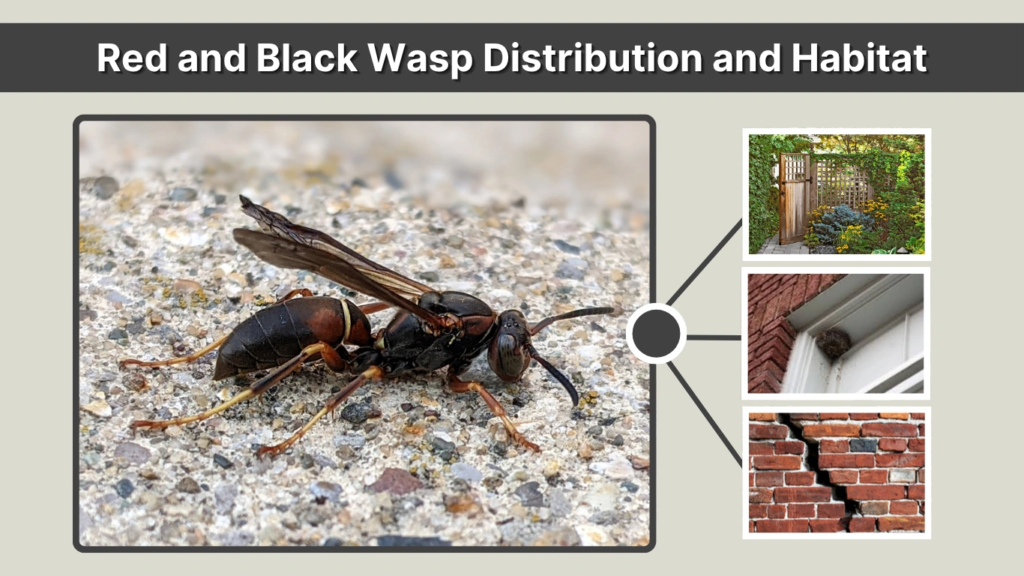
Where They’re Found
Red and black wasps thrive in warm, humid environments and are particularly common in:
- Texas and the Gulf Coast: Red wasps with black wings are frequently spotted under eaves and barns.
- Florida and Georgia: Home to many mason wasps and velvet ants.
- California and Arizona: Known for black wasps with red wings or abdomens.
- Midwestern States: Smaller populations in Ohio, Indiana, and North Carolina.
Preferred Habitats
- Gardens, wooden fences, and flower beds
- Roof edges, attics, and outdoor sheds
- Hollow trees and cracks in walls
- Sandy soil (for velvet ants and ground-dwelling species)
These wasps prefer quiet areas where they can nest undisturbed, often near sources of nectar and water.
Behavior and Temperament
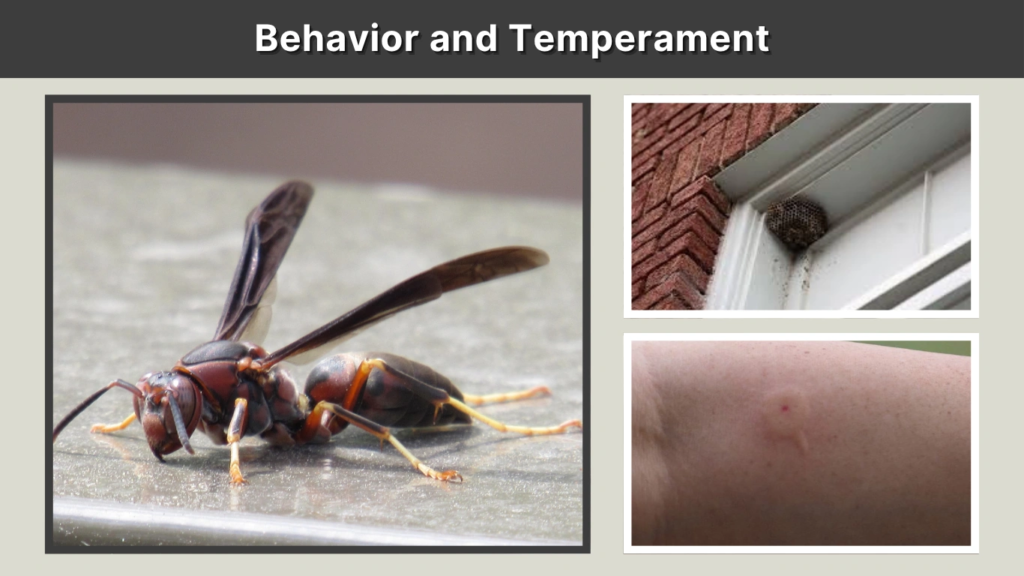
Social vs Solitary Wasps
- Paper Wasps: Social, form colonies of 20–100 individuals.
- Mason Wasps: Solitary, nesting alone in cavities.
- Velvet Ants: Solitary, ground dwellers that invade other wasp nests.
Aggression Level
Most red and black wasps are non-aggressive unless disturbed. They sting only in defense of their nests or when physically provoked. Solitary species like mason wasps are especially peaceful, while paper wasps may defend their nests more actively.
Diet and Ecological Role
Red and black wasps are both pollinators and predators. Adults feed on nectar and sweet plant sap, while their larvae eat insects such as caterpillars, beetles, and spiders. This makes them vital for controlling pest populations naturally.
Red and Black Wasp Sting
Do Red and Black Wasps Sting?
Yes — but only female red and black wasps can sting. Males do not have stingers. Most stings occur when a wasp feels threatened, especially near its nest. Unlike honeybees, red and black wasps can sting multiple times because their stingers are smooth and do not detach from the body.
In general, solitary species like mason wasps sting rarely, while paper wasps are more likely to defend their nests. Velvet ants (wingless female wasps) are known for having one of the most painful stings in the insect world but rarely attack unless handled.
Pain and Reaction
The pain from a red and black wasp sting is sharp, immediate, and burning. It often feels like an electric shock or hot needle. On the Schmidt Pain Index, their sting ranks between 2.0 and 3.0, depending on the species.
- Paper and mason wasps: Pain fades after 30–60 minutes.
- Velvet ants: Pain can last up to an hour and leave lingering tenderness.
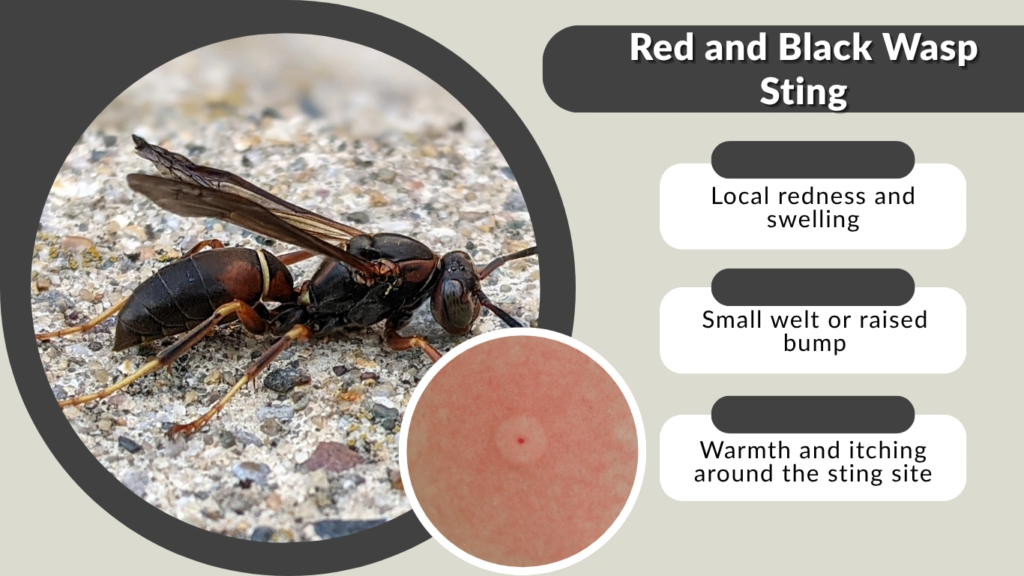
Typical reactions include:
- Local redness and swelling
- Small welt or raised bump
- Warmth and itching around the sting site
For most people, these symptoms are mild and temporary. However, allergic individuals may experience more serious responses.
Allergic and Severe Reactions
In sensitive individuals, red and black wasp venom can trigger anaphylaxis, a life-threatening allergic reaction.
Warning signs include:
- Difficulty breathing or swallowing
- Swelling of lips, tongue, or throat
- Dizziness, nausea, or fainting
- Rapid heartbeat or anxiety
If these symptoms occur, call emergency services immediately. People with known allergies should always carry an EpiPen or prescribed antihistamine.
Treatment and Relief

First Aid for Red and Black Wasp Stings
Quick and proper treatment helps reduce pain, swelling, and infection risk.
- Clean the area: Wash the sting site with soap and warm water to remove venom residue.
- Apply ice or a cold compress: Hold for 10–15 minutes to minimize swelling.
- Take a pain reliever: Use ibuprofen or acetaminophen to manage discomfort.
- Apply a topical cream: Hydrocortisone or antihistamine creams help with itching and redness.
- Avoid scratching: This can increase swelling or lead to infection.
If you’re stung multiple times or near sensitive areas like the face or neck, seek medical care promptly.
Home Remedies
For mild stings, simple natural remedies can ease pain and speed recovery:
- Baking Soda Paste: Mix with water and apply to neutralize venom and reduce burning.
- Aloe Vera: Provides soothing relief and helps with redness.
- Honey: Works as a natural antibacterial and anti-inflammatory agent.
- Vinegar or Lemon Juice: Mildly acidic; helps break down venom proteins.
- Cucumber Slices or Potato Juice: Draws out heat and reduces inflammation.
Repeat these treatments as needed for comfort. The swelling usually subsides within 1–3 days.
When to Seek Medical Help
Contact a doctor or emergency services if:
- Pain or swelling spreads significantly after several hours.
- You experience fever or signs of infection.
- You were stung multiple times.
- You have a known allergy to wasp or bee venom.
In rare cases, severe systemic reactions may require a steroid injection or antihistamine therapy to control inflammation.
Are Red and Black Wasps Dangerous?
Venom and Toxicity
The venom of most red and black wasps is designed for paralyzing prey, not attacking humans. It contains histamines, enzymes, and peptides that cause localized pain and swelling. For healthy adults, a single sting is rarely dangerous.
However, multiple stings or allergic reactions can become medical emergencies if left untreated.
Aggression and Behavior
- Paper wasps: Mildly territorial; sting when nests are disturbed.
- Mason wasps: Solitary and docile.
- Velvet ants: Defensive but not aggressive — their bright colors serve as a warning.
Despite their fierce appearance, most red and black wasps prefer to avoid confrontation.
Prevention and Safety Tips
Avoiding Stings
You can reduce the risk of being stung by following a few precautions:
- Stay calm around wasps; avoid waving your hands or running.
- Keep trash cans sealed and food covered during outdoor meals.
- Avoid wearing bright floral colors and strong perfumes that attract insects.
- Inspect porches, attics, and sheds regularly for new nests in early spring.
Nest Removal
If you find a red and black wasp nest near your home:
- For small nests: Spray with a wasp-killing solution at night when wasps are inactive.
- For large nests: Contact a professional pest control expert.
- Safety tip: Always wear long sleeves, gloves, and eye protection during removal.
Never attempt to remove a velvet ant or wasp nest during daylight hours when they’re most active.
Interesting Facts About Red and Black Wasps
- Only female wasps sting — males can only buzz defensively.
- Mason wasps are among the most beneficial pollinators in the wasp family.
- Velvet ants are called “cow killers” for their painful sting, not for actually killing cows.
- Red and black coloring is a natural warning sign to predators — known as aposematism.
- Some red and black wasps mimic hornets or bees to ward off enemies, even though they are less aggressive.
FAQs
Are red and black wasps poisonous?
No. Their venom isn’t poisonous to humans, though it can cause pain, swelling, or allergic reactions.
Do red and black wasps sting more than once?
Yes, unlike bees, they can sting multiple times because their stingers don’t detach.
Which red and black wasp has the worst sting?
The velvet ant (female cow killer wasp) delivers one of the most painful stings known, ranking high on the Schmidt Pain Index.
How long does a sting last?
Mild reactions fade within hours, while swelling and redness may last up to 2–3 days.
Are red and black wasps beneficial?
Yes. They help pollinate flowers and reduce pest populations, making them valuable for ecological balance.
