

The oak apple gall wasp is a small but fascinating insect known for creating large, round galls on oak trees that resemble miniature apples. While these galls may appear alarming, they rarely cause lasting harm. Understanding how these wasps live, reproduce, and interact with oak trees can help you protect your trees and appreciate this unique part of nature’s balance.
What Is an Oak Apple Gall Wasp?
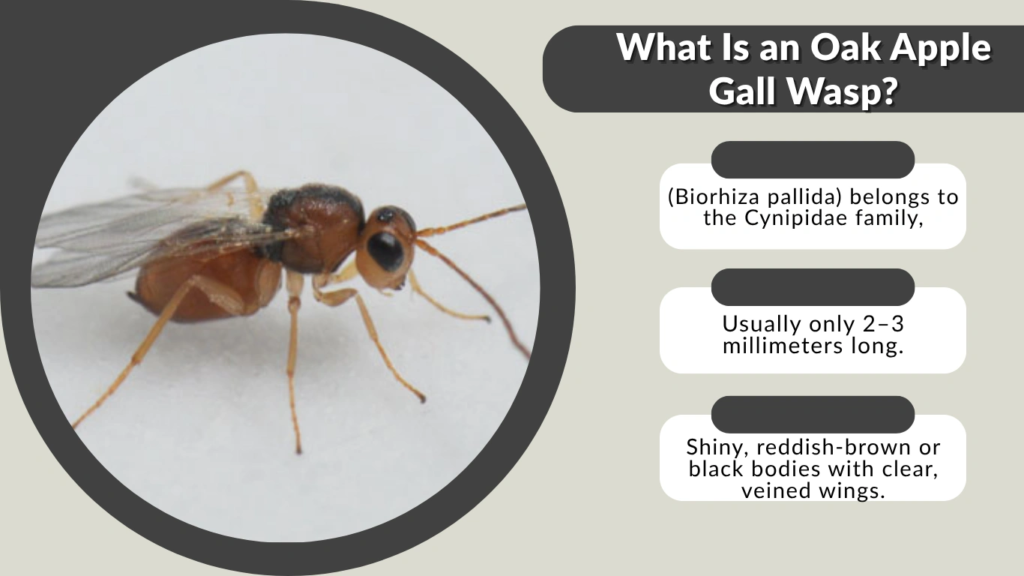
The oak apple gall wasp (Biorhiza pallida) belongs to the Cynipidae family, a group of tiny parasitic wasps that cause plants to form galls. These galls act as protective chambers for the larvae, providing both food and shelter as they grow. The name “oak apple” comes from the gall’s apple-like appearance on oak leaves or twigs.
Identification
These wasps are tiny, usually only 2–3 millimeters long. They have shiny, reddish-brown or black bodies with clear, veined wings. Because they spend most of their lives inside galls, the insects themselves are rarely seen. Instead, the presence of galls is the best indicator of their activity.
The galls themselves are spongy and spherical, ranging from 2 to 5 centimeters in diameter. When young, they are green or yellowish, but as the season progresses, they turn brown and woody before eventually drying out.
How Oak Apple Galls Form

The gall-forming process begins in spring, when female oak apple gall wasps lay their eggs inside soft oak tissues, such as buds or new leaves. The tree reacts to the wasp’s secretions by producing extra plant tissue, which swells into a round gall.
Inside this gall, the larvae hatch and begin feeding on the nutrient-rich tissue. The gall functions as both a food source and a safe enclosure, protecting the larvae from predators and harsh weather.
Stages of Gall Development
| Stage | Description | Season |
| Early Formation | Small, green, soft bump forms on the leaf or twig | Spring |
| Mature Gall | Grows larger, with a spongy or fibrous interior | Summer |
| Dried Gall | Hard, brown, and brittle with visible exit holes | Late summer–autumn |
By late summer, mature wasps chew small holes in the gall’s surface and emerge as adults. The empty, papery galls often remain attached to the tree throughout winter.
Life Cycle of the Oak Apple Gall Wasp

The oak apple gall wasp’s life cycle is unusual and includes two alternating generations: one sexual and one asexual.
Sexual Generation
In spring, winged females lay eggs in young oak tissue, forming the familiar round oak apple galls. The larvae develop inside, feeding until they mature and emerge as adults by late summer.
Asexual Generation
These adults then produce offspring that live underground in small root galls, where they overwinter. The following spring, new females emerge and start the process again by laying eggs in fresh oak buds. This alternating pattern ensures the species’ survival through seasonal changes.
Effects on Oak Trees
Most oak apple galls are harmless and primarily cosmetic. They rarely affect the long-term health of mature oak trees. However, when infestations are heavy, they can reduce the tree’s ability to photosynthesize by damaging large numbers of leaves.
You may notice early leaf drop, curling, or discolored foliage. In severe cases—especially in young, stressed, or drought-affected trees—repeated infestations can weaken growth and make the tree more vulnerable to other pests or diseases.
Do Oak Apple Gall Wasps Sting?

Despite their intimidating name, oak apple gall wasps do not sting humans or animals. Their stingers are adapted solely for egg-laying, not defense. They are completely harmless to people and pets, making them more of an aesthetic concern than a threat.
Where Do Oak Apple Gall Wasps Live?
Oak apple gall wasps thrive in temperate regions across North America and Europe, especially in areas rich with oak species such as white, red, and live oaks. They prefer woodlands, parks, and suburban gardens where oak trees grow naturally. The galls they form are often seen on leaves, branches, and sometimes near buds during late spring and summer.
The environment plays an important role in gall development. Warm temperatures and healthy, rapidly growing trees create ideal conditions for egg-laying and gall formation. Trees that are already stressed from drought or poor soil conditions are often more vulnerable to recurring infestations.
How to Manage and Control Oak Apple Gall Wasps
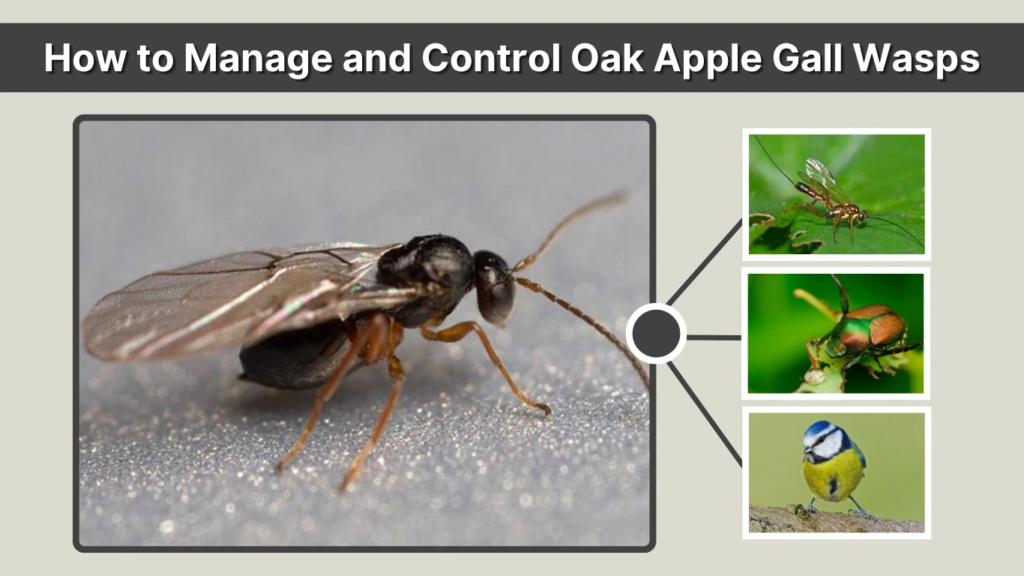
Once oak apple galls have formed, control becomes difficult since the larvae are protected inside the gall. However, preventive and cultural methods can help reduce their occurrence over time.
Natural Control
Encourage natural predators such as parasitic wasps, birds, and beetles, which feed on gall larvae. Avoid spraying broad-spectrum insecticides, as these chemicals can kill beneficial insects that naturally help control gall wasp populations.
In late autumn or winter, remove fallen leaves and twigs containing old galls to break the wasps’ life cycle. Dispose of this debris by burning or sealing it in bags—do not compost it, as larvae may continue developing inside.
Cultural and Preventive Practices
Healthy trees resist gall formation better. To keep your oak trees strong:
- Water deeply during dry periods.
- Mulch around the base to retain soil moisture.
- Avoid over-fertilizing, especially with nitrogen.
- Prune lightly to improve airflow and reduce pest habitat.
For large infestations, consult an arborist before attempting chemical treatments. Systemic insecticides may help if applied early in spring before gall formation begins, but they are rarely necessary for mature oaks.
FAQs
What causes oak apple galls?
Oak apple galls develop when female oak apple gall wasps inject eggs into soft oak tissues. Chemicals secreted by the larvae cause the plant to form a round, protective gall. This structure feeds and shelters the developing insect until it matures and exits through small holes.
Do oak apple gall wasps harm trees?
Most oak apple galls are harmless. While they can make leaves look distorted or cause early leaf drop, they rarely cause long-term harm. Repeated infestations may weaken young or stressed oaks, so maintaining tree health is the best defense.
Are oak apple galls dangerous to humans?
No, oak apple galls and the wasps that create them are not harmful to humans or pets. The wasps do not sting or bite. Their activity is limited to the tree itself and is a natural part of the oak’s ecosystem.
How can I get rid of oak apple galls?
Prune and destroy affected branches before adult wasps emerge in summer. Clean up fallen leaves and galls to prevent overwintering larvae from continuing their cycle. Encouraging beneficial predators is more effective than chemical sprays.
When do oak apple gall wasps emerge?
Adult oak apple gall wasps emerge in late summer, leaving small exit holes in dried galls. These new adults then reproduce, completing their unique two-generation life cycle that continues into the following spring.
