
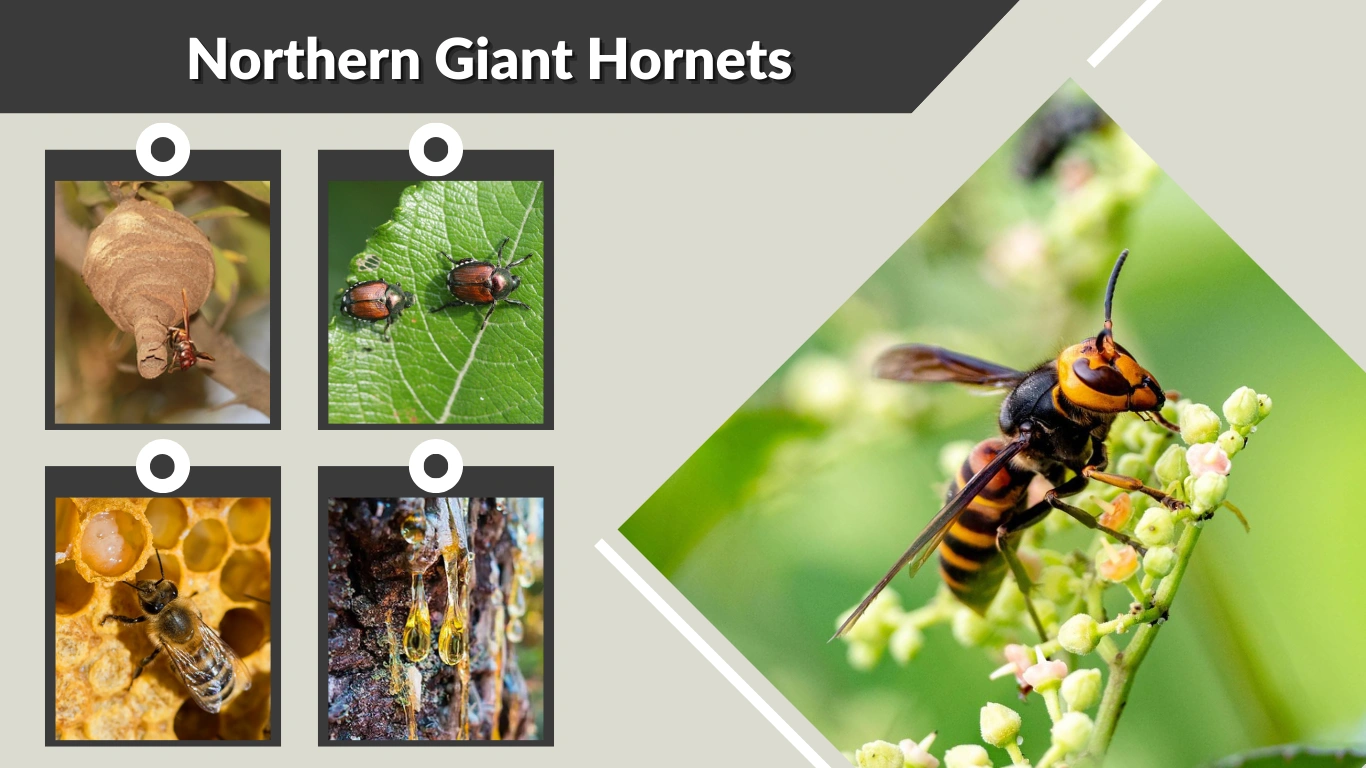
Northern giant hornets (Vespa mandarinia), sometimes sensationally called “murder hornets,” are among the most feared insects in the world. Their size, aggressive hunting techniques, and powerful sting have given them a reputation that spreads far beyond their native range. Originally found in Asia, they became widely known in the United States after a few sightings raised alarms about their possible establishment. While much of the media coverage is exaggerated, northern giant hornets do pose risks to honeybees, agriculture, and even human health.
This guide explores every detail of these hornets—from their identification and behavior to their sting, impact on ecosystems, and eradication efforts in North America.
What Are Northern Giant Hornets?
Northern giant hornets belong to the family Vespidae, the same group as yellowjackets and paper wasps. They are the largest hornet species in the world, with workers reaching up to 2 inches in length and queens sometimes even larger. Their scientific name is Vespa mandarinia, and they are closely related to the Japanese giant hornet, which is a regional variant.
The nickname “murder hornet” gained popularity in 2020 when media outlets in the United States highlighted the insect’s appearance in Washington State. While the term is dramatic, it reflects public fear of their painful sting and ability to wipe out honeybee colonies within hours.
Physical Appearance and Size
Identification Features
Northern giant hornets are unmistakable once you know what to look for:
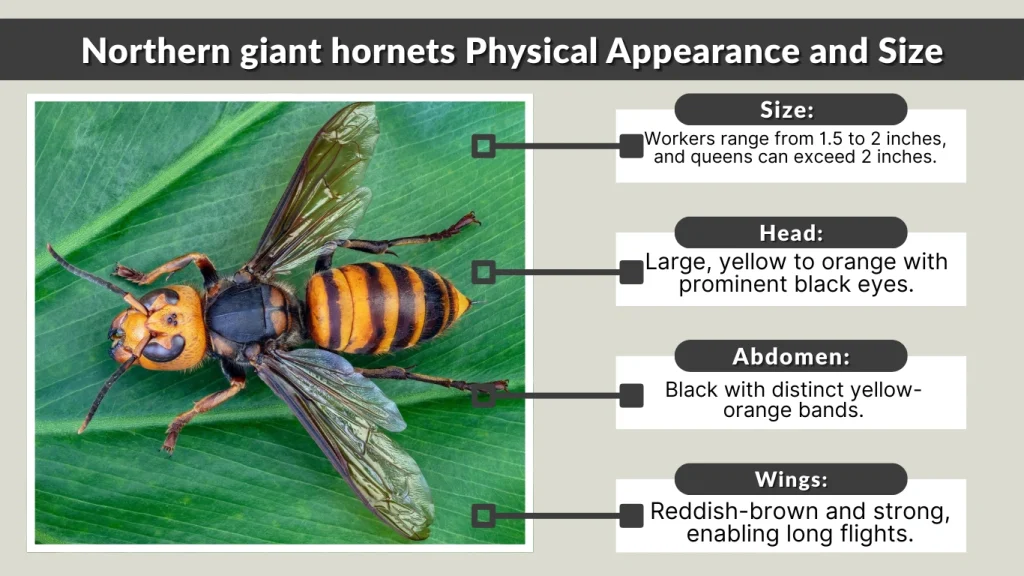
- Size: Workers range from 1.5 to 2 inches, and queens can exceed 2 inches.
- Head: Large, yellow to orange with prominent black eyes.
- Thorax: Dark brown to black.
- Abdomen: Black with distinct yellow-orange bands.
- Wings: Reddish-brown and strong, enabling long flights.
- Mandibles: Robust and sharp, designed for cutting prey and decapitating bees.
Male vs Female Differences
Females, including both queens and workers, have a stinger and venom glands, while males do not. Queens are typically bulkier and live longer, while males (drones) exist mainly to mate before dying at the end of the season.
Native Range and Habitat
The northern giant hornet is native to East Asia, particularly in countries such as Japan, China, and Korea. They thrive in low mountain forests and rural farmland, where they can nest underground and find abundant prey. Unlike some wasp species that nest in trees or man-made structures, northern giant hornets prefer secluded underground burrows, often those left behind by rodents or snakes.
Northern Giant Hornets in the U.S.
First Discovery
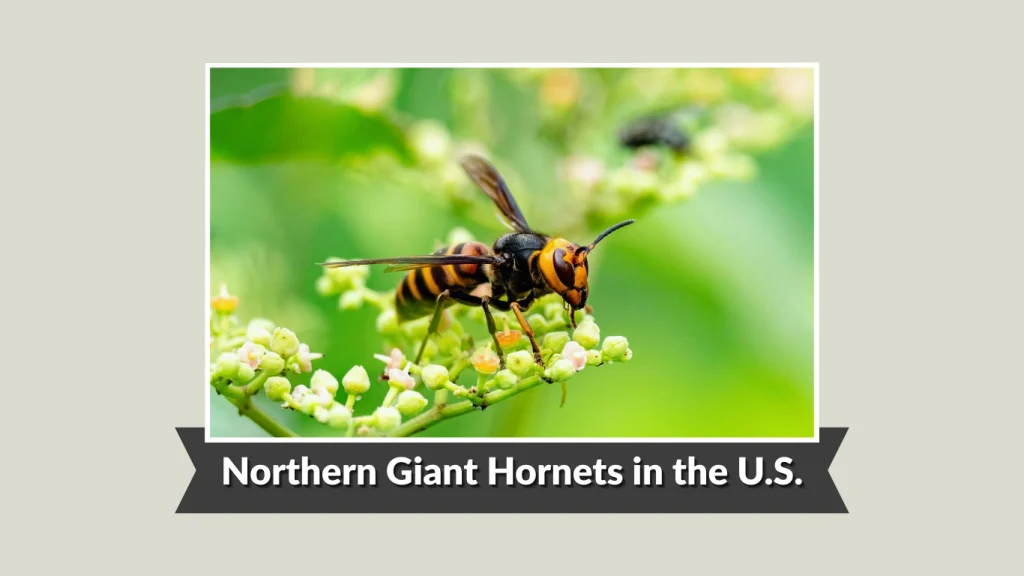
The first confirmed discovery in the United States occurred in December 2019 in Blaine, Washington. Soon after, Canadian authorities in British Columbia also reported sightings. These cases immediately raised concerns that the hornet might establish a breeding population in North America.
Current Location and Monitoring
The Washington State Department of Agriculture (WSDA) launched an aggressive campaign to track and eradicate the hornets. This included trapping, public reporting systems, and even fitting captured hornets with tiny radio trackers to locate nests. Several nests were destroyed between 2020 and 2022, preventing the species from spreading widely. So far, authorities believe eradication efforts have been largely successful, though ongoing monitoring remains critical.
Nesting Habits
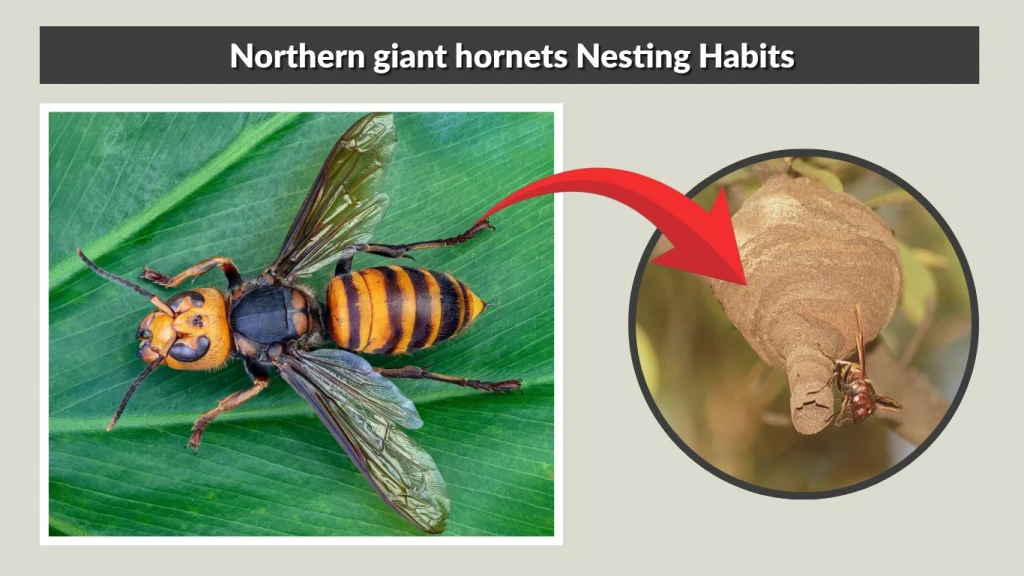
Northern giant hornets build their nests underground, unlike European hornets that prefer hollow trees. They often occupy abandoned animal burrows, which provide protection and insulation.
A typical colony consists of:
- One queen – responsible for reproduction.
- Workers – sterile females that forage, defend the nest, and care for larvae.
- Drones (males) – whose sole purpose is mating.
The nests can grow large by late summer, housing several hundred hornets. Unlike honeybees, which maintain perennial colonies, northern giant hornet nests die out in winter, leaving only new queens to hibernate.
Life Cycle
Colony Development
The life cycle of northern giant hornets follows a seasonal rhythm:
- Spring: A fertilized queen emerges from hibernation and establishes a nest. She raises the first batch of workers alone.
- Summer: Workers take over foraging and nest expansion. The colony grows rapidly.
- Autumn: The colony produces new queens and drones. Mating occurs, after which drones die.
- Winter: The old queen and workers die off, leaving only fertilized queens in hibernation to restart the cycle.
Lifespan of Individuals
- Queens can live over a year if they survive winter.
- Workers live only a few months during the active season.
- Drones die shortly after mating.
Diet and Hunting Behavior

Northern giant hornets are formidable predators. Their diet includes:
- Tree sap – an important energy source.
- Other insects – particularly beetles and caterpillars.
- Honeybees – their most notorious prey.
Their hunting style is especially brutal against honeybee colonies. Hornets enter a “slaughter phase”, where they decapitate adult bees with their strong mandibles, leaving the bodies behind but carrying bee thoraxes back to feed their larvae. A small group of giant hornets can destroy tens of thousands of bees in a matter of hours.
In Asia, honeybees have evolved defense mechanisms such as “bee balling,” where they swarm an invading hornet and overheat it to death. Unfortunately, European honeybees, which are common in the U.S., lack this strategy, making them highly vulnerable.
Sting and Venom
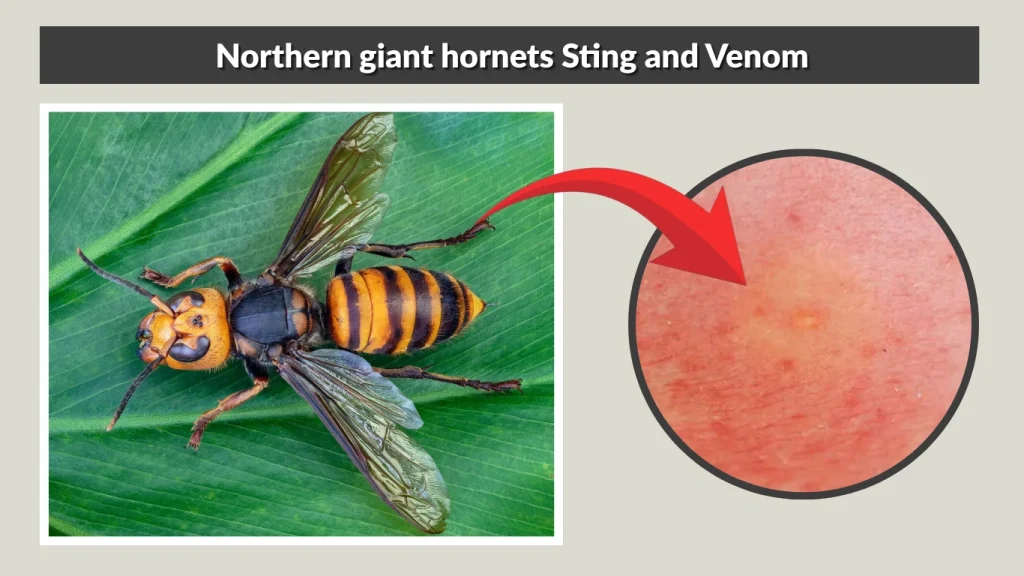
Sting Pain Level
The sting of a northern giant hornet is among the most painful in the insect world. Entomologist Justin Schmidt, creator of the Schmidt Sting Pain Index, described it as a burning, searing pain that can last for hours.
Venom Toxicity
The venom contains cytotoxins and neurotoxins that can damage tissue and cause extreme pain. Unlike honeybees, hornets can sting repeatedly without dying, making them more dangerous in groups.
Symptoms of a Sting
- Intense pain at the sting site
- Swelling and redness
- Warmth or burning sensation
- In severe cases: dizziness, nausea, or difficulty breathing
Treatment and First Aid
- Wash the area with soap and water
- Apply a cold compress to reduce swelling
- Take antihistamines for itching or redness
- Seek immediate medical help if experiencing allergic reactions or multiple stings
- Epinephrine (EpiPen) may be required for anaphylaxis
Northern Giant Hornet vs Other Hornets
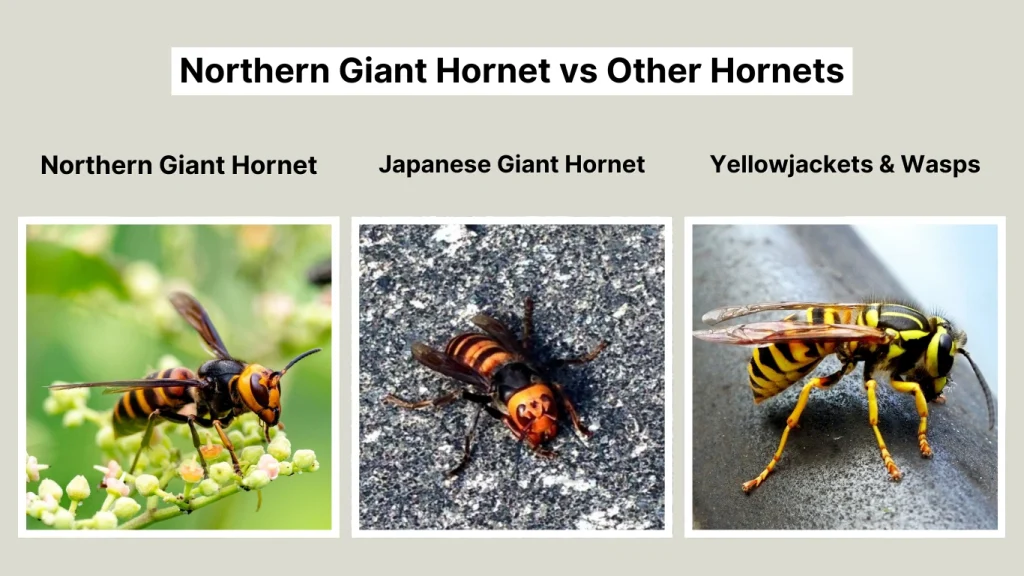
Because of their size and notoriety, northern giant hornets are often confused with other hornets and wasps.
Northern Giant Hornet vs European Hornet (Vespa crabro)
- Size: European hornets are smaller (1–1.4 inches vs up to 2 inches).
- Coloration: European hornets are more reddish-brown with yellow markings.
- Behavior: European hornets are less aggressive toward honeybees.
Northern Giant Hornet vs Japanese Giant Hornet (Vespa mandarinia japonica)
- The Japanese giant hornet is considered a subspecies of the northern giant hornet.
- It shares most features but is regionally adapted to Japan.
Northern Giant Hornet vs Yellowjackets & Wasps
- Yellowjackets are much smaller (0.5 inch).
- Behaviorally, yellowjackets are aggressive but lack the devastating hive-raiding behavior.
Eradication and Control Measures
When northern giant hornets were first discovered in North America, swift action followed. The WSDA (Washington State Department of Agriculture) led eradication efforts with several key strategies:
- Trapping – Custom bottle traps baited with fruit juice or sap to capture hornets.
- Radio tracking – Attaching tiny transmitters to captured hornets to locate nests.
- Nest removal – Vacuuming live hornets and destroying underground nests.
- Public engagement – Encouraging residents to report sightings with photographs.
Between 2020 and 2022, multiple nests were destroyed, giving hope that the hornets could be eradicated before establishing permanent populations. While no recent confirmed sightings have occurred in 2023–2025, continued monitoring is essential.
Media Nickname – “Murder Hornet”
The term “murder hornet” became a viral headline in 2020, sparking fear across the U.S. Although sensational, the nickname is misleading. Northern giant hornets rarely attack humans unless threatened or their nest is disturbed.
The real “murder” comes from their effect on honeybee colonies, not people. Still, the nickname captured public attention and helped bring awareness to the invasive threat. Unfortunately, it also fueled panic, with people destroying native wasps and bees by mistake.
Conservation and Ethical Debate
In their native Asian range, northern giant hornets are not pests; they are part of the natural ecosystem. Some regions even celebrate them—hornet larvae are considered a delicacy in rural Japan.
However, in North America, they are classified as an invasive species, and eradication is prioritized to protect honeybees and agriculture. This raises ethical questions:
- Should an insect be destroyed outside its range to protect human industries?
- What long-term effects might eradication campaigns have on ecosystems?
Balancing human concerns with biodiversity remains a complex issue.
FAQs About Northern Giant Hornets
What is the scientific name of the northern giant hornet?
The northern giant hornet is scientifically known as Vespa mandarinia. It belongs to the Vespidae family and is the largest hornet species in the world.
How big can a northern giant hornet grow?
Workers typically measure 1.5 to 2 inches long, while queens can exceed 2 inches. Their wingspan may reach around 3 inches, making them an intimidating sight.
Are northern giant hornets in America dangerous to humans?
They can be dangerous if provoked. A single sting is very painful but not usually deadly. However, multiple stings or allergic reactions can be life-threatening. Their real threat lies in their impact on honeybee colonies.
Can northern giant hornets kill honeybee colonies?
Yes. A group of hornets can destroy a hive of 30,000+ honeybees within hours, decapitating workers and carrying bee thoraxes back to feed their larvae.
What should you do if you see a northern giant hornet?
Experts recommend not approaching the insect or nest. Instead, take a clear photo if possible and report the sighting to local agricultural or environmental authorities for safe investigation.
