
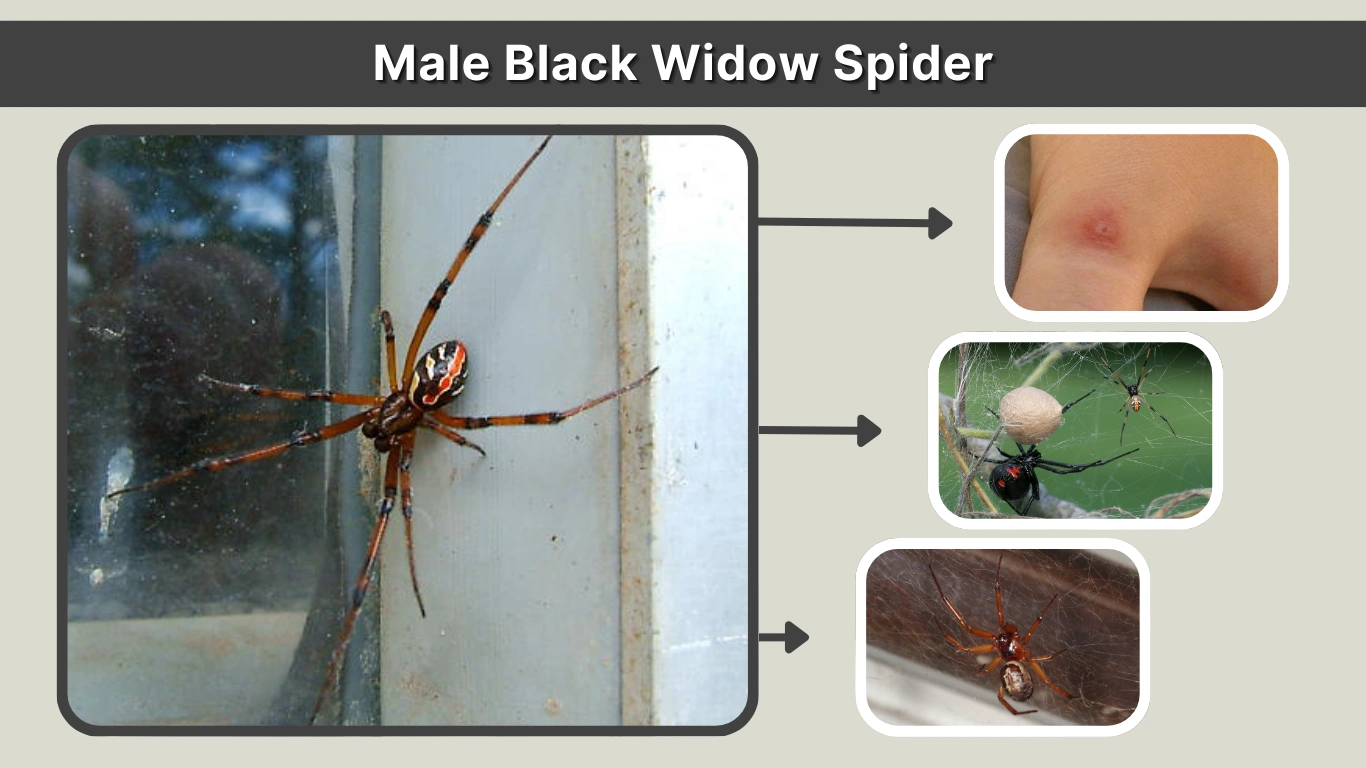
The male black widow spider is far less known than its infamous female counterpart. While female black widows are famous for their shiny black bodies and painful bites, males are smaller, lighter in color, and rarely dangerous. Because of their subtle appearance, male black widow spiders are often mistaken for juvenile spiders, false widows, or harmless house spiders. Understanding how to identify a male black widow spider helps prevent misidentification, unnecessary fear, and confusion about their behavior, venom, and role in mating.
Identification of a Male Black Widow Spider

Identifying a male black widow spider can be challenging due to its small size and muted coloring. However, several physical traits help distinguish it from similar species.
- Member of the Latrodectus genus
- Much smaller than female black widows
- Body color ranges from brown to gray or tan
- Slender abdomen instead of a round, bulbous one
- Long, thin legs relative to body size
- Red, orange, yellow, or white markings instead of solid black
- Often confused with false black widow spiders
These features become clearer when compared directly with females.
What Does a Male Black Widow Spider Look Like?
The male black widow spider looks noticeably less intimidating than the female. Instead of a glossy black body, males usually have a dull brown or gray appearance. Their bodies are slimmer, and their legs appear longer and more delicate.
As male black widows mature, their markings may fade, making identification even harder. Younger males often show brighter patterns, while adult males appear more subdued. Because of this, many people do not realize they are looking at a true black widow species at all.
Male Black Widow Spider Markings
Male black widow spider markings vary by age and species but usually include:
- Red or orange spots along the sides of the abdomen
- Yellow or white stripes or bands
- Broken or incomplete hourglass shapes
- Fading patterns as the spider matures
Unlike females, males almost never display a bold, solid red hourglass.
Male Black Widow Spider Size
Size is one of the easiest ways to distinguish male and female black widows. Male black widow spiders are extremely small.
| Feature | Male | Female |
| Body length | 3–6 mm | 8–13 mm |
| Abdomen shape | Narrow | Round |
| Overall build | Slender | Robust |
Due to their tiny size, males are often overlooked or mistaken for juvenile spiders.
Male vs Female Black Widow Spider

The differences between male and female black widow spiders go far beyond size.
| Feature | Male Black Widow | Female Black Widow |
| Color | Brown or gray | Shiny black |
| Size | Very small | Much larger |
| Venom strength | Weak | Strong |
| Hourglass marking | Faint or missing | Bright red |
| Aggression | Shy, passive | Defensive |
| Medical risk | Very low | Medically significant |
These differences explain why nearly all serious black widow bites involve females rather than males.
Male Black Widow Spider Bite
Male black widow spider bites are extremely rare. Males are shy by nature and usually flee when disturbed rather than bite. Their small fangs also make it difficult for them to pierce human skin effectively.
Even when a bite does occur, the venom amount is minimal and not considered medically dangerous.
Male Black Widow Spider Bite Symptoms
When symptoms occur, they are usually mild and localized.
- Slight redness
- Minor swelling
- Mild itching or irritation
- No severe pain or muscle cramps
In most cases, medical treatment is unnecessary, and symptoms resolve on their own.
Is the Male Black Widow Spider Poisonous?
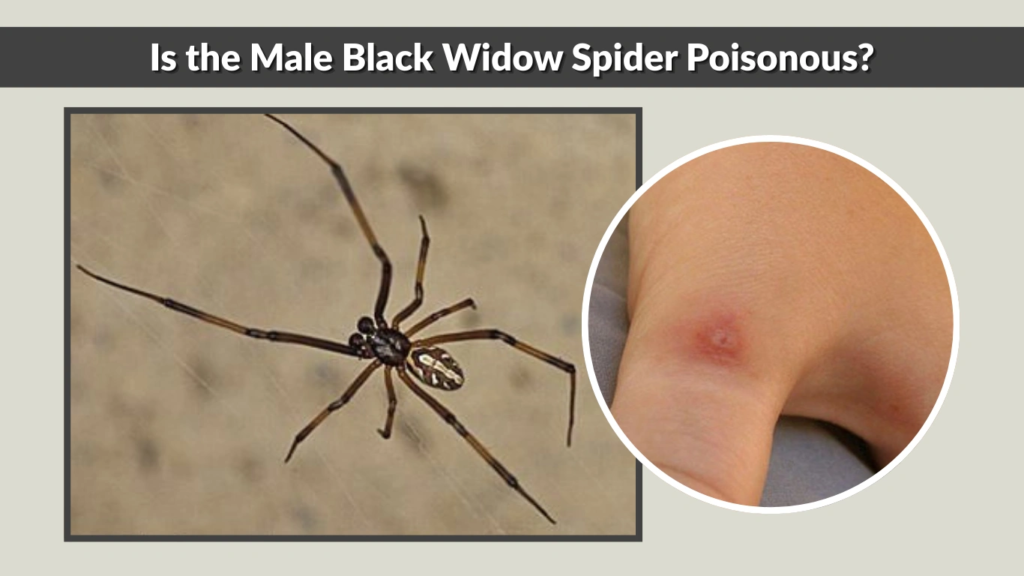
Male black widow spiders are technically venomous, but they are not dangerous to humans. Their venom is much weaker than that of females, and they lack the ability to inject significant amounts.
For this reason, male black widows pose little to no health risk and should not be considered a threat.
Male Black Widow Spider Behavior
Male black widow spiders behave very differently from females. Instead of staying in one place, males are active wanderers. Their primary goal is finding a female for mating rather than hunting or defending territory.
Male black widows avoid confrontation whenever possible. When threatened, they prefer to retreat rather than bite. This behavior, combined with their weak venom, makes them virtually harmless to humans.
Male Black Widow Spider Web
Male black widow spiders rarely build their own webs. Unlike females, which maintain strong, irregular webs, males rely on movement rather than web construction.
- Do not create permanent webs
- Often live near or inside female webs
- Use silk mainly for mobility and mating
- Occasionally steal prey from female webs
Because of this behavior, males are often found close to female black widows during mating season.
Black Widow Spider Mating Behavior
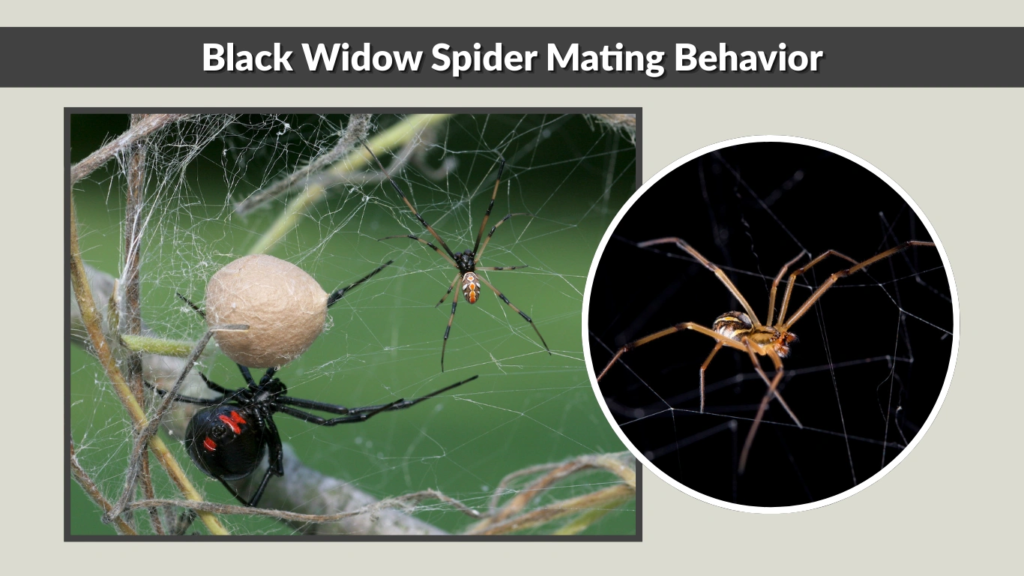
Mating is the most dangerous part of a male black widow spider’s life. After locating a female, the male carefully approaches her web using vibration signals to avoid being mistaken for prey.
If accepted, mating occurs quickly. Afterward, the male may attempt to escape, but survival is not guaranteed.
Does the Female Black Widow Eat the Male After Mating?
Sexual cannibalism is real but often misunderstood.
- Females sometimes eat the male after mating
- Cannibalism does not occur in every encounter
- Some males successfully escape
- Being eaten may increase egg production success
This behavior contributed to the spider’s reputation, but it is not universal.
Male Black Widow Spider Species Variations
There are several species of black widow spiders, and males vary slightly in appearance depending on location.
- Male Western Black Widow Spider – Found in western North America
- Male Southern Black Widow Spider – Common in the southeastern United States
- Male Northern Black Widow Spider – Found in northeastern regions
- Young Male Black Widow Spider – Displays brighter markings before maturity
Despite these variations, all male black widows share similar size, behavior, and low venom risk.
Male Black Widow Spider vs False Black Widow
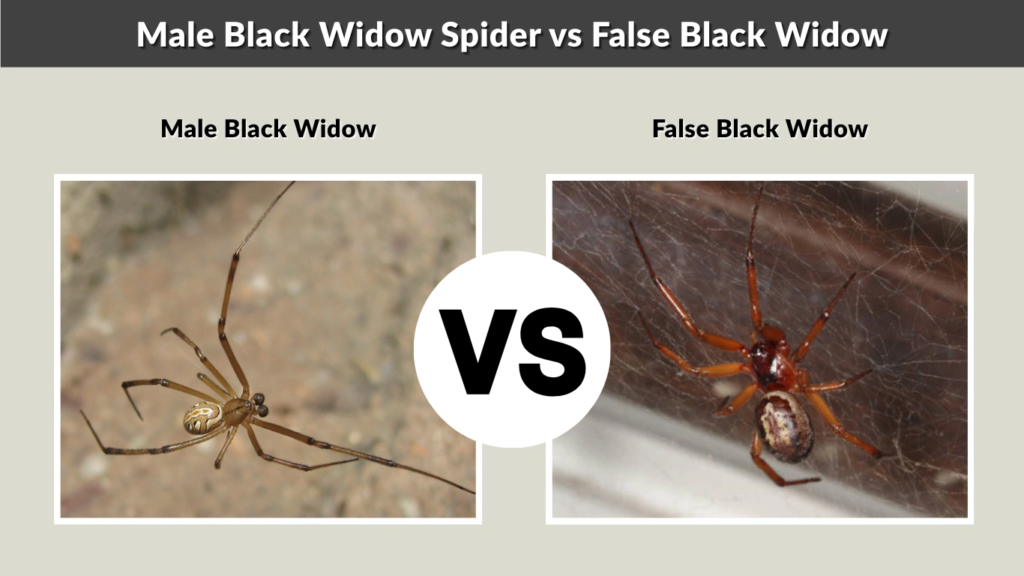
Male black widows are often confused with false black widow spiders, especially species from the Steatoda genus.
| Feature | Male Black Widow | False Black Widow |
| Genus | Latrodectus | Steatoda |
| Markings | Structured stripes or spots | Irregular patterns |
| Body color | Brown or gray | Dark brown or black |
| Venom risk | Very low | Very low |
| Common confusion | High | High |
Correct identification helps avoid unnecessary concern, as both spiders are generally harmless.
Common Misidentification Problems
Male black widow spiders are frequently misidentified due to their subtle appearance.
- Mistaken for juvenile female black widows
- Confused with brown widow spiders
- Misidentified as harmless house spiders
- Confused with false black widows
Lighting, age, and faded markings often contribute to these mistakes.
FAQs
What is a male black widow spider called?
A male black widow spider does not have a separate common name. It is still called a black widow spider and belongs to the Latrodectus genus.
How big is a male black widow spider?
Male black widow spiders typically measure between 3 and 6 millimeters in body length, making them much smaller than females.
Is a male black widow spider dangerous?
No. Male black widow spiders are not dangerous to humans. Their venom is weak, and bites are extremely rare and mild.
Can you easily tell male and female black widows apart?
Yes. Females are larger, shiny black, and have a bright red hourglass marking, while males are smaller, lighter in color, and patterned.
Do male black widow spiders always die after mating?
No. While sexual cannibalism can occur, many males survive mating and escape afterward.
Conclusion
Male black widow spiders are often misunderstood due to their association with the much more dangerous females. In reality, males are small, shy, weakly venomous, and pose almost no risk to humans. Proper identification helps reduce fear and prevents confusion with other similar-looking spiders.
