
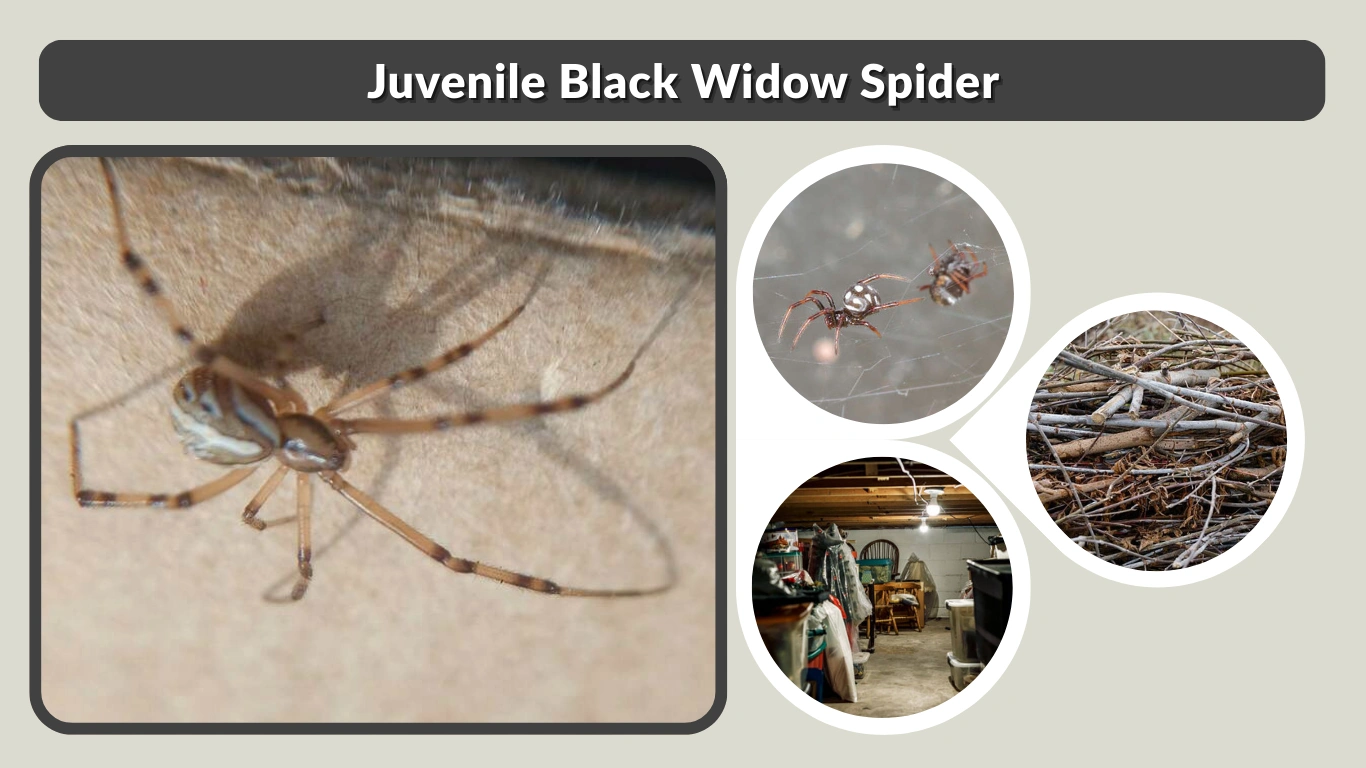
Juvenile black widow spiders look very different from the adult black widows most people recognize. Instead of a solid black body and red hourglass, juveniles have lighter colors and patterned markings that often cause confusion. Many people mistake them for brown widows, false widows, or harmless house spiders. This article explains what a juvenile black widow spider looks like, how to identify one, whether juveniles are venomous or dangerous, and how they differ from adult black widows.
What Is a Juvenile Black Widow Spider?
A juvenile black widow spider is the immature stage of a black widow belonging to the Latrodectus genus. Juveniles hatch from egg sacs and go through several molts before reaching adulthood. During this time, both male and female juveniles look similar and lack the classic appearance of adult black widows.
As they grow, their color, size, and markings gradually change. These changes are one of the main reasons juvenile black widows are frequently misidentified.
What Do Juvenile Black Widows Look Like?
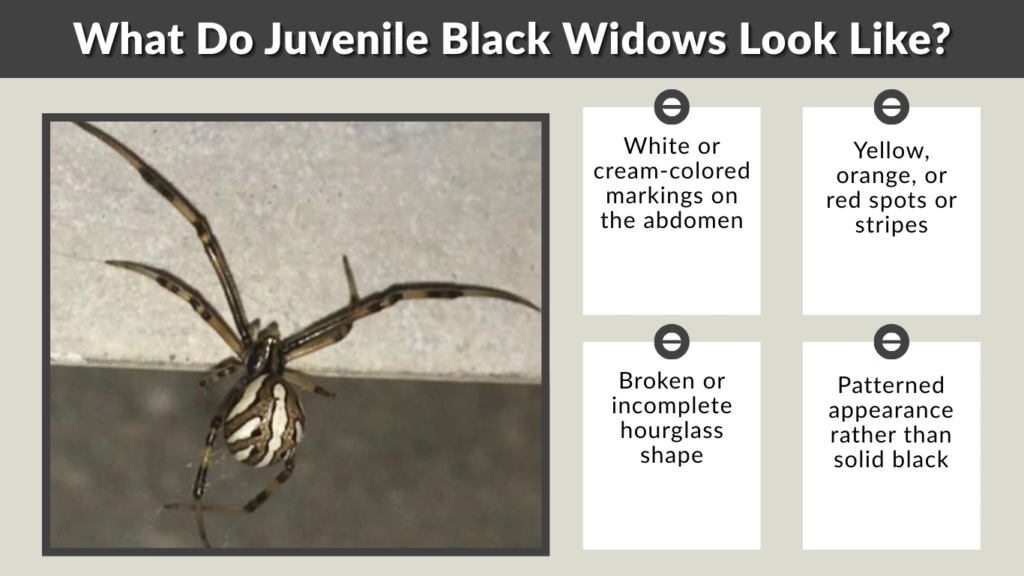
Juvenile black widows do not have the shiny black body seen in adult females. Instead, they are usually light brown, tan, or gray with visible patterns on the abdomen. Their bodies are smaller and slimmer, and their legs may appear longer in proportion to their size.
Many people search for “what does a juvenile black widow look like” because juveniles resemble other spider species more than they resemble adult black widows. Their appearance changes noticeably with each molt.
Juvenile Black Widow Markings
Juvenile black widow markings are one of the most important identification clues.
- White or cream-colored markings on the abdomen
- Yellow, orange, or red spots or stripes
- Broken or incomplete hourglass shape
- Patterned appearance rather than solid black
As the spider matures, these markings fade, especially in females.
Juvenile Black Widow Identification
Identifying a juvenile black widow spider requires careful observation, as they are often confused with other spiders.
- Smaller than adult black widows
- Light-colored body instead of jet black
- Patterned abdomen with visible markings
- Slender legs and narrow body
- Often mistaken for brown widows or false widows
Lighting conditions and age can greatly affect how visible the markings appear.
Juvenile Black Widow Size
Juvenile black widows are very small, especially in their early stages. Their size increases gradually with each molt.
| Stage | Approximate Size |
| Early juvenile | 2–3 mm |
| Late juvenile | 4–7 mm |
| Adult female | 8–13 mm |
Because of their small size, juveniles often go unnoticed or are mistaken for harmless spiders.
Juvenile Male vs Female Black Widow
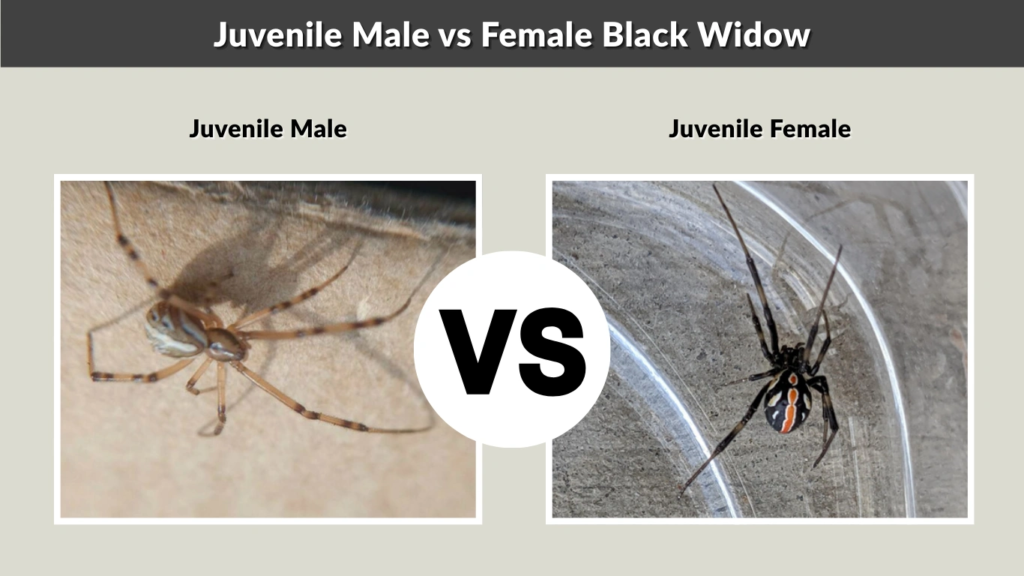
At the juvenile stage, male and female black widows look very similar. Clear differences usually appear only as they approach maturity.
| Feature | Juvenile Male | Juvenile Female |
| Size | Slightly smaller | Slightly larger |
| Markings | Often more visible | More structured |
| Adult appearance | Retains patterns | Turns solid black |
| Venom risk | Very low | Low–moderate |
In early juvenile stages, it is often impossible to determine sex by appearance alone.
Are Juvenile Black Widows Venomous?
Yes, juvenile black widow spiders are venomous. Like adults, they possess venom used to subdue prey. However, their venom is significantly weaker than that of adult female black widows.
Juveniles also have smaller fangs and inject much smaller amounts of venom. This greatly reduces any potential risk to humans.
Are Juvenile Black Widows Dangerous?
Juvenile black widows are not considered dangerous to humans. Bites are extremely rare and usually occur only if the spider is trapped or handled.
Because juveniles produce less venom and cannot deliver large doses, their bites are unlikely to cause serious symptoms.
Juvenile Black Widow Bite
When bites do occur, symptoms are usually mild.
- Slight pain or irritation
- Mild redness or swelling
- Symptoms often go unnoticed
- Rarely require medical treatment
Most people never realize they have encountered a juvenile black widow.
Juvenile Black Widow vs Adult Black Widow
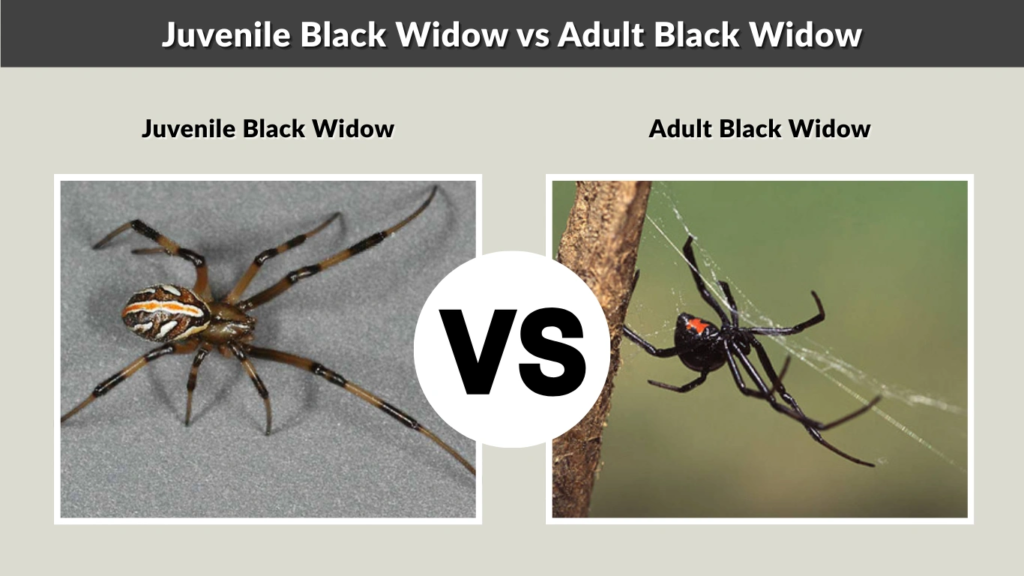
Juvenile and adult black widows differ greatly in appearance and risk.
| Feature | Juvenile | Adult |
| Color | Light, patterned | Solid black (female) |
| Size | Small | Larger |
| Hourglass | Incomplete or absent | Bright red |
| Venom strength | Low | High (female) |
These differences explain why juveniles are so often misidentified.
Juvenile Black Widow vs Brown Widow
Juvenile black widows are commonly mistaken for brown widow spiders because both have lighter colors and patterned markings. However, there are important differences that help with identification.
| Feature | Juvenile Black Widow | Brown Widow |
| Body color | Brown, tan, or gray | Light brown to dark brown |
| Markings | White, yellow, orange patterns | Orange and white patterns |
| Hourglass | Broken or faint | Bright orange |
| Egg sacs | Smooth | Spiky |
| Venom risk | Low | Low–moderate |
Brown widows tend to prefer outdoor environments, while juvenile black widows are often found near adult female webs.
Juvenile Black Widow vs False Black Widow
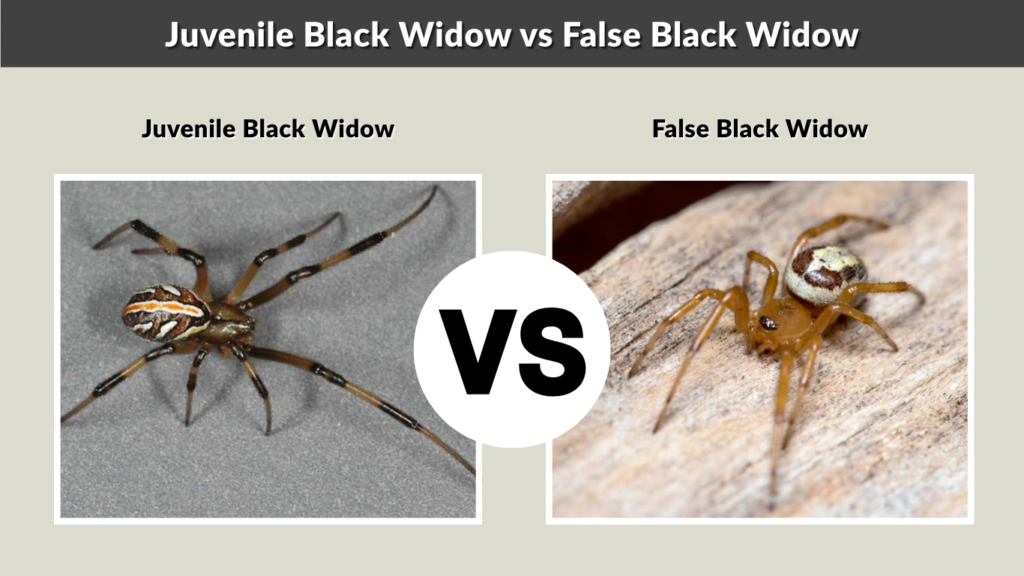
False black widows (Steatoda species) are another common source of confusion. Juvenile black widows may resemble false widows due to their size and coloration.
Key differences include:
- Juvenile black widows belong to the Latrodectus genus
- False widows have rounder bodies and thicker legs
- Juvenile black widows show changing markings with age
- False widows lack the widow-style hourglass pattern
Accurate identification usually requires observing markings and body shape over time.
Juvenile Black Widow Species Variations
Juvenile black widows vary slightly depending on species and location, although their overall appearance is similar.
- Juvenile Western Black Widow – Often shows more pronounced striping
- Juvenile Southern Black Widow – Displays warmer-toned markings
- Juvenile Northern Black Widow – Slightly darker with muted patterns
- Juvenile Female Western Black Widow – Markings fade rapidly as maturity approaches
These variations explain why juveniles can look different from region to region.
Juvenile Black Widow Habitat
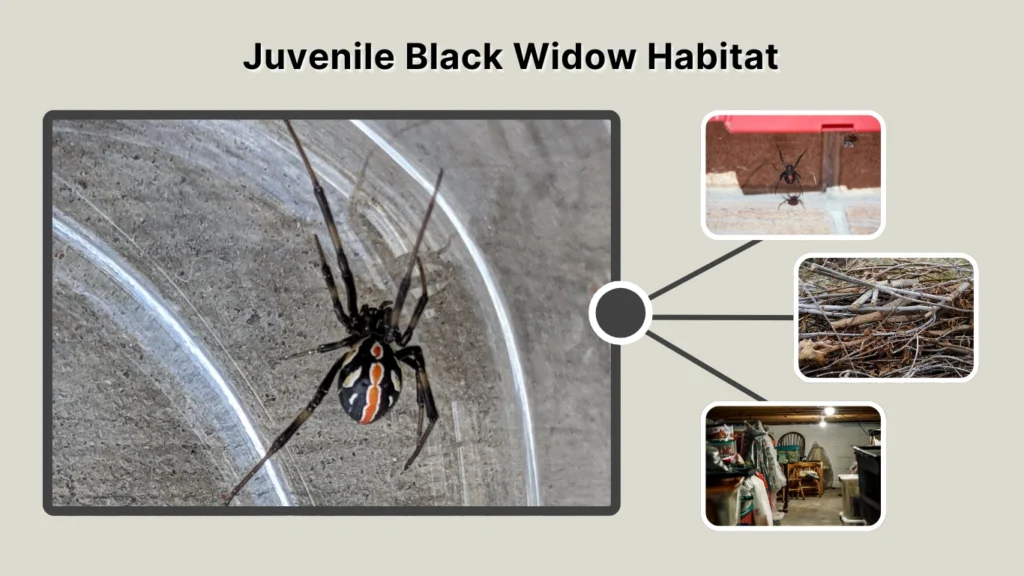
Juvenile black widow spiders usually remain close to where they hatch. They are commonly found near adult female webs and sheltered environments.
Typical juvenile habitats include:
- Garages and sheds
- Woodpiles and outdoor debris
- Crawl spaces and storage areas
- Corners of outdoor structures
As they mature, males may wander while females settle into permanent web locations.
How Juvenile Black Widow Markings Change Over Time
Juvenile black widows go through multiple molts before adulthood. With each molt, their appearance gradually changes.
- Early juveniles have bright, visible patterns
- Mid-stage juveniles show fading markings
- Female juveniles darken significantly before adulthood
- Male juveniles retain lighter patterns into adulthood
This gradual transformation is one of the biggest causes of misidentification.
Juvenile Black Widow Pictures and Misidentification
Photos of juvenile black widows often cause confusion because lighting, age, and camera quality can drastically change how markings appear. A juvenile may look harmless in one image and alarming in another.
Common misidentifications include:
- Brown widow spiders
- False black widows
- Harmless house spiders
- Juvenile wolf spiders
Relying on multiple traits rather than a single photo improves accuracy.
Common Myths About Juvenile Black Widows
Several myths persist about juvenile black widows.
- “Juveniles are more dangerous than adults” – False; adult females are more venomous
- “Juveniles inject more venom” – False; they deliver much less venom
- “Juveniles are harmless” – Also false; they are venomous but low-risk
Understanding these myths helps reduce unnecessary fear.
FAQs
What does a juvenile black widow look like?
Juvenile black widows are light-colored spiders with white, yellow, orange, or red markings on the abdomen rather than solid black.
Are juvenile black widows venomous?
Yes, juvenile black widows are venomous, but their venom is much weaker than that of adult female black widows.
Is a juvenile black widow dangerous?
No. Juvenile black widows are not considered dangerous to humans, and bites are very rare.
Can you tell male and female juvenile black widows apart?
Not easily. Sex differences usually become clear only as the spider approaches maturity.
Are juvenile black widows harmless?
They are generally harmless to humans and rarely bite unless trapped.
Conclusion
Juvenile black widow spiders are often misunderstood because they look very different from adult black widows. While they are venomous, they pose little risk to humans and gradually develop their adult appearance over time. Learning how to identify juveniles helps prevent confusion with similar spider species and reduces unnecessary fear.
