
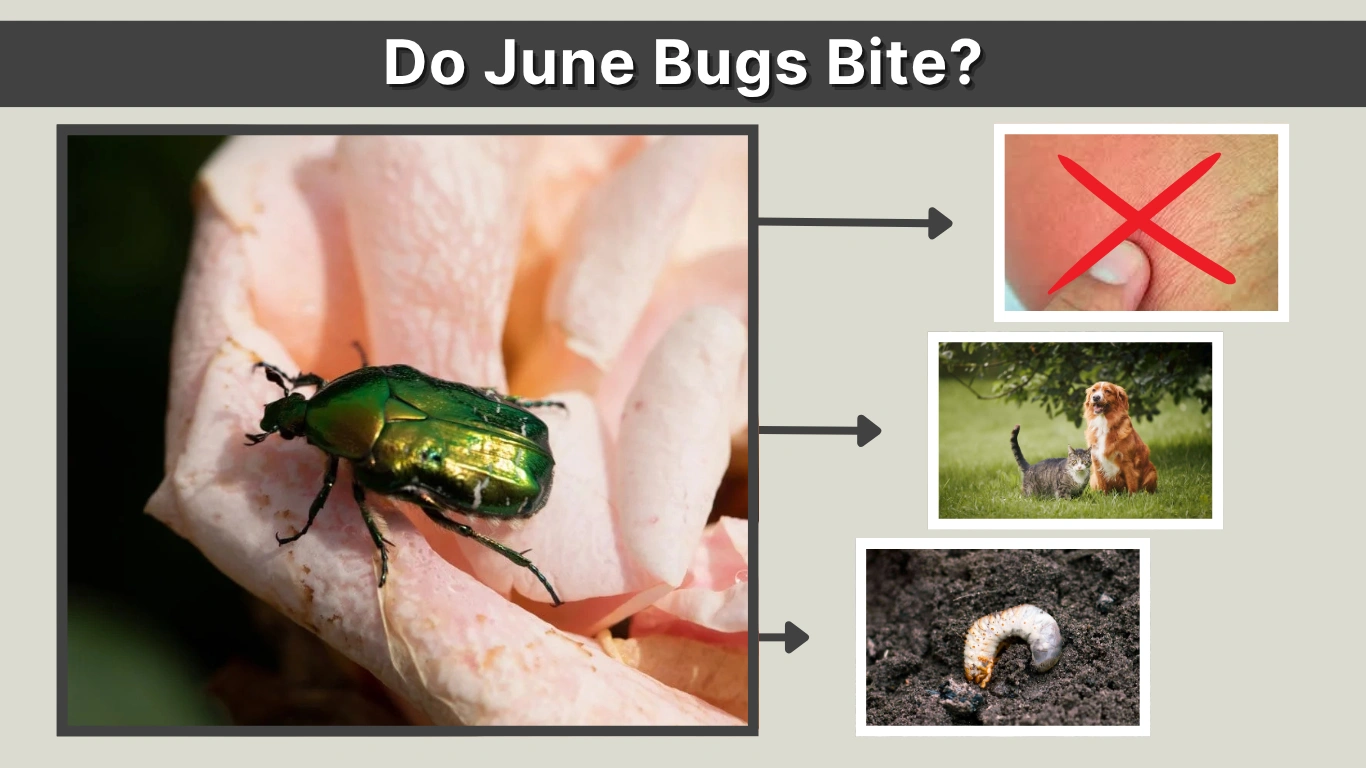
Summer evenings often bring the sound of heavy buzzing near porch lights and trees — large beetles flying awkwardly through the warm air. These are June bugs, also called June beetles, a familiar sight across North America. Their size and clumsy flight make many people wonder: Do June bugs bite? Can they sting or hurt humans?
The short answer is no. June bugs don’t bite, sting, or pose any danger to people or pets. They might look alarming, but they are gentle, harmless insects with a surprisingly important role in the environment. Let’s explore what they are, why they seem so bold, and what really happens when one lands on you.
Understanding June Bugs
June bugs belong to the scarab beetle family, a large group of insects known for their shiny shells and stout bodies. There are dozens of June bug species in the U.S., the most common being the green June beetle (Cotinis nitida) and the brown June beetle (Phyllophaga spp.).
They emerge in late spring and early summer after spending months underground as larvae, or “white grubs.” These adults are most active at dusk and nighttime, drawn strongly to bright lights and warm weather.
Their sudden flight toward porch lights often startles people — not because they’re attacking, but because they’re terrible flyers. Their heavy bodies make them noisy and clumsy, often bumping into walls, cars, and even people by accident.
Can June Bugs Bite or Sting?
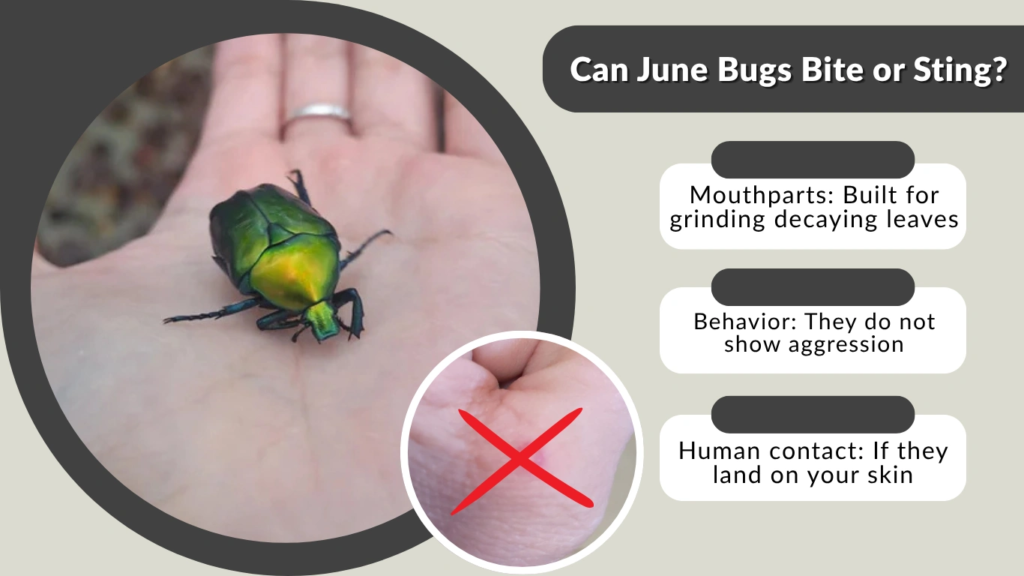
June bugs do not bite or sting, and their mouths aren’t designed for that purpose. Instead, their mandibles are weak and used for chewing soft, decomposing plant material. They simply can’t pierce human skin.
Here’s how their anatomy works:
- Mouthparts: Built for grinding decaying leaves and roots — not biting.
- Behavior: They do not show aggression or defensive biting.
- Human contact: If they land on your skin, their small claws may feel like a tiny tickle or pinch — but that’s only how they grip for balance.
There’s also no venom or saliva involved. They don’t sting, suck blood, or inject anything harmful.
Why People Think June Bugs Bite
Misunderstandings About Behavior
Many people assume a June bug can bite because of its loud buzzing, large size, and tendency to fly directly at humans. But in truth, they’re simply navigating toward light sources and often collide unintentionally.
A few key reasons for this misconception:
- They grip with their spiny legs when landing, which can feel prickly.
- Their erratic flight makes them appear aggressive.
- Other insects, such as Japanese beetles or kissing bugs, are often mistaken for June bugs and can bite.
So when someone says they’ve been “bitten by a June bug,” it’s more likely that another insect was responsible — or that the bug’s leg claws caused a mild skin sensation.
Types of June Bugs and Look-Alike Insects
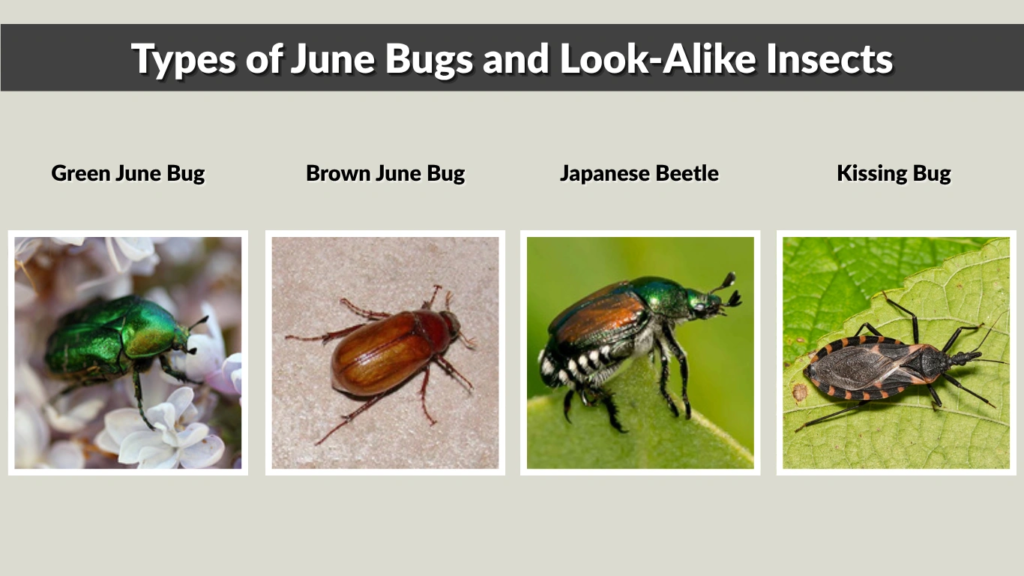
Because “June bug” is a broad nickname, several beetles are often confused for one another. Here’s a quick comparison showing which species can bite and which cannot:
| Type of Beetle | Color | Common Region | Can It Bite? | Notes |
| Green June Bug (Cotinis nitida) | Metallic green | Southeastern & Midwestern U.S. | No | Feeds on fruit, harmless to humans |
| Brown June Bug (Phyllophaga spp.) | Brown to reddish-brown | Widespread across U.S. | No | Common lawn grub adult, cannot bite |
| Japanese Beetle (Popillia japonica) | Copper-green | Eastern & Central U.S. | Yes (light leaf chewing) | Smaller, eats plants but rarely humans |
| Kissing Bug (Triatoma spp.) | Dark brown/black | Southern U.S. | Yes | Not a June bug — can bite and spread disease |
As the table shows, both green and brown June bugs are harmless — their cousins like the kissing bug, however, are true biters.
Do June Bugs Bite Humans?
No. June bugs don’t bite humans — their jaws simply aren’t strong enough. When one lands on your arm or shoulder, it might cling using the tiny hooks on its legs. That can feel like a pinch, but it’s not a bite or sting.
They have no interest in human skin, blood, or sweat. They’re attracted to light, not people. Their main food source is decaying organic matter, like fallen fruit or grass roots.
If one crawls on you, the best thing to do is remain calm. They can’t hurt you — gently brush them off or wait a second, and they’ll take flight again.
June Bugs and Pets
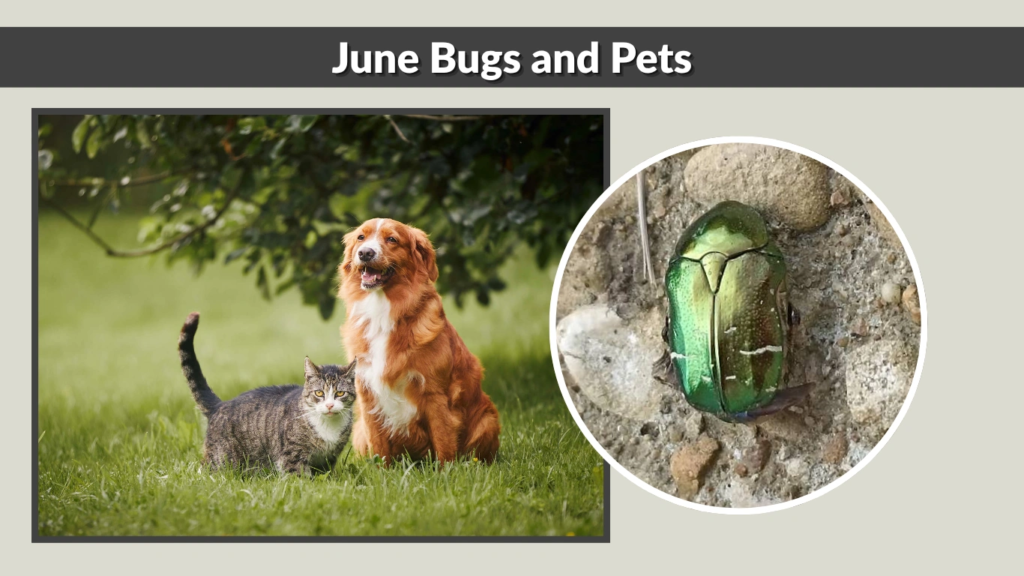
June bugs are harmless to dogs and cats as well. They won’t bite, sting, or poison pets. Some pets, especially dogs, may chase or even eat them — which isn’t usually dangerous but can cause minor stomach upset.
If your pet happens to munch on one or two, it’s typically fine. But consuming large numbers can lead to temporary vomiting or discomfort due to the beetles’ hard shells.
To keep pets safe:
- Limit their outdoor time during heavy June bug activity.
- Keep porch lights off to reduce attraction.
- Don’t allow pets to play near compost piles or rotting fruit, where these beetles gather.
June Bug “Bite” Symptoms
What You Might Feel (But Isn’t a Real Bite)
People often describe a “June bug bite” as a pinch or itch. In reality, that’s just mild skin contact or irritation caused by:
- Their tiny leg hooks, which help them cling to surfaces.
- Static or friction when they brush against skin or clothing.
Common sensations include:
- A slight tickling or prickly feeling where they landed.
- Very mild redness that fades quickly.
- No puncture marks or swelling.
If irritation persists, it’s best to wash the area with soap and water. Applying aloe or a soothing lotion will ease any lingering discomfort, though most people feel nothing after a minute or two.
June Bug Larvae and Biting
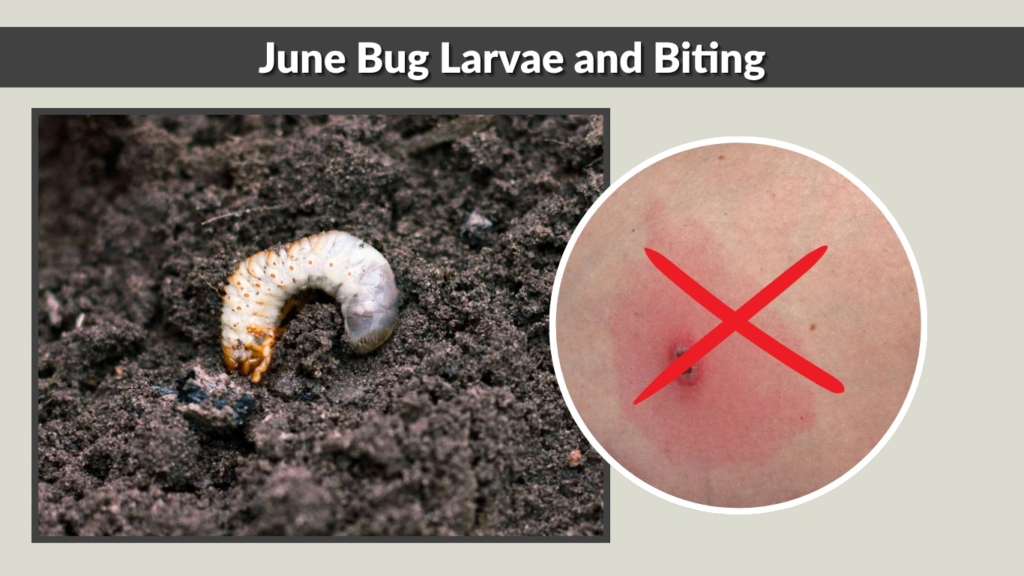
Under the soil, June bug larvae (commonly called white grubs) feed on grass roots and decaying organic material. They may damage lawns, but they never attack humans or animals.
These grubs are soft-bodied and lack biting ability. They pose no risk to people digging in the soil or gardening.
What Happens If a June Bug “Bites” You?
If you ever feel like a June bug has bitten you, it’s likely just their tiny leg claws gripping your skin. They use these claws to hold onto surfaces — or you — when they’re startled or trying to land.
There’s no pain, no venom, and absolutely no medical danger. The sensation can feel like a quick pinch or scratch but disappears within seconds.
To calm any skin irritation:
- Gently wash the area with mild soap and water.
- Apply aloe vera or a soft moisturizer if redness occurs.
- Avoid scratching, since the irritation comes from pressure, not a wound.
June bugs do not draw blood, inject toxins, or leave bite marks behind.
Are June Bugs Harmful or Poisonous?
June bugs are not harmful or poisonous to humans, pets, or livestock. They don’t spread disease, inject toxins, or carry pathogens.
In fact, they’re part of a healthy ecosystem — their larvae help break down organic waste, improving soil quality. The only minor issue they cause is lawn damage when grub populations become dense and start feeding on grass roots.
Otherwise, June bugs are completely safe and even beneficial in small numbers.
Green vs. Brown June Bugs
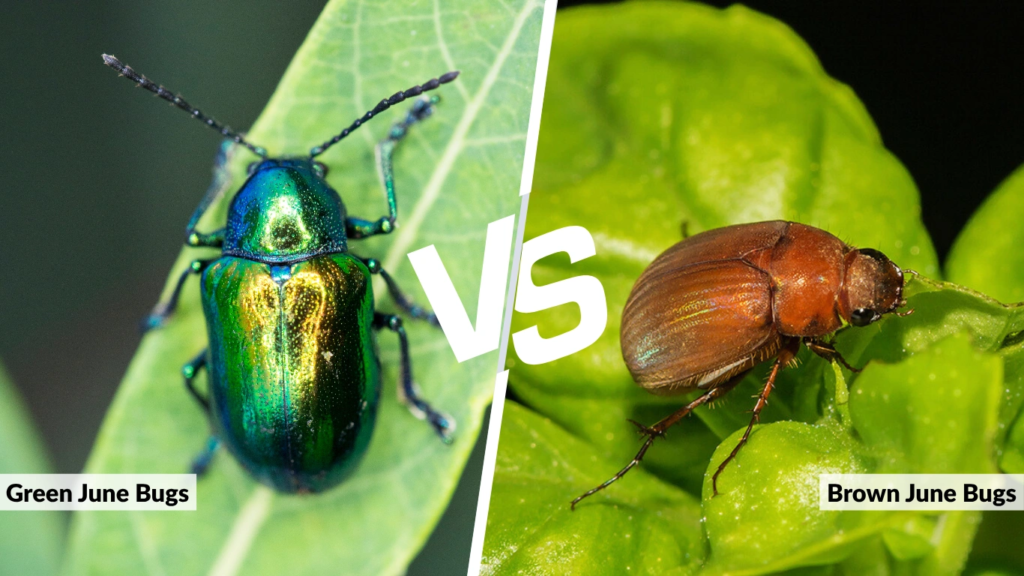
Many people notice both green and brown June bugs during summer and wonder which are which. Here’s a quick visual guide:
| Feature | Green June Bug (Cotinis nitida) | Brown June Bug (Phyllophaga spp.) |
| Color | Metallic green with golden tint | Dull brown or reddish-brown |
| Active Time | Daytime (mostly morning) | Nighttime |
| Diet | Feeds on fruit and organic waste | Chews roots and leaves |
| Flight | Loud and clumsy | Quieter and slower |
| Human Harm | Harmless | Harmless |
Neither species bites or stings — they simply differ in color, habits, and preferred feeding times.
June Bug Behavior Around People
June bugs often collide with people, windows, or outdoor lights. This isn’t aggression — it’s simply poor navigation. Their heavy bodies and slow reflexes make steering nearly impossible, especially in bright lighting.
They’re also drawn to heat, which is why they sometimes land on warm skin or clothing. Once they realize it’s not food or shelter, they fly away.
So if you ever see one buzzing toward you, don’t swat or panic — it’s just trying to find light or stability, not to bite or attack.
June Bugs and the Ecosystem (H3)
While they may seem annoying, June bugs actually serve several ecological purposes:
- Recycling: Adults feed on decomposing fruit, reducing waste naturally.
- Soil Aeration: Their larvae dig tunnels that help air and nutrients reach plant roots.
- Wildlife Food Source: Birds, frogs, and small mammals rely on grubs as protein-rich meals.
By existing in balance, June bugs contribute to a healthier environment and nutrient-rich soil cycles.
FAQs
Do June Bugs Bite or Sting Humans?
No, June bugs cannot bite or sting. Their mouthparts are too weak to pierce skin, and they don’t have venom or stingers. They may buzz near lights or land on you by mistake, but they’re harmless.
Can a June Bug Bite a Dog or Cat?
They can’t bite pets either. Dogs or cats might chase or eat them, which is generally safe in small amounts. Too many, though, can cause mild stomach upset due to their hard shells.
What Does a June Bug Bite Look Like?
There is no such thing as a true June bug bite. If you notice redness or itching, it’s from friction or another insect. Symptoms disappear within a few minutes without treatment.
Why Do People Think June Bugs Bite?
Their loud buzzing and clumsy flying can seem aggressive, and their leg claws feel like tiny pinches when they land. This leads people to mistake harmless contact for a bite.
How Can I Keep June Bugs Away?
Turn off outdoor lights at night, clean up fallen fruit, and aerate your lawn in spring. These steps reduce their breeding and feeding spots, keeping your yard naturally bug-free.
