

Bald-faced hornets are aggressive, highly territorial insects known for their large paper nests and painful stings. While they play a valuable role in ecosystems by controlling pests, a nest near your home, patio, or garage can pose a real danger. If you’re dealing with one of these nests, it’s important to understand the risks—and the safest way to remove it. In this complete guide, we’ll walk you through everything from timing and tools to step-by-step nest removal and post-cleanup safety.
Risks of Removing a Hornet Nest
Bald-faced hornets (Dolichovespula maculata) are not true hornets but a species of yellowjacket wasp. Unlike honeybees, they can sting multiple times and do so with little warning when their nest is disturbed. They also release alarm pheromones to rally other wasps in defense, which can result in swarms of stinging hornets.
Stings can cause:
- Intense pain and burning
- Swelling and redness
- Allergic reactions (in severe cases, anaphylaxis)
Never approach a hornet nest casually or without preparation. If you have known allergies to stings or the nest is in a high-risk area (like near children or entryways), consider hiring a professional exterminator.
When Is the Best Time to Remove a Nest?

Timing is critical. The best period for removal is in early spring, when the colony is small and only the queen or a few workers are present. However, most people discover nests during mid-to-late summer, when colonies are largest and most aggressive.
Best time of day:
Always attempt removal during the night or very early morning when hornets are dormant. At this time, all wasps are inside the nest and less likely to attack. Use red-tinted light to avoid disturbing them—hornets don’t detect red light well.
Avoid removal:
- During rain or strong winds (spray won’t work)
- On hot, sunny afternoons (most active time)
- If you’re unsure about your safety
Identify the Nest Location and Size
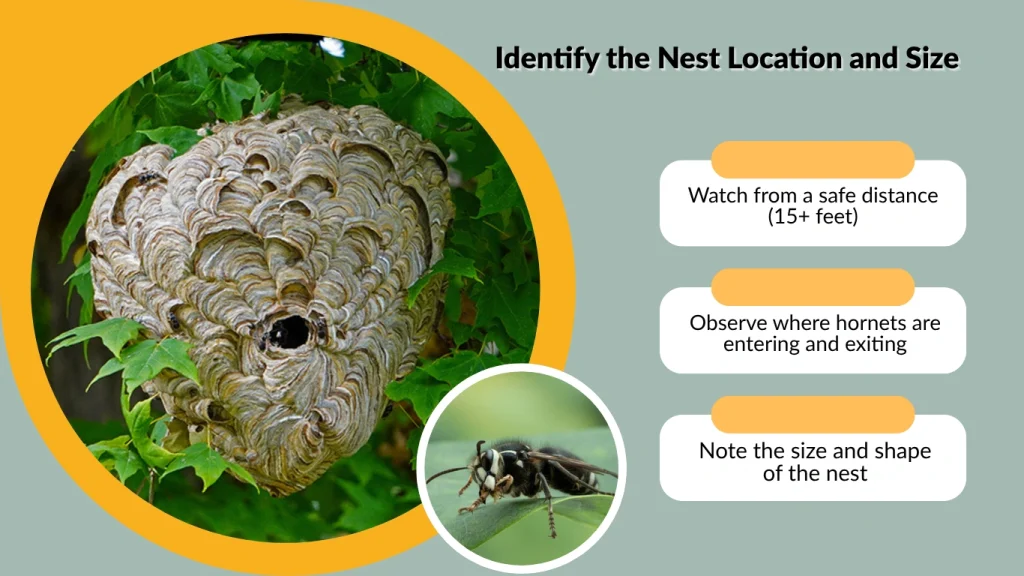
Before doing anything, you need to assess the situation.
Look for signs of activity:
- Watch from a safe distance (15+ feet)
- Observe where hornets are entering and exiting
- Note the size and shape of the nest
Bald-faced hornet nests are typically:
- Round or football-shaped
- Gray and papery in texture
- Hanging from trees, roof edges, sheds, or bushes
- Around the size of a softball to a basketball by mid-late summer
If you see hornets flying in and out frequently, the nest is active and dangerous.
Decide: DIY or Call a Professional?
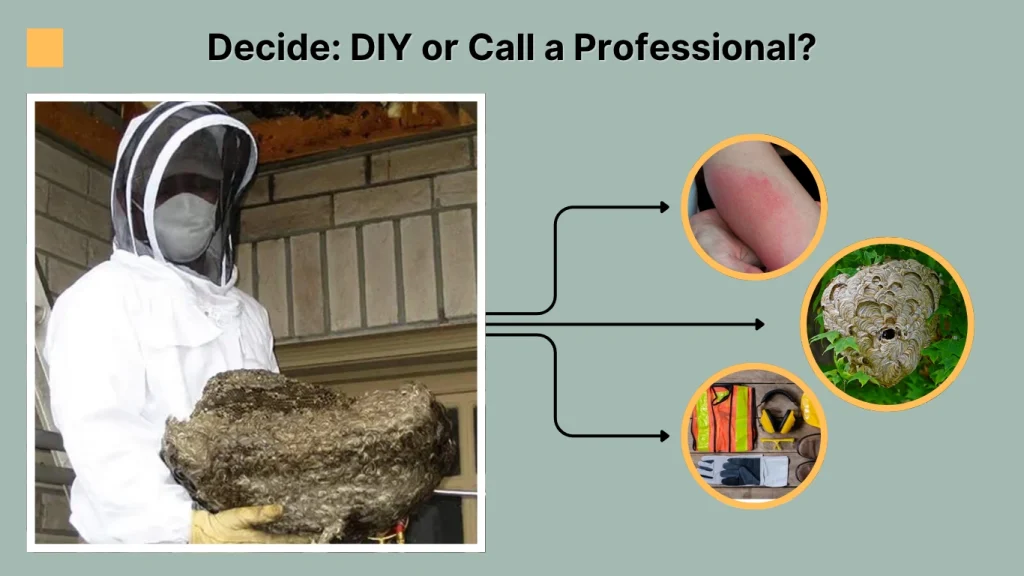
If the nest is large, high up, or located inside a wall, do not attempt removal on your own. Call a licensed pest control company with experience handling hornet nests.
Call a pro if:
- You are allergic to wasp stings
- The nest is in a difficult or enclosed space
- You don’t have proper safety gear
- The colony is large and active
Professionals have the equipment and protective suits needed for safe, complete removal. For smaller, reachable nests, a cautious and well-prepared DIY approach may be possible.
Supplies You’ll Need for DIY Nest Removal
If you’re moving forward with do-it-yourself removal, gather the following:
- Full-body protective clothing (coveralls or thick clothing)
- Leather gloves and sealed boots
- Bee veil or full-face protective hood
- Duct tape (to seal gaps at cuffs and pant legs)
- Commercial aerosol wasp spray (with a 15–20 foot spray range)
- Red flashlight or filtered headlamp
- Long stick or pole (to detach the nest)
- Heavy-duty trash bag
- Ladder (if nest is above reach)
- Sealing foam (for wall voids, if applicable)
Make sure your escape route is clear before starting.
Step-by-Step Guide to Safely Remove a Bald-Faced Hornet Nest

Step 1: Dress for Maximum Protection
Put on your full-body outfit and tightly seal all openings. Duct tape the wrists, ankles, and neck area to ensure no hornets can sneak inside. Protective goggles or a mesh face cover is also essential.
Step 2: Approach Quietly at Night
Go to the nest after dark using a red light—hornets can’t see it, so it won’t trigger alarm behavior. Do not speak, shake the nest, or use white/bright light.
Step 3: Spray the Insecticide
Stand as far back as your spray allows (usually 15–20 feet). Aim directly at the nest’s entrance hole, typically located near the bottom. Spray continuously for 10–15 seconds, soaking the nest.
Step 4: Retreat and Wait
Back away immediately after spraying and stay indoors. Wait at least 24 hours to allow the insecticide to kill the colony inside. Don’t disturb the nest during this time.
Step 5: Recheck Activity the Next Day
From a safe distance, observe whether any hornets are flying in or out. If movement continues, repeat the spray treatment at night.
Step 6: Remove the Nest
Once there’s no activity:
- Gently dislodge the nest using a long pole
- Drop it directly into a heavy-duty trash bag
- Seal the bag completely
- Place it in an outdoor trash bin away from the house
Safety Tips and Mistakes to Avoid
Even with planning, mistakes can make the situation dangerous. Here’s what to avoid:
Do not:
- Remove a nest during daylight
- Attempt removal without full protective gear
- Use fire, water, or explosives
- Hit or poke the nest before spraying
- Stand directly under or too close to the nest
Do:
- Always approach with caution
- Keep children and pets inside
- Use sprays approved specifically for hornets or yellowjackets
- Have a clear escape path planned
If anything goes wrong, do not panic. Run in a straight line to shelter without swatting at the hornets.
How to Prevent Bald-Faced Hornets from Returning
Once the nest is gone, prevention is key to avoid future problems.
Preventive Tips:
- Seal wall voids and roof gaps where nests might form
- Keep trash bins tightly closed and away from doors
- Remove food attractants like sugary drinks and fallen fruit
- Install decoy wasp nests (hornets avoid nesting near others)
- Trim shrubs and tree branches near your home’s exterior
- Inspect in early spring for queen activity or small paper nests
Being proactive in March–May can stop a full nest from developing later.
Final Thoughts
Bald-faced hornets are formidable insects that should never be underestimated. While they are valuable predators in nature, their painful stings and aggressive nest defense make them a serious concern when nesting near humans.
Removing a bald-faced hornet nest requires careful planning, the right equipment, and ideally, professional assistance when needed. If you do choose a DIY method, always prioritize safety, act at night, and never take shortcuts. Once the nest is gone, stay vigilant to prevent future infestations—and enjoy a safer, sting-free environment around your home.
