

If you’ve spotted small, tube-like mud structures stuck to your garage wall, porch ceiling, or shed, chances are you’re dealing with dirt daubers. These solitary wasps build distinctive nests out of mud and can often be seen flying quietly around homes during warmer months. While dirt daubers are not aggressive and rarely sting, their nests can become an unsightly nuisance—especially when they appear in high-traffic or indoor areas.
The good news is that getting rid of dirt dauber nests is relatively easy and doesn’t usually require professional pest control. In this guide, you’ll learn how to safely remove their nests, what tools you’ll need, and how to keep them from coming back without using harsh chemicals.
What Are Dirt Daubers?
Dirt daubers, also known as mud daubers, are solitary wasps that are best known for building their nests out of mud. Unlike more aggressive wasp species that form large colonies, dirt daubers work alone and are generally non-threatening to humans. They are often spotted hovering quietly near buildings, particularly around shaded or sheltered areas like attics, sheds, and under eaves.
Basic Identification
Dirt daubers have slender, elongated bodies with a narrow “thread-like” waist connecting the thorax and abdomen. Depending on the species, they may appear shiny black, metallic blue, or have yellow markings. Their wings are often dark or clear and fold neatly over their back when at rest. These wasps are around ½ to 1 inch in length and are frequently mistaken for other more aggressive wasps due to their similar appearance.
Nest Description
Their nests are made from tiny mud balls and usually take the form of short tubes or pipe-like rows. These nests are often found stuck to walls, ceilings, beams, or corners of garages and porches. Inside each tube, the female wasp places paralyzed spiders and lays an egg—providing food for the larva once it hatches. Over time, these nests can dry and harden, leaving behind unattractive residue if not removed.
Are Dirt Daubers Harmful?
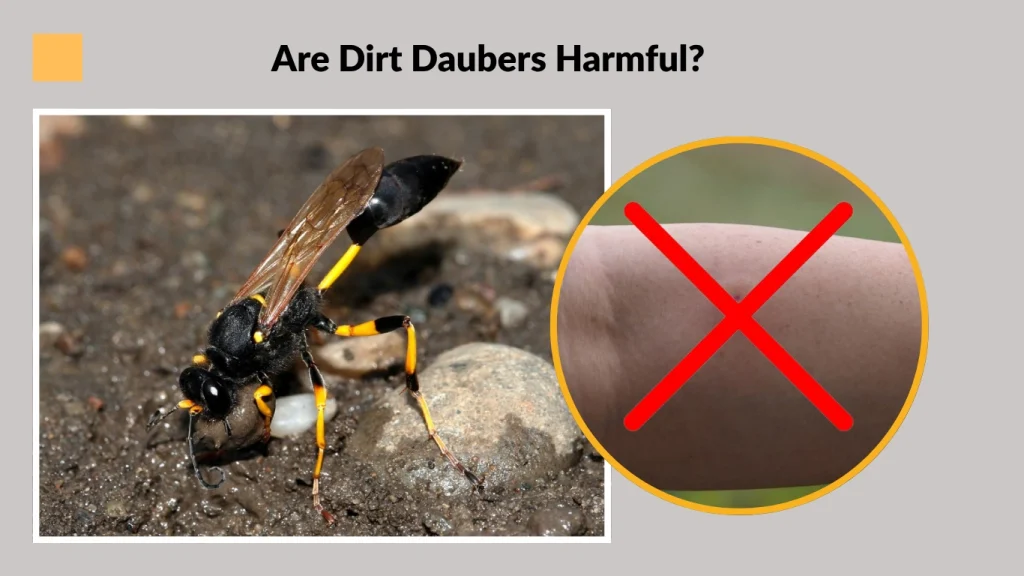
While the presence of any wasp may cause concern, dirt daubers are among the least threatening species. Understanding their behavior can help homeowners decide whether removal is necessary or if the insect can be left alone.
Do Dirt Daubers Sting?
Dirt daubers are known for their calm and solitary nature. Unlike yellowjackets or hornets, they do not aggressively defend their nests and are highly unlikely to sting unless physically provoked or trapped. For most people, the risk of a sting is minimal—even when working near an active nest.
Should You Remove the Nest?
While dirt daubers pose little danger, there are situations where removal is appropriate. If the nest is located near a frequently used door, window, or walkway, or if someone in the home is allergic to wasp stings, it’s safer to remove it. Additionally, over time, multiple nests can accumulate and create an unsightly appearance on exterior walls or ceilings.
Signs of Dirt Dauber Infestation

Dirt daubers are not stealthy insects when it comes to nesting. Their nests are easily visible and often appear in plain sight. However, spotting early signs can help prevent a buildup of nests around your property.
Common signs include:
- Visible Mud Tubes: The most obvious sign is the appearance of dry, tube-shaped mud structures on flat surfaces like walls, ceilings, beams, or under decks. These tubes are often clustered together in rows or groups.
- Increased Wasp Activity: Seeing a slim, black or blue wasp flying near the same area repeatedly usually indicates a nesting site is nearby.
- Spider Carcasses: Mud daubers hunt spiders and sometimes drop them near their nests. You may find a few paralyzed or dead spiders close to the mud structures.
- Buzzing or Flapping Sounds: In enclosed areas like sheds or attics, soft buzzing may be heard, especially near windows or vents.
Recognizing these signs early can help you take action before dirt daubers build multiple nests in one spot.
Tools Needed for Removal

Before you begin removing a dirt dauber nest, it’s important to gather the proper tools. This ensures your safety and allows for effective, clean removal.
Here’s what you’ll need:
- Protective Gloves: To keep your hands safe from potential stings and debris
- Long-Sleeved Shirt and Safety Goggles: Protection against accidental contact and falling mud particles
- Scraper or Putty Knife: For prying the mud nest off the wall or ceiling
- Trash Bag or Small Container: To dispose of the removed nest safely
- Ladder: If the nest is positioned high up or in hard-to-reach areas
- Mild Soap or Diluted Bleach Solution: To clean off mud residue and scent trails
- Dust Mask (optional): Useful if working in enclosed or dusty areas
- Wasp Spray (optional): Only if the nest is active and you’re concerned about potential stings
Having these tools ready makes the removal process safer and more efficient.
How to Get Rid of Dirt Dauber Nests (Step-by-Step)

Removing a dirt dauber nest isn’t complicated, but timing and technique are important to ensure safety—especially if there’s still insect activity around the nest.
Step 1 – Check for Activity
Before attempting removal, observe the nest for 10–15 minutes. If you see wasps flying in or out, it may be active. Choose early morning or late evening when dirt daubers are less active and likely resting inside the nest or nearby. If you’re not confident, consider using wasp spray or waiting until the nest appears abandoned.
Step 2 – Spray the Nest (if Active)
If the nest is clearly active and you’re concerned about being stung, apply a long-range wasp spray directly onto the nest from a safe distance. Allow it to sit for at least 24 hours. This step is optional but provides peace of mind during removal.
Step 3 – Scrape and Remove the Nest
Wearing your protective gear, use a scraper or putty knife to gently detach the mud nest from the surface. Try to keep the surrounding wall or ceiling intact. Immediately place the nest in a trash bag or container to avoid scattering debris or insects.
Step 4 – Clean the Area
Once the nest is removed, wash the surface using warm water with mild soap or a diluted bleach solution. This removes leftover mud and helps eliminate scent trails that may attract other dirt daubers to the same spot in the future.
How to Prevent Dirt Daubers from Returning
Getting rid of an existing nest is only part of the solution—preventing future nests is key. Dirt daubers are creatures of habit and may return to the same areas year after year unless changes are made.
Seal Cracks and Gaps
Start by inspecting your home’s exterior for small openings. Dirt daubers love quiet, sheltered spots, so sealing off access to:
- Attic vents
- Wall cracks
- Window gaps
- Gaps in soffits or siding
can go a long way in keeping them out. Use silicone caulk, expanding foam, or fine mesh screens to block entry points.
Use Natural Repellents
Several natural substances can help discourage dirt daubers from nesting:
- Peppermint oil spray: Mix a few drops with water and dish soap, then spray around eaves, beams, and corners.
- Citrus-based sprays: Many wasps dislike citrus scents.
- Fake wasp nests: Dirt daubers are territorial. Hanging a decoy wasp nest may make them think the area is already occupied.
Apply repellents weekly during peak seasons (spring through late summer) for best results.
Reduce Spider Populations
Dirt daubers rely heavily on spiders for food. By eliminating spider webs and reducing the spider population around your home, you make your property less appealing. Regularly sweep outdoor areas, keep porch lights off at night to avoid attracting flying insects, and consider using natural spider repellents.
Natural and Chemical Repellent Options

When it comes to keeping dirt daubers away, you can choose between natural repellents and stronger chemical options. Both can be effective if used correctly.
Natural Repellents
These are ideal for households with children, pets, or gardens:
- Essential Oils: Peppermint, clove, tea tree, and citrus oils
- Vinegar Spray: A 50/50 vinegar and water mix sprayed on walls, under decks, and around windows
- Diatomaceous Earth: Sprinkle near nest-prone areas to discourage crawling insects, which also reduces food sources
Chemical Solutions
For persistent infestations, chemical sprays offer stronger and longer-lasting protection:
- Wasp and hornet sprays: Use to treat active nests or prevent return
- Residual insecticide sprays: Apply to high-risk areas where nests were previously found
- Outdoor perimeter treatments: Spraying around the base of the house can help deter all types of insects, including spiders
Always follow product instructions and avoid overuse, especially around edible plants or pet areas.
When to Call a Pest Control Professional
Most dirt dauber issues can be handled on your own, but there are times when it’s best to call in a professional:
- Multiple or recurring nests: If you keep removing nests but they keep coming back, professionals can help identify root causes
- Hard-to-reach areas: Nests in roof eaves, chimneys, or behind siding can be difficult and dangerous to reach without proper equipment
- Insect allergies: If anyone in your household has a known allergy to stings, it’s safer not to take the risk
- Presence of other aggressive wasps: Sometimes what appears to be a dirt dauber nest is actually an active colony of paper wasps or hornets
Pest control companies can provide targeted treatments, seal off entry points, and apply residual repellents to protect your home long-term.
FAQs
Can I leave a dirt dauber nest alone?
Yes, you can—especially if it’s inactive and located in a low-traffic area. Dirt daubers are solitary and non-aggressive, and their nests don’t pose any structural threat. However, many homeowners choose to remove them for aesthetic reasons or to prevent future build-up.
How long do dirt daubers stay in one place?
A dirt dauber typically builds a nest, lays eggs, and moves on. The full nesting process may take a few days to a week. After the larvae mature and leave, the adult doesn’t reuse the same nest.
Do dirt daubers reuse old nests?
Usually not. However, other insects—including newer generations of dirt daubers or spiders—might occupy abandoned nests. That’s why it’s a good idea to remove them even after they appear inactive.
Are dirt daubers beneficial insects?
Yes. Dirt daubers feed almost exclusively on spiders and help control the spider population around your home. If their nests aren’t causing a problem, leaving them alone can actually be beneficial for pest control.
Is it safe to remove the nest myself?
In most cases, yes. As long as you’re cautious and the nest is inactive or the dauber is calm, you can remove it safely with basic tools and protective clothing. For high or risky spots, consider calling a professional.
