
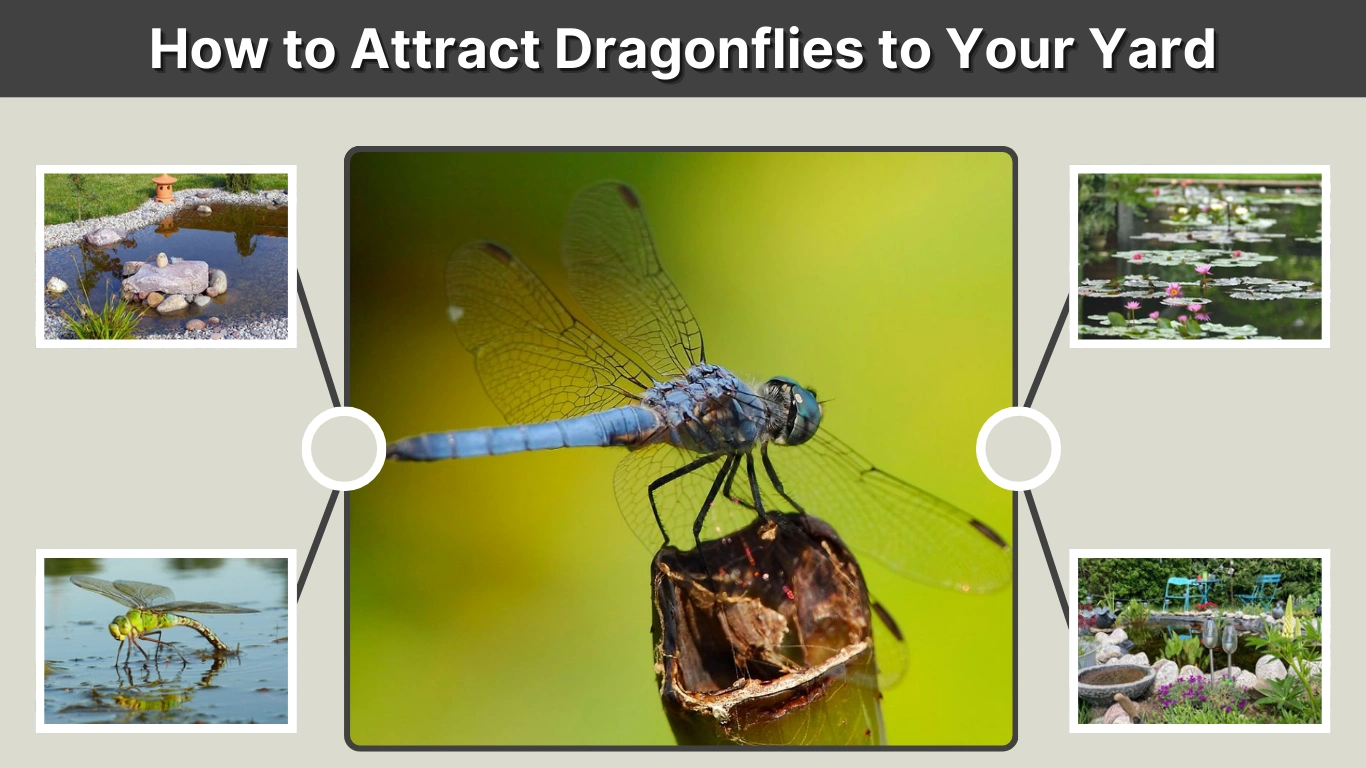
Dragonflies are not only beautiful to watch, but they are also powerful natural pest controllers. A single dragonfly can eat dozens of mosquitoes and other flying insects each day. Because of this, many homeowners and gardeners want to know how to attract dragonflies naturally. The good news is that you don’t need a large pond or special equipment. By creating the right habitat with water, plants, and shelter, you can turn your yard or garden into a welcoming space for dragonflies.
Why Attracting Dragonflies Is Beneficial
Attracting dragonflies to your yard offers important ecological benefits. Dragonflies are top insect predators that help control mosquito populations and reduce numbers of flies, gnats, and other pests. Encouraging them naturally lowers the need for chemical insect sprays, making your outdoor space safer for people, pets, and pollinators.
Dragonflies also support overall biodiversity. Their presence indicates a healthy environment with clean water and abundant insect life. When dragonflies move into an area, it often means that frogs, birds, and beneficial insects are also supported, creating a balanced ecosystem.
Beyond pest control, dragonflies add beauty and interest to gardens and backyards. Their metallic colors, fast flight, and hovering behavior make them popular among nature lovers and photographers. A dragonfly-friendly yard becomes a living classroom where you can observe life cycles, hunting behavior, and seasonal changes.
What Dragonflies Need to Live and Stay
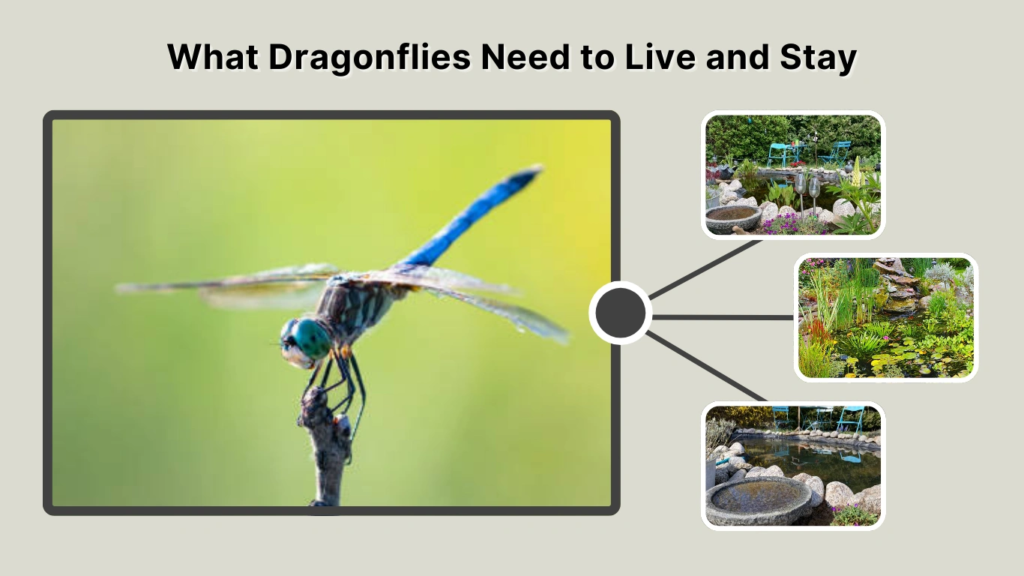
To attract dragonflies, it helps to understand what they look for in a habitat. Dragonflies require water for breeding, vegetation for shelter, and open sunny areas for hunting. Providing all three makes your property much more appealing.
Water Sources Dragonflies Look For
Dragonflies depend on water, especially because their young develop underwater. Even small water features can make a big difference.
- Backyard ponds
- Water gardens
- Birdbaths with shallow stones
- Slow-moving water features
- Container mini-ponds
Shallow edges are especially important because dragonflies lay eggs in or near water plants. Still, deeper zones help support dragonfly larvae and prevent water from overheating.
Shelter and Perching Areas
Dragonflies spend much of their time resting between flights. They prefer areas where they can perch, warm themselves, and watch for prey.
Tall grasses, reeds, and flowering plants provide hiding spots and wind protection. Shrubs and small trees give dragonflies vertical space for resting and hunting. Simple features like garden stakes, thin branches, or decorative rocks also serve as excellent perches where dragonflies can land and scan for insects.
How to Attract Dragonflies to Your Yard
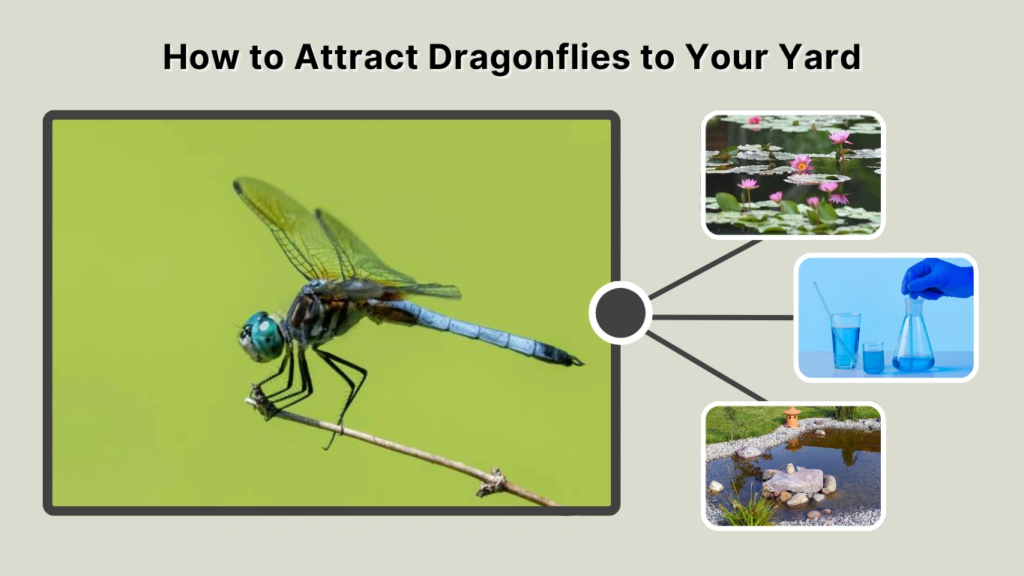
Turning your yard into a dragonfly-friendly habitat doesn’t require a complete landscape redesign. A few thoughtful changes can significantly increase dragonfly visits.
Create a Dragonfly-Friendly Water Feature
If possible, add a pond or water feature. This is the most effective way to attract and keep dragonflies.
- Include shallow and deep areas
- Add aquatic plants such as water lilies or rushes
- Keep water chemical-free
- Place the pond in a sunny location
- Create gentle slopes or plant-filled edges
Avoid adding chlorine or strong algaecides. Dragonflies and their larvae are sensitive to chemicals. Clean, naturally balanced water supports insects, which in turn attract dragonflies.
Plant for Dragonflies and Their Prey
Dragonflies are attracted to places where insects gather. Planting a variety of flowering and native plants increases the number of flies, bees, and mosquitoes that dragonflies feed on.
Native plants are especially valuable because they support local insect species. Flowering plants such as coneflowers, black-eyed Susan, and milkweed draw small flying insects. Taller plants like grasses and reeds provide cover and resting spots. The goal is to create layers of vegetation rather than a single flat lawn.
How to Attract Dragonflies Without a Pond
Even if you don’t have space for a pond, you can still encourage dragonflies. Shallow containers filled with water and aquatic plants can act as mini habitats. Refresh the water regularly to prevent stagnation and place small stones so insects and dragonflies can land safely.
Creating moist garden zones also helps. Areas that are regularly watered or shaded by dense plants attract insects, which in turn attract dragonflies. Birdbaths, drip irrigation, and rain gardens all increase local humidity and insect activity.
Finally, focus on building an insect-friendly yard. The more flying insects present, the more likely dragonflies are to visit. This means avoiding pesticides and allowing some natural growth rather than overly manicured spaces.
How to Attract Dragonflies but Not Mosquitoes
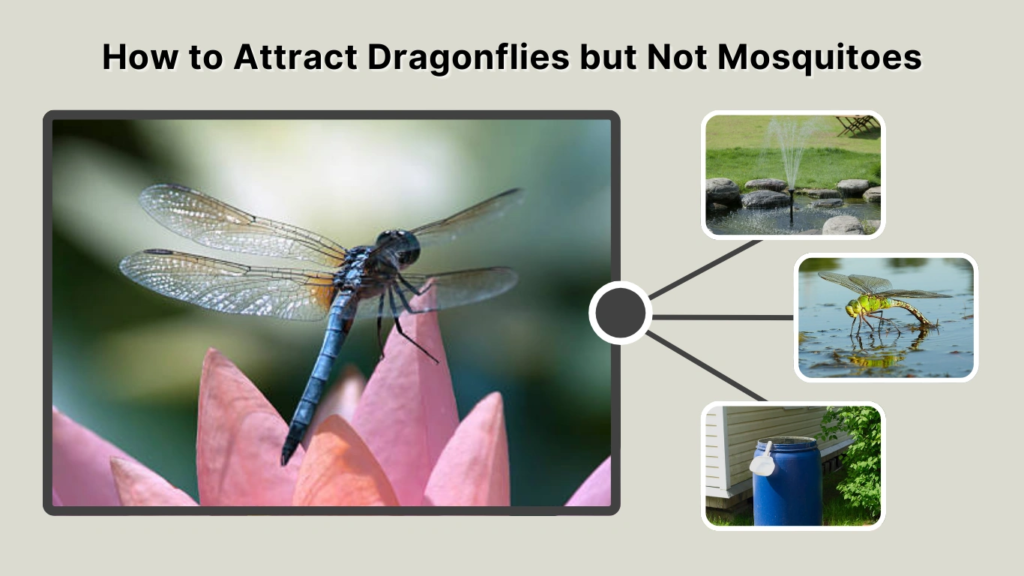
One of the biggest concerns people have is attracting mosquitoes along with dragonflies. While dragonflies do feed on mosquitoes, poor water management can allow mosquitoes to multiply before dragonflies establish themselves. The key is to design your yard in a way that supports dragonfly larvae while limiting stagnant water where mosquitoes breed.
Smart Ways to Limit Mosquito Breeding
- Use gentle water movement such as small pumps or fountains
- Add aquatic plants that provide cover for dragonfly nymphs
- Introduce mosquito-eating fish where appropriate
- Empty unused containers that collect rainwater
- Avoid clogged gutters and standing puddles
Moving water discourages mosquitoes from laying eggs, while dragonfly nymphs actively hunt mosquito larvae. A balanced pond supports predators that naturally keep mosquito numbers low.
Creating a Healthy Backyard Ecosystem
A healthy ecosystem attracts many natural mosquito predators, not just dragonflies. Frogs, birds, and beneficial insects all contribute to pest control. By focusing on diversity rather than total elimination, your yard becomes self-regulating and far less attractive to nuisance insects.
How to Attract Dragonflies to Your Garden
Gardens are excellent places to attract dragonflies because they combine sunlight, shelter, and insect activity.
Best Plants for Dragonflies
- Water lilies
- Pickerelweed
- Rushes and sedges
- Milkweed
- Black-eyed Susan
Aquatic plants support egg-laying and larval development, while flowering plants attract the insects that dragonflies eat. Tall stems and seed heads also provide perching spots.
Garden Layout Tips
Dragonflies prefer open, sunny spaces where they can fly easily. Create wind-protected areas using shrubs or fences. Avoid heavy mulching with chemicals. Let parts of your garden grow naturally to encourage insect life and shelter.
How to Attract Dragonflies to Your Pond
If you already have a pond, small adjustments can make it far more attractive to dragonflies. Include shallow edges with plants where females can lay eggs. Add submerged and floating vegetation to protect larvae.
Avoid over-cleaning your pond. Some algae, plant debris, and insects are essential parts of a dragonfly habitat. Maintain clear but natural water, and leave portions undisturbed.
Seasonal care matters. In spring and early summer, limit major pond changes so emerging dragonflies are not disturbed. In autumn, allow fallen leaves to remain in some areas to support aquatic life.
How to Attract More Dragonflies for Mosquito Control
If your main goal is mosquito reduction, focus on supporting the full dragonfly life cycle. Dragonflies return to places where they successfully bred before. When larvae survive and emerge, adults are more likely to stay and reproduce.
Provide long-term water stability, abundant plants, and continuous insect populations. Avoid sudden habitat changes. Over time, dragonflies will establish territories, leading to consistent natural mosquito control.
Encouraging dragonflies also attracts other beneficial predators, creating layered protection against pest insects.
How to Attract Dragonflies for Photography and Observation
Dragonflies are easiest to observe when they have predictable perching areas. Place thin sticks, decorative stakes, or tall plant stems near water and open spaces. Dragonflies often return to the same perch repeatedly.
Morning and late afternoon are the best times for observation. Dragonflies are slower and easier to approach when temperatures are cooler. Bright sunny hours increase flight activity and feeding.
Seasonal timing also matters. Late spring through early fall is peak dragonfly season. Maintaining consistent habitat during these months greatly improves your chances of frequent sightings.
Common Mistakes That Repel Dragonflies
Many well-intended gardening habits can accidentally drive dragonflies away.
- Using pesticides or herbicides
- Removing all aquatic plants
- Over-cleaning ponds
- Keeping yards completely shaded
- Eliminating insects entirely
Dragonflies depend on insects and natural water systems. Sterile landscapes with chemicals and constant disturbance are unsuitable for them.
FAQs
How can I attract dragonflies to my yard naturally?
You can attract dragonflies naturally by providing clean water, planting native vegetation, and avoiding pesticides. Even small ponds, birdbaths, and insect-friendly gardens help create the habitat dragonflies need to hunt, rest, and reproduce.
How do you attract dragonflies without a pond?
Use shallow water containers, rain gardens, and moist planting zones. Focus on growing flowering plants that attract insects. Birdbaths with stones, drip irrigation, and shaded garden corners can support dragonfly visits even without a full pond.
How do you attract dragonflies to eat mosquitoes?
Support dragonfly breeding by adding water features with aquatic plants and avoiding chemicals. Dragonfly larvae eat mosquito larvae, and adults eat flying mosquitoes. A balanced ecosystem encourages continuous mosquito control.
How long does it take to attract dragonflies?
It may take several weeks to a full season. Dragonflies often appear once insects increase and water habitats stabilize. Breeding populations usually take longer to establish but become consistent once conditions are suitable.
Do dragonflies stay once they arrive?
Dragonflies stay if food, water, and shelter remain available. If your yard supports their full life cycle, dragonflies often return year after year and may establish long-term territories.
