
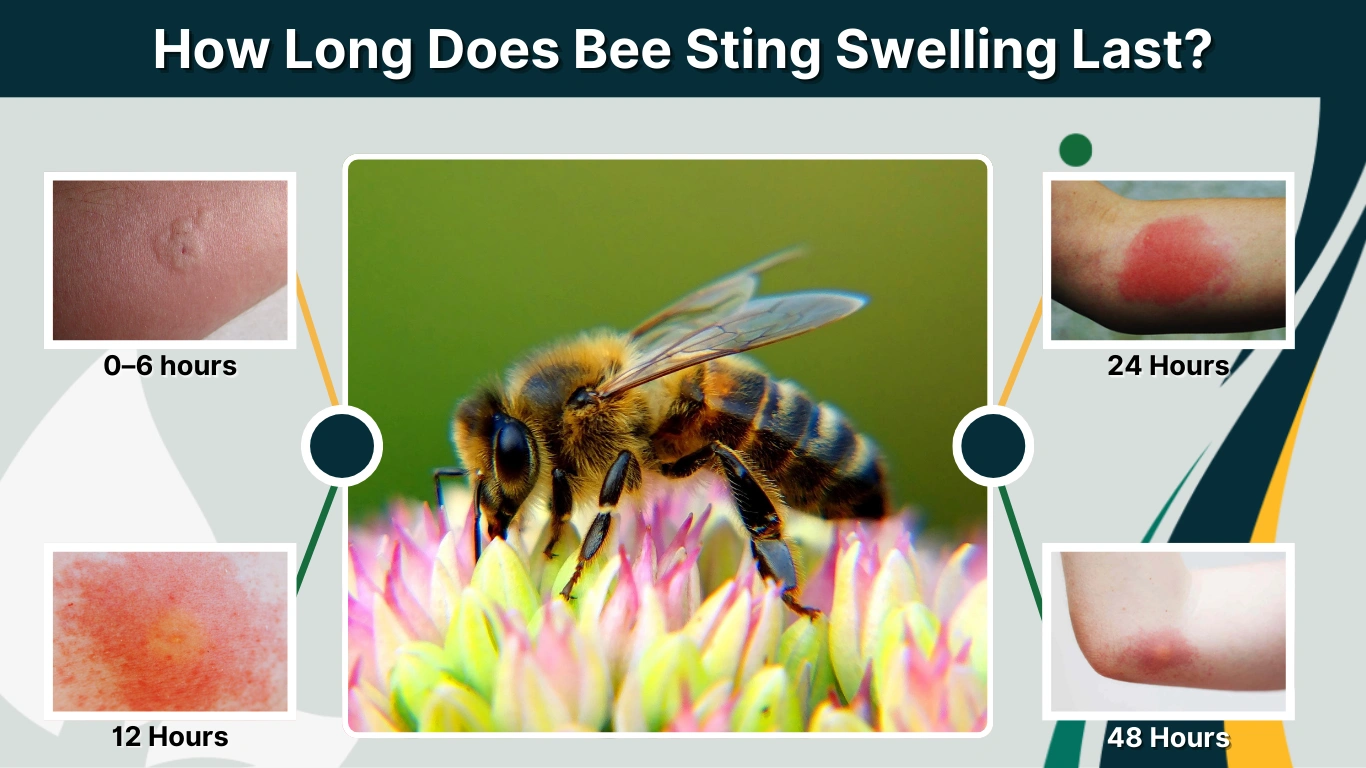
Bee stings are a common hazard during outdoor activities like gardening, hiking, or picnicking. While the initial pain is sharp and immediate, the swelling that follows often lasts longer and can be more uncomfortable. For most people, swelling improves within a few days, but sometimes it lingers or worsens. Understanding why swelling occurs, how long it typically lasts, and what factors influence recovery can help you respond appropriately and know when medical care is needed.
Why Bee Stings Cause Swelling

The Sting Process
When a bee stings, it injects venom through a barbed stinger that often remains stuck in the skin. Unlike wasps, which can sting multiple times, honeybees sting only once because their stinger detaches. While lodged, the stinger continues to release venom for several minutes, which increases pain and swelling if not removed quickly.
Venom Effects
Bee venom contains a mix of proteins, enzymes, and toxins such as melittin and phospholipase. These chemicals damage local tissues, activate nerve endings that signal pain, and trigger the immune system. The body releases histamine in response, which dilates blood vessels and causes redness, itching, and fluid buildup. This natural immune defense is what produces the swelling commonly seen after a sting.
Typical Swelling Timeline
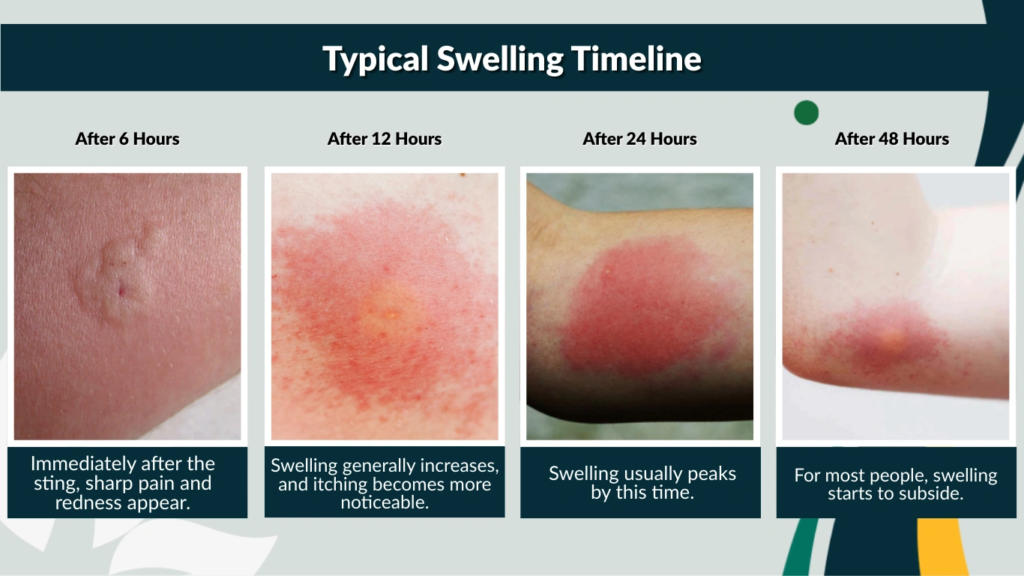
First Few Hours (0–6 hours)
Immediately after the sting, sharp pain and redness appear. Mild swelling develops quickly around the puncture site. The area feels warm and tender, and symptoms intensify if the stinger remains in place too long.
After 12 Hours
Swelling generally increases, and itching becomes more noticeable. The body’s inflammatory response is in full effect, and the area may look more puffy and irritated. This stage is still considered a normal reaction.
After 24 Hours
Swelling usually peaks by this time. The sting site can be red, raised, and uncomfortable, sometimes spreading a few inches around the sting. Pain may decrease slightly, but itching often persists. Some people develop “large local reactions,” where swelling extends several inches, but these are typically not dangerous.
After 48 Hours
For most people, swelling starts to subside. Redness fades gradually, and discomfort lessens. Applying cold compresses and antihistamines at this stage can speed recovery.
Beyond 72 Hours
By the third day, swelling normally resolves or is significantly improved. If swelling persists beyond 72 hours, worsens, or new symptoms appear (such as pus, fever, or spreading redness), infection or complications may be involved and medical advice is recommended.
Factors Affecting Duration
Individual Sensitivity
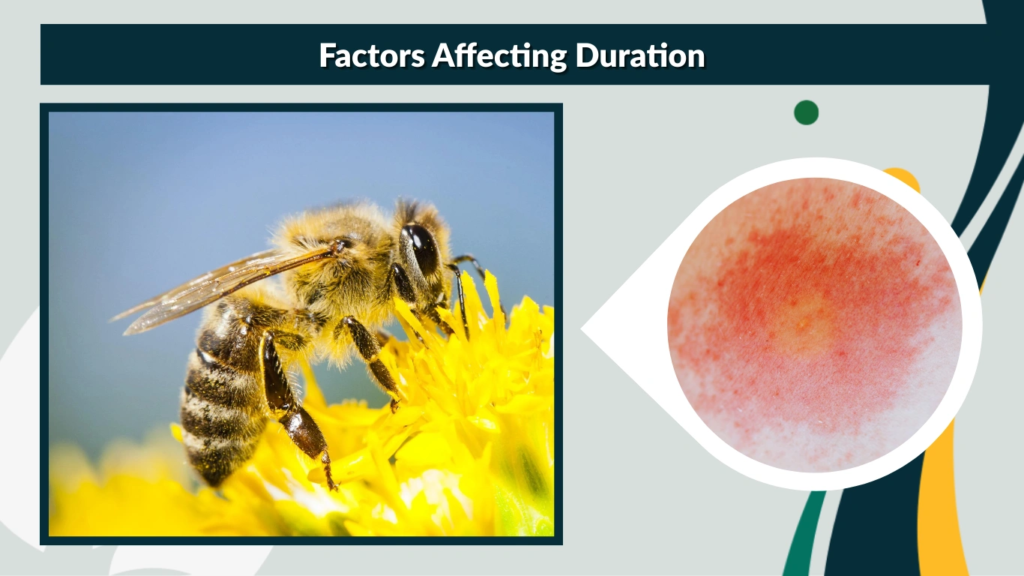
Everyone reacts differently to bee venom. Some people experience only mild swelling that disappears within a day, while others develop stronger immune responses that prolong swelling. Those with a history of large local reactions may consistently experience swelling that lasts several days.
Sting Location
Where the sting occurs makes a big difference. Stings on areas with thin skin and limited tissue, such as the hands, feet, or face, often swell more dramatically and for longer periods. Facial swelling can be especially noticeable and alarming, though not always dangerous.
Number of Stings
A single sting usually causes localized swelling, but multiple stings inject more venom into the body. This can result in prolonged or more severe swelling, even in people who normally have mild reactions. Multiple stings should be monitored closely, especially in children and older adults.
Underlying Health Conditions
People with diabetes, circulation problems, or weakened immune systems may heal more slowly. Their swelling can last longer, and the risk of infection at the sting site is slightly higher. For these individuals, careful monitoring and proper wound care are essential.
Normal vs Abnormal Reactions
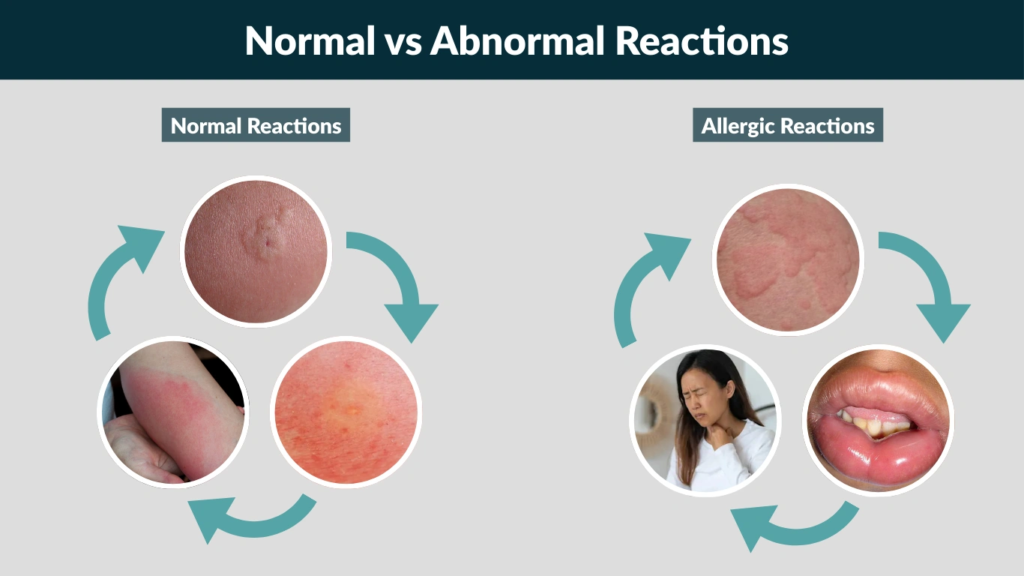
Normal Swelling
Most people experience swelling that peaks within 24 hours and begins to fade by the second or third day. The skin around the sting may be red, itchy, and sore, but symptoms steadily improve with simple care like cold compresses and antihistamines.
Large Local Reaction
Some individuals experience swelling that extends several inches beyond the sting site, lasting up to a week. Although uncomfortable, this reaction is still localized and not usually dangerous. Large local reactions may cause difficulty moving joints if the sting is near the hands, feet, or face.
Allergic Reactions
The most serious response is an allergic or systemic reaction, known as anaphylaxis. This goes beyond local swelling and can include widespread hives, swelling of the lips or throat, dizziness, difficulty breathing, or a rapid heartbeat. Unlike normal swelling, allergic reactions are life-threatening and require immediate emergency treatment.
6. Treatment to Shorten Swelling Duration

Immediate First Aid
Removing the stinger promptly prevents additional venom from entering the skin. Washing the area with soap and water reduces infection risk. Applying a cold compress for 10–15 minutes at a time helps minimize swelling and pain in the first few hours.
Home Remedies
Simple home treatments can ease symptoms. A paste of baking soda and water neutralizes acidity and soothes irritation. Aloe vera gel cools the skin and reduces inflammation. Honey has natural antibacterial and anti-inflammatory properties that may promote healing.
Over-the-Counter Medications
Antihistamines like loratadine (Claritin) or diphenhydramine (Benadryl) help reduce itching and swelling. Pain relievers such as ibuprofen decrease both pain and inflammation. Hydrocortisone cream and calamine lotion provide additional relief from redness and irritation.
Medical Treatment
For large local reactions that do not improve, doctors may prescribe corticosteroid creams or oral steroids to reduce inflammation. In rare cases of severe allergic responses, epinephrine is the most important treatment, and carrying an auto-injector is recommended for those with known allergies.
7. When to Seek Medical Help
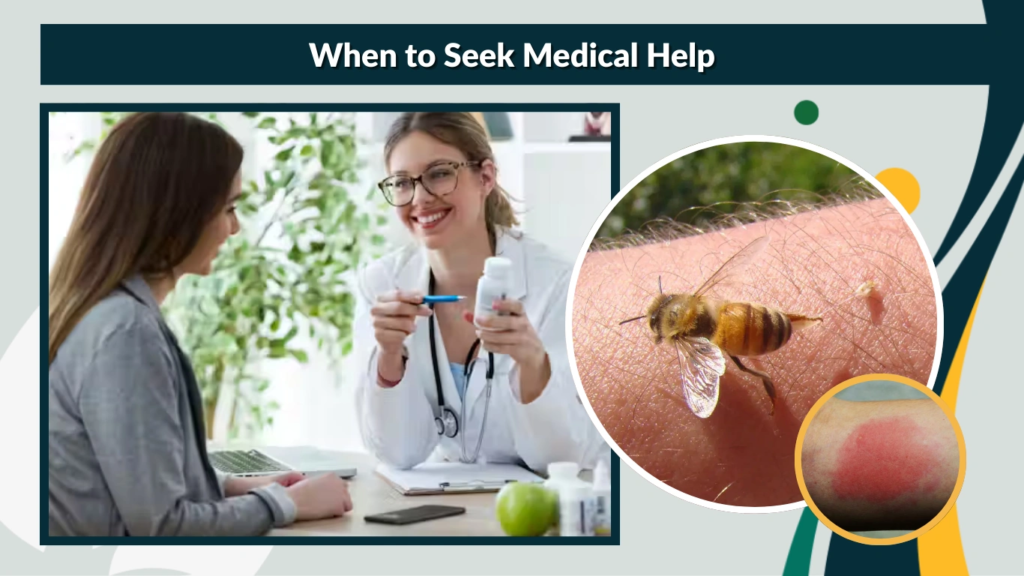
You should seek medical care if:
- Swelling worsens or persists beyond 72 hours.
- Redness spreads or pus develops, suggesting infection.
- Multiple stings occur, especially in children, older adults, or those with health conditions.
- Symptoms of an allergic reaction appear, such as difficulty breathing, throat swelling, or dizziness.
Prompt medical attention ensures safe recovery and reduces risks of complications.
8. Prevention Tips
While bee stings are often accidental, precautions reduce the risk:
- Wear shoes outdoors, especially on grass.
- Avoid brightly colored clothing and floral prints.
- Skip strong perfumes or scented lotions during outdoor activities.
- Keep food and drinks covered when eating outside.
- Stay calm if a bee approaches—sudden movements increase sting risk.
- If allergic, always carry an epinephrine auto-injector and inform friends or family.
9. Conclusion
Bee sting swelling typically lasts 24–48 hours, with most people recovering fully within two to three days. Large local reactions may persist for up to a week, while allergic reactions require urgent care. Acting quickly with first aid, using home or over-the-counter remedies, and recognizing when to seek medical help are key to managing discomfort safely. By combining proper treatment with preventive measures, you can reduce sting risks and recover more comfortably when stings occur.
FAQs
1. Is it normal for bee sting swelling to last more than three days?
Yes, large local reactions can last up to a week. As long as symptoms gradually improve, this is still considered normal. If swelling worsens after 72 hours, seek medical advice.
2. Why does swelling sometimes get worse after 24 hours?
The immune system’s inflammatory response often peaks around 24 hours, making swelling appear worse before it starts improving. This is common and not usually a cause for concern.
3. Do bee stings swell longer in children than adults?
Yes, children often have more dramatic swelling due to stronger immune responses. While this can look alarming, it is usually harmless unless accompanied by allergic symptoms.
4. What helps bee sting swelling go down fastest?
Quickly removing the stinger, applying a cold compress, and taking an antihistamine are the fastest ways to reduce swelling. Hydrocortisone cream also helps with redness and itching.
5. Can swelling return after it goes down?
It’s uncommon, but in sensitive individuals, swelling can flare up again within a day or two. Persistent or recurring swelling may signal infection and should be checked by a doctor.
