
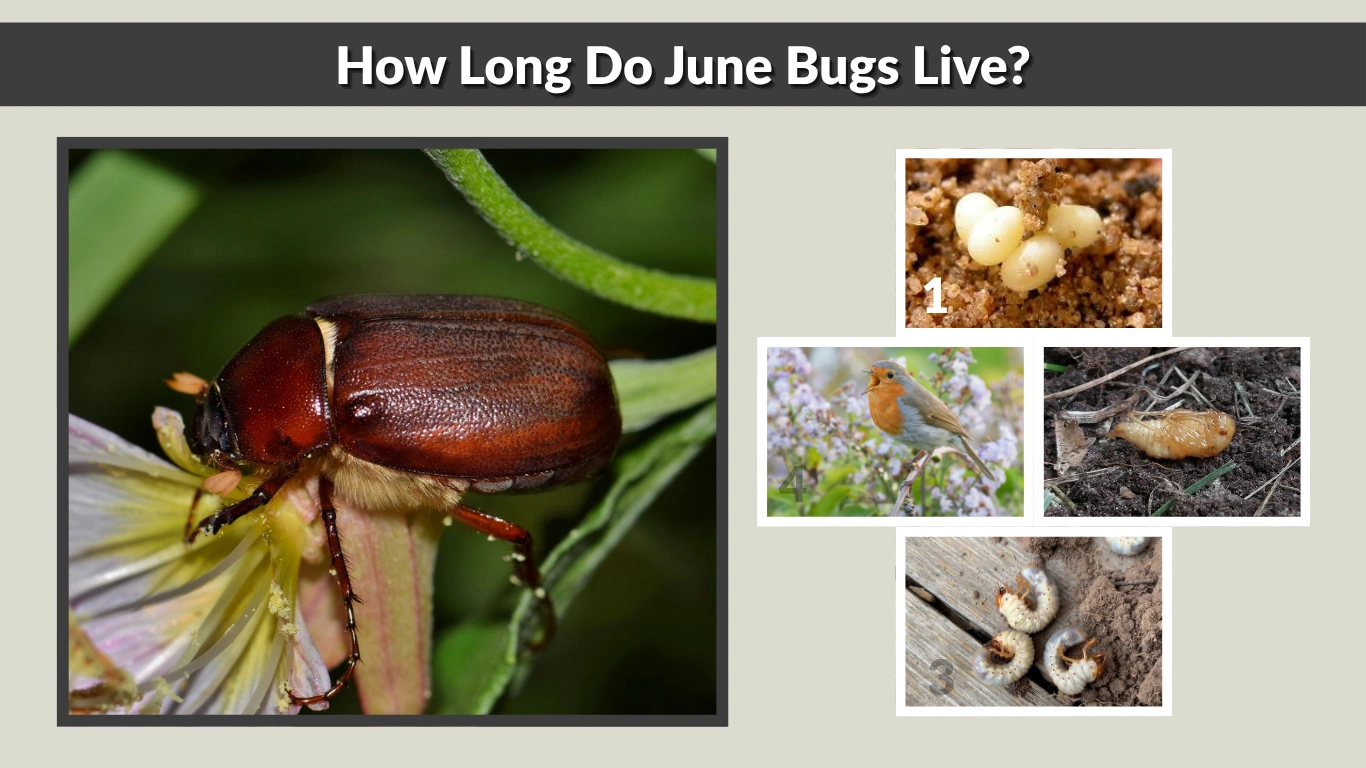
June bugs, also known as June beetles, are one of the most familiar insects of summer. Their clumsy flight, loud buzzing, and tendency to bump into lights often make them hard to miss on warm nights. But have you ever wondered how long they actually live? While adult June bugs appear only briefly each summer, their full life cycle lasts much longer. Let’s explore how long June bugs live, what affects their lifespan, and where they spend most of their lives.
June Bug Basics
June bugs belong to the scarab beetle family (Scarabaeidae), which includes over 260 species in North America. These beetles are nocturnal, often seen hovering around porch lights or windows after dusk. They’re especially common in the United States, Canada, and parts of Central America.
Physical Traits
June bugs are typically about 1 inch long with a hard, shiny exoskeleton. Most are reddish-brown, though some species — like the Green June Beetle (Cotinis nitida) — have a metallic green sheen. They have long antennae and six strong legs with tiny hooks that help them cling to surfaces. Their heavy bodies make them poor flyers, which is why they’re often seen colliding with walls or buzzing awkwardly around lights.
June Bug Life Cycle Overview
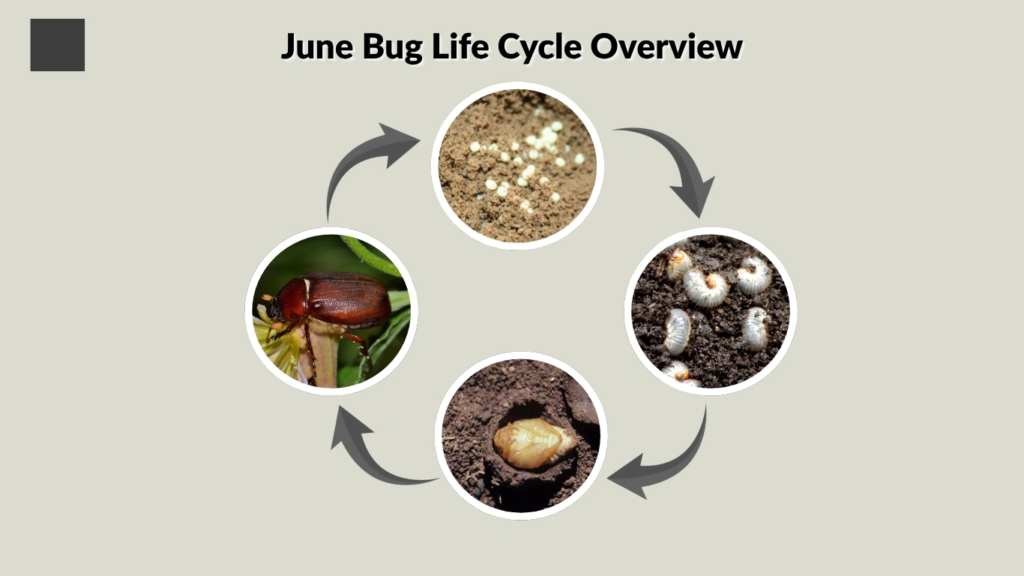
June bugs undergo complete metamorphosis, passing through four life stages: egg, larva (grub), pupa, and adult. The total life span varies by species but typically lasts 1 to 3 years, with most of that time spent underground.
Egg Stage
Female June bugs lay eggs underground in early to mid-summer, usually in moist, grassy soil. Each female can lay between 50 and 75 eggs, which hatch in 2 to 4 weeks. The small, white larvae that emerge are known as grubs.
Larva (Grub) Stage
This is the longest stage of the June bug’s life. The grubs live underground for 1 to 3 years, feeding on plant roots, decaying matter, and organic debris. They are cream-colored, C-shaped, and about an inch long. During this time, they grow and molt several times.
In colder regions, grubs remain underground longer, emerging only when conditions are warm enough to pupate.
Pupa Stage
As temperatures rise in late spring, mature grubs burrow deeper and form earthen cocoons. Inside, they transform into pupae — the transitional stage between larva and adult. This stage lasts around 2–3 weeks before they emerge as adult June bugs ready to mate.
Adult Stage
Adult June bugs emerge from the soil in late spring or early summer. Their primary goal is reproduction. They live for only 2 to 4 weeks above ground, during which they feed on tree leaves, shrubs, and crops. After mating and laying eggs, the adults die, restarting the annual cycle.
How Long Do June Bugs Live?

Although adult June bugs seem short-lived, their full lifespan can stretch to three years when the underground phase is included.
Average Lifespan
The typical June bug life span:
- Egg: 2–4 weeks
- Larva (Grub): 1–3 years
- Pupa: 2–3 weeks
- Adult: 2–4 weeks
Most of a June bug’s life happens beneath the soil, invisible to humans. Once they become adults, their time is brief — just long enough to mate and lay eggs before dying naturally.
Differences by Species
- Brown June Bugs (Phyllophaga spp.) – Lifespan of about 1–2 years.
- Green June Beetles (Cotinis nitida) – Often live up to 3 years due to a longer larval stage.
The longer underground development allows grubs to survive harsh winters, while adults thrive during the warm summer months.
How Long Are June Bugs Around Each Year?

Seasonal Activity
June bugs appear from May through July, depending on the region and temperature. Their name comes from their peak activity in June, though in warmer climates they may appear earlier.
They are nocturnal, flying around lights from dusk until midnight. Their activity often coincides with the first warm, humid nights of summer.
Regional Variations
- Texas: Active for 4–6 weeks due to longer warm seasons.
- Florida: Can be seen from April through July.
- Midwestern states (Wisconsin, St. Louis, Chicago): Appear for 2–3 weeks in late June.
- Northern areas (Nova Scotia, Canada): Shorter season of around 2 weeks.
So, while you might notice them for just a few weeks, each year’s visible “swarm” represents years of underground development.
How Long Do June Bugs Live in Different Conditions?
Above Ground
Adult June bugs typically live 2 to 4 weeks once they emerge. Their life is short because they don’t eat much and focus mainly on reproducing.
Underground
Grubs can survive for 1–3 years under the soil, feeding and growing before transforming into adults. The colder the environment, the longer they stay in this stage.
Indoors
If a June bug finds its way into your home, it won’t last long. Without access to food, water, or soil, it usually dies within 2–5 days. They may buzz around lights before exhausting themselves.
Without Food or Water
June bugs can survive 3–5 days without food or moisture. Their natural diet of leaves and roots helps sustain them outdoors, but captivity or indoor environments drastically shorten their lifespan.
In Water
They are not aquatic insects. If trapped in water, June bugs can survive for only a few minutes before drowning.
How Long Is June Bug Season?
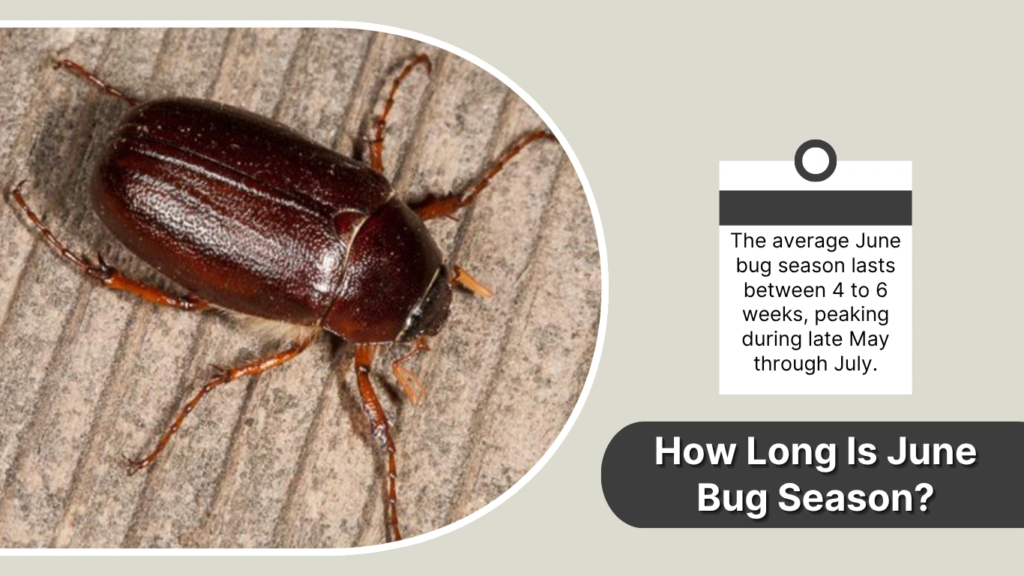
The time you see June bugs flying around depends on the climate and temperature of your region. Their season is short and intense, usually lasting only a few weeks each year. During this time, adult beetles emerge from the ground to mate, feed, and lay eggs — then quickly die off once their purpose is complete.
Duration and Frequency
The average June bug season lasts between 4 to 6 weeks, peaking during late May through July.
- In southern states such as Texas and Florida, June bugs may appear as early as April and linger through mid-summer.
- In northern regions like Wisconsin, Chicago, or Nova Scotia, their season is shorter — usually 2 to 3 weeks.
Because they spend most of their lives underground, these short-lived summer appearances are only the final act of a much longer life cycle.
Night Activity
June bugs are strictly nocturnal, meaning they are active only at night. You’ll see them buzzing near porch lights or windows from dusk until midnight. Their attraction to light is called phototaxis, and it’s one of the main reasons they seem to “appear out of nowhere” on summer evenings.
Environmental and Survival Factors
Climate and Temperature
Temperature plays a major role in how long June bugs live. Warm, humid weather encourages early emergence and faster development, while cooler or drier conditions delay their life cycle.
- Warm summers: Adults may live a full 4 weeks.
- Hot, dry climates: Shorten their lifespan due to dehydration.
- Cold winters: Extend the grub stage underground.
Predators
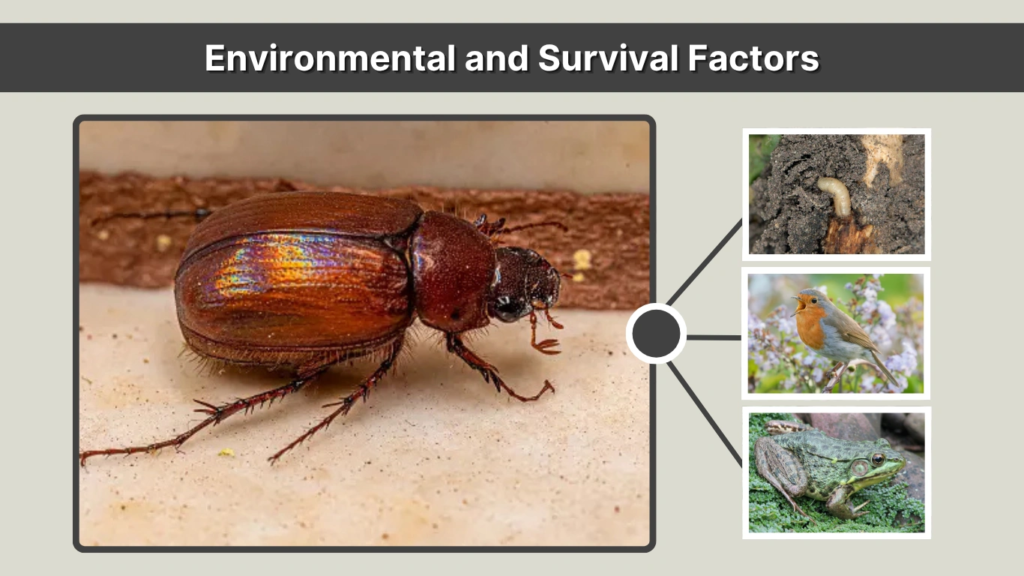
Many animals feed on June bugs and their larvae, helping keep their population in balance. Common predators include:
- Birds such as crows and robins
- Frogs and toads
- Skunks, moles, and raccoons
- Bats that hunt them mid-flight
Even though adults are clumsy flyers, they serve as an important food source for wildlife.
Soil Conditions
June bug grubs depend heavily on soil health. Moist, nutrient-rich soil promotes survival, while compacted or dry soil reduces their chances of reaching adulthood. Gardeners often notice grub infestations in healthy lawns because the larvae thrive in these environments.
Common Misconceptions
Are June Bugs Mayflies?
No — June bugs are beetles, while mayflies are aquatic insects with a one-day lifespan.
People often confuse the two because both appear in large numbers during warm months. However, June bugs live much longer — several weeks as adults and years as larvae.
Do June Bugs Die After Mating?
Yes. Adult June bugs focus solely on mating and egg-laying. After reproduction, they quickly die of exhaustion or starvation. This short adult life is part of a natural cycle that ensures new generations emerge each summer.
Do June Bugs Bite or Sting?
June bugs do not bite or sting. Their mouthparts are adapted for chewing vegetation, not piercing skin. They’re completely harmless to humans, though their large size and loud buzzing can be intimidating.
June Bugs Indoors: What to Expect
Why They Enter Homes
June bugs are attracted to artificial light. Open windows, doors, or vents can allow them to fly inside, especially at night. Once indoors, they often bump into light fixtures, walls, or ceilings in confusion.
How Long They Survive Indoors
Without access to natural food sources like leaves or soil, indoor June bugs survive only 2–5 days. They eventually die from dehydration or exhaustion. If you find one indoors, it’s best to gently catch it and release it outside.
Prevention Tips
- Turn off unnecessary outdoor lights during peak season.
- Install fine mesh screens on doors and windows.
- Seal gaps around vents and cracks.
- Keep indoor lights dim near open doors at night.
These simple steps can significantly reduce nighttime visitors.
Interesting Facts
- June bugs spend over 90% of their lives underground as grubs.
- They are part of the scarab beetle family, related to ancient Egyptian beetles once considered sacred.
- Their strong legs allow them to dig backward into soil when threatened.
- Adult June bugs are harmless but clumsy — their buzzing flight is mostly accidental.
- The larvae (white grubs) can damage lawns by feeding on grass roots but also help decompose organic matter in soil.
FAQs
How long do June bugs live above ground?
Adult June bugs live for about 2 to 4 weeks once they emerge from the soil. During this short period, they focus on mating, feeding, and laying eggs before dying naturally.
How long do June bugs live underground?
The underground grub stage lasts 1 to 3 years. Grubs feed on roots and decaying matter until they’re ready to pupate and emerge as adult beetles.
How long do June bugs stay around each summer?
June bug season typically lasts 4–6 weeks, depending on climate. They’re most active during warm, humid evenings from May through July.
How long can a June bug live indoors or without food?
Without soil or food, June bugs survive 2–5 days indoors. They rely on outdoor plants and moisture to stay alive.
Do June bugs die after mating?
Yes. Adult June bugs die shortly after reproducing, completing their brief but essential role in the insect’s multi-year life cycle.
