
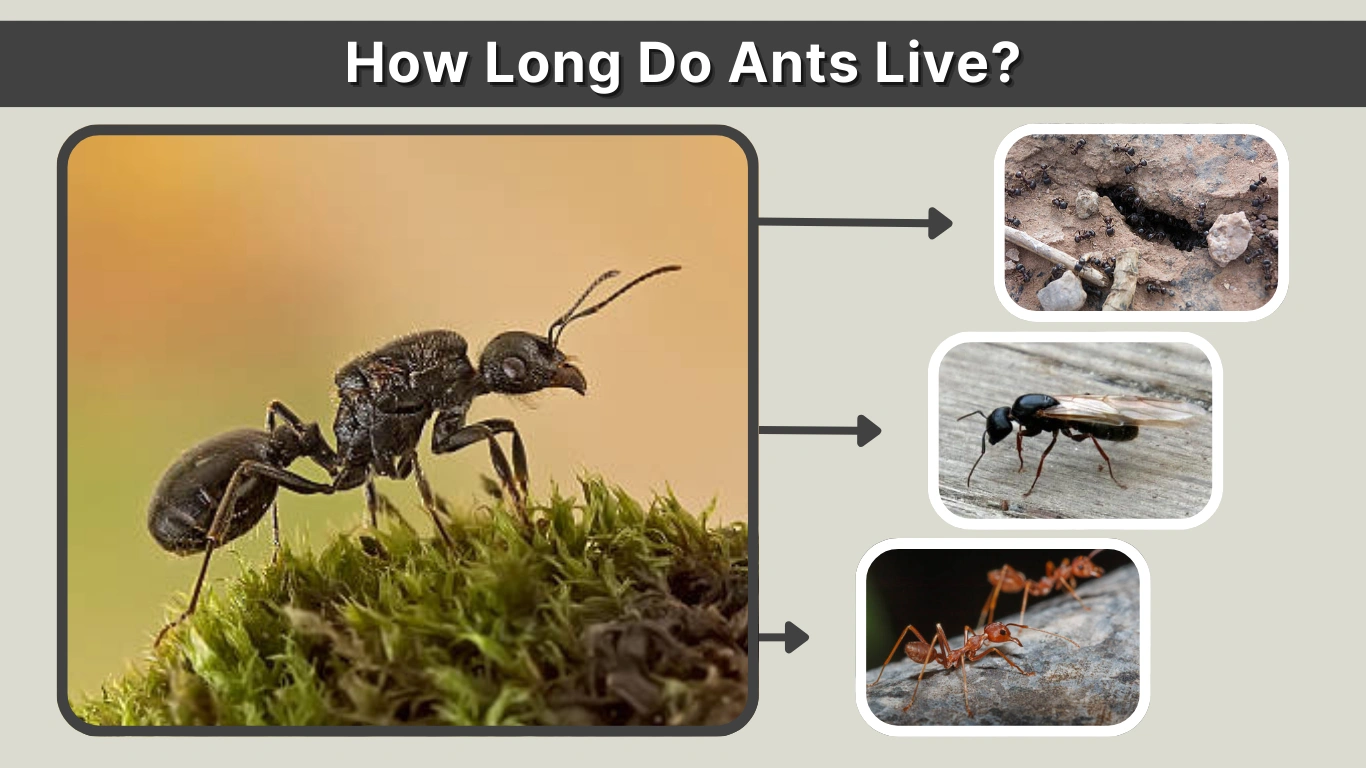
Ants are some of the most successful insects on Earth, and part of that success comes from their surprisingly long lifespans. Many people assume ants only live for a few days or weeks, but the truth is more complex. The lifespan of an ant depends on its role in the colony, its species, and its environment. Worker ants, queens, and male ants all live very different lives. In this article, you’ll learn how long ants live on average, how long queen ants survive, and what factors affect ant lifespan both indoors and outdoors.
How Long Do Ants Live on Average?
On average, most ants live anywhere from a few weeks to several years, depending on their role in the colony. Worker ants usually have the shortest lifespan, while queen ants can live for many years. Male ants, often called flying ants or drones, have the shortest lives of all.
Compared to many insects such as flies or mosquitoes, ants live surprisingly long lives. This is because ants live in organized colonies where food is shared, protection is constant, and risks are spread among many individuals. An ant’s lifespan is not just about biology—it is also shaped by how the colony functions as a whole.
How Long Do Queen Ants Live?
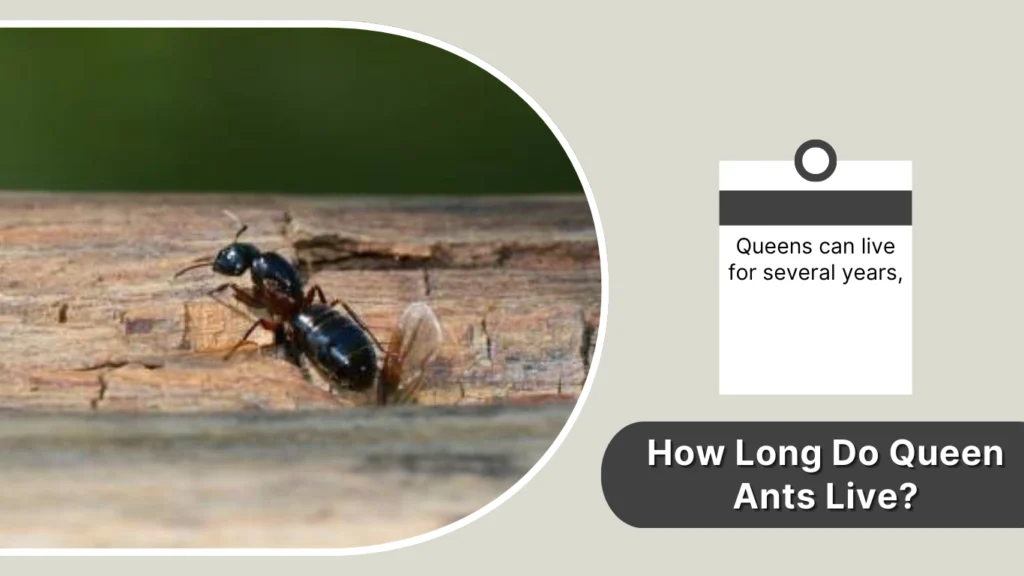
Queen ants are the longest-living members of an ant colony. While worker ants may live for months, queens can live for several years, and in some species, even decades. A healthy queen ant can continue laying eggs throughout most of her life, allowing the colony to survive and grow.
Some queen ants are known to live 10 to 15 years under the right conditions. This long lifespan is one of the main reasons ant colonies can persist for such long periods without collapsing.
Why Queen Ants Live So Long
Queen ants live much longer than other ants because their role is very different. They stay deep inside the nest, protected from predators, harsh weather, and physical labor. Worker ants feed and groom the queen, reducing her exposure to danger.
Queens also conserve energy by focusing almost entirely on reproduction. Since they are not foraging or defending the nest, their bodies experience far less wear and tear. This protected lifestyle is the main reason queen ants live so long compared to other ants.
How Long Do Worker Ants Live?
Worker ants have much shorter lifespans than queens. Most worker ants live anywhere from a few weeks to several months, depending on the species and working conditions. In some species, worker ants may live up to a year if conditions are favorable.
Worker ants perform the most dangerous jobs in the colony. They forage for food, defend the nest, care for larvae, and maintain tunnels. Because of this constant activity and exposure to threats, worker ants wear out much faster than queens. Outdoor workers generally live shorter lives than indoor or nest-bound workers due to predators and environmental stress.
How Long Do Male and Flying Ants Live?

Male ants, often seen as flying ants during mating season, have the shortest lifespan of all ants. Their sole purpose is to mate with a queen. Once mating occurs, male ants usually die within days or even hours.
Flying ants that appear inside houses may survive slightly longer if conditions are favorable, but their lifespan is still very short compared to workers and queens. After mating season ends, male ants quickly disappear, marking the end of their life cycle.
How Long Do Ant Colonies Live?
An ant colony can live as long as its queen survives. As long as the queen is alive and healthy, the colony continues producing new workers to replace those that die. This means some ant colonies can last for decades.
When a queen dies, the colony’s future depends on whether it can produce or accept a new queen. In single-queen colonies, the colony will slowly decline and eventually die out. In colonies with multiple queens, survival may continue for much longer.
How Long Do Ants Live Without Food or Water?
Ants are resilient insects, but they still need food and water to survive. Without food, most ants can live for several days to a few weeks, depending on the species and environmental conditions. Ants rely on stored energy in their bodies and on food reserves inside the colony.
Without water, ants die much faster. In dry environments, ants may survive only a few days without access to moisture. Indoor ants often die sooner because homes can be dry and lack natural water sources. Heat and low humidity significantly reduce how long ants can live without water.
How Long Do Ants Live Without a Queen?
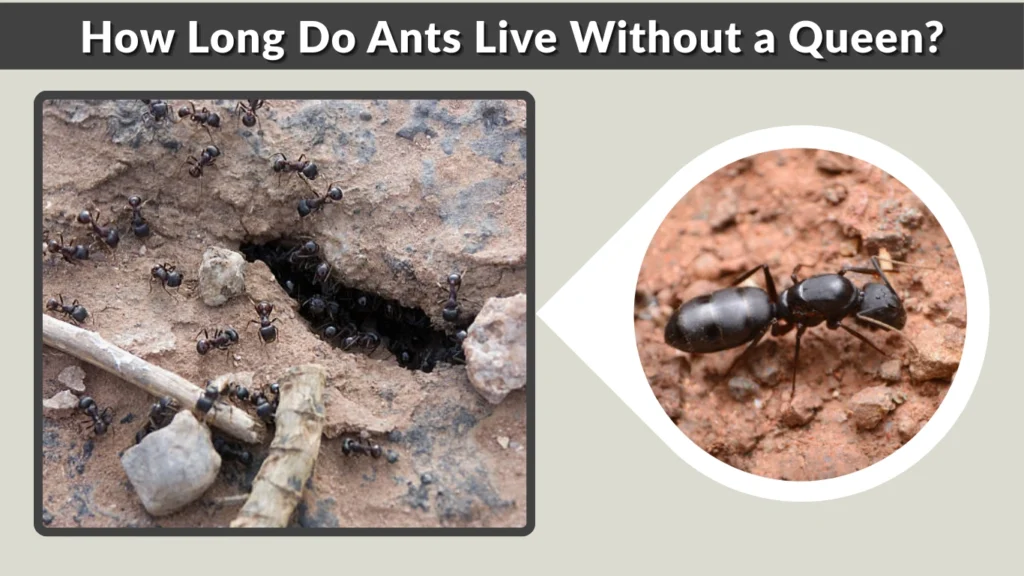
When a queen ant dies, the colony’s future becomes uncertain. Worker ants can continue living for weeks or months after the queen’s death, but the colony can no longer produce new ants.
Over time, the worker population declines as ants die naturally. In single-queen colonies, this leads to the eventual collapse of the colony. Colonies with multiple queens may survive much longer because reproduction can continue even if one queen dies.
How Long Do Ants Live Indoors vs Outdoors?
Ant lifespan can vary depending on whether ants live inside a house or in the wild.
Ants Living Inside a House
Indoor ants often have easier access to food but face frequent threats from cleaning, pest control products, and human activity. These factors usually shorten their lifespan despite stable temperatures.
Ants Living in the Wild
Ants in natural environments face predators, weather changes, and seasonal challenges. While these dangers can shorten individual lifespans, outdoor colonies are often better adapted to survive long-term.
How Long Do Ants Live in an Ant Farm?
Ants in an ant farm often live longer than ants in the wild. Ant farms provide controlled environments with stable temperatures, steady food supplies, and protection from predators.
Worker ants in ant farms can live for several months, while queen ants may live for many years. Proper care, including regular feeding and moisture control, plays a major role in extending ant lifespan in captivity.
Lifespan of Common Ant Species
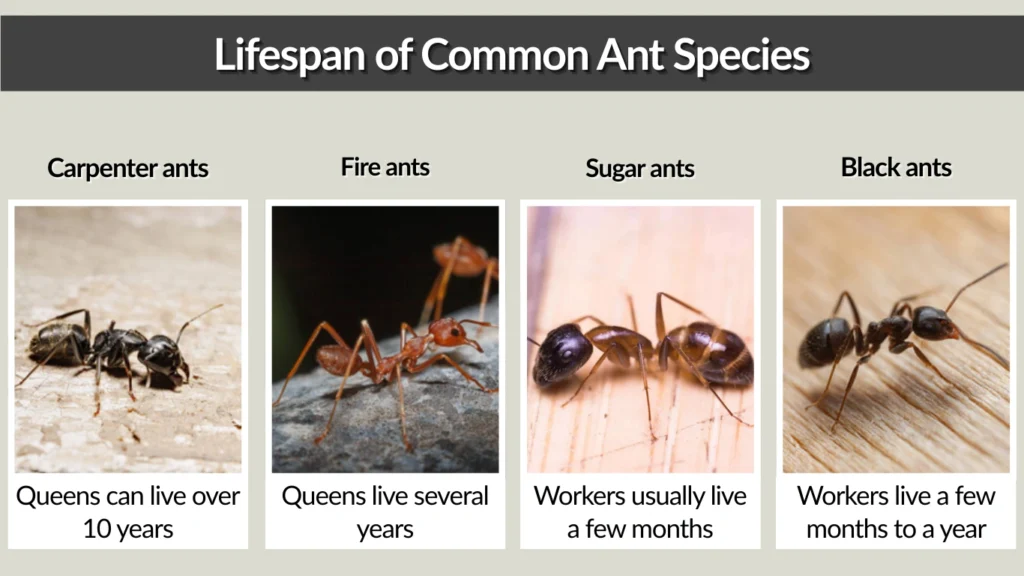
Different ant species have different lifespans based on their biology and environment.
- Carpenter ants: Workers live several months to a few years; queens can live over 10 years
- Fire ants: Workers live a few weeks to several months; queens live several years
- Sugar ants: Workers usually live a few months
- Black ants: Workers live a few months to a year
- Pavement ants: Workers live several months; queens live multiple years
These are general ranges, and actual lifespan can vary depending on conditions.
Common Myths About Ant Lifespan
There are many misconceptions about how long ants live.
- Ants only live a few days: False. Many ants live for months or years.
- All ants live the same amount of time: False. Lifespan varies by role and species.
- Queen ants live forever: False. Queens live long lives but are not immortal.
Understanding these myths helps clarify how ant colonies function.
FAQs
How long do ants live on average?
Most ants live from a few weeks to several months, depending on their role and species. Worker ants usually live the shortest lives, while queens can live for many years. Environmental conditions and access to food also affect an ant’s lifespan.
How long do queen ants live?
Queen ants are the longest-living ants in a colony. Many queens live between 5 and 15 years, and some species can survive even longer. Their protected lifestyle inside the nest and their focus on reproduction help extend their lifespan.
How long do ants live without food or water?
Ants can survive without food for several days to a few weeks, but they die much faster without water. In dry conditions, ants may survive only a few days without moisture. Temperature and humidity play a major role in survival time.
How long do ants live without a queen?
Worker ants can live for weeks or months after the queen dies, but the colony cannot reproduce. Over time, the population declines, and the colony eventually collapses unless a new queen is introduced or already present.
Which ants live the longest?
Queen ants live the longest of all ants. Among species, carpenter ant queens and some harvester ant queens are known for especially long lifespans, sometimes living over a decade under the right conditions.
