

The honey bee life cycle is a fascinating process that highlights nature’s precision and teamwork. Beginning as a tiny egg, each bee passes through eight unique stages before reaching adulthood. These stages—egg, larva, pre-pupa, pupa, emerging adult, young adult, transition, and forager—reveal the complexity of hive life. Understanding this cycle is essential for beekeepers, students, and nature lovers, offering insight into colony health, honey production, and the vital role bees play in ecosystems.
Stage One: Egg

The life of every honey bee begins as a tiny egg, laid by the queen bee inside a hexagonal wax cell. Honey bee eggs are extremely small—about the size of a grain of rice—and pearly white in color.
The Queen’s Role
The queen bee is the sole fertile female in most colonies, and her productivity is astonishing. A healthy queen can lay up to 2,000 eggs per day during peak season, ensuring the colony remains strong and productive. She carefully deposits a single egg into each prepared cell of the honeycomb.
Egg Differentiation
Not all eggs are the same. The queen controls whether an egg becomes a worker, drone, or future queen:
- Fertilized eggs develop into female bees (workers or queens).
- Unfertilized eggs develop into male bees (drones).
The decision depends on the needs of the hive, showcasing the colony’s remarkable efficiency. After about three days, each egg hatches into a larva.
Stage Two: Larva (Days 3–9)
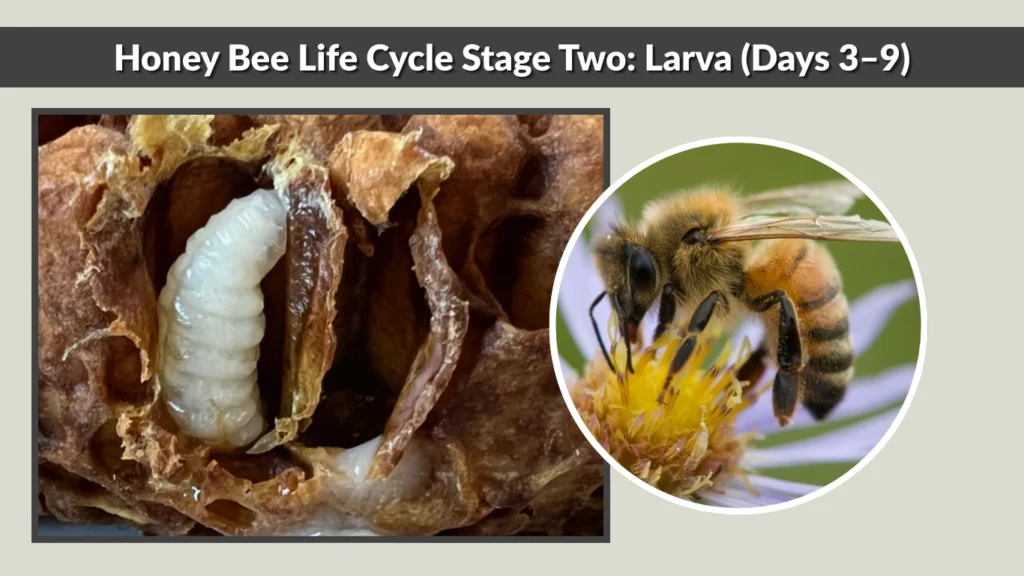
When the egg hatches, a tiny, legless larva emerges. At this stage, larvae resemble small white grubs curled at the bottom of their wax cells. Although simple in form, larvae grow at an extraordinary rate.
Feeding and Care
Nurse bees immediately begin feeding the larvae. For the first three days, all larvae are fed royal jelly, a rich secretion produced by glands in the nurse bees’ heads. After this initial period:
- Worker and drone larvae are fed a mixture of honey and pollen called bee bread.
- Future queen larvae continue receiving royal jelly, which triggers their unique development.
This diet distinction is one of the most critical elements in determining whether a larva becomes a queen or a worker.
Rapid Growth
During the larval stage, a honey bee increases its weight over 1,000 times. Nurse bees feed them dozens of times per day, ensuring they grow quickly. By day 9, the larvae are nearly full-sized for their developmental stage and ready for the next transition.
Stage Three: Pre-Pupal Phase

As the larva reaches maturity, it prepares for metamorphosis. Worker bees seal the wax cell with a thin layer of beeswax, creating a secure environment for the transformation. This marks the start of the pre-pupal phase.
Preparing for Change
Inside the capped cell, the larva spins a thin cocoon around itself. During this time, it begins reorganizing its body structure. The digestive system clears, and the larva enters a resting stage, storing energy for the major changes to come.
Significance for the Colony
The capping of the brood cell is a crucial moment. From the outside, beekeepers can see capped brood as a sign of a healthy colony. Each capped cell represents a developing bee that will soon contribute to the hive’s workforce.
Stage Four: Pupa Development

The pupal stage is perhaps the most fascinating part of the honey bee life cycle, as it represents the true metamorphosis from larva to adult.
Transformation Within the Cell
During pupation, the grub-like larva undergoes dramatic changes:
- Wings, legs, and eyes begin to form.
- Body segmentation becomes clear.
- External features such as antennae and hairs develop.
By the end of this stage, the once shapeless larva has transformed into a recognizable honey bee.
Development Timelines
The length of the pupal stage varies depending on caste:
- Worker bees: about 12 days.
- Drones: about 14–15 days.
- Queens: about 7–8 days (the shortest, allowing queens to emerge quickly).
This difference in timelines explains why queens can take over a hive so rapidly when colonies raise a new one.
Comparison to Other Insects
Much like butterflies, honey bees experience complete metamorphosis, changing entirely in body structure between larva and adult. This process ensures that each life stage serves a unique purpose, with larvae focusing solely on growth and adults taking on the responsibilities of survival and reproduction.
Stage Five: Emerging Adult

After completing metamorphosis, the fully developed bee prepares to emerge from its cell. This is one of the most dramatic and visible moments in the hive.
Chewing Through the Capping
The young bee uses its strong mandibles to chew a circular opening in the wax capping. Worker bees often assist, ensuring the new adult can break free. The process can take hours, but eventually, the bee pushes itself out into the hive.
Differences by Caste
- Workers typically emerge on day 21 after the egg is laid.
- Drones emerge around day 24.
- Queens emerge much faster, usually on day 16, which gives them a survival advantage in establishing dominance.
Stage Six: Young Adult (House Bee Duties)

Freshly emerged bees are soft-bodied, fuzzy, and slightly lighter in color. At this stage, they are called house bees and spend their first weeks working inside the hive.
Responsibilities of Young Bees
- Cell Cleaning: Immediately after emerging, bees clean the cells to prepare them for new eggs or honey storage.
- Nursing Duties: They feed younger larvae with royal jelly or bee bread.
- Queen Care: Some house bees focus on feeding and grooming the queen.
- Wax Production: As their glands mature, young bees secrete wax to build and repair honeycomb.
Gland Development
House bees gradually develop the glands needed for wax and jelly production. These glands are crucial for maintaining the hive’s structure and supporting brood growth.
Stage Seven: Forager Transition

By the second or third week of adult life, bees begin to shift from in-hive duties to more external tasks. This stage represents the transition between house bees and full foragers.
Transitional Roles
- Ventilation: Bees fan their wings at the hive entrance to regulate temperature and humidity.
- Guarding: Some act as guards, protecting the colony against intruders such as wasps or robber bees.
- Orientation Flights: Before foraging, young bees take practice flights around the hive, learning its location relative to the landscape.
This stage helps prepare the bee for the physical demands and navigational skills required for foraging.
Stage Eight: Forager Bee (Final Adult Role)

The last stage of the honey bee’s life is spent as a forager. This is the most physically demanding role and also the most crucial for the colony’s survival.
Duties of Foragers
- Nectar Collection: Foragers gather nectar from flowers and bring it back to the hive for honey production.
- Pollen Collection: Pollen provides essential protein for developing larvae.
- Propolis Gathering: Bees collect resin from trees to create propolis, which acts as a natural disinfectant for the hive.
- Water Transport: Foragers bring water to regulate hive temperature and dilute honey.
Lifespan
Foragers typically live only a few weeks during the summer due to the intense wear on their wings and bodies. In contrast, winter bees—workers that remain in the hive during cold months—can live several months.
Differences in Castes
The honey bee life cycle differs slightly depending on whether the bee is a worker, drone, or queen.
- Worker Bees: The most numerous, workers take 21 days to develop and live 6–8 weeks in summer. They perform all hive maintenance and foraging tasks.
- Drones: Male bees, taking 24 days to develop, live only until they mate with a queen. Their sole purpose is reproduction.
- Queens: Developing in just 16 days, queens can live 2–3 years or more. They are the reproductive backbone of the hive, laying thousands of eggs daily.
Importance of the Life Cycle to Beekeeping
For beekeepers, understanding the honey bee life cycle is vital for effective hive management.
Colony Health Monitoring
By observing brood patterns—eggs, larvae, and pupae—beekeepers can determine the health of the queen and overall colony. Gaps in the brood may signal disease, pests, or a failing queen.
Pest Control
Knowing development timelines helps in controlling pests such as Varroa mites, which reproduce inside capped brood cells. Timely interventions can protect colonies from collapse.
Honey Production and Swarming
Since Italians, Carniolans, and other bee breeds all follow this cycle, beekeepers adjust management practices to prevent swarming, maximize honey yields, and maintain strong colonies throughout the year.
FAQs
How long does it take for a honey bee to go from egg to adult?
On average, worker bees take 21 days, drones take 24 days, and queens take only 16 days from egg to adult.
Do all honey bees follow the same life cycle stages?
Yes, all honey bees pass through the same stages, though the duration differs depending on caste.
Why does the queen bee develop faster than worker bees?
The constant feeding of royal jelly accelerates the queen’s development, enabling her to emerge quickly and establish dominance.
What do larvae eat during development?
All larvae are fed royal jelly initially. Worker and drone larvae later receive bee bread, while queen larvae continue on royal jelly.
How long do worker bees live compared to drones and queens?
Workers live 6–8 weeks in summer, drones survive only until mating, and queens can live several years under healthy conditions.
